PC reports and market data
Documents

Plot and Parcel: Procedural Level Design in XCOM 2
The transition to a procedural level design architecture in XCOM 2 represents a strategic shift toward modularity to address the high labor costs and limited replayability associated with handcrafted environments.
- Firaxis transitioned XCOM 2 to a procedural level system using 'Plots' (the map layout), 'Parcels' (the building blocks), and 'PCPs' (Procedural Content Parcels) to eliminate environment art as a production bottleneck.
- To ensure consistent gameplay and movement, the team adopted a 'base 8' grid system for all assets and a 'one-wide rule,' which mandates two empty tiles between object clusters to prevent camera blocking and ensure freedom of movement.
- The team implemented a biome-swapping system that allowed temperate maps to be converted into arid or tundra versions on-the-fly, reducing the required maintenance of unique map files by two-thirds.
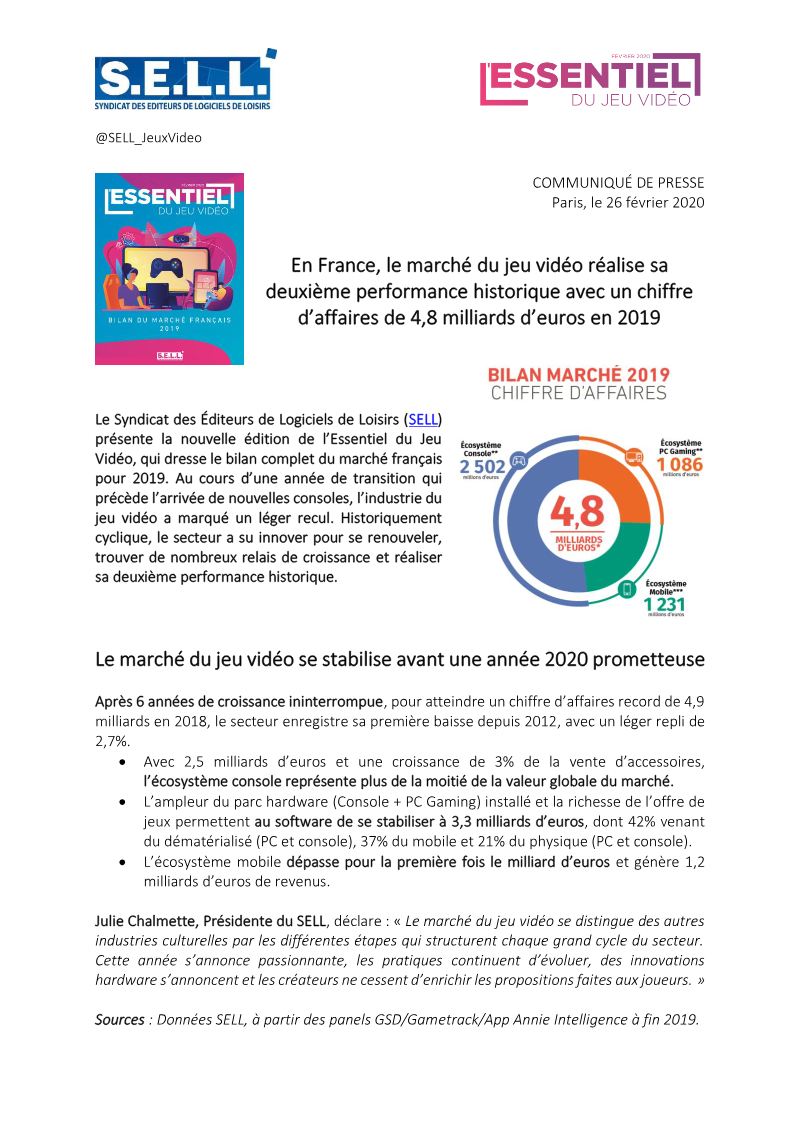
Essentiel du Jeu Vidéo: Bilan du Marché Français 2019
The French video game market reached a total valuation of 4.8 billion euros in 2019, marking its second-highest historical performance despite a 2.7% decline compared to the previous year.
- The French video game market reached a total valuation of 4.8 billion euros in 2019, representing a 2.7% decline following six years of consecutive growth.
- The console segment remains the largest market driver, generating 2.5 billion euros in revenue and benefiting from a 3% increase in accessory sales.
- Mobile gaming achieved a significant milestone in 2019 by surpassing the one-billion-euro threshold for the first time, reaching a total of 1.2 billion euros.
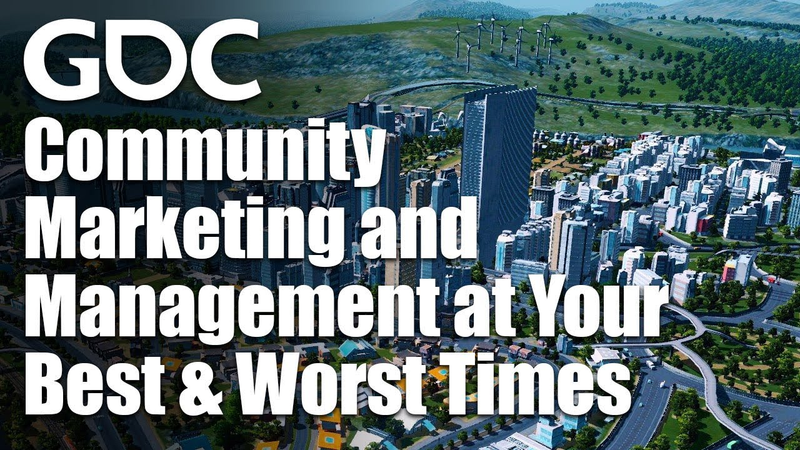
Community Marketing and Management at Your Best and Worst Times
Community marketing functions as a strategic pillar for growth by leveraging deep insights into player language, shared narratives, and specific motivations.
- When managing a crisis like the 2017 Europa Universalis 4 review bombing, companies should transparently admit mistakes, offer compensation, and communicate changes early to rebuild trust.
- Effective community marketing requires adopting the 'language' of the target audience, which includes not just spoken words but also images, music, memes, and specific community-driven inside jokes.
- When marketing a game with a clear competitor, such as Cities: Skylines versus SimCity, focus on the unique value proposition of your own product rather than merely attacking the competitor's failures, which can foster a toxic community environment.

How To Make Your First Game CONFIDENTLY
The core challenge for aspiring game developers is overcoming the pervasive lack of confidence that often prevents them from completing and releasing their work.
- Confidence is not a prerequisite for game development; success is defined by the ability to persist and execute tasks despite feelings of insecurity or uncertainty.
- Developers should decouple their emotional state from their professional output by treating game creation as a disciplined, iterative protocol rather than a reflection of personal worth.
- Adopting a high-frequency release model for small-scale projects is the most effective way to desensitize creators to public feedback and build professional resilience.
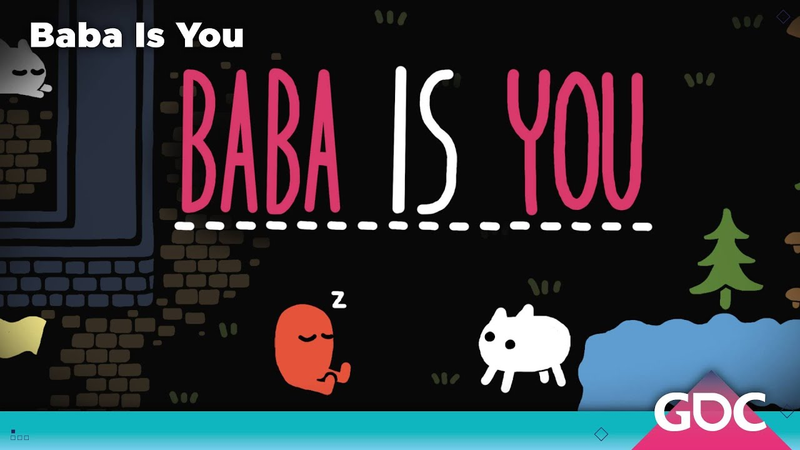
GDC Plays GDCA Nominee Baba Is You with Arvi Teikari
Baba Is You represents a significant achievement in puzzle game design, centered on a rule-manipulation mechanic that allows players to redefine the logic of the game world at runtime.
- Baba Is You utilizes a rule-manipulation mechanic that allows players to redefine game logic at runtime, creating deep, emergent gameplay from a 2017 Nordic Game Jam prototype.
- The game balances high-level complexity with accessibility by implementing a progression structure that permits players to bypass difficult levels, preventing frustration.
- The technical architecture combines the Multimedia Fusion 2 engine with Lua scripting, demonstrating how creators can leverage accessible, no-code tools to bypass traditional programming barriers.
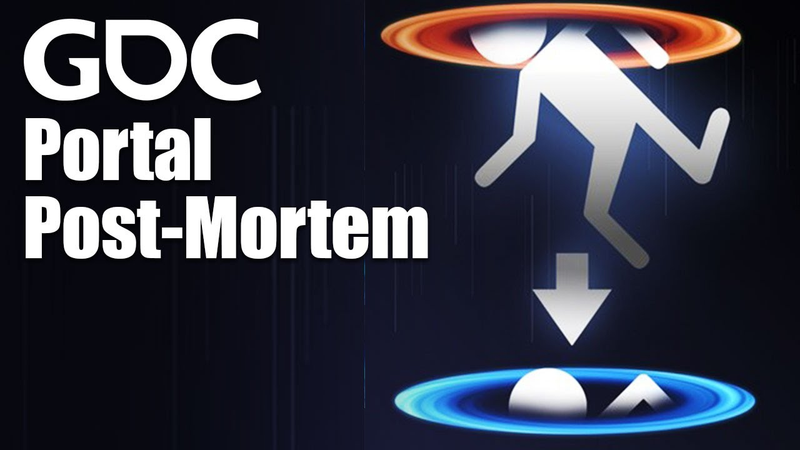
Integrating Narrative into Game Design: A Portal Post-Mortem
The development of Portal serves as a case study in how resource constraints and iterative design can foster innovative narrative integration.
- Integrating narrative directly into gameplay mechanics, such as using a disembodied AI voice to avoid character animation burdens, minimizes the gap between exposition and player action.
- Rapid prototyping and aggressive playtesting are essential for identifying and removing content that disrupts pacing or fails to resonate with the player experience.
- Emotional anchors, such as the Weighted Companion Cube, can effectively guide player behavior and increase narrative stakes without requiring complex mechanical systems.
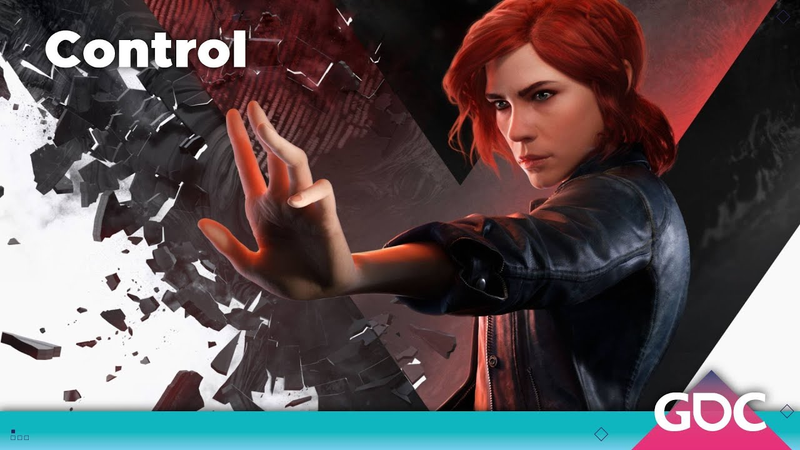
GDC Plays GDCA Nominee Control with Mikael Kasurinen and Brooke Maggs
The development of the action-adventure title Control represents a deliberate shift toward the New Weird genre, prioritizing environmental mystery and world-building over traditional, linear exposition.
- The development of Control utilized a sandbox model where leadership established strict thematic pillars and lore rules, enabling cross-departmental teams to contribute ideas while maintaining narrative consistency.
- Narrative designers functioned as essential bridges between art, level design, and writing to ensure environmental storytelling and collectibles remained coherent regardless of player exploration order.
- The design team prioritized the 'New Weird' genre by centering the game on the Oldest House, a Brutalist, shifting architectural space that fosters discovery through environmental mystery.
$0 to $1 Million: The Raw Numbers Behind Indie Success
Independent game development success relies on balancing creative vision with rigorous financial discipline, as there is no singular blueprint for studio longevity.
- Indie studios can adopt two distinct financial models: Kitfox Games utilizes a diversified portfolio approach with multiple concurrent projects to mitigate risk, while Clever Endeavour Games focuses on a single, long-term project (Ultimate Chicken Horse) to maximize depth and community engagement.
- Revenue streams for independent studios are heavily concentrated on PC platforms, with Kitfox Games reporting that approximately 91% of their total revenue is derived from Steam sales.
- Financial sustainability requires aggressive diversification of funding sources beyond initial game sales, including government grants, incubators like Execution Labs, Kickstarter campaigns, and work-for-hire contracts to cover lean periods.
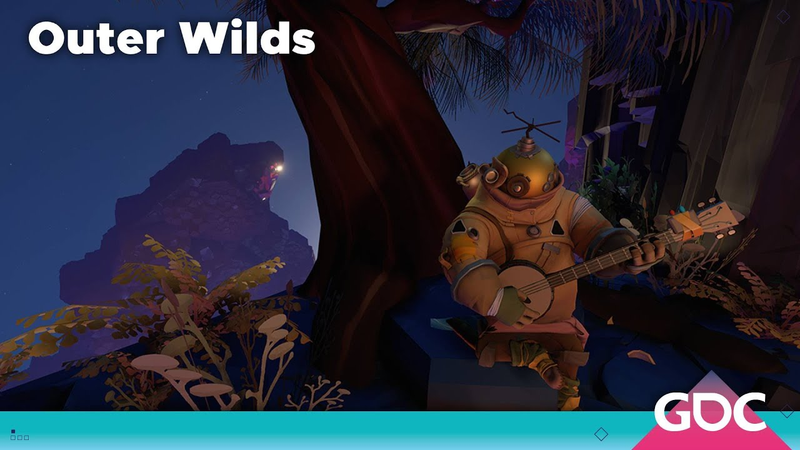
GDC Plays GDCA Nominee Outer Wilds with Loan Verneau and Wesley Martin
Outer Wilds centers on a design philosophy that prioritizes curiosity-driven exploration over conventional gaming tropes such as combat, character progression, or traditional collectibles.
- The developers intentionally removed traditional game rewards like upgrades and collectibles, ensuring that knowledge is the only currency players gain through exploration.
- The game's core design relies on a full-scale physics simulation where all celestial bodies and objects are constantly in motion, requiring the team to build custom internal tools to overcome limitations in standard 3D modeling software.
- The project originated as a student project in 2013 and gained early recognition by winning an award at the 2015 Independent Games Festival before being fully developed by Mobius Digital.
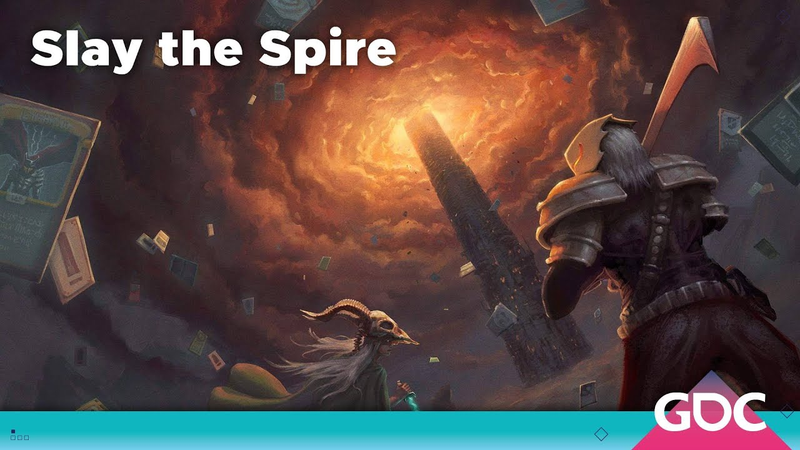
GDC Plays IGF Nominee Slay the Spire with Casey Yano
The success of Slay the Spire stems from a community-driven development philosophy that prioritizes player experience over rigid mathematical balance.
- Slay the Spire utilized Steam Early Access to gauge market interest, releasing with two of three planned characters to determine if the project warranted completion or should be scaled back.
- The developers leveraged gameplay data uploaded by the community to inform balance changes and identify which card mechanics were underperforming or confusing for players.
- The game's map system was inspired by FTL: Faster Than Light, shifting from a blind sequence of encounters to a visible, branching path that allows for strategic, long-term risk-reward decision-making.
Why Forums Can Be Great for Indie Community and Discoverability
Building a sustainable community is a critical factor for the financial success and discoverability of indie games, with 96% of surveyed developers acknowledging its importance.
- 96% of surveyed indie developers identify building a sustainable community as a critical factor for both financial success and game discoverability.
- While Discord is the most popular hub for real-time chat, many studios struggle with the fragmentation caused by managing multiple channels across various social media and storefront platforms.
- Centralized, proprietary forums—using software like Invision—allow studios to consolidate community efforts, cross-promote multiple titles, and maintain long-term ownership of user data.
Losing motivation for Game Dev...
Maintaining motivation in game development requires a dual-phase approach that shifts from internal creative obsession to external professional responsibility.
- Sustainable game development requires transitioning from internal creative obsession to a framework of professional responsibility once the initial novelty of a project fades.
- The development lifecycle should be viewed as a dual-phase process, shifting from an exploratory phase of defining core mechanics and aesthetics to a labor-intensive production phase.
- Relying on external incentives—such as financial stability, industry acclaim, and positive reviews—is a practical strategy for maintaining momentum during the tedious stages of production.