PC reports and market data
Documents
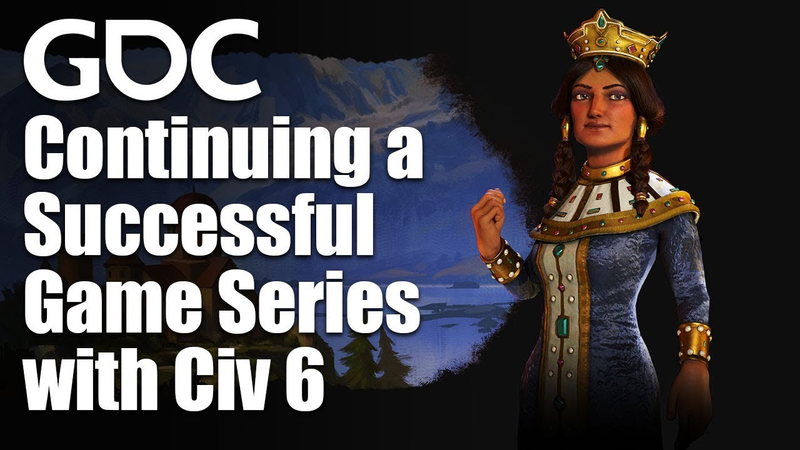
Absolutely No Pressure: Continuing a Successful Game Series with Civilization VI
The development of Civilization VI represents a deliberate evolution of the franchise, driven by a rigorous critique of the limitations inherent in its predecessor.
- Firaxis addressed the 'rote' decision-making in Civilization V by introducing 'unstacked' cities in Civilization VI, which forces players to place specialized districts on specific map tiles to gain bonuses.
- To resolve the rigid, linear progression of Civilization V's social policies, the team implemented a 'Civics Tree' that functions like a technology tree, allowing players to unlock policy bundles through cultural progress.
- The development team utilized community feedback from forums and beta testers to identify balance issues, such as the combat system in Civilization V where weak units could disproportionately damage stronger ones.

Sound Design Action for My Indie Game Again!
Sound design and music composition serve as critical components in defining the player experience and atmosphere of an indie game.
- Indie developers can produce professional-grade audio using accessible software like Cubase for music composition and Audacity for sound effect recording.
- Effective sound design relies on a consistent workflow of recording, editing, filtering, and volume adjustment rather than requiring expert-level training.
- Sound effects can be created by capturing organic noises and manipulating them through layering and reversal techniques to simulate complex impacts like explosions.
Go Outside: Jonas Plays Your Game #004
The indie puzzle platformer Go Outside presents a unique mechanical concept centered on a day-night cycle that automatically transitions the player to the next level once the sun sets.
- The game's core mechanic utilizes spatial persistence, where a player's coordinates on a platform are maintained across levels to allow access to otherwise unreachable areas.
- A mandatory day-night cycle automatically transitions players to the next level, creating a time-sensitive constraint that requires environmental awareness.
- The lack of player guidance and tutorials leads to significant user frustration, as the core objectives and progression logic are not clearly communicated.

Modeling AI Perception and Awareness in Splinter Cell: Blacklist
The design of artificial intelligence in Splinter Cell: Blacklist centers on the philosophy that player experience and perceived fairness must take precedence over strict, uncompromising simulation.
- To ensure AI feels intelligent, developers should prioritize 'plausibility' over complex simulation, focusing on what the player perceives rather than what the AI technically knows.
- The Tactical Environment System (TESS) uses position nodes linked by choke points to prevent NPCs from staring at players through walls, ensuring they only react to threats within a logical pathing or line-of-sight connection.
- Detection models should utilize raycasting against multiple body bones to determine visibility, with the number of required visible bones scaling based on the player's stance and cover state.
4 Sound Styles in 1 Day??? (Fail)
The process of establishing a cohesive audio identity for an indie game requires focused iteration rather than rapid, multi-directional experimentation.
- Attempting to develop four distinct audio styles in a single day results in inconsistent, underdeveloped, and technically flawed sound design.
- Prioritizing quantity over quality leads to execution errors, such as overly complex chord progressions and ineffective use of processed vocals that fail to match the game's visual aesthetic.
- Rapid-fire production models prevent the necessary refinement of sound effects, causing them to feel underpowered and lacking in impact.
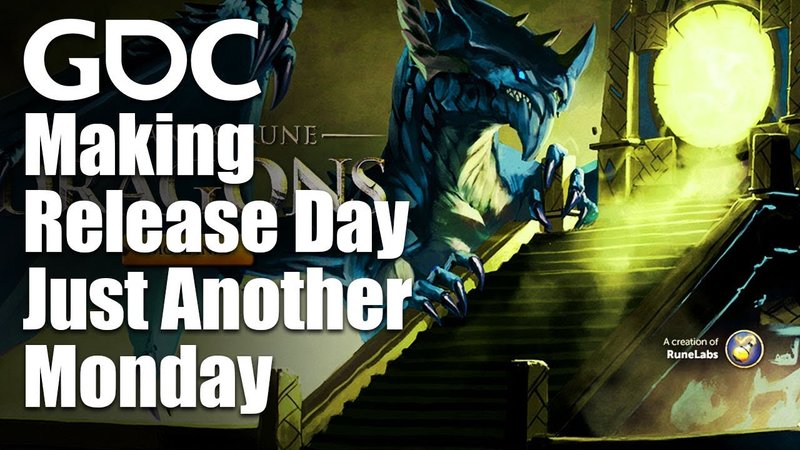
Making Release Day Just Another Monday
The transition to a high-frequency update model for RuneScape centers on replacing rigid, siloed waterfall development with a decentralized structure of autonomous, cross-disciplinary scrum teams.
- Jagex transitioned the RuneScape development process from a traditional waterfall model with functional silos to six autonomous, cross-discipline scrum teams to maintain a high-frequency update schedule.
- The studio implemented a strict, centralized release process that ensures game updates are deployed every Monday, allowing the team to avoid the common pitfalls of delayed releases.
- To maintain coherence across autonomous teams, Jagex utilizes 'councils' of interested individuals who focus on specific game aspects like lore, combat, and balance, alongside shared resources like a centralized analytics team.
Zirkon Zaga: Jonas Plays Your Game #003
The indie platformer Zirkon Zaga, developed in Unity, serves as a case study for balancing aesthetic choices with mechanical refinement.
- Prioritize refining core movement and camera mechanics before expanding level content to avoid costly downstream rework.
- Fix the wall-jump mechanic by implementing fixed velocity values instead of additive velocity to ensure predictable jump heights.
- Address critical navigation barriers by adding an invert Y-axis option for camera controls and implementing a checkpoint system to reduce player frustration.
Monument Rivals: Jonas Plays Your Game #002
Monument Rivals is a turn-based, multiplayer trading game developed in Unity by XscoGames.
- Monument Rivals, a Unity-based prototype by XscoGames, currently suffers from a lack of strategic depth due to an over-reliance on luck-based mechanics like dice rolls and random card draws.
- The game's pacing is hindered by long, unskippable animations for movement and dice rolls, which negatively impact the user experience.
- The current monument destruction mechanic creates a frustrating, repetitive cycle in two-player sessions rather than fostering constructive competition.
Riftwalker: Jonas Plays Your Game #001
Riftwalker functions as a fast-paced 2D rogue-like shooter developed in GameMaker Studio, characterized by a highly addictive core gameplay loop and satisfying mechanical feedback.
- The game must transition from its current 30 FPS frame rate to a 60 FPS standard to ensure the fluid movement and responsiveness required for a competitive 2D rogue-like shooter.
- User interface design requires immediate improvement, specifically by adding numerical values for stat upgrades and clearer visual indicators for ability cooldowns, weapon accuracy, and fuel status.
- Boss encounters currently suffer from unfair damage spikes during level transitions that require rebalancing to improve player experience.
Game Art - Dev Log - (Background and Stuff)
This development log details the iterative design process for an indie game, focusing on refining visual feedback, background aesthetics, and user interface clarity.
- Improving gameplay readability and immersion requires iterative refinements to visual feedback, specifically addressing cursor visibility, particle transitions, and object interaction responsiveness.
- The developer achieved a consistent, handcrafted aesthetic by photographing physical play-doh models and processing them in Photoshop for digital implementation.
- Implementing custom shaders to create a subtle, animated 'wobble' effect in the background helped maintain visual cohesion without distracting the player.

We Chose a Style! - (Nice!)
The selection of a definitive art style for an indie real-time strategy (RTS) game is a critical step in establishing brand identity and player immersion.
- The developer selected a space-themed art style for their RTS game to establish a unique brand identity and avoid the market saturation associated with dragon-themed aesthetics.
- The space theme was chosen over robot, flower, and dragon alternatives because it best supports a strategic command power fantasy while allowing for an efficient, analog-based animation workflow.
- Maintaining a single, cohesive visual direction is prioritized to ensure consistent marketing and prevent audience confusion across promotional materials.
I Will Play Your Game! - Let's play (+Feedback)
The initiative to revive a series dedicated to playing and critiquing indie games serves as a platform for developers to gain exposure and constructive feedback.
- The initiative functions as an experimental feedback loop designed to provide actionable design critique to indie developers while offering educational content to a YouTube audience.
- Developers must submit a functional download link, a project summary, and visual assets to be considered for the critique series.
- Submissions are prioritized based on the developer's ability to identify specific areas for critique, such as core mechanics, design choices, or unresolved technical challenges.