PC reports and market data
Documents
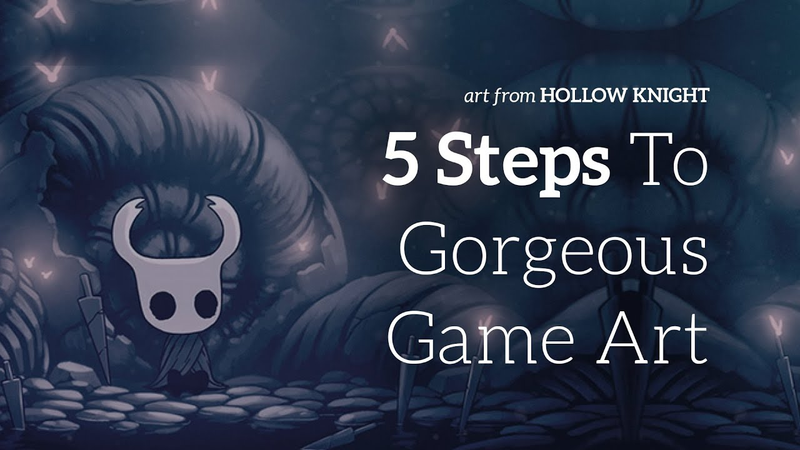
5 Steps To Making A Gorgeous 2D Game
Creating high-quality 2D game art requires a systematic, engineering-focused approach that balances aesthetic appeal with functional gameplay requirements.
- Establish hit areas and collision boundaries first by tracing simple vector shapes over game engine screenshots to ensure functional gameplay accuracy.
- Use high-contrast design to clearly distinguish between traversable ground and background elements, ensuring players can immediately identify interactive zones.
- Apply contrasting color palettes, such as blue and orange, to create visual separation and depth between foreground and background layers.
The Successful Paradox of Combining Business Strategy with Nonconforming Game Development
The integration of rigorous business strategy into game development serves as a primary driver for long-term commercial success and community sustainability.
- Long-term commercial success is driven by prioritizing player value and community sustainability over exploitative monetization models.
- Studios should replace subjective creative intuition with objective metrics, such as switching costs, scalability, and recurring revenue potential, to validate market viability.
- Successful game design focuses on creating self-sustaining ecosystems through high replayability, niche hardcore appeal, and the integration of user-generated content.
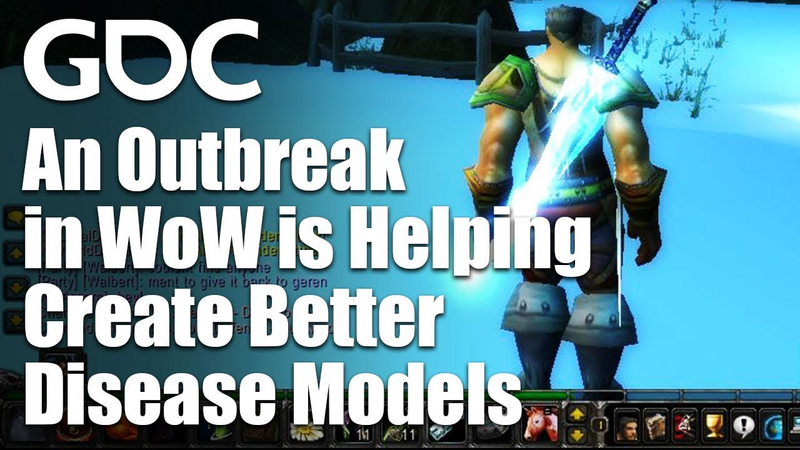
How an Outbreak in WoW is Helping Epidemiologists Create Better Disease Models
The 2005 Corrupted Blood plague in World of Warcraft serves as a foundational case study for modern epidemiological research, demonstrating how virtual environments can provide unique insights into human behavior during public health crises.
- The 2005 'Corrupted Blood' plague in World of Warcraft, caused by a design flaw in the Zul'Gurub raid, provided epidemiologists with a unique, real-world dataset to study human behavior during an infectious disease outbreak.
- Traditional epidemiological models often fail because they rely on static assumptions about human behavior, such as how individuals will react to quarantine orders or emergency information.
- Virtual environments like World of Warcraft allow researchers to observe diverse, unscripted human responses to a crisis, including altruism, curiosity-driven risk-taking, malicious griefing, and the spread of misinformation.
Know Your Market: Making Indie Games That Sell
This analysis examines the factors driving commercial success for independent games on the Steam marketplace, drawing on data-driven insights to challenge the assumption that game quality alone dictates sales performance.
- Average playtime is a primary driver of commercial success on Steam, with data showing an exponential correlation between longer engagement times and higher revenue.
- Genre selection significantly impacts market performance; for example, action RPGs generate a median revenue 24 times higher than puzzle platformers, while roguelikes and Metroidvanias earn 3.5 times more.
- Games featuring mod support are highly lucrative, with the 'moddable' tag associated with median revenues nearly 140 times higher than those of puzzle platformers.

How To Launch An Indie Game
The launch of an indie game is a high-stakes, emotionally taxing milestone that requires meticulous preparation to ensure long-term viability.
- The initial launch window on platforms like Steam is the primary opportunity for visibility and positive reviews, making immediate product polish critical despite the ability to patch post-release.
- Indie titles typically have a predictable sales shelf-life of approximately three years, necessitating a consistent release cadence to maintain long-term studio viability.
- To mitigate financial risk and avoid the complications of revenue-sharing models, studios should utilize project-based contracting for specialized tasks rather than hiring full-time staff prematurely.
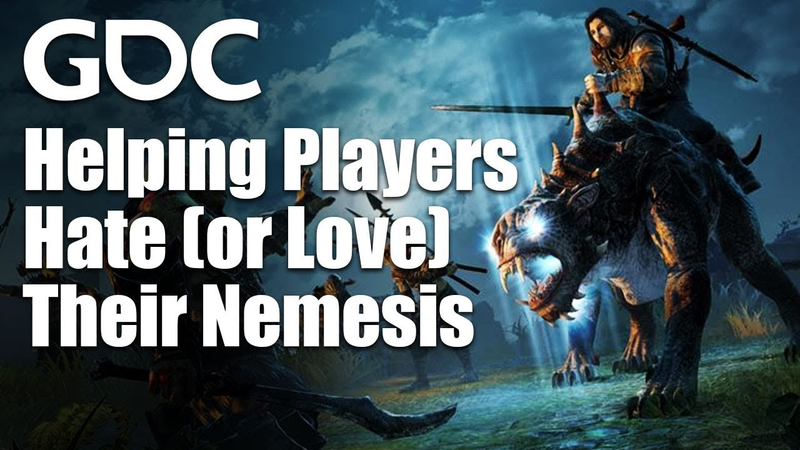
Helping Players Hate (or Love) Their Nemesis
The Nemesis system serves as a foundational design framework for fostering long-term, emotionally charged relationships between players and procedurally generated adversaries.
- The Nemesis system relies on a 'revenge loop' where time progresses after a player's death, forcing them to track down and re-engage enemies who have been promoted or changed by their victory.
- To foster deep antagonistic relationships, developers should aim for multi-encounter arcs; in Shadow of War, approximately 85% of captains are killed in one encounter, while 14% require two and 4% require three or more.
- Designers should prioritize visual impact around an enemy's head and shoulders, as these areas are more memorable to players than other body parts or equipment.

Will You Snail? - Q&A (Indie Game Devlog)
The development of the indie platformer Will You Snail centers on a unique core mechanic where an artificial intelligence tracks player movement to generate obstacles in real-time.
- The game features a core mechanic where an AI tracks player movement to generate real-time obstacles, creating a high-intensity, rage-inducing experience.
- The developer is prioritizing viral reach and streamer engagement over immediate monetization, with plans to release the title for free.
- The visual identity has been refined from a chaotic aesthetic to a polished, high-contrast red style to improve watchability and differentiate the game in the rage-platformer genre.
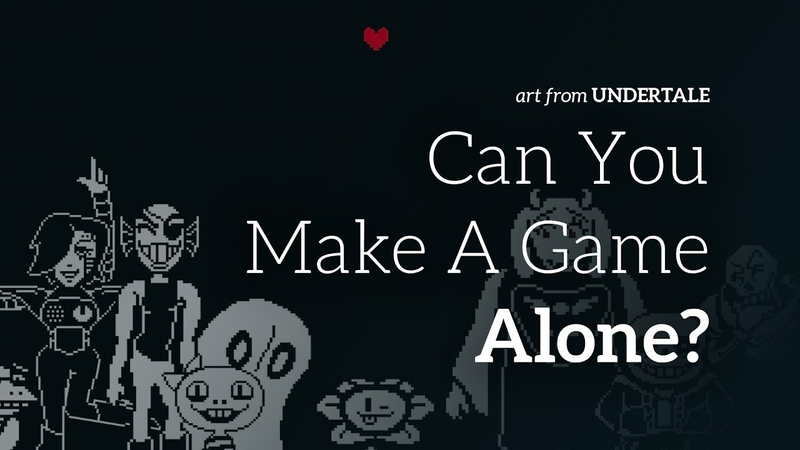
Can You Make A Game Completely Alone?
Solo game development is a viable path for creators, though it requires significant time investment and personal discipline.
- Transitioning from a solo creator to a team leader is a strategic evolution that shifts the focus from manual execution to project management and art direction, enabling more ambitious production.
- Solo development is a viable path for creators, but projects often require a significant time investment of five or more years to complete.
- To avoid burnout and isolation during long development cycles, solo developers should actively engage with online communities for feedback and emotional support.
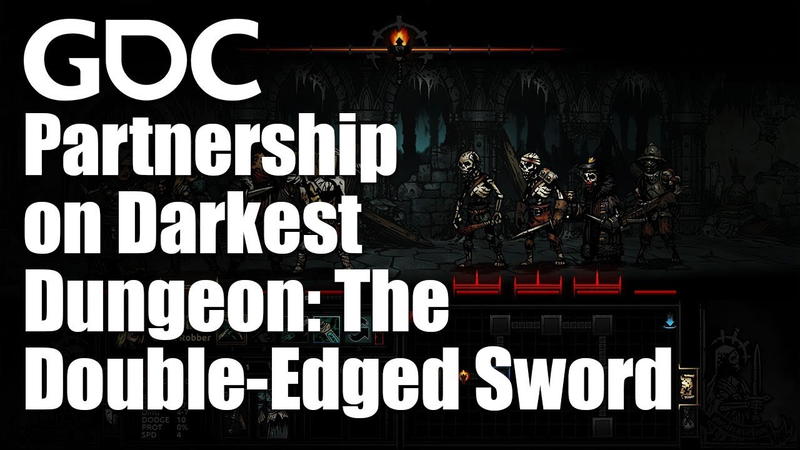
Partnership on Darkest Dungeon: The Double-Edged Sword
The 50/50 co-presidency model in game development functions as a high-stakes balancing act that requires constant navigation of competing egos and divergent decision-making styles.
- Establish a zero-tolerance policy for unresolved tension: if a disagreement or negative feeling persists for more than 24 hours, the affected partner is obligated to raise and discuss the issue immediately.
- Implement a mutual veto power system to ensure both partners have final say, which helps reduce the pressure to micromanage and provides security that the project will not move in an unwanted direction.
- Use 'devil's advocacy' as a formal decision-making tool by intentionally arguing for positions you do not believe in to stress-test ideas and uncover potential flaws.
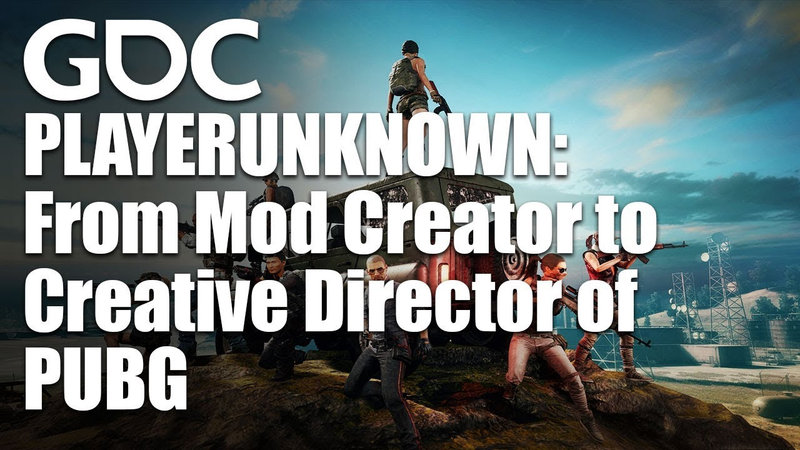
PLAYERUNKNOWN: From Mod Creator to Creative Director of PUBG
Brendan Greene’s trajectory from a photographer and designer to the Creative Director of PUBG illustrates the transformative power of modding culture in modern game development.
- PUBG achieved rapid commercial success by selling 40 million copies and reaching 3 million concurrent players within its first year of release.
- The game’s core mechanics, including the shrinking play zone, originated from Brendan Greene’s iterative development of Battle Royale mods for the Arma series.
- Development prioritized emergent gameplay and community feedback over rigid design documentation, allowing for the integration of unintended features like the bulletproof frying pan.
How to Paint an Awesome Image as An Unskilled Game Develper!
Digital painting is an accessible skill for game developers, even those without formal artistic training, provided they follow a structured, iterative process.
- Prioritize composition and grayscale values over complex drawing techniques to create professional-quality concept art within a five-hour timeframe.
- Establish the structural integrity of an image by focusing on abstract shapes and light-dark relationships before introducing any color.
- Use non-destructive editing by working on separate layers and frequently flipping or rotating the canvas to maintain a fresh perspective on the composition.
Anyone Can Make 2D Games! Here's How!
The primary objective of this guide is to provide an efficient, scalable workflow for indie developers to create high-quality 2D game environments.
- Indie developers can achieve professional-grade 2D environments by prioritizing modular design and asset reuse over creating unique illustrations for every game element.
- The 'stamp' technique utilizes reusable vector assets like moss, bricks, and foliage, which are modified through rotation, scaling, and color adjustments to maintain visual variety efficiently.
- Unity’s Z-axis arrangement enables a parallax system where movement speed is tied to depth, effectively simulating a 3D environment within a 2D space.