PC reports and market data
Documents

5 Steps To Start Making Games
Game development is a viable career path that can be pursued through self-directed learning rather than formal education.
- Independent game development is a viable career path that prioritizes self-directed learning and disciplined, daily study over formal degree programs.
- Aspiring developers should commit to a consistent routine of three hours of daily practice to master the technical and creative aspects of production.
- The launch phase requires a significant marketing investment of 40 hours per week for one month, focusing on trailer production and outreach to journalists and influencers.

Five Tips To Making A Viral Game
Achieving viral success in game development relies on five core principles designed to maximize player engagement and marketability.
- Prioritize 'stickiness' by pairing juxtaposed, high-concept ideas to create an instantly recognizable premise that captures immediate attention.
- Ensure high variability in gameplay so that no two playthroughs are identical, which is essential for maintaining the interest of streamers and their audiences.
- Focus on 'game feel' by utilizing exaggerated animations, screen shake, and high-quality sound design to provide tactile, immersive feedback between player input and on-screen action.

GET GAME IDEAS - The Ultimate Guide!
Developing a successful indie game begins with a high-quality concept that balances personal passion with market appeal.
- A successful game concept must balance market familiarity with a unique hook, ensuring the game is both recognizable to players and distinct enough to stand out in a crowded market.
- The development process should follow a three-step methodology: brainstorming familiar genres, innovating through unique mechanics or genre-blending, and simplifying the scope for realistic execution.
- To ensure a manageable project, developers must define clear victory conditions, obstacles, and a core decision-making loop while stripping away all non-essential features.

How To Make A Game ALONE (5 Secrets)!
Solo game development is increasingly viable due to significant advancements in software accessibility and industry shifts toward smaller, high-quality projects.
- Solo game development is now a sustainable career path due to the accessibility of modern engines like Unity and Unreal, which have replaced complex low-level coding with user-friendly interfaces.
- Market demand is shifting toward shorter, narrative-driven experiences that can be completed in one to two hours, favoring the limited production capacity of individual developers.
- Limiting project scope to a development cycle of five months to a year significantly increases the likelihood of project completion and prevents developer burnout.
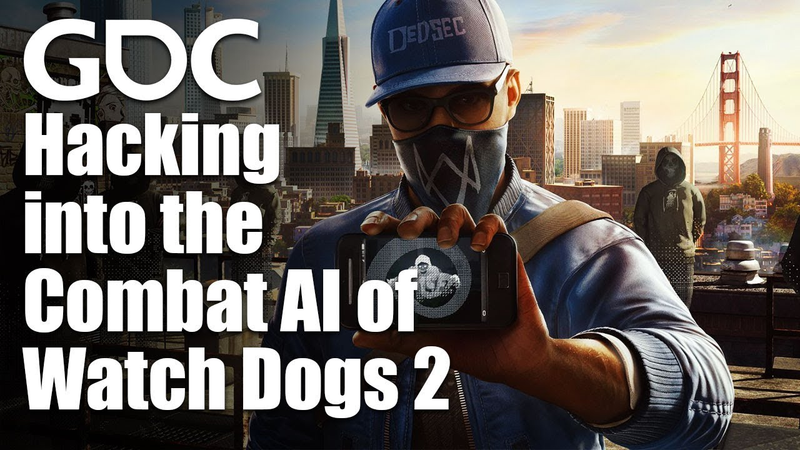
Hacking into the Combat AI of Watch Dogs 2
The combat artificial intelligence in Watch Dogs 2 relies on a multi-layered cover-selection system designed to balance tactical realism with computational efficiency.
- Watch Dogs 2 AI agents evaluate cover selection based on three primary criteria: distance to the target (optimized for weapon range), line of sight (ensuring a valid field of fire), and proximity to other agents (to avoid clumping and vulnerability to area-of-effect damage).
- To mitigate the player's ability to 'cheese' combat using unreachable vantage points like scissor lifts, developers implemented a special 'unreachable' AI mode where agents prioritize survivability and lateral movement toward cover rather than pathing directly toward the player.
- The AI uses three distinct cover-seeking behaviors: 'first cover' for immediate protection, 'neighboring cover' for repositioning during combat, and 'second cover' for tactical flanking or optimizing weapon range.

DON'T QUIT YOUR JOB FOR INDIE GAMES (5 Reasons)!
Transitioning to a full-time career in indie game development requires significant preparation and specific personal traits to ensure long-term viability.
- Establish a proven track record of completing projects before transitioning to full-time development, as successful game cycles often span several years.
- Maintain a stable day job while building a foundation to mitigate the financial volatility inherent in the indie game sector.
- Diversify revenue streams beyond initial game sales by actively exploring crowdfunding platforms like Kickstarter and Patreon, educational content, and publisher partnerships.
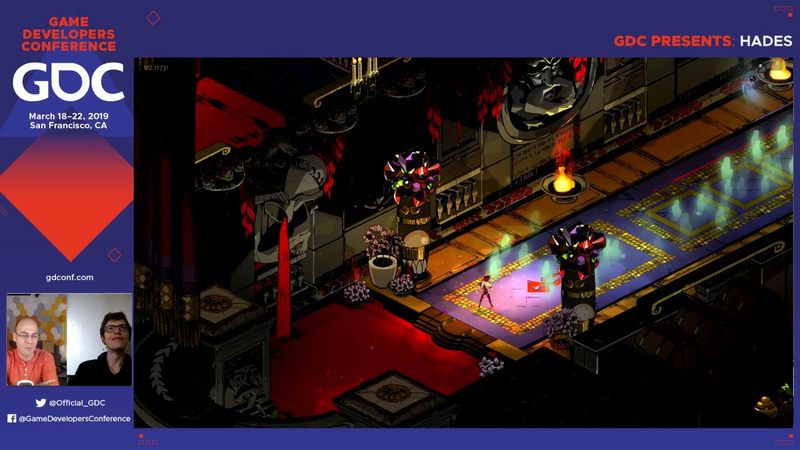
GDC plays Hades with Greg Kasavin
Supergiant Games’ development of Hades represents a strategic pivot toward iterative, community-driven design within the roguelike genre.
- Supergiant Games successfully transitioned from multi-year linear production cycles to an agile, monthly milestone cadence by utilizing the Early Access model on the Epic Games Store.
- The studio maintains high-quality, iterative development with a compact team of approximately 20 people, relying on direct feedback loops via platforms like Discord to refine gameplay and narrative in real time.
- Supergiant Games explicitly rejects industry-standard forced crunch by codifying internal values that prioritize work-life balance and individual responsibility.
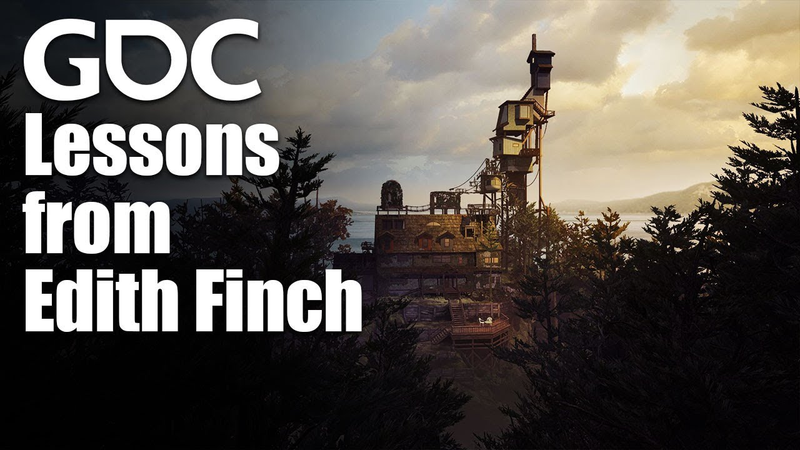
Weaving 13 Prototypes into 1 Game: Lessons from Edith Finch
The development of What Remains of Edith Finch demonstrates that prioritizing emotional resonance and the concept of the sublime over traditional mechanical complexity is a viable strategy for creating cohesive narrative experiences.
- Giant Sparrow developed What Remains of Edith Finch with a team that scaled from 3 to 15 members, utilizing a prototyping-first approach to ensure each mechanic felt unique and intuitive without the need for traditional tutorials.
- To maintain creative alignment across the team, the project was guided by three core pillars—sublime, intimate, and murky—which served as a shorthand for decision-making and artistic direction.
- The team avoided rigid, long-term production maps in favor of iterative, direction-based development, acknowledging that static planning tools often become inaccurate and hinder the discovery of unexpected, high-quality gameplay moments.
3 Lies About Being An Indie Game Dev
The independent game development industry is often romanticized as a glamorous pursuit, but the reality involves significant professional challenges that contradict common misconceptions.
- Indie developers must allocate 40% to 50% of their total working time to marketing, audience building, and content creation to remain competitive in a saturated market.
- Relying exclusively on the sales of a single game after years of development is a high-risk strategy that frequently results in financial instability.
- Sustainable indie development requires transitioning from a hobbyist mindset to a business model that integrates diverse revenue streams throughout the entire development cycle.

My Game Dev Journey! - What a Ride...
This retrospective chronicles the evolution of an independent game developer’s career, tracing the progression from rudimentary childhood experiments to professional-grade projects.
- Success in independent game development relies on the ability to abandon non-viable projects and treat failures as essential learning opportunities for refining design sensibilities.
- Transitioning from solitary development to professional success requires balancing technical proficiency with practical business skills, specifically marketing and community building.
- Technical growth is best achieved through a consistent practice of building, documenting, and archiving projects, moving from simple mechanics to complex systems like custom pathfinding and procedural generation.

Are You Wired To Be A Game Dev?
Determining whether one is suited for a career in game development is not contingent upon the commercial success of past projects, as even highly successful developers often experience early failures.
- The core aptitude for game development is a persistent, obsessive drive to construct new worlds, characters, and storylines.
- Successful game developers are defined by their internal motivation to manifest personal meaning through the act of creation rather than relying on external sources of purpose.
- A natural predisposition for game design is often evidenced by a lifelong tendency to gamify reality, such as creating complex systems, puzzles, or imaginative scenarios during childhood.
3 Game Dev Excuses & Why They Suck
The contemporary landscape for independent game development has reached a point of unprecedented accessibility, rendering common barriers to entry largely obsolete.
- The democratization of development tools, such as Unity for multi-platform deployment and Blender for creative assets, has eliminated the high capital requirements that previously acted as barriers to entry.
- Modern indie game markets are sufficiently diverse to support niche concepts, with even specialized titles capable of securing a base of at least 10,000 dedicated players.
- The primary constraint on development is often the inefficient use of personal time rather than a lack of resources, as many individuals possess significant untapped leisure hours currently spent on passive consumption.