PC reports and market data
Documents
Game Jam - ep 4 Showcase - Theme: Connect - Extra Credits
The Extra Credits community game jam series serves as a platform for independent developers to create and showcase experimental titles based on a specific theme within a single weekend.
- The fourth Extra Credits game jam, themed 'Connect,' generated over 300 independent game submissions within a single weekend development window.
- The event demonstrates that high-quality, engaging gameplay is achievable through minimalist design and rapid prototyping, independent of triple-A production values.
- Participating developers utilized diverse formats to interpret the theme, ranging from digital puzzle and narrative games to analog, pen-and-paper projects like 'Step 2'.
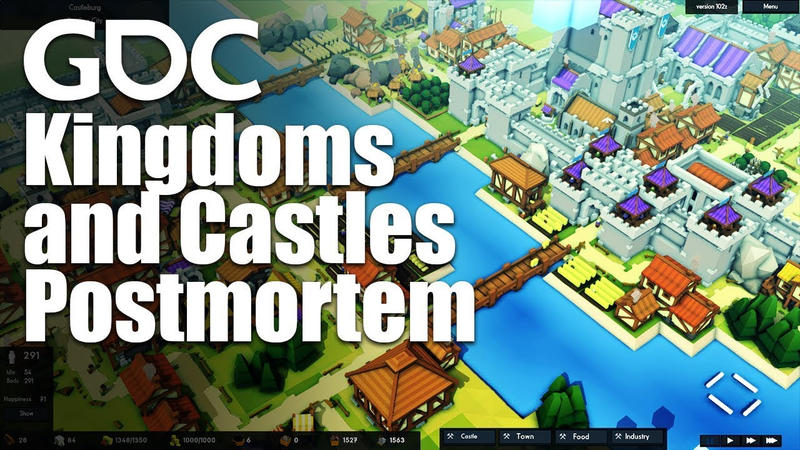
Kingdoms and Castles Postmortem
Kingdoms and Castles achieved commercial success by prioritizing iterative market validation and a disciplined approach to development scope.
- Validate game concepts early by setting measurable engagement goals, such as achieving 25 retweets on Twitter, to determine if a project is worth pursuing before committing significant development time.
- Use crowdfunding and early market testing to determine appropriate project scope, allowing developers to scale development effort based on actual audience interest rather than arbitrary timelines.
- Prioritize 'player fantasy' by ensuring the game's core loop and mechanics are intuitive and rely on existing cultural knowledge, which reduces the need for complex tutorials and extensive UI explanations.
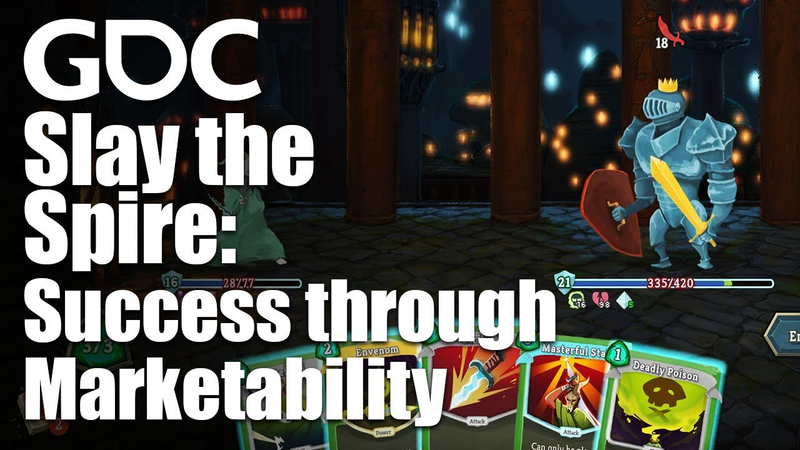
Slay the Spire: Success through Marketability
Slay the Spire demonstrates that long-term commercial success in the independent gaming sector is best achieved through a mechanics-first design philosophy and a commitment to radical transparency.
- Slay the Spire's success was driven primarily by organic player enjoyment and visibility on Twitch, which allowed a game with modest visual appeal to gain massive traction through streamer engagement.
- Steam's 'Top Sellers' list acts as a critical discovery multiplier; once the game broke into this list, sales shifted from a declining trend to a significant, sustained spike.
- Weekly patching during Early Access kept the community engaged and allowed the developers to rapidly fix bugs and iterate on features, which was essential for a small team without a dedicated QA department.
Data-Driven Dynamic Gameplay Effects on For Honor
For Honor employs a modular, data-driven modifier system designed to decouple gameplay logic from core programming, thereby granting designers the autonomy to iterate on mechanics without constant engineering support.
- Ubisoft implemented a data-driven modifier system for For Honor that allows designers to dynamically create gameplay effects—such as stat buffs, AI decision-making, and attack properties—without requiring additional programming code.
- The system utilizes a modular architecture where modifiers can be applied to various entities, including players, NPCs, capture points, and interactive objects, enabling high reusability across different game features.
- To manage performance under a load of approximately 3,000 queries per frame, the team implemented entity-specific caps, limiting soldiers to 6 active modifiers while allowing players a higher threshold.

I PLAYED YOUR GAMES! | Let's Talk Game Design.
Effective game design hinges on the early refinement of core mechanics, intuitive user interfaces, and the strategic layering of environmental feedback.
- Long-term success in game development is primarily driven by the polish and intentionality of the moment-to-moment player experience rather than the initial hook of unique mechanics.
- Developers should prioritize early iteration on physics, camera behavior, and sensory feedback to ensure a smooth transition from prototype to a polished product.
- Fast-paced titles require dynamic difficulty adjustments, such as catch-up mechanics or variable spawn rates, to maintain momentum and mitigate frustrating difficulty spikes.
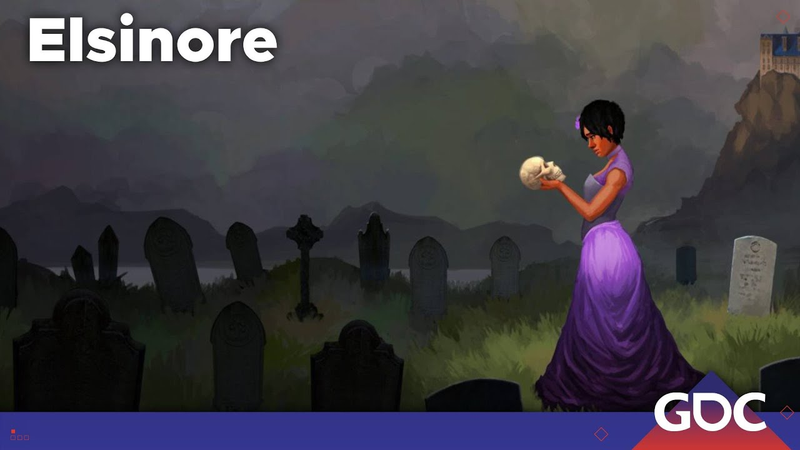
GDC Plays Elsinore with Eric Butler and Connor Fallon
Elsinore reimagines Shakespeare’s Hamlet through a time-loop simulation that centers on Ophelia, granting her the agency to alter the tragic trajectory of the original play.
- Elsinore utilizes a time-loop simulation and a custom scripting language to allow players to alter the canonical events of Shakespeare’s Hamlet from the perspective of Ophelia.
- The game employs a hierarchical event system that balances critical plot points with flavor events to maintain narrative coherence and pacing despite player-driven interventions.
- The development process spanned six years, utilizing a disciplined, part-time schedule of one day per week to allow for iterative refinement of narrative logic and isometric art.

Start A Game Studio In 12 Months (Seriously!)
Establishing an independent game studio is a viable goal within a 12-month timeframe, provided the developer maintains strict discipline and focuses on creating a high-quality, polished prototype rather than a full-scale commercial release.
- The primary objective of a 12-month studio launch is to build a high-quality, polished prototype to secure external funding, rather than attempting a full-scale commercial release.
- The roadmap allocates the first four months to foundational skill acquisition in Unity, C#, and design software, followed by a single-level prototype in month five.
- Developers should reserve months six and seven for internal focus testing and iterative refinement to ensure the core gameplay loop is engaging.
Learning to Play Magic - Part 3 - The Stack - Extra Credits
The stack serves as the fundamental mechanic governing the order of operations in Magic: The Gathering.
- The stack operates on a last-in, first-out (LIFO) system, meaning the most recently played spell or ability is the first to resolve.
- Players can neutralize threats by responding to an opponent's action with a spell that resolves first, such as using a removal spell to invalidate a creature buff before it takes effect.
- The stack allows for resource optimization, such as sacrificing a creature to pay for an ability cost in response to an opponent's removal spell, ensuring the value is captured before the creature leaves play.

PUBG Corp Burying the Hatchet with Fortnite | Games ReCAP Episode 029
The legal friction between PUBG Corporation and Epic Games has officially concluded, marking the end of a contentious period defined by allegations that Epic leveraged its role as an Unreal Engine provider to replicate the battle royale mechanics of its partner.
- PUBG Corporation has officially ended its legal dispute with Epic Games, which was originally triggered by allegations that Epic misused its position as an Unreal Engine provider to replicate PUBG's battle royale mechanics.
- To combat the current stagnation of the battle royale genre, developers are being urged to move beyond the 'last-man-standing' formula and the reliance on shrinking play zones, which are viewed as design shortcuts that limit innovation.
- Future viability for battle royale titles depends on shifting away from transient, loot-focused gameplay toward persistent, snowball-style mechanics and emergent social systems that foster deeper player engagement.

5 Reasons To Learn Coding | Interesting Coding Projects
Programming serves as a powerful catalyst for creativity, offering a digital sandbox that allows individuals to manifest complex ideas and automate tasks.
- Programming grants developers primary creative control over a project's architecture and feature set, allowing them to determine the final scope and technical feasibility of game development.
- Coding acts as a digital sandbox for building bespoke tools, such as custom software for generating 4K textures or complex animation sequences in engines like Unity and GameMaker.
- Mastering a foundational programming language significantly increases the efficiency of learning subsequent languages, making it a highly transferable professional skill in a digitized global economy.

Learning to Play Magic - Part 2 - What's in a Color? - Extra Credits
The core philosophy of Magic: The Gathering is built upon a color-coded system that represents distinct psychological and elemental archetypes rather than a binary conflict between good and evil.
- Magic: The Gathering utilizes a five-color system—White, Blue, Green, Red, and Black—that defines distinct psychological and elemental archetypes rather than a binary moral conflict.
- White focuses on law, order, and protection, utilizing defensive strategies and large armies to overwhelm opponents.
- Blue centers on reason and intellect, employing control-based tactics such as counter-spells and manipulation to disrupt enemy plans.
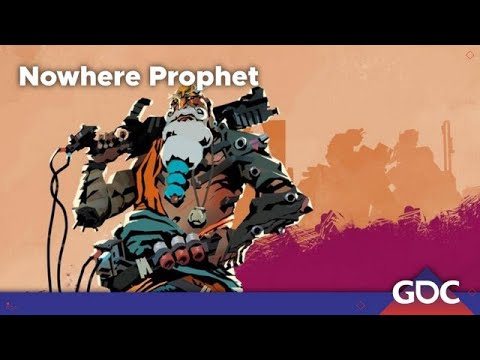
GDC plays Nowhere Prophet with Martin Nerurkar
Nowhere Prophet represents a strategic evolution in the deck-building genre, shifting the focus from competitive player-versus-player mechanics to a narrative-driven, single-player experience centered on convoy management.
- Developer Martin Nerurkar advises against solo development for large-scale projects, noting that the lack of internal checks and balances made the development of Nowhere Prophet an unsustainable and unhappy experience.
- The game's AI was optimized six to seven weeks prior to launch using a search algorithm that simulates multiple future move branches to evaluate and select the most effective strategic action.
- The visual aesthetic of Nowhere Prophet was heavily influenced by comic book art and graphic novels like Hellboy, specifically utilizing high-contrast black shadows and slim highlights rather than traditional 3D rendering.