North America reports and market data
Documents

Integrate Web3 With Ease: The Tools you Need for Seamless Player Experiences
The integration of Web3 technology into gaming presents significant technical and user experience hurdles that often impede mass adoption.
- Developers must prioritize Web2-style onboarding features—such as social logins, credit card on-ramps, and gasless transaction relayers—to eliminate the technical friction that currently hinders mass Web3 adoption.
- The industry is transitioning to all-in-one developer platforms that utilize account abstraction to simplify wallet creation and blockchain interaction for the end user.
- Adopting the ERC-1155 token standard enables more efficient and scalable management of diverse in-game assets like skins and trading cards compared to older standards.

PANEL: Learning from Mistakes: The Big 'NOs!' in Game Development.
Game development success relies heavily on the ability to transform operational failures into strategic growth.
- Prioritize shipping imperfect products over indefinite development cycles to avoid the trap of projects that fail to meet key performance indicators.
- Distinguish between productive persistence and the sunk-cost fallacy by using objective, data-driven analysis to decide when to pivot or abandon failing concepts.
- Achieve long-term stability by evolving incrementally within established genres and cultivating a consistent brand identity rather than attempting to reinvent genres with every release.

How Canada’s Biggest Independent Studio Went Global - Luc Duchaine, Behaviour Interactive.
Behaviour Interactive, Canada’s largest independent video game studio, has successfully transitioned from a work-for-hire service provider to a global publisher of original intellectual property.
- Behaviour Interactive transitioned from a work-for-hire service provider to a global publisher by launching the original IP Dead by Daylight in 2016, which has since reached over 50 million players.
- The studio maintains a dual-revenue model that balances original game development with a work-for-hire division, providing financial stability and opportunities to refine technical expertise on global brands.
- Founded in 1992, the studio has scaled to over 1,200 employees with a physical presence in Montreal, Toronto, Seattle, and the United Kingdom.

PANEL: The Path to Indie Success & Sustainability.
Achieving long-term success in the independent game industry requires a fundamental shift from viewing creative output as the sole metric of viability toward a model that prioritizes financial sustainability and operational discipline.
- Indie studios must transition from a creative-only focus to a model that prioritizes financial sustainability and operational discipline to avoid the risks of relying on single-hit titles or perpetual grant funding.
- Developers should adopt a diversified revenue strategy by balancing the creation of original intellectual property with external service work to ensure consistent cash flow.
- Strategic business planning, including rigorous financial management and realistic project scoping, must be integrated into daily operations from the inception of the studio.

Fireside Chat: Virtual Production: A Peek Behind the Curtain for Game Devs & 3D Artists
Virtual production represents a significant technological convergence between the gaming industry and traditional filmmaking.
- Virtual production leverages real-time game engines like Unreal Engine and Unity to display 3D environments on LED volumes, enabling in-camera visual effects (ICVFX) that replace traditional green screens.
- The Virtual Art Department (VAD) serves as the essential bridge between traditional art departments and technical teams, focusing on optimizing 3D assets for real-time performance on LED walls.
- Industry organizations such as SMPTE are currently working to establish necessary standardization protocols for metadata, color science, and interoperability between game development tools and film production requirements.

Maximizing Your Player Reach by Building for Different Platforms - Lucie Lalumière, & Michael Stolls
The transition toward cross-platform development represents a strategic evolution for studios traditionally rooted in mobile gaming.
- Transitioning from mobile to cross-platform development requires a fundamental shift in design philosophy, moving from short, frequent mobile sessions to the longer, immersive experiences expected by PC and console players.
- Successful multi-platform expansion depends on early-stage research and focus group testing to ensure that monetization models—whether free-to-play or premium—align with the specific expectations of each platform's audience.
- Developers must optimize user interfaces and experiences to balance the technical constraints of mobile hardware against the higher performance capabilities of consoles and PCs.

PANEL: Creating Engagement: Marketing Tricks to Attract the Right Audience.
Modern gaming audiences have evolved significantly beyond traditional stereotypes, with gaming now surpassing television in total viewership across all age demographics, including seniors.
- Rewarded video advertisements achieve completion rates as high as 95% by providing players with tangible in-game benefits instead of interrupting the user experience.
- Gaming viewership has surpassed television across all age demographics, including seniors, necessitating a move away from outdated player stereotypes toward data-driven targeting.
- Privacy regulations like Apple’s IDFA are forcing a shift away from traditional tracking toward contextual targeting and high-quality creative assets.
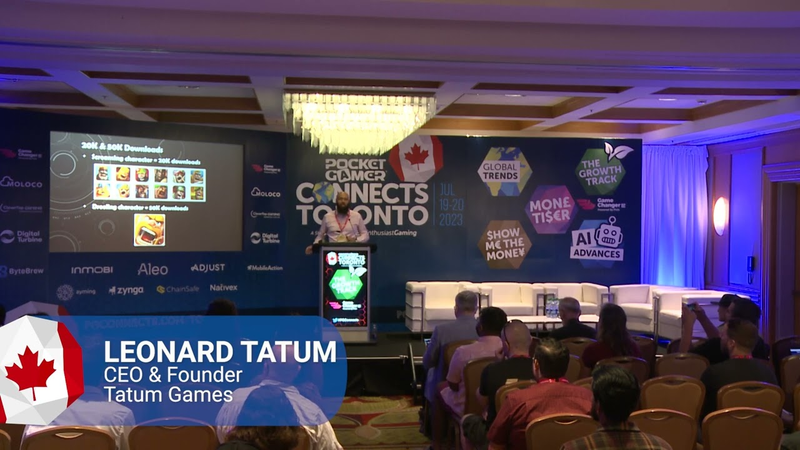
Helping Smaller Game Developers Play in the Big Leagues, Leonard Tatum, Tatum Games
The independent game development sector faces significant barriers to entry, characterized by high failure rates and a lack of access to the sophisticated data analytics utilized by major industry players.
- The independent game development sector faces high failure rates, with only 4% of released games achieving profitability and 70% of indie titles failing entirely.
- Only 7% of successful indie projects generate sufficient revenue to fund a subsequent game, largely due to a lack of the data-driven decision-making processes used by major publishers.
- The Micros analytics platform democratizes access to industry data by pooling insights across an ecosystem of developers, allowing smaller studios to benchmark KPIs anonymously against competitors.

Steel Media’s Dave Bradley On Hot Topics, Hot Takes, And Surprising Statistics At PGC Seattle
Pocket Gamer Connects Seattle serves as a critical barometer for the current state of the global games industry, highlighting a strategic pivot toward quality-focused development and professional resilience.
- The mobile gaming sector is experiencing a significant contraction in new iOS game releases, driven by the erosion of IDFA-based user acquisition strategies.
- Developers are shifting away from high-frequency, low-retention business models toward sustainable, high-quality gaming experiences.
- Blockchain integration in gaming is transitioning from speculative hype toward a model of cautious utility that prioritizes core gameplay mechanics over secondary features.
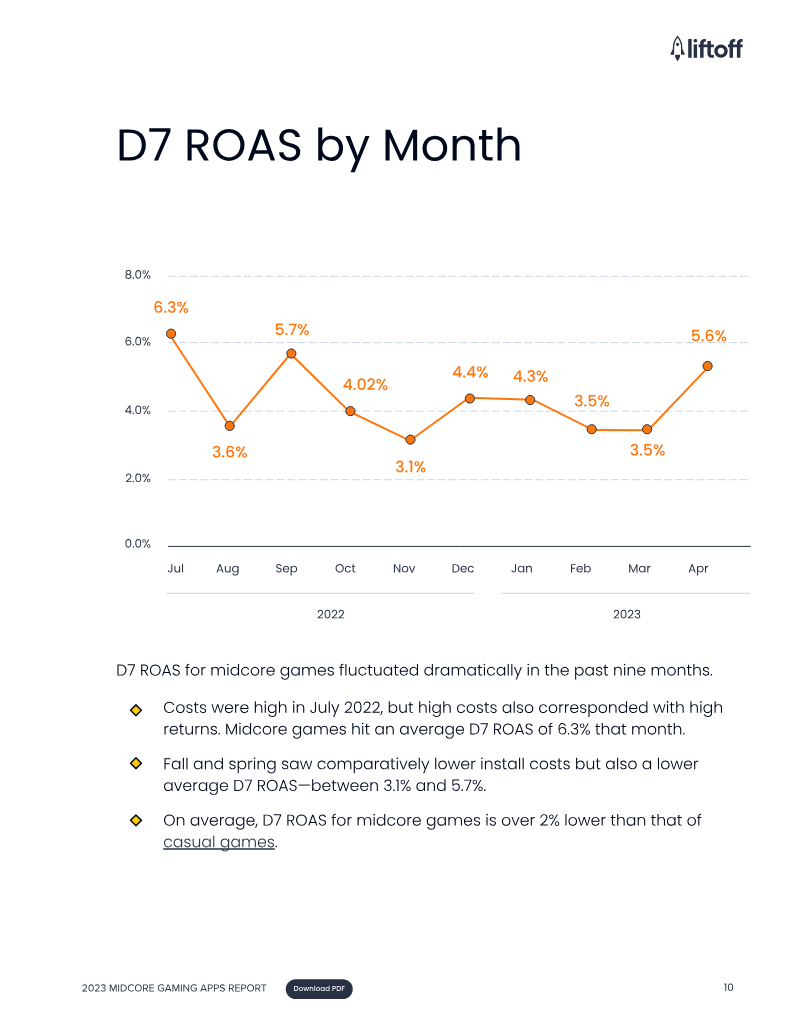
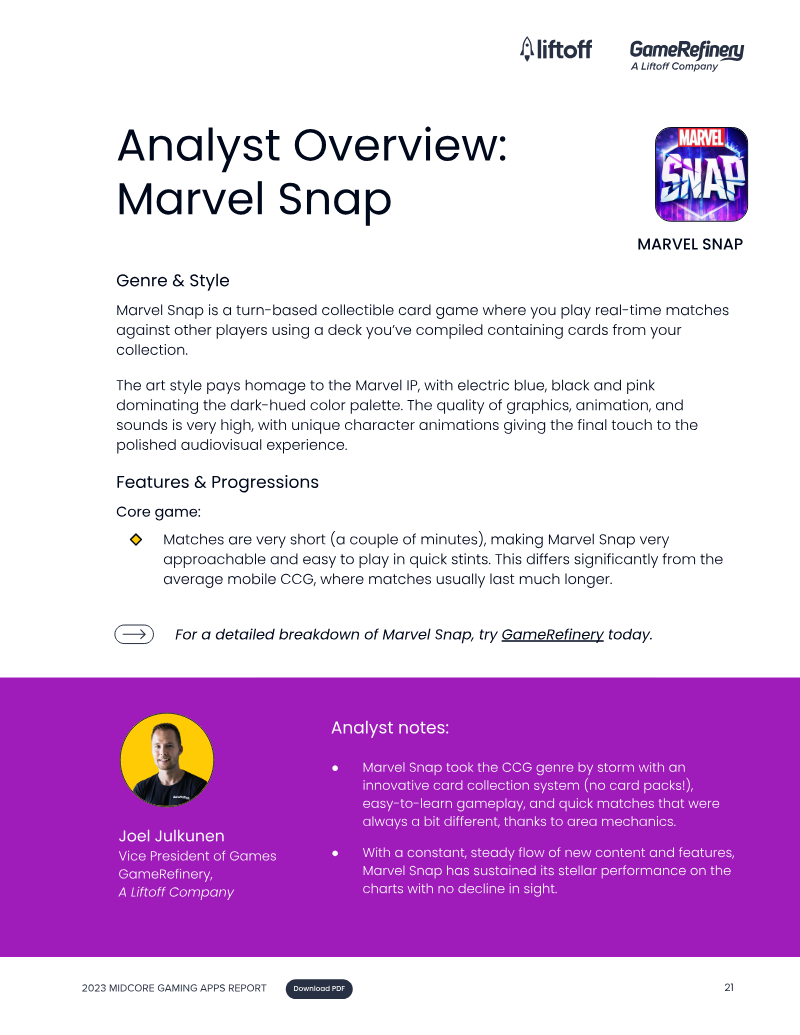
2023 Liftoff Company Midcore Gaming Apps Report
The midcore mobile gaming market in 2023 is defined by a strategic pivot toward deeper gameplay mechanics and diversified monetization streams, now commanding 35% of total iOS gaming revenue in the United States.
- Midcore mobile games now account for 35% of total iOS gaming revenue in the United States, demonstrating significantly higher market longevity than casual titles.
- Shooter games represent the most high-stakes category, commanding a $7.47 cost per install while delivering a leading 6% Day-7 return on ad spend.
- Top-performing midcore titles maintain engagement through aggressive LiveOps, typically running fifteen simultaneous unique events and fifteen limited-time gachas at any given time.



Annual Report 2023: Canada
The 2023 annual review underscores a year of extraordinary expansion for Canada’s video-game industry, positioning the nation as a pre-eminent global hub for development talent and creative output.
- Canada’s video game industry experienced extraordinary expansion in 2023, solidifying its status as a global hub for development talent and creative output.
- Canadian studios achieved record-breaking international award recognition and critical acclaim throughout the 2023 calendar year.
- The sector deepened its export revenues in 2023, significantly increasing its contribution to the national digital economy.

Hair Art in Games: Aesthetics Difference between Eastern and Western
The evolution of hair art in video games reflects a sophisticated intersection of hardware capability and cultural philosophy.
- Western game design prioritizes anatomical accuracy, physical realism, and lighting fidelity to ground characters in tangible environments.
- Eastern game design emphasizes artistic silhouettes, rhythmic line quality, and emotional expression, often drawing inspiration from traditional ink painting rather than strict physics.
- Hairstyles function as critical narrative tools that signal historical setting, character temperament, and identity through specific cultural markers.