Monetization reports and market data
Documents

Panel: Is Using a Webshop or Third-Party Payment Solution Worth it?
Direct-to-consumer webshops represent a strategic evolution for game publishers seeking to enhance profitability and deepen player engagement.
- Direct-to-consumer webshops increase profit margins by bypassing standard platform transaction fees.
- Webshops provide publishers with direct access to first-party data, enabling more personalized live operations and targeted loyalty programs.
- Successful integration requires the webshop to function as a seamless, branded extension of the core game rather than a disruptive external portal.

Panel: Is the Digital Markets Act Really Changing the Mobile Games Market for the Better?
The Digital Markets Act represents a pivotal regulatory effort to dismantle the long-standing duopoly of Apple and Google within the mobile gaming ecosystem.
- The Digital Markets Act (DMA) aims to open mobile markets by allowing alternative app stores and direct-to-consumer distribution, though Apple and Google continue to implement restrictive measures that complicate user adoption and obfuscate installation processes.
- Apple’s post-DMA terms include a 'Core Technology Fee' of 50 cents per year per user for any app install exceeding the 1 million threshold, which significantly impacts the cost structure for high-volume developers.
- Developers are increasingly adopting direct-to-consumer strategies, such as web stores and in-game payment SDKs, to bypass platform fees and regain control over their player relationships and profit margins.

How SciPlay Wins in Social Casino, Post-IDFA
SciPlay maintains a dominant position in the social casino sector by leveraging its unique integration with Light & Wonder, which allows for the seamless transition of popular land-based slot machine intellectual property into mobile environments.
- SciPlay leverages its integration with Light & Wonder to convert popular land-based slot machine intellectual property into mobile titles, targeting a core demographic where 60 percent of users are active physical casino visitors.
- The company has shifted its strategy from aggressive new user acquisition to prioritizing long-term portfolio health and deepening engagement within established franchises like Jackpot Party and Quick Hit.
- SciPlay uses its 11 mobile titles as high-speed testing environments for math models and slot mechanics, creating a data feedback loop that informs both digital development and the broader land-based gaming industry.

Soft launch Sonar #6: Is Capybara GO the next big hit from Habby?
The mobile gaming industry is currently defined by a strategic shift toward iterative design, where developers prioritize refining proven mechanics over original intellectual property.
- Mobile developers are increasingly prioritizing the refinement of proven mechanics over original IP, utilizing genre-mashups like merge, roguelite, and puzzle systems to optimize retention.
- Habby is shifting from hyper-casual roots toward complex hybrid-casual titles by integrating deep meta-layers such as collectible talent cards, gacha mechanics, and social casino elements.
- To combat rising user acquisition costs, 4X strategy studios are employing rapid prototyping and diverse creative hooks—including fantasy and survival mini-games—to validate concepts before global launch.

Brawl Stars': Learnings from the Removal of Loot Boxes
Brawl Stars underwent a significant strategic pivot between 2021 and 2024 to combat declining engagement and revenue, moving away from a reliance on loot boxes toward a more transparent, deterministic progression model.
- Removing loot boxes from Brawl Stars initially caused a decline in engagement, forcing the team to pivot toward a system that balanced player choice with long-term progression.
- The introduction of 'Stardrops' and a re-engagement program for returning players resulted in a 60% month-over-month increase in Daily Active Users (DAU).
- The team learned that shipping multiple major changes simultaneously creates 'noise' in data, making it difficult to isolate the impact of individual features on player behavior.

Curated Panel: Buying on Rewarded Platforms: The Benefits & Challenges.
Rewarded platforms have evolved into a critical component of modern user acquisition strategies, experiencing significant growth in revenue share across the global gaming industry over the past year.
- Rewarded platforms have become a critical component of user acquisition, showing significant growth in revenue share across the global gaming industry over the past year.
- Profitability in rewarded channels requires aligning external reward structures with the internal player lifecycle to ensure lifetime value consistently exceeds the cost per install.
- Success depends on rigorous data maturity and the precise tracking of in-game events to manage the higher post-event churn rates typical of incentive-driven users.

Session: The Rise of Player-Powered UA: How Incentives Will Shape the Future of Mobile Growth.
The mobile gaming industry is undergoing a fundamental shift toward a player-powered growth model, where developers increasingly treat players as partners rather than mere consumers.
- Over 80% of mobile players express interest in games that offer tangible rewards, and 25% of users are willing to switch games specifically to access these incentives.
- Developers are shifting toward value-exchange models that provide in-game items or real-world currency in exchange for player engagement and data to mitigate the impact of privacy-related tracking limitations.
- The adoption of web shops is increasing as a strategic method to bypass platform gatekeepers, capture first-party data, and provide more competitive value propositions directly to players.
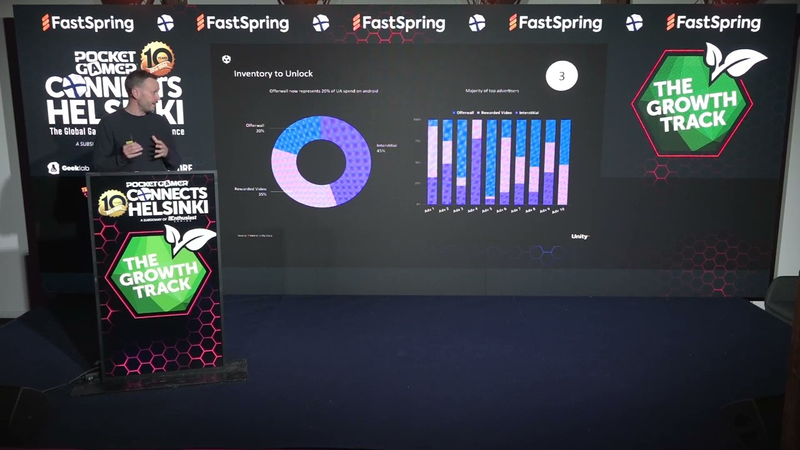
Session: Rewards Unlocked: Accelerating Game Growth with Rewarding User Experiences - Danny Cormack.
The rewarded user acquisition (UA) landscape is experiencing significant growth, driven by a shift toward privacy-centric environments and the performance limitations of traditional UA channels.
- Offer walls now account for 20% of total Android ad spend across all Unity channels, reflecting a significant shift in user acquisition strategies.
- Unity's 'Unity Rewards' web-based solution for iOS is currently in beta and showing strong performance, with 4x the ARPU and 3x the day-7 ROAS compared to Android campaigns.
- Internal Unity data indicates that offer wall users demonstrate superior retention from day 0 to 30 and higher LTV from day 0 to 60 compared to traditional video ad channels.
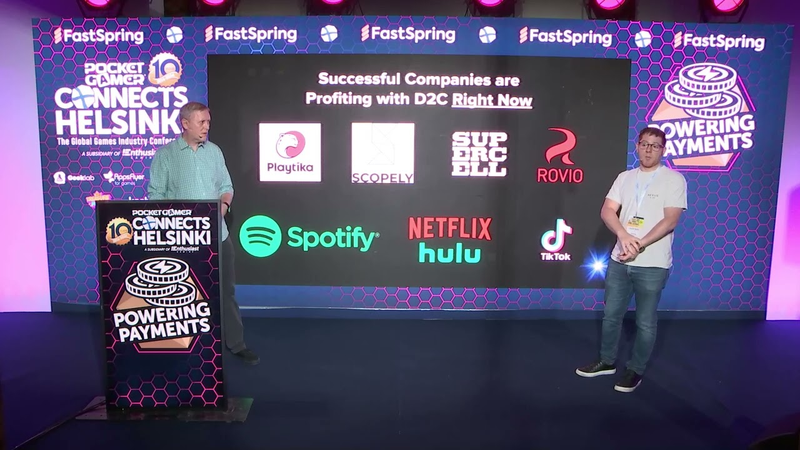
Superstar Session: How to Actually Succeed With D2C Web Shops for Mobile Games.
Direct-to-consumer web shops have emerged as a critical strategic evolution for mobile game publishers aiming to circumvent platform fees and enhance profit margins.
- D2C web shops are primarily a strategy to increase profit margins by bypassing platform fees for high-value VIP players in live-service games.
- Web shops should function as a migration channel for existing engaged users rather than as a broad user acquisition tool.
- Publishers must incentivize the transition to web shops by offering exclusive bundles, bonus currency, or unique rewards not available in the standard mobile app.
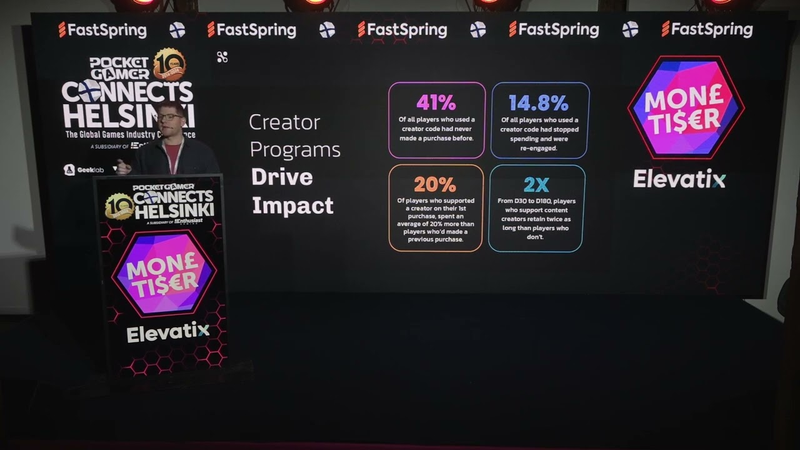
Session: Support-a-Creator programs: How They Impact Games Success - Justin Sacks, Nexus.gg
Creator programs represent a strategic evolution in game marketing, shifting from traditional, budget-heavy influencer campaigns to performance-based, evergreen models.
- Support-a-Creator programs shift marketing from upfront influencer fees to performance-based models that use unique identifiers to track and reward creators based on actual in-game revenue generated.
- Data shows these programs effectively convert non-paying users, with 41% of players using a creator code being first-time spenders.
- Creator programs aid in player retention and reactivation, as 15% of users who utilize creator codes are lapsed players returning to the game.
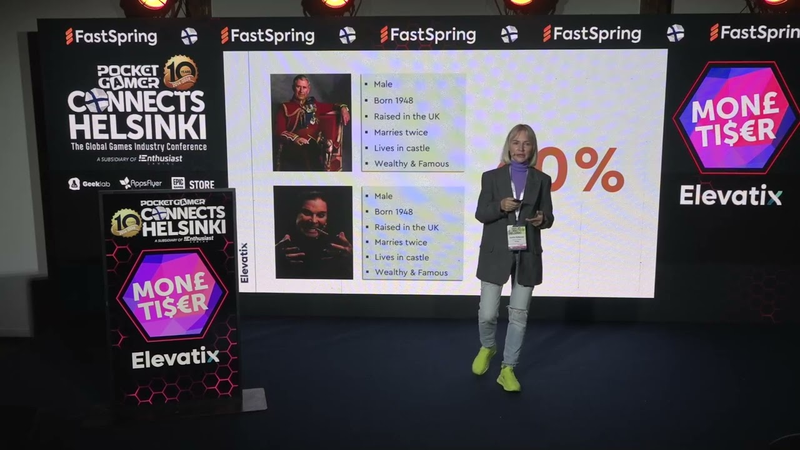
Session: Machine Learning is a new age of Personalized Game Monetization - Kseniia Maiboroda.
Machine learning serves as a critical evolution in mobile game monetization, shifting the industry from broad, demographic-based segmentation toward hyper-personalized user experiences.
- Machine learning enables hyper-personalized monetization by shifting from broad demographic segmentation to individual behavioral analysis, such as session frequency and purchasing patterns.
- Implementing machine learning for personalization can increase conversion rates by 5% to 7% while simultaneously boosting lifetime value and average revenue per paying user.
- In-house development of machine learning solutions is resource-intensive, requiring specialized data science teams and a 12- to 18-month training timeline to reach optimal performance.
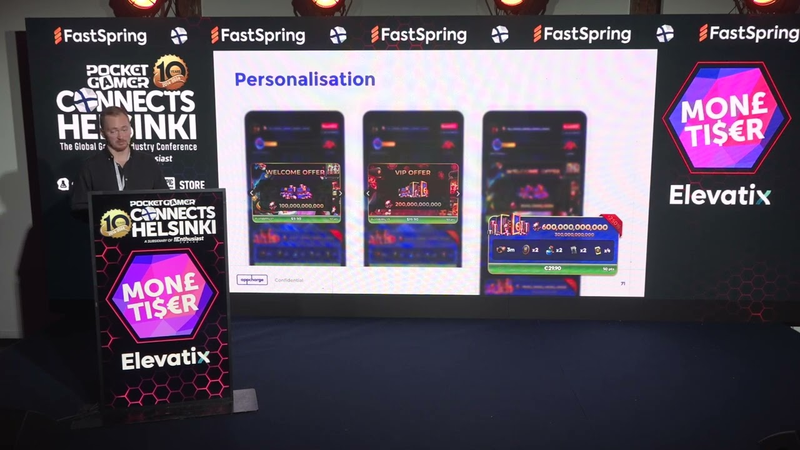
Session: You Built it, but no one Comes: Why Your Players Hate Your web Store - Miikka Luotio.
Web stores serve as a critical direct-to-consumer channel for mobile game publishers, yet they often suffer from low adoption due to friction in the user experience.
- Web stores can generate 30% to 40% in incremental revenue when treated as an extension of the game’s meta-game rather than a static transaction page.
- Personalized offers tailored to a player's progress, spending history, and local currency can drive up to 25% revenue growth.
- Authentication is the primary point of failure in the user journey, necessitating a streamlined process that ideally requires no more than two steps to prevent high abandonment.