Mergers & Acquisitions reports and market data
Documents
TWIG #180 Why Ubisoft became a target of a hostile takeover
Ubisoft has emerged as a potential target for private equity firms, including Blackstone and KKR, as the company faces significant operational challenges and declining market performance.
- Ubisoft is a target for private equity firms like Blackstone and KKR due to significant operational inefficiencies and declining market performance.
- A major inefficiency is the revenue-to-headcount ratio: Ubisoft generates 2.3 billion dollars in annual revenue with 22,000 employees, compared to Electronic Arts, which generates 7.5 billion dollars with only 11,000 employees.
- Private equity firms view the company as mismanaged, citing a lack of focus on core franchises and an unsustainable organizational structure.

Square Enix’s Western Studios ‘Only’ Cost $300M? - The Metacast by Naavik
The gaming industry is currently navigating a period of significant structural realignment, characterized by both the volatile emergence of Web3 projects and the strategic consolidation of established intellectual property.
- Embracer Group acquired Square Enix’s Western studios for $300 million, taking control of major franchises like Tomb Raider and Deus Ex to bet on the long-term value of single-player narrative IP.
- Square Enix divested its Western studios to reduce operational costs and refocus resources on its core Japanese development strengths.
- Yuga Labs’ Otherside metaverse project generated $300 million in revenue but suffered from significant technical failure due to an Ethereum gas war, highlighting the risks of poor infrastructure planning.

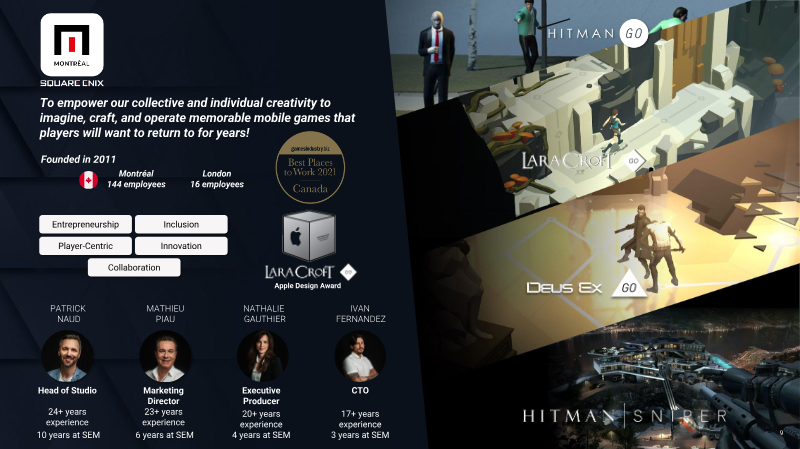

Embracer Group Acquires Eidos, Crystal Dynamics, and Square Enix Montréal: Presentation
Embracer Group’s acquisition of Crystal Dynamics, Eidos Montréal, and Square Enix Montréal represents a strategic expansion of its AAA development capabilities and intellectual property portfolio.
- Embracer Group is acquiring Crystal Dynamics, Eidos Montréal, and Square Enix Montréal for USD $300 million in a cash-and-debt-free transaction expected to close between July and September 2022.
- The acquisition adds over 50 back-catalogue titles to Embracer’s portfolio, including major franchises such as Tomb Raider, Deus Ex, Thief, and Legacy of Kain.
- The deal brings approximately 1,100 employees across eight global locations into the Embracer Group, expanding its internal infrastructure to over 124 studios.

TWIG #178 EA’s acquisition of Glu does not seem to be going according to the plan…
Electronic Arts’ acquisition of Glu Mobile faces significant performance challenges, as evidenced by a decline in the revenue and download metrics of key acquired titles.
- Electronic Arts’ acquisition of Glu Mobile is underperforming, as key titles including Golf Clash, Design Home, Covet Fashion, Kim Kardashian: Hollywood, and MLB Tap Sports show consistent declines in both revenue and user acquisition.
- While EA reported a 68 percent growth in mobile bookings for Q3 2022, this increase was driven by the consolidation of acquired portfolios rather than organic growth within the business.
- The integration of Glu assets is hindered by a significant exodus of leadership talent from the acquired studios, threatening the long-term viability of the portfolio.

Inside Overwolf with Uri Marchand, co-founder and CEO
Overwolf serves as a foundational infrastructure provider for the gaming industry, dedicated to professionalizing the creator economy by empowering developers of mods, apps, and private servers.
- Overwolf operates as an infrastructure provider for the gaming industry, supporting a network of 10,000 creators and reaching 30 million monthly active users.
- The company utilizes a revenue-sharing model that distributes 70 percent of generated earnings directly back to the creators.
- The acquisition of Tebex allows Overwolf to manage complex financial operations for private game servers, including payment processing and tax compliance.
Game Industry M&A in 2022 and Beyond! Miniclip, Drake Star Partners, & FunPlus Weigh In
The global gaming industry is undergoing a period of rapid, transformative consolidation, characterized by a shift toward platform-centric strategies and the pursuit of established intellectual property.
- The gaming industry is shifting toward a 'fewer, bigger, better' investment strategy, exemplified by major acquisitions like Microsoft’s purchase of Activision Blizzard and Take-Two’s acquisition of Zynga.
- Total deal values in the gaming sector are projected to reach $150 billion in 2022, though this growth is being tempered by cooling public markets and increased regulatory scrutiny.
- Rising user acquisition costs and mobile privacy changes are forcing companies to prioritize platform-centric strategies and the acquisition of established intellectual property.
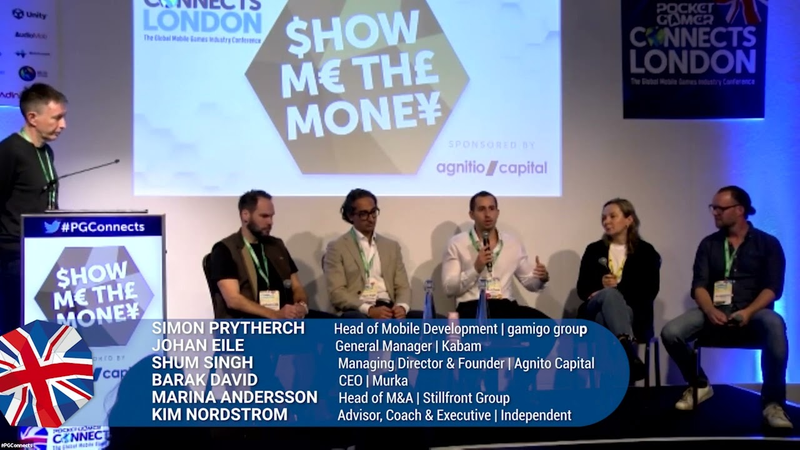
Panel: How Much are You Worth: How to Accurately Value Your Studio & Game
Valuing a game studio requires a sophisticated synthesis of quantitative financial metrics and qualitative strategic assets.
- Public game studios typically trade at valuation multiples of two to four times sales and eight to 25 times EBITDA.
- Private studio valuations are determined by a synthesis of financial metrics, intellectual property value, specialized technology, and team expertise, often adjusted by liquidity discounts or strategic premiums.
- Modern M&A processes have shifted toward rigorous, data-driven due diligence, requiring founders to provide standardized KPIs and professional documentation to satisfy institutional buyers.
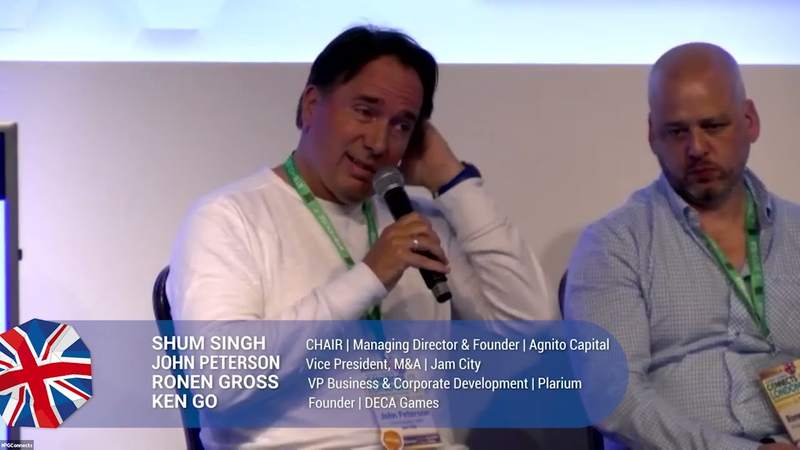
Superstar Panel: Navigating M&A During a Global Crisis
The global gaming industry is undergoing a structural shift in its mergers and acquisitions landscape, transitioning from a period of valuation-driven frenzy toward a more disciplined, strategic approach.
- The gaming M&A landscape has shifted from valuation-driven frenzy to a disciplined, strategic model focused on tangible synergies and clear payback periods.
- Acquirers are prioritizing established studios with proven key performance indicators and scalable talent over speculative ventures due to a disconnect between private valuation expectations and cooling public markets.
- Industry leaders are adopting a wait-and-see approach toward Web3 and blockchain acquisitions, favoring internal development or long-term monitoring due to regulatory uncertainty and high risk.
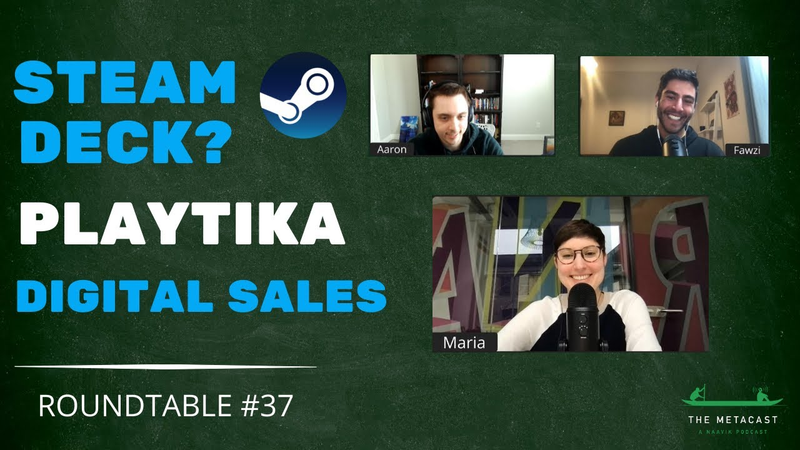
The Metacast by Naavik: Roundtable #37 - Will Steam Deck Become a Success?
The gaming industry is undergoing a fundamental transition from physical media to digital-first ecosystems, a shift driven by the superior margins and control afforded to platform holders.
- The gaming industry is shifting from physical media to digital-first ecosystems to improve margins, increase platform control, and support the storage requirements of modern titles.
- Valve’s Steam Deck is a strategic move to deepen user engagement within the Steam ecosystem and insulate the company against platform taxes, rather than a direct competitor to the Nintendo Switch.
- Mobile gaming firms like Playtika are facing significant growth stagnation and shareholder pressure due to the impact of IDFA privacy changes on user acquisition.

two & a half gamers session #2 - UA & Creative trends 2022, Microsoft + ATVI, TOP10 gaming M&A
The gaming industry is currently undergoing a structural transformation defined by aggressive consolidation and a fundamental shift in user acquisition strategies.
- Microsoft’s $68.7 billion acquisition of Activision Blizzard marks a structural industry shift toward metaverse infrastructure and the consolidation of high-value intellectual property.
- Post-IDFA user acquisition strategies are shifting away from Facebook toward a diversified portfolio including TikTok, Google, and Unity to mitigate rising costs and declining performance.
- Developers are increasingly porting mobile titles to PC to reduce friction, expand revenue streams, and ensure sustainable growth beyond mobile-only ecosystems.
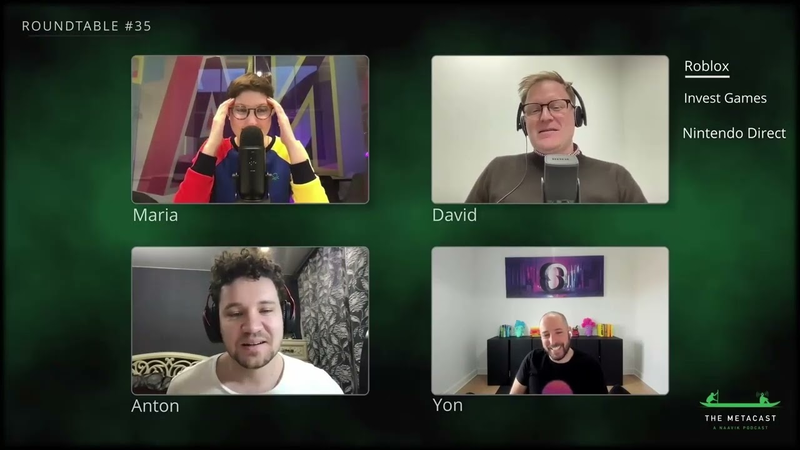
The Metacast by Naavik: Roundtable #35 - Roblox’s Results, 2021 Global Gaming Deals, Nintendo Direct
Roblox achieved substantial growth throughout 2021, generating $1.9 billion in annual revenue and distributing over $540 million to its developer community.
- The global gaming industry saw record-breaking investment in 2021, with 937 transactions totaling $71 billion, a twofold increase over the previous year.
- Roblox generated $1.9 billion in annual revenue in 2021 while distributing over $540 million to its developer community.
- Blockchain gaming emerged as a significant investment driver in 2021, attracting $3.1 billion in total capital.
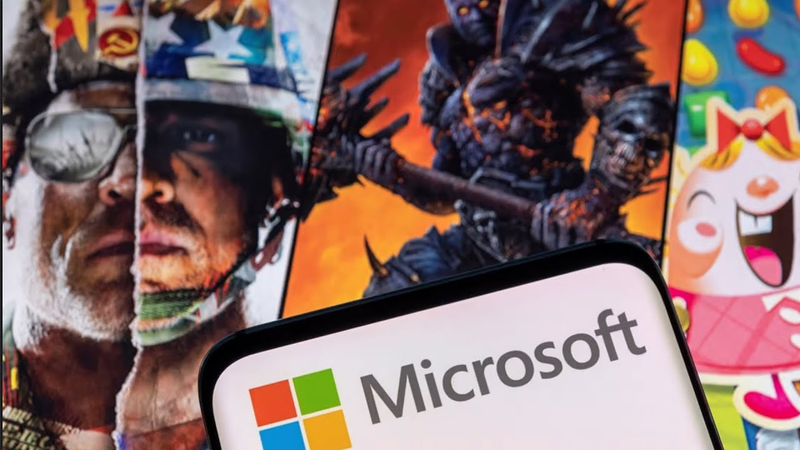
Roundtable News | Acquistions & VR Failures | Episode 293
The gaming industry is currently undergoing a period of intense consolidation, characterized by multi-billion dollar acquisitions such as Microsoft’s purchase of Activision Blizzard and Sony’s acquisition of Bungie.
- Major industry consolidation, exemplified by Microsoft’s acquisition of Activision Blizzard and Sony’s purchase of Bungie, is driven by the need to secure intellectual property and expand capabilities in mobile and live-service gaming.
- Large gaming entities are prioritizing long-term ecosystem stability and subscription service growth over immediate financial returns to mitigate the impact of escalating development costs.
- Meta’s Reality Labs division has incurred massive financial losses, signaling a failure to achieve mass-market adoption for its metaverse strategy.