Marketing reports and market data
Documents

two & a half gamers session #21 - How to run efficient UA on TikTok? TikTok's explosive growth
TikTok has established itself as a dominant force in the mobile gaming user acquisition landscape, driven by an interest-based algorithm that consistently outperforms legacy platforms like Facebook.
- TikTok’s interest-based algorithm is currently outperforming legacy platforms like Facebook in mobile gaming user acquisition by delivering lower purchase-based cost-per-install metrics.
- Successful TikTok UA campaigns require a creative-first strategy that involves rotating three to five creative variations on a weekly basis.
- TikTok’s revenue is projected to triple, positioning the platform as a primary competitor to major tech incumbents in the digital advertising space.

two & a half gamers session #19 - The King info Leak, 5 Game design tips to level up your game
Large-scale mobile game developers often face significant operational inefficiencies when attempting to build proprietary infrastructure, particularly in ad mediation.
- King's global average eCPM for ad monetization is approximately $16, aligning closely with industry estimates of $17.
- Building proprietary ad mediation platforms is generally inefficient for game studios, as specialized providers like IronSource and AppLovin maintain superior infrastructure and scale.
- Effective game session design requires balancing resource demand with player acquisition to create necessary 'deficiencies' that incentivize spending.

two & a half gamers session #17 - the creative framework, tips for inspiration, recession & games
The mobile gaming industry is currently navigating its first encounter with a significant economic recession, prompting a strategic pivot toward shorter-term return on investment and tighter capital management.
- The creative production process should follow a cyclical loop: competitor research, assessment of past performance, brainstorming, brief creation, production, testing, evaluation, and iteration.
- Performance-based creative testing consistently shows that lower-production-value assets often outperform high-end, polished visuals, proving that data-driven results should override aesthetic preferences from art directors.
- Mobile gaming teams should prioritize the CPI (Cost Per Install) versus LTV (Lifetime Value) equation over artistic quality, as the primary goal of creative assets is to drive measurable performance.

two & a half gamers session #15 - Can UA save your game? Does your game need UA? UA for beginners
The mobile gaming industry is currently undergoing a significant market correction following the unsustainable growth observed during the COVID-19 pandemic.
- User acquisition (UA) cannot fix poor game performance; product teams must prioritize retention and lifetime value optimization before scaling budgets, as UA is only effective when the core game economy is sustainable.
- The mobile gaming market is undergoing a correction, evidenced by a six percent year-over-year decline in revenue as of early 2022 and a cooling in major merger and acquisition activity.
- Capital investment has shifted significantly toward blockchain-based projects, which now account for 50% of all funding in the sector.

two & a half gamers session #11 - How to increase game revenue by 35% with Narrative design
Narrative design serves as a critical lever for enhancing mobile game performance, functioning as a bridge between core mechanics and player retention.
- Integrating narrative design from the inception of a project can increase game revenue by up to 35%.
- Narrative design functions as a bridge between core mechanics and player retention, transforming gameplay loops into immersive experiences that drive higher lifetime value.
- Applying universal storytelling frameworks like the Hero’s Journey provides structural progression that prevents player boredom and reduces churn.

two & a half gamers session #10 - How to save millions with marketability tests? Fake ads going n...
The mobile gaming industry is increasingly defined by a tension between creative vision and the rigorous demands of user acquisition.
- Marketability testing via fake ads and landing pages allows developers to validate game concepts and audience interest before investing in full production, effectively treating game development as a high-risk lottery where data-driven guidance reduces failure rates.
- Marketability tests should be used for directional guidance rather than definitive performance predictions, as metrics like CTR on landing pages do not accurately reflect actual mobile app install conversion or long-term player value.
- To mitigate bias in player surveys during testing, avoid suggestive questions and implement screening criteria, such as verifying if participants are active mobile gamers or have a history of in-app purchases.

two & a half gamers session #7 - Is Axie infinity dead? LTV in crypto gaming & web3 UA/marketing
The gaming industry is undergoing a fundamental transition from speculative play-to-earn models toward sustainable play-and-own frameworks.
- The 'Play-to-Earn' model is proving unsustainable due to economic inflation, leading the industry to pivot toward 'Play-and-Earn' or 'Play-to-Own' frameworks that prioritize fun and engagement over financial returns.
- Axie Infinity's economy has faced significant depreciation, forcing a shift in narrative from a platform for earning a living to a traditional gaming experience where earning is a secondary feature.
- Blockchain gaming introduces a native economic value transfer layer that allows for the enforcement of scarcity and value exchange, which was previously difficult to manage in digital environments.

two & a half gamers session #6 - Supercell rant, why do fake ads work? UA fundamentals Q&A
Supercell’s recent financial performance, characterized by a 45 percent revenue increase to 2.24 billion dollars in 2021, masks underlying structural challenges.
- Supercell reported a 45 percent revenue increase to 2.24 billion dollars in 2021, yet the company faces structural stagnation due to a lack of new global title launches since Brawl Stars.
- Supercell is pivoting toward PC and console markets to modernize monetization and user acquisition strategies that previously prioritized brand purity over aggressive performance marketing.
- The mobile gaming industry is facing significant disruption from privacy changes, specifically the impending phase-out of advertising IDs on Google platforms.

Stash Special: loyalty programs, well-made web shops, frictionless user experience
The gaming industry is undergoing a strategic pivot toward direct-to-consumer web storefronts as developers seek to reclaim autonomy from platform gatekeepers.
- Developers are shifting to direct-to-consumer web storefronts to bypass platform commission structures and mitigate the impact of 'core technology' charges imposed by app store gatekeepers.
- This strategic pivot is driven by evolving regulatory frameworks, specifically the EU’s Digital Markets Act and recent legal rulings in the United States.
- Web-based storefronts are most critical for game titles where annual monetization per user exceeds five dollars, particularly within the strategy and social casino sectors.
Watch This If You Want To Make Games
The primary objective for independent game developers seeking financial sustainability is to move away from the high-risk strategy of chasing viral hits and instead adopt structured methodologies for product design and audience engagement.
- Independent developers should shift from chasing viral hits to building a consistent studio brand that fosters long-term audience loyalty across multiple projects.
- The 'Trinity Hook' framework increases market viability by requiring developers to integrate distinct visual, mechanical, and narrative elements into every game.
- Narrative hooks are most effective when utilizing the principle of contrast, such as juxtaposing opposing character traits or placing ordinary individuals in extraordinary circumstances.

How Hyperbeard Became Mexico's Top Game Publisher
HyperBeard has established itself as the leading mobile game publisher in Mexico by shifting the industry standard from individual title performance to a cohesive, ecosystem-based growth model.
- HyperBeard achieved market leadership in Mexico by shifting from individual title performance to a cohesive, ecosystem-based growth model targeting young adult females.
- The company utilizes a 'feeder' strategy that funnels users from low-acquisition-cost titles into higher-monetizing games to maximize total lifetime value across the entire portfolio.
- By treating their catalog as a unified brand, the studio bypasses the limitations of the post-IDFA landscape where traditional, isolated user acquisition has become prohibitively expensive.
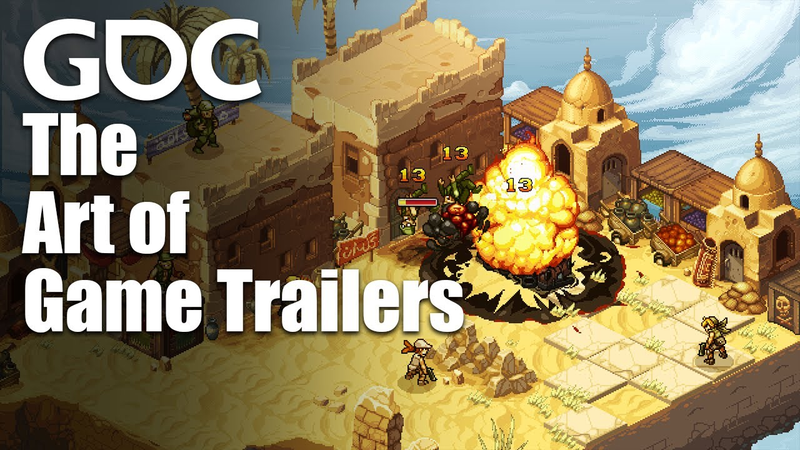
All Game Trailers Are Not Created Equal
Game trailers serve as critical marketing instruments that require tailored strategies based on their specific purpose, platform, and audience.
- AAA trailers function as technical showcases for console hardware and often utilize cinematic structures, whereas indie trailers must prioritize immediate gameplay loops, art direction, and world-building to differentiate themselves in a competitive market.
- Animated trailers carry significant financial risk, costing between $1,000 and $4,000 per second, and can create player backlash if the animation style creates a misleading expectation of the game's actual art direction.
- Always create a rough cut of a trailer using your own voiceover before hiring a professional, as this process effectively identifies pacing, script, and footage issues before incurring expensive recording costs.