Market Analysis
Documents

The Gaming Playbook: Everything You Need to Know About the Gaming Audience
Gaming has evolved into a near-universal activity, with 86% of internet users across 15 global markets engaging in play as of 2020. While mobile gaming serves as the primary driver for accessibility and broad demographic expansion—particularly among women, families, and older adults aged 55 to 64—consoles and PCs continue to anchor the more committed segments of the audience. This expansion is characterized by a shift toward a digital-first ecosystem where subscription services and digital sales dominate the market. Revenue models have transitioned accordingly, with in-game microtransactions and downloadable content emerging as the primary financial engines, especially among high-spending male millennials and Gen Z players who prioritize social status and character customization.
The landscape is increasingly defined by the convergence of gaming, social media, and live entertainment. Esports followers represent a particularly lucrative and tech-oriented demographic that displays a higher-than-average receptivity to advertising and brand sponsorships. Nearly half of these fans view sponsorships as a natural fit for the medium, and 40% actively support brands that invest in their favorite teams. Engagement is primarily driven through mobile and PC streaming, though traditional television remains a relevant secondary channel for older cohorts. India has emerged as a critical growth frontier within this space, fueled by its massive mobile-first population.
To successfully navigate this environment, brands must move beyond traditional advertising and focus on community integration and exclusivity. Vocal sub-groups, such as streamers and critics, act as essential information hubs and brand ambassadors who influence the broader community. Effective engagement requires a nuanced understanding of these diverse personas, ensuring that marketing efforts provide genuine value to the gaming experience. By fostering community involvement and offering exclusive rewards, brands can convert high-engagement players into long-term advocates within the burgeoning metaverse and competitive gaming sectors.
- As of 2020, 86% of internet users across 15 global markets engage in gaming, with mobile platforms driving significant demographic expansion among women, families, and adults aged 55 to 64.
- Revenue models have shifted toward digital-first ecosystems, where in-game microtransactions and downloadable content serve as the primary financial engines, particularly among high-spending Gen Z and millennial male players.
- Esports followers represent a highly receptive audience for advertising, with nearly 50% viewing brand sponsorships as a natural fit and 40% actively supporting brands that invest in their favorite teams.
- India has emerged as a critical growth frontier for the gaming industry, driven by a massive, mobile-first population.
- While mobile gaming facilitates broad accessibility, consoles and PCs remain the primary platforms for the most committed and high-spending segments of the gaming audience.

Gaming Spotlight 2021: The Year in Review
Mobile gaming has solidified its position as the primary driver of digital games consumption, with global spending projected to extend its lead to 2.9 times that of PC/Mac and 3.1 times that of home consoles in 2021. This growth is underpinned by a significant surge in engagement during the COVID-19 pandemic; by Q1 2021, global users were downloading over 1 billion games per week, a 30% increase over pre-pandemic levels. Consumer spending followed a similar trajectory, reaching $1.7 billion per week, up 40% from late 2019. While the Asia-Pacific region maintains nearly half of the global market share, North America and Western Europe saw the most significant growth in mobile spending during the period.
A central thesis of the market analysis is the convergence of mobile and console experiences. High-performing titles like Roblox and Genshin Impact demonstrate that cross-platform play and real-time social features are no longer novelties but essential drivers of long-term engagement. This trend is supported by the rising popularity of console companion apps and the expansion of PC gaming, with Steam reaching a record 26.85 million peak daily concurrent users in early 2021. Additionally, the rise of game livestreaming on platforms like Twitch and Discord has created new avenues for monetization and community building.
Regarding monetization, survey data from over 3,300 US gamers indicates a shift in sentiment toward in-game advertising. While video ads remain divisive due to their full-screen nature, rewarded video and playable ads have achieved net positive sentiment because they offer an immediate value exchange, such as in-game currency or a trial experience. However, the data warns of ad oversaturation; gamers in high-saturation genres, such as word and trivia games, report significantly more negative opinions of ads compared to those in low-saturation genres like sandbox games. The findings suggest that publishers must balance ad frequency with format quality to mitigate churn.
- Mobile gaming is the dominant market force, with 2021 spending projected to reach 2.9 times that of PC/Mac and 3.1 times that of home consoles.
- Pandemic-driven engagement peaked in Q1 2021 with over 1 billion weekly game downloads, a 30% increase over pre-pandemic levels, and weekly consumer spending rising 40% to $1.7 billion.
- Cross-platform play and real-time social features are now essential for engagement, as evidenced by the success of titles like Roblox and Genshin Impact.
- PC gaming continues to expand, with Steam reaching a record 26.85 million peak daily concurrent users in early 2021.
- Gamers show a net positive sentiment toward rewarded video and playable ads, while traditional full-screen video ads remain divisive.
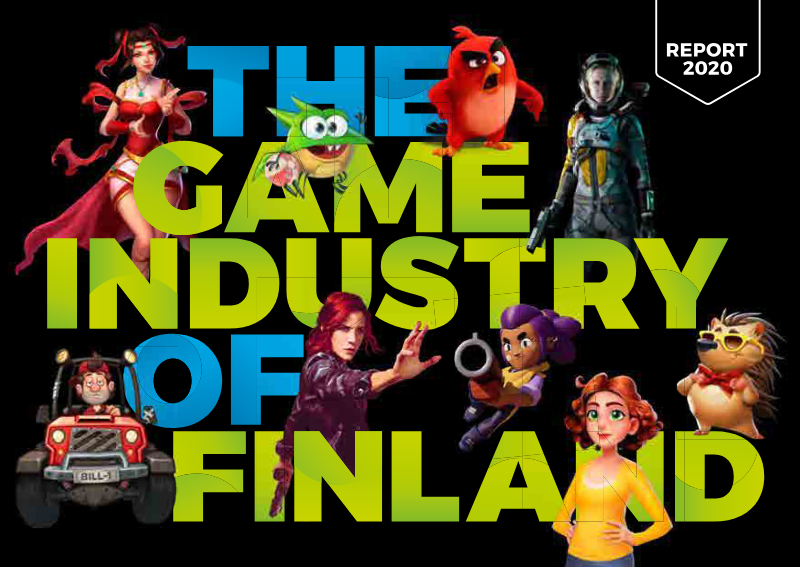
The Game Industry of Finland 2020
The Finnish game industry has transitioned from a hobbyist niche into the nation’s largest cultural export, maintaining an annual turnover exceeding €2 billion for six consecutive years. By 2020, the sector reached a turnover of €2.4 billion, driven by a maturing "middle class" of 46 studios generating over €1 million in annual revenue. While the total number of active studios decreased to approximately 200 due to global competition and regional funding shifts, employment reached a record 3,600 professionals. The industry demonstrates increased stability through a decreasing reliance on its largest player, Supercell, whose share of total turnover fell to 54% as other studios scaled.
Geographically, the industry remains highly concentrated in the Capital Region, which accounts for 96% of turnover and nearly 80% of the workforce. However, vital regional hubs in Tampere, Oulu, and Turku provide specialized support through incubators and university programs. While mobile gaming remains the dominant sector—anchored by global giants like Rovio and Fingersoft—there is a notable shift toward a "post-mobile" era. This evolution is defined by growth in multiplatform console and PC development, led by studios such as Remedy Entertainment and Housemarque, as well as emerging interests in cloud gaming, the metaverse, and AI integration.
The ecosystem is supported by a robust infrastructure, including over €150 million in R&D funding from Business Finland and a proactive private investment climate that attracted over €100 million between 2019 and 2020. Despite this strength, the industry faces challenges such as a global shortage of senior talent, increased protectionism in foreign markets, and platform volatility. Future growth is expected to stem from strong intellectual property, significant M&A activity, and a commitment to workforce diversity and social responsibility. The industry remains a resilient economic driver, characterized by high professional organization and a collaborative culture that sustains its status as a premier global hub for game development.
- The Finnish game industry generated €2.4 billion in turnover in 2020, marking six consecutive years of exceeding the €2 billion threshold.
- Industry stability has improved as Supercell’s share of total turnover declined to 54%, supported by a maturing 'middle class' of 46 studios each generating over €1 million annually.
- Despite a consolidation in the number of active studios to approximately 200, the sector reached a record high of 3,600 professional employees.
- The industry is diversifying beyond its mobile-first foundation, with significant growth in console and PC development led by studios such as Remedy Entertainment and Housemarque.
- The Capital Region remains the dominant economic hub, accounting for 96% of total industry turnover and nearly 80% of the workforce.

Deconstructing the Superstars: The Metrics Behind Hyper-Casual Games 2020 Industry Snapshot
This industry snapshot provides a detailed analysis of the hyper-casual mobile gaming sector throughout 2020, utilizing aggregated data from a network of over 140,000 integrated games and two billion monthly players. The primary thesis centers on identifying the specific performance benchmarks and mechanical traits that define "superstar" titles within this high-growth category. By segmenting the genre into four distinct sub-genres—Timing, Traversal, Physics, and Shooting—the analysis offers granular insights into the mechanics and player behaviors that drive commercial success.
Key findings highlight significant geographic variations in player engagement and retention. European markets, specifically France, Germany, Italy, and the Netherlands, lead in Day 1 retention at 49%, while Germany, the Netherlands, and Japan share the top spot for Day 7 retention at 19%. Despite lower retention rates compared to European counterparts, Japan exhibits the highest average playtime at 63 minutes, significantly outpacing the United States at 43 minutes and China at 27 minutes. These statistics underscore the importance of localized performance expectations for developers targeting global audiences.
The analysis concludes with actionable strategic recommendations for game development, emphasizing that successful hyper-casual titles must be short, simple, and satisfying. A critical threshold for viability is identified at 40% Day 1 retention; titles falling below this mark are typically deemed unpromising, necessitating either rapid iterative sprints or abandonment. The study advocates for a forgiving gameplay design—often incorporating multiple lives or low-difficulty curves—to cater to the "snackable" nature of the genre. By examining 2020 hits like High Heels! and Slap Kings, the findings illustrate that low production effort combined with high-impact mechanics remains the dominant model for hyper-casual market leaders.
- A Day 1 retention rate of 40% serves as the critical threshold for commercial viability, with titles failing to meet this benchmark requiring immediate iteration or abandonment.
- European markets lead global engagement, with France, Germany, Italy, and the Netherlands achieving a 49% Day 1 retention rate.
- Japan exhibits the highest average playtime at 63 minutes, significantly outperforming the United States at 43 minutes and China at 27 minutes.
- Germany, the Netherlands, and Japan share the highest Day 7 retention benchmark at 19%.
- Successful hyper-casual titles, such as 2020 hits High Heels! and Slap Kings, rely on a model of low production effort paired with high-impact, simple mechanics.

Tower Defense Games 2020 Industry Snapshot
The tower defense sub-genre within the mobile arcade category demonstrated significant monetization potential and engagement depth throughout 2020. Based on an analysis of over 134,000 integrated games and 900 million unique monthly players, the sector is characterized by high-value users and strong global performance. Key financial benchmarks reveal that tower defense titles achieve an average revenue per paying user (ARPPU) of $83, significantly outperforming related genres like board games and idlers. Furthermore, the sub-genre maintains an average revenue per daily active user (ARPDAU) of $1.66 and a daily conversion rate of 3.83%, indicating a highly effective monetization funnel compared to other casual arcade segments.
Geographic performance varies by metric, with European and Asian markets showing the strongest engagement. Italy leads in Day 7 retention at 39%, while France records the highest average playtime at 210 minutes. China stands out as the most effective market for monetization, boasting a conversion rate of 8.7%, nearly double that of the United States at 4.6%. These figures suggest that while Western audiences engage deeply in terms of time, Asian markets provide superior direct financial returns.
The success of the genre is attributed to its accessible core mechanics, which offer immediate satisfaction and high replayability. Developers benefit from a sustainable content model where minor adjustments to characters or obstacles can shift the entire meta-game without requiring extensive new map design. The integration of meta-features such as daily challenges, cooperative modes, and PvP elements further drives player stickiness. Notable market entrants in 2020, including Kingdom Wars Defense and Rush Royale, exemplify these trends by blending traditional defense mechanics with RPG and merge elements to capture high user ratings and market share.
- Tower defense titles achieved an average revenue per paying user (ARPPU) of $83 in 2020, significantly outperforming board games and idler genres.
- The sub-genre maintained an average revenue per daily active user (ARPDAU) of $1.66 and a daily conversion rate of 3.83% across 900 million unique monthly players.
- China leads in monetization efficiency with an 8.7% conversion rate, which is nearly double the 4.6% conversion rate observed in the United States.
- European markets demonstrate high engagement, with Italy recording a 39% Day 7 retention rate and France leading in average playtime at 210 minutes.
- Developers can maintain game longevity through a sustainable content model where minor adjustments to characters or obstacles shift the meta-game without requiring extensive new map design.

Análisis del Impacto del COVID‑19 y Mejores Prácticas de Teletrabajo en el Sector de los Videojuegos: Dec 2020
Resumen Ejecutivo Documento: Análisis del Impacto del COVID‑19 y Mejores Prácticas de Teletrabajo en el Sector de los Videojuegos – Diciembre 2020
El informe examina cómo la pandemia de COVID‑19 transformó los mercados financieros, la producción, el consumo y la organización de la industria de los videojuegos. A partir de datos de mercado, encuestas a desarrolladores y análisis de herramientas de trabajo remoto, se extraen lecciones y recomendaciones que siguen siendo relevantes para 2024‑2025.
1. Mercados y comportamiento del consumidor | Aspecto | Observaciones clave | Implicaciones | |---|---|---| | Acciones | Los índices globales cayeron al inicio de la pandemia, pero los valores vinculados a videojuegos (Tencent, Ubisoft, etc.) superaron a los índices generales, que permanecen por debajo de los niveles pre‑COVID. | Los videojuegos se consolidan como “refugio defensivo” y sector de crecimiento. | | Actividad de juego | Picos de usuarios concurrentes en Steam dejaron de seguir patrones semanales; ventas de hardware (Nintendo Switch) y de software digital se dispararon en marzo‑mayo 2020. Las ventas físicas cayeron drásticamente. | La demanda se desplazó a canales digitales; los fabricantes de hardware que ofrecieron portátiles (Switch, Switch Lite) se beneficiaron. | | Móvil | (Resumen incompleto en el texto) – se indica un aumento de la actividad en plataformas móviles, reforzando la tendencia “play‑anywhere”. | Los estudios con presencia móvil ganaron cuota de mercado y deben reforzar sus pipelines cross‑platform. |
2. Impacto en la fuerza laboral de los estudios IGDA Survey (2 500 devs) 18,5 % detuvieron contrataciones. 13,3 % cancelaron pasantías. 8,6 % (dato incompleto) redujeron equipos o pospusieron proyectos. Consecuencias Reducción de la capacidad de escalar proyectos a medio plazo. Aumento de la incertidumbre laboral y de la carga de trabajo para los equipos existentes.
3. Cambios en los hábitos de consumo de juegos Servicios de suscripción (e.g., Xbox Game Pass, PlayStation Now) mostraron resiliencia y crecimiento sostenido. Nuevas suscripciones aumentaron rápidamente al inicio de la pandemia, pero su ritmo se estabilizó por debajo del crecimiento de los usuarios activos de juegos tradicionales. Implicación: Los modelos basados en suscripción son ahora una pieza central de la estrategia de ingresos y requieren inversión en contenido continuo (LiveOps, DLCs).
4. Esports y eventos competitivos Los torneos migraron totalmente a entornos online. League
- Video game stocks, including companies like Tencent and Ubisoft, outperformed global market indices during the pandemic, establishing the sector as a defensive asset class with long-term growth potential.
- Consumer demand shifted decisively toward digital channels between March and May 2020, causing a sharp decline in physical sales while hardware platforms offering portability, such as the Nintendo Switch, saw significant spikes in sales.
- Subscription services like Xbox Game Pass and PlayStation Now proved resilient, becoming a central pillar of revenue strategy that necessitates ongoing investment in LiveOps and DLC content.
- The IGDA survey of 2,500 developers revealed that 18.5% of studios halted hiring and 13.3% canceled internship programs, leading to reduced project scalability and increased workforce instability.
- Gaming activity patterns shifted during the pandemic, with concurrent user counts on platforms like Steam breaking traditional weekly cycles and mobile gaming activity increasing, reinforcing the industry-wide 'play-anywhere' trend.
State of the Stream December/2020 Year in Review
The livestreaming industry experienced unprecedented growth throughout 2020, driven largely by global quarantine measures that accelerated viewership across all major platforms. Twitch remained the dominant force in the market, with the Just Chatting category emerging as the year's most popular content segment, amassing 1.9 billion hours watched. This was followed by established titles like League of Legends at 1.4 billion hours and Fortnite at 904 million hours. While established platforms led the market, nascent services like DLive also saw significant gains, jumping from 9.7 million hours in the first quarter to a consistent range of 15 to 17 million hours for the remainder of the year.
The year was characterized by the rapid rise of new intellectual properties and viral sensations. Valorant led the pack of new releases with 737 million hours watched, achieving a massive peak of 334 million hours in April alone. Other breakout hits included Among Us, which peaked at 140 million hours in September, and Fall Guys, which reached 106 million hours in August. By the end of the year, titles like Cyberpunk 2077 and Phasmophobia solidified their positions as top-tier content, while World of Warcraft and Call of Duty: Warzone saw late-year surges in viewership due to new updates and seasonal interest.
Individual creator performance was led by xQcOW, who finished 2020 as the most-watched streamer on Twitch. Data provided by StreamElements and ArsenalGG indicates that the industry is shifting toward a mix of traditional gaming and non-gaming content, with Just Chatting maintaining its lead even as major game releases fluctuate. The final month of the year showed a diverse landscape where new titles like Cyberpunk 2077 competed directly with long-standing staples, reflecting a robust and diversifying ecosystem for digital content creators and brands.
- Twitch maintained market dominance in 2020, with the 'Just Chatting' category becoming the most-watched content segment at 1.9 billion hours.
- Valorant was the most successful new release of 2020, accumulating 737 million hours watched with a single-month peak of 334 million hours in April.
- Established titles remained central to viewership, with League of Legends and Fortnite generating 1.4 billion and 904 million hours watched, respectively.
- The livestreaming ecosystem is diversifying beyond gaming, as evidenced by the sustained popularity of non-gaming content and the emergence of breakout viral hits like Among Us (140 million hours) and Fall Guys (106 million hours).
- DLive experienced significant growth in 2020, increasing its quarterly viewership from 9.7 million hours in Q1 to a consistent range of 15 to 17 million hours for the remainder of the year.

Recommendations for Implementation of Virtual Reality Applications in Other Industries
Implementation of Virtual Reality Applications in Other Industries The VR Best Practice Catalogue plays a key role in opening up new business areas for game developers in the BSR. The stabilisation of existing and opening of new markets will enable the BSR to be a high potential actor in the rapidly growing VR sector and to develop into an international game industry hotspot.
- The goal of a VR application dictates design choices like game engine, target device, mechanics, and user interface, with therapeutic applications requiring careful consideration to avoid increasing muscular tension or using ergonomically poor hardware.
- Input devices for VR applications, especially in professional training or therapy, need careful selection; standard XR controllers are unsuitable for fine motor actions, making haptic gloves a viable but more expensive and technically complex alternative.
- When selecting an XR headset, key features to consider include Field of View (FOV) for immersion, tracking method (Outside-In for precision but higher room requirements, Inside-Out for flexibility and lower cost but less computing power), and eye-tracking for research and training.
- Data privacy and protection are critical for VR applications, particularly in medical contexts; issues like mandatory Facebook accounts for Oculus headsets and uncontrolled data traffic to manufacturers can be mitigated by using offline systems or selecting headsets without such requirements.
- For medical and research VR applications, data output must be precise and exportable to common office programs like Excel, requiring early planning and agreement between developers and experts on data format and recording, as seen in the ALCAVOID application.
The Game Incubation Landscape in Europe: Appraisal of the BSR in the European Context
The Game Incubation Landscape in Europe Appraisal of the Game Incubation Landscape of the BSR in the European Context Pedro Santoro Zambon has been commissioned by BGZ Berliner Gesellschaft für internationale Zusammenarbeit mbH in the context of the BGI project to appraise different incubation approaches in Europe to provide a comparative view for the BGI incubation pilot results.
- The Baltic Sea Region (BSR) has 24 game-focused incubators and accelerators, with half located in Sweden (6) and Finland (6). Nearly 40% (9) of these programs were established in the last three years, indicating a recent trend.
- Most BSR incubation programs prioritize supporting regional ecosystem development and university students/alumni.
- Governments are crucial for fostering an environment where incubator capacity-building initiatives can thrive, by adopting laws and regulations that promote research, development, and entrepreneurship.
- Game incubation programs focused on investment prospecting tend to favor game studios with scalable business models (e.g., freemium, microtransactions) over premium PC/console games, as early-stage investors seek multiplied returns.
- Examples like Dutch Game Garden and GameBCN demonstrate structured incubation phases, from intake to 'achiever' status, and the use of partnerships with educational institutions to provide skills and support to incubated teams.
Store Intelligence Data Digest: Q3 2020
Global mobile app performance in the third quarter of 2020 reflected a landscape profoundly shaped by the COVID-19 pandemic, with total downloads reaching 36.4 billion. This 22.8% year-over-year increase was primarily fueled by Google Play, which saw a 30.3% surge in installs. While TikTok maintained its position as the top non-gaming application globally, the gaming sector experienced a historic breakout with Among Us, which became the first title since 2018 to surpass 100 million global downloads in a single quarter. This title alone generated 24 million downloads in the United States, tripling the performance of its closest competitors and signaling a shift toward social-driven gaming experiences.
Market dynamics diverged significantly by platform and region during this period. While Google Play game downloads grew by 36.4% worldwide, the App Store saw a 4.7% decline, largely attributed to a 25% drop in game installs within the Chinese market. Despite these fluctuations, consumer spending in the United States remained at record levels, totaling $5.8 billion for the quarter. The Simulation and Casino genres emerged as primary growth drivers, increasing by 59% and 51% respectively. On the publishing side, Google remained the global leader with 850 million downloads, though hyper-casual specialist Voodoo achieved a milestone by becoming the top publisher on Google Play in Europe for the first time.
The pandemic also fundamentally altered seasonal trends for utility and lifestyle applications. Education apps sustained a 21% year-over-year increase in downloads as remote learning tools like Google Classroom became essential infrastructure. Simultaneously, the sports category underwent a volatile recovery; after a stagnant spring, the return of professional leagues drove a 13% year-over-year increase in European downloads. This resurgence was particularly visible in the United States, where the rescheduling of major events led the NBA app to achieve five times its typical quarterly download volume, illustrating a broader trend of digital platforms capturing pent-up demand for live entertainment.
- Global mobile app downloads reached 36.4 billion in Q3 2020, a 22.8% year-over-year increase driven primarily by a 30.3% surge in Google Play installs.
- Among Us achieved a historic milestone as the first title since 2018 to exceed 100 million global downloads in a single quarter, with 24 million of those installs occurring in the United States.
- United States consumer spending reached a record $5.8 billion in Q3 2020, with Simulation and Casino genres serving as the primary growth drivers at 59% and 51% increases, respectively.
- Google Play game downloads grew 36.4% globally, while the App Store experienced a 4.7% decline, heavily influenced by a 25% drop in game installs within the Chinese market.
- Education apps maintained a 21% year-over-year download increase due to the essential nature of remote learning tools like Google Classroom.
Q1‑Q3 2020: Recap of the Investment Activity in the Video Game Market
The first three quarters of 2020 saw the global gaming industry navigate significant volatility caused by the COVID-19 pandemic, ultimately demonstrating strong resilience and a rapid recovery in deal activity. While private investments dropped sharply in May 2020, the market rebounded by July, closing 100 transactions worth approximately $2.78 billion. This investment activity was heavily concentrated at the later stages, with American companies like Epic Games, Roblox, and Scopely accounting for over 90% of total capital value. Conversely, early-stage venture capital remained more geographically diverse, with U.S. startups representing only 30% of those funds.
Mergers and acquisitions remained robust throughout the period, largely unaffected by macroeconomic instability. The mobile segment led in volume with 41 deals totaling $4.6 billion, while the PC and console segment reached $10.5 billion in value, driven primarily by Microsoft’s $7.5 billion acquisition of ZeniMax. Strategic buyers such as Tencent, Embracer Group, and Stillfront Group continued to consolidate the market. Public offerings followed a similar recovery arc; after a near-total halt in the first half of the year, the market reopened in June with significant IPOs from Asian companies and capital raises by Western firms to fund future acquisitions.
The landscape of financial backers was led by specialized venture funds like Makers Fund, Play Ventures, and BITKRAFT Ventures in terms of deal volume, while KKR and Andreessen Horowitz dominated in total value through large-scale, later-stage investments. Strategic activity was characterized by "mastodons" like Microsoft and Zynga, alongside aggressive consolidation efforts by European holding companies. Analysts expect continued momentum into 2021, driven by the need for content on subscription platforms and the scaling of major mobile publishers ahead of potential public listings.
- The gaming industry demonstrated strong resilience in 2020, with a July rebound leading to 100 transactions worth approximately $2.78 billion in private investment.
- M&A activity was significant, with the PC and console segment reaching $10.5 billion in value, largely driven by Microsoft’s $7.5 billion acquisition of ZeniMax.
- The mobile gaming segment led in deal volume with 41 transactions totaling $4.6 billion, supported by ongoing consolidation from strategic buyers like Tencent, Embracer Group, and Stillfront Group.
- Late-stage private investment was highly concentrated, with American companies such as Epic Games, Roblox, and Scopely accounting for over 90% of the total capital value.
- Early-stage venture capital remained geographically diverse, with U.S. startups representing only 30% of those specific funds.
Creative Industries Statistics: United Kingdom (August 2020)
Creative Industries Statistics United Kingdom August 2020 Released: Official Statistics on Film, High-End 13 August 2020 Television, Animation, Video Games, Next release: Children’s Television, Theatre, Orchestra, Summer 2021 and Museums & Galleries Exhibition Frequency of release: Tax Reliefs https://www.gov.uk/government/org Section 1: Key points and summary 4 1.1 Summary ...
- Since its introduction in 2007, Film Tax Relief (FTR) has supported 3,470 films, accounting for £18.4 billion in UK expenditure. In 2019-20 alone, 300 films claimed FTR with £2.5 billion in UK expenditure.
- High-End Television (HETV) Tax Relief, introduced in 2013, has supported 635 programmes with £5.9 billion in UK expenditure. In 2019-20, 110 programmes claimed HETV tax relief, totaling £1.5 billion in UK expenditure.
- Video Games Tax Relief (VGTR) paid out an estimated £161 million for 2018-19, with 310 claims made by 270 companies. Since its introduction in 2014, the relief aims to promote sustainable production of culturally relevant video games in the UK.
- Theatre Tax Relief (TTR) paid out £71 million in 2019-20 across 1,115 claims, representing 3,580 productions. Since its 2014 introduction, TTR has disbursed £280 million for 12,065 productions.
- Children's Television Tax Relief (CTR) supported 25 British children's TV programmes in 2019-20 with £30 million in UK expenditure. Since 2015, 280 programmes have claimed CTR, totaling £299 million in UK expenditure and £59 million in payments.