Market Analysis reports and market data
Documents
Why Big Game Companies Don't Make Small Games
Large game publishers frequently face criticism for prioritizing massive, high-budget projects over smaller, experimental titles.
- Publicly traded publishers prioritize established franchises like Call of Duty and World of Warcraft because they offer the predictable, scalable revenue required to satisfy corporate mandates for high ROI.
- Large companies view smaller, experimental projects as inefficient uses of resources because they lack the potential to become billion-dollar franchises that justify massive marketing and technical infrastructure investments.
- The industry’s shift toward 'engagement-first' design metrics, such as daily active users, penalizes shorter or experimental games that cannot sustain the long-term retention levels of live-service models.

Xbox's big reset | Week in Mobile Games podcast
Xbox is currently executing a fundamental strategic pivot, moving away from an aggressive focus on scaling the Game Pass subscription service toward a broader objective of engaging one billion players.
- Microsoft is undergoing a major restructuring involving 3,200 staff layoffs and the divestment of five studios, including management buyouts for Compulsion Games and Double Fine and the sale of Ninja Theory and Undead Labs.
- Microsoft has set an ambitious goal to engage one billion daily active users, a target that industry analysts view as highly challenging given that current console markets are largely flat and the company's total monthly active user base across its gaming division was reported at 500 million in 2024.
- Pokémon Go has generated over $9 billion in lifetime revenue across the Google Play Store and Apple App Store during its 10-year history, with player spending peaking during the pandemic.
🏨 My Perfect Hotel Meets Merge: Decoding Hotel Legacy by Century Games
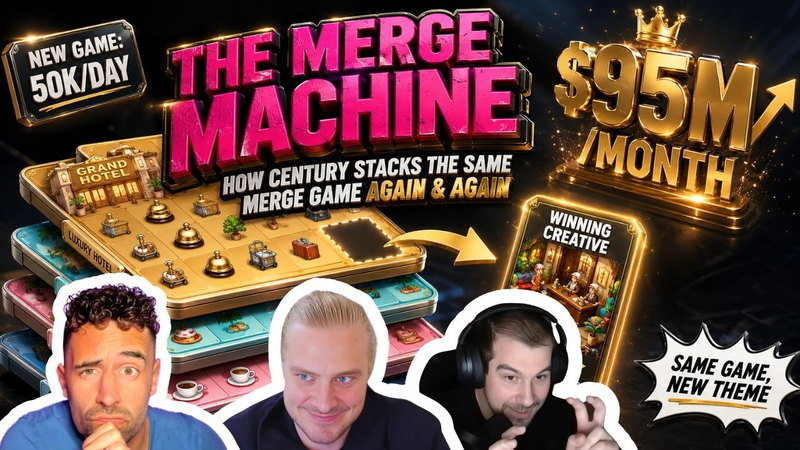
The merge game genre maintains a position of significant stability and profitability within the global mobile market, anchored by high-performing titles like Gossip Harbor, which currently generates approximately $95 million in monthly revenue.
- The merge game genre remains highly lucrative, evidenced by titles like Gossip Harbor generating approximately $95 million in monthly revenue.
- Developers are scaling portfolios by deploying functionally identical merge titles, allowing players to rotate between similar games to maintain engagement once energy resources are exhausted.
- Hotel Legacy by Century Games utilizes a data-driven soft-launch strategy that prioritizes rapid testing of diverse mini-game concepts and creative assets over radical structural innovation.
What PlayStation Needs To Do Next | Extra Credits Gaming
Sony’s strategic pivot toward an all-digital console ecosystem, specifically the reported transition to disc-less hardware by 2028, represents a significant point of contention regarding consumer rights and industry standards.
- Sony plans to transition to an all-digital console model by 2028, effectively eliminating physical media and the associated secondary market for games.
- The shift to digital-only hardware removes the ability to use physical discs for backwards compatibility, limiting the console's utility as a multimedia hub.
- Sony's digital-only strategy faces criticism for lacking true consumer ownership, as users merely license content that can be revoked, as evidenced by the recent removal of 551 purchased movies due to expired licensing deals.
Xbox Tells Sony to Say Less, Digital Ownership & SITTING in Minecraft! | Games For Breakfast
The gaming industry is currently navigating a period of profound instability characterized by widespread workforce reductions, shifting hardware regulations, and contentious debates over digital ownership.
- Microsoft has initiated significant layoffs affecting approximately 12,000 to 14,000 employees, representing roughly 20% of the Xbox workforce.
- As part of its restructuring, Microsoft is transitioning Compulsion Games and Double Fine Productions into independent studios, allowing them to retain their IP catalogs and operational runway.
- Fandom has laid off its entire commerce team and its Vice President of Games and Entertainment, Chris Grant, according to reports from Aftermath.



The Esports Generation: Who They Are, and Why They Spend
The global esports industry has matured into a significant economic force, reaching an estimated 640 million fans and generating $3 billion in annual revenue by 2026.
- Gen Z esports fans represent a massive, high-value demographic of 400 million potential global viewers, with 76.3% of fans having made an esports-related purchase in the past year.
- The esports industry generates $3 billion in annual revenue, driven by a global audience of 640 million and high engagement from a cohort that is largely employed and well-educated.
- Esports fans are highly receptive to brand partnerships, with 47.1% of fans stating that brand collaborations with teams or athletes positively influence their purchase behavior.
🚨📢 BREAKING NEWS: Xbox Layoffs, Niantic rebrand, New Turkish puzzle studio
The gaming industry is currently navigating a period of significant structural change, marked by large-scale workforce reductions and shifts in corporate strategy.
- Microsoft is restructuring its gaming division with 3,200 layoffs and the spin-out of four console studios, including Double Fine and Ninja Theory, to prioritize mobile growth and P&L efficiency.
- The Chinese mini-game market is projected to reach nearly $10 billion in revenue by 2025, supported by a 34% year-over-year growth rate and 1.2 billion monthly active users.
- M&A activity in the second quarter of 2026 reached $2.3 billion, marking the highest deal volume recorded since 2022.
TWIG #391: Xbox's 4,800 Cuts, Apex Predator Playbook, and the 6% Problem Killing New Games
The gaming industry is currently undergoing a structural shift characterized by extreme market consolidation and a pivot toward established intellectual property.
- Legacy franchises older than five years now command 60% of total gaming market earnings, while new titles generate only 6% to 7% of annual revenue.
- Microsoft is restructuring its Xbox division to focus on high-margin pillars like King and Minecraft due to a stagnant Game Pass subscriber base of approximately 30 million.
- The gaming industry is shifting away from original intellectual property development toward the optimization of existing assets to maximize average revenue per user.
Is The Indie Game Industry Broken? (w/ Jonathan Blow) — Ep 70
The contemporary video game industry is experiencing a significant structural shift characterized by the decline of traditional AAA dominance and the rise of independent development.
- The cost of game development has increased by an estimated factor of 18 since 2005, driven by a combination of tripled salaries, tripled team sizes, and development cycles that take twice as long.
- AAA studios are increasingly struggling to maintain quality due to bureaucratic bloat, creating a market vacuum that has allowed independent developers to capture significant market share with high-quality single-player titles.
- Jonathan Blow’s 10-year development project, 'Order of the Sinking Star,' demonstrates that building custom engines and scripting languages—while inefficient from a traditional business perspective—can build a unique brand identity that differentiates a developer in a crowded market.

The truth behind mobile gaming's $17bn D2C market
The global direct-to-consumer mobile gaming market currently stands at $17 billion, accounting for approximately 15% of total in-app purchase revenue.
- The global direct-to-consumer (D2C) mobile gaming market is valued at $17 billion, representing 15% of total in-app purchase revenue.
- Leading industry players are currently capturing between 30% and 60% of their total revenue through web stores and integrated payment links.
- D2C revenue is experiencing 26% year-over-year growth, with 92% of organizations expecting sustained gains through 2026.

Number of video game journalists plummets. Plus! More on Xbox and Atari launches IMDB rival
The global video game industry is currently navigating a period of profound structural instability, characterized by widespread workforce reductions, the contraction of traditional media, and a strategic pivot toward consolidation and niche sustainability.
- The global gaming media sector has faced a significant contraction, with over 280 journalists exiting the industry during the first half of 2026.
- Xbox is undergoing major internal restructuring and shifting its strategic focus toward massive, mainstream-oriented franchises like Call of Duty and Minecraft following ineffective post-acquisition integration.
- Atari is attempting to revitalize its operations by centralizing administrative functions and expanding its MobyGames platform into a professional networking tool for developers.
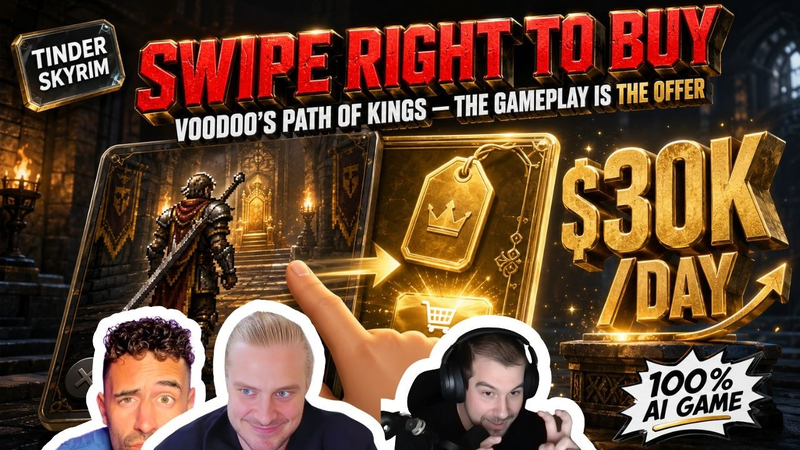
🎮 Path of Kings review: Voodoo's midcore pivot is real
Voodoo is executing a deliberate strategic pivot from its origins in casual puzzle games toward the midcore market, leveraging idle RPG mechanics to capture a broader audience.
- Voodoo is executing a strategic pivot from casual puzzle games to the midcore market, with its broader midcore portfolio now generating $25 million in monthly revenue.
- Path of Kings serves as a key case study for this transition, currently generating approximately $30,000 in daily revenue through idle RPG mechanics and gear progression.
- The publisher utilizes AI-generated creative assets to facilitate rapid user acquisition and high-volume testing of marketing concepts.