Global reports and market data
Documents
Beyond Balatro: Why PlayStack doesn’t want a 100% hit rate
The modern gaming landscape is undergoing a fundamental shift where the traditional distinction between indie and AAA titles is becoming increasingly irrelevant.
- PlayStack strategically avoids a 100% hit rate to ensure resources are available for experimental projects that push genre boundaries.
- Maintaining an 85% profitability rate is the established benchmark for financial health at PlayStack.
- The traditional distinction between indie and AAA titles is becoming irrelevant, with success now driven by authentic, passion-led experiences rather than budget size.

Design Club: Hooked on Fishing!
Fishing mini-games have evolved from niche simulation elements into a ubiquitous design staple across the global gaming industry.
- Fishing mini-games are popular in MMOs like Final Fantasy 14, World of Warcraft, and Elder Scrolls Online because they encourage players to revisit older, underutilized zones, effectively increasing the longevity of existing game content.
- From a development perspective, fishing systems are considered 'low lift' to implement, requiring minimal art assets and simple database-driven logic compared to complex features like new combat spells or character classes.
- Fishing serves as a tool for environmental immersion, allowing developers to force players to pause and appreciate scenic vistas, weather cycles, and time-of-day transitions in a semi-living world.
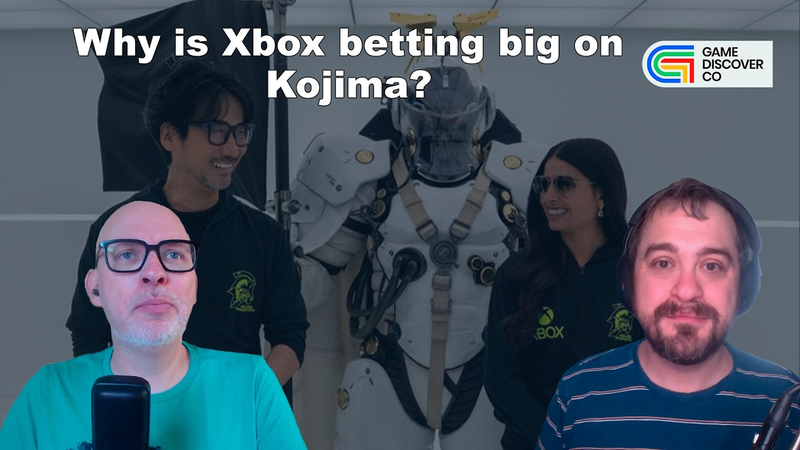
Why is Xbox betting big on Kojima?
The gaming industry is currently undergoing a structural transformation as the dominance of proprietary PC launchers wanes and the financial viability of massive, high-budget single-player projects faces intense scrutiny.
- Sony’s decision to drop Hideo Kojima’s 'Physint' project is likely driven by the financial risk of high-budget titles, as games like 'Death Stranding' require sales of 6 to 7 million copies to justify production costs estimated at $150 million to $200 million.
- Ubisoft is beginning to scale back its intrusive PC launcher on Steam, testing the removal of the requirement on 'Prince of Persia: The Lost Crown' as part of a broader strategy to improve user experience.
- The AAA game industry is facing a structural shift where the traditional model of massive, high-cost investment is becoming unsustainable, leading to calls for a period of 'faceplanting' to force a transition toward more unconventional and cost-effective development methods.
Blizzard is Microsoft's Hidden Weapon?
Recent industry developments highlight significant shifts in consumer behavior, corporate restructuring, and studio leadership performance.
- Blizzard Entertainment achieved its third-highest fiscal year revenue in history during FY26, marking the studio's first back-to-back growth years since FY17.
- Blizzard's financial turnaround was driven by re-entering the Chinese market, a disciplined release cadence of one to two major titles annually, and a successful rebranding of the Overwatch franchise.
- Grand Theft Auto 6 consumer demand is skewing toward premium products, with pre-orders for the $100 Ultimate Edition currently outpacing the $80 standard version.

The shooter that Tencent abandoned: Wardogs hits 2m sales in one weekend
The tactical shooter Wardogs has emerged as a significant commercial success, achieving 2 million unit sales during its opening weekend.
- The tactical shooter Wardogs achieved 2 million unit sales during its opening weekend, reaching profitability shortly after launch.
- Bulkhead successfully launched Wardogs independently after losing support from Tencent and navigating a period of organizational instability.
- The studio’s operational model prioritizes internal autonomy and a developer-led creative vision, explicitly rejecting external publisher influence and industry trends.
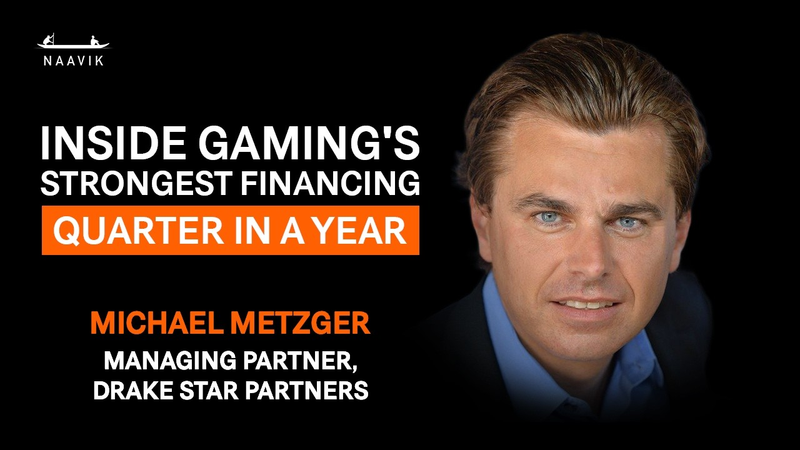
Is Gaming in an AI Bubble? What the Deal Data Says
The gaming industry is currently undergoing a structural transition characterized by a shift from speculative content creation toward infrastructure, hardware, and artificial intelligence.
- Gaming financing reached a 12-month high in Q2 2026 with over $2.5 billion raised, despite the total volume of deals dropping from roughly 200 per quarter in 2021-2022 to below 100.
- Capital allocation has shifted away from general content and studio funding toward AI, ad-tech, and hardware, with AR glasses emerging as a significant platform bet.
- The current funding landscape for game studios is bifurcated; while AI-native gaming companies are attracting massive capital, studios that raised small rounds in 2021-2022 are struggling to secure follow-on financing.

🎮 Playables Are Now 40-60% of Creative Spend: Here's what's working ńow
Playable advertisements have emerged as a dominant force in digital marketing, currently accounting for 40% to 60% of total creative spend across the gaming and non-gaming sectors.
- Playable advertisements now represent 40% to 60% of total creative spend across both gaming and non-gaming sectors.
- The industry is shifting toward 'Frankenstein playables,' which synthesize multiple proven, high-engagement mechanics like yarn puzzles and rescue scenarios into a single ad unit.
- Non-gaming sectors, including finance and social apps, are adopting gamified elements like obstacle-avoidance and item-catching to drive user engagement through low-friction interactions.

Sony Fumbles Kojima, Zelda’s Ocarina of Load Times & Skyrim LOVES Ikea | Games For Breakfast
The gaming industry is currently navigating a period of significant strategic volatility, characterized by shifting publisher priorities and evolving consumer expectations.
- IKEA has released a playable Skyrim mod featuring actor Matt Barry as part of a marketing campaign to promote a new shelving system.
- Sony and Kojima Productions have experienced a public disconnect regarding the developer's departure from the PlayStation ecosystem, with Xbox actively courting the studio.
- Nintendo has confirmed it will not provide refunds to customers for costs associated with past illegal tariffs, instead opting to host a customer appreciation sale to discount products.
Why PlayStation Ditched Hideo Kojima's Physint
PlayStation has officially terminated its partnership with Hideo Kojima for the development of his upcoming espionage action title, Physint.
- PlayStation cancelled its partnership with Hideo Kojima on the espionage game 'Physint' (renamed 'Fizzant') due to the project consistently missing development milestones, exceeding budget expectations, and failing to meet internal revenue targets.
- Kojima Productions has moved the 'Physint' project to Xbox, which views the investment as a strategic play to expand its presence in Asian markets and secure film and television rights for both 'Physint' and 'OD'.
- PlayStation is currently undergoing a strategic shift toward maximizing revenue per user and implementing more rigorous development milestones, following a period where previous Kojima titles like 'Death Stranding' failed to meet the company's high commercial expectations.
🚨📢BREAKING NEWS: EA merging with Savvy? Chinese market hits $50bn, Pokemon GO record spend week
The gaming industry is currently experiencing significant shifts driven by market expansion in China, potential large-scale corporate consolidation, and aggressive monetization strategies.
- The Saudi Public Investment Fund is reportedly exploring a merger between Electronic Arts and Savvy Games Group, a move that would consolidate major franchises including EA Sports FC, Battlefield, and Monopoly Go.
- The Chinese gaming market has surpassed $50 billion in annual revenue, with a projected player base of 769 million by 2030 and mini-games now accounting for nearly 20% of mobile revenue.
- Live-service optimization continues to drive record-breaking performance, evidenced by Pokémon Go achieving its highest weekly revenue since launch and Delta Force reaching $10 million in daily spending.

TWIG #400: Is the Game Industry Actually Crashing, OpenAI's Astra and 8 Years of Hot Takes
The global gaming industry is currently undergoing a structural market correction rather than a catastrophic collapse.
- The gaming industry is undergoing a structural market correction rather than a collapse, with employment levels remaining stable at approximately 750,000 workers since 2022.
- The sector remains fundamentally robust, supported by a global player base exceeding 4 billion and a 16% compound annual growth rate in mobile advertising.
- Indie game revenue has increased sixfold over the past decade, highlighting a significant shift in market distribution alongside AAA development budgets that now range from $250 million to $400 million.
The Legend of Zelda: Ocarina of Time and GTA 6: The video game industry’s Barbenheimer moment
The simultaneous anticipation surrounding the upcoming remake of The Legend of Zelda: Ocarina of Time and the impending launch of GTA 6 represents a pivotal cultural moment for the gaming industry.
- The simultaneous anticipation for the Ocarina of Time remake and GTA 6 serves as a primary catalyst for market engagement, mirroring major industry showcases.
- The gaming industry is experiencing cyclical volatility, marked by significant layoffs in North America contrasted with growth in the Asia-Pacific region.
- Studios are shifting development strategies by balancing cost-effective outsourcing with the need for local talent retention and cultural alignment.