Game Engines reports and market data
Documents

Moving the Heavens: An Artistic and Technical Look at the Skies of The Last of Us
The artistic and technical development of skyboxes in The Last of Us centers on the thesis that the sky is a critical, yet frequently overlooked, narrative tool capable of defining the emotional tone, lighting, and color palette of an entire game environment.
- The Last of Us utilized high-resolution matte paintings projected onto a dome to maintain artistic control over the game's skyboxes.
- To simulate cloud movement without the performance overhead of volumetric systems, the team implemented a UV distortion technique known as flow using vector-based motion maps.
- The development team achieved perspective-correct cloud movement by calculating the dot product of wind direction against the sky dome’s normals.
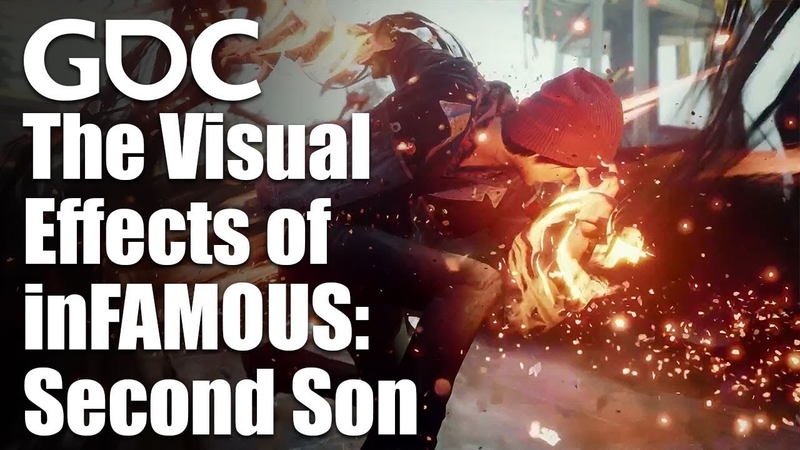
The Visual Effects of inFAMOUS: Second Son
The visual effects strategy for inFAMOUS: Second Son centers on the pursuit of a believable, stylized aesthetic that prioritizes fluid traversal and dynamic power representation over strict photorealism.
- The development team replaced traditional, resource-heavy flipbooks with a custom, GPU-accelerated, expression-based particle system to achieve high-fidelity visual effects.
- Visual cohesion for power-based traversal and combat was maintained through advanced lighting integration, including particle-cast shadows, dynamic light emission, and spherical harmonic probes.
- The team utilized plasma-like waveforms and curl noise, a technique termed 'light writing,' to define the form and timing of character powers.
Math for Game Programmers: Understanding Homogeneous Coordinates
This analysis explores the mathematical foundations of homogeneous coordinates in game development, specifically focusing on how they facilitate 3D perspective and coordinate transformations.
- Homogeneous coordinates use a four-dimensional vector system to unify translation and rotation into a single matrix-based framework for efficient spatial manipulation.
- The W component distinguishes between positions and directions: a W value of 1 represents a position subject to translation, while a W value of 0 represents a direction invariant to translation.
- Perspective projection is achieved by storing depth information in the W component, which is then used in a hardware-accelerated 'W-divide' process to scale X, Y, and Z coordinates.
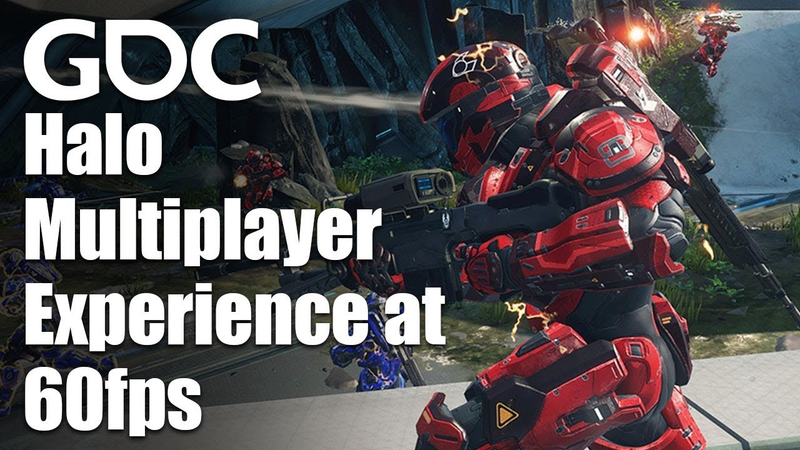
Running the Halo Multiplayer Experience at 60fps: A Technical Art Perspective
Achieving a consistent 60 frames per second for the Halo 2 Anniversary multiplayer experience on Xbox One required a fundamental shift in production philosophy, prioritizing performance as a core design constraint rather than a final optimization step.
- Performance was treated as a foundational design constraint rather than a final optimization step, ensuring a consistent 60fps for Halo 2 Anniversary on Xbox One.
- The development team enforced a strict 16.6ms frame budget, allocating 13.5ms to environments and 2.5ms to sandbox elements.
- Technical artists were embedded directly into map teams to provide real-time oversight, preventing the need to strip visual fidelity during the final production stages.
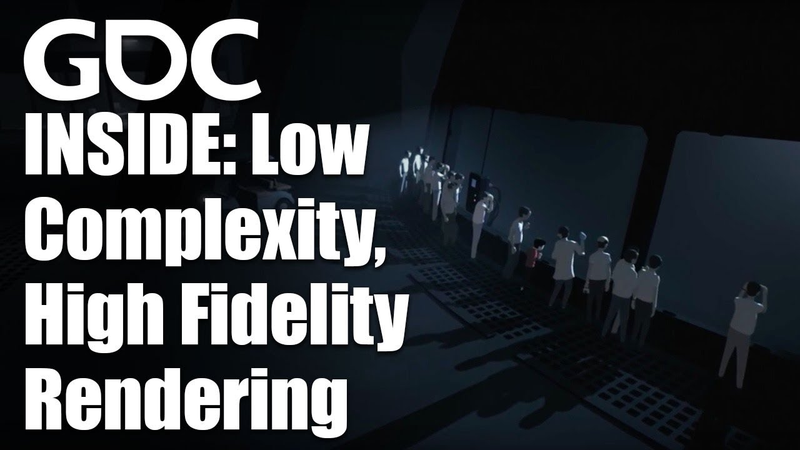
Low Complexity, High Fidelity - INSIDE Rendering
The rendering architecture for INSIDE centers on achieving high-fidelity, atmospheric visuals within a 2.5D environment while maintaining a consistent 60fps performance.
- The rendering engine utilizes a custom light pre-pass architecture that executes complex lighting and volumetric effects in under one millisecond to maintain a consistent 60fps.
- Visual fidelity is achieved through empirical approximations and mathematical shortcuts rather than brute-force computation, prioritizing efficiency to stay within strict performance budgets.
- Blue noise is implemented to manage dithering and eliminate banding artifacts, providing a superior error distribution compared to traditional noise patterns.
Tech Art in Tamriel: The Elder Scrolls Online's Character Tools and Pipeline
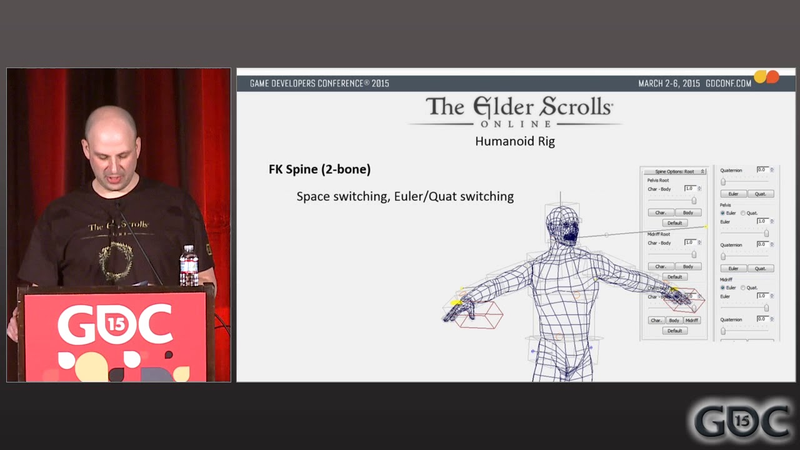
The development of The Elder Scrolls Online required a sophisticated, data-driven technical art pipeline to manage the massive scale of its character assets.
- The Elder Scrolls Online utilized a modular, XML-based rigging system in 3ds Max to manage character assets across ten playable races and ninety unique monster rigs.
- To meet DirectX 9 performance constraints, the team enforced a standardized humanoid rig limited to 77 bones, enabling automated asset creation and procedural animation for elements like robes and tails.
- A data-centric architecture allowed for the management of thousands of armor and character combinations while enabling tool updates across the network without requiring software restarts.
Data binding architectures for rapid UI creation in Unity
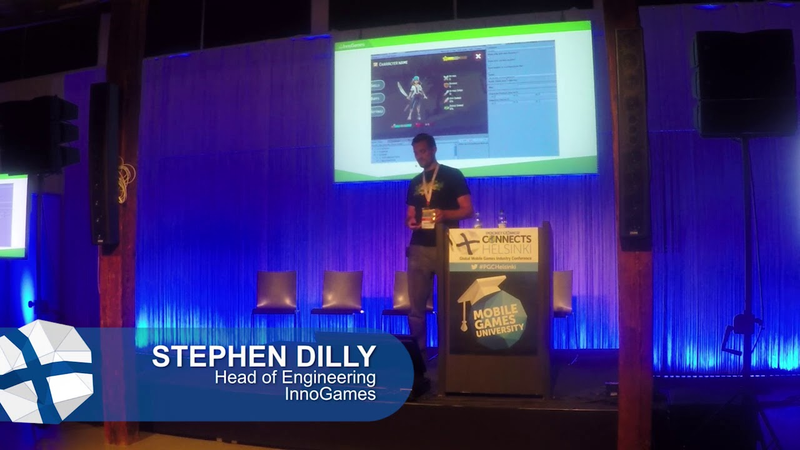
Modern mobile game development often suffers from inefficient, siloed workflows where artists and developers work in isolation, leading to redundant tasks and late-stage errors.
- Implementing MVC and MVVM architectures in Unity decouples UI views from game logic, enabling parallel workflows where artists and developers work independently.
- Data binding allows the UI to automatically update based on game state changes, while startup-time caching eliminates the runtime performance overhead typically associated with C# reflection.
- Mocking capabilities within the Unity editor allow artists to test UI components in isolation, removing the need for full-game builds and significantly accelerating iteration cycles.
The Art of Destruction in Rainbow Six: Siege
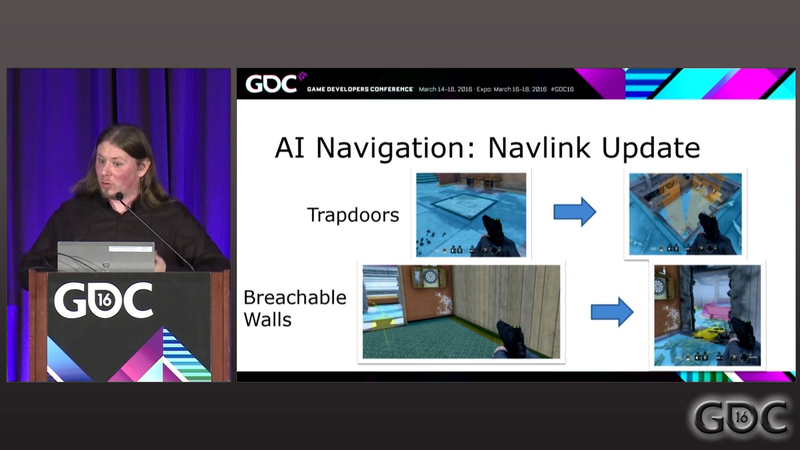
The Realblast engine serves as the foundational architecture for Rainbow Six: Siege, shifting environmental destruction from a scripted visual effect to a core tactical mechanic.
- Destruction in Rainbow Six: Siege is a core gameplay mechanic that functions as a tactical tool, allowing players to create new paths, sightlines, and murder holes while enabling defenders to reinforce walls to funnel attackers.
- The development team utilized a custom-built solution called 'Realblast' to manage environmental destruction, which relies on a graph-based model where connections between objects are broken to create independent, destructible fragments.
- To maintain performance, the team implemented 'surface destruction' for planar objects, using 2D convex hulls to represent holes rather than costly full-geometry simulations.

OpenXR News: Converging on a Widely Accepted VR API Standard
The OpenXR initiative, spearheaded by the Khronos Group, seeks to resolve the persistent fragmentation within the virtual and augmented reality sectors by establishing a universal, vendor-agnostic application programming interface.
- The Khronos Group's OpenXR initiative establishes a universal, vendor-agnostic API to eliminate the need for developers to build custom integrations for every individual VR/AR hardware platform.
- Major industry stakeholders, including Valve, Oculus, Google, and Epic Games, are collaborating to ensure content compatibility across diverse runtimes and hardware configurations.
- The 1.0 release utilizes a core feature set supplemented by an extension-based model, allowing for vendor-specific innovations like gesture recognition while maintaining a unified standard.
Gears of War 4, Project Triton: Pre-Computed Environmental Wave Acoustics
Project Triton serves as a sophisticated acoustic modeling framework designed to automate the simulation of complex wave phenomena, including diffraction, reflection, and reverberation, within the high-fidelity environment of Gears of War 4.
- Project Triton automates acoustic simulation for complex wave phenomena like diffraction and reflection, replacing labor-intensive manual reverb volume placement with an offline baking process similar to light mapping.
- The system extracts critical perceptual parameters—initial energy, reflected energy, decay rates, and occlusion—and compresses them into a 100 to 110 MB footprint per map to fit within a 500 MB total RAM budget.
- Development teams should prioritize aesthetic interpretation over strict physical accuracy, as evidenced by the shift from a complex 12-reverb matrix to a more manageable and debuggable six-bus system.
The Inner Workings of Fortnite's Shader-Based Procedural Animations
The development of Fortnite’s procedural animation system relies on vertex shaders to achieve a stylized, responsive aesthetic while maintaining high performance.
- Fortnite achieves high-performance procedural animation by offloading complex movement from the CPU to the GPU using vertex shaders, avoiding the high computational costs of traditional skeletal animation.
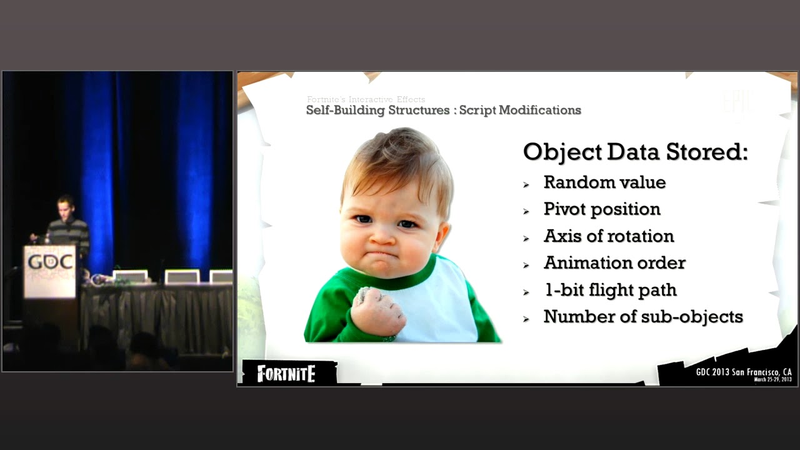
- The system uses a custom 3ds Max toolset to embed animation metadata—including flight paths, pivot points, and animation order—directly into the UV channels of static meshes.
- Gameplay code drives procedural movement by feeding real-time variables like impact vectors and health status into the shader, which then manipulates individual mesh components.

John Carmack on The Issues and Rewards of Bleeding Edge Engine Development
The evolution of computing power has brought graphical fidelity to the threshold of cinematic realism, shifting the industry’s primary challenge from rendering to the advancement of complex physics simulations and artificial intelligence.
- The primary challenge in game development has shifted from graphical rendering to the implementation of complex physics simulations and artificial intelligence.
- Studios are trapped in a 'mainframe-like' cycle where ballooning team sizes and legacy production pipelines stifle innovation and agility.
- To combat rising development costs and multi-year project inefficiencies, studios must prioritize strategic asset reuse, standardized workflows, and smaller, iterative releases.