Game Development reports and market data
Documents
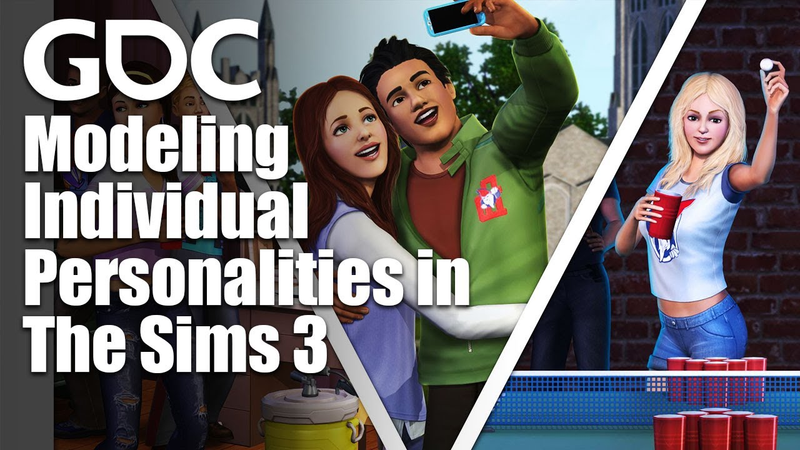
Modeling Individual Personalities in The Sims 3
The Sims 3 centers on the objective of fostering emergent narrative through a dynamic, autonomous simulation of life.
- To optimize performance, The Sims 3 replaced the inefficient iteration of all object interactions with a memory-efficient map that links specific 'Commodity' desires directly to the interactions capable of satisfying them.
- Instead of choosing the single highest-scoring action, which results in robotic behavior, the game utilizes a Boltzmann distribution to select actions, ensuring a natural variety of choices while still prioritizing high-utility tasks.
- The engine employs a data-driven architecture that allows developers to define complex interconnections between personality traits and social interactions without modifying the core codebase, ensuring long-term maintainability.

Practical Contract Law 201 for Indie Developers: Moderately Scary Edition
Contracts function as the foundational rulebooks for independent game studios, providing the necessary clarity and predictability to navigate business relationships and mitigate risks associated with both failure and unexpected success.
- Prioritize robust work-for-hire agreements that explicitly transfer all project-related intellectual property to the studio, avoiding fragmented 'Franken-contracts' that jeopardize ownership.
- Secure leverage in development agreements by withholding the formal transfer of intellectual property rights until all final payments are successfully processed.
- Mitigate financial risk from scope creep by implementing rigorous scope-of-work documentation, formal change-order processes, and mandatory kill fees.
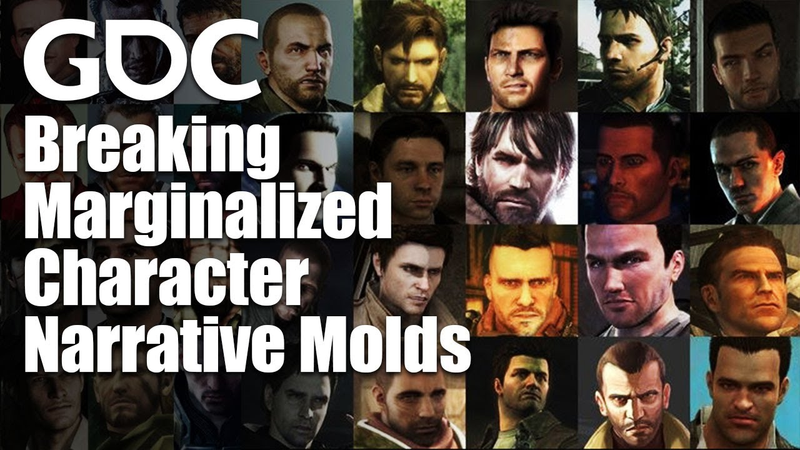
Breaking Marginalized Character Narrative Molds to Write Better, Richer Characters
The prevailing reliance on the cisgender, able-bodied white male as the default protagonist in video games frequently results in generic, imperialist archetypes that lack genuine relatability.
- Developers must move beyond the default cisgender, able-bodied white male protagonist to avoid generic, imperialist archetypes and foster deeper character relatability.
- Authentic representation requires grounding protagonists in specific, deliberate cultural and personal histories, as demonstrated in the narrative approach of Treachery in Beatdown City.
- Writers should avoid reducing marginalized characters to one-dimensional stereotypes or trauma-based plot devices, a failure observed in titles like Mafia III and Watch Dogs 2.
Mad Skillz for Directing Dialogue
Effective dialogue direction in video games requires a shift from viewing voice recording as a purely technical task to treating it as a collaborative creative process.
- Establish a single director as the sole conduit for feedback to prevent 'direction by committee,' which wastes time and confuses performers.
- Provide scripts and character briefs to actors well before recording sessions to allow them to internalize roles and reduce performance anxiety.
- Avoid line readings, which often lead to mimicry; instead, provide context or ask actors to recall personal experiences that mirror a character's emotional state.
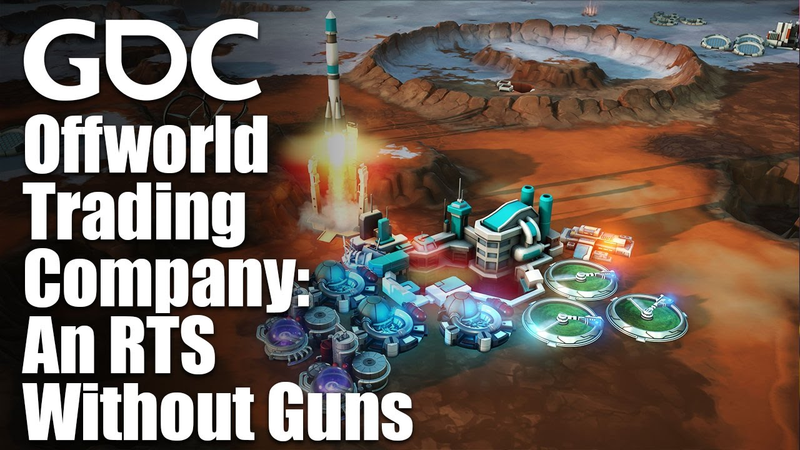
Offworld Trading Company: An RTS Without Guns
Offworld Trading Company reimagines the real-time strategy genre by replacing traditional military combat with a dynamic, player-driven free market.
- Offworld Trading Company differentiates itself from traditional RTS games by focusing exclusively on the 'macro' economic layer, removing unit micro-management to create a distinct sub-genre.
- The game's market mechanics utilize a dynamic pricing system where buying black market items, such as pirates or sabotage tools, increases their cost for all players, naturally limiting their frequency and impact.
- Early access development allowed the team to replace a standard setup screen with a reverse-auction mechanic for starting locations, a core feature that was iterated upon for 12 months prior to the official launch.

GDC Founder Chris Crawford's Dragon Speech
The evolution of interactive entertainment hinges on the transition from simple mechanical play to a sophisticated medium capable of conveying the full spectrum of human emotion.
- The game industry’s focus on commercial viability and incremental complexity is stifling the medium's maturation into a serious art form.
- Interactive entertainment should shift from simple mechanical play toward the development of complex artificial personalities and emotional systems that simulate the human condition.
- Prioritizing the preferences of a vocal, expert demographic has narrowed the scope of game design, leading to a reliance on repetitive mechanics over broader human experiences.

Don't Change a Thing! The Challenges of Evolving Solitaire
Managing a massive digital product suite like Solitaire requires a delicate balance between driving revenue growth and maintaining the loyalty of a deeply entrenched user base.
- Managing a product with over 200 million downloads requires prioritizing iterative refinement over radical overhauls to avoid alienating a habitual user base.
- A dual-layered feedback approach combining quantitative performance metrics with qualitative, free-form user commentary provides the most actionable insights for feature adjustments.
- Targeted updates to progression systems and visual design have demonstrated the ability to boost positive player sentiment by ten percentage points within a two-week timeframe.
Designers Are from Saturn, Programmers Are from Uranus
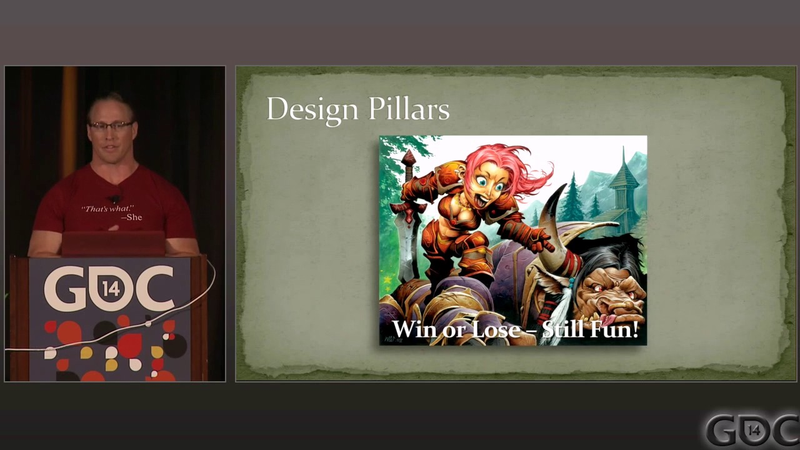
The fundamental friction between game designers and programmers arises from divergent professional priorities, where designers focus on creative iteration and player experience while programmers emphasize system scalability, performance, and code maintainability.
- The core friction between design and engineering stems from conflicting priorities, where designers focus on creative iteration while programmers prioritize system scalability and code maintainability.
- Integrating technical designers into the development process provides a necessary conduit to translate creative requirements into feasible technical implementations.
- Teams should replace lengthy, rigid manuals with concise, two-page design documents to facilitate ongoing dialogue and ensure documentation remains a living tool for decision-making.
Peggle Blast: Big Concepts, Small Project
The development of Peggle Blast for mobile platforms necessitated a radical departure from traditional audio production methods due to a stringent 5MB memory constraint, a stark reduction from the 783MB utilized in previous console iterations.
- The development of Peggle Blast reduced audio memory usage from 783MB in console versions to a 5MB limit for mobile, necessitating a shift from pre-recorded wave files to a MIDI-based architecture.
- By utilizing procedural audio synthesis and real-time digital signal processing, the team generated dynamic soundscapes while avoiding the high CPU overhead associated with compressed formats like MP3 or Ogg.
- The team implemented a multi-tiered quality manager that dynamically adjusted voice limits and sample complexity to ensure consistent performance across diverse mobile hardware.
Building Game Mechanics to Elevate Narrative in Oxenfree
The development of Oxenfree centers on the philosophy that narrative should function as the primary driver of gameplay rather than a secondary element siloed from mechanical systems.
- Night School Studio treated dialogue as a core gameplay mechanic by requiring players to initiate every conversation, ensuring that Alex only speaks when the player chooses to trigger an interaction.
- To maintain narrative flow without traditional cutscenes, the developers implemented a system where NPCs can dynamically resume interrupted conversations or acknowledge when a player cuts them off, utilizing hundreds of specific lines to bridge dialogue gaps.
- The design team prioritized a 'Leanback' experience by positioning dialogue bubbles directly over characters, allowing players to focus on the action without moving their eyes to read subtitles at the screen edges.

The Legality of Using Your Data - Games of Tomorrow - Extra Credits
The integration of personal data into game development offers significant potential to enhance player experiences through personalization, such as adaptive matchmaking, tailored tutorials, and customized difficulty settings.
- The gaming industry faces a critical tension between using personal data to enhance player experiences—such as adaptive matchmaking and difficulty—and the risk of predatory practices like dynamic pricing or manipulative microtransactions.
- Global regulatory landscapes are shifting toward stricter oversight, exemplified by the European Union’s regulations on behavioral targeting and China’s mandates regarding loot box transparency.
- In the United States, the Federal Trade Commission regulates data practices under broad standards against unfair or deceptive acts, though legal definitions regarding differential pricing remain ambiguous.
Classic Game Postmortem: Sid Meier's Civilization
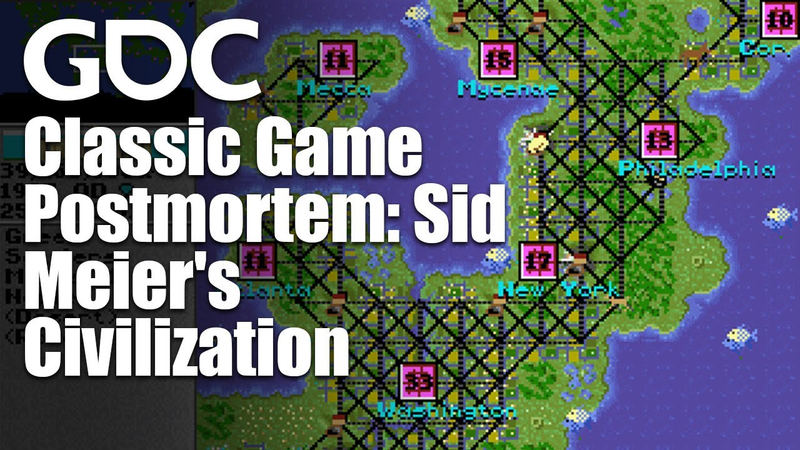
The development of Civilization represents a pivotal shift in strategy gaming, moving away from rigid historical simulation toward a sandbox experience that prioritizes player agency and long-term strategic planning.
- Sid Meier and Bruce Shelley developed the original Civilization in under one year, beginning in early 1990 and shipping the title in 1991.
- The game's design was heavily influenced by existing titles like Empire, SimCity, and Railroad Tycoon, as well as Francis Tresham’s board game, Civilization.
- The 'tech tree' mechanic was a core innovation that provided players with a sense of progression and long-term strategic goals, such as unlocking railroads to improve unit mobility.