1 free read left. Create a free account for unlimited reading + AI research.
Create free account
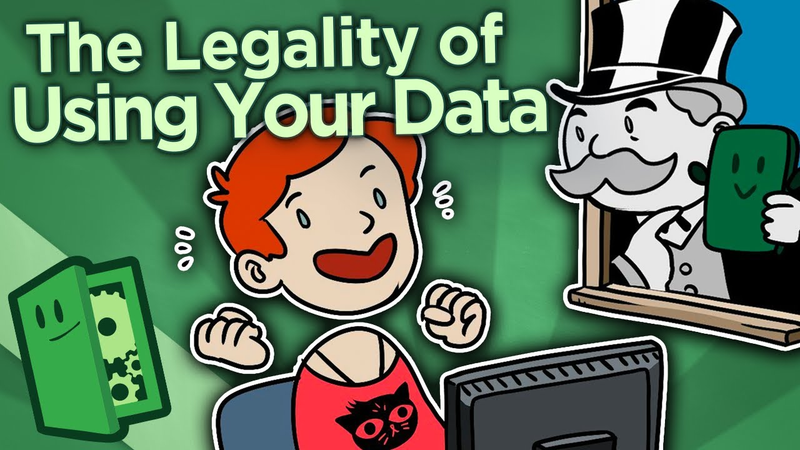
The Legality of Using Your Data - Games of Tomorrow - Extra Credits
Key insights
6 takeaways- 01The gaming industry faces a critical tension between using personal data to enhance player experiences—such as adaptive matchmaking and difficulty—and the risk of predatory practices like dynamic pricing or manipulative microtransactions.
- 02In the United States, the Federal Trade Commission regulates data practices under broad standards against unfair or deceptive acts, though legal definitions regarding differential pricing remain ambiguous.
- 03The industry is at a crossroads where developers must choose between adopting self-regulatory best practices or facing inevitable government intervention.
- 04Global regulatory landscapes are shifting toward stricter oversight, exemplified by the European Union’s regulations on behavioral targeting and China’s mandates regarding loot box transparency.
- 05Hyper-personalization risks fracturing gaming communities into isolated bubbles and complicates the ability to critically review games that function differently for every user.
- 06Constant monitoring and data collection may alter player behavior, potentially stifling the freedom of choice that is fundamental to the gaming medium.
Ask AI about this video
Transcript
In our episode on liminal spaces, we talked about the ways that modern games use your data to personalize your experience. The examples we used, like getting emails from your in-game characters or the AI taking over a friend's avatar, those would not be possible without today's connected technology. Today, we're going to talk about how modern games use your data in other ways that are a bit less obvious or noticeable, but no less important for gaming's future. And to help, we've gotten some writing assistance from Joe Newman, privacy and consumer protection counsel at EA. And disclaimer, these are all Joe's opinions, not formal legal advice, and this does not necessarily represent the views or practices of EA. Cool? Okay. Also, say hi to Maki. He's doing the art for us this week, and he's great. Behind the scenes at almost any major developer, there's a team of engineers collecting and using player data to make the games work. Most of these data uses are unsurprising. Authenticating in-game
purchases, detecting cheating, identifying balance issues or glitches, and stuff like that. But as tech improves and data from disparate sources gets better organized, it opens a whole new field of opportunity for developers to customize your experience, even if you aren't consciously aware it's happening. For instance, games of the future could use player data in matchmaking to consider not just your skill level, but also how seriously or casually you play, and could automatically shield you from toxic or overly aggressive players. Or future games could save you time by skipping over tutorials if you're a series veteran, recommending items or loadouts based on your play style, and even offering you custom discounts for in-game items or other games you might like to play. Future games could also be made more accessible by detecting when you're struggling with a specific level or task and offering personalized help, either by giving you boosts, creating specially crafted training missions, or in some cases, even tweaking the RNG
odds ever so slightly in your favor to give you a better chance of brute forcing your way to victory. Through personalization, games of tomorrow will be smarter, more streamlined, and ultimately more fun. But, there is a flip side to this. In today's microtransaction-heavy industry, where every new feature must be justified with a bump in revenue, there's definitely the risk that players are going to be taken advantage of. That they'll be pestered with overly aggressive or invasive ads, or that their personal data will be used to make their experience less fun, all in the service of making a few extra bucks. So, one might reasonably ask, is all of that legal? In the United States, the Federal Trade Commission and similar state consumer protection laws prevent private businesses from engaging in, quote, "unfair or deceptive acts or practices in or affecting commerce." And the FTC has written a lot about consumer issues raised by big data. But, then again, if unfair or deceptive acts or practices sounds kind of like a squishy legal
standard to you, well, that's because it can be. To illustrate, Orbitz drew some negative criticism a few years back because they were secretly showing pricier hotel deals to customers searching their site using a Mac versus a PC. The thinking presumably being that Mac users are probably more likely to pay for the additional luxury. The Obama administration and FTC did not like that Orbitz's targeting practices were not super transparent to consumers. That is for sure. But, the government was hesitant to outright say that all differential pricing is automatically illegal. After all, we are a capitalist economy here in the US, and both buyers and sellers can benefit when the market efficiently responds to demand. If a seller knows you well, understands your needs, and goes out of its way to present you with offers that it thinks you'll like, that's not necessarily hurting you. The heck, some would say that that's good customer service. But legal analysis aside for a second, as game developers, we need to tread very carefully here for a simple reason. Gamers are smart and they talk to each
other. They compare their experiences on forums. They reverse engineer and min-max game systems, and they do all of that for fun. Imagine that Orbit's scenario taking place in the gaming world. Imagine a game where the in-game shop charges you just a little bit more if you're on an iPhone than if you're on an Android device. Or imagine a game that bumps up its prices if it recognizes you as somebody who spends a lot in its store. Or imagine that the game detects that you've been collecting all the pieces to build a specific set of armor and you only need just one more piece of adamant to make it. And then suddenly you notice that for some reason adamant costs more in your in-game shop than in your friend's. Players will catch on to stuff like that. And if they think they're being cheated, they will turn on you hard. The stakes here are real. If developers don't self-regulate and keep their mechanics fair to players, the government is eventually going to have to intervene. The EU has already passed a regulation going into effect next year giving citizens the
right to withdraw their consent to all behavioral targeting. Meanwhile, countries like China are already taking a direct active role in game development forcing game companies to publicly disclose drop rates for in-game loot boxes. We need to come to our own set of best practices for this stuff now because otherwise all developers, including those who aren't abusing data, are going to get caught up in this mess. If we can figure this out though and keep our players' trust in the process, data-driven games have the potential to move our medium forward in some really exciting ways, making gaming more personal and therefore more engaging. Hopefully, this has given you a glimpse into gaming's data-driven future and driven you to think a bit more about how your games get to know you as a player. But believe me, there is a lot more worth talking about here. Pretty big questions like how do we review games or even talk about them critically when the game I experienced might be fundamentally different than the game you experienced due to personalization. Or as a developer, what responsibility do I have to avoid exposing players to
content that I know would be outside their personal comfort zone. And if we do take steps like that, do we risk fracturing our games community into disparate bubbles, each experiencing different versions of our game? And lastly, as a player, if you know that your actions are going to be tracked and potentially carry consequences outside the game, will that actually change the way you play? Would you make different choices if you felt like the game was watching you? As you can see, we have just barely scratched the surface on this. Maybe we'll come back to it another time. Until then, share your thoughts on these questions below. Thank you again to Maki and Joe for their help today, and we will see you next week.
Summary
The integration of personal data into game development offers significant potential to enhance player experiences through personalization, such as adaptive matchmaking, tailored tutorials, and customized difficulty settings. While these data-driven features can streamline gameplay and increase accessibility, they also introduce ethical and legal risks. The industry faces a critical tension between leveraging data to improve engagement and the potential for predatory practices, such as dynamic pricing or manipulative microtransactions, which could erode player trust and invite external regulatory scrutiny.
In the United States, the Federal Trade Commission regulates these practices under broad standards against unfair or deceptive acts. However, legal definitions remain somewhat ambiguous, as differential pricing is not inherently illegal in a capitalist market. The industry is currently at a crossroads where developers must decide whether to adopt self-regulatory best practices or face inevitable government intervention. Global examples, such as the European Union’s strict regulations on behavioral targeting and China’s mandates regarding loot box transparency, demonstrate that the regulatory landscape is already shifting toward greater oversight.
Beyond legal concerns, the rise of hyper-personalized gaming introduces complex challenges for the medium. If games become fundamentally different for every user, the industry must grapple with how to critically review these experiences and whether such personalization risks fracturing gaming communities into isolated bubbles. Furthermore, the awareness of being constantly monitored may alter player behavior, potentially stifling the freedom of choice that defines the medium. Ultimately, the industry must prioritize transparency and fairness to maintain the player-developer relationship, ensuring that data-driven advancements serve to enrich the gaming experience rather than exploit the consumer.
































Comments