Game Development reports and market data
Documents

Steam Demos Are the New Early Access
Modern indie game development prioritizes a marketing-first philosophy where high-quality, polished demos serve as the primary vehicle for market validation and wishlist acquisition.
- Game developers should prioritize the 'ugabooga' solution—the lowest-investment, simplest implementation—to test core mechanics before building complex systems.
- Steam's 'New and Trending' tab remains a critical discovery metric, with an estimated threshold of approximately $8,000 in sales required to gain visibility.
- The quality of a game is validated when playtesters continue playing for hours after a scheduled session ends, indicating the presence of 'secret sauce' beyond just a compelling trailer.

Square Enix Next: That Excitement Once Again
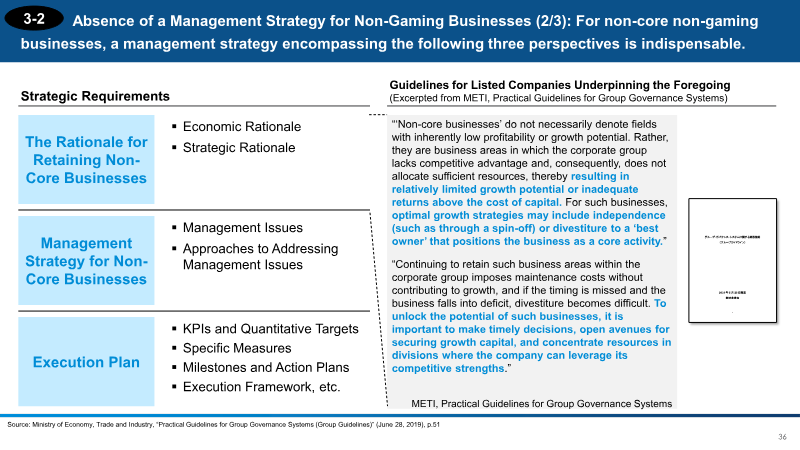
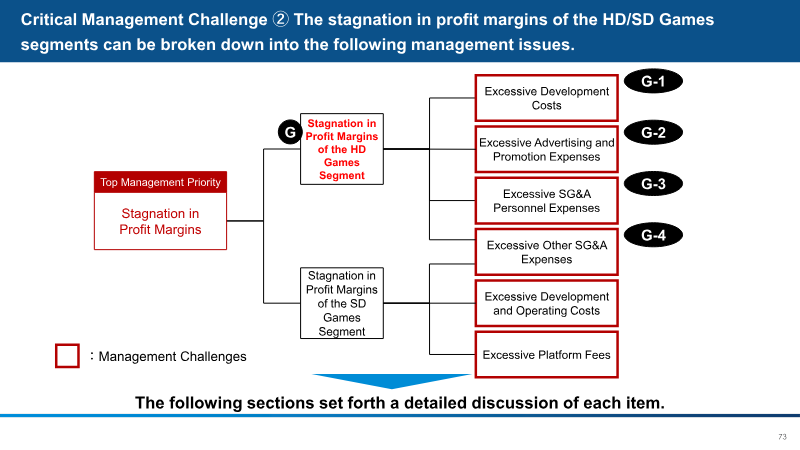
Square Enix’s recent performance review exposes a persistent decline in revenue growth and profitability over the past three years, with operating income falling 32% and ROE dropping 61%.
- Square Enix has experienced a significant financial decline over the past three years, marked by a 32% drop in operating income and a 61% decrease in return on equity (ROE).
- Core gaming segments are underperforming, with HD and SD game revenues falling 4% and 5% respectively, while MMO licensing remains the only growth driver at +11%.
- Operating margins for HD and SD segments remain inefficient at 35–40%, and SG&A costs exceed industry norms by 5–6 percentage points due to an oversized sales force.
PLAYERUNKNOWN’s Comeback… So Why Did They Do This?
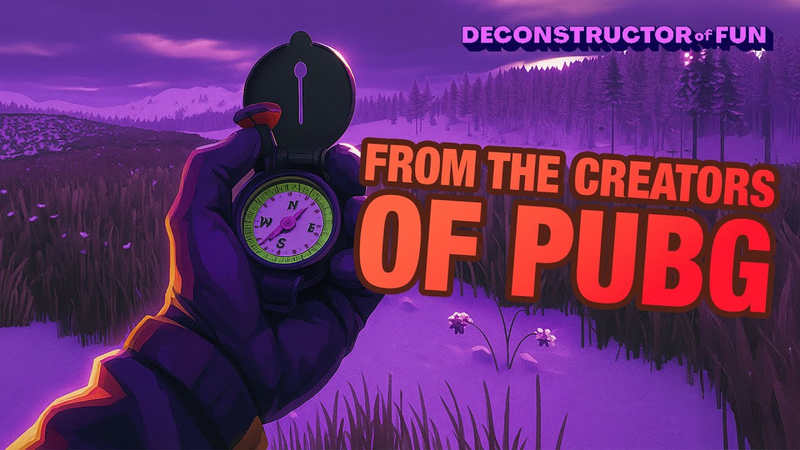
PlayerUnknown Productions, a fully remote AAA studio led by Brendan Greene and CEO Kim Nordstrom, serves as the focal point for an analysis of studio strategy and the risks associated with high-profile game development.
- PlayerUnknown Productions, backed by a $70 million investment from Krafton in 2021, released the survival title Prologue as a technical proof-of-concept rather than a flagship product.
- Prologue failed to gain market traction, peaking at only 182 concurrent players on Steam.
- The studio’s decision to launch Prologue in Early Access invited negative public scrutiny, as the release lacked the controlled environment typically used for technical testing.

Surviving "extinction events" in the games industry with Tyranno Studios' Michael Rubinelli
The games industry is defined by recurring extinction events, such as the transitions from 2D to 3D, console to online multiplayer, and premium to free-to-play models.
- The mobile games market is dominated by long-standing titles, with top-performing strategy games like Clash of Clans maintaining market leadership 13 years after their initial launch.
- Transitioning to new business models like free-to-play requires a shift from relying on personal creative intuition to a data-driven mindset where product decisions are validated by user behavior, churn rates, and testing.
- AI should be utilized to compress production schedules and accelerate the testing of ideas rather than as a replacement for human oversight; it makes good ideas testable faster but cannot turn bad ideas into good ones.

Inside General Intuition’s Push to Build Embodied AI Agents
General Intuition is advancing the development of embodied AI agents by utilizing billions of gameplay clips from the Metal platform to construct sophisticated world models.
- General Intuition is developing world models that simulate environments by predicting future frames based on user actions, allowing for interactive, embodied AI agents rather than just passive video generation.
- The company is leveraging a proprietary dataset from Medal, a platform for recording and sharing gameplay clips, to train agents on human behavior across diverse, consistent first-person perspectives.
- General Intuition aims to provide game developers with tunable AI bots that allow for skill-level adjustments (on a scale of 0 to 100) and steerable text-based prompts to control agent behavior.

How mobile devs use AI and Pikmin Bloom blossoms | Week in Mobile Games podcast E75
The mobile gaming industry is currently defined by a shift toward massive marketing expenditures, with budgets frequently surpassing $50 million to secure user acquisition.
- Pikmin Bloom has reached $100 million in lifetime revenue, with 2025 marking its most successful year to date at $34.8 million in revenue despite only having one month remaining in the year.
- Pikmin Bloom's monthly installs have approximately doubled between 2022 and 2025, while its revenue has more than quadrupled in the same period, indicating improved monetization efficiency.
- Industry experts at the Wiggin Games Summit suggest that the term 'casual' is increasingly inaccurate for mobile games like Royal Match or Candy Crush, as their player bases often exhibit high-engagement, 'hardcore' behavioral patterns.
What Nintendo's Aggressively Bad Patents REALLY Mean | Extra Credits Gaming
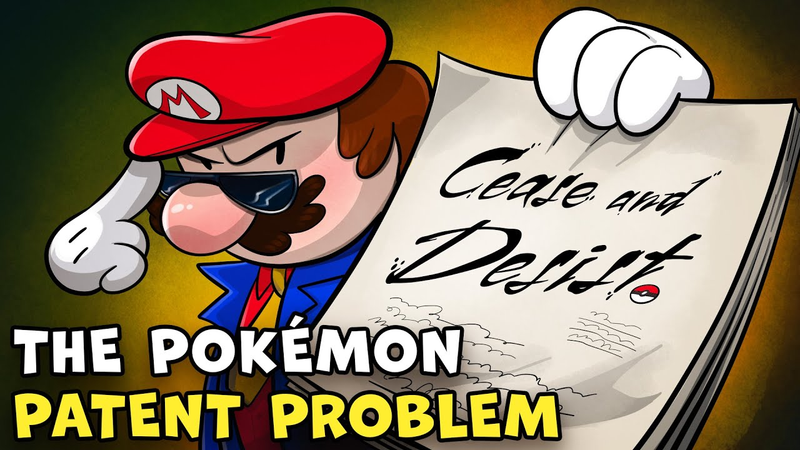
Nintendo’s recent acquisition of patents related to creature-battling mechanics and mount-based traversal systems has sparked significant industry concern regarding their potential to stifle competition.
- Nintendo is utilizing patents as a strategic tool to potentially stifle competition, specifically targeting smaller developers who lack the financial resources to defend against expensive litigation.
- Patent litigation is prohibitively costly, with Inter Partes Review (IPR) proceedings costing upwards of $500,000 and full-scale federal court litigation reaching up to $2,000,000 per patent.
- Nintendo's recent patents, such as the September 2024 'Amore' patent, contain highly specific, narrow claims that require a game to replicate a precise sequence of user inputs and mechanics to constitute infringement.
TWIG #360 The Story of Two Steam Games, Where Winds Meet & The 4X Shake-Up
The modern gaming landscape is defined by a widening gap between vanity metrics and sustainable revenue, as developers struggle to balance high user acquisition costs with long-term retention.
- The 4X strategy genre currently generates approximately $700 million in monthly revenue, with growth driven by gender-neutral themes and casualized art styles rather than traditional hardcore aesthetics.
- The gaming industry is shifting away from complex, gear-heavy progression systems toward accessible, cross-platform experiences that utilize seasonal resets to improve retention.
- Rising user acquisition costs and high install prices are forcing studios to abandon traditional squad RPG models in favor of high-fidelity, broad-appeal titles.

Writing Clean Code for Games (Industry Veteran)
Game development success is fundamentally driven by human coordination, team dynamics, and pragmatic design rather than the pursuit of perfect technical architecture.
- Success in game development is driven 80% by choosing the right game and team, while technical programming skill primarily serves to reduce bugs, minimize crunch, and improve maintainability.
- Avoid over-architecting systems before development begins; most successful games are built on codebases that are messy but functional rather than perfectly structured.
- Gameplay programmers should function as 30% game designers, focusing on player-facing features and the fun factor rather than treating development as a pure coding challenge.
The Future of Fortnite Creative
The Fortnite Creative ecosystem is undergoing a fundamental transformation, shifting from a supplemental mode into a professionalized marketplace capable of sustaining diverse, non-Battle Royale experiences.
- Epic has introduced in-island item sales, allowing creators to monetize experiences through gated content or virtual items, though this creates potential friction with Epic's own internal monetization strategies.
- Fortnite's concurrent user base has declined from a peak of over 3 million during the 'Fortnite OG' event to approximately 1 million, signaling a shift in the platform's current engagement lifecycle.
- New user acquisition tools, including UA rewards and paid campaigns, currently operate on an auction-based CPM model where early bidding costs are volatile, with some participants bidding as high as $20 per CPM.

Let's Review Your Games — Ep. 037 (Part 2)
Independent game development in 2024 requires a strategic balance between technical polish and high-concept marketability.
- To maximize streamability and viral potential, indie games should incorporate high-stakes mechanics such as permadeath, intense difficulty, or horror elements that encourage streamer engagement.
- Visual clarity in puzzle games is essential; UI elements with different behaviors must be visually distinct, and sprite assets require proper import settings to ensure a crisp, high-quality appearance.
- Game developers should utilize environmental storytelling and lighting to establish mood, as seen in the effective use of dark, atmospheric lighting in 'The Hambagu Shop'.

Let's Review Your Games — Ep. 037
The indie title Devoid demonstrates significant creative potential, characterized by a compelling art style and well-conceived core mechanics.
- Menus serve as a primary indicator of a game's overall polish; a lack of hover sound effects or excessive time spent navigating them often signals an unrefined product.
- Avoid using walls of text to explain mechanics; instead, use icons or short video clips to demonstrate controls, and introduce mechanics gradually rather than all at once.
- Text-based dialogue should be paced automatically or allow for manual progression, as players cannot gauge reading speed without accompanying audio cues.