Game Culture reports and market data
Documents
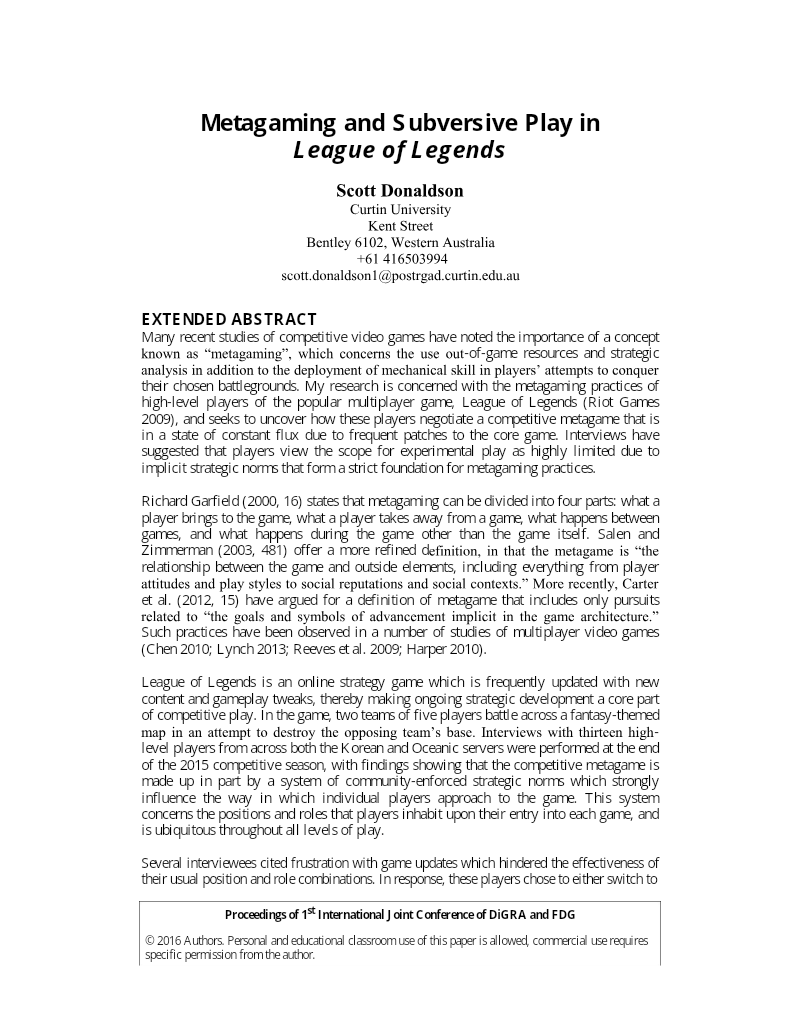
Metagaming and Subversive Play in League of Legends
This study examines metagaming practices among high-level players of League of Legends, focusing on how competitors navigate a strategic metagame that shifts constantly because of frequent game patches.
- Metagaming in League of Legends, as examined in this study, goes beyond mechanical skill to include community-enforced strategic norms governing how players approach their roles and positions on entering a match.
- Frequent game patches constantly shift the metagame, and interviewed players reported that updates disrupted their established position and role combinations.
- Based on interviews with 13 high-level players from the Korean and Oceanic servers at the close of the 2015 competitive season, most players responded to patches by either switching to other pre-existing combinations or maintaining their habitual style even when it reduced their enjoyment.
Good Violence, Bad Violence: The Ethics of Competition in Multiplayer Games
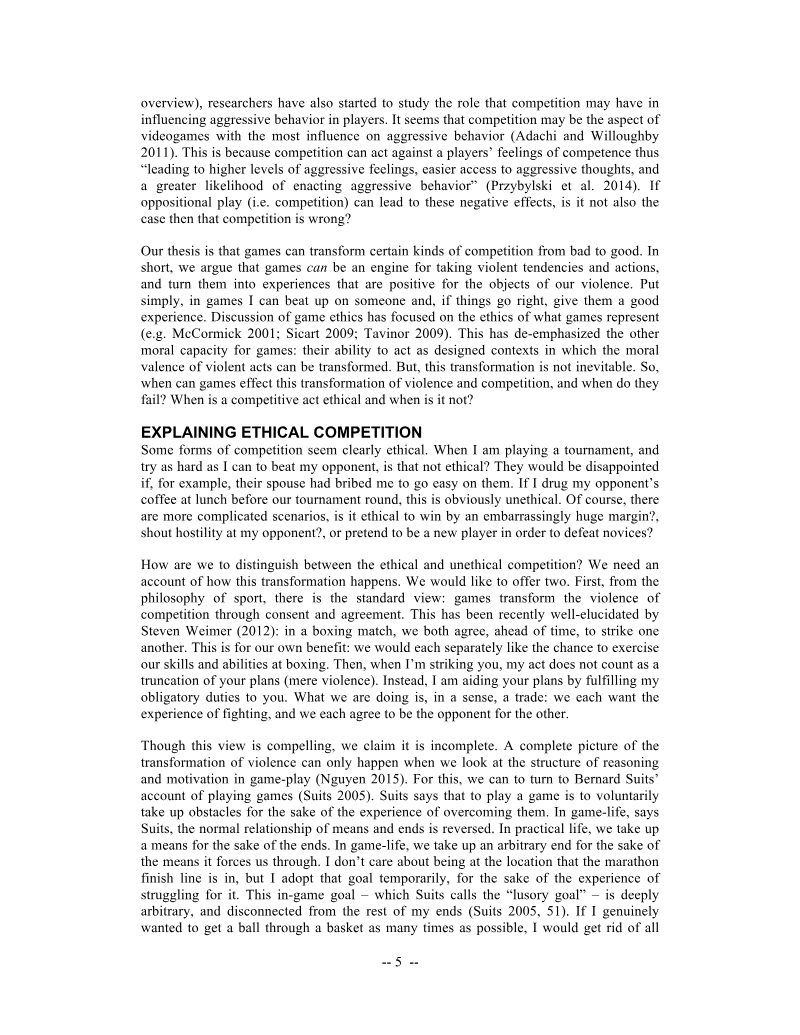
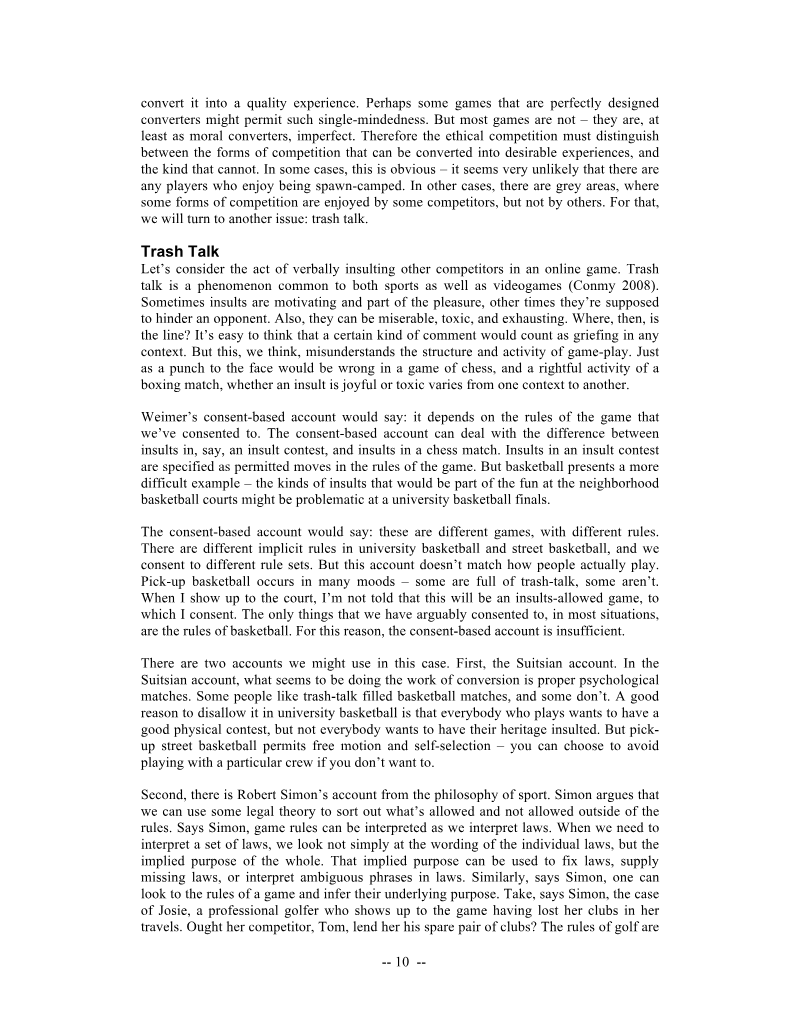
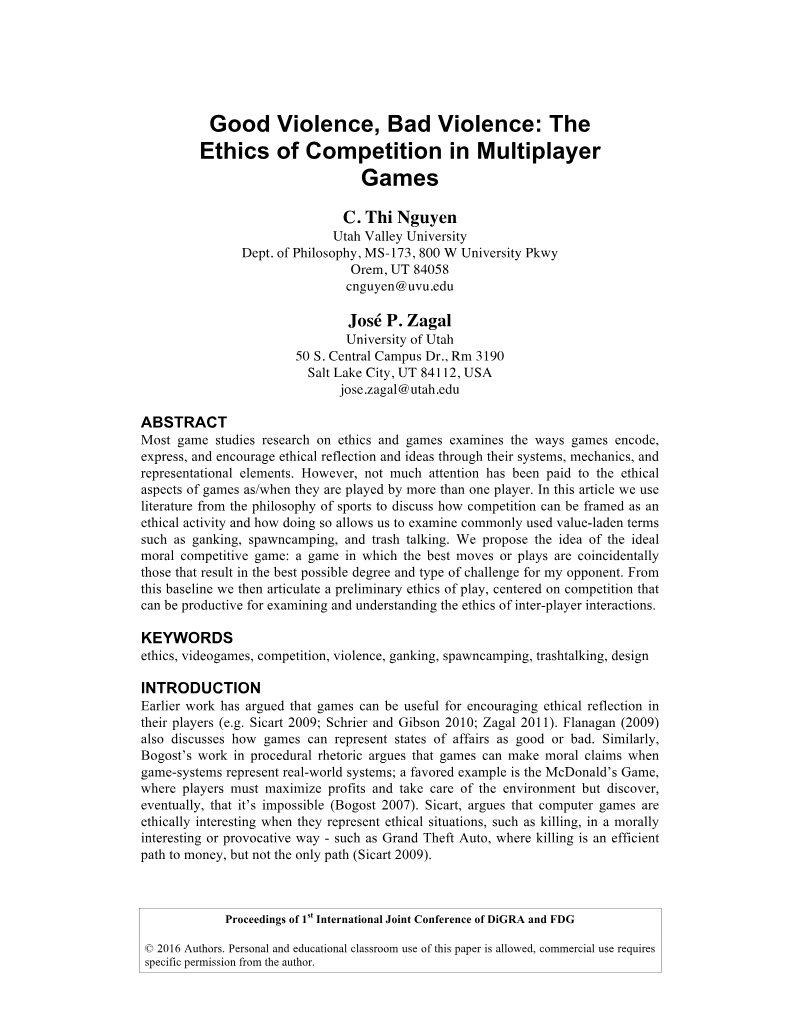
Nguyen and Zagal's paper argues that competition in multiplayer games constitutes a form of "mere violence," in the sense that it frustrates an opponent's in-game plans, yet this violence can be transformed into an ethically positive experience.
- Competition in multiplayer games is framed as 'mere violence': it frustrates an opponent's in-game plans, but it can be transformed into an ethically positive experience.
- The authors reject the 'magic circle' idea that games are insulated from moral consequence, arguing that the ethics of competitive play depend on design, mutual consent, and psychological fit between opponents rather than on fixed rules.
- The central thesis is that competitive games can be 'competitive in their individual moments but collaborative as a whole,' which requires deliberate effort from both designers and players.
Ecological Approach to the Performance of Larping
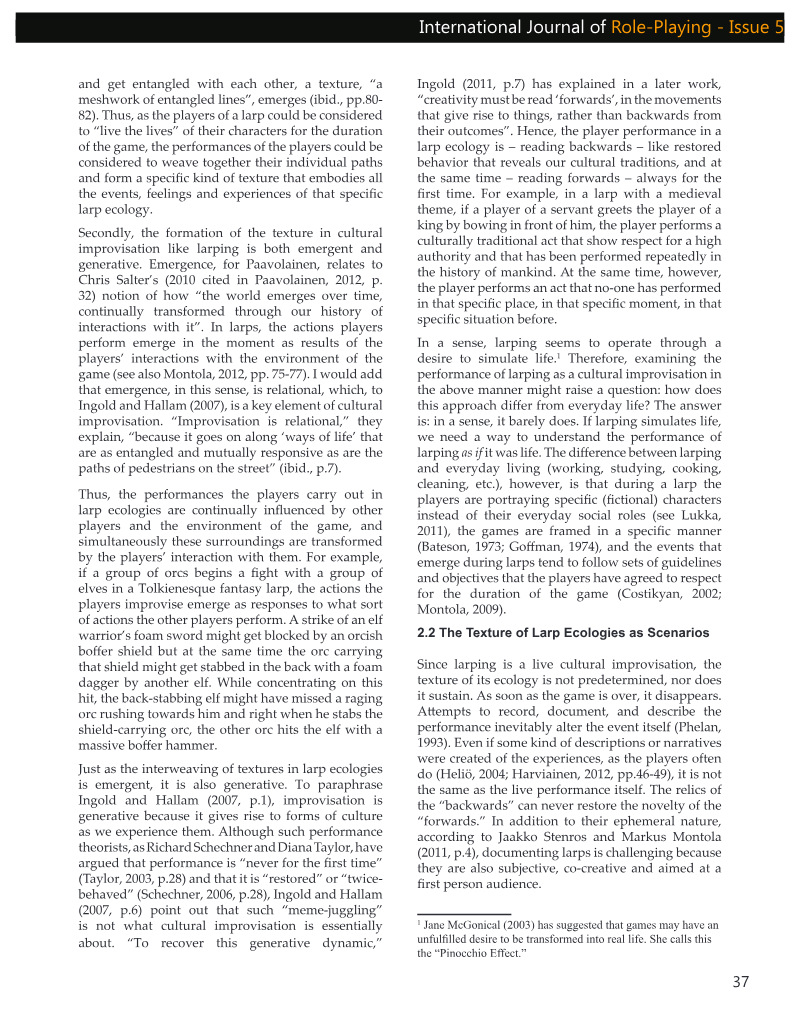
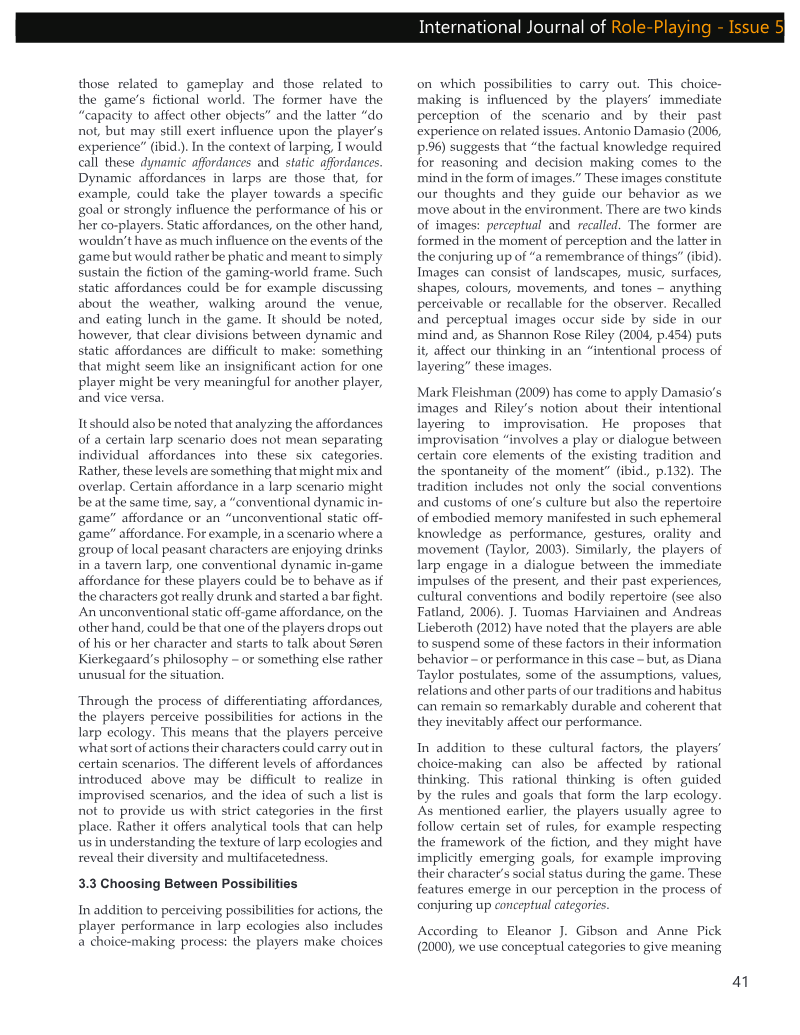
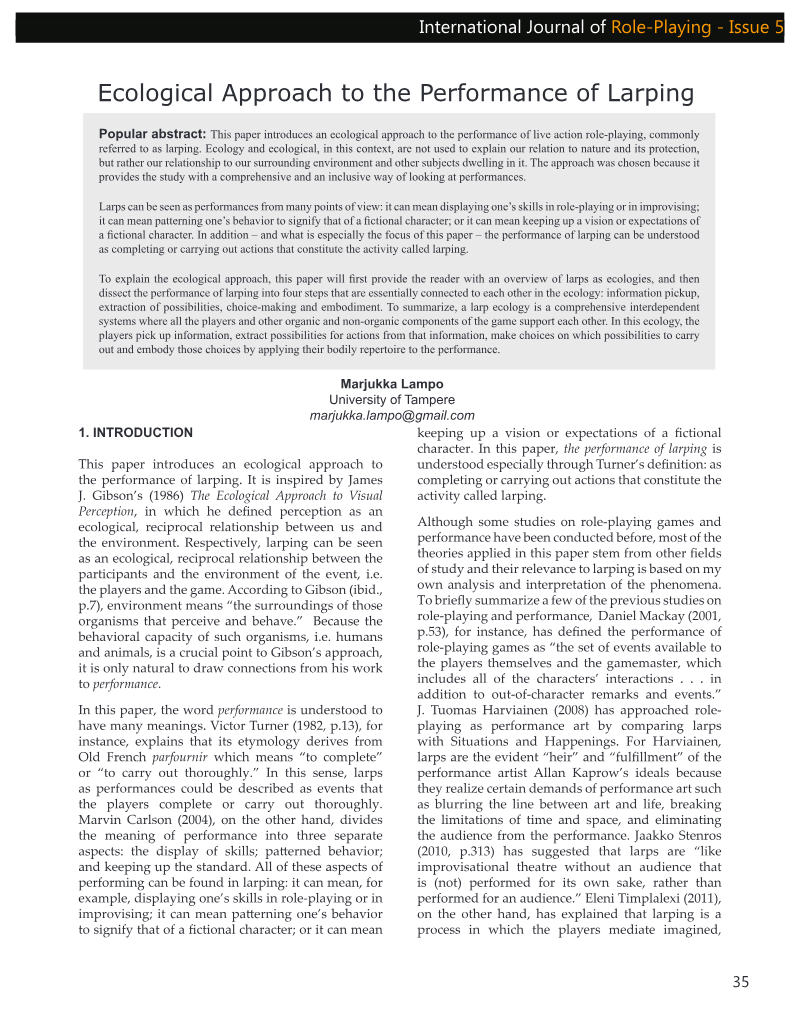
Lampo's paper proposes an ecological framework for understanding the performance of live action role-playing games (larps), drawing on Gibson's ecological perception, Kershaw's theatre ecology, and Ingold's notion of knots and lines.
- Larp performance is framed as an ecology rather than a set of isolated acts: individual player actions interweave into an interdependent, improvised texture drawing on Gibson's ecological perception, Kershaw's theatre ecology, and Ingold's knots and lines.
- Because larps are unscripted and transient, they can only be partially captured through documentation, and Taylor's concept of scenarios is proposed as a way to grasp their structure.
- The core model describes player performance as four steps: information pickup, extraction of possibilities, choice-making, and embodiment.

gamevironments 2015
The document announces the establishment of a new Video Gaming and Religion Seminar within the American Academy of Religion (AAR), a major professional body for religious studies scholars.
- The AAR Program Committee approved a new Video Gaming and Religion Seminar for a five-year term (2015–2019), with one session at each Annual Meeting.
- The seminar was founded to address the marginal status of video games within Religious Studies, with author Kerstin Radde-Antweiler arguing that video games now depict religious themes just as film did in the twentieth century.
- The seminar aims to build a multidisciplinary, international network covering personal computer, console, and mobile games, with a steering committee of six scholars from the United States, Canada, Germany, and Finland.

Current Key Perspectives in Video Gaming and Religion
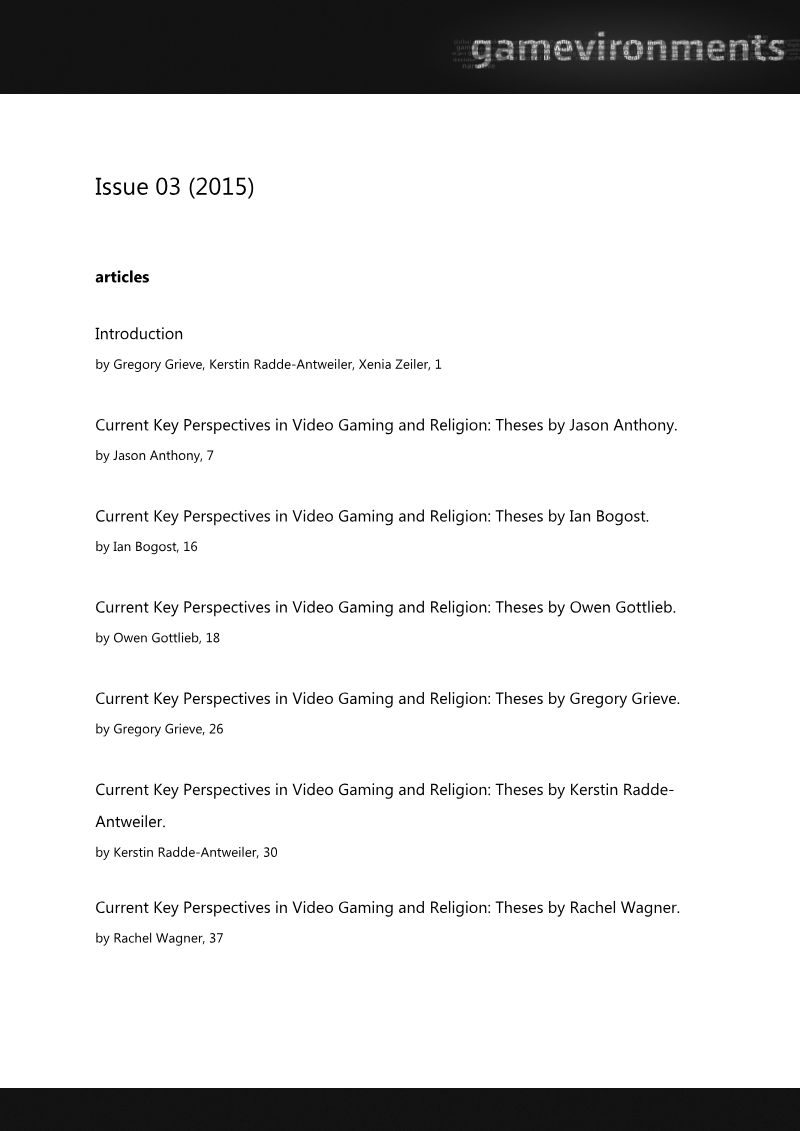
Gregory Grieve's contribution to this special issue on video gaming and religion argues that religious studies should examine video games through a "cultural dialogic mode," treating games as a space where religion and human meaning-making emerge rather than as objects that either hide timeless sacred symbols or serve merely as…
- Gregory Grieve argues that religious studies should examine video games through a "cultural dialogic mode," treating games as spaces where religion and human meaning-making emerge, rather than as hiding timeless sacred symbols or as mere products of the scholar's imagination.
- Grieve draws on Mircea Eliade, J. Z. Smith, Mikhail Bakhtin, and Ian Bogost's concept of procedural rhetoric, contending that in Minecraft religious meaning arises from the embodied experience of play, especially the survival mode's cycle of exploration, resource gathering, construction, and combat.
- Grieve proposes a documentary methodology called "close play," which requires scholars to actually play the games they study, since procedural meaning cannot be fully grasped through narrative or imagery alone.

Current Key Perspectives in Video Gaming and Religion
Kerstin Radde-Antweiler's theses, published in a 2015 special issue on video gaming and religion, argue that religious studies cannot ignore video games, since games form part of today's mediatized life-worlds in which online and offline religious practice increasingly merge.
- Religious studies cannot ignore video games because they form part of today's mediatized life-worlds, where online and offline religious practice increasingly merge.
- Games reach well beyond 'digital natives': German data showed at least 20 percent of players in 2006 were aged 40 to 64, and gaming shapes religious identity construction generally, not only within digital culture.
- Radde-Antweiler warns against overstating any single medium, arguing that media change interacts with individualization, globalization, and economization, so research should start with actor-centered inquiry into gamers' mediatized worlds rather than games as isolated objects.
Hackers and Cyborgs: Binary Domain and Two Formative Videogame Technicities
Brendan Keogh's paper "Hackers and Cyborgs: Binary Domain and Two Formative Videogame Technicities" uses Sega's Binary Domain as a lens for arguing that two competing modes of identifying with videogames have shaped the medium.
- Using Sega's Binary Domain as its lens, the paper treats the cyborg as a resistant and complementary perspective rather than a strictly opposed one, arguing the two identities are entangled and interdependent.
- The author contends the hacker ideal is masculinist and that this "technicity" influences which games get made, which are celebrated as exemplary, and how scholarly and popular discourse values the medium.
- Mainstream journalism and design privilege skill-based mastery, leading critics to dismiss exploration-focused and queer or women-created titles such as Dear Esther and Gone Home as "not real games," a rhetorical policing that also hits casual and avant-garde games reaching broader, more diverse audiences.
Ludic Ontology: Play's Relationship to Language, Cultural Forms, and Transformative Politics
Rachel Shields's "Ludic Ontology" is a theoretical essay that argues play should be understood as an ontological force rather than a culturally bounded category or a descriptive social practice.
- Shields argues play should be treated as an ontological force, embodied, affective, and transcendent, rather than as a culturally bounded category or a descriptive social practice.
- The essay contends that play's irrational, creative energy can disrupt rational social orders, and that political theory could be enriched by recognizing this in accounts of resistance, social transformation, and revolution.
- The author critiques play studies for narrow, tautological definitions that reduce play to an empirical binary of "play" versus "not-play", and proposes an inner, sensory framework in its place.
Tribute and Resistance: Participation and Affective Engagement in Brazilian Fangame Makers and Modders' Subcultures
Brazilian fangames and game modifications emerge from participatory fan culture, where affectionate homage to original works, or "tribute," operates alongside challenges to dominant media and copyright norms, or "resistance."
- Brazilian fangames and mods are framed as driven by two inseparable motivations: affectionate "tribute" to original works and "resistance" to dominant media and copyright norms.
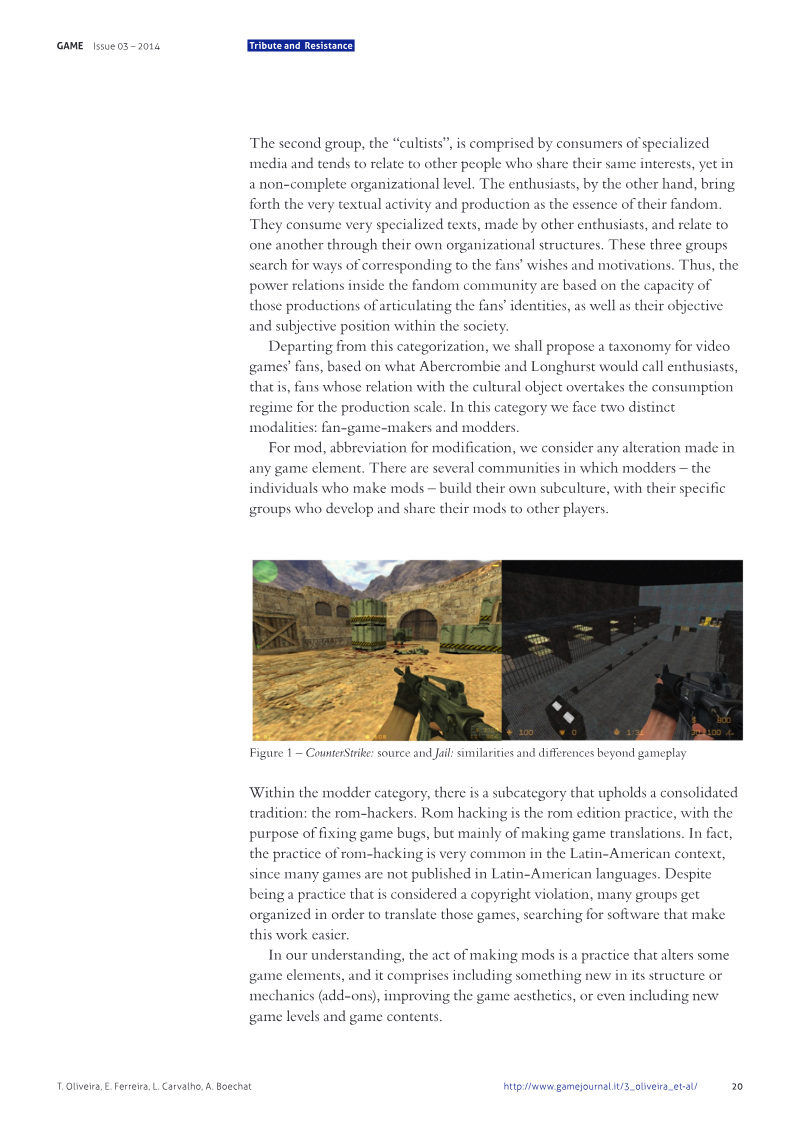
- The report distinguishes fangame makers, who build standalone games inspired by mainstream titles, from modders, who alter existing games.
- Brazil's modding and piracy traditions are traced to the 1980s MSX home computing boom following the MSX standard launched in 1983, with firms such as Gradiente and GranSoft cloning imported cartridges and removing developer logos.
Learning and Enjoyment in Serious Gaming: Contradiction or Complement?
This study examines whether presenting a serious game as "serious" or "playful" shapes its enjoyment, perceived credibility, and learning outcomes.
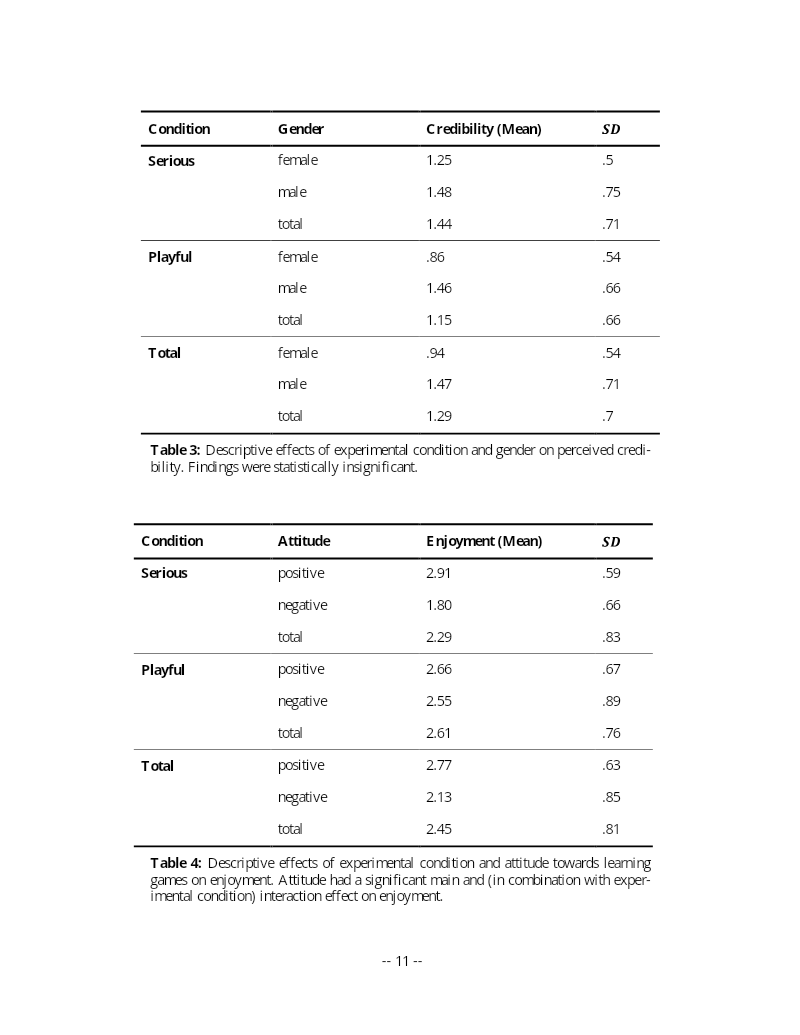
- Playful versus serious framing alone did not significantly change perceived credibility or enjoyment in a 54-student study; instead, learners' prior attitude toward learning games was the strongest predictor of enjoyment, and framing's effect depended on that attitude.
- In a 16-employee industry study, a serious game with explicit learning cues stripped out produced significantly higher immersion than traditional instruction, with a large effect size, but lower perceived credibility.
- Learning transfer did not differ meaningfully between game-based and traditional instruction, and attraction and satisfaction differences were not significant, so the game's entertainment advantage did not translate into clearly better learning outcomes.
Analysing the History of Game Controversies
Karlsen's analysis examines the recurring cycles of public alarm over digital games, beginning with the 1976 controversy surrounding Death Race, which prompted the first worldwide debate linking games to violence.
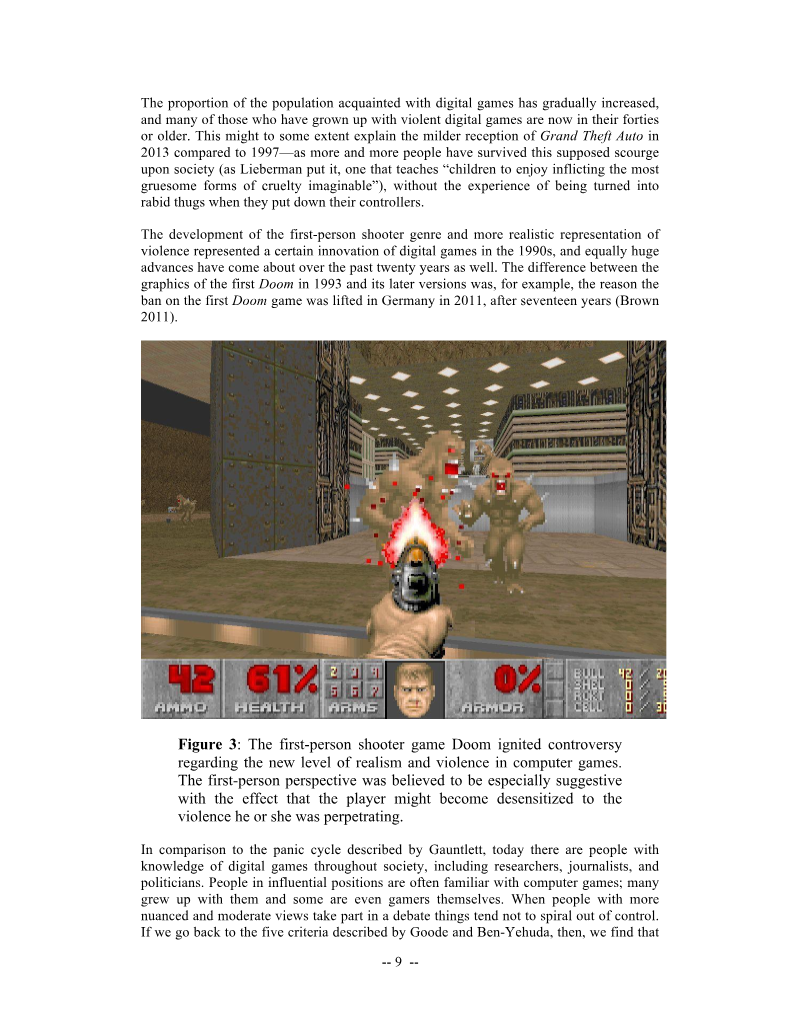
- The report traces recurring moral panics over digital games back to Death Race in 1976, the first worldwide debate linking games to violence, and argues these reactions were often disproportionate and shaped by cultural hierarchies that rank games below books.
- Despite more than five thousand studies over fifty years, research has not established a clear causal link between media violence and real-world violence, though some psychologists still argue for a meaningful effect.
- Controversies centred on games where players actively commit socially unacceptable violence (Carmageddon, Grand Theft Auto, Mortal Kombat) drew far more criticism than militarised violence in titles such as Tank or Space Invaders.
The Production of Subject and Space in Videogames
"The Production of Subject and Space in Video Games" argues that the player's experience of game space cannot be adequately explained by the familiar inside/outside duality that dominates game studies, and proposes instead that player subjectivity and ludic space are produced simultaneously.
- The paper argues that the inside/outside duality dominating game studies cannot explain player experience, and proposes that player subjectivity and ludic space are produced simultaneously.
- It traces the fixed ideal viewing position of linear perspective, inherited from Renaissance and Cartesian representation, as a treated-as-natural framework that produces unified spectator-subjects, and notes game studies has largely left this framework unexamined.
- The author replaces camera distance, embodiment, and interface-as-barrier with suture and the broader field of gaze as explanatory frames, drawing on Lacan, Barthes, and Lefebvre.