1 free read left. Create a free account for unlimited reading + AI research.
Create free accountWhitepaper American Journal of Play
1 free read left. Create a free account for unlimited reading + AI research.
Create free accountWhitepaperAmerican Journal of Play
Shields argues play is embodied, affective, and transcendent, rather than a culturally bounded category or a descriptive social practice.
Rachel Shields's "Ludic Ontology" is a theoretical essay that argues play should be understood as an ontological force rather than a culturally bounded category or a descriptive social practice. Drawing on Huizinga, Spariosu, Nietzsche, and Sutton-Smith's "rhetoric of the imaginary," the work contends that play is embodied, affective, and transcendent, exceeding the limits of conventional language and cultural form. Its central thesis is that this irrational, creative force can disrupt rational social orders, and that recognizing it could enrich political theory's accounts of resistance, social transformation, and revolution.
The argument proceeds by critiquing the narrow and often tautological definitions of play common in play studies, which tend to reduce it to empirical categories of "play" versus "not-play." In their place, the author proposes an inner, sensory framework, supported by examples such as Teresa of Avila's religious ecstasy, in which affective states open new expressive possibilities. Play is thus understood primarily through its effects, as a prerational agôn that interrupts the moral and cultural forms produced by late-capitalist and liberal-democratic rationality.
The work situates these claims within a critical engagement with Foucault, Benjamin, Jameson, and Marx, framing capitalism's colonization of cultural forms as the backdrop against which embodied play operates. Its conclusion is that play generates novel feelings and concepts that can serve as a genuine source of political and historical change. The essay acknowledges that play cannot replace the institutions sustaining social life, and its evidence is theoretical and textual rather than empirical, with no original data. Its scope is philosophical and draws on Western intellectual traditions across philosophy, sociology, and play studies.
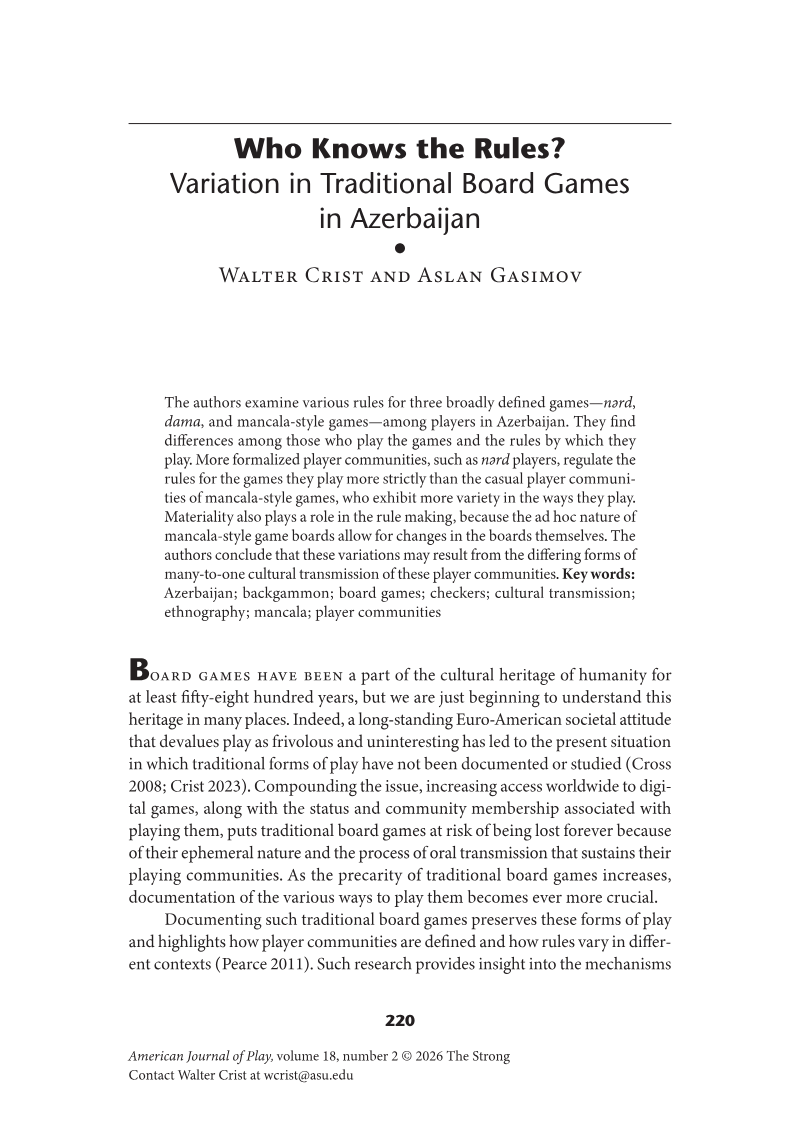
American Journal of Play · 2025
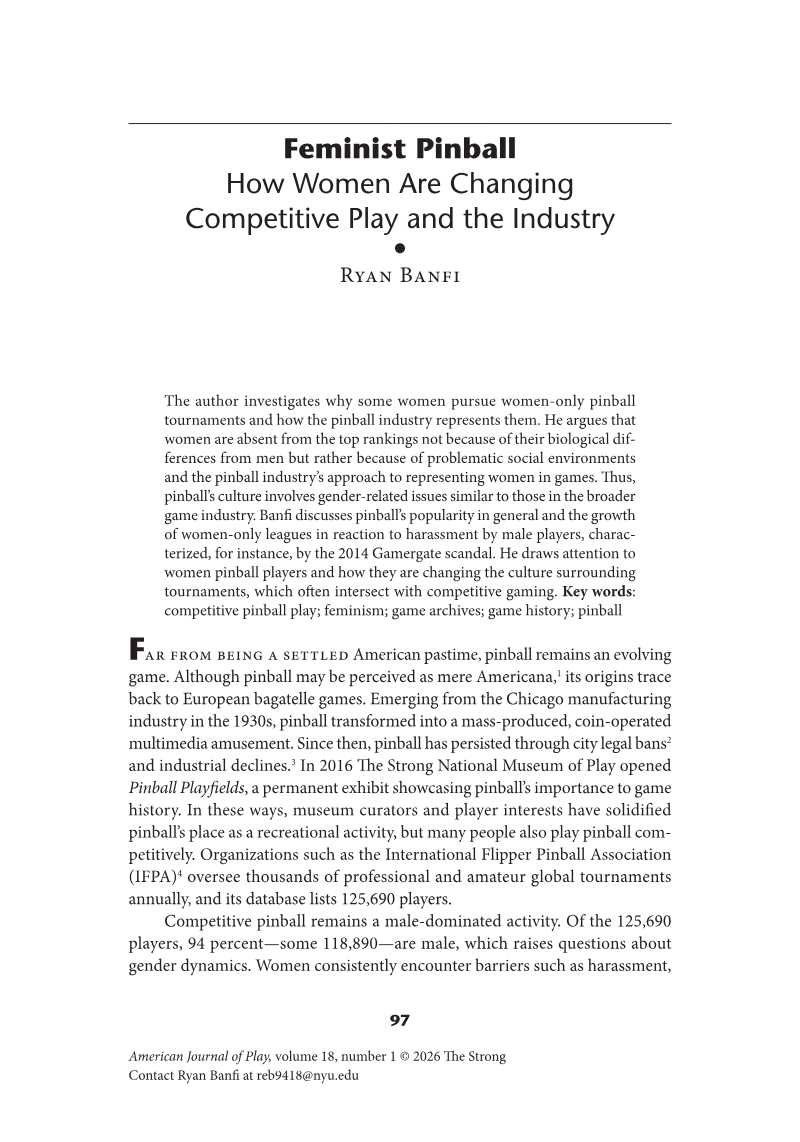
American Journal of Play · 2025
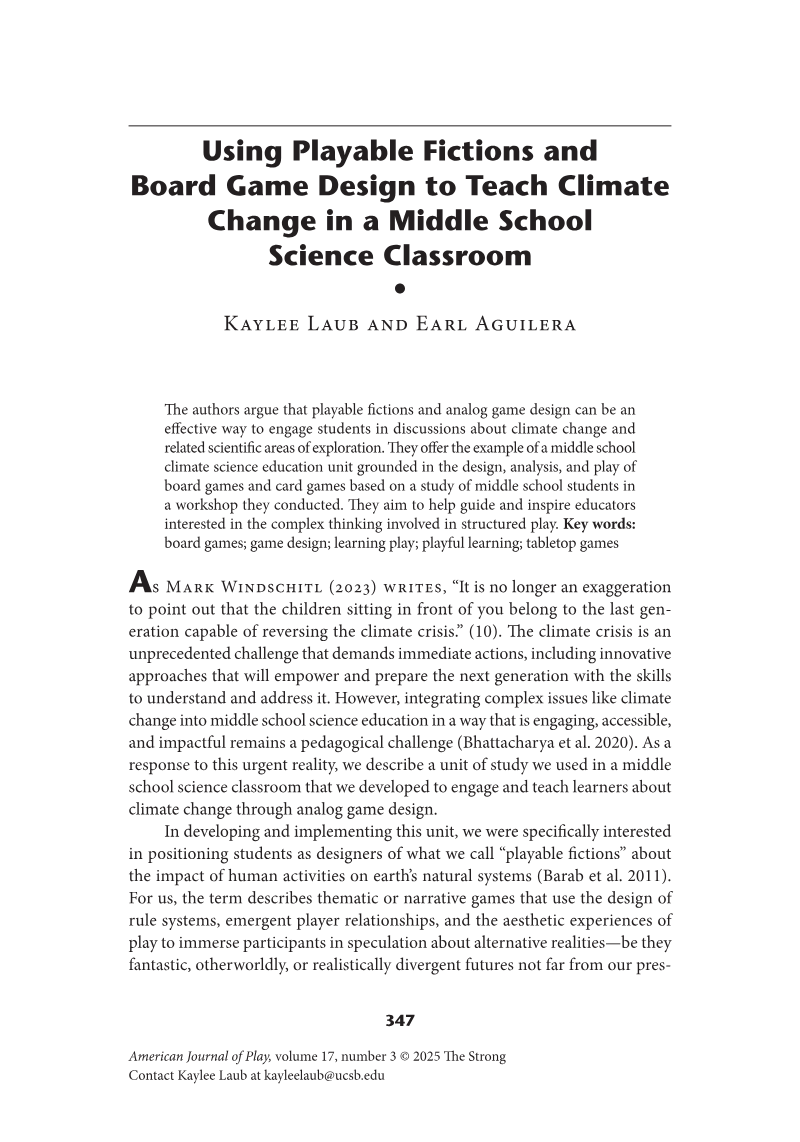
American Journal of Play · 2024
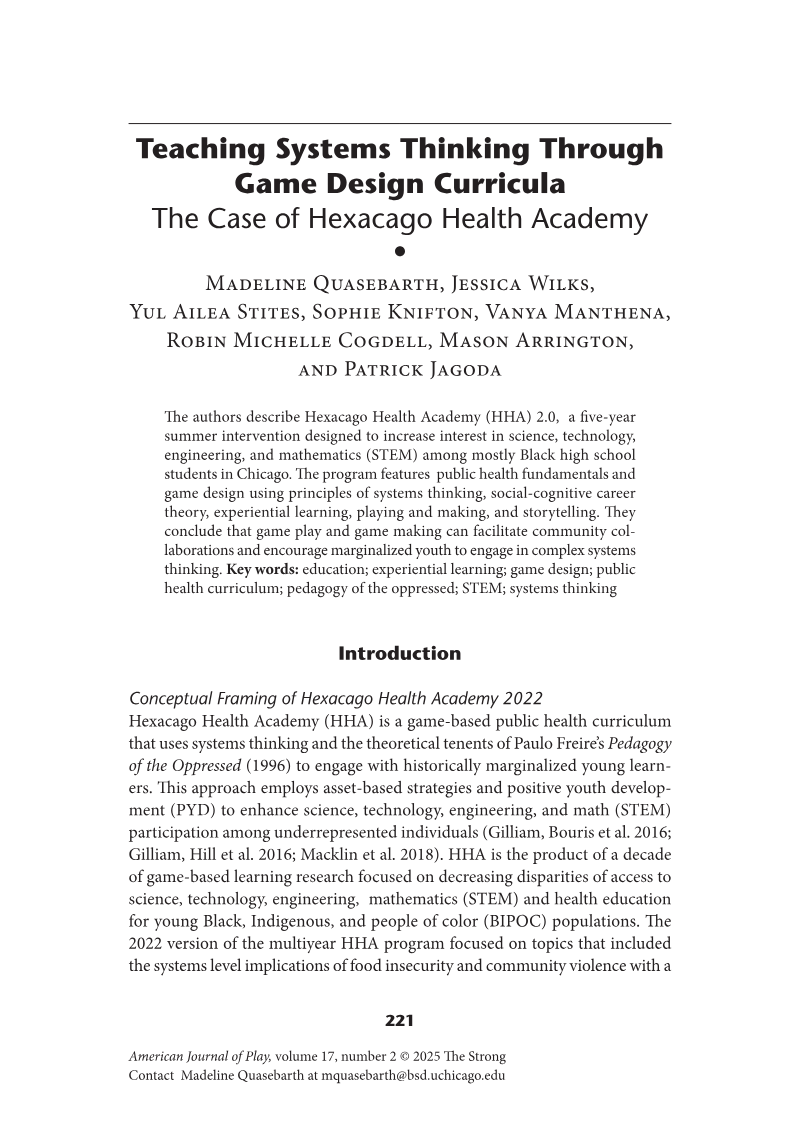
American Journal of Play · 2024
American Journal of Play · 2024
American Journal of Play · 2023
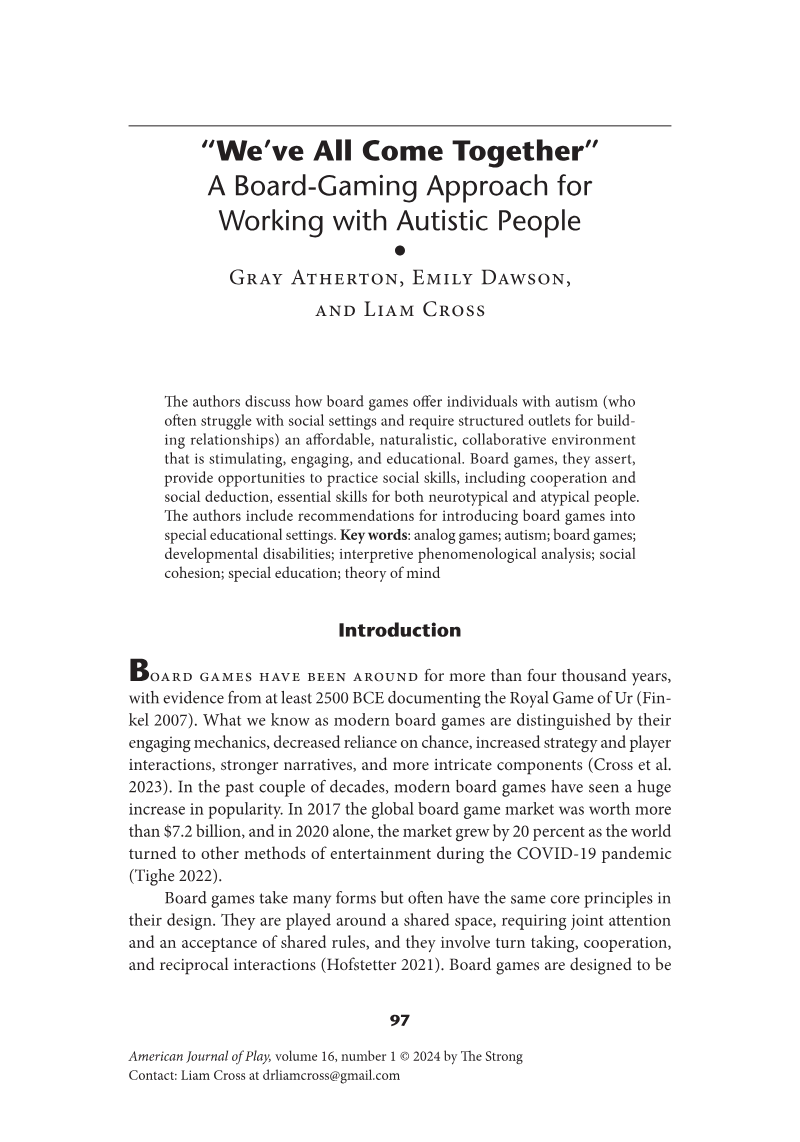
American Journal of Play · 2023
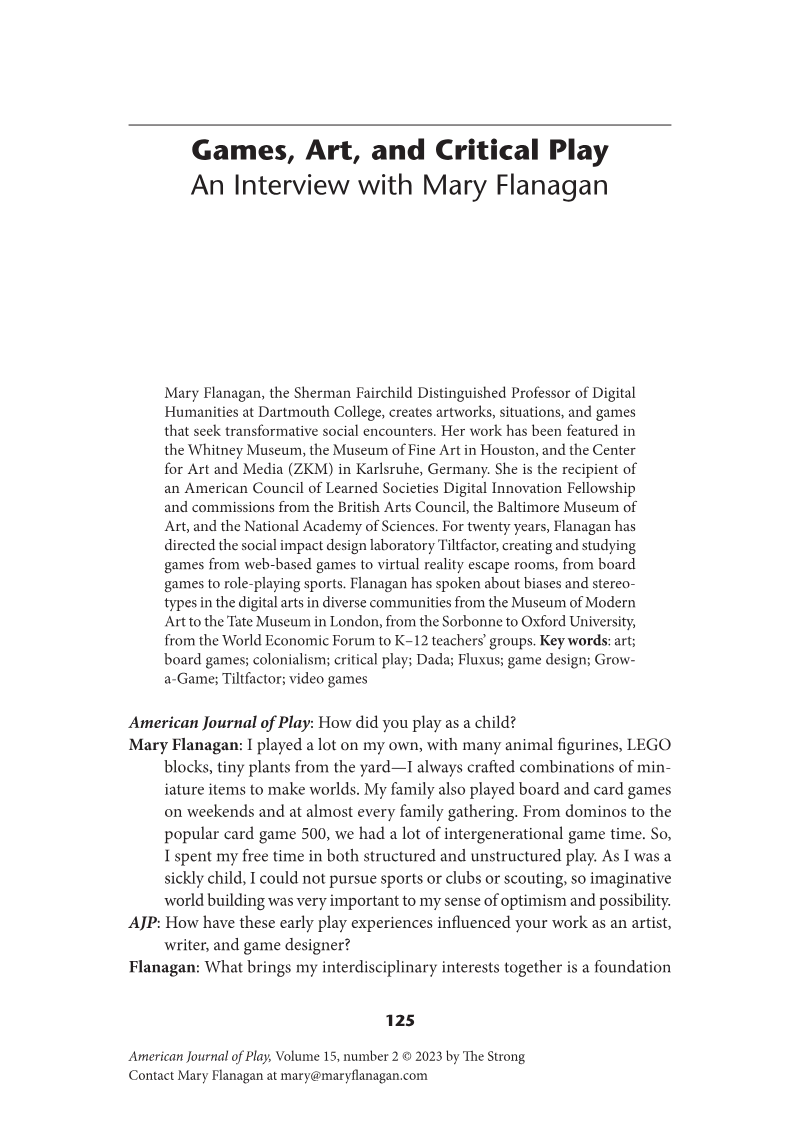
American Journal of Play · 2022
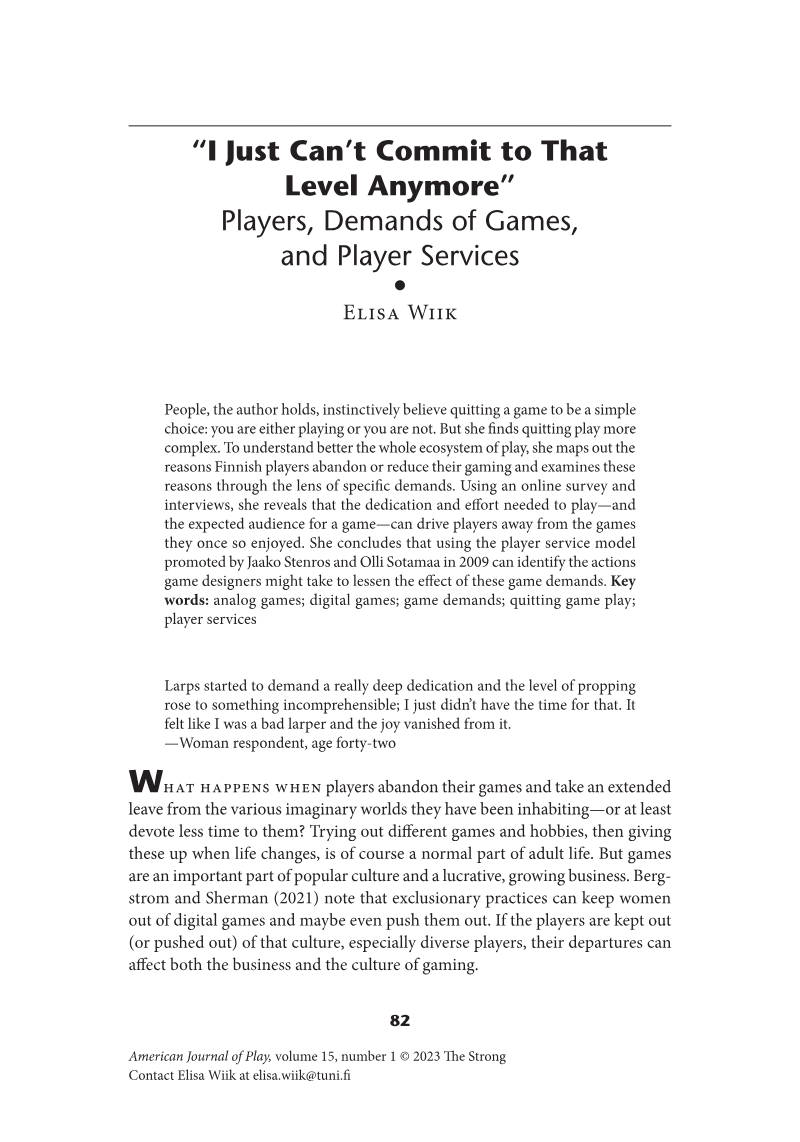
American Journal of Play · 2022
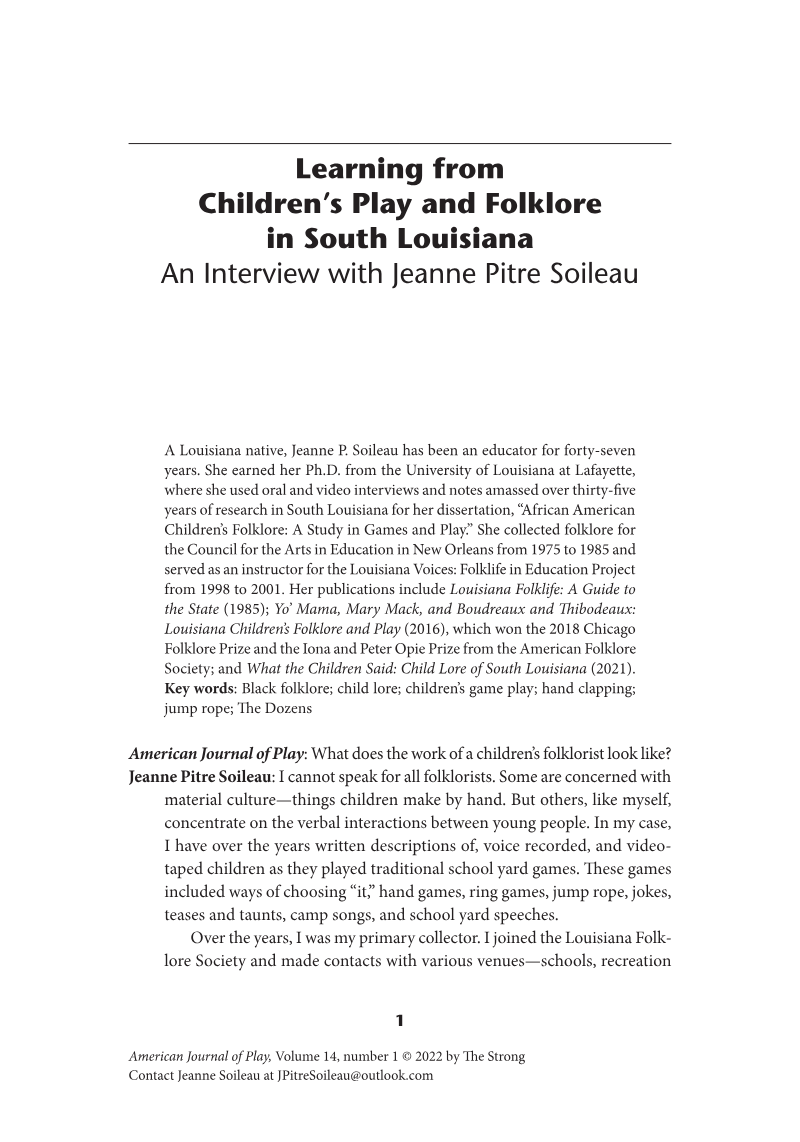
American Journal of Play · 2021
American Journal of Play · 2020
American Journal of Play · 2020
International Journal of Role-Playing · 2026