Creative Ads reports and market data
Documents

two & a half gamers session #34 - Low budget UA, Sheep a Sheep game in China, APS Update, Amazon UA
Amazon Publisher Services (APS) represents a significant opportunity for mobile game developers seeking to diversify their monetization strategies beyond traditional giants like Meta.
- Amazon's ad ecosystem is split into two tiers: UAM (Unified Ad Marketplace) for initial access and TAM (Transparent Ad Marketplace) for high-performance inventory, which requires individual IOs with 4–10 different DSPs.
- To gain access to Amazon's premium ad placements, publishers should leverage their Amazon account manager to advocate for whitelisting, a process that can take anywhere from one week to three months.
- For low-budget ad-monetized games, the recommended UA strategy is to start with Facebook for D0/D1 optimization, then pivot to Google tROAS campaigns once performance signals decline or stabilize.

two & a half gamers session #33 - The UA (r)evolution, from fake ads to fake core gameplay in games
The mobile gaming industry is currently defined by a strategic shift toward the use of misleading advertisements and deceptive core gameplay mechanics to drive user acquisition.
- Fake ads—creative that depicts gameplay not present in the actual app—are used to drastically lower Cost Per Install (CPI), even though they often result in lower user retention.
- The math behind fake ads relies on volume: acquiring 100 players at a low CPI via misleading creative can yield more total conversions than acquiring 10 players at a high CPI through accurate gameplay footage.
- A current industry trend involves integrating the 'fake' gameplay into the actual game as a secondary feature, such as using hyper-casual mini-games to occupy players while waiting for timers in 4X strategy games.

two & a half gamers session #21 - How to run efficient UA on TikTok? TikTok's explosive growth
TikTok has established itself as a dominant force in the mobile gaming user acquisition landscape, driven by an interest-based algorithm that consistently outperforms legacy platforms like Facebook.
- TikTok’s interest-based algorithm is currently outperforming legacy platforms like Facebook in mobile gaming user acquisition by delivering lower purchase-based cost-per-install metrics.
- Successful TikTok UA campaigns require a creative-first strategy that involves rotating three to five creative variations on a weekly basis.
- TikTok’s revenue is projected to triple, positioning the platform as a primary competitor to major tech incumbents in the digital advertising space.

two & a half gamers session #20 - The Ants creative analysis. Which visual theme has the lowest CPI?
The Ants: Underground Kingdom has fundamentally reshaped the mobile strategy landscape by leveraging an under-saturated insect theme to drive a 904% year-over-year growth in the animal-themed gaming category.
- The Ants: Underground Kingdom drove a 904% year-over-year growth in the animal-themed gaming category and currently captures nearly 90% of consumer spending within that niche.
- Animal-themed visuals consistently deliver the lowest cost-per-install (CPI) metrics, with US purchase campaigns achieving figures as low as $0.30 to $0.40.
- The game successfully converts casual players into high-monetization 4X strategy users by masking complex competitive mechanics behind an accessible base-building interface.

two & a half gamers session #17 - the creative framework, tips for inspiration, recession & games
The mobile gaming industry is currently navigating its first encounter with a significant economic recession, prompting a strategic pivot toward shorter-term return on investment and tighter capital management.
- The creative production process should follow a cyclical loop: competitor research, assessment of past performance, brainstorming, brief creation, production, testing, evaluation, and iteration.
- Performance-based creative testing consistently shows that lower-production-value assets often outperform high-end, polished visuals, proving that data-driven results should override aesthetic preferences from art directors.
- Mobile gaming teams should prioritize the CPI (Cost Per Install) versus LTV (Lifetime Value) equation over artistic quality, as the primary goal of creative assets is to drive measurable performance.

two & a half gamers session #10 - How to save millions with marketability tests? Fake ads going n...
The mobile gaming industry is increasingly defined by a tension between creative vision and the rigorous demands of user acquisition.
- Marketability testing via fake ads and landing pages allows developers to validate game concepts and audience interest before investing in full production, effectively treating game development as a high-risk lottery where data-driven guidance reduces failure rates.
- Marketability tests should be used for directional guidance rather than definitive performance predictions, as metrics like CTR on landing pages do not accurately reflect actual mobile app install conversion or long-term player value.
- To mitigate bias in player surveys during testing, avoid suggestive questions and implement screening criteria, such as verifying if participants are active mobile gamers or have a history of in-app purchases.

Creative trends Q3, Merge mansion Japan, Admon tips, Habby: Souls review (#87)
Mobile gaming strategy currently centers on aggressive user acquisition through high-frequency creative refreshes and the strategic adoption of successful, genre-agnostic hooks.
- Mobile user acquisition strategy is shifting toward genre-agnostic creative hooks, such as physics-based puzzles and animal themes, to lower cost-per-install regardless of core gameplay alignment.
- Habby’s idle RPG 'Souls' generated $13 million in revenue between its August 2023 launch and the report date, maintaining a balanced 50/50 revenue split between Android and iOS.
- Technical stability is now a primary operational requirement, as publishers must meet strict Google Application Not Responding (ANR) thresholds to protect organic traffic from SDK-related crashes.

two & a half gamers session #6 - Supercell rant, why do fake ads work? UA fundamentals Q&A
Supercell’s recent financial performance, characterized by a 45 percent revenue increase to 2.24 billion dollars in 2021, masks underlying structural challenges.
- Supercell reported a 45 percent revenue increase to 2.24 billion dollars in 2021, yet the company faces structural stagnation due to a lack of new global title launches since Brawl Stars.
- Supercell is pivoting toward PC and console markets to modernize monetization and user acquisition strategies that previously prioritized brand purity over aggressive performance marketing.
- The mobile gaming industry is facing significant disruption from privacy changes, specifically the impending phase-out of advertising IDs on Google platforms.
All Game Trailers Are Not Created Equal
Game trailers serve as critical marketing instruments that require tailored strategies based on their specific purpose, platform, and audience.
- AAA trailers function as technical showcases for console hardware and often utilize cinematic structures, whereas indie trailers must prioritize immediate gameplay loops, art direction, and world-building to differentiate themselves in a competitive market.
- Animated trailers carry significant financial risk, costing between $1,000 and $4,000 per second, and can create player backlash if the animation style creates a misleading expectation of the game's actual art direction.
- Always create a rough cut of a trailer using your own voiceover before hiring a professional, as this process effectively identifies pacing, script, and footage issues before incurring expensive recording costs.

TWIG #283 Anime correction, Applovin speculations, Ad creative trends and Ubisoft’s xDefiant
The gaming industry is currently undergoing a structural transition from the era of blitz scaling toward a model defined by operational efficiency, profitability, and strategic consolidation.
- The gaming industry is shifting from blitz scaling to a model of operational efficiency and profitability, evidenced by major workforce reductions at companies like Ubisoft and Pixar.
- Private equity firms have become the primary exit strategy for established studios, highlighted by the $2.8 billion acquisition talks involving Keywords Studios.
- Hyper-casual games currently lead the mobile marketing sector with an IPM (installs per mille) of 48, driving a trend toward 'mashup' creative techniques that blend gameplay, animation, and user-generated content.
2.5 gamers x Live AM(F)A #2 - Ask Me Anything @ April 23 5 pm CET
The mobile gaming industry is undergoing a structural shift toward long-term sustainability, favoring evergreen genres such as solitaire and merge games over the fleeting trends of traditional hyper-casual titles.
- The mobile gaming market is shifting away from hyper-casual titles toward evergreen genres like solitaire and merge games to ensure long-term sustainability.
- Publishers are gaining market power by providing the essential financial stability, historical modeling tools, and UA infrastructure required to navigate complex, data-intensive user acquisition.
- Developers should adopt a rigorous development cycle where prototypes are abandoned if they fail to meet specific retention or Return on Ad Spend (ROAS) benchmarks within three iterations.
Brawl Stars' UA & Creative Strategies, Game Review Radar vol4, GAM not dead yet? (#106)
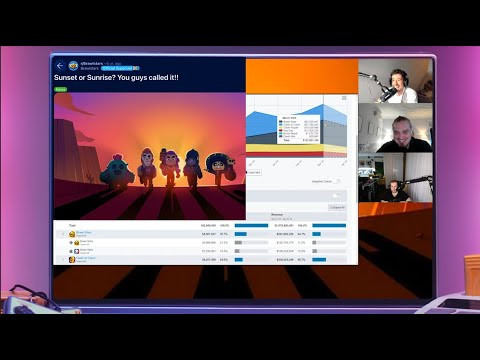
Brawl Stars has successfully revitalized its market position, doubling year-over-year monthly revenue seven years after its initial launch.
- Brawl Stars achieved significant growth following its global launch, with US daily downloads increasing from 7,000 to 40,000 and sustained revenue gains driven by a shift toward standardized UA creative strategies.
- Supercell has expanded its UA strategy beyond YouTube, increasingly utilizing 'altered gameplay' creatives—where scenes are constructed from game assets—which now account for approximately 60% of video creative output.
- The Google Ad Manager (GAM) partner ecosystem underwent a major shift around December 20, 2023, as Google restricted video inventory for third-party resellers, forcing companies to adapt their monetization models.