Advertising reports and market data
Documents

PechaKucha: Eric Seufert's Mobile Ads Marketing 101
Mobile advertising sales operate as a high-pressure war of attrition rather than a traditional relationship-based business.
- Mobile ad sales are characterized by a high-pressure, confrontational model that prioritizes aggressive outreach and volume over professional relationship-building.
- Sales tactics frequently rely on deceptive practices, such as name-dropping high-profile clients to establish false credibility and using unsolicited communication to secure initial test budgets.
- Operational strategies often prioritize vanity metrics like daily active users over actual return on investment or traffic quality to maintain the appearance of growth.

Biz Daily: Will Instagram be the next UA goldmine?
The integration of Instagram into Facebook’s advertising ecosystem marks a significant development in mobile user acquisition (UA) for the gaming industry.
- Facebook is integrating its advertising infrastructure with Instagram to open its 300-million-user base to mobile game developers.
- Major mobile game developers currently allocate approximately 30 percent of their revenue toward marketing, driving the demand for new high-scale acquisition channels.
- Mobile measurement partners have been authorized to provide granular analytics for Instagram, enabling developers to track ad performance, user interaction, and geographic reach.

Appodeal's Pavel Golubev on trends in mobile advertising
Appodeal serves as an automated monetization platform designed to optimize revenue for mobile application developers by aggregating various advertising networks.
- Appodeal originated as an internal tool for a publisher managing over 3,000 applications and was commercialized after proving it could triple ad-related earnings.
- The mobile advertising industry is currently transitioning toward increased automation through the maturation of real-time bidding and programmatic exchanges.
- Virtual reality and wearable devices are considered nascent segments that currently lack the standardized user interfaces and consumer adoption required for large-scale monetization.

HyprMX's Dan Laughlin on bringing brands to mobile advertising
HyprMX serves as a bridge between Fortune 500 brands and mobile application developers, facilitating the transition of large-scale advertising budgets from traditional desktop platforms to mobile environments.
- Mobile advertising now represents a substantial revenue stream for major mobile companies, with some publicly traded firms generating 10% to 30% of their total income from ad-based monetization.
- HyprMX facilitates the transition of Fortune 500 advertising budgets—including brands like Microsoft, McDonald’s, and Audi—from desktop to mobile environments for small-to-medium-sized developers.
- The launch of Hypr Mediate automates the management of multiple ad networks, allowing developers to shift engineering resources away from ad-integration maintenance and toward core game development.

LoopMe CEO Stephen Upstone on the rise of mobile video advertising
Mobile video advertising is undergoing a rapid transformation driven by the shift toward full-screen formats and programmatic buying.
- Mobile video advertising is shifting from traditional ad networks to programmatic demand-side platforms to better leverage real-time data for targeting specific user behaviors.
- The industry now processes approximately 30 billion full-screen ad impressions monthly, requiring infrastructure capable of handling 30 billion data points daily to optimize delivery.
- The Chinese market is a primary growth driver, supported by data sets tracking 800 million smartphone devices and a high concentration of globally competitive game developers.

HasOffers' Justin Vanning on measuring the value of your ad campaigns
Effective mobile user acquisition requires a shift from bulk traffic purchasing toward data-driven, targeted advertising strategies.
- Mobile user acquisition must shift from bulk traffic purchasing to data-driven strategies that prioritize high-value users over low-cost volume to improve return on investment and lifetime value.
- Third-party attribution tools are essential for measuring campaign performance across diverse platforms, including major players like Facebook and Google, as well as hundreds of specialized ad networks.
- Advertisers should prioritize third-party tracking providers that do not operate their own ad networks or resell client data to ensure data sovereignty and prevent competitors from accessing proprietary campaign insights.

StartApp's Marina Nissim on the challenges of mobile advertising
The mobile advertising landscape has undergone a significant evolution, shifting away from ineffective web-based banner formats toward more engaging, rich media experiences.
- Mobile advertising success requires a dual-pronged strategy combining 'brains' (data analytics and programmatic targeting) with 'beauty' (creative, rich media ad units) to maximize conversion rates.
- Performance optimization is the primary driver of industry innovation, requiring developers to rapidly test, iterate, and discontinue underperforming ad formats to maintain competitive CPMs.
- Developers must avoid 'one-size-fits-all' monetization and instead align revenue models—such as free-to-play, in-app purchases, or virtual currencies—with their specific app architecture.

Successful use of ad networks is all about getting scale says InMobi
The Chinese mobile gaming market presents a highly fragmented landscape characterized by significant stratification across distribution, payment, and discovery channels.
- To achieve scale in the fragmented Chinese mobile market, developers must utilize large ad networks for user segmentation and high-volume downloads, as these networks outperform the organic reach of standard app stores.
- Market entry requires deep localization beyond language, specifically adopting cartoon-style aesthetics, lighter color schemes, and 2D perspectives favored by Chinese players.
- Gameplay design should prioritize simplicity, daily rewards, and social competition via leaderboards rather than focusing on individual player milestones.

AdTruth's James Lamberti on the challenges of privacy while tracking mobile users
The digital advertising industry faces a significant challenge in balancing the need for effective audience identification with the growing demand for consumer privacy.
- The digital advertising industry is shifting from persistent device identifiers like UDIDs and Android IDs to probabilistic identification to better balance marketing intelligence with consumer privacy.
- Probabilistic identification maintains ad functionality by aggregating anonymous data points such as language settings, time zones, and operating system versions to identify user segments without tracking specific individuals.
- This approach enables essential advertising functions like reach and frequency management, which prevents the negative user experience of repetitive ad exposure.

An Open Letter to EA Marketing - Why EA's Controversial Ads Harm the Industry - Extra Credits
Electronic Arts (EA) faces significant criticism for its marketing strategies, which are characterized as tasteless, juvenile, and detrimental to the broader gaming industry.
- EA’s reliance on inflammatory and exclusionary marketing tactics undermines the gaming industry’s efforts to be recognized as a legitimate, serious medium for art and communication.
- Controversial campaigns, such as the 'Sin to Win' contest for Dante’s Inferno and the use of fake protesters, prioritize short-term sensationalist buzz over long-term brand loyalty and product quality.
- Marketing strategies that utilize sexist or offensive content reinforce negative stereotypes about gamers, ultimately alienating potential audiences and complicating relationships with external institutions.

MTG Corporate Responsibility Report 2009
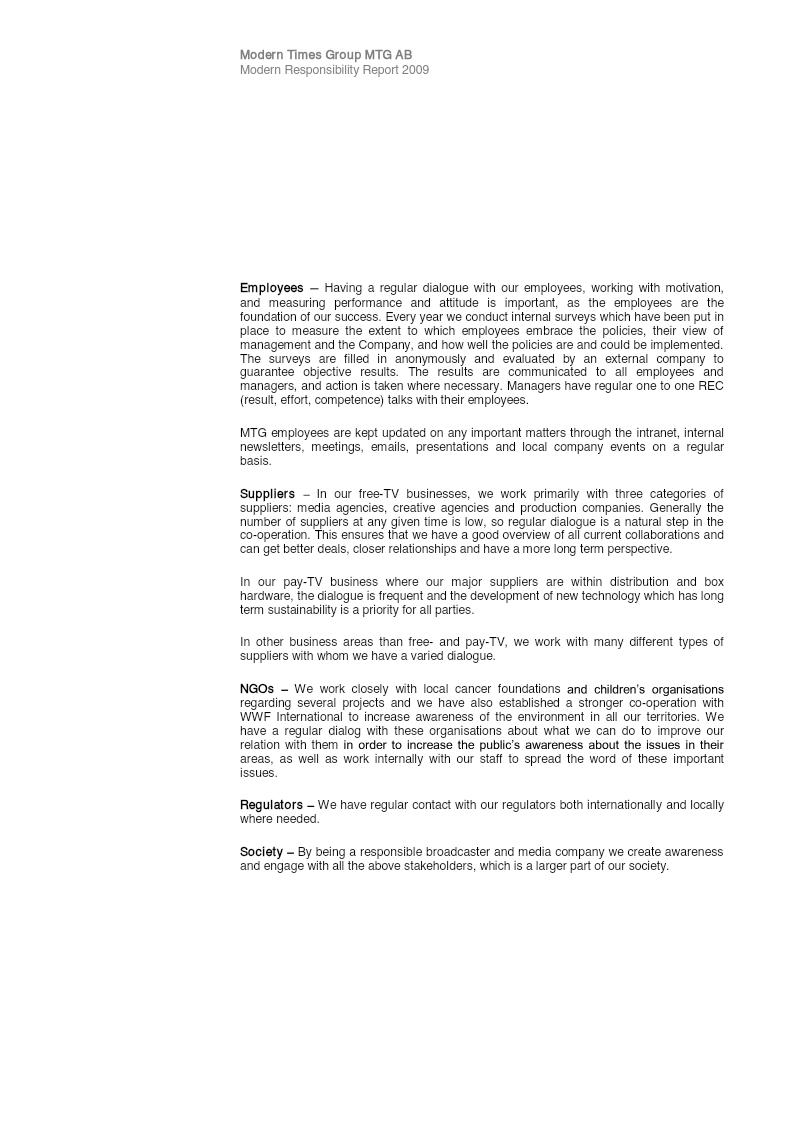
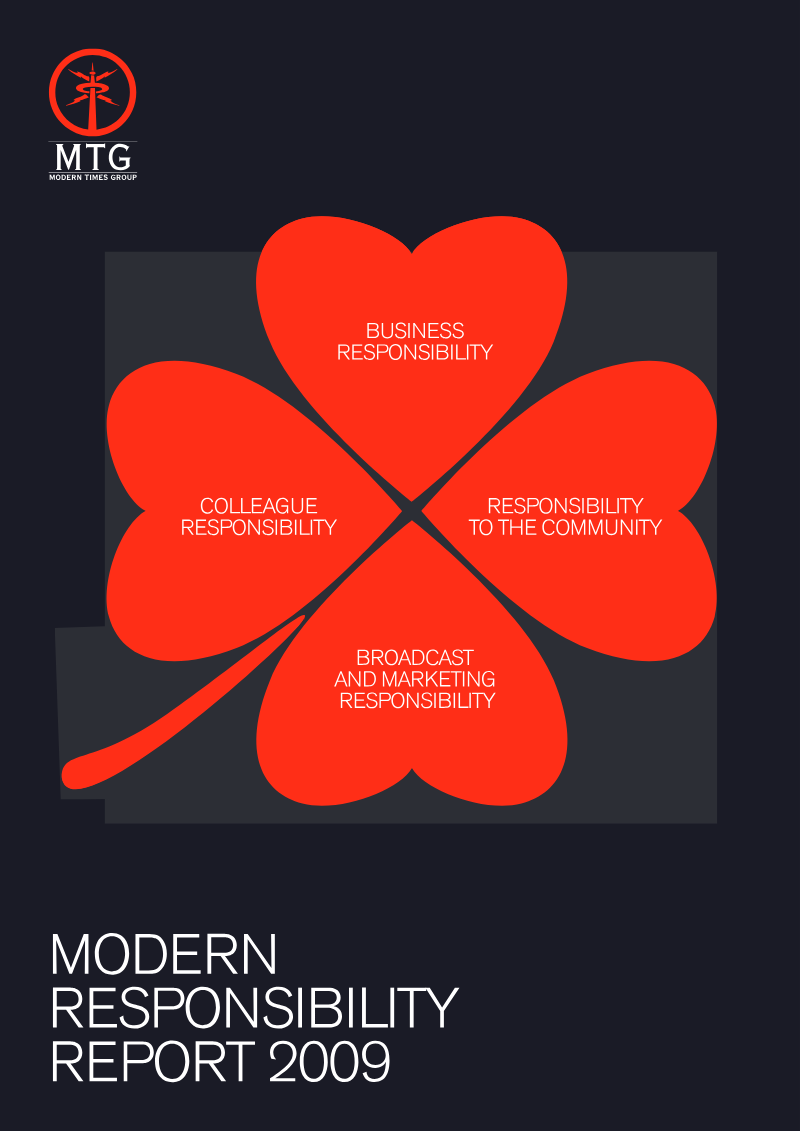
The 2009 Modern Responsibility Report presents Modern Times Group’s (MTG) effort to embed corporate responsibility across its broadcasting and media operations while navigating the aftermath of the 2008-09 financial crisis.
- MTG reported 2009 net sales of SEK 14.2 billion, though operating income resulted in a loss of SEK 1.4 billion and earnings per share fell to -30.86 SEK.
- The company expanded its portfolio during the 2008-09 financial crisis by launching TV3 Puls, Prima COOL, and Viasat Hockey, alongside a major restructuring of Bulgarian assets.
- Employee engagement remained high, with 86% of the 2,906-person workforce participating in the annual survey and 88% reporting enthusiasm for their work.

Q3 2015 Data Digest
The Q3 2015 Data Digest provides a comprehensive analysis of the iOS mobile application market, focusing on global and U.S. trends in downloads, revenue, and advertising strategies.
- Gaming remains the dominant App Store category, generating over 20 times the revenue of the next leading category.
- Clash of Clans maintained its lead in Q3 2015, though Game of War significantly narrowed the revenue gap in the U.S. market.
- Aggressive advertising on the Facebook network, particularly using high-production image and video assets, shows a strong correlation with increased revenue for gaming and lifestyle apps like those from ContextLogic.