Advertising reports and market data
Documents

Roblox Launches Rewarded Ads – Here's What it Means
Roblox has introduced rewarded video ads to its platform, marking a significant strategic shift toward hypercasual-style monetization.
- Roblox has launched a programmatic rewarded video ad system via Google Ad Manager, allowing players to watch 30-second ads in exchange for in-game rewards.
- The initiative aims to improve monetization for the platform, which has historically stagnated at approximately $20 in average bookings per monthly unique payer.
- Early testing shows high player engagement, with rewarded ad completion rates reaching between 80% and 90%.

AppLovin Hit by Short Sellers – Behind the $54B Market Cap Drop
AppLovin has faced significant financial volatility following a series of short-seller reports that alleged the company engaged in unauthorized data collection, misleading advertising, and violations of platform policies.
- AppLovin’s market capitalization dropped by 36%, or approximately $54 billion, falling from $150 billion to $96.11 billion between February and April following short-seller allegations.
- The short-seller reports accused AppLovin of unauthorized data collection, misleading advertising, and violations of platform policies, including the targeting of children.
- AppLovin has launched an independent investigation led by the law firm Quinn Emanuel and issued executive rebuttals to defend the integrity of its AXON advertising technology.

Unlocking Gen Z: Strategies for Game Publishers and Developers
Generation Z has emerged as the most influential demographic in the mobile gaming sector, with 82% of this cohort utilizing smartphones as their primary platform.
- Gen Z gamers are highly social, with 34% citing social interaction as their primary motivation, necessitating a shift from single-player models to social live-ops and community-driven engagement.
- Influencer-led marketing is critical, as Gen Z is 58% more likely to engage with a title based on creator recommendations compared to traditional advertising methods.
- Developers should prioritize long-term partnerships with micro-creators over expensive, short-term campaigns with top-tier influencers to drive higher advocacy and community growth.
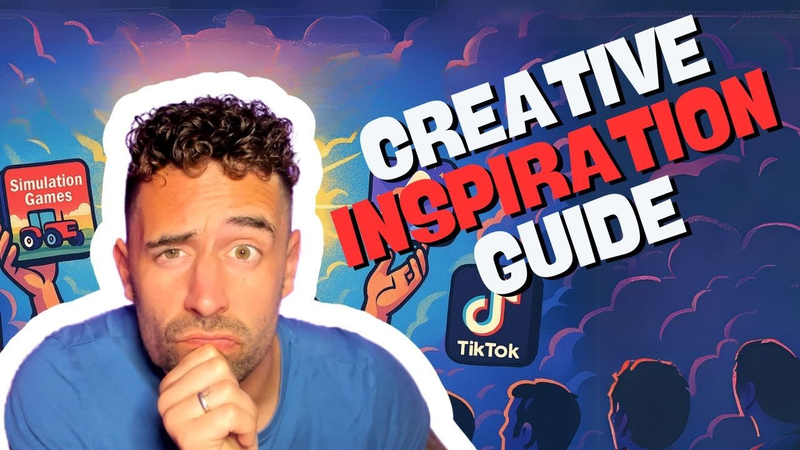
Your ads are boring! 5 Inspiration Tricks to Ignite Your Creative Strategy by Matej Lancaric
Effective creative strategy in the mobile gaming industry centers on the ability to evoke strong emotions to drive user acquisition and lower cost-per-install (CPI) metrics.
- Creative strategy in mobile gaming has shifted from Forex-style ads to casual and puzzle-based mechanics, with a primary focus on driving user engagement through emotional triggers like near-death experiences or satisfying ASMR-style interactions.
- To identify high-performing creatives, monitor competitor spend using tools like Adscan.ai, Facebook Ad Library, TikTok Ad Library, and Google Ads Transparency Center, as the highest-spending creative is typically the best-performing one.
- Cross-pollinate creative concepts by looking outside your specific genre; for example, adapt hyper-casual mechanics (like gates or sorting) or e-commerce and app-space trends to fit your game's audience.

The Future of Brands in Live Streaming
The live streaming industry is undergoing a fundamental shift toward contextual, non-intrusive advertising that prioritizes authentic community integration over traditional, disruptive ad formats.
- Live streaming advertising is shifting from disruptive formats to contextual, non-intrusive integrations that bypass ad-blockers by embedding content directly into the viewer experience.
- Brands like Cheetos and Danone have achieved double-digit percentage increases in brand affinity and awareness by utilizing AI-driven triggers that respond to real-time gameplay events.
- Proprietary technology connecting to game APIs enables brands to interact with specific player milestones, such as winning streaks or low health, to foster authentic engagement.

How Mobile Gaming’s Solitaire Giant Shuffled Its Strategy and Won Post-ATT
MobilityWare’s strategic evolution serves as a blueprint for mobile gaming studios navigating the restrictive post-App Tracking Transparency (ATT) landscape.
- MobilityWare achieved a 21% increase in click-through rates and 38% growth in its US-based iOS user base by shifting from granular user acquisition to a privacy-centric framework post-ATT.
- Studios should adopt 'cost weighted by retention' as a primary performance metric to balance the need for scale with long-term player value in a privacy-restricted environment.
- Successful measurement in a fragmented landscape requires a Single Source of Truth (SSOT) model that synthesizes probabilistic data with Apple’s SKAdNetwork to overcome measurement delays.

A Beginners Guide to Ad Monetization: The Fundamentals by Felix Braberg
Mobile ad monetization relies on the interplay between effective cost per mille (eCPM) and fill rates to drive sustainable revenue.
- Ad Revenue per Daily Active User (Ad ARPDAU) is the primary metric for evaluating monetization performance, providing a stable baseline independent of user acquisition fluctuations.
- A healthy monetization ecosystem requires a balanced demand distribution where no single ad network accounts for more than 40 percent of total earnings.
- During the soft launch phase, developers should prioritize maximizing ad viewer rates and impressions per DAU rather than focusing exclusively on eCPM.
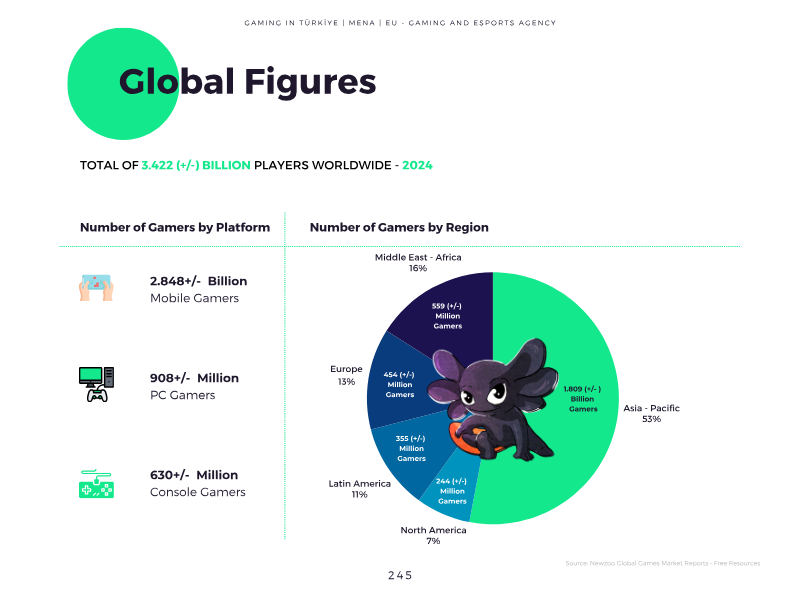

Türkiye Game Market 2024 Report
The Turkish gaming industry demonstrated remarkable resilience and strategic evolution throughout 2024, navigating significant economic headwinds and regulatory challenges to reach a market valuation of approximately $810 million.
- The Turkish gaming market reached a valuation of approximately $810 million in 2024, supported by a player base of 48 million and over 1,400 active studios.
- Investment activity in the sector showed signs of recovery with nearly $120 million secured across various funding rounds throughout 2024.
- The industry is undergoing a strategic transition away from hyper-casual mobile titles toward sustainable, high-quality development for PC and console platforms.

Whiteout Survival - How to Fake It to Make It
The mobile gaming industry is currently defined by a strategy of pairing casual, hyper-casual, or misleading gameplay advertisements with deep, complex 4X strategy monetization.
- Mobile strategy games like Whiteout Survival and Last War: Survival are achieving commercial success by using hyper-casual mini-game advertisements to funnel broad audiences into complex 4X monetization loops.
- Developers are mitigating the discrepancy between misleading ads and actual gameplay by integrating these casual mini-games directly into the core product as side activities or recurring events.
- While this 'fake' advertising strategy often results in lower user retention rates compared to traditional targeting, it remains a dominant and sustainable model for growth in the post-IDFA mobile landscape.
Why Your Game's Ads Need to Evolve–Fast | AI-Powered Creative Intelligence Platform to Unlock Scale
Modern game marketing requires a fundamental shift from intuition-based strategies to a rigorous, data-driven framework that treats creative assets as quantifiable variables.
- AI-driven creative optimization allows studios to 10x human compute by deconstructing competitor ads into granular data points like colors, music, emotions, and call-to-action messaging to identify high-win-rate patterns.
- Treating creative production as a science rather than just art enables studios to reduce failure rates, which can otherwise exceed 95% when ads are not aligned with specific audience preferences across different regions and platforms.
- Data-backed creative adjustments can lead to significant performance gains, such as a 5x increase in win rates for a sports-related advertiser after optimizing messaging to better resonate with the target audience.
Panel: How User Acquisition Is Evolving In 2025.
User acquisition in 2025 is undergoing a fundamental transformation, moving away from simple ad arbitrage toward a sophisticated, data-driven model centered on long-term retention and high-quality user engagement.
- User acquisition budgets are projected to rise in 2025, driven by a decrease in game development costs which is leading to a higher volume of new titles entering the market.
- Advertisers are increasingly diversifying beyond traditional Google and Apple channels, with platforms like Shopify—which presents ads immediately before checkout—and Meta's Threads emerging as high-intent alternatives.
- Creative production volume has surged significantly, with games spending over $100,000 per month now producing an average of 839 ad variations per month.
Session: Podcast Marketing – Insights & Strategies For Success - Sara Guerola, Media Bodies.
Podcast marketing has emerged as a vital, high-growth channel for user acquisition within the gaming industry, serving as a strategic bridge between traditional performance marketing and long-form engagement platforms.
- Podcast ad spend in the gaming industry is growing rapidly, with investment increasing 3.6 times quarter-over-quarter and overall market spend rising at an average annual rate of 22%.
- Gen Z listeners show high conversion potential, with 61% expressing interest in products after hearing an ad and 44% actively using promotional codes.
- Attribution for podcast campaigns is primarily probabilistic, requiring the integration of promo codes, unique URLs, and 30-day attribution windows to account for the medium's extended shelf life.