Action-Adventure reports and market data
Documents

Sucker Punch's Performance Capture for inFAMOUS: Second Son
The development of inFAMOUS: Second Son marked a significant technical shift for Sucker Punch, moving away from traditional joint-only rigs toward a sophisticated, data-driven facial capture pipeline.
- Sucker Punch transitioned to a data-driven facial capture pipeline for inFAMOUS: Second Son, replacing traditional joint-only rigs with an example-based system rooted in the Facial Action Coding System.
- The studio utilized wireless head-mounted cameras and a consistent 168-marker set to capture actor performances in real-time, ensuring precise translation of physiological details like jaw depth and lip movement.
- The animation engine employs a pose-space deformation system that integrates skin clusters with vertex-level offsets, using radial basis functions to normalize blending and retargeting across character models.
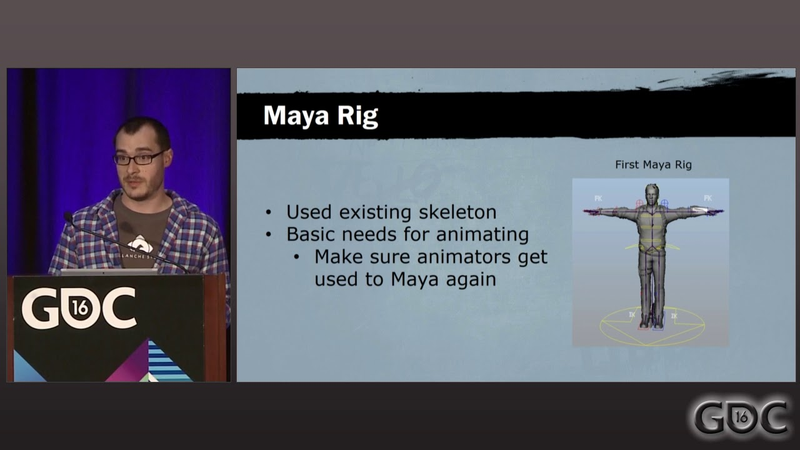
Honey, Where is My Wingsuit? - Building the Just Cause 3 Animation and Rigging Pipeline
The development of the Just Cause 3 animation and rigging pipeline centered on transitioning from a MotionBuilder-centric workflow to a Maya-based environment to better accommodate the game’s unique hand-keyed mechanics, such as the wingsuit.
- Avalanche Studios implemented a dual-software pipeline for Just Cause 3, transitioning animation workflows between Maya for rigging and MotionBuilder for animation editing using a shared HumanIK (HIK) skeleton system.
- The team utilized a modular rigging architecture where all character types—including humans, animals like cows, and specialized gear like wingsuits—shared a standardized initialization and finalization process to ensure consistency.
- To manage 13,000 lines of English dialogue, the studio used MotionBuilder’s built-in voice device to automate lip-syncing, driving face poses via float data (0 to 1) that the game engine blended at runtime.
Assassin's Creed Syndicate: London Wasn't Built in a Day
The development of Victorian London for Assassin’s Creed Syndicate represents a significant evolution in open-world production, shifting from rigid, grid-based design to a flexible, procedural toolset.
- The development of Victorian London for Assassin’s Creed Syndicate required managing six square kilometers of urban space, featuring 80 kilometers of drivable streets and 8,000 unique structures.
- The team transitioned from rigid, grid-based design to a modular architecture using standardized 3-meter and 0.5-meter components to enable rapid iteration.
- To accommodate irregular street geometries, developers implemented adjustable building systems that allowed structures to slide or rotate, supported by a specialized street mesh generation system.
The Lives of Others: How NPCs Can Increase Player Empathy
Modern game development is shifting toward a paradigm where non-playable characters function as integral, living components of a virtual ecosystem rather than mere background assets.
- Game development is shifting toward treating NPCs as autonomous agents with individual goals, social networks, and backstories rather than static background assets.
- Humanizing enemies by embedding unique behavioral traits and personal possessions forces players to confront the emotional consequences of violence.
- Moving away from rigid, one-to-one dialogue structures toward flexible, systemic interaction models is essential for creating deeper narrative engagement.
Exploding the Box: Thinking Differently in the A + B Era
The development of Sunset Overdrive serves as a case study in overcoming the limitations of traditional, formulaic game design.
- Success in modern game development relies on replacing rigid design documentation with a culture of rapid, grey-box prototyping and iterative refinement.
- The development of Sunset Overdrive shifted from a standard cover-based shooter to a high-velocity, traversal-focused experience by prioritizing player agency over conventional genre constraints.
- Cross-departmental alignment on abstract creative goals, such as tone and satire, was achieved through shared touchstones like curated movie nights and music-driven brainstorming sessions.

Change Is Good: The Importance of Iteration Within a Character Art Pipeline
The development of BioShock Infinite serves as a primary case study for the necessity of iterative design in character art pipelines.
- Transitioning from bespoke, labor-intensive asset creation to a standardized, modular system—utilizing shared topology, rigs, and UV layouts—is essential for reducing technical overhead and enabling rapid iteration.
- Implementing an override system using proxy boxes allows for efficient asset swapping and tiered customization, which effectively mitigates memory limitations while streamlining combat design.
- The development of BioShock Infinite demonstrates that character art must evolve alongside narrative shifts, as seen in the transformation of Elizabeth from a generic companion to a complex protagonist requiring custom shaders and unique rigging.

Adaptive Virtual Texture Rendering in Far Cry 4
Adaptive Virtual Texture rendering serves as a foundational technology for Far Cry 4, enabling the display of high-fidelity terrain and thousands of procedural decals without exceeding strict memory constraints.
- Ubisoft's Adaptive Virtual Texture (AVT) rendering technique allows for the rendering of thousands of terrain decals in under 1 millisecond, achieving a high resolution of 10 pixels per centimeter.
- The AVT system dynamically adjusts texture resolution based on camera distance by dividing the world into 64x64 meter sectors, allocating larger virtual image sizes for sectors closer to the camera and smaller sizes for those further away.
- To minimize memory footprint and bandwidth, the system uses a 32-bit page ID buffer during the G-buffer rendering pass, with bits allocated specifically for page ID, mipmap level, and virtual image size.
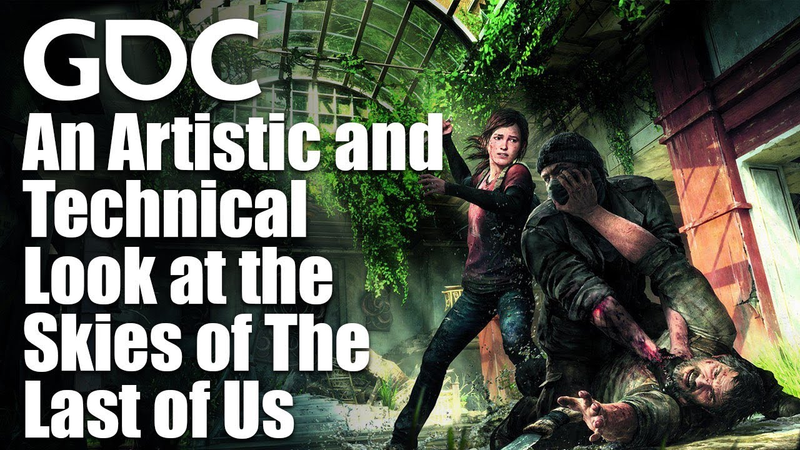
Moving the Heavens: An Artistic and Technical Look at the Skies of The Last of Us
The artistic and technical development of skyboxes in The Last of Us centers on the thesis that the sky is a critical, yet frequently overlooked, narrative tool capable of defining the emotional tone, lighting, and color palette of an entire game environment.
- The Last of Us utilized high-resolution matte paintings projected onto a dome to maintain artistic control over the game's skyboxes.
- To simulate cloud movement without the performance overhead of volumetric systems, the team implemented a UV distortion technique known as flow using vector-based motion maps.
- The development team achieved perspective-correct cloud movement by calculating the dot product of wind direction against the sky dome’s normals.
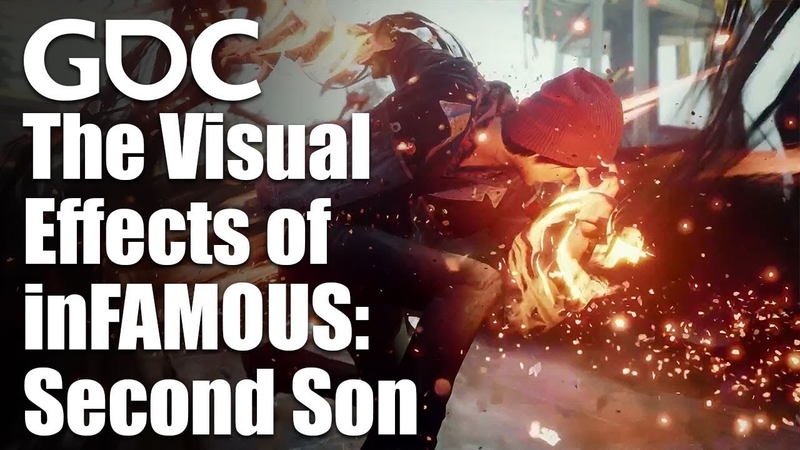
The Visual Effects of inFAMOUS: Second Son
The visual effects strategy for inFAMOUS: Second Son centers on the pursuit of a believable, stylized aesthetic that prioritizes fluid traversal and dynamic power representation over strict photorealism.
- The development team replaced traditional, resource-heavy flipbooks with a custom, GPU-accelerated, expression-based particle system to achieve high-fidelity visual effects.
- Visual cohesion for power-based traversal and combat was maintained through advanced lighting integration, including particle-cast shadows, dynamic light emission, and spherical harmonic probes.
- The team utilized plasma-like waveforms and curl noise, a technique termed 'light writing,' to define the form and timing of character powers.
Animating the Spy Fantasy in Splinter Cell: Blacklist
The development of Splinter Cell: Blacklist centered on the dual pillars of Panther-style surgical precision and grounded realism to deliver an immersive spy fantasy.
- The development team successfully reduced animation memory usage from 40MB to 23MB while maintaining high-quality character movement.
- Engineers implemented dynamic animation bundles that loaded assets based on specific map requirements to optimize memory usage.
- The team utilized mirroring techniques for cover animations and animation layering to eliminate redundant animation sets.
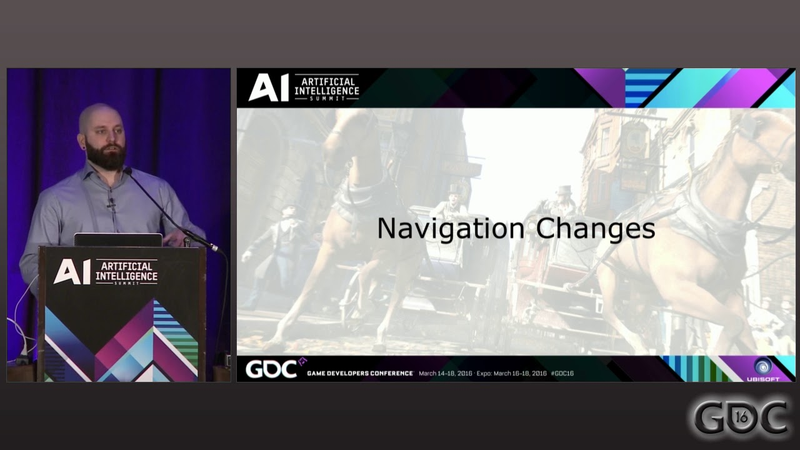
What Are You Driving At? Vehicle AI in Assassin's Creed Syndicate
The implementation of vehicle artificial intelligence in Assassin’s Creed Syndicate was driven by the need to integrate dynamic, physics-based carriages into a world defined by parkour, stealth, and historical accuracy.
- To integrate carriages into Assassin's Creed Syndicate, developers implemented 'navmesh patching,' which dynamically alters the navigation mesh by punching holes in it based on the vehicle's rigid body size to allow NPCs to interact with moving vehicles.
- Due to the high computational cost of navmesh patching, the system was limited to updating only one vehicle per frame and prioritized patching based on the vehicle's proximity to the player.
- The team utilized 'virtual vehicles'—fake entities existing in virtual space—to group NPCs by faction, allowing multiple NPCs to spawn with a single vehicle request rather than spawning individual vehicles for every enemy.
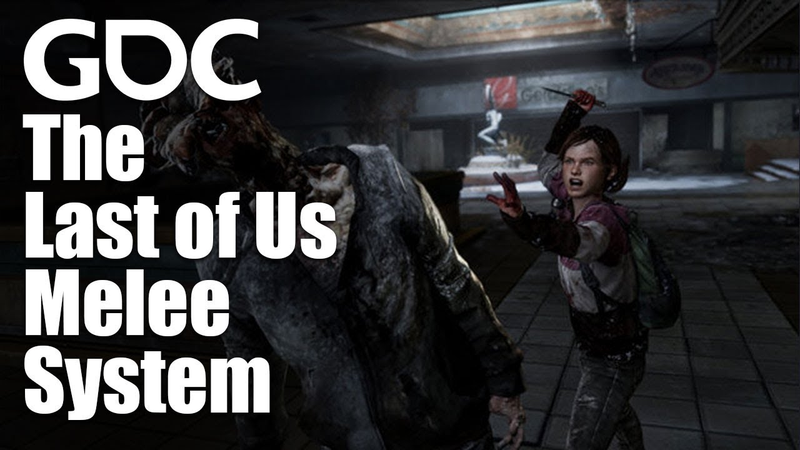
Unsynced: The Last of Us Melee System
The melee system in The Last of Us was engineered to deliver a brutal, visceral combat experience that reinforces the game’s high-stakes survival narrative.
- The melee system was optimized to function within a strict four-megabyte memory footprint while maintaining high-fidelity performance.
- Designers managed nearly 1,000 individual combat moves using a text-based Lisp scripting architecture, which allowed for rapid iteration without constant programmer intervention.
- The combat system replaced rigid, synced animations with an independent, joint-based reaction system to enable dynamic movement on uneven terrain and sophisticated flinching mechanics.