
Report12 pages
Inside Gaming: It's Personal!
The report examines how video games increasingly serve as a platform for personal identity and self‑expression, noting that nearly two thirds of gamers feel they can be more authentic while playing. It argues that this trend fuels a 30 % rise in time spent gaming among those who view games as a space for true self‑presentation, compared with previous years. The analysis draws on a global survey of 5,000 entertainment and gaming consumers and proprietary first‑party data from Fandom for 2024. Findings highlight that in‑game customization is the most powerful driver of self‑expression, with 76 % of players citing character personalization as a key tool; gamertags and usernames follow at 48 %, while communication features, signatures, emblems, emotions, and gestures each attract between 30‑35 % of respondents. The study also identifies a disconnect: many gamers believe they can be authentic online yet perceive their in‑person gamer persona as distinct from their real‑life personality. Brands are encouraged to bridge this gap by creating opportunities that translate virtual identity into physical expression—such as cosplay collaborations, cosmetic product lines, or skill‑building experiences that mirror in‑game achievements. The report covers a global audience across all major gaming segments, focusing on the 2024 period and emphasizing actionable insights for marketers seeking to align brand experiences with gamers’ desire for authenticity.
- Nearly two-thirds of gamers report feeling more authentic while playing than in their daily lives, a sentiment that has driven a 30% increase in time spent gaming among those who view these platforms as spaces for self-presentation.
- In-game character customization is the primary driver of self-expression for 76% of players, significantly outpacing other features like usernames (48%) and communication tools or emotes (30–35%).
- Fandom’s 2024 data indicates a psychological disconnect where gamers maintain distinct online personas that they perceive as separate from their real-life identities.
- Marketers can capitalize on the desire for authenticity by creating physical-world extensions of virtual identities, such as cosplay collaborations, branded cosmetic lines, or skill-building programs that mirror in-game achievements.
- These insights are based on a 2024 global survey of 5,000 entertainment and gaming consumers, combined with proprietary first-party data from Fandom.
+2
FandomJan 2024
Report17 pages
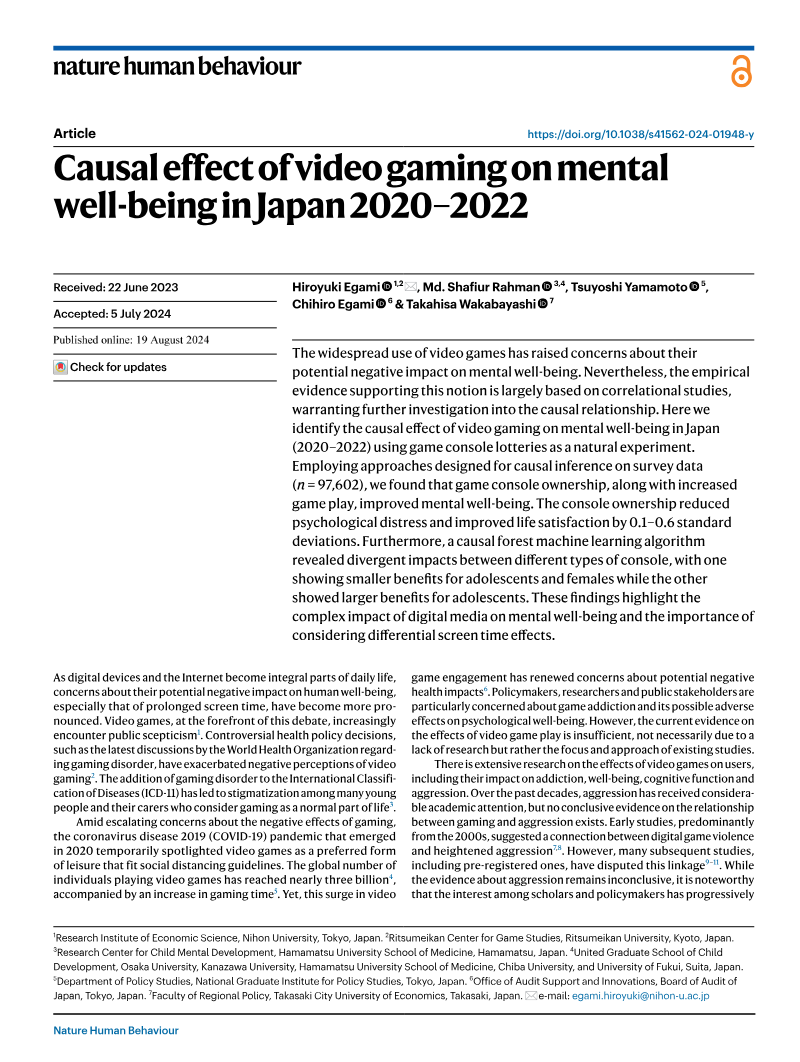
Causal Effect of Video Gaming on Mental Well-Being in Japan 2020–2022
Evidence from a natural experiment conducted in Japan between 2020 and 2022 demonstrates that video game ownership and increased play time exert a positive causal influence on mental well-being and life satisfaction. By leveraging the unique lottery-based distribution of gaming consoles during pandemic-related supply shortages, researchers analyzed data from over 97,000 respondents to isolate the effects of gaming from self-selection bias. The findings indicate that winning a console lottery reduced psychological distress by 0.1 to 0.6 standard deviations, directly challenging traditional correlational studies that often associate gaming with negative mental health outcomes.
The magnitude of these psychological benefits varies significantly across different demographic groups and hardware platforms. Machine learning analysis reveals that the Nintendo Switch offers more pronounced well-being improvements for adolescents and female users, whereas the PlayStation 5 provides stronger positive effects for adult males and dedicated gamers. While the overall impact of gaming remains positive, the data suggests a threshold of diminishing returns, as the benefits to mental health and life satisfaction begin to decline after three hours of daily play.
The scope of this research is specifically focused on the Japanese market during the COVID-19 pandemic, a period characterized by heightened social isolation and restricted physical activity. These environmental factors may have amplified the observed positive effects, as gaming served as a primary tool for digital engagement and stress mitigation. Despite these contextual considerations, the use of instrumental variable causal forests and propensity score matching provides a rigorous statistical foundation for the conclusion that moderate video game consumption serves as an effective intervention for improving psychological health.
- Winning a gaming console lottery during the 2020–2022 Japanese supply shortages reduced psychological distress by 0.1 to 0.6 standard deviations, establishing a positive causal link between gaming and mental well-being.
- The positive impact of video games on mental health and life satisfaction follows a threshold effect, with benefits beginning to decline after three hours of daily play.
- Nintendo Switch ownership provides the most pronounced well-being improvements for adolescents and female users, while the PlayStation 5 yields stronger benefits for adult males and dedicated gamers.
- The study utilized data from over 97,000 respondents to isolate the effects of gaming from self-selection bias, effectively challenging prior correlational research that linked gaming to negative mental health outcomes.
- The observed psychological benefits were likely amplified by the COVID-19 pandemic environment in Japan, where gaming functioned as a critical tool for digital engagement and stress mitigation during periods of social isolation.
Springer Science and Business Media LLCJan 2024
Report111 pages
Annual Universe of Positive Gaming Experiences 2024
Stillfront Group’s 2024 fiscal year marks a pivotal transition into a synergy-driven operational phase, characterized by a major geographic reorganization into Europe, North America, and MENA & APAC business areas. This strategic shift aims to drive efficiency and mitigate a 2% organic revenue decline, which resulted in total net revenues of 6,737 MSEK. The financial year was defined by a significant net loss of 7,378 MSEK, primarily driven by a 6.9 billion SEK goodwill impairment in the North American segment due to lower-than-expected growth. Despite these non-cash charges, the group maintained a resilient financial foundation, generating over 1 billion SEK in free cash flow and improving gross margins to 80% through successful direct-to-consumer initiatives.
The group’s portfolio remains focused on free-to-play franchises, with North America and Europe accounting for 71% of player bookings. To reduce dependency on third-party platforms, which still facilitate 54% of revenue, management is prioritizing its internal payment systems and the "Stillops" platform for cost optimization. A comprehensive cost-savings program is underway, targeting up to 250 MSEK in annual savings by late 2025. Leadership has also stabilized under a new CEO and a board that remains fully compliant with the Swedish Code of Corporate Governance, focusing on organic growth and franchise scaling over dividend distributions.
Sustainability and governance have been deeply integrated into the corporate strategy in preparation for the EU’s Corporate Sustainability Reporting Directive. The group achieved Science Based Targets initiative validation, reducing market-based greenhouse gas emissions by 7% and more than doubling its renewable energy share to 37%. While social metrics show a stable workforce with improved turnover rates and high data security standards, challenges remain in gender diversity at the executive level. Executive remuneration is now tied to long-term sustainability targets, including employee satisfaction and data privacy, ensuring that environmental and social governance remains central to the group’s long-term value creation.
- Stillfront Group reported a net loss of 7,378 MSEK for fiscal year 2024, largely driven by a 6.9 billion SEK goodwill impairment in its North American segment.
- Total net revenues reached 6,737 MSEK, reflecting a 2% organic revenue decline that prompted a major geographic reorganization into Europe, North America, and MENA & APAC.
- Despite the net loss, the company generated over 1 billion SEK in free cash flow and improved gross margins to 80% through direct-to-consumer initiatives.
- Management is executing a cost-savings program targeting 250 MSEK in annual savings by late 2025 while prioritizing internal payment systems to reduce reliance on third-party platforms, which currently account for 54% of revenue.
- The company is shifting focus toward organic growth and franchise scaling, with 71% of player bookings currently concentrated in North America and Europe.
+1
StillfrontJan 2024
Report9 pages
Longitudinal Survey Report on Gaming Disorder: Japan
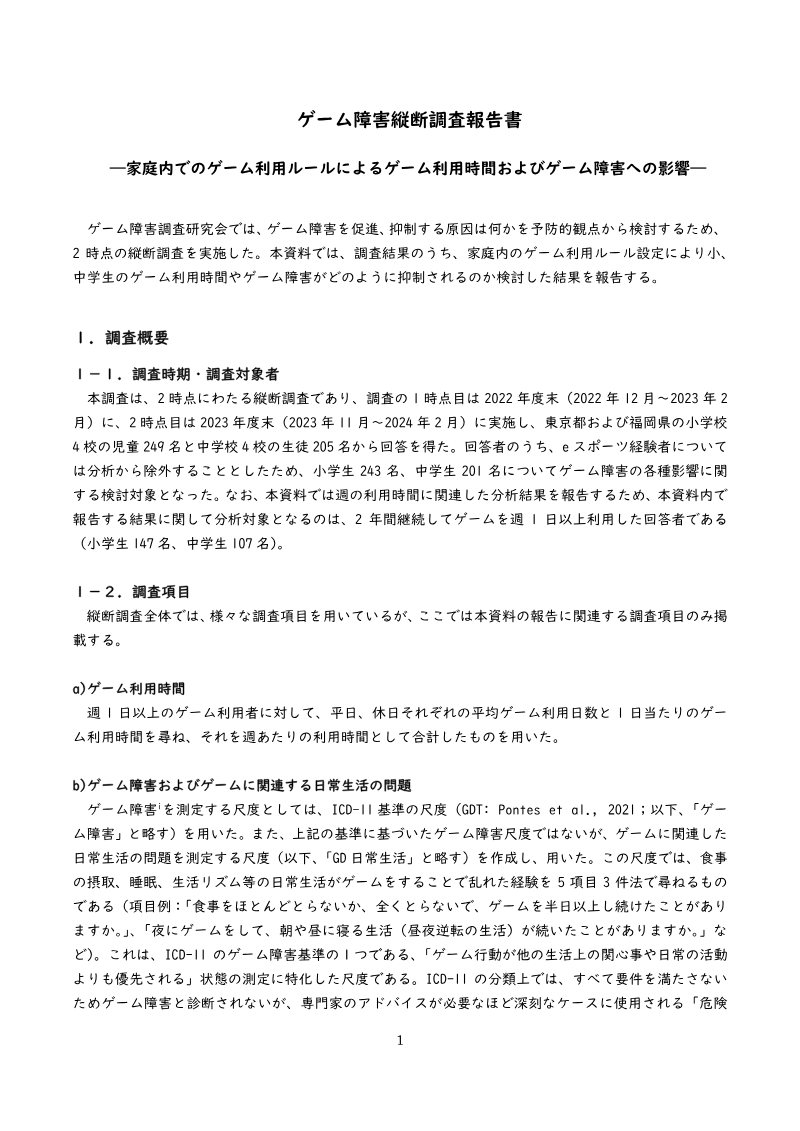
The study investigates how household rules governing video‑game use influence weekly play time and the emergence of gaming disorder among Japanese elementary and middle‑school students. By tracking participants over two survey waves—late 2022 to early 2023 and late 2023 to early 2024—the research tests whether specifying permissible gaming periods or prohibiting certain times can curb excessive play and related daily‑life problems.
A longitudinal sample was drawn from four elementary schools and four middle schools in Tokyo and Fukuoka, yielding 243 elementary and 201 middle‑school respondents after excluding esports players. Analyses focused on the 147 elementary and 107 middle‑school students who reported gaming at least once per week across both waves. Weekly gaming hours were calculated from weekday and weekend use, while gaming disorder was measured with the ICD‑11‑based Gaming Disorder Test and a custom scale assessing disruptions to sleep, meals, and routine. The presence of two rule types—“allowed‑time” (e.g., one hour per day) and “prohibited‑time” (e.g., no gaming after midnight)—was recorded at each wave and examined using cross‑lagged models and mixed‑design ANOVAs.
Results show that higher weekly gaming hours predict later increases in gaming‑disorder scores for both age groups (standardized coefficients .12 for elementary and .11 for middle‑school students), while disorder does not feed back into later play time. Gaming hours and daily‑life problems mutually reinforce each other, forming a negative feedback
- Increased weekly gaming hours serve as a significant predictor for higher gaming disorder scores, with standardized coefficients of .12 for elementary students and .11 for middle-school students.
- Gaming hours and daily-life problems, such as disruptions to sleep and meals, create a negative feedback loop where each factor mutually reinforces the other.
- Gaming disorder symptoms do not appear to influence or increase future weekly play time, suggesting that excessive play is the primary driver of disorder rather than a consequence of it.
- The study tracked 254 total students—147 elementary and 107 middle-schoolers—who played games at least once per week across two survey waves between late 2022 and early 2024.
- Research methodology utilized the ICD-11-based Gaming Disorder Test and a custom scale to measure the impact of household rules, specifically 'allowed-time' limits and 'prohibited-time' restrictions.
+1
CESA – Computer Entertainment Supplier's AssociationJan 2024
Whitepaper127 pages
Guide to Game Literacy: Improving Understanding of Games
The guide establishes game literacy as the capacity to comprehend, critique, and responsibly engage with video games, extending traditional media‑literacy to encompass rules, interactive systems, cultural influence, and self‑control. It argues that cultivating this competency is essential for healthy digital participation and for linking gaming to broader STEAM learning and career pathways.
Empirical evidence from a 2023 Korean survey shows that 86 % of adolescents play video games, with 71 % classified as general users, 12 % as adaptive, and 3 % as problematic. Parental awareness markedly differentiates groups—78.5 % of adaptive gamers report informed parents versus 60.2 % among problematic gamers—underscoring the need for literacy programs targeting youths, parents, teachers, and administrators. The curriculum is organized around four pillars: understanding games and culture, education‑facilitating games, game ethics, and game careers, and is delivered through age‑specific, spiral‑learning modules from early childhood through high school, complemented by specialized teacher training.
A coordinated ecosystem involving schools, families, policymakers, developers, researchers, and sponsors is presented as vital for fostering “good gamers.” Internationally, the framework draws on initiatives such as Finland’s Assembly festival, Germany’s Schau Hin, the UK’s BFI/Futurelab programs, and North American platforms, while highlighting Korea’s G‑School teacher‑training system and the “Good Gamer” rating‑compliance program. Comparative analysis of rating bodies—from Europe’s PEGI and Germany’s USK to the ESRB, CERO, IGRS, and Singapore’s classifications—demonstrates a universal aim to shield minors through age‑tiered content limits.
Economic context is provided by the United Kingdom, the world’s fifth‑largest gaming market, which generated roughly £4 billion in 2022 and is projected to reach £10 billion by 2030, with the gamer population expanding from 33.4 million in 2019 to an estimated 38.5 million by 2025. Together, these findings support the thesis that comprehensive, multi‑stakeholder game‑literacy education is a prerequisite for a sustainable, ethically aware, and economically vibrant gaming culture worldwide.
- Parental involvement is a critical determinant of healthy gaming habits, as 78.5% of adaptive gamers have informed parents compared to only 60.2% of those classified as problematic.
- The UK gaming market is projected to grow from £4 billion in 2022 to £10 billion by 2030, with the national gamer population expected to reach 38.5 million by 2025.
- A 2023 Korean survey indicates that 86% of adolescents play video games, with the user base segmented into 71% general users, 12% adaptive users, and 3% problematic users.
- Effective game literacy requires a multi-stakeholder ecosystem involving schools, families, policymakers, and developers to promote ethical engagement and link gaming to STEAM career pathways.
- Global efforts to protect minors rely on a standardized approach to age-tiered content regulation, utilizing systems such as PEGI (Europe), USK (Germany), ESRB (North America), CERO (Japan), and IGRS (China).
K-GAMES – Korea Association of Game IndustryJan 2024
Report2 pages
Comportamientos e Intereses de los Videojugadores: Spain
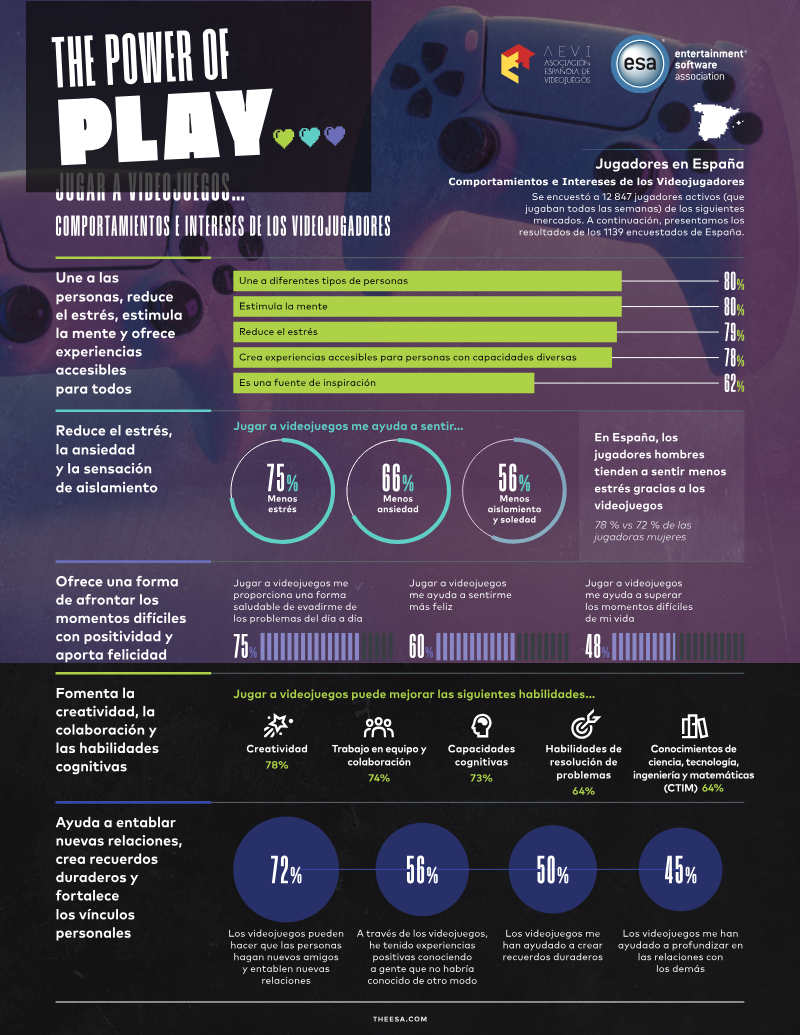
The study investigates how Spanish video‑game players experience play, what motivates them, and which social and cognitive benefits they perceive. It situates Spain within a broader cross‑national analysis that also includes Poland, South Korea and Australia, focusing on active gamers who play at least once a week.
Data were collected through an online questionnaire administered to 12,847 weekly players across the four markets, of which 1,139 respondents were from Spain. The sample spans ages 16 to 65 plus and includes both genders, allowing comparison of habits and attitudes between men and women and across age brackets.
Among Spanish gamers, 80 % cite “meeting different people” and “stimulating the mind” as primary reasons for playing, while 78 % report that games help reduce stress and anxiety. Men are slightly more likely than women to feel less isolated (78 % vs 72 %) and to use gaming as a healthy outlet for daily pressures (75 % of men versus 60 % of women). Solo play remains the most common mode, yet eight out of ten men regularly play with others online, and roughly half of all respondents combine solo and online sessions.
Social interaction is linked to perceived skill gains: 78 % associate multiplayer play with enhanced creativity, 74 % with teamwork, and 64 % with improved cognitive and STEM‑related abilities. Integrated communication tools are used frequently by 29 % of younger male players, while 55 % of all participants view playing with others—whether online or in person—as a positive experience that fosters lasting friendships and shared memories.
Overall, Spanish gamers view video games as a versatile medium that delivers entertainment, mental‑health relief, social connection and transferable competencies, underscoring the sector’s relevance for both consumer satisfaction and broader wellbeing initiatives.
- 80% of Spanish gamers play primarily to meet new people and stimulate their minds, while 78% use gaming as a tool to reduce stress and anxiety.
- Multiplayer gaming is perceived as a driver for skill development, with 78% of players associating it with creativity, 74% with teamwork, and 64% with improved cognitive and STEM-related abilities.
- Social gaming is a core habit, as 55% of all participants view playing with others as a positive experience that fosters lasting friendships and shared memories.
- While solo play remains the most common mode, 80% of male gamers play online with others regularly, and roughly 50% of all respondents combine solo and online sessions.
- Gender differences exist in perceived benefits, with men more likely than women to report feeling less isolated (78% vs 72%) and using gaming as a healthy outlet for daily pressure (75% vs 60%).
+1
AEVIJan 2024
Report2 pages
The Power of Play: España
Summary of “The Power of Play: España” (Survey of Spanish Video‑Game Players)
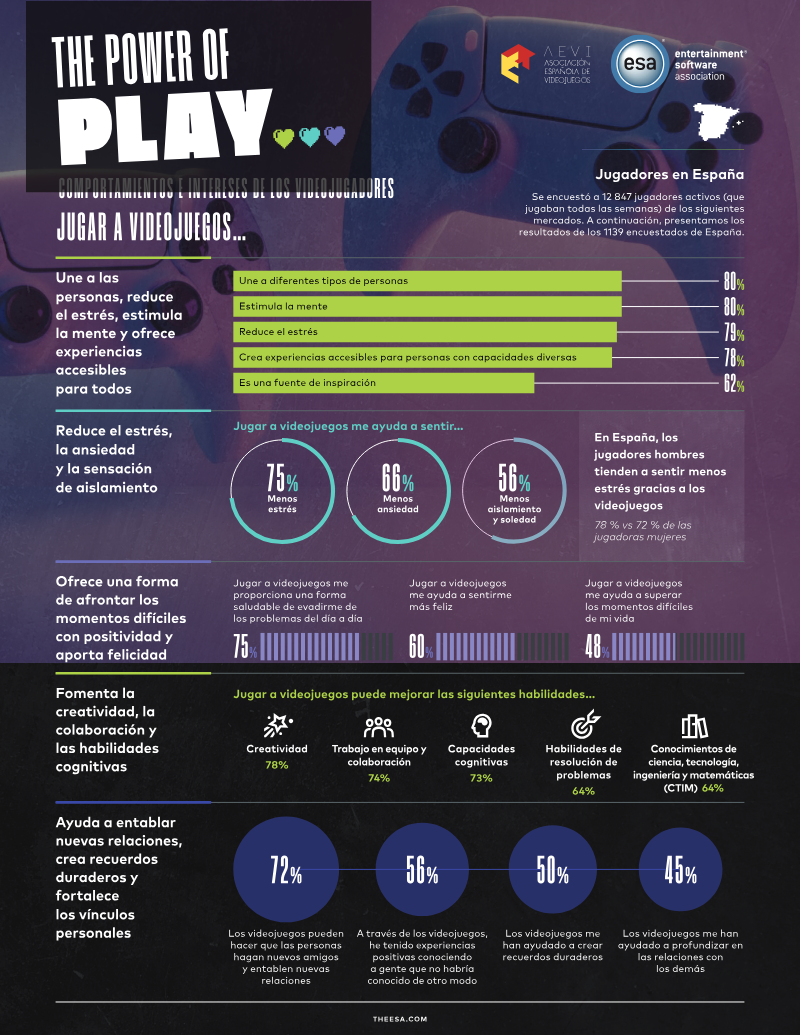
1. Scope & Sample Population surveyed: 12 847 active gamers (play ≥ once a week) across several markets. Spanish subsample: 1 139 respondents (men + women) who answered the questionnaire.
2. Demographic Profile
| Age group (years) | % of Spanish respondents | |-------------------|---------------------------| | 16‑18 | 8 % (men) / 41 % (women) | | 19‑24 | 49 % (men) / 28 % (women) | | 25‑34 | 28 % (men) / 28 % (women) | | 35‑44 | – | | 45‑54 | – | | 55‑64 | – | | 65+ | – |
\The table in the original document mixes gender‑specific percentages; the numbers above reflect the most clearly reported figures.
Gender split (overall): Roughly equal, with a slight male majority in the 19‑24 bracket. Play mode: 8 out of 10 male gamers (≈ 80 %) report playing with other players online. For women, solo play is still the most common, but a sizable minority also play online or in person.
3. Primary Motivations for Playing
| Motivation | % of respondents (overall) | |------------|----------------------------| | Fun / Entertainment | 85 % | | Stress reduction / relaxation | 78 % (men) – 75 % (women) | | Social connection (meeting new people, making friends) | 62 % (men) – 55 % (women) | | Escapism / coping with daily problems | 28 % (men) – 48 % (women) | | Feeling happier / more positive | 75 % (men) – 60 % (women) | | Creating lasting memories | 45 % (men) – 35 % (women) |
Note: The percentages are drawn from multiple overlapping questions (e.g., “Jugar a videojuegos me ayuda a sentir…”, “Reduce el estrés, la ansiedad, el aislamiento”). The highest‑scoring items are fun, stress relief, and social interaction.
4. Perceived Benefits
4.1 Psychological & Emotional Stress & anxiety: 78 % of men and 75 % of women say gaming helps them feel less stressed and less anxious. Isolation: 78 % of men and 72 % of women report a reduction in feelings of loneliness.
- Gaming is primarily used for emotional regulation in Spain, with 78% of men and 75% of women reporting that it effectively reduces stress and anxiety.
- Social connection is a major driver for the Spanish gaming population, with 62% of men and 55% of women citing it as a primary motivation for play.
- Online multiplayer engagement is significantly higher among men, with approximately 80% reporting they play with others online, whereas women show a stronger preference for solo play.
- Gaming serves as a vital tool for combating loneliness, as 78% of men and 72% of women report that playing reduces their feelings of isolation.
- The Spanish gaming demographic is heavily concentrated in younger age brackets, with 49% of male players and 28% of female players falling within the 19–24 age range.
+3
AEVIJan 2024
Report5 pages
2024 Financial and Fan Support Structures in Korean eSports
The analysis examines the financial scale of Korean e‑sports organizations and the patterns of fan support, drawing on a longitudinal budget survey (2015‑2023) and two 2024 public opinion polls conducted across South Korea. It targets professional teams, the broader e‑sports audience aged ten and older, and the period from the mid‑2010s through mid‑2024, providing a comprehensive view of market growth and consumer behavior.
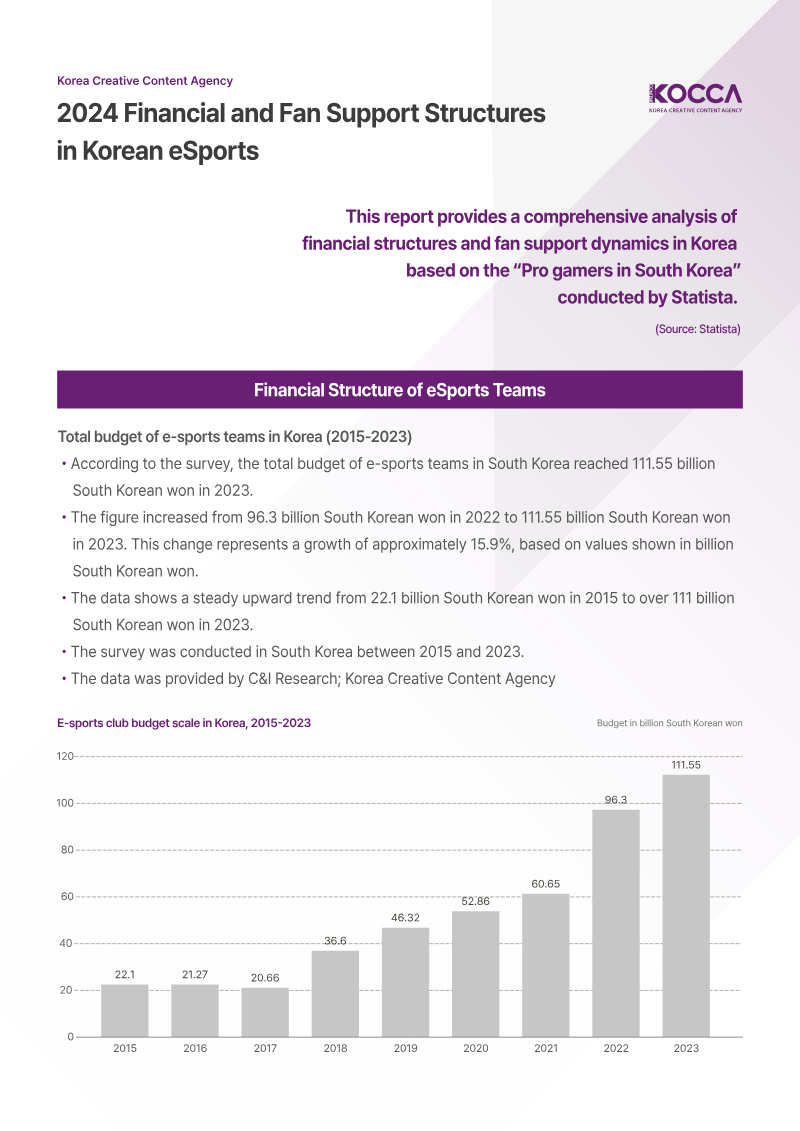
Budget data reveal a steady expansion, with total team expenditures rising from roughly 22.1 billion won in 2015 to 111.6 billion won in 2023—a near five‑fold increase over eight years. The most recent year alone saw a 15.9 % jump from 96.3 billion won in 2022, underscoring accelerating investment in the sector. These figures originate from C&I Research and are based on the Statista “Pro gamers in South Korea” survey.
Fan engagement remains modest: among 2,000 respondents surveyed between June and August 2024, only 35.3 % reported supporting a specific professional team, while 64.7 % did not align with any team. Of the 706 supporters who identified a favorite, T1 commanded an overwhelming 78.2 % share, with the runner‑up Gen.G attracting just 5.4 % and all other teams each receiving under 2 % of votes, indicating a highly concentrated fan base.
Motivational analysis shows that personal affinity for players drives support (48.6 %), followed by a positive perception of the team’s image (41.4 %). Interest in tactical or skill‑based aspects accounts for only 9.2 % of the rationale, highlighting the primacy of player appeal in shaping loyalty.
Overall, the sector demonstrates robust fiscal growth, yet the majority of the audience remains unaffiliated with specific teams, and fan allegiance is heavily skewed toward a single dominant organization. Player popularity emerges as the key lever for deepening fan commitment and expanding market participation.
- Korean e-sports team expenditures grew nearly five-fold between 2015 and 2023, rising from 22.1 billion won to 111.6 billion won.
- Market investment is accelerating, with total team spending increasing by 15.9% between 2022 and 2023 alone.
- Fan loyalty is highly concentrated, as T1 commands 78.2% of identified team supporters, while the runner-up Gen.G holds only 5.4%.
- The majority of the Korean e-sports audience remains unaligned, with 64.7% of 2024 survey respondents reporting no specific team affiliation.
- Player affinity is the primary driver of fan loyalty, accounting for 48.6% of support motivations, compared to just 9.2% for tactical or skill-based interest.
+1
KOCCA – Korea Creative Content AgencyJan 2024
Report47 pages
The Xsolla Report: State of Play (Autumn 2024 Edition)
Mobile gaming is now the dominant segment of the global video‑games market, generating $98.7 billion in 2024, of which roughly two‑thirds ($65 billion) originates from Asian economies. The rapid expansion of smartphones, high‑speed connectivity, and localized content have driven this growth, positioning mobile titles as the primary source of interactive entertainment worldwide.
A pivotal shift is the emergence of direct‑to‑consumer (D2C) web shops as essential revenue channels for mobile developers. Awareness of these storefronts is extremely high, with 81 % of players recognizing them and 77 % having completed at least one purchase. Although only a small “whale” cohort—between two and six percent of the player base—accounts for 95 % of in‑app spending, this segment also delivers superior retention and lifetime value, underscoring its strategic importance for monetisation strategies.
Empirical case studies illustrate the financial upside of integrating D2C web shops. Titles such as Tilting Point’s Warhammer: Chaos and Conquest and Star Trek Timelines achieved revenue lifts of up to 50 % after adding web‑shop functionality, leveraging exclusive content, personalised offers and frictionless payment methods to stimulate repeat purchases. These findings suggest that developers who adopt low‑friction, web‑based commerce can capture a larger share of the whale segment while also expanding overall player spend.
Overall, the data indicate that the mobile gaming ecosystem is maturing into a highly concentrated market where a minority of high‑spending users drive the majority of revenue. Strategic investment in D2C web‑shop infrastructure and targeted offers for whales presents a clear pathway for developers to enhance monetisation, improve player retention, and sustain growth in an increasingly competitive global landscape.
- Mobile gaming is the dominant global segment, generating $98.7 billion in 2024, with $65 billion of that revenue originating from Asian markets.
- A small 'whale' cohort comprising 2% to 6% of the player base accounts for 95% of all in-app spending.
- Direct-to-consumer (D2C) web shops are highly effective, with 81% of players aware of them and 77% having completed at least one purchase.
- Integrating D2C web shops can drive revenue increases of up to 50%, as demonstrated by titles like Tilting Point’s 'Warhammer: Chaos and Conquest' and 'Star Trek Timelines'.
- High-spending 'whale' segments provide superior player retention and lifetime value, making them the primary focus for sustainable monetization strategies.
+1
XsollaJan 2024
Report33 pages
Mobile Gaming Spender Report: Decoding Today’s Mobile IAP Spenders to Understand Motivations, Engagement
The 2024 Mobile Gaming Spender Report by Mistplay examines the evolving motivations, behaviors, and shifting financial priorities of mobile in-app purchase (IAP) spenders. The analysis is based on a survey of approximately 2,000 active spenders in the United States and Canada conducted between December 2023 and January 2024, supplemented by behavioral data from millions of users on the Mistplay platform from Q2 2023 through Q1 2024. The report segments players into high-value ($100+), mid-value ($10–$99), and low-value (<$10) cohorts to provide granular insights into the current market maturity.
A primary thesis of the research is that mobile spenders are becoming increasingly discerning due to economic headwinds. Findings indicate that 32% of all spenders—and 41% of high-value spenders—plan to reduce their in-game expenditures in 2024. To combat this, the data suggests a shift toward hyper-personalization and loyalty-driven retention. Approximately 40% of spenders are influenced by personalized offers, and 79% engage with loyalty programs. Furthermore, 51% of respondents indicate they would spend more if they earned tangible rewards or points for their purchases, highlighting a demand for value-driven discretionary spending.
The report also identifies distinct genre-based personas: "Casual Candace" (Puzzle/Simulation), "Midcore Mike" (RPG/Strategy), and "Lucky Lucy" (Social Casino). While social factors and referrals are effective for top-of-funnel discovery—with 73% of spenders installing a game via referral in the past year—they rarely drive actual spending, as 69% of respondents claim social influence does not affect their financial decisions. Ultimately, the findings conclude that sustainable growth in 2024 will require publishers to move beyond traditional user acquisition toward sophisticated lifecycle marketing, direct-to-consumer web stores, and transparent ad creative that accurately reflects gameplay.
- Economic headwinds are driving a contraction in spending, with 32% of all mobile spenders and 41% of high-value spenders planning to reduce their in-game expenditures in 2024.
- Value-driven incentives are critical for retention, as 51% of spenders would increase their spending if they earned tangible rewards or points for their purchases.
- Loyalty programs and hyper-personalization are essential engagement tools, with 79% of spenders engaging with loyalty programs and 40% influenced by personalized offers.
- While social factors and referrals are effective for user acquisition—driving 73% of installs—69% of spenders report that social influence does not affect their actual financial decisions.
- Sustainable growth in 2024 requires a strategic shift toward direct-to-consumer web stores, sophisticated lifecycle marketing, and ad creatives that accurately reflect actual gameplay.
+2
MistplayJan 2024
Report10 pages
Toxicity and the Bottom Line: The Impact of Hate and Harassment on Player Retention and In-Game Purchases
Toxicity and harassment in online gaming environments significantly impact player retention and monetization, creating a direct financial incentive for studios to prioritize trust and safety. Research based on a representative survey of 2,408 active gamers across various age groups, genders, and ethnicities indicates that three out of four players consider safety from hate and harassment a high priority. Despite this, approximately 10% of players report feeling actively unsafe, with this figure rising to 23% among bisexual players and 18% among Asian players, highlighting the disproportionate impact on marginalized communities.
The data establishes a clear link between toxic behavior and lost revenue. Approximately 19% of players report spending less money in gaming communities to avoid harassment, while 21% have reduced their overall playtime. Engagement is further eroded by defensive player behaviors: 31% of participants have abandoned matches already in progress, 27% have left lobbies before a match began, and 44% have disabled voice chat entirely to mitigate exposure to abuse. These actions not only decrease individual player lifetime value but also degrade the experience for the broader player base.
Demographic analysis reveals that younger players, particularly those aged 18 to 24, are the most sensitive to these issues. This cohort is the most likely to feel unsafe and the most prone to disengaging or reducing spending in response to toxicity. Because these players represent a core demographic with long-term growth potential, their tendency to "vote with their wallets" suggests that safer gaming environments are fundamentally more profitable. The findings conclude that traditional moderation is currently insufficient, necessitating more robust community guidelines and integrated safety tools to protect both players and the industry's bottom line.
- Toxicity directly suppresses revenue, as 19% of players spend less money and 21% reduce their overall playtime to avoid harassment.
- Safety is a critical player priority, with 75% of the 2,408 surveyed gamers identifying protection from hate and harassment as a high priority.
- Harassment causes significant engagement loss, with 44% of players disabling voice chat, 31% abandoning active matches, and 27% leaving lobbies to avoid abuse.
- Marginalized groups face disproportionate risks, with 23% of bisexual players and 18% of Asian players reporting that they feel actively unsafe in gaming environments.
- The 18-to-24 age demographic is the most sensitive to toxicity, showing the highest propensity to disengage or reduce spending, which threatens long-term industry growth.
+2
Take ThisJan 2024

Report12 pages
Inside Gaming: It's Personal! 2024
The 2024 Inside Gaming analysis reveals that video games have evolved into a primary medium for identity formation and self-expression, surpassing traditional motivations like competition or time-killing. Based on a global survey of 5,000 entertainment and gaming consumers alongside proprietary first-party data, the findings indicate that 46% of players now prioritize creation and imagination as their primary reason for gaming, marking a 10% year-over-year increase. This shift is driving significant engagement, as players who view gaming as a platform for authenticity are 30% more likely to increase their playtime compared to previous years.
The data highlights a profound psychological disconnect between players' digital and physical lives, with 80% of respondents stating their gaming personality differs from their real-life persona. Furthermore, 64% of gamers find it easier to be themselves with a controller in hand than in person. This desire for authenticity is reflected in gameplay preferences, where 76% of players utilize character personalization and 48% focus on unique gamertags to express themselves. Games that facilitate this expression through in-game customization, vast open worlds, and constant updates see 60% higher engagement than industry norms, a trend exemplified by titles such as Roblox, Fortnite, and The Sims.
There is a significant commercial opportunity for brands to bridge the gap between virtual and physical identities. Nearly half of all players express a desire for their real-life presence to mirror their gaming presence, particularly regarding physical appearance and skill sets. This sentiment is especially strong among marginalized and younger demographics, including women, non-binary individuals, and multicultural players. Consequently, 72% of consumers report they would view brands more favorably if those companies helped them translate their gaming-inspired self-expression into the real world through products, skills, or lifestyle alignments.
- 46% of gamers now prioritize creation and imagination as their primary motivation for playing, representing a 10% year-over-year increase.
- Games that facilitate self-expression through customization, open worlds, and constant updates—such as Roblox, Fortnite, and The Sims—achieve 60% higher engagement than industry norms.
- 72% of consumers report they would view brands more favorably if those companies helped them translate their gaming-inspired self-expression into real-world products, skills, or lifestyle alignments.
- 64% of gamers find it easier to be themselves while gaming than in person, and 80% report that their gaming personality differs from their real-life persona.
- Players who view gaming as a platform for authenticity are 30% more likely to increase their total playtime compared to previous years.
+1
FandomJan 2024

Report22 pages
How IP and Brand Collaborations Level Up Games
IP and brand collaborations serve as a critical strategic lever for boosting player engagement and revenue in the modern games market. Analyzing 477 collaborations across 104 unique PC and console games between January 2021 and June 2023, the data reveals that these events drive an average daily active user (DAU) increase of 11% during the first week of launch. Engagement typically peaks between the fourth and fifth days of an event before gradually returning to baseline levels.
The impact of these partnerships varies significantly by monetization model. Premium games experience a more substantial engagement boost of 19% on average, largely because they often utilize downloadable content (DLC) that adds substantial new gameplay or story elements. In contrast, free-to-play titles see a more modest 8% DAU increase, as they frequently rely on cosmetic skins which, while cost-effective, offer less mechanical depth to drive player return.
The most frequent collaborations occur between two game IPs, followed by partnerships with anime, manga, and comic franchises. Battle Royale and Sandbox genres lead the market in collaboration frequency, exemplified by platforms like Fortnite and Roblox. Case studies of Dead by Daylight and Top Gun: Maverick expansions in Ace Combat 7 and Microsoft Flight Simulator demonstrate that success is heavily dependent on brand fit and timing. Aligning in-game events with broader transmedia marketing activities, such as theatrical film releases, can result in DAU increases as high as 120%.
Methodologically, the analysis utilizes Newzoo’s Game Performance Monitor, covering 37 global markets. The study excludes browser games and Nintendo Switch data, focusing on Steam, PlayStation, and Xbox platforms. To isolate the specific impact of collaborations, the research excludes events that coincide with initial game launches or shifts to free-to-play models.
- Aligning in-game collaborations with external transmedia marketing, such as theatrical film releases, can drive DAU increases of up to 120%.
- IP collaborations generate an average 11% increase in daily active users (DAU) during the first week of launch, with engagement typically peaking between the fourth and fifth days.
- Premium games see a 19% average DAU boost from collaborations, significantly outperforming free-to-play titles, which see an 8% increase due to a heavier reliance on cosmetic-only content.
- Battle Royale and Sandbox titles, such as Fortnite and Roblox, lead the industry in the frequency of brand partnerships.
- Game-to-game IP partnerships are the most common form of collaboration, followed by integrations with anime, manga, and comic franchises.
+1
NewzooNov 2023
Report36 pages
Mobile Games: State of the Market & Playtime Benchmarks Q3 2023
The analysis evaluates the current performance of the mobile‑games ecosystem, concentrating on download popularity, revenue generation, and user‑engagement metrics across key Western and Asian markets. By comparing platform‑specific behavior and regional preferences, it seeks to identify the titles and genres that drive the strongest financial returns and the longest play sessions, thereby informing strategic decisions for developers, publishers, and marketers.
Casual‑puzzle and social titles dominate download charts in France, Germany, and the United Kingdom, with Monopoly Go!, Roblox and Subway Surfers leading the rankings. Revenue concentration is even more pronounced: Coin Master repeatedly tops earnings tables, delivering €5.3 million on Android in France and €6.7 million on Android in Germany. Across the surveyed territories, iOS users exhibit markedly longer sessions than Android users, with average iOS playtime ranging from 35 minutes in the United States to 51 minutes in Japan, compared with 29–44 minutes on Android. Japan records the longest sessions overall, while France shows the smallest platform gap of roughly 3.6 minutes. The titles that capture the most playtime vary by region but are largely anchored by the same franchises, such as Candy Crush and other established puzzle series.
The study covers major European markets (France, Germany, UK), North America (US) and Japan, reflecting data from the most recent full‑year cycle. It spans the casual, puzzle, and social segments of the mobile‑games industry, highlighting a persistent dominance of a limited set of high‑engagement franchises and a clear platform‑based divergence in user behavior. These patterns suggest that future monetization strategies should prioritize iOS‑centric engagement tactics in markets with
- Revenue in the mobile sector is highly concentrated, with Coin Master generating €5.3 million on Android in France and €6.7 million on Android in Germany during Q3 2023.
- iOS users consistently demonstrate higher engagement than Android users, with average session lengths ranging from 35 to 51 minutes on iOS compared to 29 to 44 minutes on Android.
- Japan records the longest average mobile game sessions globally, while France exhibits the smallest platform-based engagement gap at approximately 3.6 minutes.
- Casual-puzzle and social games, specifically Monopoly Go!, Roblox, and Subway Surfers, currently dominate download charts across the UK, Germany, and France.
- Established franchises such as Candy Crush remain the primary drivers of user playtime across all surveyed Western and Asian markets.
+2
AppticaSept 2023
Report14 pages
Console Title Activity Trends: June 2023
Console title activity in June 2023 reveals a market dominated by established live-service franchises, though major new releases successfully disrupted engagement patterns. Data collected from PlayStation and Xbox platforms across 22 markets indicates that Fortnite remains the preeminent title by a significant margin, recording 36.1 million monthly active users (MAUs) and 612 million hours of total playtime. Other perennial leaders such as Grand Theft Auto V, FIFA 23, and Call of Duty: Modern Warfare II continue to hold the top positions, illustrating the entrenched nature of live-service games and the difficulty new titles face when competing for player time.
The launch of Diablo IV served as the primary market disruptor for the month, achieving 6.1 million MAUs and leading in engagement depth with an average of 55 hours played per user. It outperformed the launch-month playtime of Hogwarts Legacy despite lower initial console sales. Other notable June releases included Final Fantasy XVI, which reached 4.3 million MAUs on PlayStation 5, and Street Fighter 6, which showed stronger initial momentum than its predecessor. While premium titles performed well, the analysis highlights that subscription services are increasingly vital for user acquisition, often providing an initial surge in active users followed by an expected decline.
Engagement metrics suggest a significant opportunity for the expansion of the MMO genre on consoles. Currently, titles like Final Fantasy XIV Online and The Elder Scrolls Online show high player retention, but the category remains under-represented compared to other genres. Looking forward, the console sector is expected to maintain a balanced ecosystem of free-to-play and premium content, supported by the dual role of subscription services as both content providers and discovery platforms. This hybrid monetization model remains robust as publishers leverage high-engagement live services alongside major premium launches.
- Fortnite remains the dominant console title, leading the market with 36.1 million monthly active users and 612 million hours of total playtime in June 2023.
- Diablo IV emerged as the primary market disruptor, achieving 6.1 million monthly active users and leading in engagement depth with an average of 55 hours played per user.
- Established live-service franchises including Grand Theft Auto V, FIFA 23, and Call of Duty: Modern Warfare II continue to hold top market positions, demonstrating the difficulty new titles face in capturing player time.
- Final Fantasy XVI reached 4.3 million monthly active users on PlayStation 5, while Street Fighter 6 demonstrated stronger initial momentum than its predecessor.
- Subscription services are increasingly vital for user acquisition, acting as both content providers and discovery platforms that drive initial surges in active users.
Ampere AnalysisJul 2023
Report13 pages
How DLC boosts engagement for PC and console games
Downloadable content (DLC) serves as a critical driver for player engagement and long-term monetization in the PC and console gaming sectors. Analyzing over 1,600 content releases between April 2020 and April 2023 across 37 major markets, data indicates that DLC launches provide an average monthly active user (MAU) boost of 11%. This impact is most pronounced for medium-sized games with 250,000 to 2 million MAU, which experienced a 22% growth during launch months. While these releases successfully spike interest, engagement typically declines in the months following the initial release, highlighting the necessity of a consistent content pipeline to maintain player interest.
Monetization trends in the United States further underscore the importance of post-launch content. In 2022, DLC accounted for 13% of PC revenue and 7% of console revenue, contributing to a landscape where in-game spending represents nearly half of total industry earnings. Strategy games emerged as the top-performing genre for DLC-driven growth, seeing a 30.5% average increase in MAU, followed by role-playing and adventure titles. These findings suggest that genres requiring deep mechanical updates or narrative expansions benefit most from the DLC model.
Case studies of The Sims 4 and Dead Cells illustrate diverse strategic approaches to content delivery. Electronic Arts successfully utilized a "free-to-play" transition combined with a free base-game update to prime the audience for the "Growing Together" expansion, resulting in its most successful launch week since 2015. Conversely, Dead Cells demonstrated the power of high-profile collaborations, such as the Castlevania DLC, which drove a 225% MAU increase. However, the data also reveals a retention challenge, as a significant majority of players who engage with new DLC do not remain active in subsequent non-update months. This emphasizes that while DLC is a potent tool for re-acquisition and revenue, sustaining a permanent player base remains a complex hurdle for live-service titles.
- DLC releases drive an average 11% increase in monthly active users (MAU), with medium-sized games (250,000 to 2 million MAU) seeing the highest impact at 22% growth.
- Strategy games benefit most from the DLC model, recording a 30.5% average increase in MAU, followed by role-playing and adventure titles.
- DLC is a significant revenue driver, accounting for 13% of PC revenue and 7% of console revenue in the U.S. during 2022.
- High-profile collaborations can trigger massive short-term spikes, evidenced by the Dead Cells 'Castlevania' DLC which drove a 225% increase in MAU.
- Strategic content delivery, such as Electronic Arts' combination of a free-to-play transition and base-game updates for The Sims 4, can achieve record-breaking expansion launches.
+1
NewzooMay 2023
Report68 pages
The 50-Plus Gamer of Today and Tomorrow
The population of gamers aged 50 and older has expanded to 52.4 million individuals, with average weekly engagement rising over 40% since 2019 to reach 12 hours per week. While mobile remains the dominant platform due to the popularity of puzzle, card, and word games, there is a notable increase in console and PC usage among high-engagement segments. This demographic is segmented into five distinct cohorts, where the most passionate 26% of players—classified as Enthusiasts and Immersives—account for nearly half of all total spending. Although current biannual spending averages $49 per person, the market is poised for significant growth as the 40-49 age bracket, which boasts a 62% participation rate, transitions into this older demographic.
Primary motivations for play center on mental acuity and passing time, with 70% of these gamers viewing play as an essential component of healthy aging and cognitive stimulation. Despite this high level of engagement, a significant gap exists between consumer behavior and industry representation. Approximately 70% of older gamers feel the industry treats them as an afterthought, citing a lack of age-inclusive design and a dearth of marketing that reflects their demographic. Furthermore, these players express strong dissatisfaction with aggressive monetization strategies, such as progress-gating ads and microtransactions, which serve as primary barriers to enjoyment.
The industry currently faces a critical disconnect where older adults struggle to find titles specifically designed for their needs. While gaming peaks for this group during evening hours, their preferences remain concentrated in logic and tile genres, though higher-engagement segments increasingly seek narrative-driven and social experiences. To capture the full potential of this expanding market, developers must address sensitivities regarding cost and representation while leveraging the deep-seated belief among older players that gaming is a vital tool for maintaining mental health and social connection.
- The 50-plus gaming population has reached 52.4 million individuals, with average weekly engagement increasing by over 40% since 2019 to 12 hours per week.
- A high-engagement segment comprising 26% of the demographic—classified as Enthusiasts and Immersives—accounts for nearly 50% of total spending.
- 70% of gamers aged 50 and older believe gaming is essential for cognitive stimulation and healthy aging, yet 70% feel the industry treats them as an afterthought in design and marketing.
- Current biannual spending averages $49 per person, but the market is positioned for growth as the 62% participation rate of the 40-49 age bracket transitions into this demographic.
- Aggressive monetization strategies, specifically progress-gating ads and microtransactions, are identified as the primary barriers to enjoyment and retention for this age group.
+1
AARPApr 2023
Report21 pages
Video Game Streaming Trends Report: Q1 2023
The live-streaming market experienced a cooling period in the first quarter of 2023, with combined viewership across major platforms decreasing by 16% compared to the previous year. Despite this decline, the industry remains significantly larger than pre-pandemic levels, with total hours watched still 46% higher than in Q1 2020 and double the volume of Q1 2019. This analysis, based on data from Twitch, YouTube Live Gaming, Facebook Live, and emerging platforms like AfreecaTV, highlights a shifting competitive landscape where Twitch and YouTube have increased their market share to 74% and 15% respectively, while Facebook Live’s influence plummeted by nearly 69%.
A primary trend identified is the growing synergy between streaming and other media formats. The release of The Last of Us television series on HBO triggered a 107% increase in viewership for the franchise's games and generated over one million related chat messages on Twitch within two weeks. Similarly, non-gaming content continues to expand, with sports—specifically football—accounting for four of the top five non-gaming broadcasts. In the gaming sector, League of Legends reclaimed the top spot by hours watched, while Hogwarts Legacy set a record for single-player games with 1.28 million peak viewers during its early access period.
The creator landscape saw significant shifts as KaiCenat became the top streamer, surpassing xQc following a record-breaking 30-day "subathon" that generated 53.4 million hours watched. The report also notes the rising dominance of VTubers, particularly in the female creator category, where they occupy half of the top ten spots. Geographically, the influence of Spanish and Portuguese-speaking creators remains strong, representing the majority of the top ten global streamers. While the market is stabilizing after years of rapid growth, these findings suggest that high-production crossovers and diverse content categories are becoming the primary drivers of audience engagement.
- Total live-streaming viewership declined 16% year-over-year in Q1 2023, though total hours watched remain 46% higher than Q1 2020 levels.
- Twitch and YouTube Live Gaming consolidated their market dominance to a combined 89% share, while Facebook Live viewership plummeted by 69%.
- Cross-media synergy is a primary growth driver, evidenced by the HBO 'The Last of Us' series triggering a 107% increase in viewership for the franchise's games.
- Hogwarts Legacy set a record for single-player games with 1.28 million peak concurrent viewers during its early access period.
- Creator KaiCenat became the top streamer in Q1 2023, generating 53.4 million hours watched during a 30-day 'subathon'.
+1
Stream HatchetMar 2023

Report14 pages
State of Mobile Games: Cognitive and Psychological Benefits
The report investigates how mobile games influence cognitive and psychological well‑being, drawing on a large U.S. sample of 483 participants (252 men, 213 women, 18 non‑binary) and a series of 28 individual game studies. Personality was measured with the Big 5 inventory, while gaming habits included frequency, genre preference and primary motivations. The study found that personality traits significantly moderate game effects: extraverts gravitate toward social and action games, while introverts prefer relaxation‑oriented titles; openness predicts immersion and inspiration motives.
Mood impact was quantified using Cohen’s d effect sizes for pre‑ to post‑play changes. Several games produced moderate to large positive effects on focus (e.g., Sound Sky, d = 0.90), creativity (Colorize, d = 1.17), determination (Nature Video, d = 0.76) and calmness (Color Breathing, d = 0.61). Puzzle‑centric titles consistently boosted creativity and curiosity, whereas timed or competitive games enhanced focus and grit. Non‑game controls such as a dripping faucet video yielded negative mood shifts, underscoring the relative benefit of game interventions.
The findings suggest that mobile games can serve as low‑cost, scalable tools for improving mental well‑being, particularly when game design incorporates personalization to match diverse personality profiles. Recommendations target developers (to broaden appeal through adjustable difficulty and genre alignment), players (to select games aligned with desired emotional outcomes), and health professionals (to consider mobile gaming as adjunct therapy for mood disorders or attention deficits). The report calls for future research incorporating real‑time behavioral metrics to refine these insights.
- Mobile games function as effective, scalable tools for mental well-being, with specific titles demonstrating significant positive effects on creativity (Colorize, d=1.17), focus (Sound Sky, d=0.90), determination (Nature Video, d=0.76), and calmness (Color Breathing, d=0.61).
- Personality traits significantly dictate user engagement, as extraverts favor social and action-oriented games while introverts prefer relaxation-focused titles, and openness correlates with immersion and inspiration motives.
- Game mechanics directly influence psychological outcomes: puzzle-centric titles consistently boost creativity and curiosity, whereas timed or competitive games are more effective at enhancing focus and grit.
- Mobile gaming interventions outperform passive non-game stimuli, as evidenced by negative mood shifts observed in control groups watching neutral content like a dripping faucet video.
- Developers can maximize user retention and therapeutic impact by incorporating personalization features, such as adjustable difficulty settings and genre-alignment options, to cater to diverse personality profiles.
+2
SkillprintJan 2023
Report35 pages
Video Game Streaming Trends 2022 Yearly Report
Western live streaming viewership experienced a 13.5% year-over-year decline in 2022, totaling 29.5 billion hours watched. This contraction was primarily driven by a 14% reduction in unique active channels, suggesting that streamer burnout impacted content supply more significantly than a lack of audience demand. While Facebook Gaming suffered a substantial 56% drop in viewership, Twitch maintained its market dominance, and YouTube Gaming solidified its status as the second-largest platform. Notably, non-gaming content reached new heights, with the "Just Chatting" category leading Twitch and female creator representation expanding across YouTube and Facebook.
The industry landscape shifted toward creator-driven events and original programming, which frequently outperformed traditional AAA game launches. High-profile spectacles like Ludwig’s Chessboxing and Ibai’s boxing matches demonstrated the immense power of individual personalities to command massive audiences. This trend extended to esports organizations, which generated 1.6 billion hours watched; however, more than half of that engagement was attributed to their rosters of content creators rather than professional competitive matches. Marketing strategies evolved accordingly, as brands prioritized long-term sponsorships with mid-sized influencers and publishers utilized "drops" campaigns to boost game viewership by as much as 412%.
Engagement metrics from 2022 highlight the continued dominance of established titles such as Counter-Strike: Global Offensive and Escape From Tarkov, alongside the rise of international creators like the Portuguese streamer Gaules. As the ecosystem matures, the integration of business intelligence, social analytics, and programmatic advertising has become essential for stakeholders. These tools allow brand marketers and media publishers to navigate a complex market where influencer management and creator-led events serve as the primary engines for revenue growth and audience retention.
- Western live streaming viewership fell 13.5% year-over-year in 2022 to 29.5 billion hours, driven largely by a 14% reduction in unique active channels.
- Twitch maintained market dominance while YouTube Gaming solidified its position as the second-largest platform, despite Facebook Gaming suffering a 56% viewership decline.
- Creator-driven events and original programming frequently outperformed traditional AAA game launches, with individual personalities proving more effective at driving engagement than professional esports matches.
- Marketing strategies shifted toward long-term sponsorships with mid-sized influencers and the use of 'drops' campaigns, which can boost game viewership by up to 412%.
- Non-gaming content, led by the 'Just Chatting' category on Twitch, reached new heights while female creator representation expanded across YouTube and Facebook.
+1
Stream HatchetJan 2023