Thronefall
GameBy GrizzlyGames
Documents about Thronefall
Our New Game "Didn't Meet Expectations"
The development of a new indie title, codenamed Dodo Derby, serves as a case study in the challenges of game design and the importance of adhering to established development philosophies.
- Prioritizing a strong, clear 'fantasy' or core concept at the start of development is essential for the studio's success, as projects lacking this foundation often lead to aimless prototyping and eventual cancellation.
- The studio cancelled 'Dodo Derby' after six months of development because the gameplay-first approach resulted in unintuitive rules and a high skill gap that could not be resolved without over-complicating the design.
- Development teams often fall into the trap of 'echo chamber' testing, where playing exclusively with the same small group masks usability issues and lack of accessibility for broader audiences.

How to Make Anything Fun
Fun functions as a biological reward mechanism, signaling that the brain is effectively building and refining its internal model of the world.
- Fun is a biological prompt for learning, functioning similarly to hunger or thirst, and is best achieved by creating an optimal learning environment.
- The 'Flow' state—the core of fun—requires a balance between challenge and skill, frequent and fast feedback, clear goals, and a high signal-to-noise ratio.
- Game design should prioritize a smooth difficulty curve that keeps players within the 'flow channel,' utilizing emergent and combinatorial complexity to provide layers of depth.

What Sells on Steam: You Don't Need a Hook
Successful indie game development on Steam does not require a unique gameplay hook—a specific mechanic designed to differentiate a title—but rather a focus on compelling player experiences and market appeal.
- Commercial success on Steam is driven by the player's desired experience and fantasy, rather than a unique gameplay mechanic or 'hook'.
- Developers should prioritize solving for 'appeal'—the visual or conceptual urge that makes a player want to engage with the game before they have even played it.
- Successful game development strategies include iterating on proven formulas (like Thronefall), finding market gaps (like Islanders), or translating successful media tropes into a game environment.
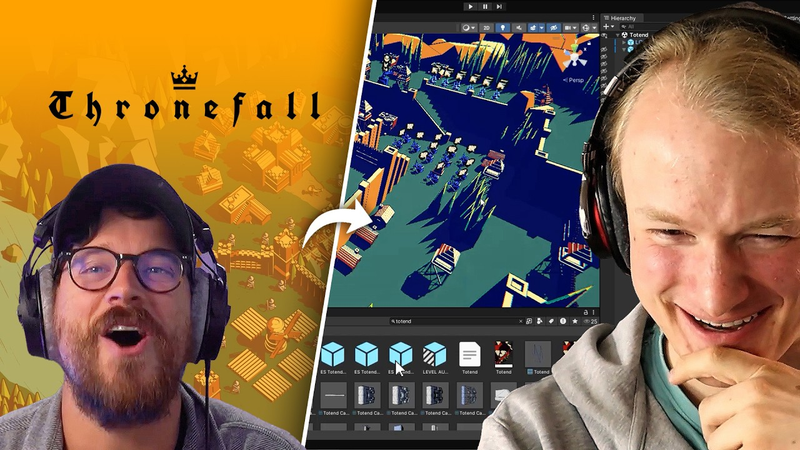
What A Million Dollar Game Looks Like Behind The Curtain (Jonas Tyroller's "Thronefall")
The development of Thronefall demonstrates that indie game success relies on prioritizing development speed and visual cohesion over rigid technical perfection.
- Prioritize development speed and visual cohesion over technical perfection to ensure rapid iteration and a polished final product.
- Utilize a minimalist, low-poly aesthetic combined with strategic lighting and color theory to achieve high-quality visual identity without the cost of complex assets.
- Centralize game balance using ScriptableObjects to enable rapid, global adjustments to mechanics and weapons without the need to edit individual prefabs.
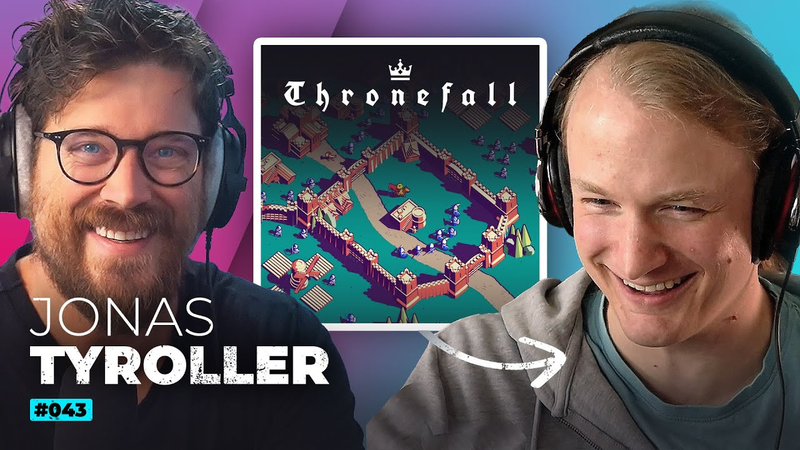
Jonas Tyroller: Making Games Alone Again, Project Overload, Profitable Game Ideas | Ep. #043
Solo game development requires a disciplined approach to project management, where the limited number of major releases in a career necessitates rigorous commercial validation before long-term commitments.
- To achieve full-time indie success, developers must prioritize efficiency and validate ideas rigorously before committing years of development, as the ROI on long-term projects is often not guaranteed.
- Working with a team can be more cost-effective than working solo; sharing royalties is a secondary concern compared to the necessity of partnering with people who improve the project's quality and output.
- Game performance can be significantly optimized by using scripts to merge individual meshes into single objects at runtime, which reduces draw calls and improves frame rates.
Making of Thronefall: Final Devlog
The development of the medieval base defense game Thronefall concluded with the release of version 1.0 on Steam and the Nintendo Switch, marking the end of a three-year production cycle.
- Thronefall evolved from a failed turn-based card game prototype into a successful action-oriented strategy title over a three-year development cycle by a two-person team.
- The tower upgrade system was significantly expanded during development, growing from four initial variations to sixteen distinct options.
- The team utilized asset-bashing techniques and iterative level design inspired by historical ruins to maintain a rapid production pace.
200 Days of Game Development
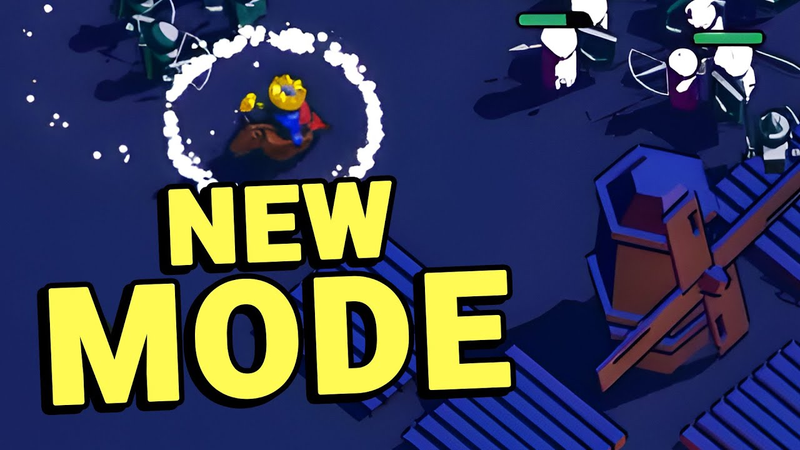
This development retrospective details the creation of new content for the indie strategy game Thronefall, specifically focusing on the addition of a new map, Uferwind, and a roguelike-inspired game mode titled Eternal Trials.
- The development of the Eternal Trials mode and the Uferwind map spanned 200 days, culminating in a final release on day 222.
- To address performance issues caused by high enemy counts, developers replaced mass entity spawning with an elite enemy system that maintains difficulty while reducing on-screen unit density.
- The team integrated an economy simulator and meta-randomization into the procedural generation system to ensure that randomized enemy waves remain balanced and viable against player build orders.

I Recorded the Release of Our Indie Game
The development and release of the indie game Thronefall, a tower defense title created by a two-person team, highlights the intense, iterative, and often anticlimactic nature of the independent game development process.
- The two-person team behind Thronefall achieved a successful Early Access launch on Steam by securing a top 10 position in the Steam Next Fest most-played demos list.
- Strategic marketing efforts and the demo release generated record-breaking wishlist numbers that exceeded the combined total of the lead developer’s previous projects.
- The developers utilized a hybrid localization workflow, combining AI-generated translations with human verification to balance development speed with linguistic quality.
👑 Our Game Thronefall is OUT NOW!
Thronefall, a minimalist medieval base defense game developed by Grizzly Games, has officially launched into Early Access on Steam.
- Grizzly Games has launched its minimalist medieval base defense title, Thronefall, into Steam Early Access.
- The game aims to distill complex real-time strategy mechanics into a bite-sized, accessible format focused on balancing economic development with nightly defensive waves.
- Thronefall has generated significant market interest, with pre-launch wishlist numbers substantially outperforming the developer's previous title, Will You Snail.
Announcing Thronefall's Release Date
Thronefall, a medieval base defense game developed by Grizzly Games, is scheduled for an Early Access launch on August 2, 2023.
- Grizzly Games will launch its medieval base defense title, Thronefall, into Early Access on August 2, 2023.
- The initial Early Access release will include four distinct levels, consisting of one tutorial and three primary stages, plus a variety of gameplay perks.
- The developers are adopting a transparent pricing model that reflects the game's current content volume rather than charging for speculative future updates.
150+ Days of Development = YOU Can PLAY Now!
Thronefall is a minimalist base-defense game that balances daytime base building with nighttime combat against enemy waves.
- Thronefall, a minimalist base-defense game developed by a two-person team, has transitioned into its marketing phase following the release of a playable Steam demo.
- Technical optimizations, including batching and GPU instancing, increased performance from below 60 FPS to 140 FPS on high-end hardware.
- The developers utilized AI tools such as ChatGPT to assist with debugging complex systems and implementing custom shaders for environmental effects.
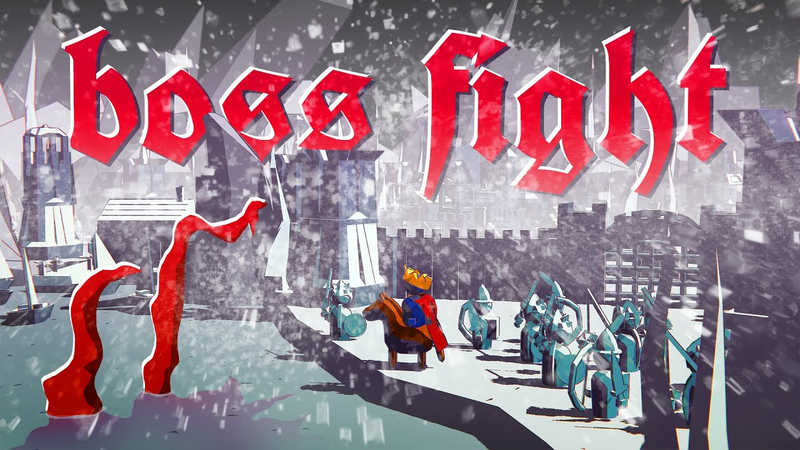
Making an Epic Boss For our Castle Builder Game (Devlog)
The development of the minimalist base defense game Thronefall focuses on expanding player agency and strategic depth through a series of iterative design updates.
- Thronefall transitioned from predefined building paths to a choice-based upgrade system, allowing players to specialize units like spearmen and archers for greater tactical depth.
- Developers replaced passive character scaling with active upgrade choices at the castle center to support diverse playstyles, ranging from aggressive to economic strategies.
- Technical adjustments were implemented to curb gameplay exploits, including the addition of spawn damage to prevent spawn camping and modified unit behavior to stop players from bypassing combat mechanics.