Squad
GameBy Offworld
Documents about Squad

Why Supercell couldn’t save Squad Busters and Google's AI game maker | Week in Mobile Games podcast
The mobile gaming landscape is currently defined by a tension between established intellectual property expansion and the integration of generative artificial intelligence.
- Supercell is discontinuing Squad Busters on December 14th, marking its first global launch failure despite the title reaching 58 million downloads and $67 million in lifetime revenue.
- Squad Busters failed to sustain long-term engagement due to a combination of convoluted gameplay mechanics and ineffective monetization strategies.
- Google’s Playground is attempting to democratize game development through text-to-game generation, though current iterations lack the mechanical depth and visual variety to compete with professional ecosystems like Roblox.

🚨📢BREAKING NEWS: New Adnetwork AdSURGE is here, Supercell Kills Squad Busters, Ubisoft Quits Mobile
The mobile gaming industry is currently experiencing a significant shift characterized by the emergence of new ad-tech infrastructure and a wave of high-profile project cancellations.
- Miniclip, in partnership with Tencent and Easybrain, has launched AdSurge, a new ad network leveraging first-party data to compete in the mediation and ad-tech space currently dominated by AppLovin and Unity.
- Supercell is shutting down Squad Busters, with the game being pulled from stores on December 1 and servers closing on December 14, marking a rare global launch failure for the studio.
- Ubisoft is exiting mobile game development in Europe, highlighted by the closure of its Helsinki-based studio RedLynx and the cancellation of Rainbow Six Mobile.

What’s going on at Rovio, Miniclip’s new ad network, Squad Busters’ last rites, RedLynx closes, more
The mobile games industry is currently undergoing a period of significant restructuring, characterized by studio closures, project cancellations, and a strategic pivot toward established intellectual property.
- Mobile game spending declined by 7% in Q3, with only three of the top 20 grossing titles being less than two years old, highlighting a significant barrier to entry for new games.
- Major publishers are aggressively pruning portfolios, resulting in the cancellation of Supercell’s Squad Busters, Ubisoft’s Rainbow Six Mobile, and Fingersoft’s Lego Hill Climb Adventures.
- Ubisoft is closing its Helsinki-based studio RedLynx as part of a broader industry trend of studio closures and project cancellations.
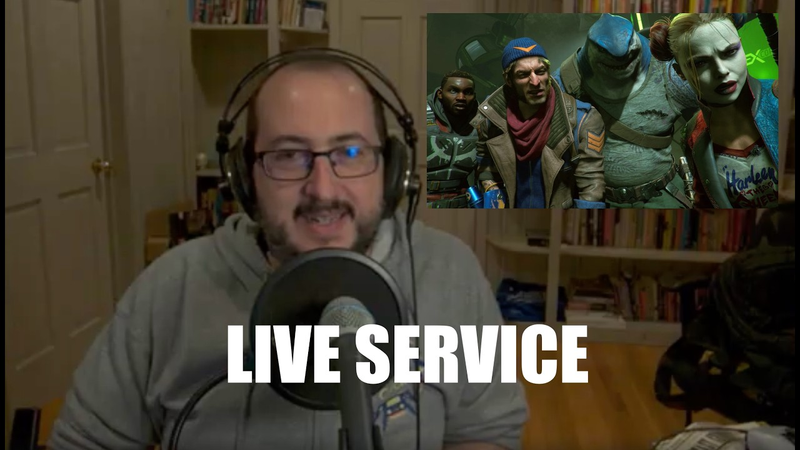
Why Everyone Wants A 'Live-Service' Game
The video game industry has increasingly pivoted toward live-service models as a strategic response to the rising costs and inherent volatility of AAA game development.
- The shift toward live-service models is primarily a strategy to mitigate the extreme financial risk of modern AAA development, where production costs have ballooned from $20–30 million to a $200–300 million floor.
- Live-service games provide recurring revenue streams that stabilize companies against the volatility of a hit-driven industry, preventing total reliance on the success of a single, infrequent release.
- The industry's pivot was heavily influenced by the massive success of Fortnite, which demonstrated the profitability of free-to-play models combined with ongoing monetization through skins, seasons, and content updates.

Clash Royale's Fake Comeback? The UA Pop-and-Drop Debate
The annual letter from the CEO of Supercell serves as a strategic reflection on the company’s performance, characterized by a near-record revenue year despite a 4% decline.
- Supercell experienced a near-record revenue year despite a 4% overall decline, highlighting the company's struggle to maintain growth in a mobile market expanding by only 3% annually.
- Clash Royale’s reported 500% growth in new player acquisition and doubled re-engagement are attributed by critics to aggressive user acquisition spending rather than organic product improvements.
- The $150 million failure of Squad Busters demonstrated a disconnect between early beta metrics and long-term retention, revealing that the company initiated marketing pushes before achieving sufficient product validation.

TWiG #370: Supercell’s Annual Letter, Reading Between the KPIs
The global gaming industry is currently defined by a stark consolidation of market share, where established live-service titles dominate revenue and monthly active users across PC and console platforms.
- Supercell’s Squad Busters failed to achieve long-term viability despite reaching 75 million downloads and receiving a $100 million marketing investment.
- Supercell is restructuring into a startup-like model with tighter budgets and profit-sharing to address internal complacency and move away from a reliance on high-spend user acquisition.
- Roblox is struggling with low unit economics and market saturation due to a user base primarily under the age of 18, prompting a strategic pivot toward older, higher-income demographics.

Why is Google policing how the world's top mobile games monetise? | Week in Mobile Games podcast E72
Google and Epic Games have proposed a tiered fee structure for the Play Store that distinguishes between cosmetic items, taxed at 9%, and gameplay-advantage items, taxed at 20%.
- Google and Epic Games have proposed a tiered Play Store fee structure that charges 9% for cosmetic items and 20% for items providing gameplay advantages.
- An analysis of the top 50 mobile games shows that every title currently employs monetization mechanics, such as loot boxes or boosters, that would trigger the higher 20% fee.
- Direct-to-consumer revenue streams are gaining traction, evidenced by Playtika reporting 20% growth in this sector during the third quarter through strategic entertainment brand partnerships.
Epic-Google shenanigans, EA payouts, Squad Busters, Take-Two, Playtika, Rainbow 6, Horizon, more
The mobile gaming industry is currently navigating a period of significant structural and financial shifts, characterized by high-stakes legal developments, major executive compensation disclosures, and evolving platform strategies.
- Take-Two Interactive's mobile segment accounted for 46% of its net revenue in Q3 2025, signaling a shift where mobile performance is outpacing the company's console portfolio.
- Gaming-related digital advertising spend reached $8.7 billion during the first three quarters of 2025, highlighting the growing importance of ad-based revenue streams.
- Legal proceedings indicate that the proposed Epic Games-Google settlement is unlikely to be approved, as critics argue the terms disproportionately favor Epic's business model over broader industry reform.
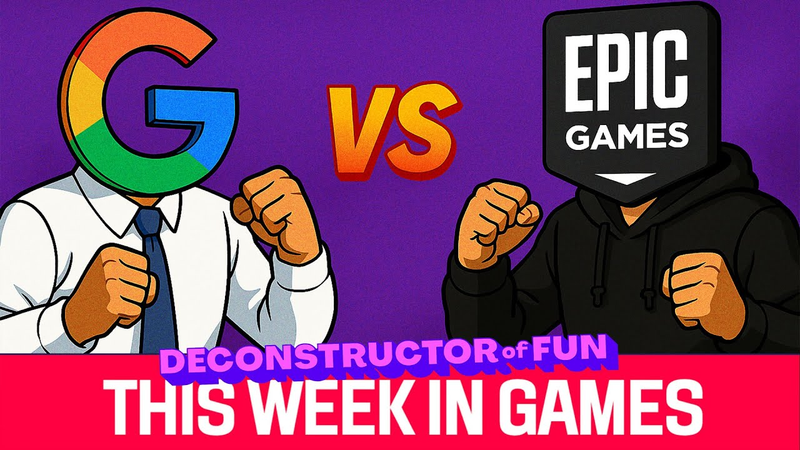
TWIG #356 Epic vs Google, Roblox’s Rough Quarter, Supercell Pulls the Plug
The mobile gaming landscape is undergoing a significant structural shift following the settlement between Epic Games and Google, which concludes five years of litigation.
- The Epic Games vs. Google settlement mandates a tiered fee structure through 2032, charging 9% for non-gameplay items and 20% for gameplay-affecting purchases, which incentivizes developers to shift toward direct-to-consumer billing.
- Supercell canceled Squad Busters despite the title generating $100 million in gross revenue, as it failed to meet long-term viability standards after an estimated $150 million investment in development and marketing.
- Roblox reached 151 million daily active users and record bookings in Q3 2025, yet continues to face investor skepticism due to margin compression caused by rising infrastructure costs and expensive international user acquisition.
Week in Mobile Games E70 - Squad Busters shuts down and Google Play's transformative changes
The mobile games industry is currently navigating significant shifts in development strategy, platform regulation, and corporate restructuring.
- Supercell is shutting down Squad Busters, which launched in May 2024, after the game failed to meet internal performance expectations despite generating over $100 million in lifetime revenue. In-app purchases will be disabled on October 30, 2024, and the game will receive its final update in December.
- Following an injunction in the Epic Games vs. Google case, Google Play in the US is now required to allow alternative payment methods and permit developers to communicate pricing options outside of the Google Play billing system as of October 29, 2024.
- Amazon is cutting approximately 14,000 corporate jobs, with significant layoffs impacting its games division, specifically in the San Diego and Irvine offices, alongside the closure of the game New World.
Squad Busters, Sandsoft, Boss Fight, the ‘billion dollar blueprint’, Google Play, more
The mobile gaming industry is currently experiencing a period of significant consolidation and studio restructuring, marked by the high-profile closure of several notable titles and development teams.
- The mobile gaming industry is undergoing significant consolidation, evidenced by the closure of Sandsoft, Netflix's shuttering of Boss Fight, and Supercell’s decision to discontinue Squad Busters by mid-2026 due to poor long-term retention.
- Hybrid-casual games are experiencing rapid growth, recording a 114% increase in in-app purchase revenue during the third quarter.
- Google has opened the US Play Store to alternative payment systems, aligning with broader industry trends toward payment liberation for mobile developers.

Istanbul Is Building Gaming Giants
Cipher Games, a mobile developer based in Istanbul, recently secured $30 million in Series A funding led by the Rain Group and Play Ventures.
- Istanbul-based mobile developer Cipher Games secured $30 million in Series A funding led by Rain Group and Play Ventures, bringing its total capital raised to $43 million since 2022.
- Cipher Games is currently test-launching its debut title, Match Squad, in the Philippines, Indonesia, and the UK to refine its hybrid mechanics.
- Match Squad differentiates itself by combining traditional match-3 gameplay with a die-roll system inspired by titles like Monopoly Go and Coin Master.