Medal of Honor
Game
8 documents in the library are about Medal of Honor, from writers such as DiGRA, The Game Business and Deconstructor of Fun. Each has a summary and key insights with the page they come from.
Connections
Each row is a game or company named alongside Medal of Honor, each column a document, oldest first. A mark means that document names it. Select a row to see those documents.
Documents about Medal of Honor
Vince Was the Real Deal: Gaming Leaders Mourn Vince Zampella in Las Vegas
The 2026 DICE Summit in Las Vegas served as a formal venue for the video game industry to honor the legacy of developer and executive Vince Zampella, who passed away in a car accident on December 21, 2025.
- Vince Zampella, a foundational industry leader who co-founded Infinity Ward and Respawn Entertainment, passed away in a car accident on December 21, 2025.
- Zampella’s career was defined by his work on major franchises including Medal of Honor: Allied Assault, Call of Duty, Titanfall, Apex Legends, the Star Wars Jedi series, and the Battlefield franchise.
- Industry leaders including EA’s Laura Miele, Microsoft’s Phil Spencer, and Bethesda’s Todd Howard honored Zampella at the 2026 DICE Summit for his ability to prioritize creative excellence and team culture over corporate bureaucracy.
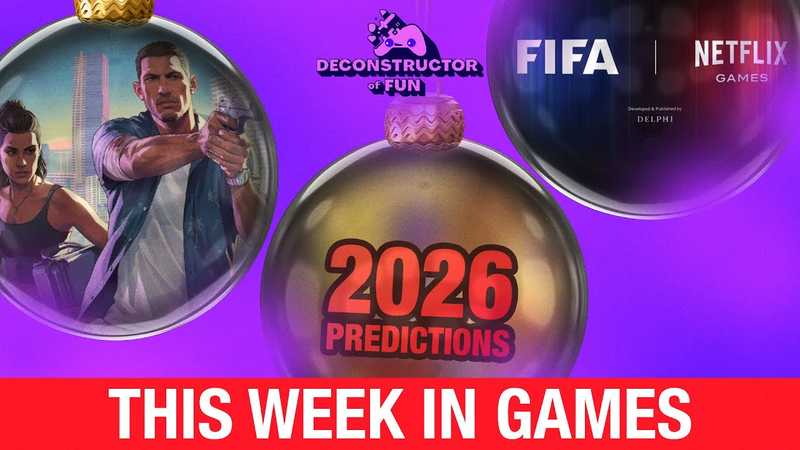
12 Game Industry Predictions: The Numbers Don't Lie!
The global gaming industry faces a transformative period leading into 2026, characterized by a structural shift toward high-fidelity, cross-platform experiences and a challenging environment for traditional mobile and PC sectors.
- The global player base is projected to grow by 5% annually, reaching 1.7 billion players by 2026, supported by the rising popularity of cost-effective PC handhelds.
- Western mobile gaming firms are losing market share to Chinese publishers, who currently occupy six of the top twenty global market positions.
- Venture capital investment in gaming is expected to hit record lows as exit multiples compress, shifting investor focus toward user acquisition financing rather than traditional project funding.
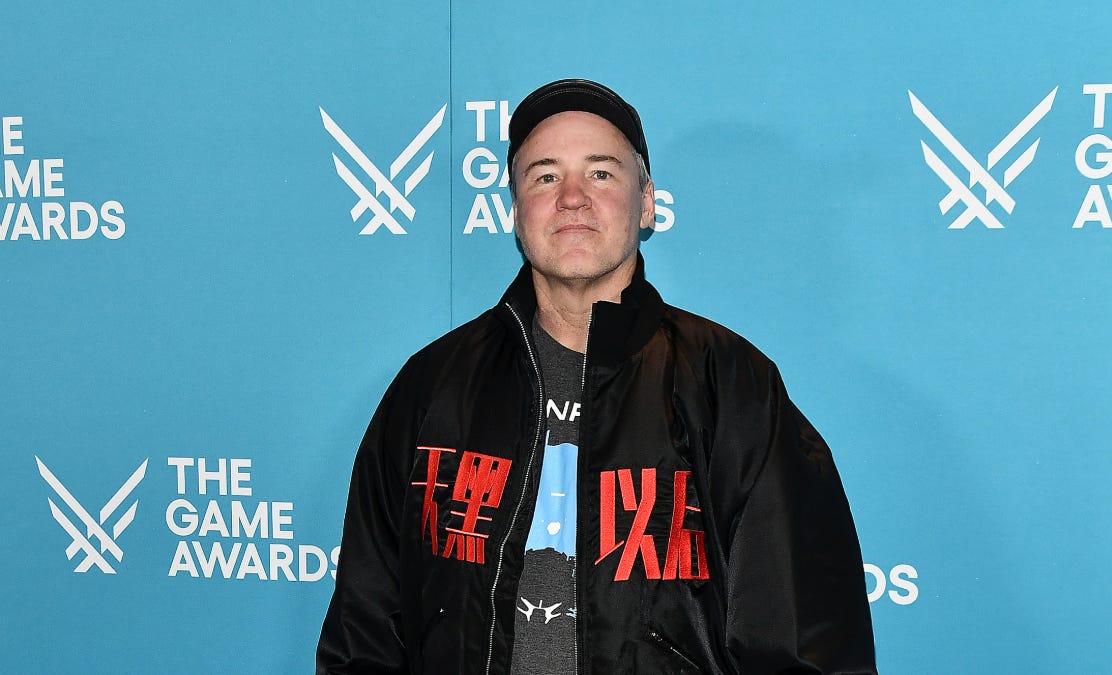
Call of Duty Co-Creator, Respawn Founder and Battlefield Boss Vince Zampella Has Died
Vince Zampella, a prominent figure in the global video game industry, passed away at the age of 55 following a car accident in Los Angeles.
- Vince Zampella, the co-creator of Call of Duty and founder of Respawn Entertainment, has died at age 55 following a car crash in Los Angeles.
- Zampella rose to prominence as the development director for 2002's Medal of Honor: Allied Assault before co-founding Infinity Ward, where he helped launch the Call of Duty franchise in 2003.
- After being fired from Activision in 2010 due to a contract and royalty dispute, Zampella co-founded Respawn Entertainment, which created the Titanfall series and Apex Legends.
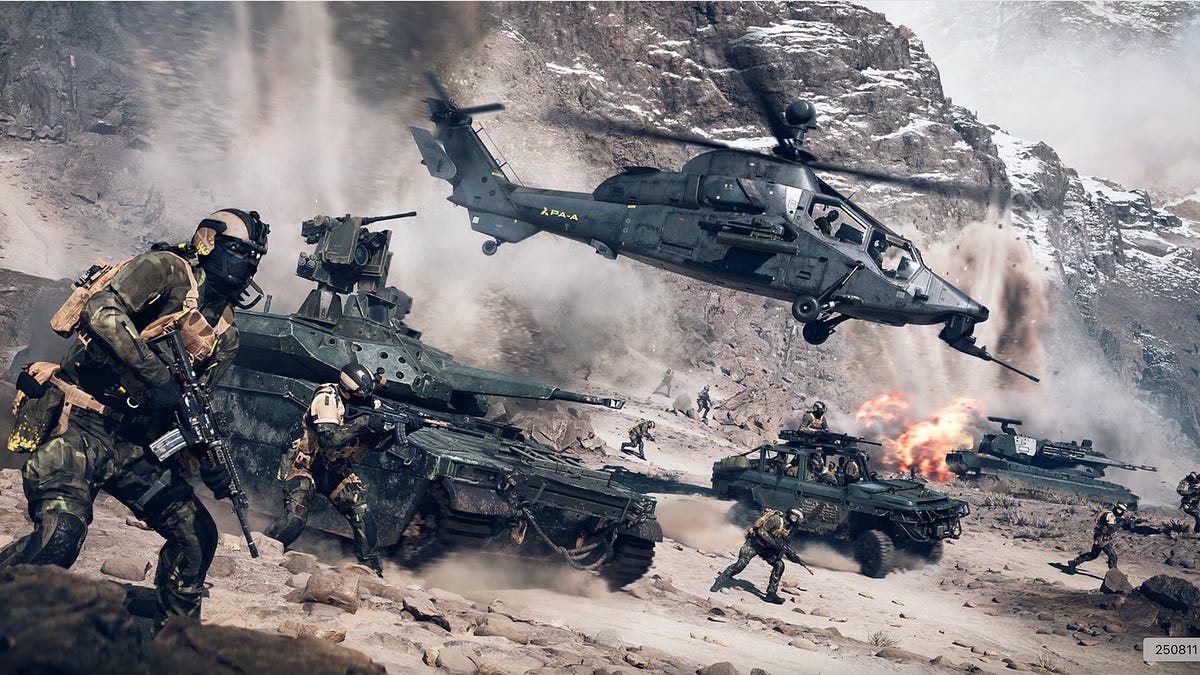
Here's The Dring: Battlefield 6's Challenges
The competitive landscape between the Battlefield and Call of Duty franchises remains a central point of tension within the first-person shooter market.
- Battlefield 6 has demonstrated a strong market entry with a peak player count of over 520,000 on Steam, surpassing the 490,000 peak achieved by Call of Duty.
- While Battlefield 6 has seen high pre-order and wishlist figures, the primary challenge for EA remains long-term player retention in a market where users are deeply entrenched in existing live-service ecosystems.
- The historical failure of Ubisoft’s XDefiant serves as a cautionary tale; despite an initial launch month of 7.58 million players, the game’s monthly user base collapsed to under 50,000 before its closure in June 2025.
Ten Principles for Good Level Design
Effective level design functions as a holistic delivery system that integrates narrative, mechanics, and mission structure to create immersive, replayable experiences.
- Designers should prioritize emotional resonance over simple player empowerment by working backward from a desired emotional impact to ensure every spatial choice and mechanic serves a specific purpose.
- Levels should function as a holistic delivery system that integrates narrative, mechanics, and mission structure to foster emergent gameplay and player agency.
- To maintain engagement and avoid predictable pacing, developers should use subversion by revisiting familiar locations with altered contexts to disrupt player expectations.
Mailbag 5 - Questions About the Game Industry - Extra Credits
This analysis addresses the state of the video game industry as of late 2012, focusing on the trajectory of console hardware, emerging platforms, and the ethical implications of industry marketing practices.
- As of late 2012, the next console generation is expected to shift toward digital distribution, social integration, and increased connectivity with mobile devices.
- Marketing strategies that conflate real-world weaponry with digital entertainment, such as EA’s promotion of firearms on the Medal of Honor website, are criticized for trivializing combat and ignoring underage audiences.
- The Wii U holds potential for asymmetric and local multiplayer innovation, provided developers look beyond its dual-screen functionality.
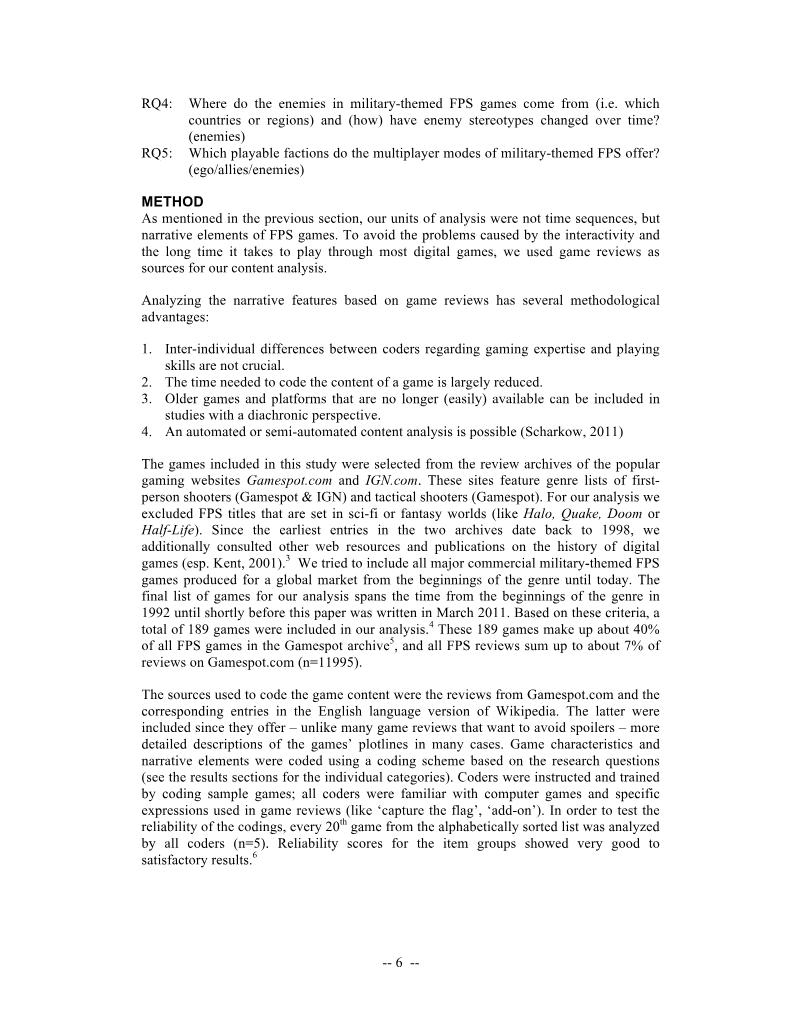
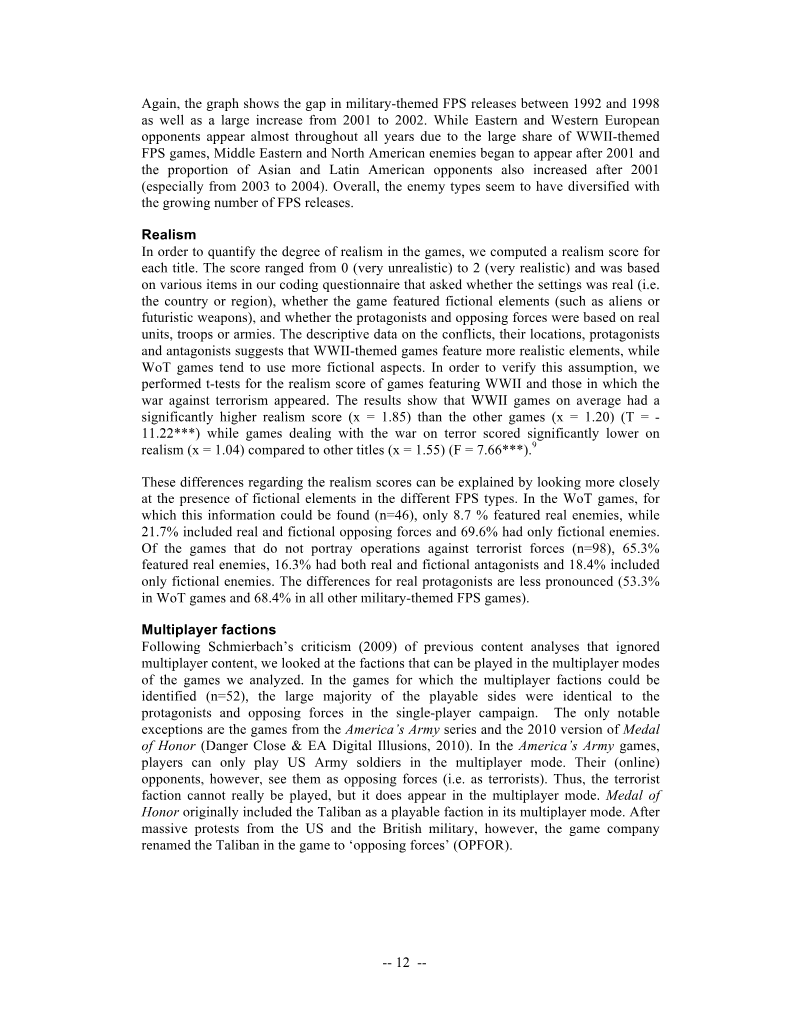
In the Army Now: Narrative Elements and Realism in Military First-Person Shooters
This study examines 189 military-themed first-person shooters released between 1992 and 2010, responding to a gap in empirical research on FPS content despite theoretical claims about the military-entertainment complex and possible persuasive effects on players.

Apocalypse the Spielberg Way: Representations of Death and Ethics in Saving Private Ryan, Band of Brothers and the Videogame Medal of Honor: Frontline
Kingsepp's paper compares how death and ethics are represented in Steven Spielberg's Saving Private Ryan and Band of Brothers and in the 2002 video game Medal of Honor: Frontline.
- The paper argues that Spielberg's Saving Private Ryan and Band of Brothers depict death in hyperrealistic, emotionally intimate ways that invite viewers to reflect on mortality and moral ambiguity, whereas Medal of Honor: Frontline (2002) adopts a postmodern model in which enemy corpses vanish.
- The game's vanishing corpses are read as a symbolic ritual of conquering death, casting enemies as an abundant, disease-like threat to be continually exterminated in pursuit of heroic reward.
- The author suggests the disappearing corpses may partly stem from technical constraints such as limited memory ('byte economy'), noting that the earlier game Return to Castle Wolfenstein shows corpses can be preserved.
Companies behind it

As the documents state it.