Magic: The Gathering
Game
Documents about Magic: The Gathering

Learning to Play Magic - Part 2 - What's in a Color? - Extra Credits
The core philosophy of Magic: The Gathering is built upon a color-coded system that represents distinct psychological and elemental archetypes rather than a binary conflict between good and evil.
- Magic: The Gathering utilizes a five-color system—White, Blue, Green, Red, and Black—that defines distinct psychological and elemental archetypes rather than a binary moral conflict.
- White focuses on law, order, and protection, utilizing defensive strategies and large armies to overwhelm opponents.
- Blue centers on reason and intellect, employing control-based tactics such as counter-spells and manipulation to disrupt enemy plans.
Learning to Play Magic - Part 1 - Core Concepts - Extra Credits
This instructional overview outlines the fundamental mechanics of the collectible card game Magic: The Gathering, focusing on turn structure, resource management, and combat dynamics.
- The primary objective of Magic: The Gathering is to reduce an opponent's life total from 20 to zero using spells and creatures.
- Players must manage lands, which function as the essential resource known as mana, to cast cards and execute strategies.
- The game follows a structured seven-phase turn sequence: untap, upkeep, draw, first main phase, attack phase, second main phase, and end step.
The History of Roguelike Deckbuilders - From Playing Cards to CCGs and Beyond - Extra Credits
The evolution of card-based gaming traces a path from traditional playing cards to the modern roguelike deckbuilder genre.
- Slay the Spire served as the critical inflection point for the roguelike deckbuilder genre, refining procedural dungeon exploration and strategic card progression into a commercially successful and highly accessible format.
- The 2014 title Dream Quest was the first to successfully integrate roguelike procedural generation with deck-building mechanics.
- The 2008 release of Dominion revolutionized card gaming by shifting deck-building from a pre-game meta activity into a core, real-time gameplay loop.
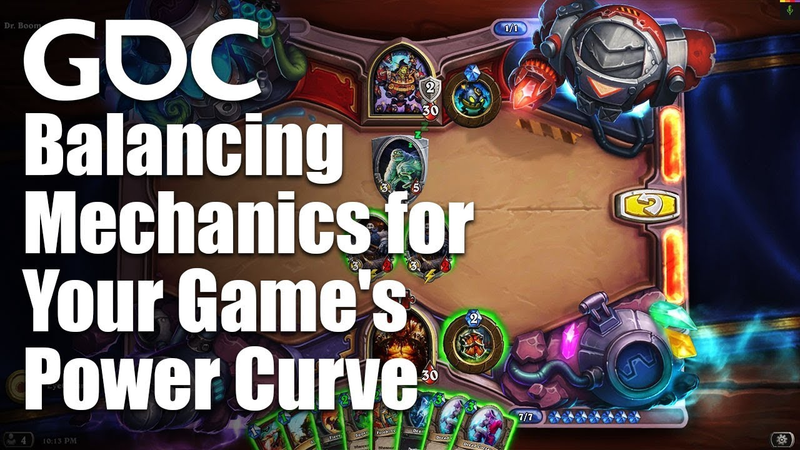
Board Game Design Day: Balancing Mechanics for Your Card Game's Unique Power Curve
Effective card game design relies on the strategic calibration of power curves, which are inherently non-linear due to the trade-offs between card cost, flexibility, and the risk of game termination.
- The power of a card is defined by its ratio of utility to cost, where higher-cost cards must provide significantly greater impact to justify the lack of flexibility and the difficulty of playing them late in a game.
- Games with automatic resource generation, like Hearthstone, require lower power ceilings for high-cost cards because players are guaranteed to reach those mana thresholds, whereas games like Magic: The Gathering must offer massive power payoffs to incentivize players to reach higher costs.
- Granularity in resource systems—such as Magic's ability to use color-specific mana or decimal-like cost adjustments—provides designers with more balancing 'knobs' compared to systems with rigid, chunky cost structures like Pokémon.
Achieving Two Worlds, Every Year: How Magic the Gathering Sustainably Doubled Its Worldbuilding
To sustain a release cadence of two new worlds annually, Magic: The Gathering has fundamentally restructured its creative operations by integrating game design and worldbuilding into a singular, collaborative pipeline.
- Magic: The Gathering doubled its release cadence to two new worlds annually by integrating game design and worldbuilding into a single, collaborative pipeline rather than using siloed handoffs.
- The production process relies on a concentrated three-week 'concept push' to finalize a comprehensive world guide that serves as the blueprint for all subsequent creative and mechanical development.
- To ensure aesthetic consistency across a global, outsourced illustration network, the team uses the finalized world guide to provide rigid narrative and visual boundaries for hundreds of individual card assets.
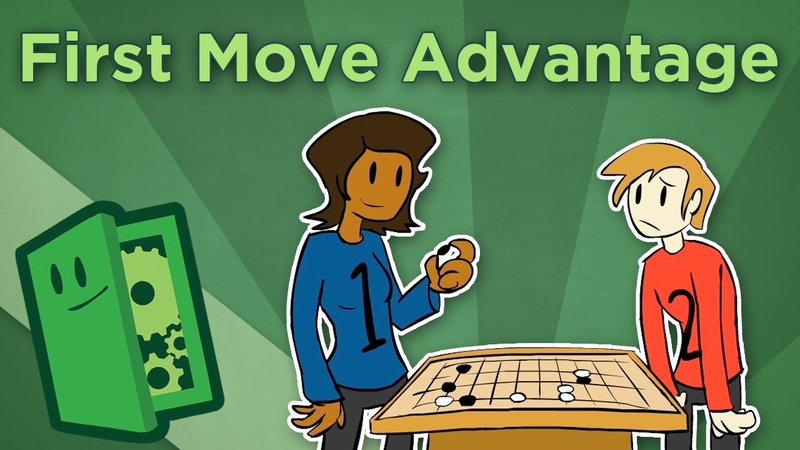
First Move Advantage - How to Balance Turn-Based Games - Extra Credits
First move advantage represents a critical design challenge in turn-based competitive games, where the inherent initiative of acting first creates a significant imbalance.
- First move advantage creates a systemic competitive imbalance that requires active design mitigation to ensure fairness.
- Developed resource games, such as card games or Go, experience more pronounced initiative advantages than static resource games like chess and require more aggressive balancing.
- Designers should utilize granular, flexible compensation systems—such as Go’s point-based adjustments—rather than blunt levers like extra cards or mana, which risk overcorrecting the balance.
Companies behind it

As the documents state it.