
Guild Wars
GameBy ArenaNet · Released Apr 26, 2005
Documents about Guild Wars
Whitepaper17 pages
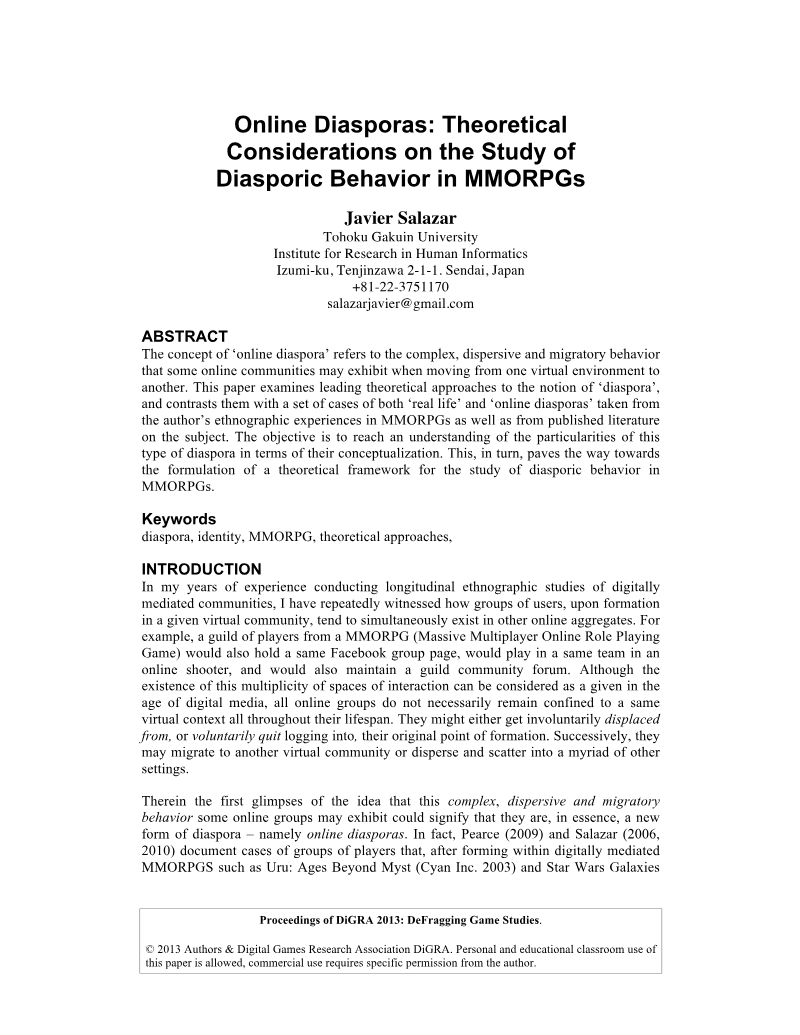
Online Diasporas: Theoretical Considerations on the Study of Diasporic Behavior in MMORPGs
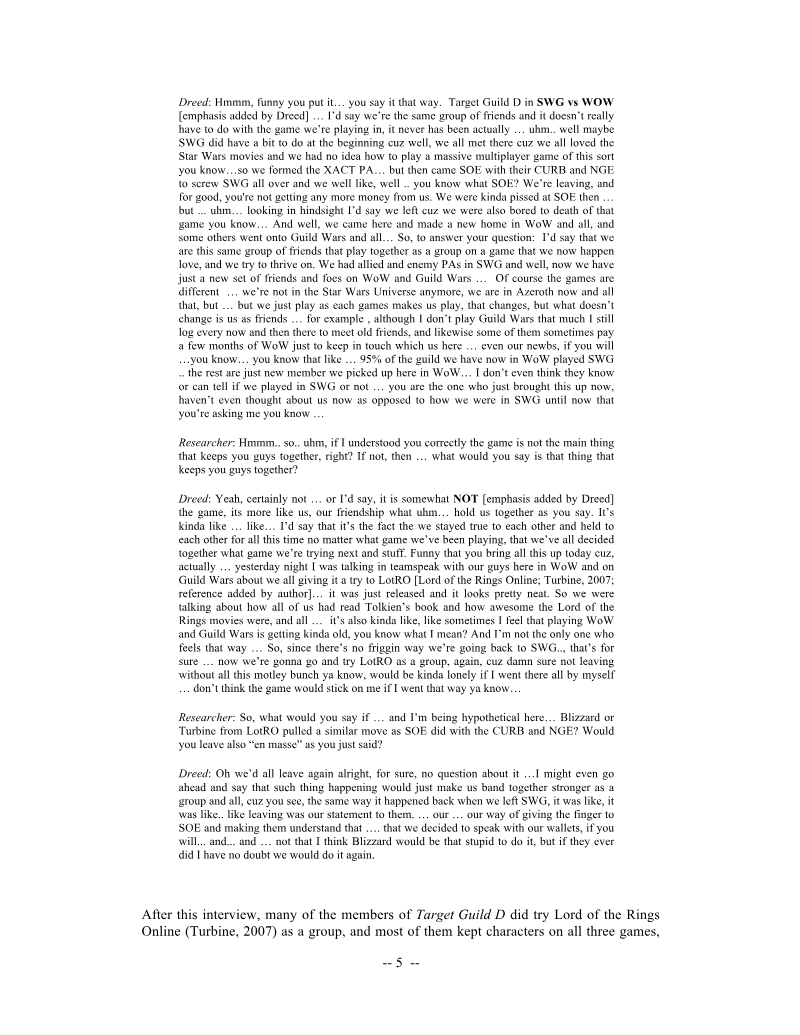
Salazar's study examines whether the concept of diaspora, long applied to forced dispersions of physical peoples, can meaningfully describe groups of players who become displaced within massively multiplayer online role-playing games (MMORPGs).
- Salazar argues that the concept of diaspora, classically defined by forced dispersion, nostalgia for a lost homeland, and tension with host communities, can be extended to online groups in MMORPGs, but only once they develop a diasporic consciousness.
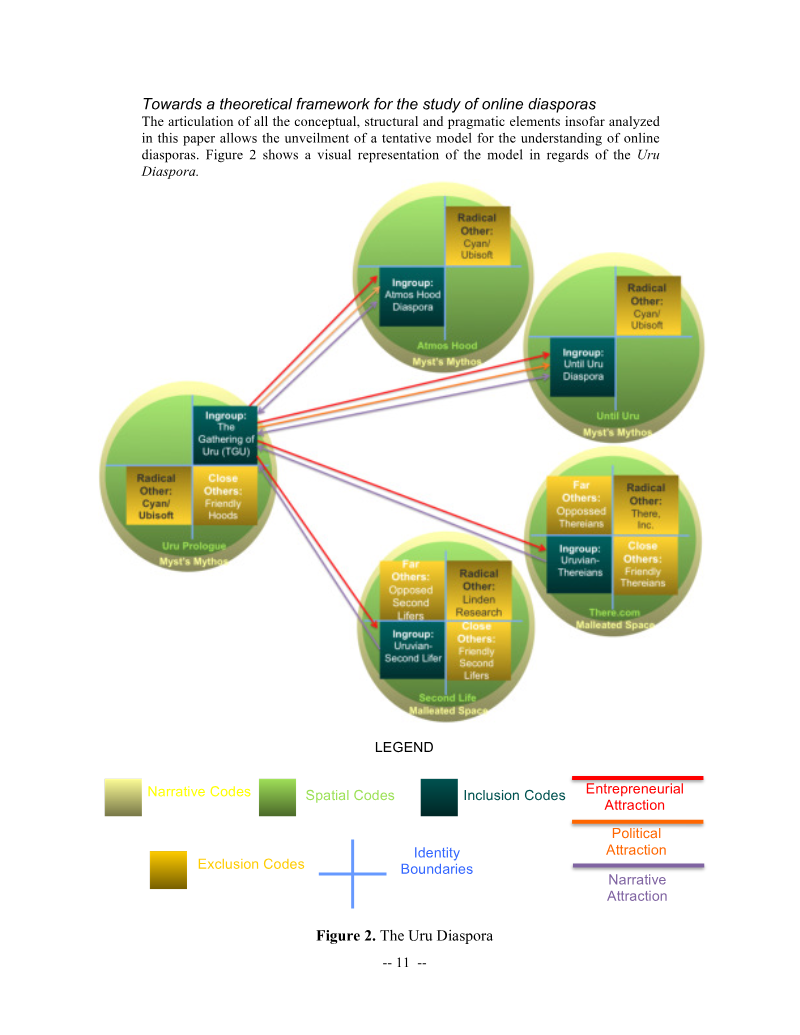
- The paper proposes reconciling classical and postmodern diaspora models by treating online diasporas as one possible outcome of MMORPG social configurations, in which groups may show either or both patterns.
- The first case, the Gathering of Uru, displayed classical traits after a server shutdown displaced its members, including idealized attachment to their virtual homeland and friction with new environments.
DiGRAJan 2014
Whitepaper20 pages
Fusing Quantitative and Qualitative Methods in Virtual Worlds Behavioral Research
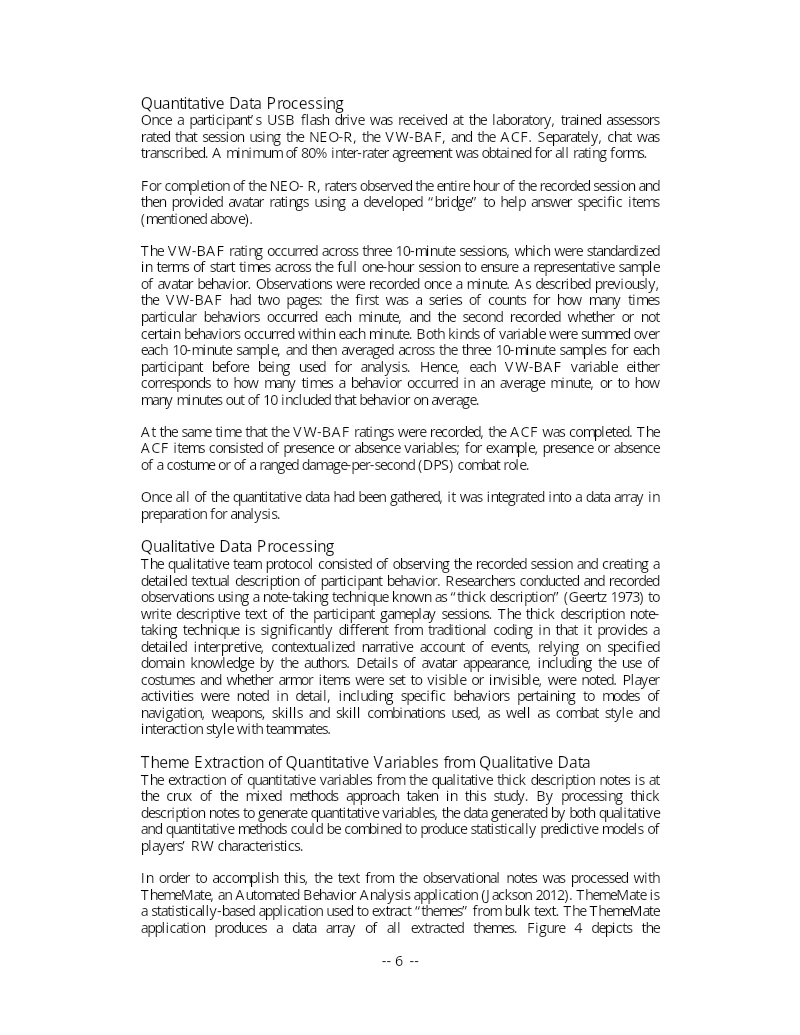
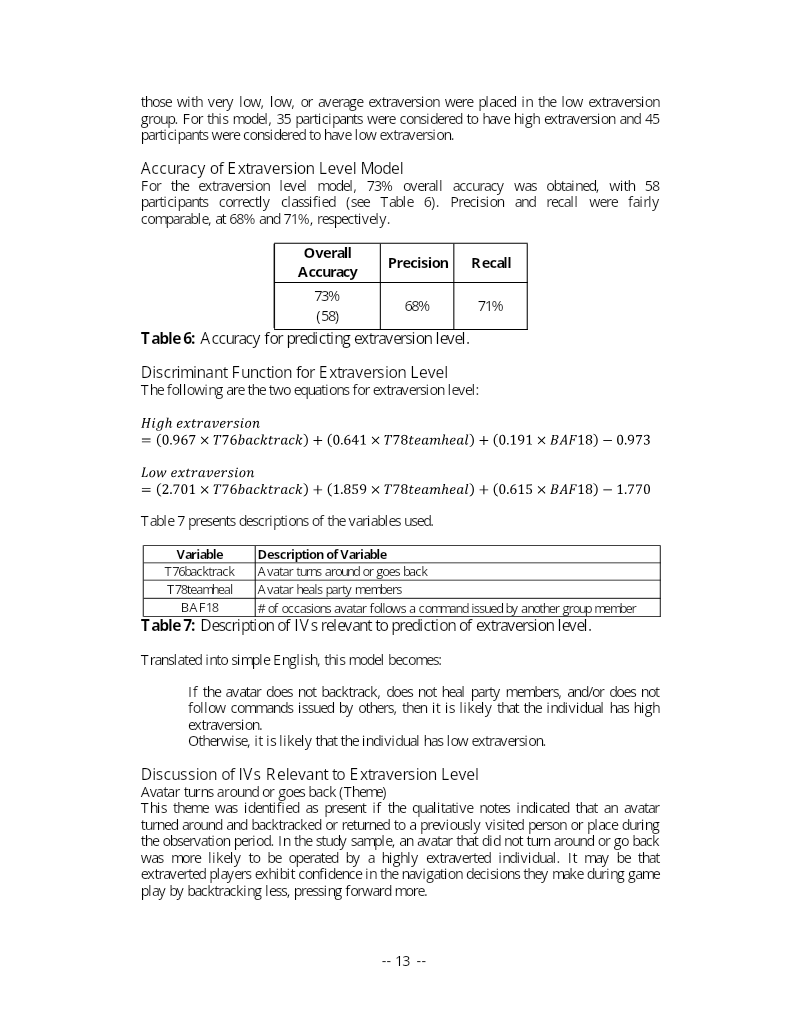
A mixed-methods study conducted by SAIC and Georgia Tech examines whether real-world characteristics of players can be inferred from how they behave and appear as avatars in massively multiplayer online role-playing games.
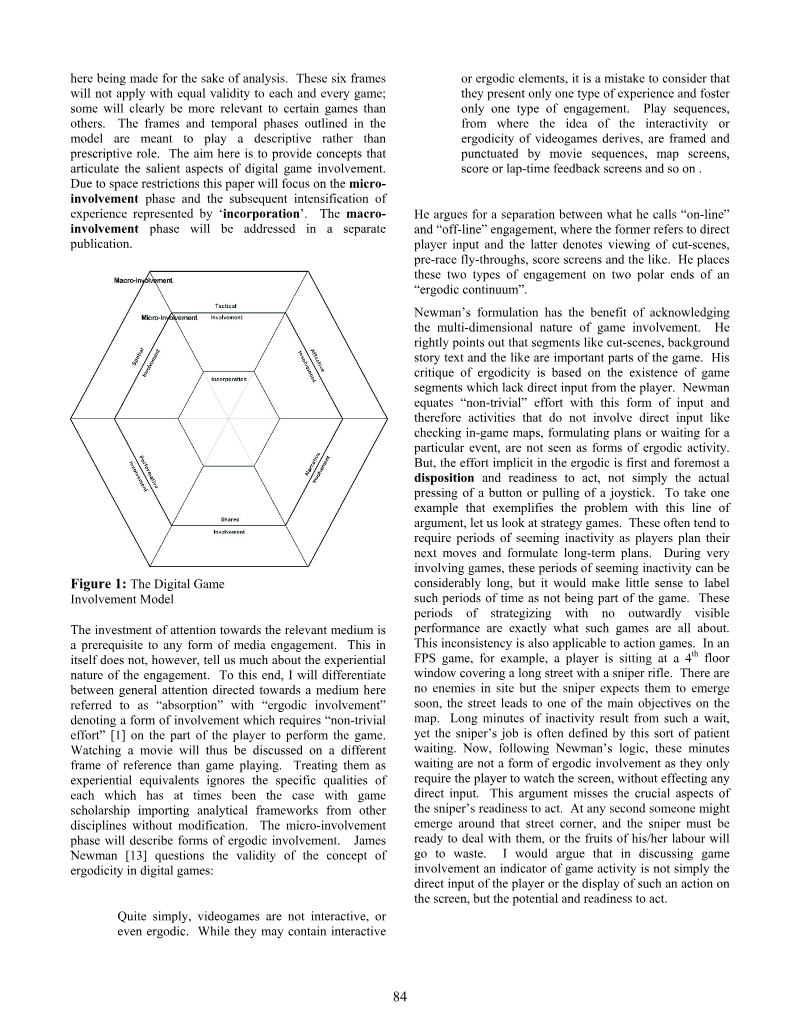
- Gender was predicted from virtual-world observation with 84% overall accuracy, the strongest result in the study of 80 Guild Wars and Aion participants, followed by extraversion (73%), aggressive ideology (73%), submissive ideology (71%), and approximate age (66%).
- The study fused standardized avatar ratings with 'thick description' field notes converted into quantitative predictors via automated text analysis, then analyzed them with discriminant analysis and leave-one-out cross-validation.
- Key predictors included male avatar appearance, movement patterns, and avatar class; aggressive ideology was associated with non-strategic play, melee combat, and frequent quest log checking, though its 53% precision indicates many false positives.
DiGRAJan 2014
Whitepaper8 pages
Revising Immersion: A Conceptual Model for the Analysis of Digital Game Involvement
Calleja's "Revising Immersion" argues that the vague, binary metaphor of immersion should be replaced by a more precise framework for analyzing how players engage with digital games.
- Calleja's paper argues that the vague, binary metaphor of immersion should be replaced by 'incorporation,' which better describes inhabiting a virtual environment, acting meaningfully within it, and remaining present to others.
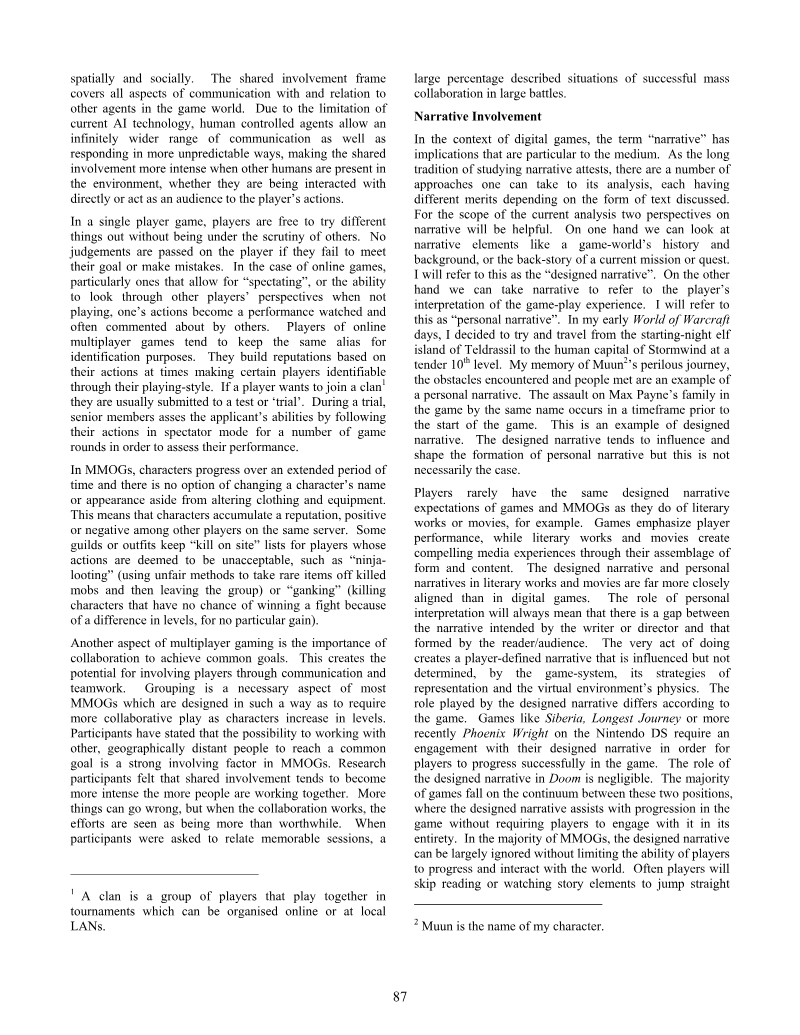
- The model analyzes digital game involvement through five frames (tactical, narrative, shared, performative, and spatial) and places its analytical focus on the micro-level momentary engagement rather than macro-level motivational phases.
- A key distinction is between designed narrative and personal narrative; the paper finds that in massively multiplayer online games most players largely disregard the designed storyline and instead construct personal narratives through play and collaboration.
DiGRAJan 2007
Companies behind it

As the documents state it.