Final Fantasy XII
Game
8 documents in the library are about Final Fantasy XII, from writers such as Square Enix, DiGRA and Taito Corporation. Each has a summary and key insights with the page they come from.
Connections
Each row is a game or company named alongside Final Fantasy XII, each column a document, oldest first. A mark means that document names it. Select a row to see those documents.
Final Fantasy XII sales and key figures
Square Enix reported a 31.3% increase in net sales to ¥163.5 billion and a 67.5% surge in operating income for FY2007, largely driven by the consolidation of Taito Corporation and the success of Final Fantasy XII.
Square Enix, 2007 · Square Enix Annual Report FY2007, p. 21
The Games (Offline) segment was the primary growth driver, achieving a 90.1% increase in sales to ¥40,298 million behind the successful releases of Final Fantasy XII, Kingdom Hearts II, and Final Fantasy III.
Square Enix, 2007 · Square Enix Consolidated Financial Report: Nine-Month Period Ended December 31, 2006, p. 2
Flagship titles *Final Fantasy XII* and *Kingdom Hearts II* were key revenue drivers, shipping a combined total of over 3.6 million units.
Square Enix, 2006 · Square Enix Annual Report FY2006, p. 20
Square Enix reported a first-half operating income of ¥2,484 million, with performance impacted by acquisition costs and a strategy to back-load major software releases like Kingdom Hearts II and Final Fantasy XII into the second half of the year.
Square Enix, 2005 · Square Enix and Taito Corporation 2005 First-Half Year Results, p. 9
Documents about Final Fantasy XII
Portraying Unfavorable Sociocultural Circumstances Through the Videoludic Picaresque
This paper examines how contemporary video games use the rogue figure and the picaresque framework to portray unfavorable sociocultural circumstances, arguing that the videoludic picaresque continues a centuries-old literary tradition of depicting marginalized lives in oppressive societies.
- The paper argues that the videoludic picaresque continues a centuries-old tradition: picaresque fiction, from sixteenth-century Spain onward, served as an early form of intersectional storytelling addressing class, gender, ethnicity, and sexuality.
- The author proposes that urban density, visible economic disparity, and institutional corruption, prominent in early modern picaresque novels, closely parallel present-day conditions, which is a key reason for the rogue's renewed popularity in games.
- The rogue protagonist is framed as a vehicle for exploring how identities are treated within oppressive systems, with games shaped by their historical moment in the same way early literature was.



Square Enix Annual Report FY2007
Square Enix achieved a significant financial milestone during the fiscal year ended March 31, 2007, reporting a 31.3% increase in net sales to ¥163.5 billion and a 67.5% surge in operating income.
- Square Enix reported a 31.3% increase in net sales to ¥163.5 billion and a 67.5% surge in operating income for FY2007, largely driven by the consolidation of Taito Corporation and the success of Final Fantasy XII.
- Net income declined 32% to ¥11.6 billion due to over ¥11 billion in extraordinary losses incurred from restructuring the amusement segment, which included closing unprofitable arcades and divesting Taito’s karaoke business.
- The company is shifting its business model toward persistent network services and mobile platforms, evidenced by a 315% growth in mobile segment operating income.
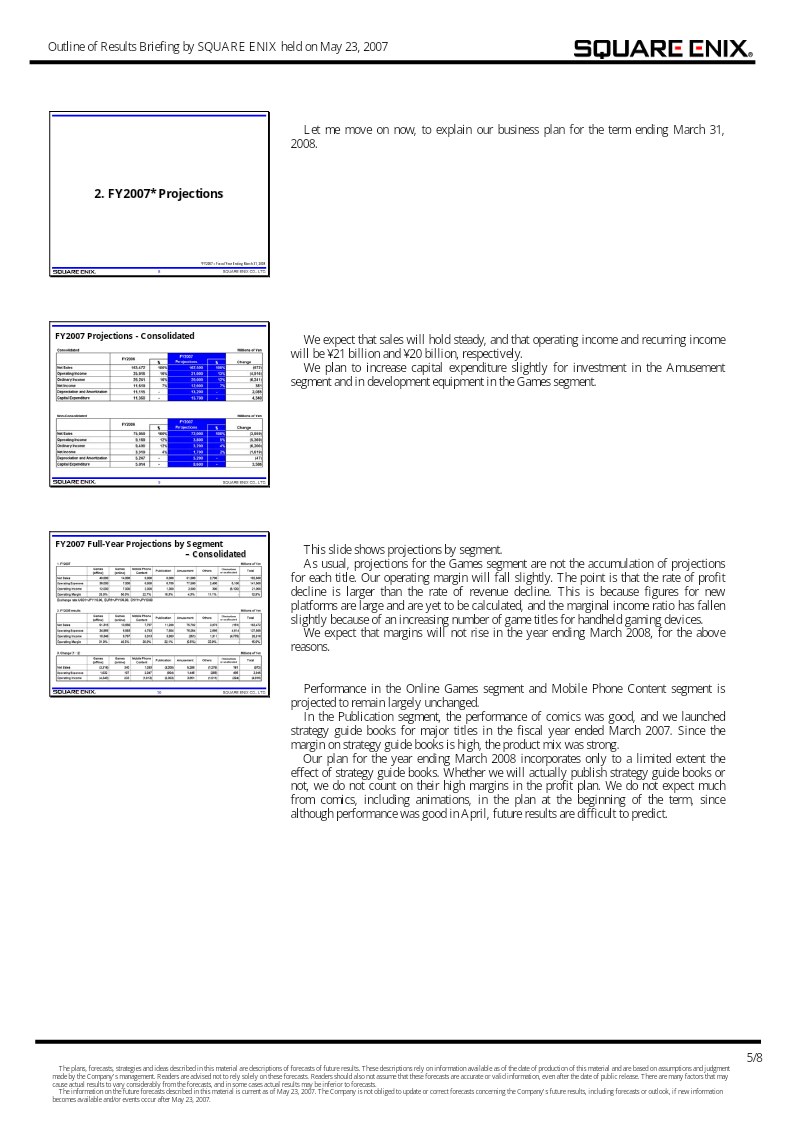
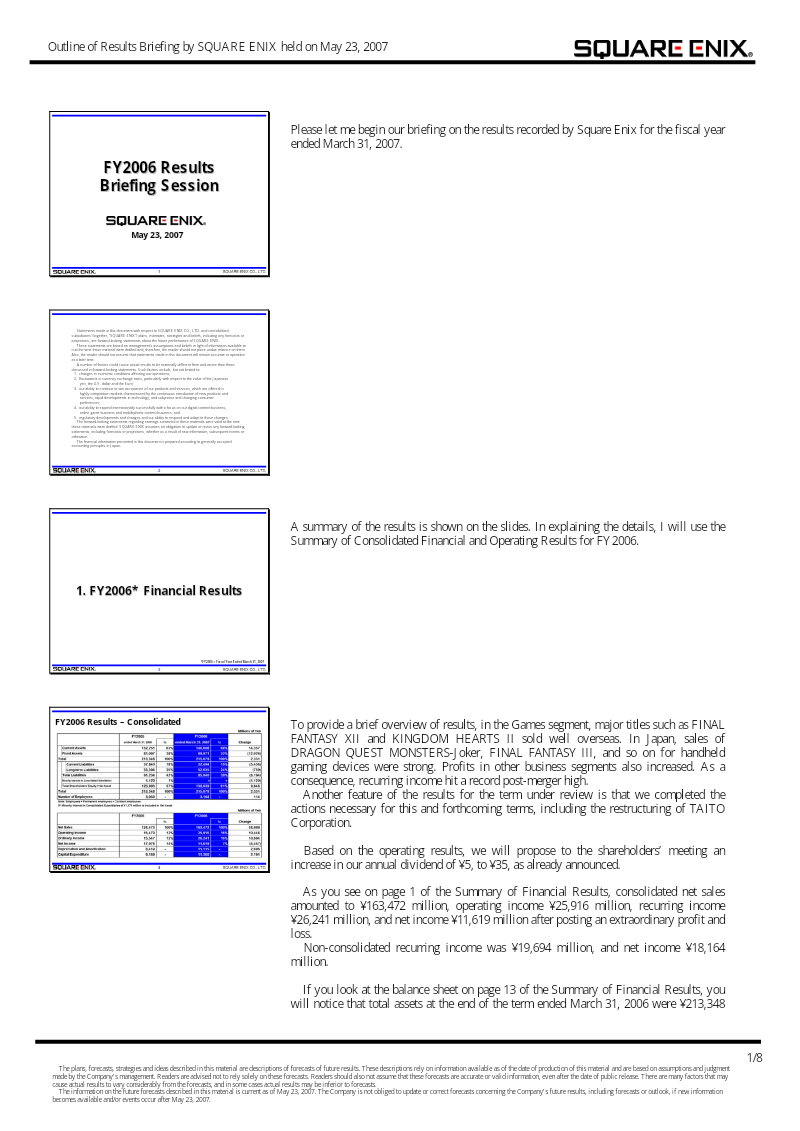
Square Enix FY2006 Results Briefing
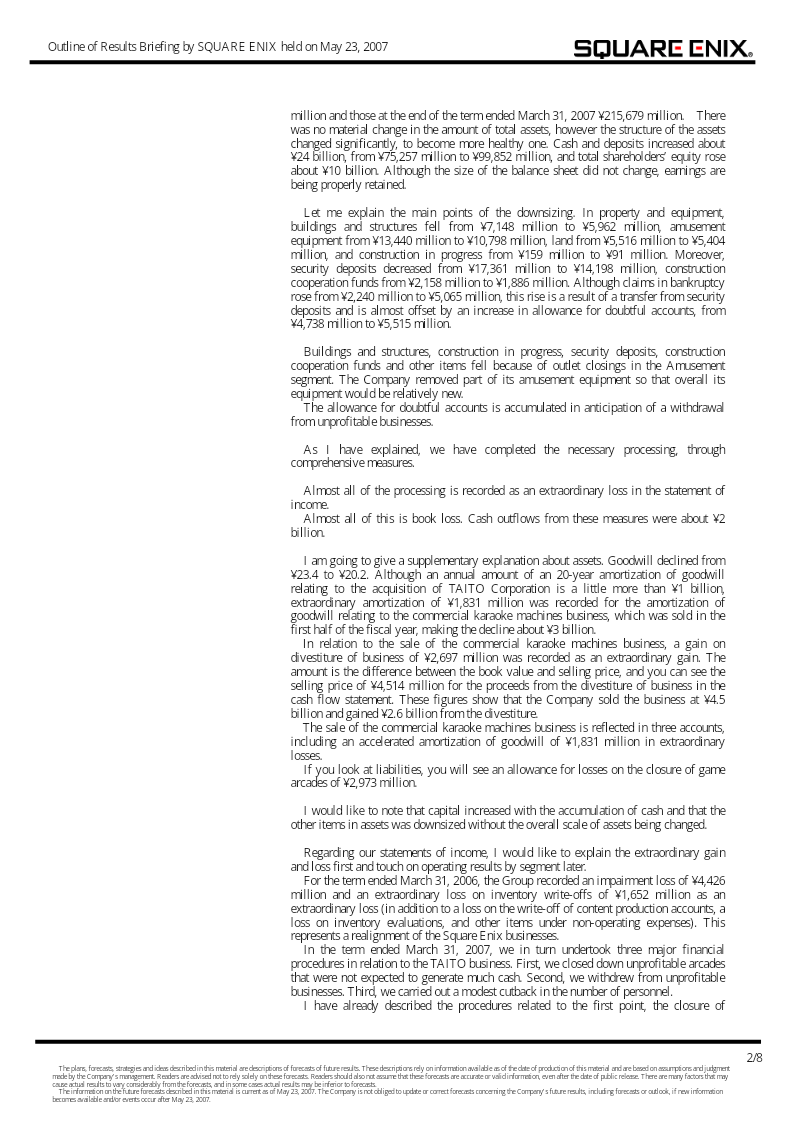
Square Enix’s fiscal year 2006 results, ending March 31, 2007, reflect a period of successful operational restructuring and strong international performance.
- Square Enix achieved record post-merger recurring income of ¥26,241 million for the fiscal year ending March 31, 2007, on consolidated net sales of ¥163,472 million.
- Operating income for the fiscal year ending March 31, 2008, is projected at ¥21 billion, with a long-term recurring income target set at ¥50 billion.
- Financial stability is supported by a strong balance sheet containing ¥99,852 million in cash and deposits, which the company plans to reinvest into business restructuring.
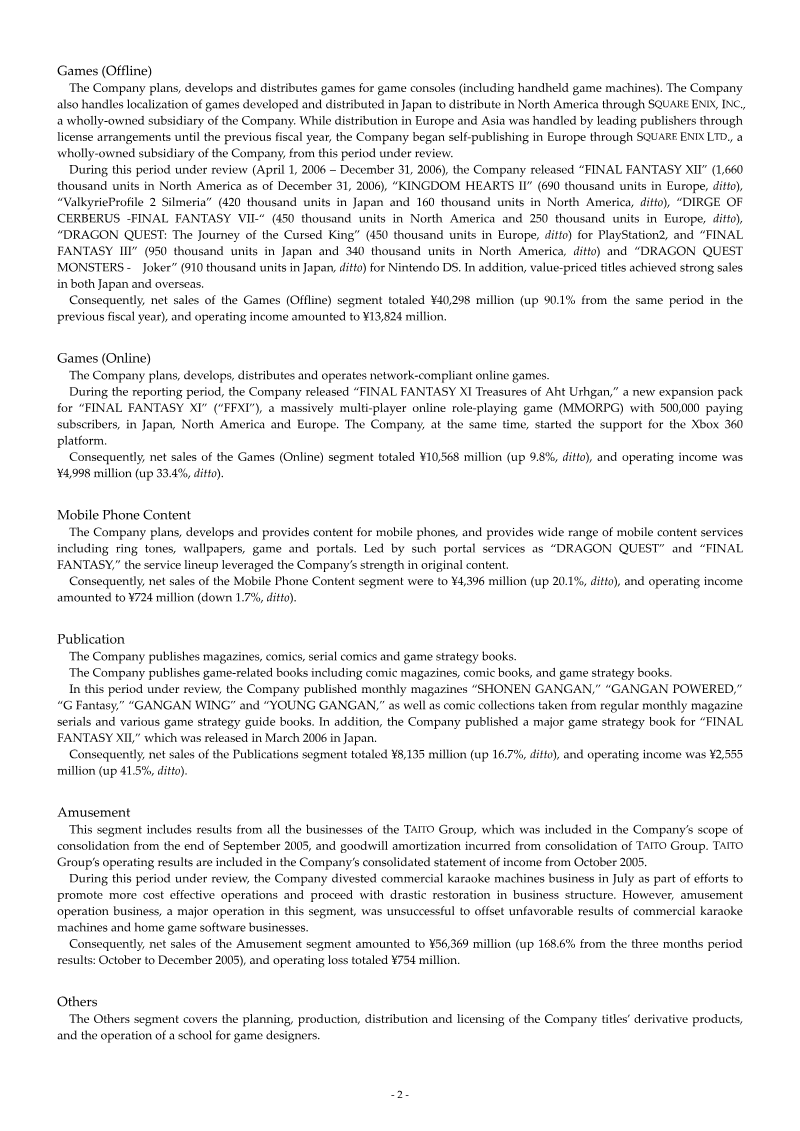
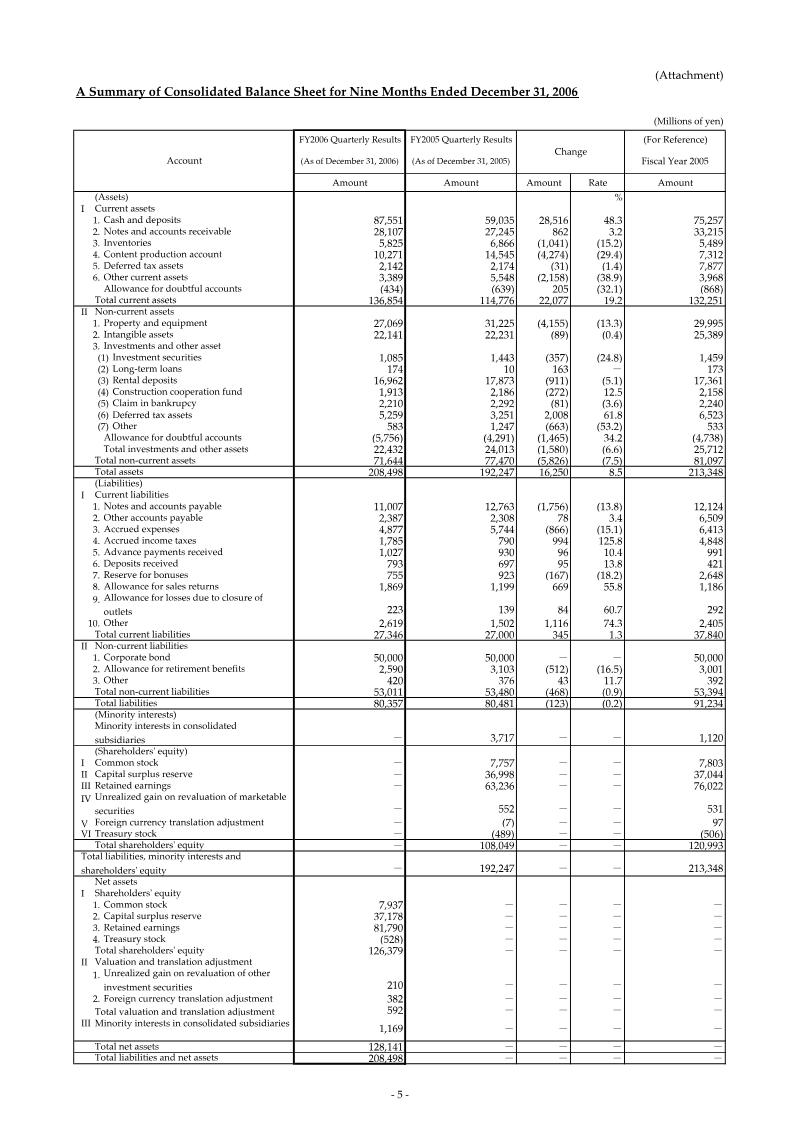
Square Enix Consolidated Financial Report: Nine-Month Period Ended December 31, 2006
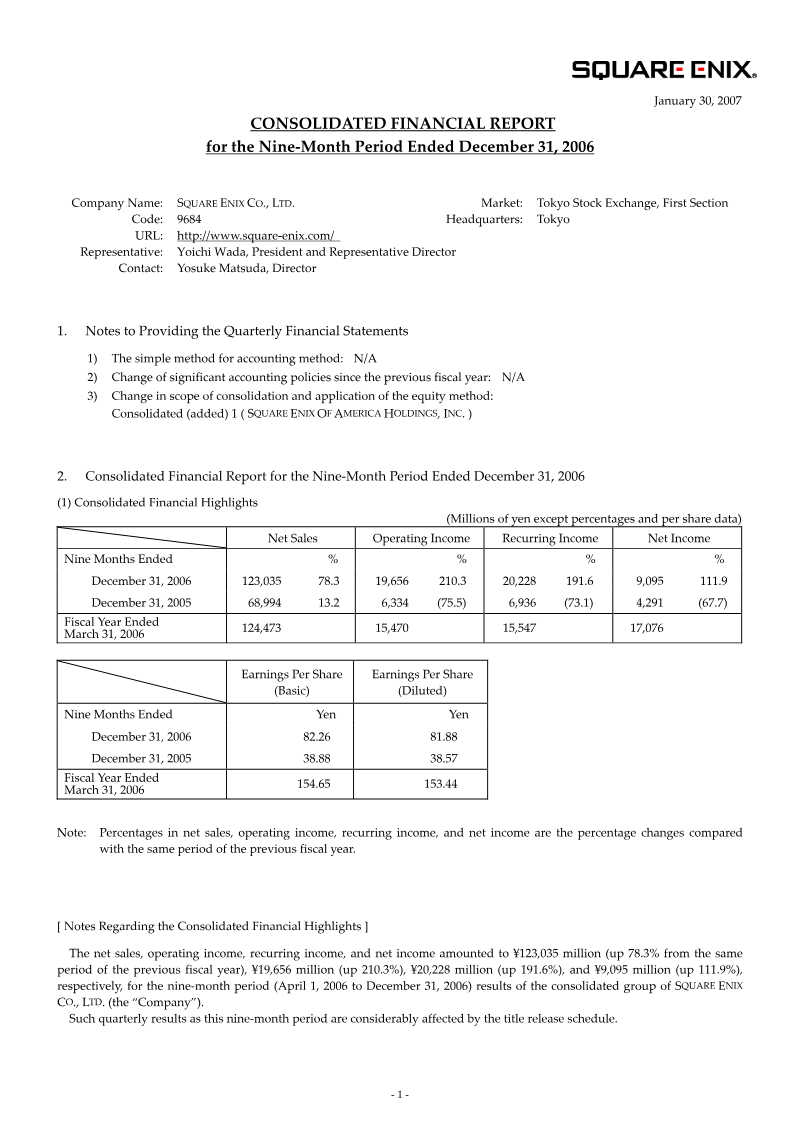
Square Enix experienced significant financial growth during the nine-month period ending December 31, 2006, driven primarily by a robust release schedule of major console titles.
- Square Enix reported significant financial growth for the nine-month period ending December 31, 2006, with net sales rising 78.3% to ¥123,035 million and operating income increasing 210.3% to ¥19,656 million.
- The Games (Offline) segment was the primary growth driver, achieving a 90.1% increase in sales to ¥40,298 million behind the successful releases of Final Fantasy XII, Kingdom Hearts II, and Final Fantasy III.
- The Amusement segment, including the Taito Group, generated ¥56,369 million in sales but recorded an operating loss of ¥754 million, leading to structural restructuring and the divestment of the commercial karaoke business.
Temporal Frames: A Unifying Framework for the Analysis of Game Temporality
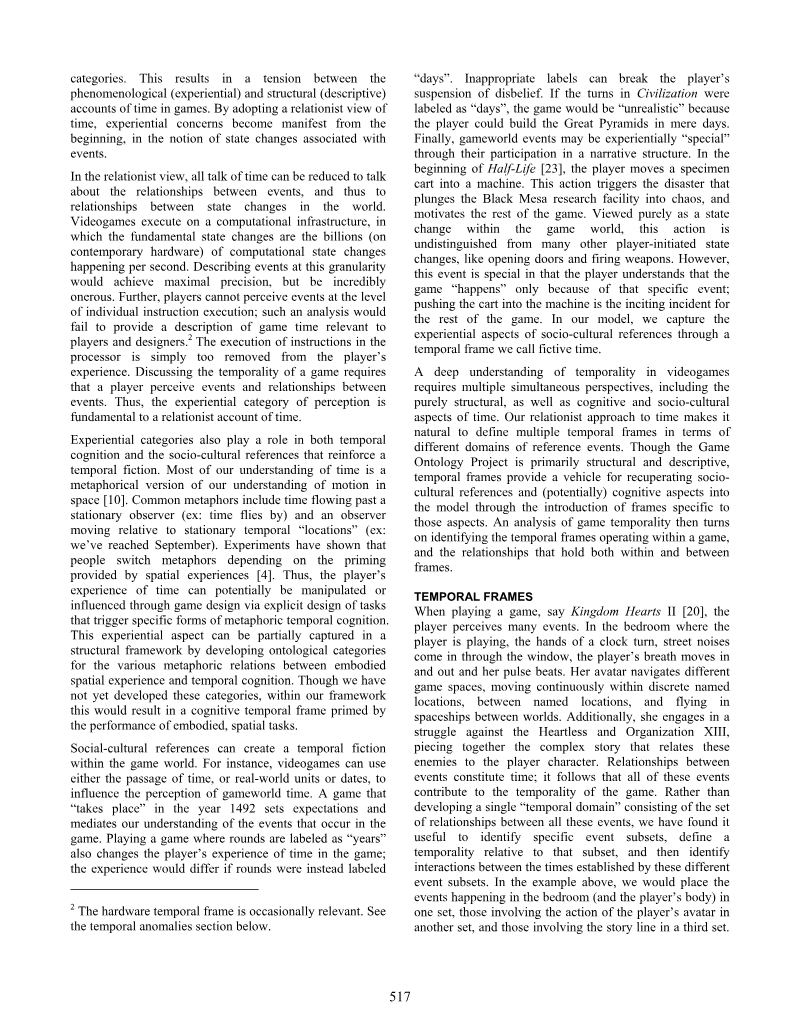
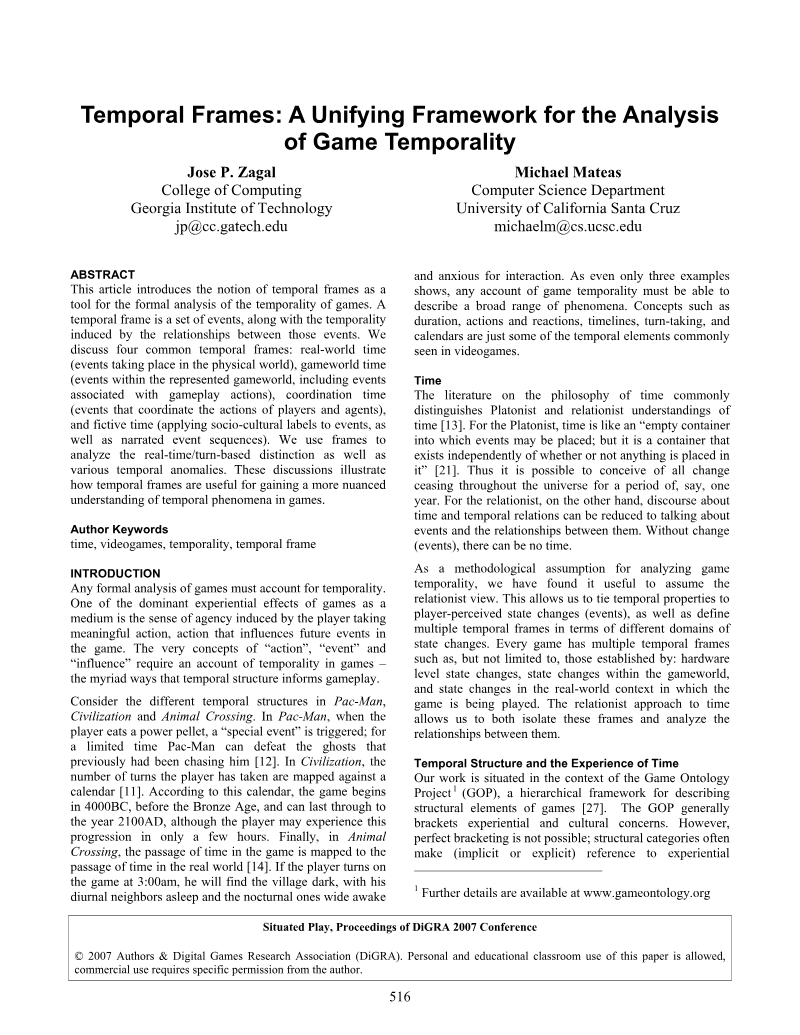
"Temporal Frames" proposes a formal analytical tool for studying how time operates in games, grounded in a relationist view in which temporal properties arise from relationships among events rather than from time as an independent container.
- Games rarely operate within a single temporal frame; the authors identify four recurring frames (real-world time, gameworld time, coordination time, and fictive time) that often coexist or succeed one another, and meaningful analysis depends on identifying each and how they interact.
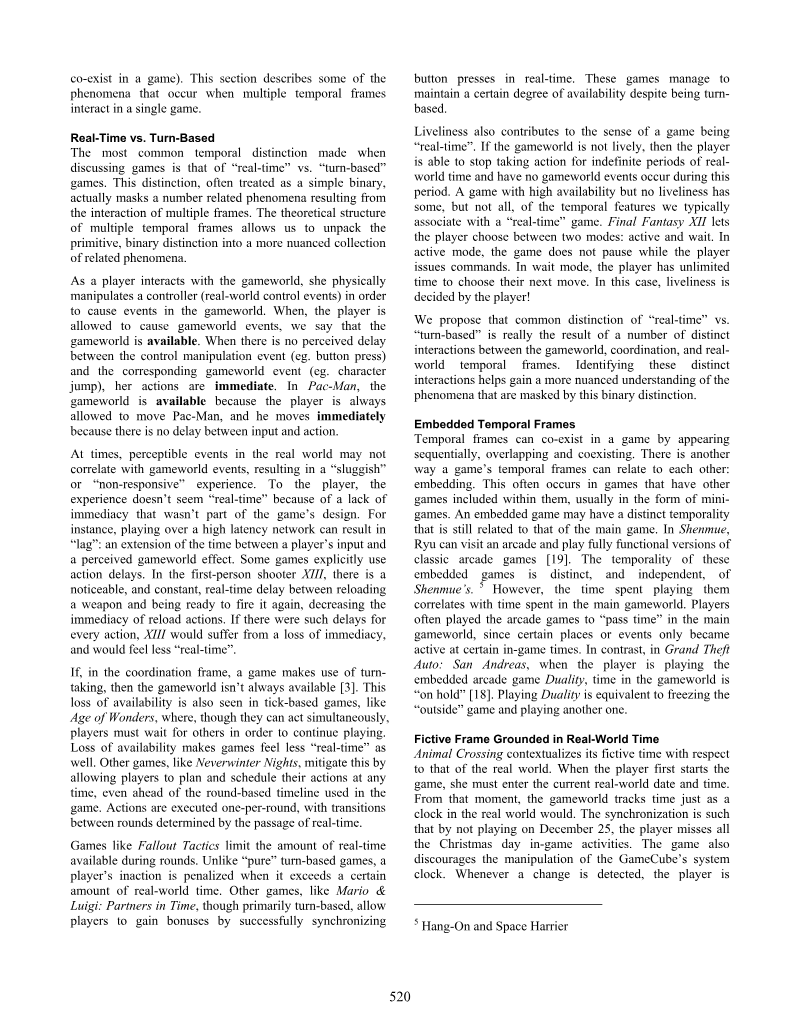
- The paper critiques the familiar real-time versus turn-based binary as obscuring distinct temporal phenomena produced by frame interactions, and reconceives both as interactions between frames rather than fixed categories.
- Sequential and embedded arrangements of temporal frames generate temporal anomalies such as temporal bubbles, warping, and non-uniform temporality, illustrated with cases from Final Fantasy XII, Animal Crossing, Civilization, and Grand Theft Auto III.



Square Enix Annual Report FY2006
Fiscal year 2006 marked a period of aggressive structural expansion and strategic pivot for Square Enix, defined primarily by the acquisition of Taito Corporation.
- Square Enix acquired Taito Corporation in FY2006, driving a 68.5% increase in net sales to ¥124.5 billion.
- Operating income declined 41.4% to ¥15.5 billion due to console lifecycle transitions, underperforming titles, and a ¥3.9 billion goodwill write-down for UIEvolution.
- The Taito acquisition increased total assets to ¥284.3 billion but required the issuance of ¥50 billion in corporate bonds and resulted in initial operating losses within the new Amusement segment.
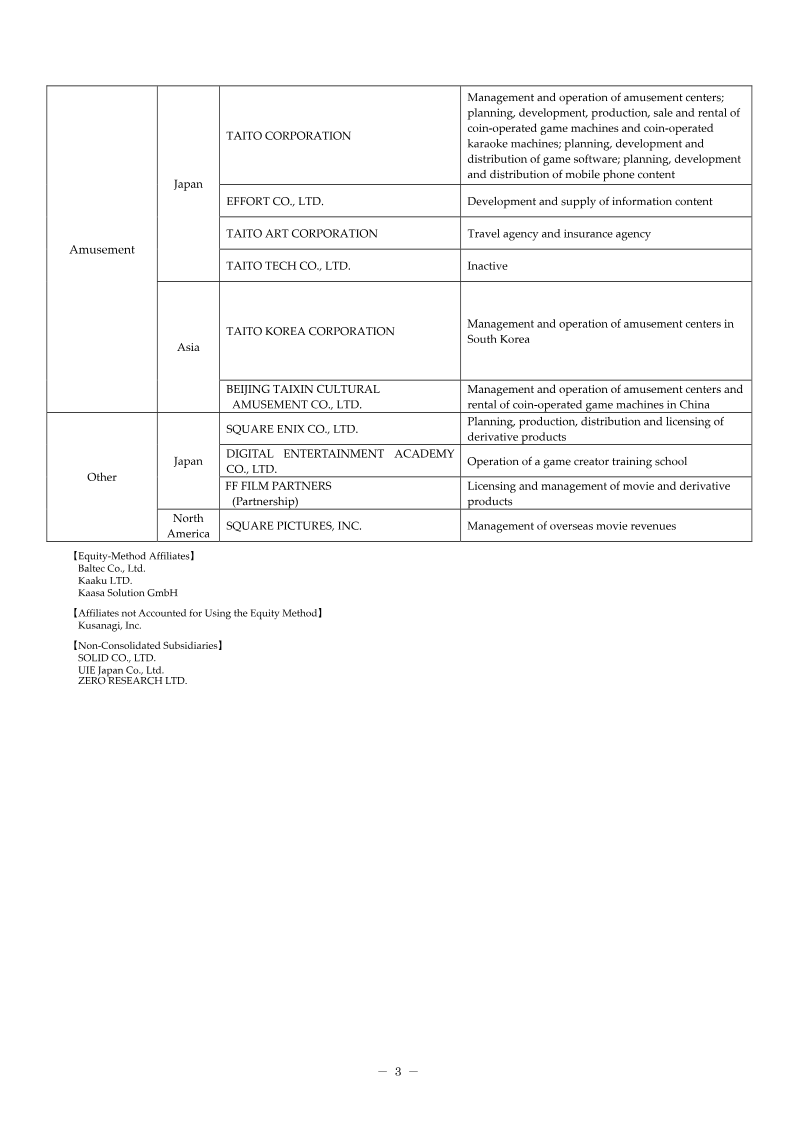
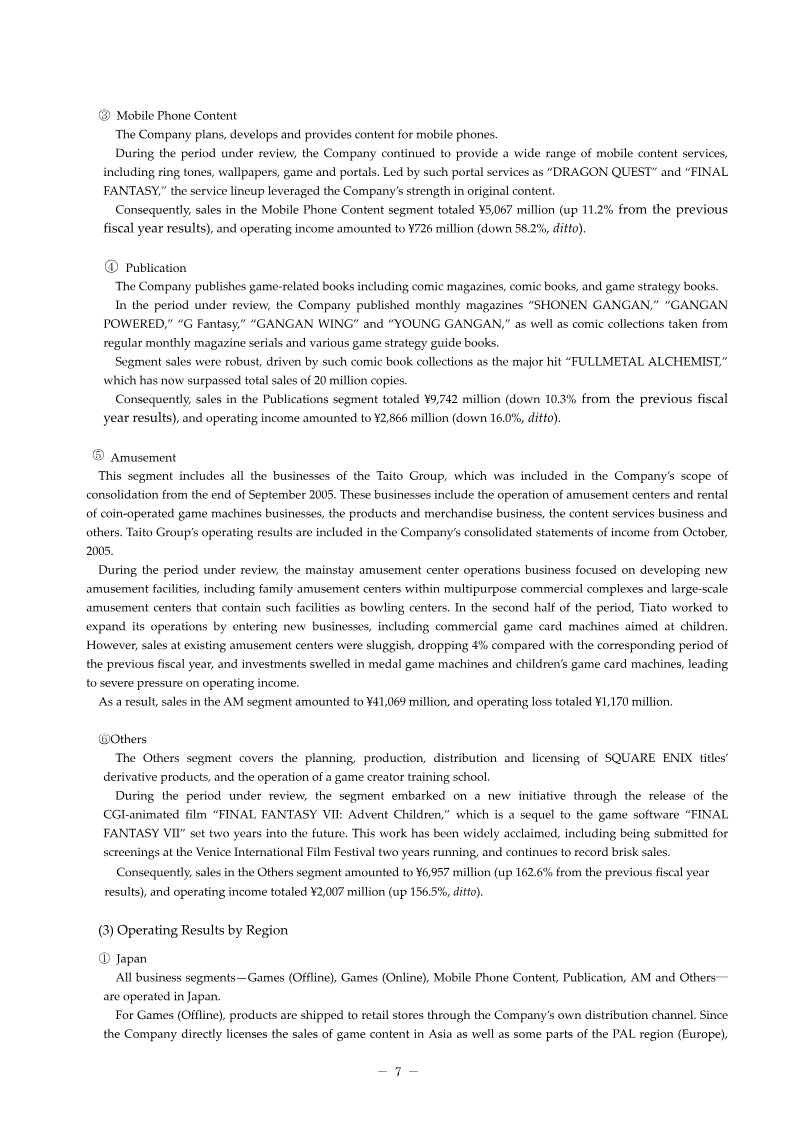
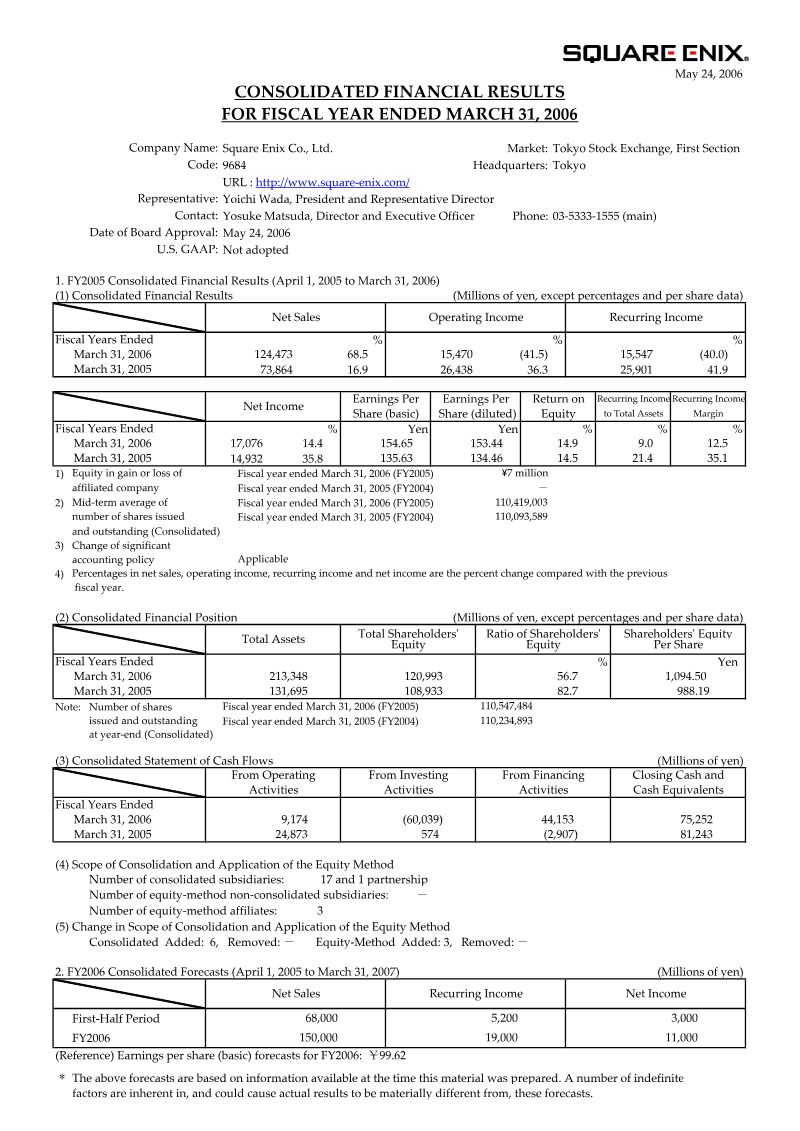
Square Enix Consolidated Financial Results: Fiscal Year Ended March 31, 2006
Square Enix concluded the fiscal year ending March 31, 2006, with a complex financial profile defined by aggressive corporate expansion and shifting profitability across its diverse business segments.
- Net sales grew by 68.5% to 124,473 million yen, driven primarily by the strategic acquisition of Taito Corporation.
- Operating income declined by 41.5% to 15,470 million yen, reflecting high integration costs and the transition to next-generation gaming platforms.
- Net income increased by 14.4% to 17,076 million yen, despite the contraction in operating income.
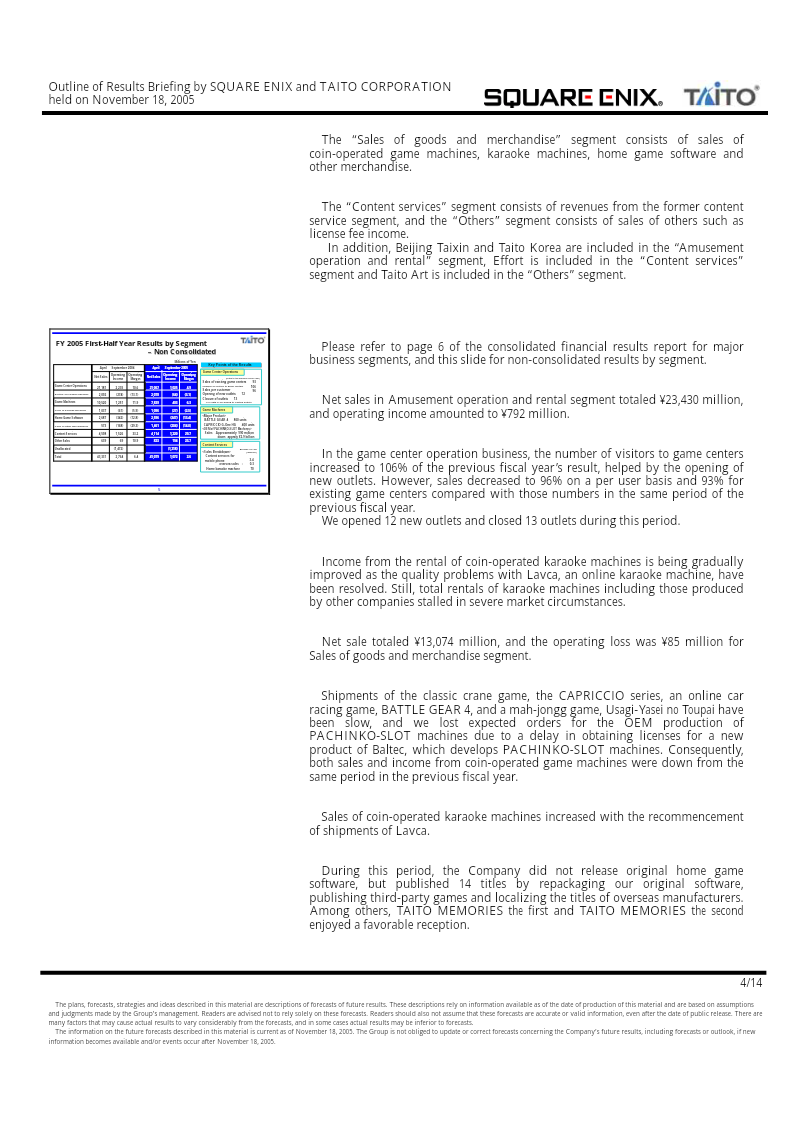
Square Enix and Taito Corporation 2005 First-Half Year Results
The 2005 fiscal interim period for Square Enix and Taito Corporation reflects a transitional phase defined by strategic acquisition and a deliberate shift toward a service-oriented business model.
- Square Enix and Taito Corporation have set a long-term financial goal of ¥50 billion in operating income by fiscal year 2009, targeting an operating margin exceeding 20%.
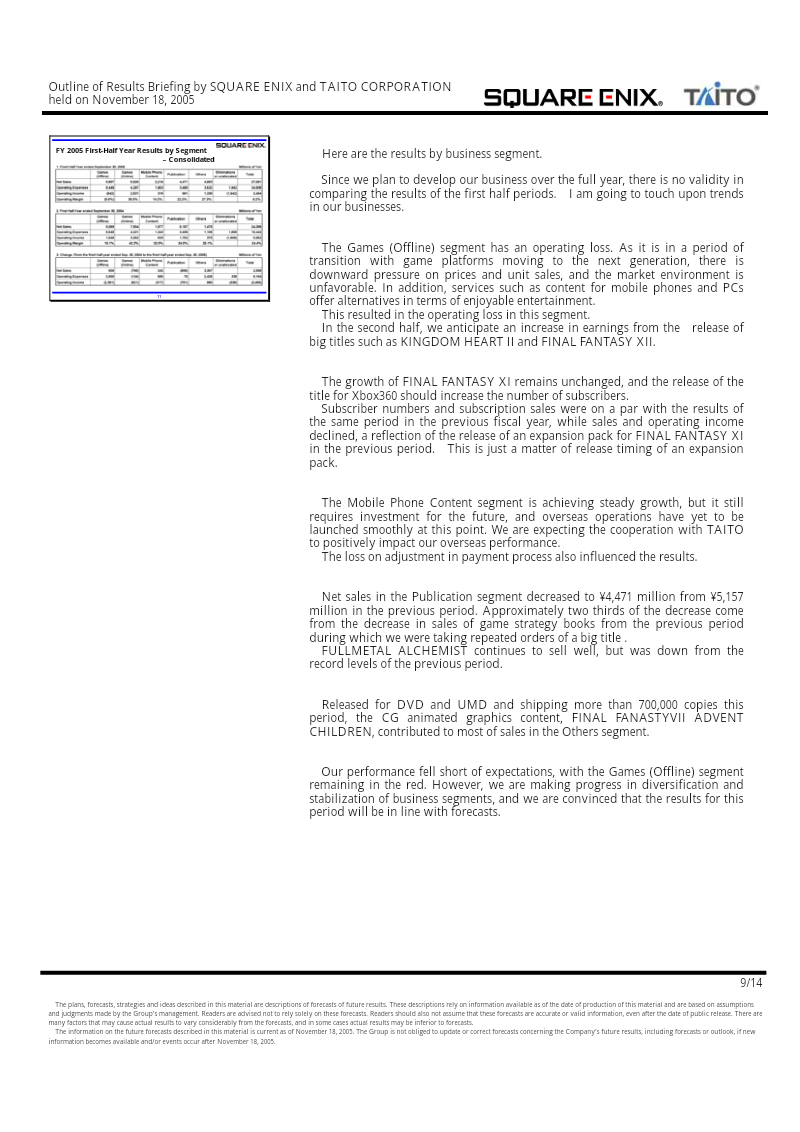
- Square Enix reported a first-half operating income of ¥2,484 million, with performance impacted by acquisition costs and a strategy to back-load major software releases like Kingdom Hearts II and Final Fantasy XII into the second half of the year.
- Taito Corporation recorded a net loss of ¥3,383 million on consolidated net sales of ¥41,486 million, driven by integration costs, declining amusement center traffic, and canceled pachinko-slot machine orders.
Companies behind it

As the documents state it.