Fallout Shelter
14 documents in the library are about Fallout Shelter, from writers such as PocketGamer.biz, Mobilegamer.biz and GameRefinery, the newest from 2026. Each has a summary and key insights with the page they come from.

Fallout Shelter puts you in control of a state-of-the-art underground Vault from Vault-Tec. Build the perfect Vault, keep your Dwellers happy, and protect them from the dangers of the Wasteland. Vault-Tec has provided the tools, but the rest is up to you. What are you waiting for? Get started building your Vault today for free.
- Released
- Jun 14, 2015
- Developer
- Bethesda Game Studios
- Publisher
- Bethesda Softworks
- Genres
- Role-playing (RPG), Simulator, Strategy
- Platforms
- PlayStation 4, Android, PC (Microsoft Windows), iOS, Xbox One, Nintendo Switch
- Links
- Official site, Wikipedia
Game data from IGDB.com
Key figures
Sensor Tower forecasts that mobile game downloads in 2026 may decline to pre-pandemic levels, while Fallout Shelter has reached a milestone of 230 million total downloads.
Mobilegamer.biz, 2025 · Unity shenanigans, Space Ape postmortem, your games of the year, 2025 wrapped, more, p. 15
The Fallout television series reached over 100 million viewers, triggering a five-to-sixfold increase in player engagement across Fallout 4, Fallout 76, and Fallout Shelter.
The Game Business, 2025 · Fallout Season 2 Interview: How Todd Howard and Bethesda are capitalising on the TV show, p. 1
The mobile game Fallout Shelter saw a 484% increase in monthly revenue during April 2024, adding an estimated $5 million to $10 million in value beyond the primary $80 million figure.
Game World Observer, 2024 · Fallout TV Show Might Bring Bethesda $80 Million in Additional Game-Related Revenue
Only 8% of mobile games with a Game Power Score similar to Fallout Shelter have successfully maintained a position in the top 10 grossing charts.
GameRefinery, 2015 · Fallout Shelter: Is Its Success Sustainable?
Documents about Fallout Shelter

Tencent, Playtika and SuperPlay shenanigans, further Google Play changes. Monopoly Go, MTG, more
The mobile games industry is currently navigating significant shifts in corporate ownership, platform accessibility, and market performance.
- Google has dropped its requirement for a 'registered app stores' program, allowing third-party app stores like the Epic Games Store to operate directly within the Google Play Store as of late July 2024.
- Tencent is reportedly in talks to acquire Superplay, the developer of Dice Dreams and Domino Dreams, for up to $1.5 billion following the studio's significant performance growth under Playtika.
- MTG reported Q2 group revenue of $306 million with a 24% profit margin, driven by Raid: Shadow Legends, which earned $111 million, while direct-to-consumer revenue grew to 38% of total group income.
Xbox reshuffle analysis, what’s next for King, Overwatch Rush, data, jobs, more
The recent executive leadership transition at Microsoft Gaming, marked by the departure of Phil Spencer and Sarah Bond and the appointment of Asha Sharma as CEO, signals a strategic pivot toward data-driven management and artificial intelligence integration.
- Microsoft Gaming has appointed Asha Sharma as CEO, signaling a strategic shift toward AI integration and data-driven operational efficiency over traditional creative-led management.
- King remains the anchor of Microsoft’s mobile portfolio, generating $1.7 billion in projected 2025 revenue, with Candy Crush Saga alone contributing $1 billion.
- Attempts to port AAA console franchises to mobile have largely failed to achieve commercial scale, highlighting a disconnect between console-centric strategies and mobile-first consumer preferences.
Unity shenanigans, Space Ape postmortem, your games of the year, 2025 wrapped, more
The mobile gaming industry is currently navigating significant shifts in corporate strategy, consolidation, and monetization models.
- Unity is reportedly introducing a new 'Enterprise minimum commitment' fee for studios with over $25 million in annual gross revenue, with costs scaling from $250,000 for $25M+ earners up to $2 million for those exceeding $250M in revenue.
- Supercell completed its acquisition of Space Ape Games in November 2024, rebranding the studio as Supercell London and tasking it with applying lean live-ops expertise to legacy titles like Hay Day and Boom Beach.
- Space Ape Games' history under Supercell involved testing approximately 25 different games and numerous prototypes, a process that highlighted the studio's struggle to focus on winners and kill underperforming projects quickly enough.

Fallout Season 2 Interview: How Todd Howard and Bethesda are capitalising on the TV show
The success of the Fallout television series on Amazon Prime has catalyzed a strategic shift in how Bethesda Game Studios manages its intellectual property, moving toward a model where linear media and interactive gaming experiences are tightly integrated.
- The Fallout television series reached over 100 million viewers, triggering a five-to-sixfold increase in player engagement across Fallout 4, Fallout 76, and Fallout Shelter.
- Bethesda is shifting to a strategy of tightly integrating linear media with interactive gaming, treating the television show as a new, canonical entry in the franchise timeline rather than a simple adaptation.
- To lower barriers for non-traditional gamers, Bethesda is leveraging cloud streaming platforms like Samsung Gaming Hub, Xbox Game Pass, and Amazon Luna to allow immediate gameplay without dedicated hardware or downloads.
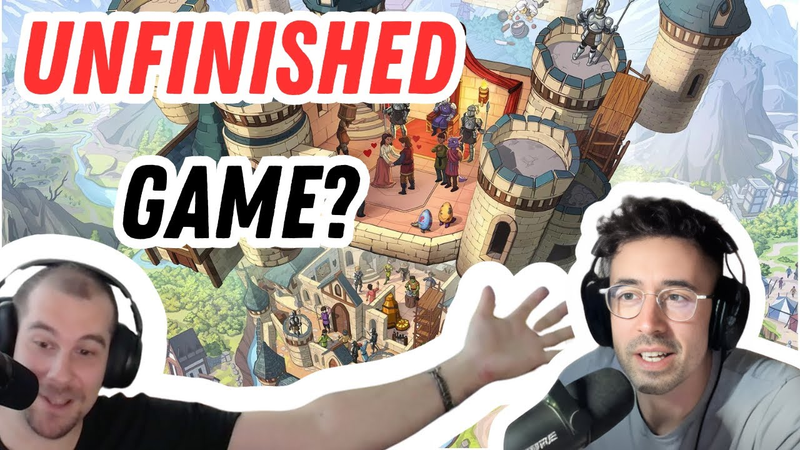
Elder Scrolls Castles: Flop with the most successful iteration of this core gameplay
Elder Scrolls: Castles represents a derivative entry in the mobile management genre, struggling to maintain momentum despite leveraging the high-profile Elder Scrolls intellectual property.
- Elder Scrolls: Castles experienced a sharp decline in player interest, with daily downloads dropping from an initial 230,000 to 40,000.
- The game struggles to generate significant revenue, with recent estimates placing daily ad income between only $9,000 and $12,000.
- The core gameplay loop, which combines mechanics from Fallout Shelter and Hustle Castle, is hindered by restrictive health-based gating and a punishing resource management cycle that creates player death spirals.
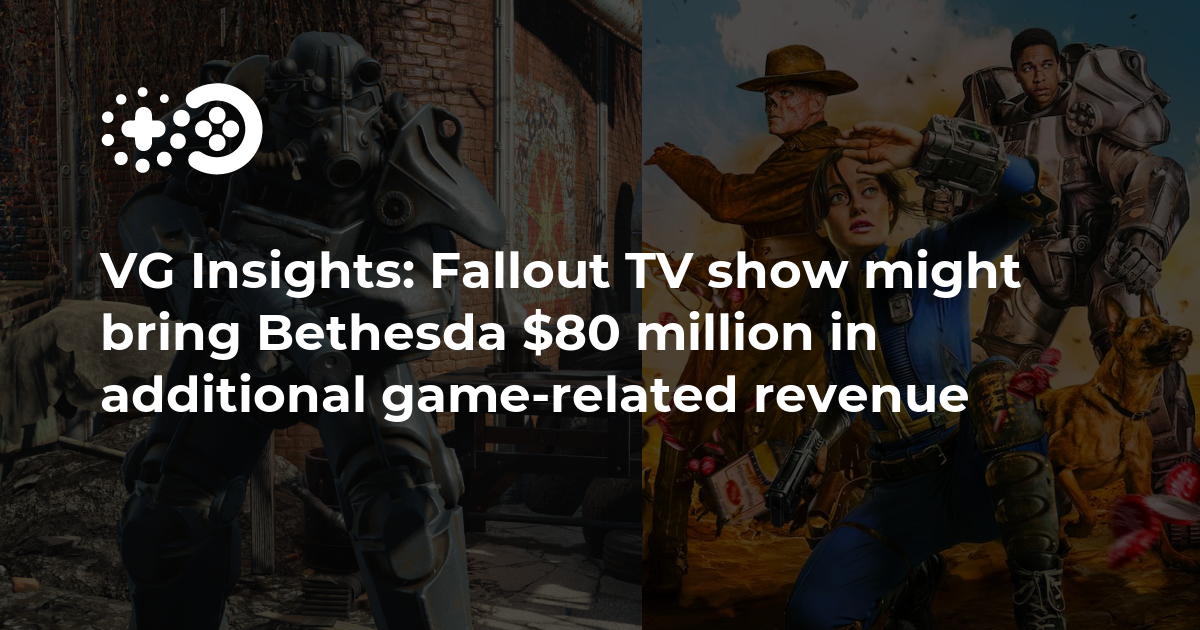
Fallout TV Show Might Bring Bethesda $80 Million in Additional Game-Related Revenue
The release of the Fallout television series on Amazon has generated a significant financial windfall for Bethesda, with total additional game-related revenue estimated at approximately $80 million.
- The Fallout television series generated approximately $80 million in additional revenue for Bethesda between April and September 2024.
- Licensing fees for the television adaptation rights accounted for $30 million of the total revenue generated.
- Fallout 4 sales contributed $22 million from 2 million copies sold, while Fallout 76 generated $28 million through a combination of game sales and in-game purchases.
Transmedia Opportunity in Games: How the Fallout TV Series Made Bethesda 80 Million USD
The Fallout television series serves as a primary case study for the financial viability of transmedia strategies within the gaming industry.
- The Fallout TV series generated an estimated $80 million in game-related revenue and license fees for Bethesda from its first season, primarily through increased game sales, higher in-game spending, and licensing fees.
- The Fallout TV series boosted sales of Fallout 4 by an estimated 2 million units and Fallout 76 by 1-1.5 million units, totaling approximately $35-40 million in revenue for Bethesda.
- Increased engagement in Fallout 76, with daily active users peaking at 1 million during the show's launch window (up from 100-200k pre-show), contributed an estimated $10-15 million in incremental in-game revenue for Bethesda.

Mobile vs. Desktop UI: Key Differences in Design
The primary objective is to provide developers with a strategic framework for adapting game user interfaces (UI) across mobile, desktop, and console platforms.
- Mobile UI design requires strict prioritization of essential elements due to limited screen real estate, whereas desktop interfaces can accommodate more complex menus and HUDs without obstructing gameplay.
- Mobile games are typically limited to three primary control inputs, compared to the 16+ inputs available on consoles and the vast, flexible capacity of PC keyboards and mice.
- Developers can improve mobile usability by allowing players to customize button placement, a strategy successfully employed by Fortnite to balance the playing field across devices.
Fallout Shelter - How a Casual Game Won Over Hardcore Players - Extra Credits
Fallout Shelter achieved unexpected commercial success, briefly surpassing top-grossing titles like Candy Crush, despite utilizing free-to-play mechanics typically rejected by the hardcore gaming demographic.
- Fallout Shelter achieved commercial success by briefly surpassing top-grossing mobile titles like Candy Crush, demonstrating that hardcore players will engage with free-to-play mechanics if implemented correctly.
- The primary driver of the game's success was the removal of player-versus-player (PvP) competition, which eliminated the pressure to compete and the fear of falling behind other players.
- Hardcore players' traditional resistance to free-to-play elements like timers and gashapon-style monetization is rooted in competitive friction rather than the mechanics themselves.

Biz Daily: Did Fallout Shelter only make $5.1M?
Fallout Shelter emerged as a significant surprise in the 2015 mobile gaming landscape, achieving high rankings on Western top-grossing charts shortly after its release.
- Fallout Shelter generated approximately $5.1 million in its first two weeks following its June 2015 launch, representing a ten-fold return on development costs estimated at under $500,000.
- Despite initial success, the game experienced a rapid decline from the top 200 grossing charts in major markets including the U.S., U.K., Germany, and France.
- The game's revenue potential was structurally capped by a 200-dweller capacity limit, which effectively concluded the player experience once reached.

Analysing the monetization of Fallout Shelter
This analysis examines the monetization strategy and technical performance of Bethesda’s Fallout Shelter, contrasting its economic model with industry standards set by titles like Marvel: Contest of Champions and Boom Beach.
- Fallout Shelter achieves commercial success by prioritizing brand engagement and gameplay loops over the high-frequency, high-spend monetization models typical of mobile industry leaders like Marvel: Contest of Champions and Boom Beach.
- The game’s monetization strategy is notably conservative, capping its maximum in-app purchase at $20 and maintaining an average purchase price under $10, diverging from the industry-standard $100 price ceiling.
- Monetization relies on the sale of 'lunch boxes' rather than direct hard currency, creating a unique economic loop that lacks traditional reciprocity metrics found in competing titles.

Biz Daily: Fallout Shelter's slow top grossing decline
Fallout Shelter’s performance on the App Store during its initial two-week launch period demonstrates a unique trajectory characterized by a surprisingly gradual decline in top-grossing rankings.
- Fallout Shelter’s launch performance defied mobile trends by maintaining a resilient top-30 grossing position across major Western markets, including the UK, Australia, Canada, France, Germany, and Russia, following its E3 debut.
- The game’s success demonstrates that strong brand equity can compensate for the absence of standard free-to-play retention drivers, such as multiplayer, social integration, and frequent content updates.
- Bethesda successfully leveraged the Fallout brand to attract core console and PC gamers who typically avoid mobile free-to-play titles, establishing a level of consumer trust that drove initial monetization.