Fallout 3
10 documents in the library are about Fallout 3, from writers such as Extra Credits, Game Developers Conference and Game World Observer, the newest from 2026. Each has a summary and key insights with the page they come from.

Fallout 3 from the creators of the award-winning Oblivion, featuring one of the most realized game worlds ever created. Create any kind of character you want and explore the open wastes of post-apocalyptic Washington D.C. Every minute is a fight for survival as you encounter Super Mutants, Ghouls, Raiders and other dangers of the Wasteland. Prepare for the future. The third game in the Fallout series, Fallout 3 is a singleplayer action role-playing game (RPG) set in a post-apocalyptic Washington DC. Combining the horrific insanity of the Cold War era theory of mutually assured destruction gone terribly wrong, with the kitschy naivety of American 1950s nuclear propaganda, Fallout 3 will satisfy both players familiar with the popular first two games in its series as well as those coming to the franchise for the first time.
- Released
- Oct 28, 2008
- Developer
- Bethesda Game Studios
- Publisher
- Bethesda Softworks
- Genres
- Shooter, Role-playing (RPG)
- Platforms
- PlayStation 3, PC (Microsoft Windows), Xbox 360
- Links
- Official site, Wikipedia
Game data from IGDB.com
Documents about Fallout 3

I Interviewed Todd Howard For The First Time In 15 Years
Bethesda Game Studios has officially announced a new strategic roadmap for the Fallout franchise following a significant organizational restructuring at Xbox.
- Bethesda Game Studios has officially announced Fallout 5, which is currently in pre-production and being developed alongside The Elder Scrolls 6 using the proprietary Creation Engine 3.
- Bethesda confirmed a collaboration with Obsidian Entertainment on a new, unannounced Fallout project, with Bethesda retaining management and supervisory control over the franchise.
- The company announced official remasters for Fallout 3 and Fallout New Vegas, alongside a new Fallout 76 expansion titled 'Raven Rock' scheduled for release next year.

Xbox’s Switch 2 Support, Oblivion’s Remaster & Marvel Rivals Swimsuit Edition | Games For Breakfast
The gaming industry is currently undergoing a significant strategic pivot, moving away from traditional hardware-locked exclusivity toward platform-agnostic growth.
- Xbox is shifting toward a platform-agnostic strategy by committing to support the upcoming Nintendo Switch 2, which is expected to launch at a $450 price point.
- Major gaming companies are moving away from hardware-locked exclusivity to combat market saturation and reach broader, multi-platform audiences.
- Free-to-play titles like Marvel Rivals are facing backlash for aggressive monetization tactics, including complex currency systems and deceptive marketing for premium cosmetic content.

Fallout TV Show Might Bring Bethesda $80 Million in Additional Game-Related Revenue
The release of the Fallout television series on Amazon has generated a significant financial windfall for Bethesda, with total additional game-related revenue estimated at approximately $80 million.
- The Fallout television series generated approximately $80 million in additional revenue for Bethesda between April and September 2024.
- Licensing fees for the television adaptation rights accounted for $30 million of the total revenue generated.
- Fallout 4 sales contributed $22 million from 2 million copies sold, while Fallout 76 generated $28 million through a combination of game sales and in-game purchases.

World Building with Architecture
Architecture functions as a foundational narrative and navigational instrument in game design, operating beneath the level of conscious player awareness to establish tone, strategy, and emotional context.
- Architecture serves as a primary narrative and navigational tool, using materiality, scale, and spatial hierarchy to guide player behavior subconsciously without relying on HUDs or dialogue.
- Games like The Legend of Zelda: Breath of the Wild, Fallout 3, and Inside demonstrate that silhouette-based wayfinding and cultural material expression are essential for creating immersive, legible worlds.
- Developers can leverage the absence of real-world financial and socio-political constraints to employ non-Euclidean geometry and forced perspective, creating structures impossible in traditional construction.
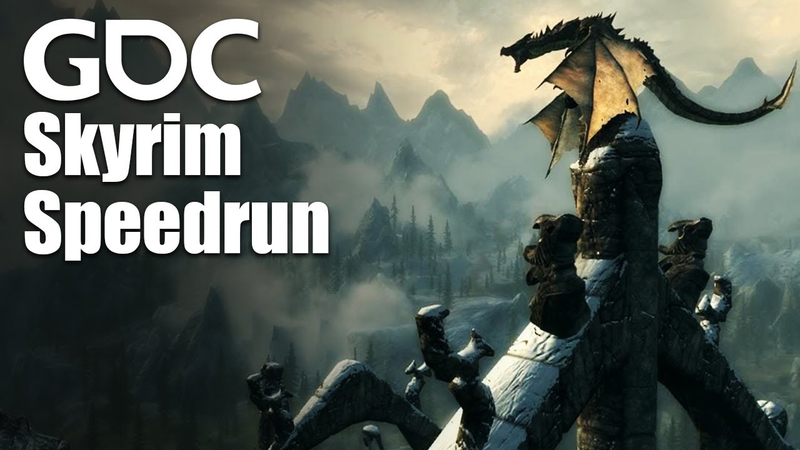
GDC Summer Dev Speedrun - Skyrim With Jonah Lobe
The development of The Elder Scrolls V: Skyrim represents a unique intersection between ambitious open-world design and the unintended technical exploits discovered by the speedrunning community.
- Bethesda’s reliance on system-driven gameplay created an environment where technical quirks like load warping and quick-save exploits—persistent since Fallout 3—enabled the speedrunning community to manipulate game states.
- The development of creatures like the Spriggan and Alduin required a pipeline spanning several months per asset, balancing artistic iteration with the technical requirements of performance optimization.
- The art department utilized ZBrush and Marmoset to prioritize a 'lived-in' aesthetic through high-resolution normal maps, focusing on realistic weight and foundational shapes rather than rigid technical metrics.
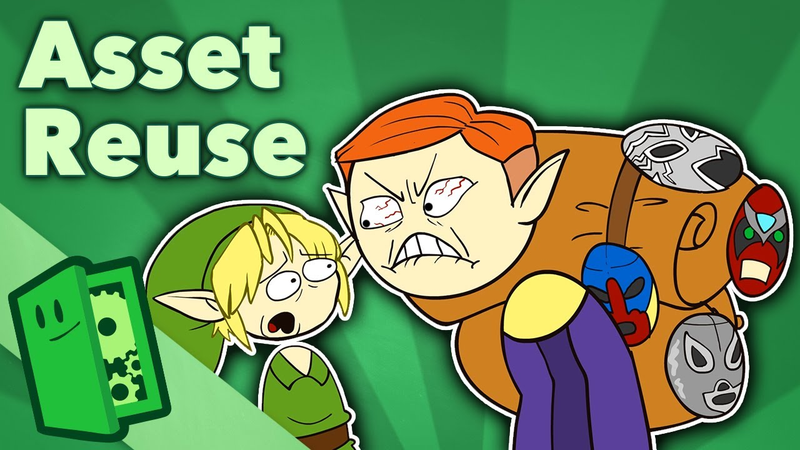
Asset Reuse - Working Smarter, Not Harder - Extra Credits
The practice of asset reuse in game development is often unfairly stigmatized as laziness or cost-cutting, when it is, in fact, a strategic design tool that allows developers to prioritize innovation and depth.
- Asset reuse is a strategic design tool that allows studios to shift finite resources away from redundant technical labor and toward core gameplay, narrative depth, and world-building.
- Reusing existing assets can enable rapid production cycles, such as the 16-month development timeline achieved for Dragon Age 2.
- Successful implementations like Fallout: New Vegas and The Legend of Zelda: Majora’s Mask demonstrate that reusing assets can facilitate superior role-playing depth and unique narrative experiences.
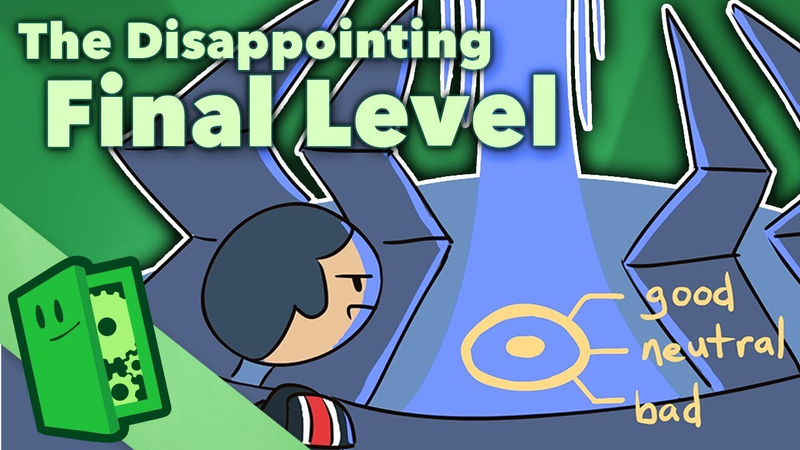
The Disappointing Final Level - Making Better Endings For Better Games - Extra Credits
The game industry frequently struggles to produce satisfying conclusions, often treating the final level as an afterthought due to development time constraints, resource allocation, and the difficulty of playtesting content that requires a full playthrough to experience.
- Game endings must be treated as a critical, planned component of the development cycle rather than an afterthought to ensure they validate the player's time investment.
- A successful conclusion requires the integration of three distinct layers: the narrative ending for emotional resolution, the mechanical ending for skill mastery, and the ethos ending for thematic reflection.
- Developers should prioritize early planning of the final level to avoid the common pitfalls of rushed development, resource depletion, and the difficulty of playtesting content that requires a full playthrough.

More Than Exposition - Building Worlds without Info Dumps - Extra Credits
Effective narrative design in video games requires minimizing the use of exposition dumps—clunky, unnatural dialogue used solely to explain world-building or backstory to the player.
- Minimize exposition dumps by ensuring every line of dialogue serves multiple purposes, such as simultaneously revealing character personality and providing necessary world context.
- Utilize environmental storytelling to convey history and setting through visuals and level design, as demonstrated by titles like Fallout 3, Journey, and Half-Life.
- Avoid overwhelming players by limiting the use of jargon and unnecessary proper nouns, focusing only on the most essential elements of the setting.
Aesthetics of Play - Redefining Genres in Gaming - Extra Credits
The current method of categorizing video games by mechanics—such as camera perspective or input type—is fundamentally flawed and limits design innovation.
- The industry's current practice of categorizing games by mechanics, such as camera perspective or input type, is fundamentally flawed and stifles design innovation.
- Designers should adopt the Mechanics, Dynamics, and Aesthetics (MDA) framework, which prioritizes the psychological reasons for play over the underlying rules and systems.
- Player engagement is driven by nine primary aesthetics: sense pleasure, fantasy, narrative, challenge, fellowship, competition, discovery, expression, and abnegation.
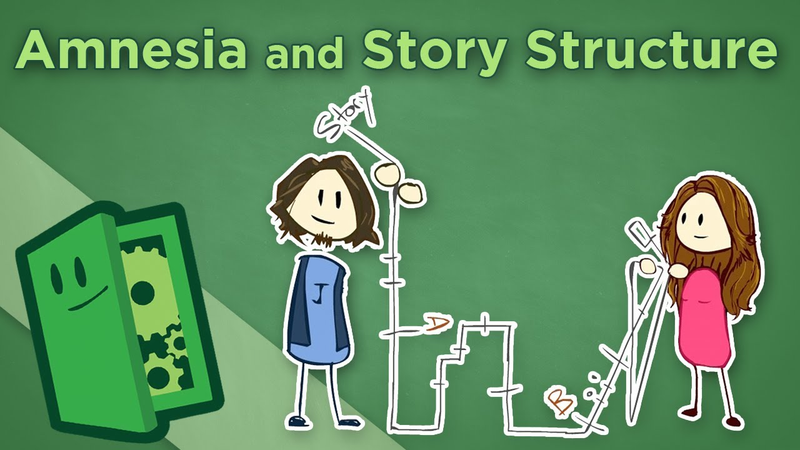
Amnesia and Story Structure - Character Development in Fallout: New Vegas - Extra Credits
The use of amnesia as a narrative device in video games often serves as a shortcut to bypass the traditional three-act story structure.
- Amnesia is often used as a narrative shortcut to bypass the first act of a traditional three-act story structure, frequently resulting in protagonists that lack depth.
- Fallout: New Vegas relies on the amnesia trope to skip character history, creating a disconnect where the player inhabits a role with a pre-existing life that is never meaningfully explored.
- In contrast to New Vegas, Fallout 3 effectively utilizes a three-act structure by allowing players to experience the character’s formative years.