1 free read left. Create a free account for unlimited reading + AI research.
Create free account
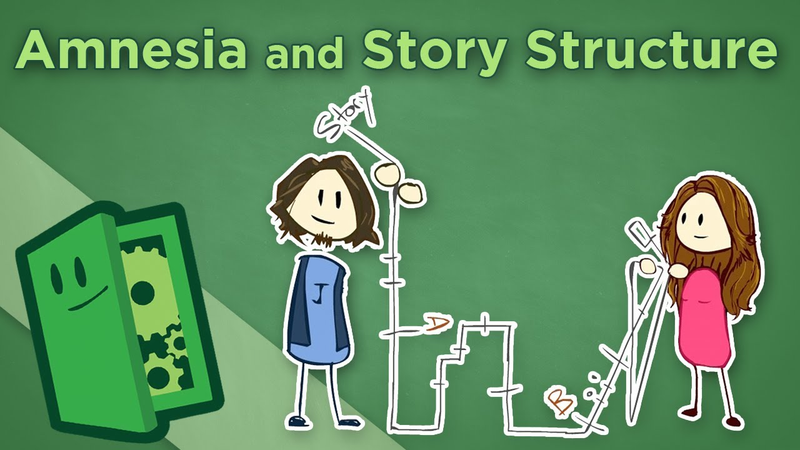
Amnesia and Story Structure - Character Development in Fallout: New Vegas - Extra Credits
Key insights
6 takeaways- 01Amnesia is often used as a narrative shortcut to bypass the first act of a traditional three-act story structure, frequently resulting in protagonists that lack depth.
- 02Fallout: New Vegas relies on the amnesia trope to skip character history, creating a disconnect where the player inhabits a role with a pre-existing life that is never meaningfully explored.
- 03In contrast to New Vegas, Fallout 3 effectively utilizes a three-act structure by allowing players to experience the character’s formative years.
- 04Dominion 3 serves as a model for non-dialogue storytelling by using character debuffs and equipment to imply a history without relying on written narrative.
- 05Developers can integrate character history through mechanical choices like starting perks or inventory items that provide environmental storytelling, rather than relying on text-heavy exposition.
- 06Bioshock demonstrates an effective execution of in media res by grounding the second act in active gameplay while using audio logs and environmental cues to reveal the first act's events.
Ask AI about this video
Transcript
[Music] [Music] hey guys before we begin today I just wanted to say that if any of you are going to be down at South by Southwest this year come hang out James will be running a room called the game developers Meetup for people to get together and discuss the medium and the future of games we had a room like it at Pax and it was awesome so go say hi anyway today we're going to talk about story structure in games specifically the whole Amnesia cliche you ever wonder why it feels like you see Amnesia pop up in almost every other game is it just a Trope game writers keep pulling out over and over because no one can think of anything new to do well no I mean I guess they could try making you play a character with Aphasia or some other weird thing but these game writers aren't just throwing a psychiatric Affliction at you for the fun of it nope Amnesia serves a very distinct if stupid narrative purpose but before we go into more detail about that we're going to do a little talking about story structure one of the simplest and most common types of story structure you'll find is called the threea structure we see it in
almost everything in act one we set up the story first showing the normal lives of the characters establishing their relationship and personalities and then moving to some dramatic event that shifts the character out of their normal Paradigm of life this is often called the call to action inciting incident or the dramatic question this dramatic event sets up the storyline questions which most of the rest of the story will be spent resolving will he get the girl will she Escape will they succeed in robbing that casino this brings us to act two act two is where most of the action is in general the protagonist starts off act two lacking the necessary skills knowledge equipment Partners or whatever to successfully resolve the dramatic question raised in Act One therefore almost all of act two is spent acquiring these things this is where a number of small conflicts and resolutions can occur in Rapid succession allowing for the most exciting or dramatic elements of the piece this is as true in romances and dramas as it is in action films once the protagonist has everything they need and is ready to answer the overarching dramatic question posed in Act One the Final Act begins in act three we reach the climax and resolution of the piece the main dramatic question is resolved the loose ends are tied up and we're
given a moment to contemplate the characters we've become attached to throughout the story let's run through a quick example of this structure in action can I safely assume you've all seen Star Wars that was a stupid question I'm sorry act one we see Luke's everyday life on the farm Princess Leia's message is revealed Luke refuses the call to action but Upon returning with Obi-Wan finds his home destroyed and his relatives killed and so he accepts the dramatic question will you rescue the princess and save the Rebellion from the Death Star act two here Luke gears up and gets his party Ben C3PO and R2-D2 become permanent party members we add hanot and chewy later he gets the Millennium Falcon Luke gets basic Jedi training we add the princess to the group Ben dies but through his death Luke becomes a completely independent person and grows as an individual Luke joins the rebel army they find the death stars weaknesses which sets up act three here we have the resolution The Showdown at the Death Star the big dramatic question is resolved the heroes are awarded medals and we get a chance to think about the struggles ahead okay so now that we've talked about threea structure there's one more narrative concept we need to cover before we can really talk talk about Amnesia it's called Inus res
Inus res just means in the middle of it's when a story starts in Act 2 instead of act one and then either jumps back to act one later in the story or delivers act one in small segments throughout the tale now why would a Storyteller choose andus res over a more standard story structure because it lets you get to the action right away Act 2 is the juicy bit so why not start there which finally almost brings us to Amnesia video games use and Med s res a lot more than most other media they do this because they're interactive they're based entirely around action so game developers usually want to get to the action as quickly as they can the problem is that game developers often forget to go back and ever give us an act one most games simply start an act two spend 90% of the time there and then end with a quick rushed act three this structure tends to leave us with characters we can't associate with and a story we don't really care that much about this is for example the key difference between Fallout 3 and Fallout New Vegas Fallout 3 had a clear threea structure even though it was a nonlinear game in Fallout 3 you start playing your early life in the vault seeing your character's birth family and formative years
then the big dramatic event plays out and your character is thrust out into the Wasteland for act two where most of the gameplay takes place finally after many hours of Exploration and preparation out in the wastes everything comes to a big Climax and dramatic conclusion Fallout New Vegas on the other hand starts off in act two and never really concerns itself with its theoretical First Act so why Amnesia well because it's a cheap way to get away without ever having to have a first act or to Simply deliver the first act as an expository dump at some random point in the game so how do we resolve this problem well I guess the simplest answer is to stop writing lazy Amnesia stories but I guess that's kind of obvious so well since we're talking about an interactive medium and all let's come up with some ways that games can jump right to act to without sacrificing the backstory the answer lies in using non-dialogue methods of conveying narrative let's take a look at some examples both good and bad first since we already brought it up let's look at Fallout New Vegas again in New Vegas you start as a career on a delivery gone bad you get shot in the head and of course end up with amnesia naturally and from what we can tell after playing the first 20 or 30 hours we never really seem to hear about our
pre getting shot in the head life again maybe they throw it in at the very end or something but by then it's a little late to have much of an impact so how might they have filled Us in on that First Act without dropping a huge pile of text on us well maybe by something as simple as starting the player with a group of perks related to who they once were say they had given you plus one to perception for being a veteran Courier plus two to endurance for being a desert native and plus one to intelligence for simply being literate out in the waist and then taking it all away with a was shot in the head perk leaving the character mechanically and perceptually identical to how they now start even something as simple as that would at least give a nod to the character's past life giving the player and the story a more fleshed out more believable character a fantastic example of this sort of characterization can be found in Dominion 3 units like philosophers or the Crone will start with the debuff called old age the Alla begins with blind in one eye now theoretically these debuffs do reduce the character stats but the designer compensated for this by balancing the characters first choosing what debuffs they wanted to use to characterize each unit and simply raised their stats by that much the the designers also use each character's
magic types weapons and even equipment slots to fill in their backstory and give their world a feeling of living history without using a single printed word of exposition hopping back to New Vegas when your character wakes up you're not given any of your personal effects this is another missed opportunity because What We Carry On Us says a lot about who we are was this the kind of guy to navigate the waste with medx rat away and a gun or did he travel around carrying a baseball an old photo and a candy bar those belongings suggest radically different people does he do his Courier runs in a wasteland Trader outfit or a pre-war suit or maybe he's the type to roll out in Raider paint Spike armor who knows all of these things help us to understand and contextualize the character in the story without additional text now some of you may argue the reason the developer didn't do any of these things was to allow the character to be an empty vessel molded by the player and sure there's a lot to be said for the blank slate player character one that lets the player decide who he is but this guy isn't a blank slate either they gave you a previous life you had a day job you worked as a courier they didn't tell us anything about it but the guy already has a history if you're already set on defining aspect of the character for the
player you might as well give us a bit of an act one to show us why it matters or why we should care you want to know a really great example of Inus R in gaming Bioshock what's amazing here is that they turn standard narrative delivery on its head the designers of Bioshock start the game in act two but they tell act two entirely through the environment and the interaction everything you learn and know about what's going on in Rapture right now you learn through play but then they give the player a series of monologues and audio records filling them in on Act One revealing the series of events that turned Rapture into a nightmare they actually use almost all of their writing on the First Act and convey The Narrative of the second act entirely through play now that is how you do in Ms res share beat your standard Amnesia story anyway you know we better wrap this up Allison's starting to get that eraser look see you next week [Music] [Applause] [Music] oh
[Music] [Applause] [Music] [Applause] [Music]
Summary
The use of amnesia as a narrative device in video games often serves as a shortcut to bypass the traditional three-act story structure. While the three-act model—comprising an introductory setup, a conflict-driven middle, and a climactic resolution—is standard in storytelling, game developers frequently employ the literary technique of in media res to jump directly into the action of the second act. When this transition is handled poorly, it results in protagonists who lack depth and stories that fail to resonate with players, as the essential foundational work of the first act is neglected or relegated to lazy exposition.
The contrast between Fallout 3 and Fallout: New Vegas illustrates this disparity. Fallout 3 successfully utilizes a three-act structure by allowing players to experience the character’s formative years, whereas Fallout: New Vegas relies on an amnesia trope to skip the character's history. This approach creates a disconnect, as the player is forced into a role with a pre-existing life that is never meaningfully explored. Rather than relying on amnesia, developers could better integrate character history through mechanical choices, such as starting perks that reflect a past life or inventory items that provide environmental storytelling.
Effective narrative design avoids the pitfalls of the amnesia trope by using non-dialogue methods to convey backstory. Dominion 3 serves as a strong example, using character debuffs and equipment to imply history without relying on text. Furthermore, Bioshock demonstrates a superior execution of in media res by grounding the second act in active gameplay while using audio logs and environmental cues to reveal the first act’s events. Ultimately, if a game establishes that a character has a history, developers should prioritize integrating that background into the player experience rather than using amnesia to avoid the responsibility of writing a cohesive first act.


















Comments