Dance Dance Revolution
Game
Documents about Dance Dance Revolution
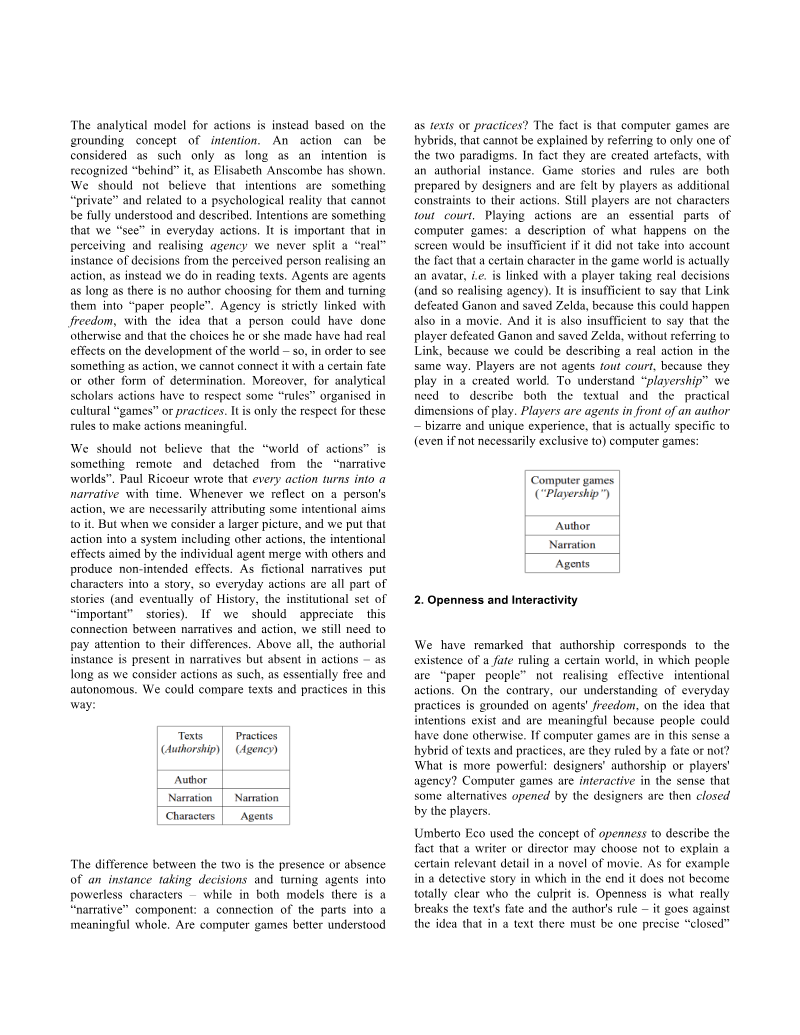
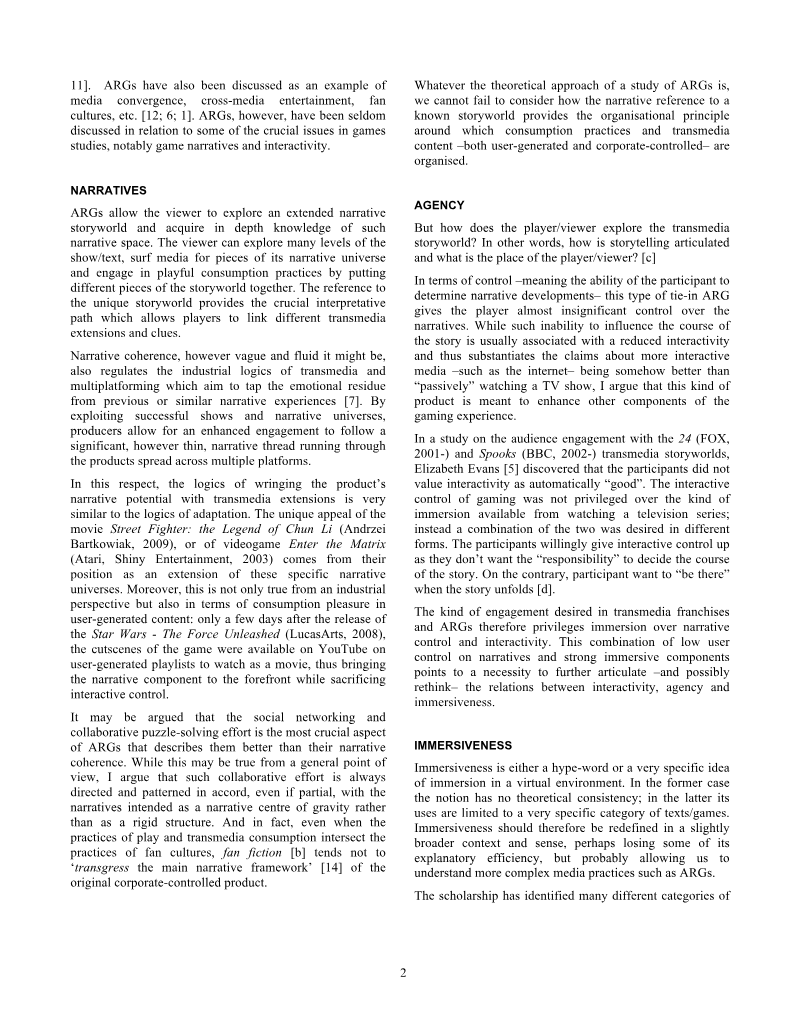
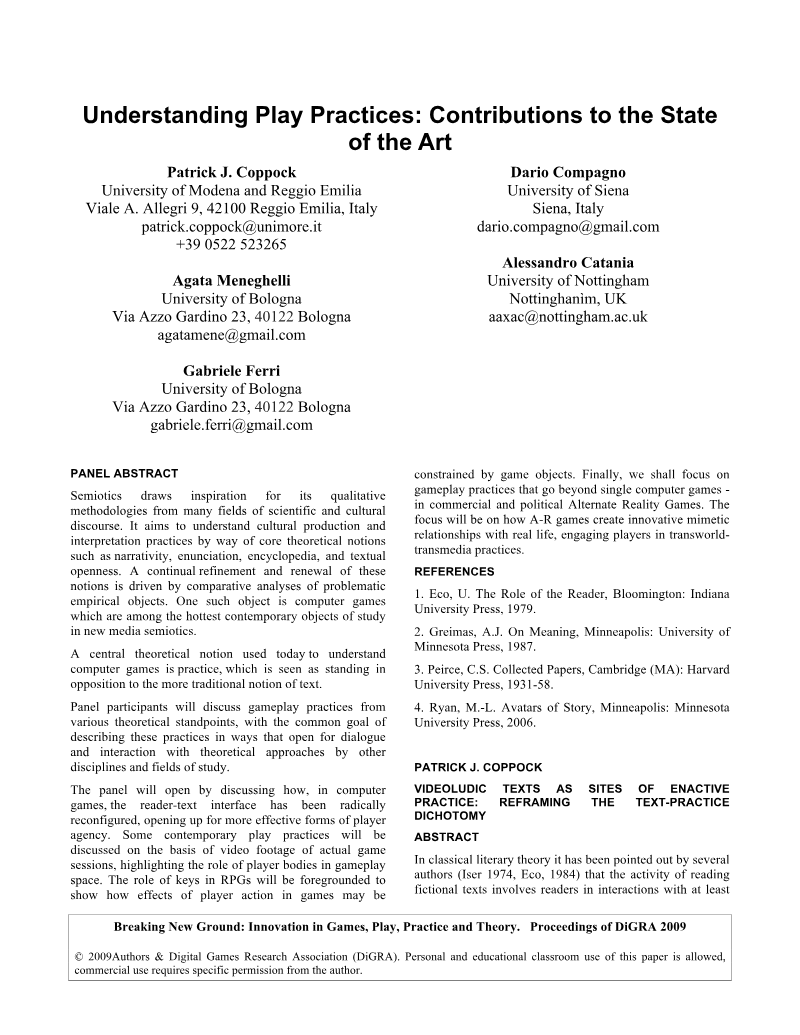
Understanding Play Practices: Contributions to the State of the Art
The collection "Understanding Play Practices" argues that computer games and related play forms should be understood as hybrids of text and practice, in which authored structures meet the genuine agency of players.
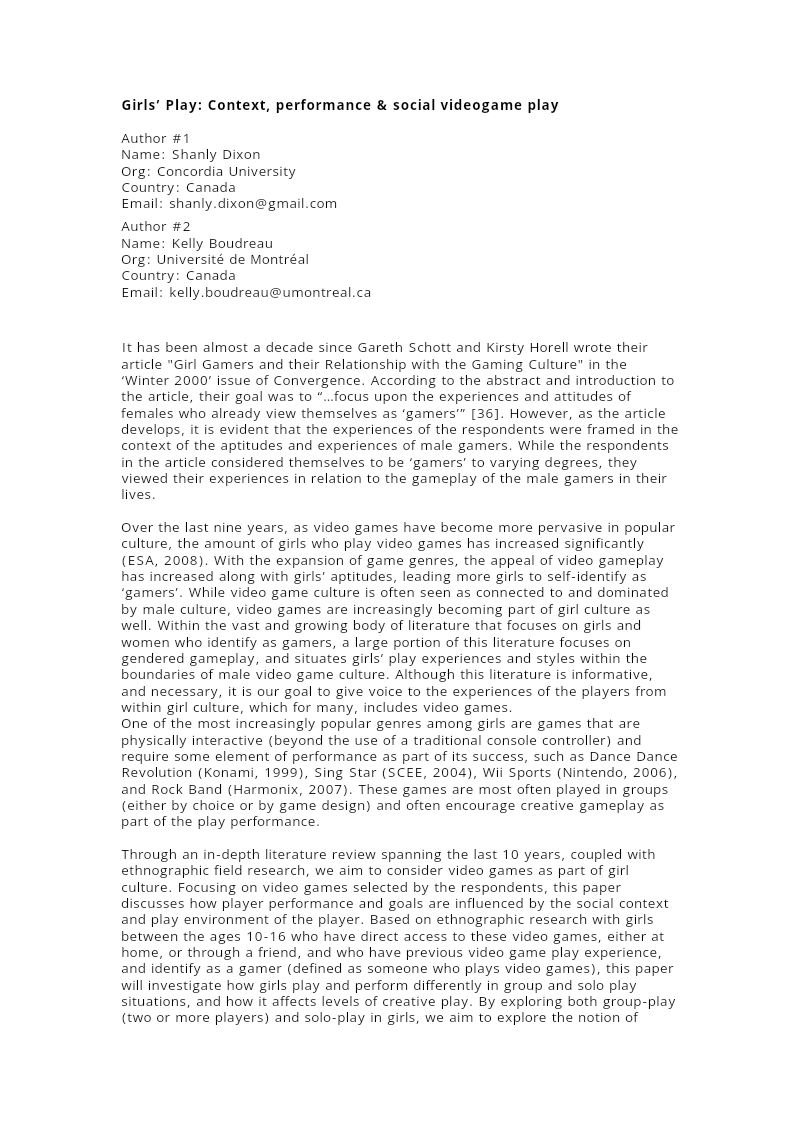
Girls' Play: Context, Performance & Social Videogame Play
This paper examines how girls aged 10 to 16 play video games, with particular attention to how social context shapes performance and creativity.
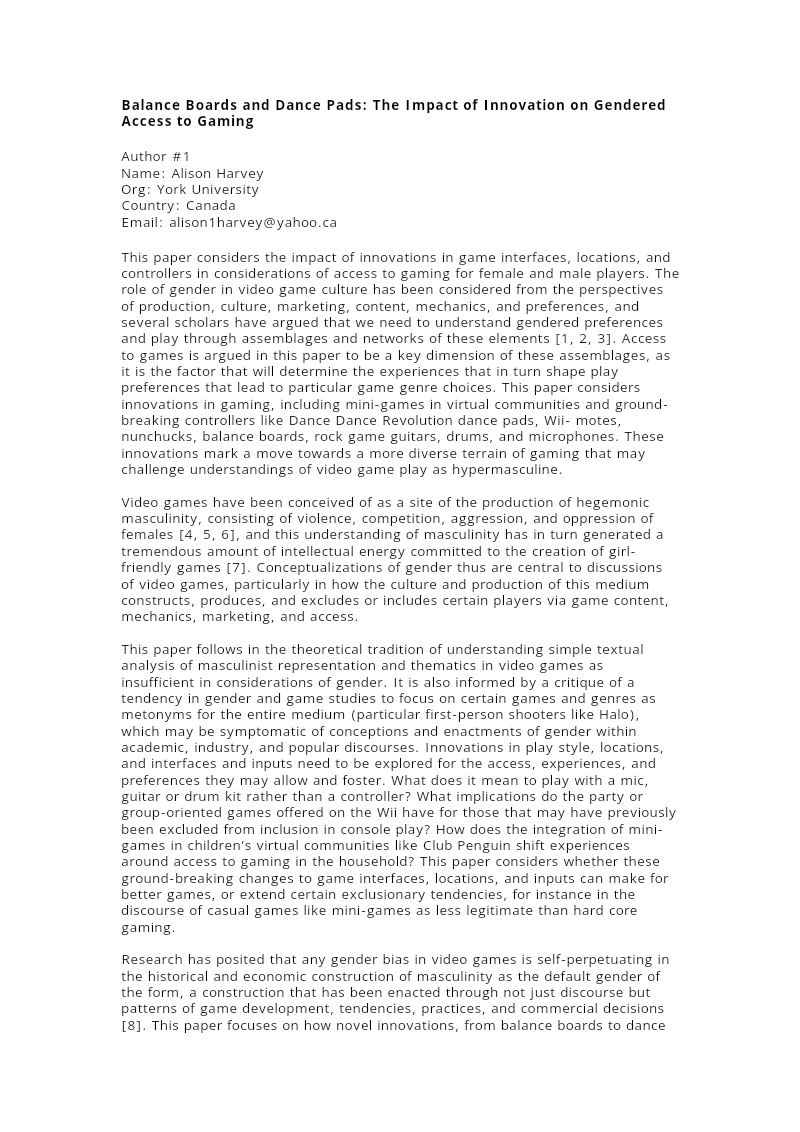
Balance Boards and Dance Pads: The Impact of Innovation on Gendered Access to Gaming
This paper examines how innovations in game interfaces, controllers, and play locations shape gendered access to gaming, arguing that access is a central dimension of the assemblages of production, culture, marketing, content, and mechanics that determine play preferences and genre choices.
- The paper's central thesis is that innovations in input and play location, such as Dance Dance Revolution dance pads, Wii motes, balance boards, instrument controllers, and household mini-games, may shift gaming away from its conception as a hypermasculine activity built around violence and competition.
- The author remains uncertain whether these innovations produce better games or instead reproduce exclusionary tendencies, so the paper frames them as warranting examination rather than as proven inclusive developments.
- The paper treats access as a central dimension of the assemblages of production, culture, marketing, content, and mechanics that shape play preferences and genre choices.
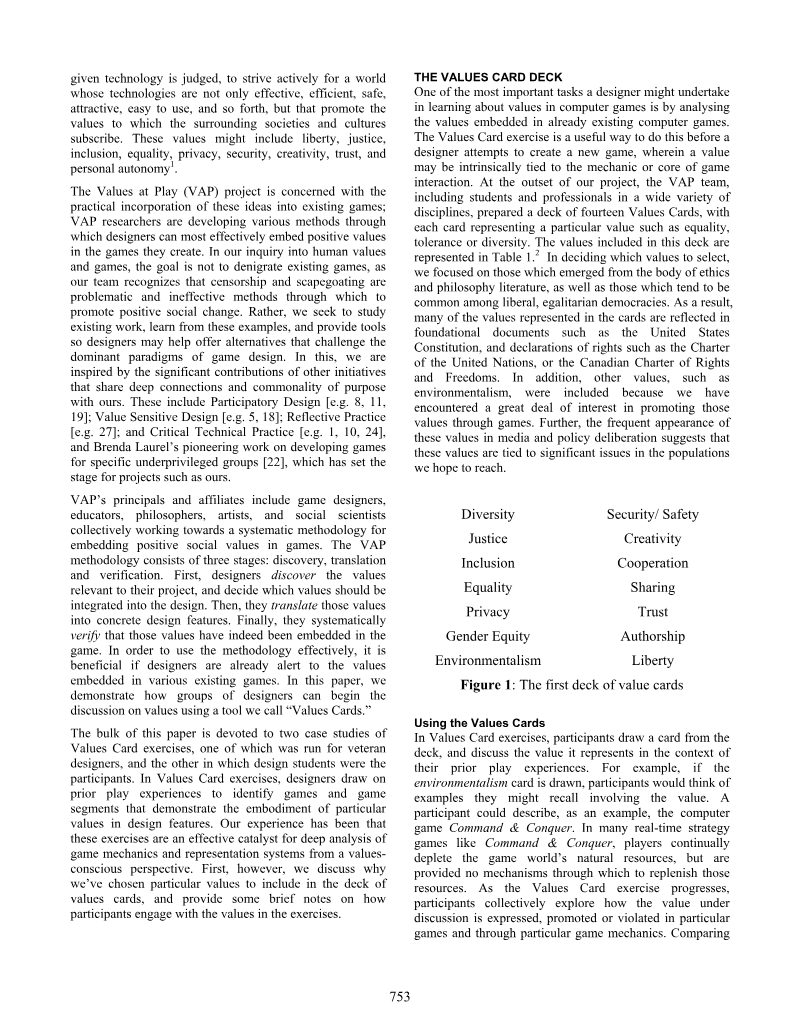
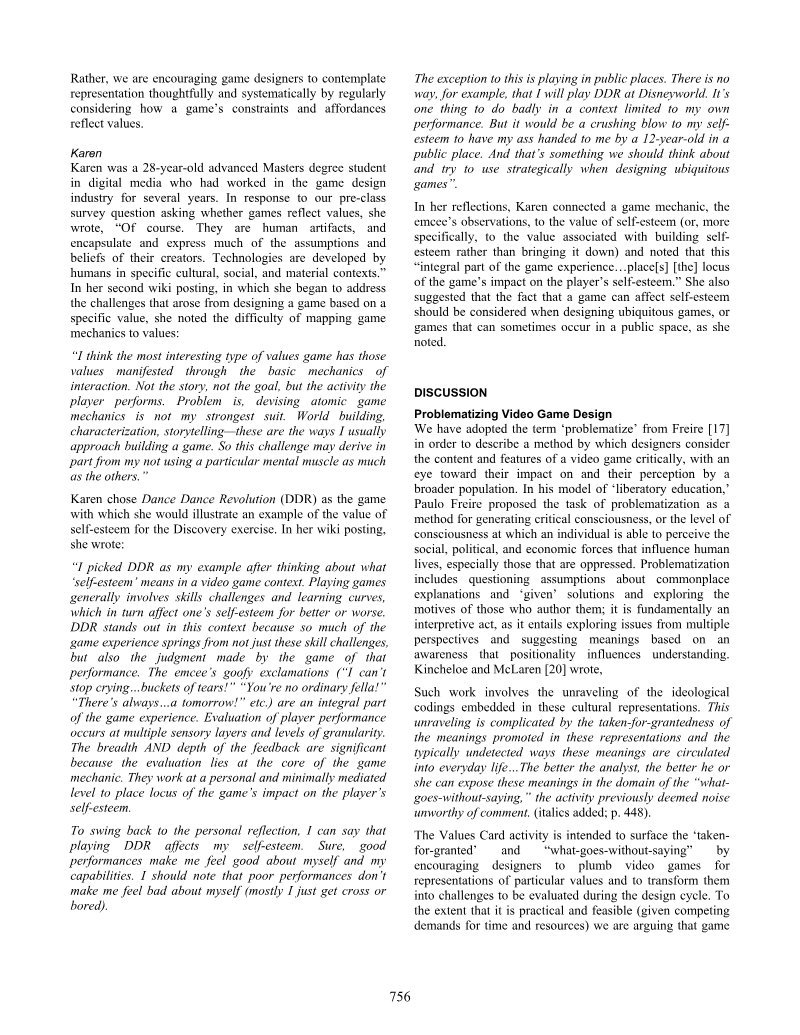
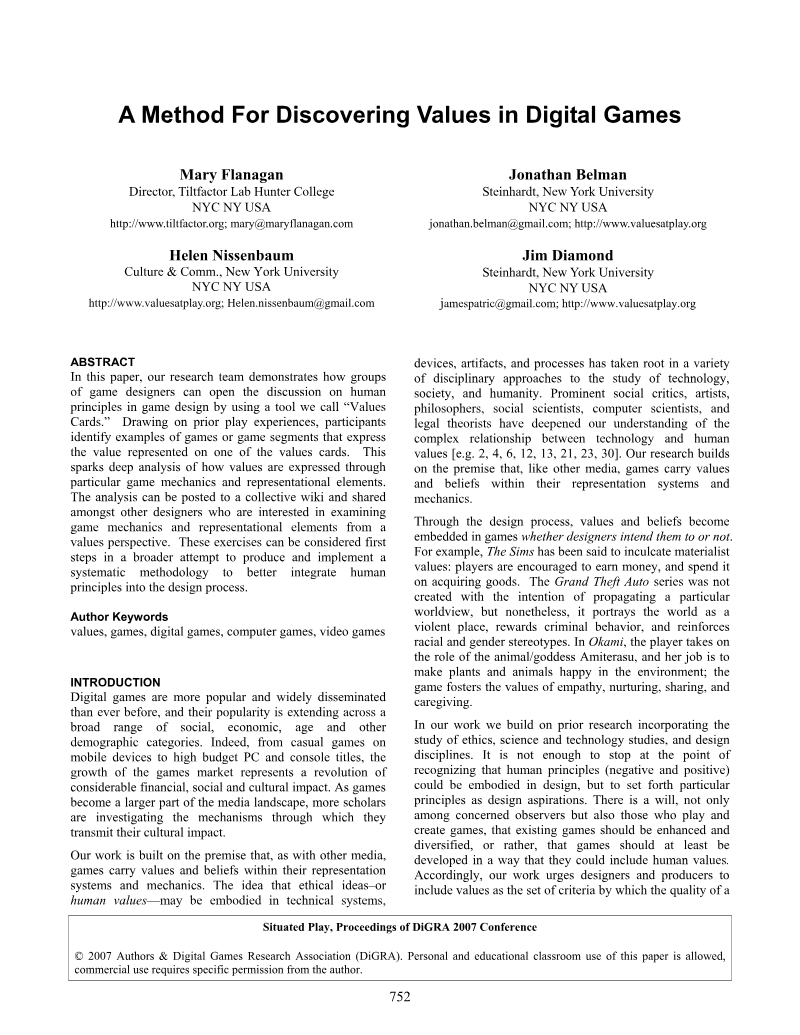
A Method for Discovering Values in Digital Games
"A Method for Discovering Values in Digital Games" presents the Values Cards exercise, a practical tool that helps game designers identify and discuss human values such as equality, justice, generosity, and competition that are embedded in game mechanics, representation, and players' prior experiences.
- Games inevitably embed human values such as equality, justice, generosity, and competition, in their mechanics, representation, and the prior experiences players bring, much as other media do.
- The Values Cards exercise is presented as a practical tool that lets game designers identify and discuss these embedded values, and it is positioned as the first step in the broader Values at Play methodology of discovery, translation, and verification.
- Designers can gain conscious control over the values their games convey by examining both the positive and negative expressions of those values.
The Effects of a Consumer-Oriented Multimedia Game on the Reading Disorders of Children with ADHD
This study examines whether Dance Dance Revolution (DDR), a consumer entertainment game, can improve reading impairments in sixth-grade students diagnosed with ADHD.
- A test-retest study of 62 sixth-grade students with ADHD and reading impairments, drawn from four West Virginia and neighboring-state middle schools between 2002 and 2004, tested whether Dance Dance Revolution could improve reading skills.
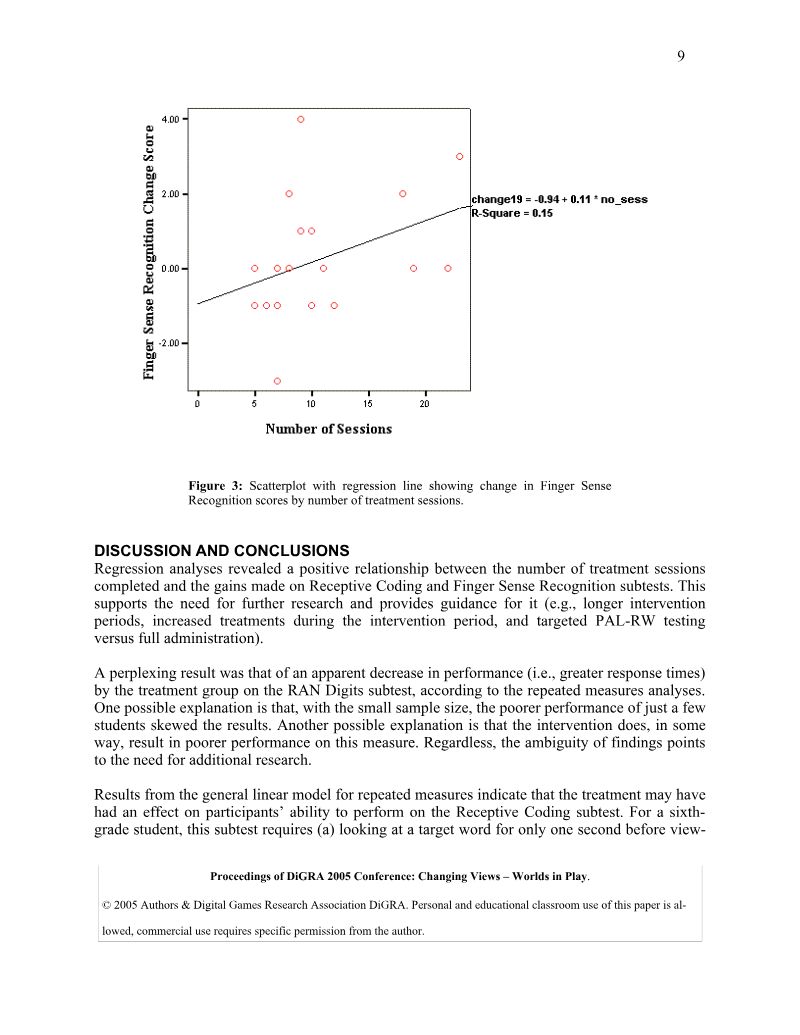
- Results were modest: of 24 PAL-RW subtests, the DDR treatment group showed only slightly larger gains than controls on RAN Digits and Receptive Coding, with small effect sizes.
- The RAN Digits result was ambiguous, with some evidence that treatment participants performed worse on that measure.