Combat
Game
Documents about Combat
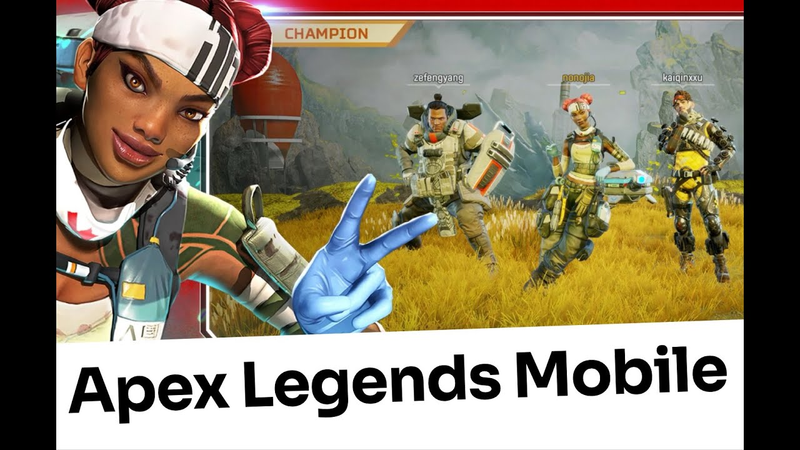
Apex Legends Mobile footage from mobilegamer.biz. Captured from the Australian soft launch build.
Apex Legends Mobile successfully translates the core mechanics and high-intensity gameplay of the original battle royale title to mobile platforms.
- Apex Legends Mobile successfully replicates the core battle royale mechanics of the original franchise, including squad-based dynamics, the tactical ping system, and high-intensity combat.
- The mobile build maintains consistency with console and PC versions by utilizing identical loot rarity systems, such as level four sniper magazines and level three body shields.
- Gameplay remains centered on familiar resource management loops, requiring players to navigate shrinking zones while utilizing shield batteries and armor upgrades.
Master of the Katana: Melee Combat in 'Ghost of Tsushima'
The development of Ghost of Tsushima centers on the realization of a precise, skill-based samurai fantasy that prioritizes player discipline and fluid combat.
- Ensure the most effective way to play the game is also the most enjoyable, as players will resent being forced into either ineffective fun or effective drudgery.
- Front-load the best ideas and mechanics in the first 15 to 60 minutes of the game, because if the initial experience is not compelling, players will not reach the end.
- Use 'carrots' instead of 'sticks' to encourage variety; rather than nerfing overused abilities, incentivize the use of underused ones to improve player engagement and satisfaction scores.
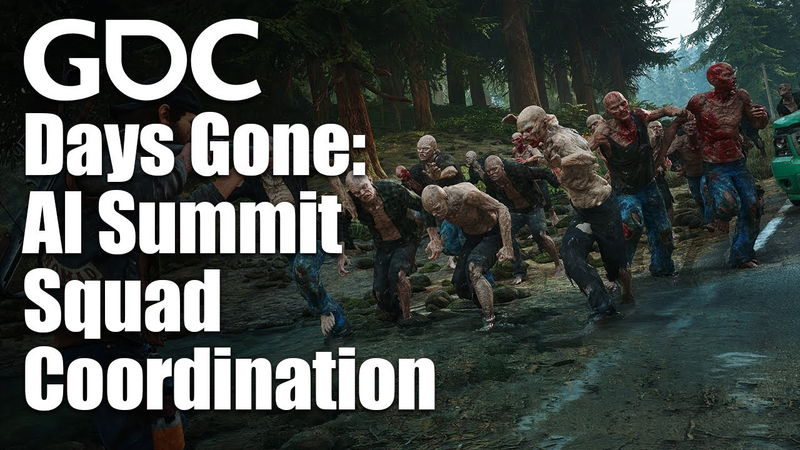
Squad Coordination in 'Days Gone'
Combat believability in Days Gone is achieved through a systemic, squad-based artificial intelligence model that replaces traditional scripted encounters with dynamic, role-based coordination.
- Sony Bend Studio implemented a 'frontline' system in Days Gone that defines the spatial relationship between a squad and its enemies, using a sliding window average to stabilize combat movement and ensure squad members maintain clear lines of fire.
- The AI uses a behavior hierarchy where high-priority reactive tasks, such as avoiding grenades, override assigned combat roles, while low-priority behaviors are suppressed when a valid role is active.
- Squad members are assigned to specific lanes along the frontline to minimize movement, prevent collision, and ensure optimal positioning relative to both the enemy and fellow squad members.
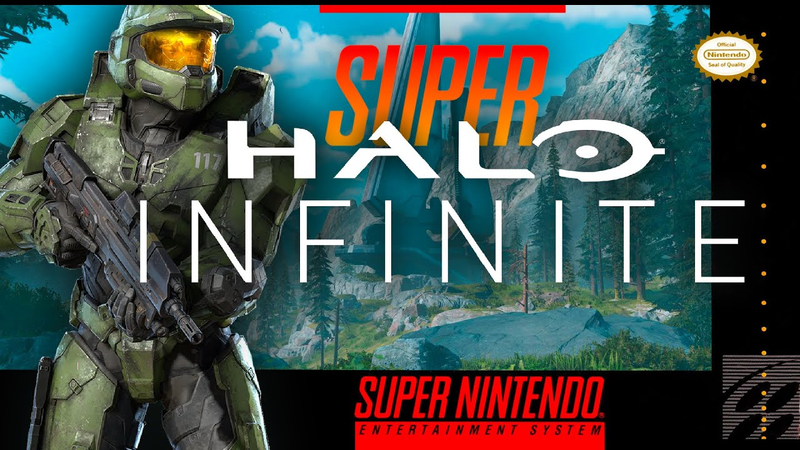
I Made Halo Infinite ... but 2D (PIXEL ART & GAMEPLAY)
The process of translating a high-fidelity 3D title like Halo Infinite into a 2D pixel art format relies on specific technical strategies to maintain visual depth and atmospheric consistency.
- Atmospheric depth in 2D environments is achieved by applying a color gradient that transitions from lighter, desaturated hues in the distance to darker, more saturated tones in the foreground.
- Modular asset design allows for complex level creation by using tiling sprites for backgrounds and reusable components for foreground elements like terrain and debris.
- Real-world references for textures and shapes are essential for enhancing the realism of pixel art and maintaining high visual fidelity.
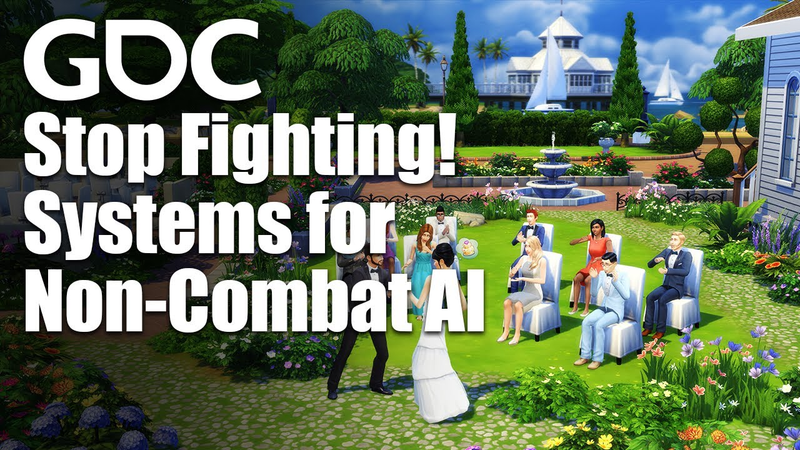
Stop Fighting! Systems for Non-Combat AI
The primary objective of this analysis is to provide a framework for developing immersive, non-combat artificial intelligence in video games.
- Utility theory is the most effective foundation for non-combat AI, using weighted utility curves to drive decisions based on NPC needs, personality traits, and environmental context.
- Controlled randomness must be integrated into utility-based decision-making to generate emergent, organic behaviors that avoid repetitive, deterministic loops.
- Relationship systems, where NPCs maintain distinct feelings toward other characters and objects, are essential for creating social depth and driving non-combat conflict.
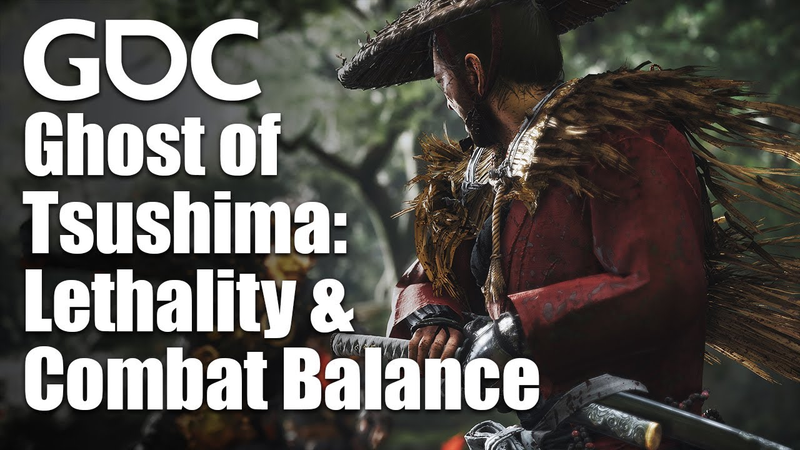
Honoring the Blade: Lethality and Combat Balance in 'Ghost of Tsushima'
The primary objective in the development of Ghost of Tsushima was to reconcile the mechanical requirements of a 30-hour open-world action game with the core samurai fantasy of lethal, high-speed sword combat.
- To maintain the 'samurai fantasy' of lethal blade combat, Sucker Punch limited the number of hits required to kill enemies, keeping the engagement window short even as players progressed through 30 hours of open-world gameplay.
- The team avoided traditional RPG-style level scaling—which often relies on artificial health bars and 'skull' indicators—because it undermined the grounded, realistic nature of the game's combat.
- Developers implemented a stagger meter system to force offensive play, allowing players to break enemy defenses using specific stances rather than relying solely on parrying, which had become a repetitive, dominant strategy.
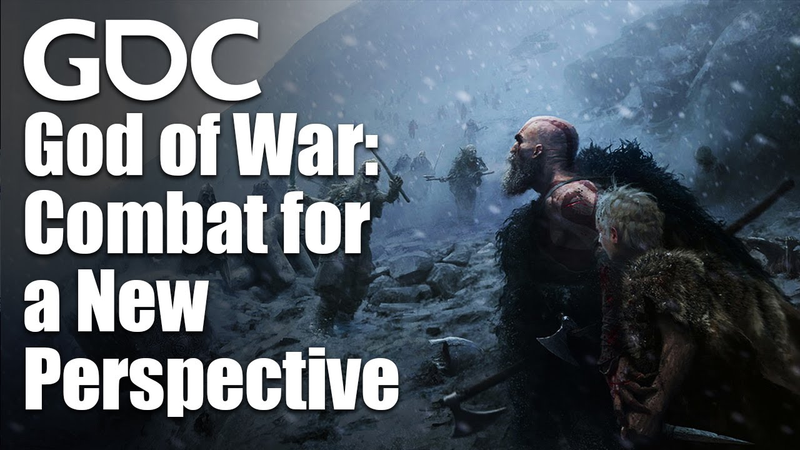
Evolving Combat in 'God of War' for a New Perspective
The transition of the God of War franchise to an intimate, over-the-shoulder camera perspective necessitated a complete overhaul of combat mechanics to preserve the series' signature offensive power fantasy.
- To maintain an offensive power fantasy with a restricted over-the-shoulder camera, developers implemented a data-driven zone constraint model that forces enemies into a predictable crescent-shaped area in front of the player.
- An aggression token system limits the number of active threats simultaneously engaging the player, preventing them from being overwhelmed by off-screen enemies.
- Combat fluidity is maintained through a hybrid targeting approach that combines analog stick input with motion warping, removing the necessity for traditional lock-on mechanics.
A Dark Mind: The AI of ""The Dark"" in BELOW
The development of the tentacle-based entity known as The Dark in the game BELOW centers on achieving a balance between fluid, animalistic movement and structured, readable combat mechanics.
- Capy Games developed 'The Dark' for the game BELOW using a 30-bone mesh tentacle system that combines bespoke squirmy idle animations with a kinematic chain controlled by an inverse kinematic (IK) tip target.
- To solve issues with poor animation blending caused by complex kinematic states, the team implemented a shape-casting system that rotates around a target to find unobstructed goal positions for the tentacle tips.
- The team transitioned from a rigid, order-of-execution rule system to a flat scoring-based architecture, allowing for configurable weights that make it easier to balance competing behaviors like avoiding the player versus hiding the tentacle base.
When Trainers' Eyes Meet: Creating Real Time Combat for Pokemon GO
The introduction of real-time combat to Pokémon GO serves as a strategic initiative to bolster player retention and re-engage lapsed users by transitioning from traditional turn-based mechanics to a faster, more interactive system.
- The transition to real-time combat was a strategic move to increase player retention and re-engage lapsed users by shifting away from traditional turn-based mechanics.
- Developers balanced accessibility and competitive depth by combining simple tap-to-attack controls with tactical features like protect shields and secondary move slots.
- To mitigate pay-to-win concerns and ensure competitive integrity, the game utilizes tiered battle leagues (Great, Ultra, and Master) defined by specific combat power caps.
Marvel's Spider-Man AI Postmortem
The development of Marvel’s Spider-Man necessitated a fundamental shift in artificial intelligence architecture to manage the complexity of 64 distinct enemy classes within an open-world environment.
- Insomniac Games utilized a data-driven approach for combat AI, where designers configured complex move sets and combos through data files rather than directly editing behavior trees or finite state machines.
- To prevent combat from feeling stagnant, the team implemented an 'intensity meter' that tracks enemy aggression and triggers special attack sequences or simultaneous strikes when the meter fills.
- The AI combat system manages enemy positioning using a 'hill climber' algorithm that iteratively pushes potential bot locations radially outward to maintain optimal spacing and keep enemies on the navigation mesh.
Middle-earth: Shadow of War: Creating Multi-Character Combat Animations
The development of Middle-earth: Shadow of War centered on the implementation of complex, multi-character combat animations to establish a visceral and brutal aesthetic.
- Monolith Productions managed a high-volume animation pipeline for Middle-earth: Shadow of War by producing 1,200 unique sync-action animations between the player and orcs within a three-year development window.
- To maintain production efficiency, the team utilized a motion capture-first workflow where in-house animators performed the stunts, allowing for rapid iteration and immediate feedback from designers on-site.
- The studio employed a 'destructive' animation workflow that prioritized baking keys and layering poses over traditional non-destructive rigging, enabling animators to quickly adjust timing and weight without getting precious about curve handles.
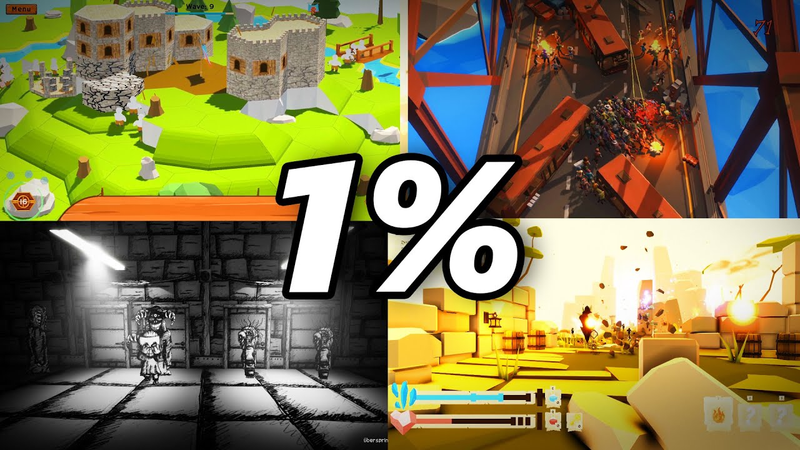
I Played 1% of Your Games (My Feedback)
Indie game development often falters when creators prioritize visual aesthetics over the fundamental clarity of player experience.
- Prioritize intuitive player experience and clear onboarding over visual aesthetics, as poor communication of core mechanics leads directly to user disengagement.
- Combat systems require strategic depth through diverse enemy types and faster movement mechanics to avoid the stagnation caused by repetitive, low-stakes encounters.
- Meaningful progression systems, such as unlockable abilities, are essential to transition gameplay from passive interaction to a dynamic loop that rewards player skill.
Companies behind it

As the documents state it.