Astroneer
Game
12 documents in the library are about Astroneer, from writers such as Devolver Digital, GameDiscoverCo and Game Developers Conference. Each has a summary and key insights with the page they come from.
Connections
Each row is a game or company named alongside Astroneer, each column a document, oldest first. A mark means that document names it. Select a row to see those documents.
Astroneer sales and key figures
Astroneer reached 8 million total players as of early 2022, doubling its 4 million unit sales through strategic inclusion in subscription services like Xbox Game Pass.
GameDiscoverCo, 2022 · Deep Dive: How Astroneer Made It to 8 Million Players
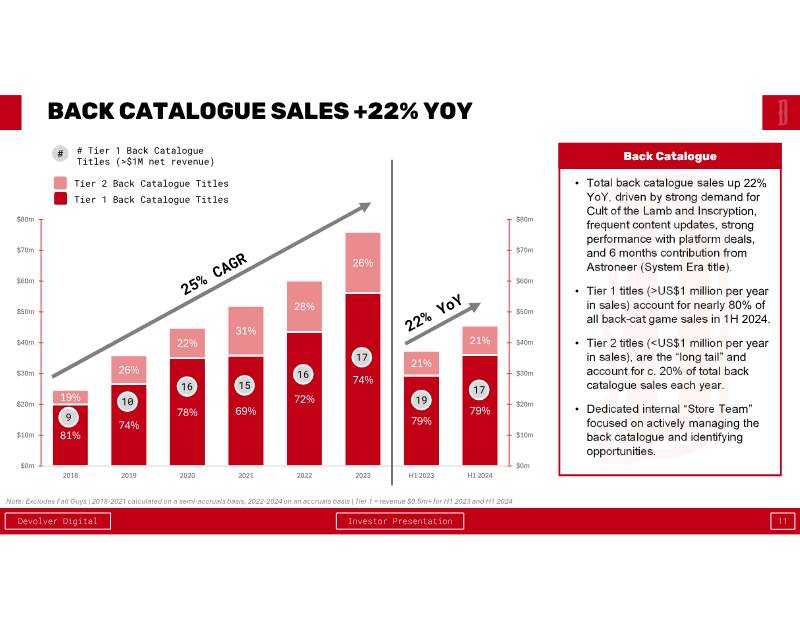
The company’s back catalogue is the primary revenue driver, accounting for 89% of total 1H 2024 revenue through sustained performance of titles like Astroneer, Cult of the Lamb, and Inscryption.
Devolver Digital, 2024 · Devolver Digital 2024 1H Investor Presentation, p. 11
System Era’s flagship title, Astroneer, has reached over 13 million players and generated more than $87 million in lifetime revenue since its 2016 launch.
Game World Observer, 2023 · Devolver Digital Acquires System Era Softworks
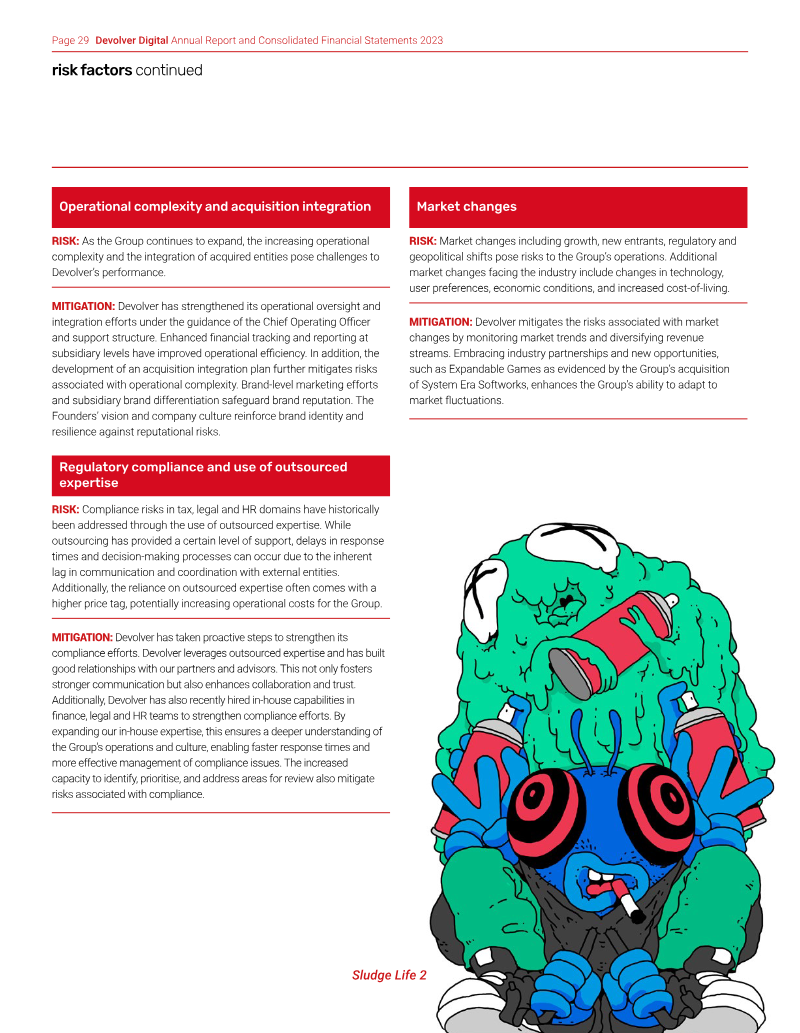
Devolver Digital acquired System Era Softworks, the developer of Astroneer, for $40 million to support a strategic shift toward 'Expandable Games' with sustained post-release engagement.
Devolver Digital, 2024 · Devolver Digital: Annual Report and Consolidated Financial Statements 2023, p. 7
Documents about Astroneer


Devolver Digital 2025 Investor Presentation
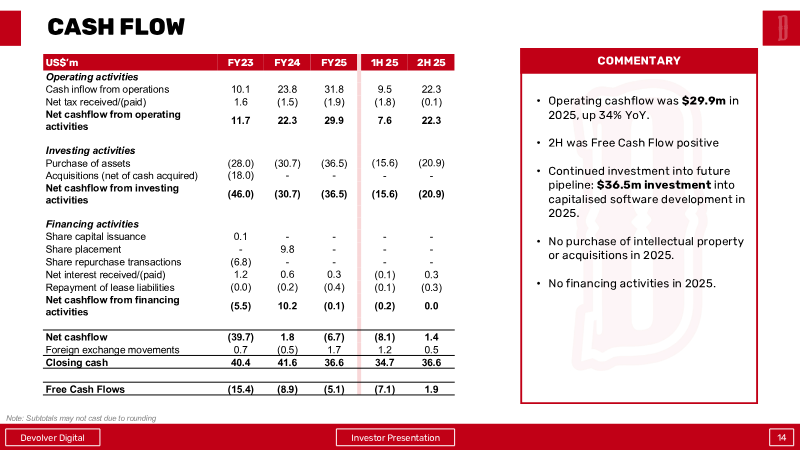
Devolver Digital achieved robust financial growth throughout 2025, characterized by a 39% increase in Adjusted EBITDA and a successful transition to positive free cash flow during the second half of the year.
- Devolver Digital achieved a 39% increase in Adjusted EBITDA in 2025 and transitioned to positive free cash flow in the second half of the year.
- The company maintains a stable cash position of US$36.6 million to support its strategy of high-quality indie releases and IP portfolio management.
- The 2026 release pipeline is anchored by five major first-party titles, including new entries in the Serious Sam series and Astroneer Expeditions.

How Games Do Destruction
Real-time, gameplay-driven destruction is difficult because it must handle unpredictable physics, particles, and debris without wrecking frame rate or memory budgets.
- Modern game design is shifting from pre-canned animations to real-time, procedural destruction to enhance player agency, allowing for emergent gameplay like creating new paths or altering tactical lines of sight.
- Developers balance performance constraints by using asset swapping, as seen in Control and Battlefield: Bad Company 2, or real-time mesh slicing, utilized in Astro Bot and Rainbow Six: Siege.
- High-fidelity, free-form destruction is achieved through voxel-based systems, such as those in Teardown, which treat environments as clusters of independently removable blocks.
Crafty-Buildy-Strategy-Simulationy-Games: A PC Market Overview
The PC gaming market is defined by a specific meta-genre categorized as crafty-buildy-strategy-simulation games.
- The 'crafty-buildy-strategy-simulation' meta-genre is a dominant force on the PC marketplace, often contrasting with the narrative and platforming-heavy history of console-native indie developers.
- Indie developers struggling with sales for traditional console genres should consider pivoting their existing engines toward deep, procedurally generated environments that emphasize resource collection and base building.
- Strategy games that rely on maps and menus are a viable alternative for developers lacking high-end artistic resources, as strategy players are generally more forgiving of graphical simplicity than those of other genres.


Devolver Digital 2024 1H Investor Presentation
Devolver Digital’s 2024 first-half investor presentation details a return to EBITDA profitability, marking a successful turnaround from the losses recorded in the same period of 2023.
- Devolver Digital returned to EBITDA profitability in 1H 2024, reporting $51.6 million in revenue—an 18% year-over-year increase—and a 63% improvement in adjusted gross profit to $15.3 million.
- The company’s back catalogue is the primary revenue driver, accounting for 89% of total 1H 2024 revenue through sustained performance of titles like Astroneer, Cult of the Lamb, and Inscryption.
- The acquisition of System Era Softworks in 2H 2023 was successfully integrated, contributing to financial performance while the company maintained disciplined expense management, with operating costs rising only 8%.

Devolver Digital: Annual Report and Consolidated Financial Statements 2023
Devolver Digital’s 2023 fiscal year was defined by a strategic transition toward long-term stability and portfolio diversification, despite a 31% decline in annual revenue to $92.4 million.
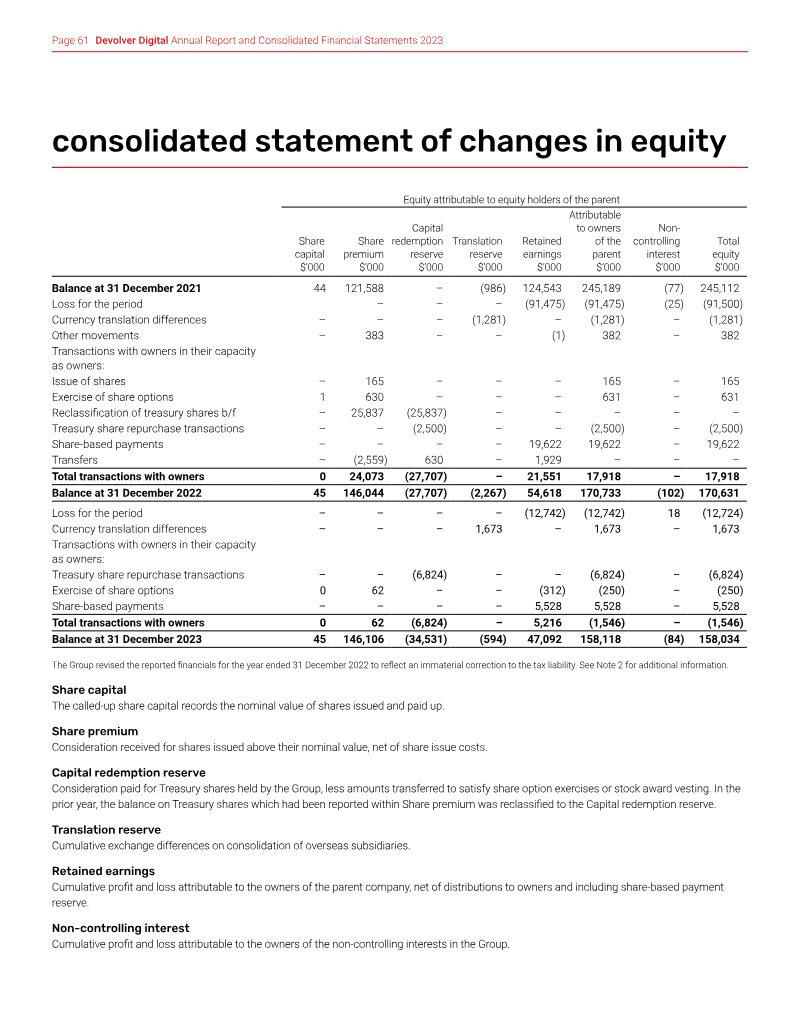
- Devolver Digital narrowed its statutory net loss to $12.7 million in 2023, a significant improvement from the $91.5 million loss reported in 2022.
- Annual revenue declined 31% to $92.4 million, primarily due to a reduced release schedule of three major titles compared to five in the previous year.
- The company’s back catalogue grew by 25% and generated 83% of total 2023 revenue, highlighting the long-term profitability of its premium indie portfolio.
Plus: Zenith's Surprising VR Steam Hit, Dying Light 2's Debut & More
This analysis examines the performance of PC and console titles during late January 2022, focusing on sales trends across Steam, Epic Games Store, Nintendo Switch, and Xbox.
- The VR MMO Zenith: The Last City achieved top-grossing status on Steam, highlighting a significant commercial breakout for the VR sector.
- Meta Quest 2 headsets account for 40% of the Steam VR user base, serving as a primary driver for VR platform engagement.
- Dying Light 2 entered its launch window with over two million Steam wishlists, cementing its position as a dominant AAA performer alongside Elden Ring and Total War: Warhammer III.
Devolver Digital Acquires System Era Softworks
Devolver Digital has expanded its portfolio by acquiring System Era Softworks, marking the studio as the publisher’s seventh subsidiary.
- Devolver Digital has acquired System Era Softworks for an initial $22 million, with a total potential valuation of up to $40 million paid in cash and shares.
- The acquisition aims to diversify Devolver Digital’s portfolio by adding System Era’s expertise in live operations and long-term, expandable game development.
- System Era’s flagship title, Astroneer, has reached over 13 million players and generated more than $87 million in lifetime revenue since its 2016 launch.
What Do Devolver's Results Tell Us About Game Discovery in 2025?
The 2023 financial results for Devolver Digital provide a critical look at the challenges facing indie publishers in a post-pandemic market characterized by high interest rates and shifting consumer discovery patterns.
- Devolver Digital reported a 31% revenue decline to $92 million and a $12.6 million net loss in 2023, highlighting the volatility of the premium indie market for public companies.
- Back-catalog titles accounted for 83% of total revenue in 2023, as the company failed to produce a new release that surpassed the $12 million gross threshold on Steam.
- Revenue from subscription deals fell by 50% to $15 million, reflecting a cooling market for upfront platform payments from companies like Sony and Microsoft.
Deep Dive: How Astroneer Made It to 8 Million Players
This analysis examines the commercial trajectory and performance metrics of the space sandbox adventure Astroneer, specifically focusing on its transition from Early Access to a mature "games as a service" model.
- Astroneer reached 8 million total players as of early 2022, doubling its 4 million unit sales through strategic inclusion in subscription services like Xbox Game Pass.
- The game generated $75.7 million in lifetime gross revenue by early 2022, with Steam accounting for 70% of total sales despite Xbox holding 68% of the unique player base.
- System Era Softworks sustained long-term engagement through regular free content updates, supplemented by $2.7 million in lifetime revenue from optional cosmetic microtransactions.
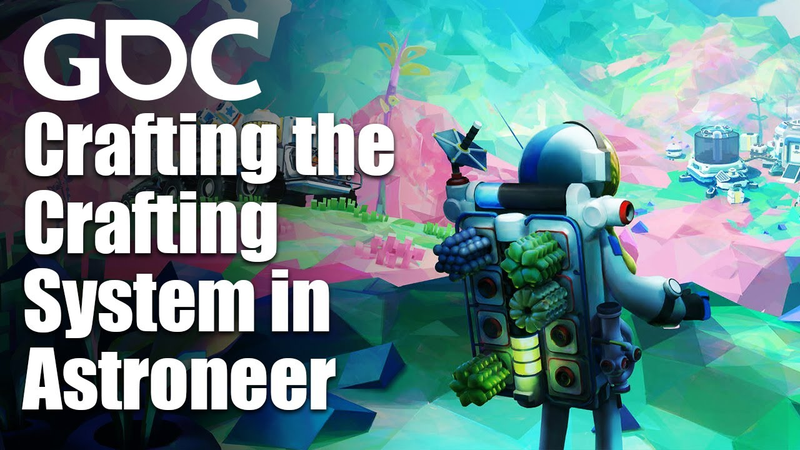
Mining Your Own Design: Crafting the Crafting System in Astroneer
The crafting system in Astroneer underwent a comprehensive structural overhaul to address declining player engagement caused by a repetitive core loop and a lack of meaningful progression.
- To avoid design paralysis in live games, treat existing systems like an archaeological dig to uncover the core intent behind original features rather than just iterating on surface-level mechanics.
- When team members have conflicting visions, explicitly map out specific subsets of the system to identify if the disagreement stems from different focuses, such as moment-to-moment tactile interaction versus long-term systemic complexity.
- Use the 'What’s This For' (WTF) thought exercise to strip away entrenched assumptions and clarify the ultimate goal of a feature, such as identifying that a module was intended as a resource sink rather than a resource generator.
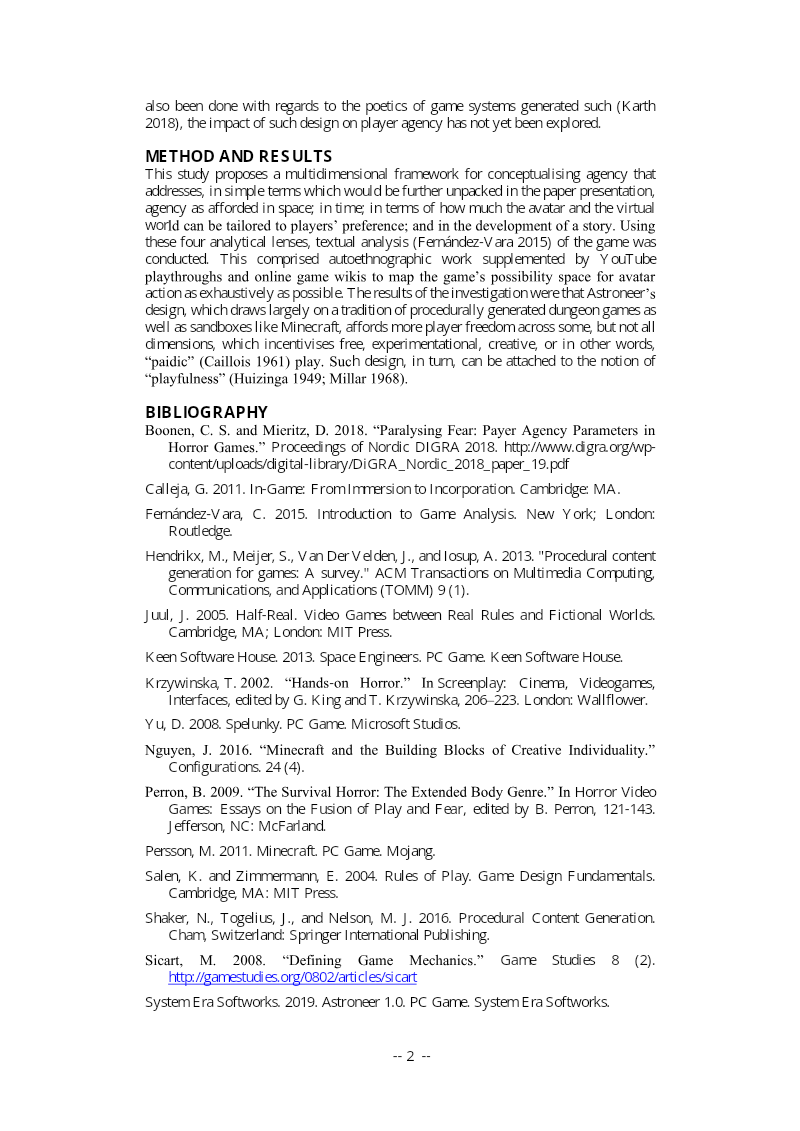

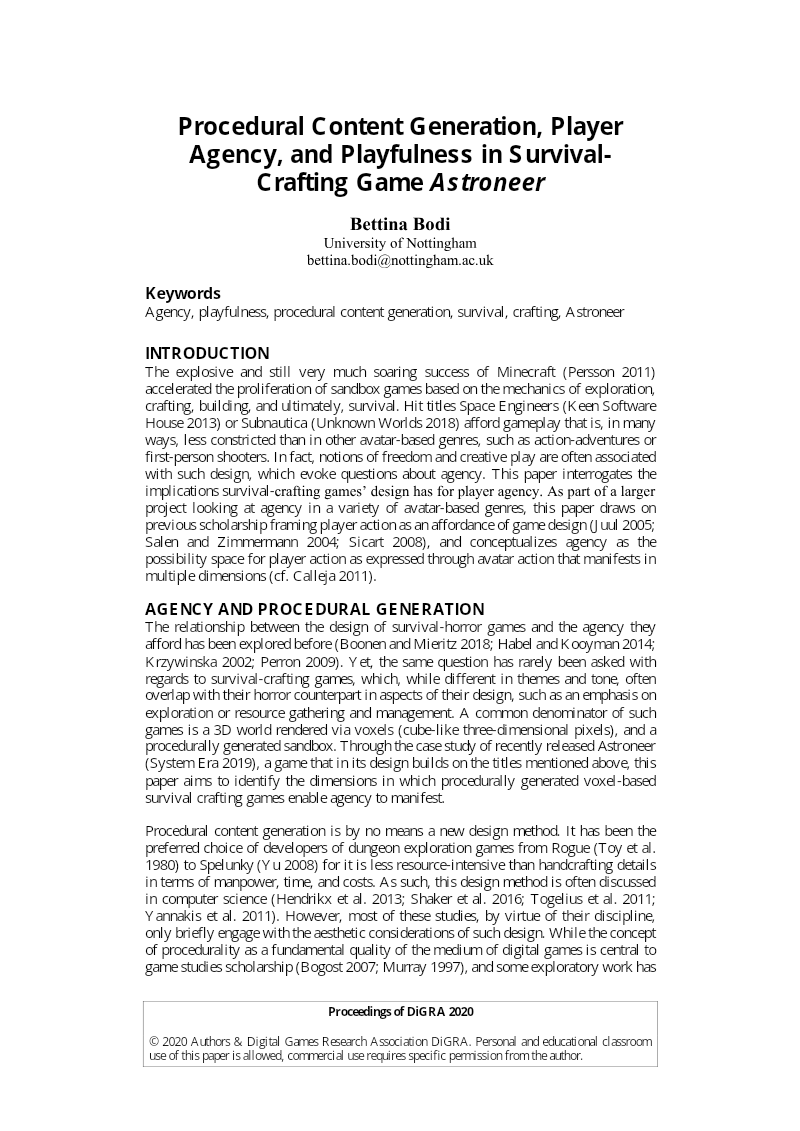
Procedural Content Generation, Player Agency, and Playfulness in Survival-Crafting Game Astroneer
This paper examines how the design of survival-crafting games shapes player agency, using the procedurally generated voxel-based game Astroneer as a case study.
- The paper argues that agency in avatar-based games is multidimensional, and proposes a four-lens framework covering agency afforded in space, in time, in the degree of tailoring of the avatar and world to player preference, and in story development.
- The principal finding is that Astroneer, which blends the procedurally generated dungeon tradition with Minecraft's sandbox model, affords greater player freedom in some of the four agency dimensions but not all of them.
- Procedural content generation is presented as a long-established design method valued for being less resource-intensive than handcrafting, while its aesthetic and agency implications have received only brief treatment in computer science and game studies.
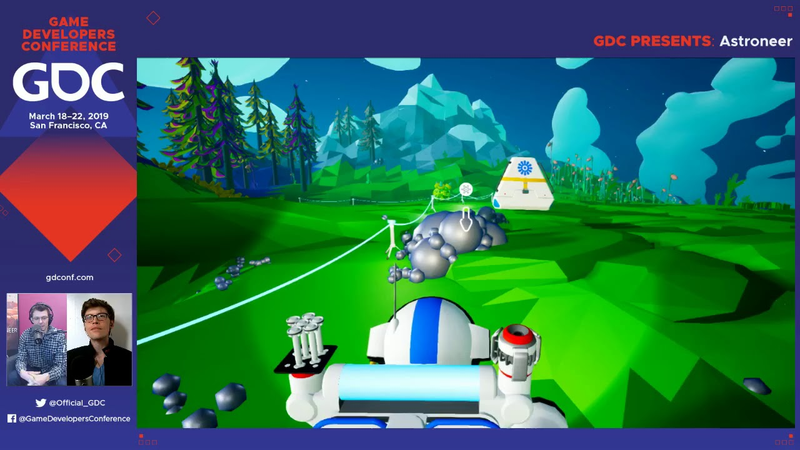
GDC plays Astroneer with System Era's Brendan Wilson
The development of Astroneer serves as a case study in the complexities of managing a long-term Early Access project.
- System Era scaled its development team from an initial cap of 10 people to 21 employees to meet the technical and support demands of the game's 1.0 release.
- The game utilizes a voxel-based terrain system powered by the marching cubes algorithm, which allows for real-time deformation by modifying density data within specific chunks rather than rebuilding the entire planet's mesh.
- Managing an Early Access title requires the same rigorous certification, store presence, and publishing infrastructure as a fully released game, while simultaneously balancing community expectations for features.