1 free read left. Create a free account for unlimited reading + AI research.
Create free account
What's the state of VR gaming in 2016 and beyond
Key insights
7 takeaways- 01The 2016 VR market is transitioning from experimental technology to a viable gaming platform, despite initial hardware launches missing aggressive sales projections.
- 02The hardware landscape is currently split between high-end, performance-driven devices like the HTC Vive and more accessible mobile solutions such as the Gear VR.
- 03PlayStation VR is positioned as a potential market leader due to its plug-and-play functionality and support for asynchronous local multiplayer.
- 04The Chinese market offers significant scale for VR, but requires navigating complex local partnerships and technical fragmentation.
- 05The industry is shifting toward a model where VR functions as a standalone ecosystem rather than a mere peripheral, with a focus on social connectivity and professional productivity.
- 06Long-term industry viability depends on expanding VR applications beyond gaming into high-impact sectors like medical training, journalism, and therapeutic use.
- 07While exclusivity agreements currently provide necessary financial buffers for developers, the industry must move toward cross-platform accessibility to ensure sustained growth.
Ask AI about this video
Transcript
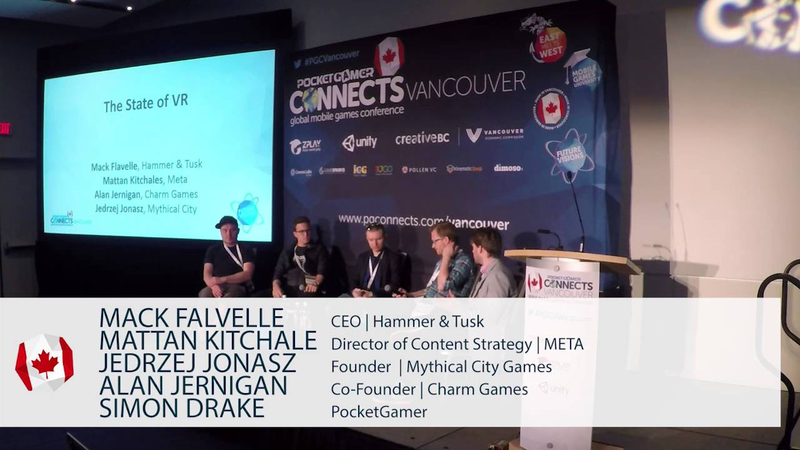
at this point we're going to move to our final panel and talk and everything of the day so I'm actually going to be moderating this one so I think at this point I'm going to introduce my panel to the stage and I let them introduce themselves when they're up here but they're some of them you've met already and then we'll get started the panel is going to be basically it's entitled the state of VR we're going to be looking at the present and what also the future holds for virtual reality so we've got a mic here we've all got a mic great so when i'll start with myself just in case you know for people who are new here my name's Simon Drake I'm the developer relations manager at Pocket Gamer and steel media I lead a lot of the virtual reality stuff that we're moving into at the moment such as the global VR challenge and so I've spent a lot of time with virtual reality and then i'll let the guys introduce themselves now hi
everybody I'm Alan Jernigan I'm the managing director at charm games we make be our puzzle games and I promise that I'm not up here sweating because I'm nervous about the future of ER hi there my name is JJ from mythical city games and which is a vancouver-based game studio hi my name is matança chalice they run content strategy for meta we're based in redwood city Silicon Valley my name is macaroon hammerin tusk we started out as a VR newsletter we stumbled into making V our product it's going really well super exciting great okay well I think to begin we'll start with what is an easy question to say but the answer might not be as easy so obviously 2016 has been posed by the entire industry myself included as sort of the year of VR so I supposed to start we're just wondering how do you think it's going you know the how do you think the year Revere is faring at the moment take it away of your folks hey
so what I think the goal of 2016 was to build up the hype for 2017 2018 that's that's how I've always taken it from the beginning and a lot of people have said that there's more to it than that and it's about shipping units early on that I i don't i don't buy into that so it's going great everybody's really excited and 2017-18 are going to be great yeah I agree that 2016 has been fantastic so far as a start for VR one of the things that I'm very excited about is the fact that being in this early into the VR development is it's a great time to explore an experiment and getting a chance to do that is really exciting I feel like that opportunity doesn't come around very often so it's great that we have this set of content creators out there experimenting creating stuff testing things out seeing what works and what doesn't so that for the next few years will be able to develop some sort of standards and really help push the industry forward I think it's been a
great year for VR I mean I'm a VR enthusiast and we have a vibe we have an oculus and now as we play with it a lot I was very I'm very bullish about the vibe this is our main Torah these days in the office that we kind of constantly use and test for different kinds of content I can't wait for the sony vr to come into the market and see what it does what kind of impact that creates for especially for the developer community and also daydream there was lack of content there still is and in addition to those great releases around gaming hope I mean I'm coming from a company whose all focused mainly on productivity and creativity I would love to see in addition to the gaming realm more really usable use cases that I can use on the vibe to create and to learn i think i'm going to play the contrary enroll today i think that's what all we needed so 2016 is 0 vr if you're i mean
why did we call that we called it that because it wasn't 2015 and i would argue that it's not really working out in 2016 either as i don't think it really matters like there's so much money that is flowed into this ecosystem that if it takes an extra year to blow up that's fine who cares the like some of the indie developers are going to starve and die and more will emerge but the platforms are big and real they have budgets last a long time the number of developers on earth are making money today who are feeding the children with their VR development is nearly nil and that's that's that's fine I mean as long as you're not that guy or woman yourself that's you know the ecosystem as a whole will do just fine if I'm a developer in the ecosystem 2016 I'm kind of scratching my head wondering where the party went so I suppose like a small follow-up to that is obviously we've had some and I'm sure I got the impression from the previous questions but it's good to clarify we've had some rocky launches you know especially from oculus and in a vibe has a you know a high financial burden to entry do you think
that's just inevitable that we've had some rocky launches and event you know if the market will keep growing and growing as we go what does rocky launch me I suppose everyone in in my opinion everyone was basically expecting millions of units to be shifted year one real high adoption rates you know we'd seen PlayStation 4 obviously it's a different sphere of gaming but in the console space shift millions and and that hasn't been mirrored I suppose we didn't expect a complete mirroring but it's nowhere near those sorts of numbers I mean again do you think that's to be expected I swear I can talk this whole time I don't think the PlayStation 3 or the xbox one or whatever those are the playstation 4 irrelevant i think what is relevant and shows the ineptitude of the launches is the Wii the Wii was weird the wii was totally new and unheard of and the first time you handed the wii to your uncle the first time you saw we had a core of a party you went home you bought that on amazon and there was technical requirements you did have to
plug the sensor and your TV and your wiimotes did run out of batteries and it was far from trial are from flawless but the way that the weed it'll launch is is unparalleled and sort of like software hard warrior history and we didn't hit those numbers nor should we ever have expected to well I work at a company that is filled with very smart people and it took us three hours with two engineers to set up the vibe that's stupid really like to get to get my mom or my dad to go through that process obviously we're not ready for mainstream if you had three people it would have taken five hours there's a too many cooks problem okay so a disastrous product launch is like a couple of Tesla's catching on fire right like nobody's been killed by a vibe yet so like this is not a disastrous product launch this is just natural in product development right so again there were a lot of outsized expectations but that's exactly what they were they were outsized and and they were there to
build up hype i would say that i'm actually as an indie game developer getting into VR I'd actually say that it's very excited about the way it has started without actually becoming such a mainstream market super fast where it squeezes out the indie developers very quickly being in a smaller market allows us to experiment and develop stuff and have a little bit less competition from a lot of the big studios and if it was a massive launch with millions of units right away I think a lot of the big studios will be getting into this and it would be a little bit harder to get into as an indie so I mean obviously you've actually jumped into the next question I was going to ask JJ an acidic services so suppose one argument is that with you know market competition being less as it is right now it is giving Indies and anyone who enters that market far greater of a mind share of the audience so do you think right now it's a great
time to be in Virtual Reality development in order to grab those eyeballs that are thirsty for content I mean obviously JJ does I just wondered what the rest of the panel that thinks I just think you know as a developer someone who codes as someone who's been working in the field arv our field for the last three and a half years four years and I just see a giant reset button in front of me you can basically reimagine every application that exists out there today I'm not as exciting that is amazing and you see as you said and you see a lot of indie developers who are just taking these projects on their own and they're showing amazing stuff you have skill and hackett you know suddenly being acquired by google no one expected that and I'm sure you know more use cases like those will come soon enough okay and anyone else want to jump in weigh in on that now well you know again anytime you got an opportunity to be the only guys in
the room you get a lot of attention so it's it's a two-part problem right because now you've got to make stuff good enough to live up to expectations but that's a really good problem to have cuz you know like you say we're not in the echo chamber that mobile game developer you came to relevant is right now for example so it's a huge platform it's it's a great opportunity imma throw question back to you then if you and I think you've answered this by your actions and both of you have which is which is awesome but so if I if I was actually worried about like paying my employees are feeding my family and I'm not for a number of reasons I don't need to worry about that right now which is great but if I was going to what I want to compete in the hyper-competitive supersaturated mobile market or the VR market where there's very few competitors and very few players so i would say that right now a really good approach is to actually have a some sort of a combination in terms of being able to run it as a business there are some developers that are doing well just
doing vr development but i think for the larger majority of devs like in our position where we've got existing games that already have a revenue stream but also that we can possibly adaptive ER as a really good move and it allows us to kind of get into this without as much of a burden or as much without as much of a risk that well well ok so I don't really agree with the choice around having to pay people versus jump into a new area we're paying people and we're hiring right now right and so it's all about how you approach the early stage regardless of who your customers are who your future business partners are right like if you approach it from the perspective of wanting to operate it as a successful business over the long term you can do that whether it's VR or mobile in a new company or whatever it is right so there's a path to success there it's just about having the right combination of skill sets and
and and tools to do it yeah most of the companies that we're working with are very very small and you know they currently call themself startups into raising money and they can't allow themselves you know to put the resources or you know did you don't get distracted from the main goal or you know but the main prize in front of it so you know I'm sure you know other companies as well and we offer we have a fun going in house we were lucky enough to raise a big chunk of serious V now 50 right yeah total 75 and you know that gives us the opportunity to kind of invest and the ideas and the applications that we see out there today and to imagine them together with these companies uh and you know how would it look like in augmented reality ask it so suppose one thing that feeds into some of this is I'm hearing a lot of love for the HTC vive and that's common across you know most of the development community in gaming however you know it's not just the high-end oculus rift HTC 5 we've also got the gear VR and you know I mean give er has
been relatively quite successful you know a million users in April and I'm just wondering it's been largely overlooked by the industry you know and do you think I mean do you think the value of mobile VR is generally being overlooked and that you know there needs to be more attention paid to this area because right now it seems to be where a lot of high-end adoption is coming from because the cost of entry so low I think content developers make content they like and right now everybody likes the vibe and so everybody's making content for it and as soon as the gear VR turns into something that content developers like content on there will be a lot of content on yeah I think it's just a matter of time until the gear VR type platform will be very similar to what you get from the vibe so those experiences will start to come across to those other platforms but yeah it's I guess it's I agree also it's what you like to make what you what do you want to play yourself and that's what's what
you'll make i love the gear VR and i love the numbers that you know gear vr is you know kind of showing us out there today you know and it's just a matter of time i completely agree i mean you look at the hardware you look at the software you look at you know project tango being deployed and you know in lenovo phones these days you look at daydream being announced and launched looking at open geo WebGL a frame you know what VR you know starting to pick up you know you see partnerships with you know the most important things out there like Wikipedia and other you know platforms that you know awful sorry offer these toggle buttons on sketchfab that you can just easily see you know on a VR headset like a mobile VR headset I think it's just a matter of you know like a year from now until we we see a lot of developers specifically android mobile developers starting to build fort of your mobile platform
no I can't this is no okay fair enough I mean so I suppose obviously we've talked about gear but then shipped him back obviously in comparison as you said developers are loving the vibe you know that you know there's rift as well these these are high-end you know comp things through their devices with high levels of innovation and you know graphical quality and everything but obviously as we've discussed they haven't quite attracted the numbers yet now whether that's a good or a bad thing is obviously something we've discussed but how much better do you feel that P SVR will fare something that is positioned within the console market but is that mid to high-end device rather than the gear VR can I start this one yeah so I've tried the psv are once and I loved it like from an ergonomics perspective I put this thing it felt more like a like a catcher baseball like the catcher's
mitt I put this helmet on and then I clicked the mask into place and I could hear it click into place and I knew everything was good and then the game I played was awesome like it was excellent and so I was early deep deep on PS VR I was like these guys have got it HTC's done oculus is done they got nothing this is the future this is amazing they have 34 million units installed in living rooms around the world from people who are not uncomfortable spending four hundred dollars on a gaming peripheral this is the future and then they announced PlayStation 4 point 5 so it's not PlayStation 5 I mean if you don't know they announced a new Playstation 4 with as far as i understand just better graphic processing yeah yep GPU and that's like and they're not even saying that's for VR they're saying this is for modern games our games require a lot of polygons a lot of processing blah blah blah and that's fine except that you just ruined the 34 million installed base which is why you were going to win in the first place so I assume that the
psv are will work on the standard PlayStation 4 like I don't think that you need the 4.5 for it but the fact that you should go get the 4.5 to me is them shooting themselves in the foot and maybe they need to maybe like the ps4 just literally can't handle it but it was I was sad inside that day because I was betting big on PS VR and then I was like every opportunity that you have every reason that you were going to not just win but crush this race got throw another window yeah i mean it's it's in it yeah it's definitely an interesting point of view i mean sony as far as i understand it said that vr will work now I mean but I think there is a question mark over the future of the psv ours development and whether people will need to migrate to playstation 4.5 on neo in the future i mean yet did do any of you think that that will affect what a lot of people have been seen as a surefire thing for psv are i haven't put a lot of thought into that but that's a really good point um and you know it's really interesting
now that all three kind of full feature headsets are converging toward very similar price points when you put the oculus rift together with josh controllers the same experience is going to cost about the same amount so you know down the road I think that Sony's massive advantage in like the plug and play factor like you talked before about having to take three hours and two people to set something up the cost is one thing but but being a pain in the ass is a thing to write and so you know if it just works people are going to want to pay for that and the price will drop over time like come Christmas I don't think those price points are going to hold for oculus and vive I was just gonna say I'm happy that there's gonna be more headsets out there yeah more people playing I suppose won't counter-argument you know that Sony will probably be weighing up in in the
analysis of PlayStation 4.5 is the fact that you know what you have was arguably with rift and vive is a consumer base that you know arguably have to understand the mechanics of their computer in order to enter the race you know you have to know which drivers you need which you know cards you need all this sort of thing whereas you know you have to question in my opinion how much thought the average playstation 4 consumer will put into buying that PS vr headset you know they may not way up those options and just be like great it works now that'll do for me but you know I don't know if anyone else agrees with that notion the reason i think p SVR is still amazing and super excited but it is because of local asynchronous multiplayer VR so the description of that that I've heard about is the Godzilla game you put on the headset you are Godzilla you're destroying the city's it's awesome sounds super fun i love this your friends are over passing the headset every five minutes is lame like a sweaty it's gross nobody wants to do that but
but if I'm Godzilla for 20 minutes or half an hour and the three of you are flying around on the TV screen being the spaceships that are blasting Godzilla that's really cool that's super fun now we're all like playing together locally and it's great this is a real thing that launching I don't know what it's called but like it's a real game that's awesome and that's not gonna happen on oculus that's not going to happen on vibe we're not all gonna gather around my computer screen and like take turns on the keyboard or something PlayStation of the only people were set up to make local asynchronous multiplayer VR work and as far as creating the kind of a virality that we did in real life like come over have the best time you've had in the last six months go home and buy it at bestbuy I still think that position to do well in that way I mean yeah interesting just it's not she'll my question list but following on from that is you know everyone's discussing the you know the loneliness of VR and you know the fact that gaming has become such a social endeavor you know you know we play multiplayer games online you know you play games in mobile like you
know clash Royale and it's all you know pvp gaming how important do you think virtual reality discovering a way to solve a you know as one that Mac suggested you know solving that social problem how important do you think that is to the future of VR it's imperative and it'll come soon like we don't we don't push enough bits across the internet right now to make this work but if there's one thing that we've been good after the last 30 years it's like making computers smaller and faster and I have no idea how to solve social VR at scale you know all space just did there Reggie Watts demo and it didn't work for intensive purposes it crashed that's fine i tried to do a comedy show in VR that also didn't work you know we don't put 20 people in a room and it bombed but but this will go away I mean there's much smarter people than anybody in this room who are getting paid a lot of money to solve this problem and honestly within six months like the PlayStation will launch with able to support 150
people in real time in VR would not be surprising that these guys won't figure out something if you know that would be up not be surprising multiplayer gaming is always liked a second gen problem tickets all right there's always the first wave of games that everybody makes that are mainly single-player and everybody has a really good time and then they crack the multiplayer nut and billions and billions of dollars role in so that will happen br2 yeah i think another thing that's going to sort of quietly do this is bind craft having played a little bit of Minecraft and VR on the vibe and having two hours gone by without even noticing playing with another friend who has a vibe which is a bit of a rare situation right now but that already kind of solved a lot of the social problem for me I was able to we were able to do stuff together chat and build things together while we were playing great and I suppose one thing at the moment is we're obviously focusing on you know the markets that we know but for example the Chinese market has
rapidly different headsets and is a quite a fast-growing market that's radically different do you think that poses an argument that all of us you know whether we're developers publishers writers anyone working in VR should be looking internationally right now and should be looking internationally from day one has anybody on the stage tried watching a game in China nope it's crazy but and there are people here at this conference talking about how to how to do it but the challenges of going into that market or you need to have the right partners you need to have the right partners and there's a whole other like layers and layers and layers of stuff that you need to get right over there right that aren't the case over here and the headset market in VR is an awesome example of the exact same challenges coming into this market now as came into the mobile market in China which is market fragmentation to a degree that no one in outside China have
seized in content development right so you know if somebody manages to get some kind of traction with some kind of device to make it worth it to you know take time and energy away from making a game for outside China to take it into China then it becomes viable my understanding is the good people at our key act who just did the consumer vir show here this is a venue and I've had a lot of success I think they're Lampert's equals like the third most downloaded VR experience of all time the number one game or something and they are now publishers for the Chinese market so what I on my own go venture into the Chinese market absolutely not I even speak Chinese like I mean are at least I used to speak Chinese and I can kind of fake it now I got a better understanding of China that most people do and I would no attempt to do that on my own but but there's like 1.35 billion people over there and there pick things up quicker than us so despite the obvious risk of setting sail and the big storm that
exists in front of you there's gold in them Hills like if there's more people like our key act who can build those relationships and can take twenty percent from you and figure that out it seems highly compelling to me now that I've done it but it seems highly compelling yeah totally that's an argument that works on a lot of people and its really really compelling and the question that i have about that strategy is that if i'm sitting here as a Content developer right now and looking at all the places i can release content and the effort that i can put into that china is on top of the list regardless of the market numbers because of all those challenges that come along with it it's not that to say that it won't be there but like there's gotta be I've got to see some like hard evidence of that being the best payoff right and if I see that then I make that decision but otherwise I'm going to focus on where I know I think a lot of people are going to be out there trying to help us as developers solve some of these problems between publishers and partners in China
that are making hard we're making a lot of these hats hats it's and arcades they're going to be very thirsty for content there's going to be a big demand for new content for VR content so I think those partners will come the market has a way of filling in those holes somebody will jump in and help us transition over to those markets well okay yeah great so I mean supposed to change tracks lightly I mean I was at e3 for example and the adult entertainment area was one of the busiest there for virtual reality I know architects using virtual reality in order to sell apartments before they build them I mean there's loads of different varying applications for virtual reality I mean do you think that other areas of virtual reality may gain or already are even gaining traction at a far faster rate than gaming I like the idea of medical simulations kind of
being thrown into a scenario which you are being fully immersed in and having to face that challenge over and over again and to kind of do it repetitively and learn you know how to do it it's all about you know kind of creating that pattern and that is a really great use case I mean we see a few really good companies like BioDigital and an effusion tech from Stanford and SIMEX I mean all these companies that are creating just at to replace you know half a million dollar mannequins that exists today I mean these are real apps that bring immediate at like added value to to businesses to universities to medical facilities that are being already deployed and different mediums or different interfaces like iPads or computers and that would be just you know a huge step up in terms of learning and picking up something new I just literally a Saturday through a symposium on VR journalism at the Pacific Fairmont
across the street there and it went really well it was really exciting Vera's amazing for any kind of high-impact low frequency training so the kind of thing where you pray to God that the person who's involved in this scenario has done this before but they likely haven't because it what happens vr is awesome with us like a nuclear reaction whether that's rescuing somebody in a helicopter from the kind of disaster situation whatever apparently there's 900 hospitals in America that are having brain surgeons using VR for training the brain surgeons right now and I would rather my brain surgeon had surgeon Don a brain before but if I can't get that far I would like them to a VR surgeon the heck out of a bunch of brains that would be that would be super good that being said outside of mobile you know like i just did symposium on VR journalism nobody's going to go buy an oculus rift for better journalism they're gonna use the figment case I finally saw a figment case you guys seen that I finally saw one in real life and it's awesome it's like better than I was hoping it's super good that kind of thing so I think that
journalism is a way that a lot of people will engage with VR for the first time and will make a lot of strides for us because we all engage in journalism every day anyways but gaming is the one place where nerds will get nerdy and we'll go spend like their credit card money that they don't have on the gear required to do this well god bless them god bless all of you but as far as like hitting the mainstream I honestly think journalism might go first especially if you include 360 video and that kind of thing in this discussion alongside the medical sort of fields I think one area is going to be therapy there's already been some examples of experimentation in this area and it's somewhere where you're able to recreate situations in a safe environment for people and also be able to track very detailed information about how they react to that their movement so physical therapy or their emotional responses to some of these things so I think that is one area where
it could be very beneficial and probably desperately needed to right oh no gone oh no Paul you know and so I was just gonna say well obviously as we can see from the time I coming to a close it so I thought quickly at this point I just want to raise it to the floor to see if there are any final questions that you want to pose to the panel or even myself and yep there's one at the back if we can just get a mic out there and sorry yeah Oh trade you that one um thanks guys um there's been a lot of controversy recently about exclusivity of content on particular VR headsets at the moment I'm just wondering whether they are still being seen as a peripheral more than a whole new experience platform and what your thoughts are on on that at this stage and whether that should happen in the future of it's not right now or that kind of thing and I mean I suppose from
my experience of speaking to consumers I'd say that consumers for me is still somewhat seen it as a peripheral but in terms of the technology it certainly isn't so I think you know breaking down those those barriers and you know as you mentioned in terms of breaking down exclusivity and things like that will I think help the consumer to understand that this is a brand new platform for gaming just like there was confusion in the early days of mobile in terms of you know is this comparable to 3ds or virtually back then des or early a gameboy you know it's sort of creating a new branch to gaming so you'll have mobile you'll have portable you'll have console you'll have VR and I think whilst the consumer it doesn't quite you know is still learning that right now I think the more people that get to use it the more people move to like wow this is a brand new feel to the market that was
just my piece on that well I have a hard time commenting on the whole exclusivity question without like I I can't not be a Content developer and answer that question because there are a lot of assumptions built into why we make decisions to work with the people that we work with and a lot of the lot of the reaction to it has been negative directed toward content developers who've accepted exclusivity deals with people that they worked with and I totally understand the frustration around exclusivity I don't really agree with the sort of demonizing people who want to you know do what Mac was talking about and pay put food on your plate and a roof over your head right that being said I like the moves that the valve is making to kind of break those barriers down and I think the end result is that if somebody feels that they can make their customers happier by breaking down
those barriers then that's good for all of us because we don't want exclusivity to be there but it's natural for the businesses to try to get it and it's natural for the content developers to take the best deal they can get for the content that they're making so you know if as long as there's a white knight in the form of valve or somebody like that then I think we're okay I think oculus switch today didn't they yeah yeah pull it back they did go work but I just want to say from my personal experience on so as a business I mean we're fully against exclusivity at the moment I mean we think that it's a bigger problem I mean were I mean it's not you know us versus magically versus hololens versus oculus I mean you know in my mind and you know it's one big community kind of trying to break these screens today and that is the goal as opposed to you know I mean to kind of fight each other it's all towards kind of pushing these two new interfaces into anja mainstream
and to kind of go and let you know developers go multi-platform obviously great but well then unfortunately we're gonna have to leave it there for now but I'm sure if anyone else has got any extra questions you can find any of us then asker's after this but yes so now I just like to say thanks to wear Mac matte and JJ and Alan and there yeah thank you very much for watching Shh
Summary
The year 2016 serves as a foundational period for virtual reality, marking a transition from experimental technology to a distinct, viable gaming platform. Although initial hardware launches encountered technical challenges and fell short of aggressive sales projections, these obstacles represent a natural phase of product maturation rather than a systemic failure. This early stage offers indie developers a unique window to establish industry standards and explore innovative applications before the medium reaches mass-market saturation.
The current landscape is defined by a strategic divide between high-end, performance-driven hardware like the HTC Vive and accessible mobile solutions such as the Gear VR. PlayStation VR is positioned as a potential market leader due to its plug-and-play nature and support for asynchronous local multiplayer, though concerns persist regarding hardware fragmentation. While gaming remains the primary catalyst for early adoption, the long-term viability of the sector depends on expanding into high-impact fields such as medical training, journalism, and therapeutic applications. Furthermore, while the Chinese market offers immense scale, it requires nuanced navigation of local partnerships and technical fragmentation.
Ultimately, the industry is moving toward a model where virtual reality functions as a standalone ecosystem rather than a peripheral. While exclusivity agreements currently serve as a necessary financial buffer for developers, there is a broad consensus that removing these barriers is essential for sustained growth. By prioritizing social connectivity and cross-platform accessibility, the industry aims to move beyond the initial hype cycle and build a sustainable, diverse business model that spans both entertainment and professional productivity sectors.

















Comments