Transcript
Hello and welcome to the Game Discover Co show. I am your co-host Chris Plant and I am joined as always by the wonderful, by the brilliant Simon Carless, the co-host of the show. Also, how are you doing today, Simon?
I'm doing good. My head got slightly bigger as a direct result of your intro, but besides that, I'm I'm doing good and it's you know, it's the depth of the summer. It's slightly hot in some parts of the world, but we still have to hang out in our rooms with microphones talking to you. So, that's fun, right?
What a treat. Thank you everyone for listening. This is, if it's your first time listening, a show about game discovery. It's in the title about how games are discovered, whether those are the games that you are looking for, the games that you are making, and it's also an overview of what's going on in the industry, in the business. And we break it into various segments starting with the first one, which is kind of the news items of the
week. And I wanted to kick things off with a game that I am disgustingly excited for and also know that I will buy and play for 2 hours and then never get good at because that's what I do with every fighting game that is Marvel Tokon Fighting Souls. And this game has a lot of enthusiasm and hype behind it that may have taken a little bit of a hit with its PC open beta. Can you tell people about kind of what issues they ran into there?
Yeah, I mean, it's interesting, right? Because this is a this is made I think by Arc System Works, but this is published by PlayStation. So, it's a PlayStation's I think second-party game you would call it. And they hadn't really done, I don't think, many open open betas until this one, which is really quite close to its release. It comes out I think in 3 days and this was like what, like a week, a week and a half ago? And yeah, there were quite a lot of technical issues on PC. And I got into like some interesting discussions with people on like why why
those were happening because, you know, I think there's some people are like, well, there's a bunch of anti anti anti-cheat stuff in there. That must be it. Or some people are like, well, you know, it's got a lot of extra services added. And then some people are just like me, I mean, I think it might be a bit of that, but me, I'm a little bit like this was just optimized for PlayStation 5 and possibly PlayStation 5 Pro as its main console and they didn't necessarily spend as much time as they could do optimizing for PC. But the point here is there's a the the sort of a long a long-term issue with kind of like console first games not quite performing on PC as people would like. And then you get into really interesting arguments about, well, is that the is that the PC owner's problem cuz they don't have a good enough PC? Like what's up with that?
Yeah, well, I know that there is one theory of why you should develop PC first and that that is where all these issues are going to pop up. You got all the different hardware that you need to account for. And then at the same time, we hear Microsoft, well, I guess Microsoft isn't
a great example. We hear Sony specifically saying, we are not going to be developing for this anymore. Is part of that the cost of removing these headaches or is that purely that they want to keep it exclusive in getting people to continue to buy PlayStation hardware?
Yeah, I think it's really PlayStation hardware like buying more PlayStation hardware is specific. And I think this game especially as a second party game I was discussing um this with someone because Sony has bought in the past they bought I think a Dutch company that specialized in PC conversion that at one point. Uh I don't know how people pronounce their name. N I X X E S is the name of the company, Nixxes. I think so.
yeah, yeah.
Um so that so they bought them really quite specifically to get better PC conversions. So, I think PlayStation as a whole understands this uh even if they are maybe now pivoting back uh to having at least their single player games be a bit more PlayStation only or certainly PlayStation first because they want to sell more hardware. But, the issue here is that, you know,
Arc System Works is a long-running kind of third-party developer. And I do suspect that, um, you know, they weren't really, um, you know, they just weren't really paying enough attention to the mid-level PC, uh, hardware owners who are going to complain if the game just doesn't run well.
Yeah.
And I did get in a conversation on my LinkedIn with someone who was kind of like, well, you know, he's like, well, you know, caveat emptor. Like, you know, the if if if it says it's not going to work on your PC, then what's the problem? And that's to me is not the point. I think the point is you need to look at the midpoint of the kind of people who are going to play this game.
Yeah.
make sure the game runs okay on it on on PC because that's that's how people are going to judge you. They're not going to be like, oh, well, okay, it is it is high spec. That's my problem. It doesn't feel like the kind of game that should be incredibly high spec. So, yeah, I I don't know what happened, but I think it is a bit of a miss and I suspect probably not non-fixable by launch unless they find some amazing last-minute optimizations.
Yeah, I mean, when I think of these open betas, I know this was more about, I would assume like the net code and how well these games play online, but catching problems and reactions early is sort of the point. But, can a poor beta end up having the unintended effect of like early bad word of mouth? Like, are are people bringing that kind of uh, I guess sympathy? Like, I guess understanding that like it is not finished or do people see these open betas now that they are so abundant, so close to launch as basically like, well, it should be finished by now?
Well, I think the biggest problem with this one it was was it's too close to launch. You know, I think the best open betas are 6 months, 9 months out. And then, the answer is I think people are sympathetic if they feel like it's something you can fix. And in this case, I don't think anyone was really querying the gameplay. So So in this case, it it it is going to be annoying, I think, for people if then they say, "Well, look, this game is great. It just doesn't run properly on
my system." And And sometimes, you know, it's an underlying issue, you know, maybe I don't I can't remember if they're using Unreal Engine. Sometimes it's an engine issue. There's a lot of engine shader issues that happen that are quite difficult to code around, but you you have to like look at that. Um and sometimes you need like serious PC specialists in to to work out what's going on there, but yeah, I think it's Yeah, I I think the answer is yes, those um you can turn around semi-negative uh open beta stuff, but I think it what everyone said when they saw this was, "Well, it's not looking great right now, and there's [clears throat] like 2 weeks to launch, so what's what are they going to do?" So that's that's I think that's that's more of the more of the error here.
Yeah, I want to move on to a question uh relevant to every video game and how it gets promoted, which is are people paying enough attention to vertical video, specifically? And this is flagged by Kirill Oreškin, who is the uh co-founder CEO of Pultan Publishing, but basically raising this idea that
influencers are this huge, perhaps the main source of uh traffic for Steam games. And the way that influencers often communicate their ideas is with vertical video. This is [snorts] both inarguable to me that vertical video is here and also like kind of what's the use?
[laughter]
So I want to talk through that because yes, I agree, and there's a story that we can point to from The Verge that vertical video has won the internet, that it is leaped past uh horizontal video, which is such a weird phrase to say. And at the same time, the sheer abundance of vertical video and short-form content makes it seem completely useless. So, where where do you land on this? Like, what should developers be thinking about in terms of promoting their games with vertical video?
Yeah, I mean, this was something I put in the newsletter I think last week, and I just wanted to I think it's difficult because a lot of people who make games are often a little bit older, not
always. There's plenty of people with plenty of teen and folks in their early 20s, but I think a lot of people grew up in the time when they were watching maybe longer-form horizontal video. So, so so my main point with this is when I look, for example, I look every week at trending unreleased games by wishlists, and I look at kind of top games that have top top demos that are unreleased on Steam. I see a lot of stuff that I think is getting a lot of movement on short-form. And I, you know, I have a kid who is 10, and and I and I watch him, and he he watches he watches games that are doing well. I go and look at what he's watching on Often I he watches more long-form than short-form, but, you know, he was he was he was watching stuff. He was watching um uh what's the name of that game? Uh he he he was watching one of those like horror kind of co-op games that I I talked about pretty pretty recently. So, so, you know, so maybe that's a
little bit more horizontal, but I think my point is I don't know because to your point, like, what do we do about this? I think I think I think one thing that people are doing is, you know, there are there are methods to pay people to do vertical video, right? You can you can have these influ- influencers, and this has suddenly become quite a big trend, but there's companies who have influencers you can pay per thousand to get incented video where they talk about your game. You can also design your game to be more interesting to the kind of people who watch vertical video, but I think that is, you know, it's such a different a different way to look at things than most people are used to looking at, I guess is my point.
Yeah, I want to come back to that question of the promotion and paying people and all that because I think the question around especially clipping is a big one. But first, you said something about designing a game for this. When Christopher Nolan shoots The Odyssey, right? He designs it in a way
that there are multiple frames that the film can be viewed in. Right? There's the full IMAX frame. But then also usually if you're looking at even the camera setup, you can see lines of like, "Well, here's what it'll look like in the traditional setup. And here's what it might look like if it's cropped to be on an old-fashioned TV, right?" Are we going to see developers designing not the game to be played necessarily in vertical, but for the center of the frame to be mindful of the fact that it will be appearing in vertical video?
You know, I've never really thought about that. And that's actually a really interesting question. Uh I think certain types of games do read better on vertical video and it probably helps. I mean, a lot of the games that read well, right? Are first-person or third-person games where you're in a human perspective. And so, as we know, a human perspective is quite easily clippable in various ways. I think the stuff that doesn't read so well in vertical video is kind of like, yeah, very complicated
strategy games maybe. But there's a ton of UI because the UI will not read well on vertical video. What I actually meant by sort of designing for, it wasn't really a visual design comment. It was more like a um you know,
What do people play?
Yeah, what do people see on vertical video that, you know, like a good example is uh certainly job simulators continue to do very well on on vertical video because they're very understandable. It's like, "Oh, this is a first-person game where I'm doing something. I can see what I'm doing. It's like I'm watching a a a human do something." So, I think uh that's that's really what I'm talking about, but I think your your point is also good, which is there's some games that read quite badly in in vertical form, yeah, visually.
Yeah, I think I guess I would give some unsolicited advice for people who are listening to this when you are thinking about clipping, paying people to either clip video or to guarantee you views for a thousand is fake traffic is fake traffic. [laughter]
Coming from somebody who spent their life in this, it um it can give you a quick dopamine hit, but the the other big question that you should be asking is what is the actual conversion on any of this. And getting somebody to close their app and then open another app and buy your game is a big ask. The closer you are to the product, having the candy right at the checkout, the more likely you are to buy it. And I think that there is a misunderstanding that scale equals conversion. I think a perfect example of this is the Mr. Beast problem, which is Mr. Beast has gobs and gobs and gobs of viewers, but they are finding not necessarily the perfect person to pair your advertisements with. That said, finding out who that person is, who is that streamer influencer who can actually both cover your thing and lead to conversion, that seems like the golden ticket. There is another thing that I do want to talk
about before we get to the next section though, which is should teams have a theater kid on staff? Or should people who run studios be marketers uh on top of their other jobs? I think of Zale Aver Nelson Jr., one of the best at this. Somebody who is always making verti- vertical videos to show how the games are made and like what the games are and what's pitch? Is that an expectation for game makers going forward?
I think it can be really helpful with the right type of companies like a good example is Landfall. Like Landfall are just a very internet native company who I mentioned quite a bit and I think they do a great job on on social and vertical video generally. Now I think the weird thing about this market at this point is I'm actually sold that you should try to pay these vertical video experts who are the people making like the Instagrams and the TikToks. You should try to pay them to to sell your game to their audience. And
what you will discover is if your game is not very sellable to a vertical video audience, they'll make the video. It won't get many views and you will have your and you will have your answer. So I actually think nowadays especially cuz yeah, some of some of these some of these vertical kind of like video businesses, they're only paying per thousand views anyway. So if you do it and it's you know, it it isn't like you have to pay Mr. Beast $100,000 or a million dollars no matter what. Like some of these are actually kind of CPM deals. So I I actually think it's really it can be really good if you're like, well, do vertical video people care about my stuff? Well, guess what? You can just pay some and if they don't get a lot of views, then you'll have your answer. And so I I think that's almost like a Also, I do think you need to have good social media to be clear, but I think that's potentially a good a good use of people's money because then you will really discover like I worked with a publisher who who tried that and they were like, oh yeah, this one we tried just no one really cared and this one's getting a lot of traction. So that's
really useful information.
A way to test. Yeah, I I'm also realizing that working with game trailer or video creators who specialize in this is going to be increasingly important. That the old way of focusing your trailer itself is is just different now. Um I want to keep moving cuz we have another are little story before we get to the main story, which is compulsion loops, our conversation of the week. Matthew Kumar wrote about Vampire Survivors and quote, "It's getting disturbingly transparent to see the slot machine and scratch card-ish gameplay. Come join us in the machine zone. Doesn't even need you to spend all your money, your time is good enough for us here." That is a condensed version of a lot of what's discussed over at xz.com. Love this conversation cuz I've had this anxiety for a long time about where do you draw the line on what constitutes a waste of time and when is
a game too manipulative? And I have not found the answer, so I'm curious how this piece hit you.
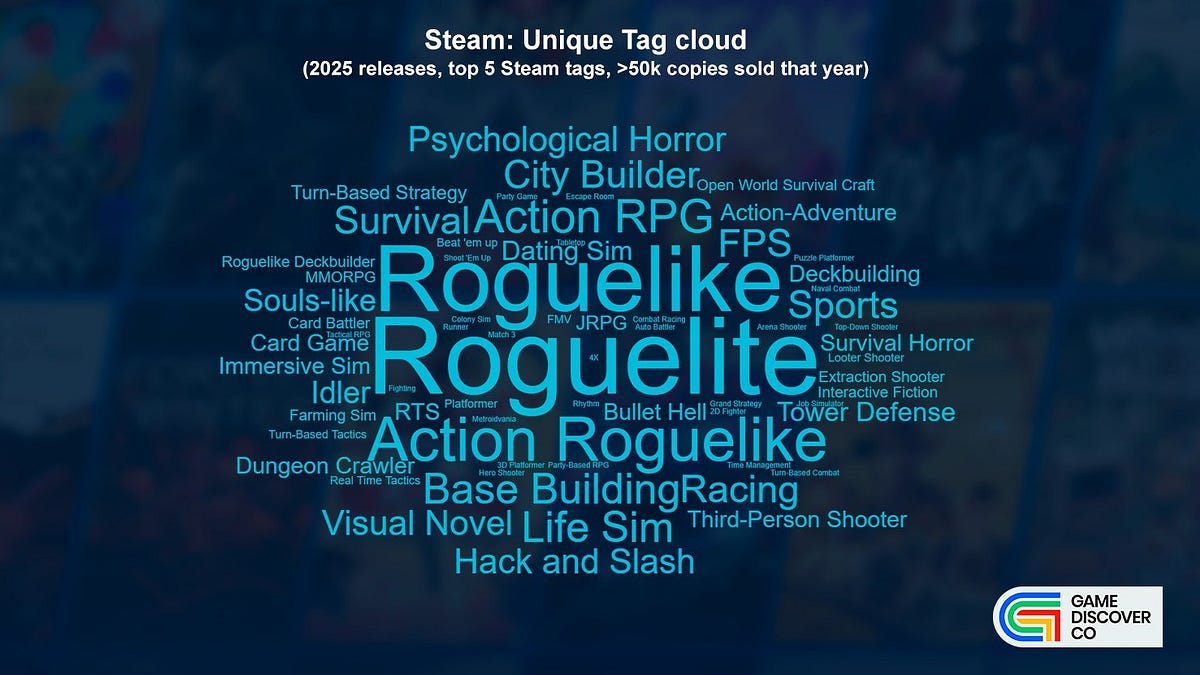
Yeah, I mean I like this piece. I've known Matthew for for a long time. I I like this place piece specifically because I do think about this because what's happening as I showcase games that are popular is increasingly I'm seeing the kind of games that are popular are games with very strong, I guess, you know, core design loops, you would say. And they are games often, you know, the whole roguelite element is just getting bigger and bigger. And all of those are kind of short-form replayable games where you're trying to get a different outcome. And to some extent that is and sometimes it's based on randomly are you getting the right stuff? So obviously, you know, and it's No, it's it's human nature to you know, like trying things again and seeing different things. It certainly is very very abstractly pseudo pseudo gambling. And so I think it's reasonable to keep keep asking this
question. And I like it that Matthew did that.
It It's interesting to me that roguelike are getting so far apart in their philosophy of what they ask the player that rogue to me, I think of a game like Spelunky that is asking you to grow. That is asking you to gain skill, that it will not reward you until you have accomplished that. Versus these games where it's unclear if you are ever actually gaining skill. And I think I I don't want to undercut Vampire Survivors. I do think that there are strategies, there are things going on. But there are also games out there where really it is just a matter of you're putting in more time, which unlocks more power, which gives you the opportunity to put in more time. And yeah, it's a little grim if I think about it too much. But also, people's lives are hard and people turn to these for all sorts of different reasons.
Yeah, and and that is one thing. I had this conversation with someone recently and he pointed out like many people play games to relax. If this is a good way
that you are going to relax and you're and the good news is you're not spending spending thousands of dollars. And it is, you know, like um a book that Matthew cited, uh which I I definitely think everyone should read, is this this this book by Natasha Dow Shull, which is about uh gambling addicts in in Las Vegas. Um and it is very interesting cuz one of the things he identified in there, which I've cited a couple of times, is like people don't gamble in Las Vegas. These are sort of like I'd say off-strip slot machine kind of players. Um you know, they don't necessarily gamble to win. They say actually that's not the reason they gamble. They gamble uh so uh you know, it's a it's a wonderfully uh numbing experience to be in this kind of machine zone where you don't have to worry about anything. And so, I think you know, obviously that's a it's it's pretty bad if you're doing that and losing all your money. I think you can say it's it's it's less bad if you're doing that to relax and and have fun. It might be more bad if you're doing that for 20 hours a week and you should be doing other stuff like
uh hanging out with your family. So, I think everyone just needs to have a have a view on this. And unfortunately, you know, I think that video games, you know, they need to compete with all the other ways you can spend your time. And a lot of other ways you can spend your time have this type of stuff in them. I mean, God, sports, sports gambling, and you know, all these new wagering markets.
Prediction markets, yeah.
Yeah, all the prediction market stuff. So, so I think it's reasonable to think that games are going to get a bit more like this, and I think everyone just has to internally calibrate how they feel about that. And one final thing I would say is that um many games that do this are actually short and finite, which is good. There's been a couple of games that came out in the last week where it's like, "Oh, yeah, this is a total grind." It's like 4 or 5 hours and you're done. So, I think that's certainly certainly one way to to deal with that, yeah.
Yes, yes. Well, this brings us to the main story, and we've done a few surveys over the past few weeks and talked about what we're learning about gamers. This week, we're going to talk about a game and just really drill down on a game and
look at what it says about what is actually popular, kind of like we just did with the the gambling in games. And that game is Guild Run. Can you tell folks a little bit about this game?
Yeah, it's funny cuz Guild Run is actually a little adjacent to the conversation we just had. So, basically, Guild Run is not out yet. It is a game that we featured in on in our newsletter last week because it already got to 300,000 demo players in in about 10 days, which is really good on Steam. I was I was looking certainly at its all-time all-time concurrence for a demo, and I think it was in like the top 40 or 50 of any demos we've been tracking it up to about like 14,000 CCU. And people are really praising this game, and I think it's an interesting one cuz it's like a German German team of about I think seven or eight people. There is a one person who is an ex I I guess they used to do stuff for a for a Hearthstone fan site. They also did stuff for like Blizzard Blizzard and Riot kind of kind of kind
of like related stuff, but a lot of these people are just really younger German devs who decided they were going to make a roguelike or auto battler. And the sort of comment I had on it was you know, why wouldn't skilled Indies pull Riot and Blizzardish levels of complexity and polish into the roguelike auto battler space? It feels It feels like a lot of auto battler kind of games, but it has nice character art. It has very complex and interesting matter in terms of how and why you level up. And I think that's why that it immediately appealed to people.
Yeah, I I mean, I guess it makes sense in my head of a genre that started from the fan and community space and then grows into this massive thing would still have a space there. What is I guess what is most surprising to you? Is it the fact that it has this polish?
Yeah, I think Well, I mean and I didn't mention obviously the one game that people are comparing it to is Teamfight
Tactics and that's a that's a Riot title that is generally PvP, but this is So, this specifically if you want to have a one sentence of what they did is they they looked at TFT. They said, you know, we're going to make this PvE only and we're going to and we're going to put a lot of the classic kind of like up, you know, random upgradeable roguelike stuff in it. And so So, yeah, I think the thing that surprises me about it a little bit is it Yeah, it it does have that real nice like really complex UI. I think a lot of as you might know a lot of roguelikes that have done well, they don't have a very I mean, Vampire Survivors like Brotato is another great example. Like Brotato is a really good game. I like playing it, but it's got very programmer adjacent art. And it's really simple in terms of the stuff. It does have a lot of unique items you can upgrade with, but it's definitely not got a kind of like here's your kind of 10 stats and here's a here's a ring of something that makes So, I think it's just bringing like from
what I've seen so far, Guild Run is sort of bringing some of this much more significant complexity in a nice way in into this I mean it's kind of like auto battler and rogue like. It's not really it is really very auto battley like you're just positioning positioning your enemies and letting them letting them go basically. That's all you're doing.
You mentioned that there is maybe an ex-Blizzard developer involved in some capacity but this isn't a game that's you know being directed by a former head of Blizzard. There is a joke that I made to you before the show was like the number of times I get an email about a game like this and the PR selling point is from somebody who worked at Blizzard and Riot is countless. I feel like I get them every week. And yet many of them have not managed to pop off. Is there a a reason is is there a certain randomness to why Guild Run seems to be popping for these games from people who
actually had a lot of experience in these studios like
Yeah, that's that's a good question.
to find the mystery.
Yeah, I mean I think there's no mystery in the sense that when there was a lot of money floating around and VCs wanted to fund people they ex-Blizzard and Riot very senior people were just first on the list but obviously the issue is when you have these very established franchises it's difficult to make make new ones. It is interesting to me that this ex-Blizzard and Riot person is you know has come from a Hearthstone fan site and is very I think nitty-gritty design person. So and I think and to be clear I only joined them I think a year and a bit ago so I think it's quite possible I think this game might have been partially designed before he even came up with it. So so yeah so so I'd say is I think the lesson I would get from this is if you want someone who crazy understands like uh, you know card metal balancing and you want to put them on a road light and you want to let them go. Then I
suspect that is the correct use of an explicit right person as opposed to uh, someone you're giving $20 million from scratch and you're like, you can just make anything because I think what's happened is, um, you know, new games as a service titles so are just very hard to get going and I don't think almost any of the explicit right people in the end have managed to work it out. That's obviously being tied uh, to uh, some weird stuff that happened with like pandemic and a lot of VC floating around. But you're correct. It's it's it is the typical the typical pitch point and it hasn't unfortunately worked with like like worked out too well for many of those companies.
Yeah. Well, I want to talk about last week. I want to talk about what's coming up this week. I want to start to wrap up the show, so give me a summary. What what happened last week? What really actually popped off and found its audience?
Yeah, so so last week and it's pretty busy time of year. I think I mentioned this last week as well. So so so
Mistfall Hunter, which we definitely mentioned last week, which is like a a sort of a Souls-like extractiony game that has PvP. I think I believe it's Chinese developed. I think it has separate Chinese servers to Western servers as well, which is a little unconventional. It's it's doing pretty nicely. Like like we definitely already have it at it's a hit 44,000 CCU. I think we have it wandering towards a million units sold in the in the high in the high hundreds of thousands sold already. So it has some issues at launch, but I think in general people are like, oh, this is well made. Um, Halo uh, campaign evolved came out and I think it's done reasonably well. I I think it it was at 25,000 CCU on Steam and obviously a bunch of people put it on Xbox because of Game Pass. I think there were some quibbles on Steam, which is it's not that different to other versions uh, of the OG Halo you can already get. Um, and then further down there's been a couple that have been breaking out. So, there's three games that when I talked about them cuz last Friday I did a newsletter, they did not have nearly the
amount of CCU they have now. One in particular, which I think only had 2,000 CCU when I looked at it on Friday and now have 22,000, is this game Machine Party, which is basically evil Mario Party. It's a It's It's It's It's a multiplayer game where
Great game.
Yeah, there's there's there's lots of blood and all kinds of things. I think it's from from one of the guys who did Buckshot or the main guy who did Buckshot Roulette. So, obviously what's happened there is it's gone very viral after launch. It's only eight bucks, so that's sort of expected. Uh, then Corsair Cove, which I think was originally maybe going to be published by by by Bandai Namco, I'm not sure, which is a which is a piratical city builder and people sure like pirates, you may have noticed.
Yes.
So, I think people really liking pirates has made this one do pretty nicely. It's already at 12,000 CCU and it's like a $40 game. And finally, uh, How Many Dudes, which we talked about in the newsletter a few months ago, which is by the Butterscotch Shenanigans folks, um, has scaled quite nicely. It's a roguelite. It's a It's interesting cuz it's a reverse concept
one. Normally, you're the you're the protagonist and you're fighting off all the other people who are attacking you. So, in this game, you are the the horde of people and you have to uh and you have to attack the dudes. So, I think it's kind of a a clever a clever switch around. And uh yeah, I think that's that game's going to do nicely. I think it's already 150,000 copies and will probably go quite a lot higher. So, yeah, so that was that was last week, yeah.
And then for this week, uh, I want I want to do a little bit of a new game, which is I pick a title and you let me know how deep in my bubble I have been trapped.
[laughter]
Is Fields of Mysteria going to be big?
Uh, that is a good question. Um, I I feel like the answer to this is um it's it it's actually already been big and it it it if indeed I think it's um I think it's actually a 1.0 release,
right? For this game that which is this week or next week. So yeah, so the interesting thing about
aren't familiar, this is a Stardew Valley but more anime-inspired uh experience.
Yeah, so the answer is it's it's already been pretty big. Uh we have it at about 800,000 copies sold already and I think about almost $10 million gross on Steam. And um yeah, I'm pretty darn sure that its 1.0 is going to be really good. This is actually something that we deal with uh we we don't do so many charts about for whatever reason. Like when things go 1.0, we actually do have and I was noting this because um Scrap Mechanic uh went went 1.0 last week. I might have mentioned it and and and that's a game again that's been in 1.0 early access for 10 years or so. So yeah, so I think Fields of Mistria is going to do pretty nicely. Interestingly, because for us early access is a bit of a state of mind, if you know what I mean.
Yeah.
We actually don't count that as one of the games that is in quotes releasing this week. Even though I do agree with you, it's releasing this week in in 1.0.
So so so it's actually actually not on our list but but the but but the stuff that is on our list is really I think the big stuff and it gets a pretty busy week again is this game Iron Nest, which is a a sort of like a military um artillery simulator. So I think that's going to do nicely. Beast of Reincarnation from the depths of of Pokémon, which I I do not know how that game is going to do, but people are excited about it. I think it's quite heavily outsourced, interestingly. Um and then and then Big Walk, which is the game I think which I think you mentioned which is last week which is which which is the game from the Untitled Goose Game devs and I'm hearing good things about and it's picking up a lot of wish lists. So I think I think that one may well do well. I think that's out. Uh well, we're fourth uh tomorrow. Yes, that's out tomorrow as as we record this.
Well, that is actually a really good place to start to wrap it up and get into my question of the week. Which is about Big Walk and like what we can expect from a game like this. And also
like what is Friend Shop? This is a bit more of like I guess a slightly more games criticism type question. But Big Walk uh huge reviews very very glowing. Seems to be on track for game of the year conversations. Um and is from the developer of Untitled Goose Game. But that is a game that came out a long time ago. I don't know if that is a household name. And Big Walk's early selling point when it was previewed years ago, I guess, was it looked like what would become Friend Shop.
What?
And is it possible for a game, sales-wise, to be too late? I'm not saying that's what I think is going to happen here. But where does it fit alongside these games that at least it superficially looks like? I think the game is actually quite different then, but it certainly has a similar aesthetic.
Yeah, I just saw a review of this game that was comparing it to like Myst.
Very much so.
Yeah, so so so I I I think it's going to
be interesting. What I will say is it's wish list is trending really nicely. So, I I do have an impression that actually Oh, we actually have data. Let me bring up this data about what the overlap is like. Uh I could I could probably see. So, if I look at overlap, it has 46% 47% of its wish listers have played Peak. So, it it it it does look to me like um you know, there's definitely some obvious crossover there. And I don't see I can probably find I can probably find Goose Game in here, but I actually don't see I I don't I don't think it's like everyone who everyone who got this game uh is going to be is uh is is is is going to be doing this. I think it is very much um yeah, uh it's it's different, right? Uh it's it's it's it's very friend sloppy. Here we are. Wow, um only
Yeah.
only 4.6% of people who wish this to this game according to our public Steam data have played Untitled Goose Game. So, that is a very very low overlap. So,
Wow.
yeah, yeah. So, so so I I would I would say actually it's really much more uh I think the friend sloppy crew are noticing it. I other stuff that has big overlap is like Golf With Your Friends. Actually, Undertale has quite good overlap even even Balatro, uh Risk of Rain 2. So, it's not quite I don't think it's I don't think it's the sloppier end of friend slop. I think it's the better designed end of friend slop, which I would count Peak as actually. I think Peak is quite a well-designed game. So, um yeah, so I actually think I think I've said
Yes.
I think I've said in the past I wasn't convinced on the sales of this, but looking at its wish list going into launch, I am now thinking that it may it may be really do quite well.
I am very curious to see what the long tail of this game looks like, and I think people should keep an eye on it in terms of what the evolution of this style of cooperative game design is because
clearly it was began designed before a lot of the friend slop uh stuff came out. And again, I always say that as a compliment. I like that term. I think it is a great genre. But this game, for people who have not been following it closely, it is a designed experience. It is not proc gen. It is the same experience as you go through it, and you need someone else to play it. You need at least one. You can play I think up to four, but you need one. And I'm just very I'm very curious what that means for a multiplayer game. It's not unusual that have a single player campaign that's one and done, but it is a little stranger to have a co-op game like that where you need to find somebody who hasn't already played the game before and that you're going to play it with. And that is a little bit more of an ask than than either single player games or friend swap games. So it's a little bit more of a barrier.
Although I will say that there are some examples of these kind of co-op I mean obviously it takes two and and that could be also but but but but also there's the there's the We Were Here series of games. The We Were Here series of games has quietly done tremendously well and they are all kind of puzzly puzzly exploratory games that are co-op only. You like there's and there's been like five or six of them at this point I think. So so yeah I I actually suspect that this is a underserved genre interestingly which is the co-op only linear genre. So whether the big walk folks were thinking about that I don't know but I I've occasionally suggested to people that they should do a co-op a co-op only kind of linear game because I actually think the market is much more into it than they used to be. Yes, We Were Here was such a good poll and reference for people to check out. Cool. I think we did it. I think we have made another episode of Game Discover Co-Op Show. Hey, if you are still
listening which is everyone, you made it from beginning to end, do us a huge favor and please consider going to Apple Podcast and leaving a review for the show. I know it seems silly, it seems like it shouldn't make a big change, it does. That's just the way the algorithms work. So please consider leaving a review there or sharing the show with friends. Are there other people at maybe your video game studio or just in your group chat that you think would like the show, share it. That is a huge help. Otherwise, we hope that you love the show. We hope that you are going and checking out the Game Discover Code newsletter. I am your co-host Chris Plant. Simon, do you want to give us a farewell?
Yes, it's it's been a delight and we shall see you all again in a week for more of the same.
Auto-generated captions from YouTube — names and numbers may be misheard.
Key insights
7 takeaways · ~3 min read- 01Influencers are currently the primary source of traffic for Steam games, particularly for strategy, tactics, and roguelike titles, making them essential partners for developers.
- 02Vertical video has surpassed horizontal video in internet consumption, necessitating that developers consider how their game visuals appear when cropped for platforms like TikTok and Instagram.
- 03Technical performance on mid-level PC hardware is critical for launch success, as evidenced by the negative reception of the Marvel Tokon: Fighting Souls open beta due to poor optimization.
- 04The rise of roguelite and auto-battler genres is driven by 'compulsion loops' that provide a 'machine zone' experience, which players often use for relaxation rather than traditional gambling.
- 05Indie developers can achieve significant market success by applying high-level polish and complex meta-design to established genres, as seen in the recent performance of Guildrun.
- 06Viral growth remains a powerful driver for Steam titles, exemplified by Machine Party, which saw concurrent user counts jump from 2,000 to 22,000 shortly after its launch.
- 07Cooperative games with strong design, such as Big Walk, are showing high wishlist potential and strong audience overlap with established hits like Balatro and Risk of Rain 2.
Ask AI about this video
Cite this video
Citation
Generating citation…









Comments