Transcript
Welcome to the Navit Gaming Podcast, where it is our mission to explore the business and future of video games. We bring together the industry's brightest builders, investors, and thinkers to keep a pulse on current events, dissect emerging trends and games, share lessons learned, and have a great time. This podcast is also part of Navik's growing ecosystem which ranges from free and premium research to consulting and advisory services. For more information, visit www.navic.co. This episode is brought to you by Heroic Labs, which powers some of the world's biggest games with its heroic game stack. Its composable products are Nakama, the open- source back-end game server, Hero, the game development framework for all your live service game features, including the complexity of managing offline mode, Sattorii, the
worldclass live ops product for maximizing monetization and retention. And lastly, the Heroic Cloud to provide massive scalability. After nearly 10 years of operation, thousands of studios trust Heroic Labs to help them focus on their games and not worry about game tech or scaling for success. To learn more and reach out, make sure to visit heroiclabs.com or check out the link in the show notes. This episode is brought to you by Neon. For the first time in our industry, developers can finally have their own DTOC channels to save on app store fees and build closer relationships with players. But there's a catch. Selling direct means either building complex infrastructure yourself or choosing among legacy providers whose inexperience in games or questionable reputations pose real risk to your business. Luckily, there's Neon, the DTOC platform built for games. As a merchant of record with customizable web
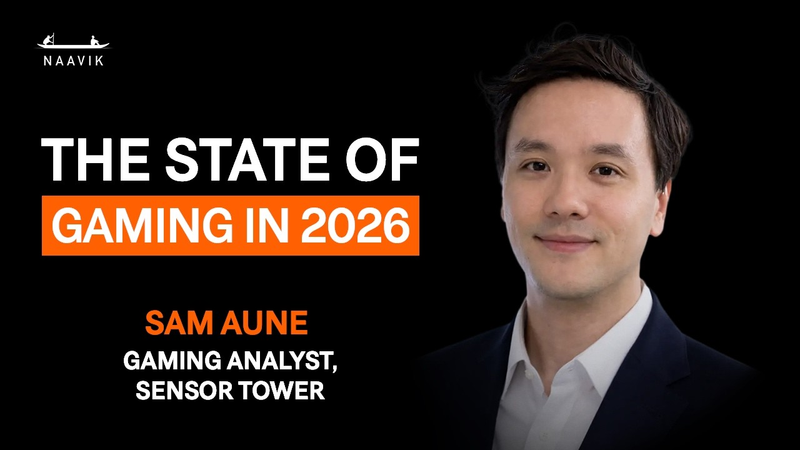
shops optimized for conversion and modern APIs that let you use your existing live ops tools, Neon is trusted by some of the biggest names in gaming to help you sell direct without the typical overhead. To start selling direct and finally take control over your full player experience, simply head to neonpay.com or check out the link in the show notes. And with that, let's jump into the episode. Hello everyone. I'm your host Deon Becker. And today I'm delighted to be joined by Sam Aun, gaming analyst, Sensor Tower. And Sensor Tower is an intelligence platform that empowers companies to understand consumer behavior and market performance across mobile apps and more. Great platform. We use it all the time. Uh definitely good shout out for that. Uh but today we're going to explore the state of gaming industry as outlined in a very recent sensor tower report that came out not too long ago. Uh and just kind of focusing on some of the major shifts. Uh but why don't we just start out by talking about you Sam just for a second. So can you just give a quick overview of your background and what you do for Sensor Tower?
Yeah, sure. Uh hi everyone. I'm Sam uh lead gaming insights analyst at Sensor Tower on our market insights team. So that basically means I I lead our global global gaming reports, blogs, gaming insights requests across the business. Uh before working at Sensor Tower, I worked in product and games for a few years. Before that, I was actually an English teacher in South Korea and Japan for a while. Uh, I'm also a lifelong gamer, so getting to watch the industry as part of this role is it's basically a dream job for me.
Awesome. Uh, could you just uh tell us quickly about the sensor tower report that you guys recently when you put it out and um maybe even just where people could find it?
Sure. Uh, yeah, we just released our biggest report of the year, state of gaming last month. In prior years, it was the state of mobile gaming since sensor tower was historically focused on mobile. But with our acquisition of video game insights or BGI as we like to call it, uh we were able to broaden the scope this year and turn it into a full state of gaming report across mobile, PC, and console. Uh I don't know the exact URL off the top of my head, but I'm sure if you Google sensor tower state of gaming, you'll be able to find it pretty quickly. So yeah, please take a look if you haven't. I'd love to hear anyone's thoughts on that.
Awesome. Yeah, and congrats on the video game insights pickup that uh now covers console and uh PC as well. So it's pretty nice to have that all in one place. So definitely a fan of that just because that is definitely hard to get good data on.
Yeah. So so it seems it's great to have the team on board there. Uh yeah, really excited to work with Carl and the rest of the team there.
Awesome. Why don't we just get into some of the uh the bigger issues here. Of course, mobile is somewhat your bread and butter still. Uh so why don't we just start with that? Uh we'll cover some of the topics here. Maybe get a little more detailed than uh the report does or maybe some more analysis on on what it covers. Uh but the latest report notes that while mobile downloads are declining still uh revenues remain relatively steady are are games basically getting better at monetizing a smaller pool of players or is there like a shift the whale demographic? Like how is that kind of working out at the moment?
Yeah. Uh so unfortunately sensor tower data doesn't currently let us break revenue down cleanly by cohorts like whales versus non bears. I know that's really commonly asked for. Maybe we'll
try to work towards it in the future but currently it's hard for me to answer that with hard data. Um what what I can say is that declining downloads don't actually necessarily mean fewer players. It just means that there's less demand for like a new game to play from a player perspective. Uh so as the market matures and older games keep holding on to their audiences. Many cases those players are investing more over time makes those games harder to displace. There's those privacy changes that have made targeting high value users more difficult, fewer downloads to be able to compete for. So it's it's harder to for new games to break through, though not impossible by any means. Um, but yeah, I do think that this means that the stories that mobile has become more mature, uh, more more incumbent driven market. There's more consolidation towards the top and it kind of makes it harder to scale new games. Um, but yeah, many of the top games, I would say, are definitely monetizing their existing player bases better than ever. So, allowing revenue to kind of hold flat year-over-year despite decreasing downloads. Is there any specific uh, strategies you're seeing in live ops or retention or anything like that that's helping with that monetization or like any additional insight you could provide? doesn't necessarily have to have hard data, just maybe some more
insight into why that's happening still.
Yeah, sure. Uh, so at a market level, one trend we're seeing and in live ops is is a shift towards progression events that drive short to midterm engagement and retention. So we we just recently picked up another uh acquisition from Playiner uh which covers the live ops and they go in and document all sorts of different events and and strategies that are going on inside of live ops games. And so I went and looked inside of their uh their library of of different events that they cover. And yeah, it looks like there's just more progression events as a percentage of new events that are coming out year-over-year as opposed uh as opposed to monetization or or other kinds of events. Uh and many of the strongest examples, progression and monetization are are pretty tightly linked actually in a lot of these really really strong events. Um historically, uh the battle pass has been around forever. It's probably the most widespread version of that, but it's not the only model. Uh we're also seeing time limited events recently trending building around milestones that unlock additional rewards or offers that kind of sits between a battle pass and and a
piggy bank almost. They give players clearer reward break points than a piggy bank, but they they'll have a free track. So maybe it's a little bit easier to balance from an econom economy perspective on the freetoplay side. Uh another big trend I'd call out is social. Um not just in retention among mobile, really across almost every major metric and in platform even. Uh, so if we're talking about social gaming on mobile, I would say Roblox is is really clear crossplatform example, but most of its players are on mobile. But you also see things like in the biggest forex games that really took over in in 2025. Alliance wars are a huge reason why players are retaining while they're why they're paying. Uh there's co-op events and casual, all sorts of different tournaments and so forth. Putting aside the wave of uh social games on PC console even, but more and more I would say social motivation is a core part of why players stick around and convert and games that successfully built social systems into the core experience rather than treating them as a layer on top are generally in a much stronger position on retention. I would say
that makes sense. I mean one of the things I noticed too is and you
mentioned forex and and stuff like that. was that it seems like these some of these core midcore genres are strongly overtaking casual and especially hyper casual with the whole shift in the market around monetiz monetizing players better uh and and retaining them things like that as opposed to acquiring new players and downloads increasing. Does this look like something where we could see a a huge reduction in the casual market or at the very least maybe some crash in the hyper casual market more so than we saw first off when like the the privacy changes happened? Yeah, this is this is something we've been watching closely. Uh I think people have been watching to see how these different changes on the market level have been affecting hyper casual specifically in addition to the other product models as well. Um so yeah, the install is definitely declining across mobile more broadly. And I I think for sure a lot of hyper casual publishers have felt faced real challenges over the past few years. But one of the most interesting things I found while creating this the state of gaming is that hyper casual activity is actually not moving in the same direction as the rest of the market in 2025. Hyper casual downloads are up
while most other product models saw downloads fall. Time spent was up for Hyper Casual. And maybe most surprisingly, actually, inapp purchase revenue was up quite a bit as well. Hyper casual inapp purchase revenue reached almost $700 $700 million worldwide in 2025, which is up 130% year-over-year. And that may sound strange if you're familiar at all with sensor towers taxonomy because hyper casual is still primarily an admonetized category by our definition, but our game IQ team does allow for some limited IAT behavior and and hyper casual things like ad removal, starter packs, uh currency bundles, and those seem to be growing meaningfully. So when you look at the market level data, it doesn't really point to an imminent crash. Uh it actually might suggest that hyper casual is adapting better than expectations. Uh my own little theory is that Hyper Casual has always been a kind of mechanics discovery lab. It has to constantly try to find the next sticky loop or die trying. So if sheer execution is increasingly becoming a game only the biggest publishers can win, that means everyone else has to lean more into innovation to break through. And in that environment, hyper casual may actually be better positioned
structurally than casual or even some midcore segments.
Well, that's definitely interesting to know like it's obviously one that people tend to panic about. It's good to know that there's like some level of stickiness there even if it just requires constant innovation from the developers both on the monetization side and the the game mechanic side. Uh Forex you mentioned a little bit earlier that was a big growth. I mean obviously it's a genre that's been around for a little while but seems to be doing very well and growing despite a lot of the others. Um why is a specific genre resisting like the general trends especially with it kind of being a somewhat saturated genre? like there's quite a few entries. Some of them have been around for a while, some of them not. Uh some of them have been around for over a decade. Uh what is it that's about this genre that's helping just drive all that? Maybe there's a variety of things.
Yeah. Yeah, for sure. Uh I would say that Forex strategy growth is primarily driven by a new wave of Forex strategy games primarily by Eastern and even like Chinese, Hong Kong, Singaporean kind of publishers. And a lot of the older ones
are are not seeing the same level of growth unfortunately. And there's there's two reasons I think this this big forex wave is and taking over in 2025. Uh first of all, Forex strategy, some of the strongest monetization in mobile period, I would say these games layer progression systems on top of social structures and create real pressure to keep spending, keep showing up. You're not just trying to beat your opponent in these games like other competitive games. You're trying to not let your alliance down. It's uh it's, you know, it's a really strong retention and monetization driver. Second, I I would say the category has gotten really good at building adfriendly mechanics into the actual game. So, Last War has their shooter gameplay that they put in all their ads. Kingshaw has their tower defense thing. Uh, newer games are continuing that pattern by combining some some proven ad gameplay hooks. One thing that comes to one game that comes to mind is Last Asylum Plague. It's a new Forex that's been seeing some real traction. and they they took gameplay from uh the My Perfect Hotel hybrid casual and and use that in their their gameplay and and in their ads to really drive downloads, which is really
interesting to see. So yeah, these all have these adfriendly gameplay hooks and they combine that of course with the the mature forex back end. So these games are I would say they're they're a little easier to market. They have these mechanics that are just instantly readable and creative. uh then you add the fact that many of the top publishers as I mentioned earlier are these large Chinese or eastern publishers that execute extremely well on life ops and ad creative and it starts to make sense why a lot of these forex games have exploded despite the broader decline. Uh but what I don't think people should take away though is that this is some magic unique to forex. I think a lot of these lessons really should be transferable. Uh there's no reason deep social monetization can't work outside forex ad friendly gangplay has existed forever in hyper casual and casual. Uh the real story I think is that Sporex has really been better than most genres at innovating on these elements and combining the ingredients. And that to me points to a broader problem. It feels like innovation in mobile at least at the mechanics level. It feels a little bit slower than it used to. There it's kind of a broad statement but uh it's hard not to notice how much of the casual catery for example still clusters
around like match three merge traditional casino hooks like slots. So I would ask rather than why is forex winning, it's why more genres aren't really borrowing this playbook as effectively. That makes sense. It does also have like sort of these long-term hooks with good seasonal cycling, things like that that seem to work pretty well that might be a little harder for some of those genres to adapt to, but obviously like these aren't things that are, as you said, specific to Forex. They're just ones that they've refined and polished like over the last decade or two. And and as you mentioned, leading to some of these new games, uh, continuing to sort of build and innovate on top of that, which as you as you mentioned, we're not seeing from the casual ones. in in regards to that like are we do you think we're seeing any kind of shifting to and this is something that's been discussed for quite a while. It's not like a new thing but this sort of shift to where the increase of midcore and core players on mobile like there was you know in the earlier days of casual there was this big rejection of mobile from what we call core players or gamers generally but that over time it seems like it's
shifted towards accepting a bit more this we're seeing like these very like high quality AAA style of games now that are like thirdp person shooters first-person shooters uh that are like you know what almost what you'd see on PC sometimes PC ports even Rainbow 6 mobile kind of trying to make a push recently as a as a sort of port from a PC game. Do you think there's a trend towards core gamers at all or or at least like a growing acceptance uh rather than a cannibalization of casual just a growth of that audience?
Yeah, it's it's definitely a trend you were seeing over time as more core games make pushes and it feel does feel like the core audience has become more accepting of of mobile games for sure. Um, but looking at the the games that we were just talking about, the Forex strategy games and and just strategy in general, I guess I I would say that it's actually it doesn't feel so much like maturing towards core in that specific instance. It's maybe more um they're they're targeting the casual and maybe hyper casual audience even a lot better. Uh I think a lot of these forex strategy games when you play them, there's a lot of, you know, different progression
systems. There's a lot of elements involved, but they don't actually demand super strategic decision-making moment to moment. you know, if you're playing Starcraft in 2005 and then you move to Last War Survival, it's it's quite different, right? Uh but what seems more likely to me is that these games have really become good at requiring uh broader audiences, including more casual ones. I actually took a look at Sensor tower audience insights on this. Uh one useful feature we have on there is called personas, which these are groups that we create based on broader mobile behavior. things like uh so personas will include things like core gamers, casual gamers, PC gamers, console gamers, also non- gaming personas of course like e-readers, world travelers. Uh so I looked at a cohort of this recent wave of Forex strategy games. Top persona, not surprising, core gamers, which is our uh our persona for specifically midcore gamers on on mobile. Number two is actually hyper casual gamers. Uh and it might be a little bit surprising at first, but to me it actually makes a lot of sense when you look at their ad creative strategy. It really feels like their creative tactics have a lot inspired from hyper
casual. Uh they have, you know, really strong uh onboarding and quest systems whenever they get into the game. Uh they they use these bright, approachable art styles that travel well across eastern and western markets and the gameplay hooks. Again, whenever you watch it, it does really remind you, I think, of a lot of uh of hyper casual ads. So, to me, this this suggests that these games specifically aren't really becoming more core. They're borrowing a lot of the hyper casual style acquisition tactics and successfully pulling some of that audience into core.
That makes sense when you see the ads like when you have that sort of transitionary period as well like something like white out survival was a good example of a game where it kind of tricks you and we did see a trend of that especially forex games. We're like 4X games are intimidating for the casual or hyper casual audience. So let's kind of ease them into it uh and show them how it isn't Starcraft on mobile. That's that you can that you can work your way into this. And I think that's that's interesting sort of insight that hyper casual has been sort of pulled into this a little bit as well along with what you said around hyper casual finding ways to adapt. It just kind of makes you think
that that is an audience regardless of whether or not the market is adapting to that. That audience seems to remain and it's just how well can you get them in, get them playing, get them monetizing, all that stuff. Um, and not thinking about them as this audience that's like a wave that comes and goes.
Shifting over to PC though, that was a big growth area. And of course having the video game insights uh helps with that quite a bit to be able to pull that kind of data alongside console, but PC seem to be seeing like probably some of the biggest growth and I know there's been a lot of attention on Steam lately, both from just general industry interest, but as well as like legal interest, it seems. Um, yeah. Why do you think PC in general is is seeing such a a massive growth despite some of the the struggles in mobile?
I just think PC and console feels like it has a much healthier, more diverse paths to breakout success than mobile does. When you look at mobile growth is really concentrating into largest publishers, biggest games, even some of the oldest games, PC and console. Uh there is a lot of that as well. There's a lot of legacy titles that are taking a lot of people's time and and uh the
active users for sure. But the market is still broad enough that there you can see AAA games, there's still live for service games, there's double A games, there's indie games. They all can kind of coexist to a degree in a meaningful way. And that creates room, I think, for smaller teams to win with these innovative viral hits. then we don't see these this sort of mirrored on on uh mobile. I think a big difference contributing to this is social discovery. So you see things like streamers, YouTube, Discord communities, friendto friend recommendations. These are all much more powerful in PC and console that you don't really see in the same way on on mobile. There's there's a real audience that really just looks for new games, especially multiplayer or socially entertaining ones recently and and to play with your friend groups. Mobile is much less driven by that kind of organic discovery. it's more, you know, direct paid UA established brands, existing incumbents that seem to be driving the market in mobile at the moment. So when mobile install growth stalls a little bit, the the natural response it feels like is to double down on these existing audiences, monetize them a little bit more. The market becomes a little bit more conservative. It feels like fewer launches, less
experimentation, and maybe less room for smaller teams to disrupt the category and break through. Um, that also kind of feels like maybe why uh mobile increasingly borrows from PC and console. a lot of the new concepts that feel fresh in mobile adaptations uh that have proven themselves elsewhere. But going back to PC console, essentially I feel like there's multiple paths to success in the space allowing small teams and innovation to coexist meaningfully with AAA blockbusters and freetoplay live service titans.
Yeah. Which is interesting because you know obviously they try and promote sort of that diversity on the app stores. you know, they have their indie sections and like try and have that, you know, that multi-promotion. But I guess one one aspect of that that doesn't really work very on mobile is the the different business models, right? Where it's pretty much only free to play for the most part on mobile, whereas it's definitely not the case on say Steam where a lot of it is paid up front. I mean, maybe that's part of it as well. But but it's interesting to see that you would think by now if Race to the Bottom was kind of the the strategy forward
regardless that we wouldn't see that growth, that we would see Steam struggling heavily because it's not free to play dominated. Uh so I I suppose that provides some hope for game developers that people are still willing to pay for games, that there's still growth there.
Yeah, absolutely. And I I think that the the model of premium the news of its death are far overblown in the past and and maybe even today you know I think it's really supportive a model for maybe some of the smaller teams where uh if you want to build a durable wiz service you need scale and if you want to just sell a free have a small team and and have a paid game you kind of don't need that many people to to play the game for a long time. You just need people to to buy the game at first and you know maybe experience it and recommend to their g their friends. But at the end of the day, you sell enough copies and you're probably okay. Whereas on mobile, uh, or in just free to play in general, yeah, you it's it doesn't work the same way.
Makes sense. It it did seem like though that there was a kind of a little bit of a genre dominance on Steam. Now, of course, action, which was the dominant thing, is is a bit of a broad category
in general because, you know, action could encompass practically everything uh at some point or another if there's real time play. Uh but it did seem like there was c certain trends around action uh especially first-person shooters uh or thirdp person shooters things like that. What do you think made uh action such a huge genre this this year in particular?
Uh so action as you as you noted it has just so many different sub genres from the sensor tower taxonomy folded into it. So the biggest games that on action that we classify as action that uh were the biggest units sold hits this year were were games like uh Repo, games like Peak, these really social viral hits that managed to to really come out and uh and just sweep through the market I would say. Yeah. So I would say that these games really are targeting two kind of core audiences. Friend groups, content creators are the two that I would call out here. So, friend groups, they want games that create memorable shared moments. The ideal game night,
everyone's laughing, yelling, panicking, blaming each other. Uh, content creators want something similar. Nuance is a little bit different. They want games that reliably generate strong, clippable reactions that will engage their audience and travel well on platforms like YouTube, Tik Tok, Twitch. Uh, and Repo and Peak both deliver exactly that to both audiences. Repo creates these dramatic, funny, scary, social moments that make people scream and everyone else laugh. Uh, Peak does it through spectacular failure, people falling off mountains, collapsing at the worst time, that kind of thing. Uh, in both cases, the game is constantly producing moments that are fun to experience, fun to watch, easy to share, and once one big streamer picks up a game like that, loop can compound really quickly. They're their audience sees it, they want to play with their friends, so they recommend it to them. Other creators notice it's good content, and then you get this big cascading wave of attention. And that's how games from small teams can suddenly compete with much bigger titles. why uh we've been seeing a lot of growth in action and especially in Indie in 2025 and in the last couple years even I would say
I guess that goes back to a little bit
of something that you're pointing out with mobile which was the social strategy of things uh whereas you know 4X is leading very heavily onto it but a lot of other genres seem to struggle with the social aspect especially around friend groups which is different than social with strangers right so like 4X is still yes often leaning into socialist strangers and sort of those hierarchies that they that they sort of structure and develop from that whereas it doesn't seem like, you know, a lot of mobile has stickiness amongst friends and and maybe that's just my perception. I don't know if there's like really any good data on whether or not people are mostly playing with strangers or mostly playing with friends in any particular genre, but it doesn't seem like that's a big difference in terms of how social is played and and the way social is structured. Uh I mean, obviously with something like these these smaller games that you're talking about, they're they're only a couple bucks, but they're not free, yet they're still somehow scaling socially, which is an interesting like approach where it's like, okay, well, this is cheap. like I could just buy this for a few bucks or whatever and my friend can buy it as well and you don't necessarily have to like all lay out for like a big fourack or something of the game.
Yeah, for sure. Yeah, it's definitely I
would agree for sure that there's there's just a difference in how social groups approach these different platforms. You know, I guess anecdotally speaking for me as well, I don't really recommend mobile games to my friends even though I play them. Uh, right. I do recommend PC console games all the time to my friends. And that the primary, I think, use case for for friend groups is just getting on PC on Discord together. Maybe maybe consoles for some groups. It's not really mobile, unless you're in some of the different areas of the world that are more mobile first, of course. Um, so yeah, it's just a difference in in social dynamics that makes scaling socially seem really difficult for mobile. Although I think we've seen some of that in the past with things like the the Wordle, which was also available on PC, of course, and different experiences. But but but yeah, it just it seems like a completely different beast to to attack.
Yeah, it makes you wonder too if some of that lack of a social graph of any kind. Like so Steam has built-in social whereas I think it also speaks to the failure of Game Center and some of those other attempts to sort of build a social structure on top of it, right? I suppose
had Facebook been able to stay, you know, relevant on mobile despite the sort of tiff back for with Apple and Google and stuff like that that maybe we we'd have enough of a social graph for that to matter. Whereas like when you go to recommend to your friend, how do you really connect and you see people like Supercell trying to build Supercell ids to try and sort of build these friend systems crossame and all that. So, it is an interesting thing that we still this far into mobile are struggling so heavily with that and and I don't know maybe that's a problem area that could be tackled that would benefit mobile
but uh I'm interested in in what other genres as well like outside of action and sort of social stuff we might be seeing like as a trend towards in on on PC like for example you guys kind kind of called out a little bit in their port simulation as interesting genre which is also percolated a bit to mobile in more simplified forms things like that what do you guys think is is that maybe the next genre to kind of keep an eye on or is that just an interesting data point?
Yeah. Uh so I would say simulation especially on mobile is where we uh classify Roblox. So a lot of times when
you see something happening in the simulation genre, it's really just Roblox being gigantic and expanding in Asia or what have you. So while I would say that you know that is for sure a trend, Roblox being gigantic and worthy of its own conversation in its own right. Um it was that indicative of a category level market shift m maybe it is but maybe not in terms of like having multiple different uh competitors being able to to go in there and play a little bit. Uh I would say on the PC console side it's it's kind of difficult to predict what the next big genre would be from just because PC console is is really hit driven and genre momentum is often a reflection just of the the release slate. So you know 2026 so far big releases are like Slay the Spire 2, Resident Evil Reququiam. So, of course, deck building, survival horror are really spiking as subg genres. Uh, and when Grand Theft Auto 6 releases, I expect action adventure just to surge, but it's not really a category level market shift, I would say, in that. Um, so I I would, if I were to make a prediction, I would want to maybe base it just on what genres I think would be
affected by some of the biggest trends we're currently experiencing that haven't really been riding the wave as much compared to to other genres. So, the first trend that come to mind, we've already been talking about it is the social gaming thing. uh shared experiences, friend group play, creator friendly chaos, still hugely powerful. I think GTA is 6 is going to reinforce that as well. Um another big trend I've been noticing extraction um and it's what's interesting is that it's not really confined to extraction shooters I think as well as DNA is spreading a little bit into other genres I'm noticing. So you can see like other you know other games taking taking lessons other publishers seeing that this is you know getting traction this is getting a little sticky. So um able to to pull elements of that and and take advantage. Uh, so if you ask me what genre it can ride some of these waves that hasn't yet, I would actually maybe say RPGs. Um, they can they can combine social play. They can have some of the extraction elements. You know, dungeons have been a thing since the beginning of of time. Uh, I think they can produce a lot of the big reaction moments as well that uh made games like Repo and Peak Breakout uh so well. Uh, two examples
that kind of come to mind for me personally, just my my personal experience, World of Warcraft, still a huge social experience. kind of a unicorn I I guess but just you know a big social RPG for sure. One that is has been attempted to uh to replicate numerous times with with varying success but uh still I think a really interesting case study and another one is just uh even off digital games completely Dungeons and Dragons is produces I think an experience really similar to what you see in repo and peak. So, uh, if we're talking about, uh, where the next opportunity from from genres, I feel like there's actually still a lot of white space from from RPGs that can absorb the the social and extraction dynamics. I think it makes sense because even some of these big action games that we're talking about that were successful even like Arc Raiders um or even the RPGs like Clarab like a lot of this sometimes depends still on social word of mouth uh and friendsations and things like even if you're not necessarily playing with your friends it becomes like a topic between your friends like uh oh you talk
about art graders even if you don't play together and things like that whereas this sort of shared experiences. It's it's an interesting take on it that doesn't necessarily have to be limited to just social driven games, but that social layer still making huge difference in terms of uh word of mouth recommendations. And also something I I kind of was thinking about was one of the interesting aspects that you sort of brought up a little bit earlier was uh compared to mobile the genre diversification. While we have these huge broad genres like action and RPG and stuff like that, there's also a huge amount of diversification in those genres uh that you said like can sit side by side. I think it's kind of an interesting point in terms of like on mobile if it's only a few genres like the ones that market best dominate and then you don't get like a like a wider variety of games being successful. Whereas on Steam you do get that because like success can also be a little smaller but it also could be across a lot of weird niche genres uh that just wouldn't make sense on mobile just because of the marketing.
You guys called out Battlefield 6 a little bit of course was like a big surprise hit. Um, and I know it's been
talked about a lot, but do do you have any uh particular insights why you think that did so well, especially against uh competing against Call Call of Duty was a big deal. Uh, but just in general like the bad reputation Battlefield had gotten from the previous release and managing to overcome all that to become that success. It was a big leap for players to try and take uh for it to become that big of a success. Anything any thoughts on that?
Yeah, for sure. Uh, I noticed a few things going on for from my end. So, first, you know, some previous Battlefield titles, maybe they underperformed. Maybe there is some some criticism for them, for sure. Uh, but I do think the Battlefield brand still has real weight with SUD players going into Battlefield 6's uh launch. And I think Battlefield 6 played pretty well directly into what audiences wanted from the franchise. Uh, second, I think the marketing campaign very effective. For a stretch, it really felt like the Battlefield beta completely took over the conversation. People were talking about how good it felt. Streamers were everywhere. uh game really just built momentum and it created the sense that Battlefield was just back in in a big
way. Uh and then importantly the the game itself mostly delivered on that promise I I would argue. Um there was there was criticisms for sure and users have come down since launch. Uh but if if you uh you know you sell tens of millions of units at a $70 price point, you you've kind of already won. Uh that said, uh I I do think it's important to separate unit sales from durable live service dominance, live service dominance. Uh so you know, Fortnite Knight, Call of Duty, they don't actually need to outsell Battlefield 6 in 2025 to remain bigger live games by active users, which which they are. Uh so my read is that Battlefield 6 absolutely huge comeback, massive launch, actually hasn't displaced the biggest live service incumbents in terms of ongoing scale. Uh it's really interesting. PC console might seem even harder to disrupt than mobile in that sense. You know, mobile we saw two new top games of the year by by revenue. Uh, and in terms of top active users on PC console, it's really just the same same people in the conversation.
It's interesting the the especially the point you mentioned about um the $70 price point. So, when we're talking about a lot of these um sort of fights over taking the space, a lot of it's, you know, either free to play or a lot of these games are are hitting sort of these 30 or $40 price points uh as a way to draw in an audience without being this big sticker shock. Whereas Battlefield 6 is not as much about monetizing longtail. Obviously, they try to uh compared to Call of Duty, which does a lot of that, you know, through their skins and things like that.
Sure. But it's still Battlefield 6 not only overcoming the uh the sort of bad reputation but also doing so at a high sticker price is a pretty interesting thing to to to come back from. And then on the flip side, another game I wanted to bring up that I think is kind of interesting from a crossplatform perspective is Delta Force, which is one that uh you know, borrowing the name of an older game, an older series, but like it has managed to be sort of a free-to-play hit and disrupt in that space that typically I would think would kind of reject uh some of the freeto play. I mean, outside of obviously there's stuff like Marvel Rivals and
things that have managed to do well in sort of the freetoplay side of that, but Delta Force is also like seeming to have pretty good crossplatform success uh both on PC and mobile. And I don't know if you want to speak to either of those uh in terms of like where they may be different and interesting, but I I thought that was a really interesting one that's sort of disruptive without being like relatively gamechanging. It's not like a really innovative game, managed to borrow from a few different genres. Uh it seems to have found like a weird kind of general brush audience. I don't know. Any interesting thoughts on that one?
For sure. Yeah. Uh so yeah, Delta Force I would say definitely been a real success from several angles.
Uh I I would say it's more on mobile though uh that it's been clearly a success. It's number 29 mobile game by revenue in 2025. Number five mobile shooter. genuinely strong result I would say for you know shooters being an ultra competitive space dominated by the biggest publishers with downloads shrinking year-over-year. Uh but looking at 2026 year to date, Delta Force is uh
is a little bit uh not as strong on the PC console side. It's it's not really in the top 10 or even in the top 50 by average. Now, looking at VGI data, uh, this suggests that it hasn't really establish established itself at the level you would want if you're positioning it as a AAA freeto-play alternative to Call of Duty, I would think. Um, so to me, uh, Delta Force currently looks like, uh, a strong mobile success that has yet to find the same level of traction on PC and console. Uh, if you look at the broader market, I I think that, yeah, being crossplatform at the moment is isn't required. So, you know, a lot of the biggest shooter successes on PC and console in 2025, like Battlefield 6, you mentioned Marvel Rivals, Arc Raiders already, whether you count that as like an action or shooter, of course, all these are all games that found meaningful traction without uh mobile presence. Uh, and that said, uh, the biggest shooters like Fortnite, Call of Duty, PUBG do have strong crossplatform presence. So it feels like it's not uh crossplatform. It's not a requirement
for success, but it's like more of a natural expansion when you're a very top player. You're looking for somewhere to go and you just say, "Oh, there's another platform right there." And for a lot of these top games that it really worked out for them.
Yeah. I guess it's just interesting to me when you look at it compared to some of the other failures to try and do platform like Apex Legends. Um and then, you know, we have some other ones attempting to come in like Valor and things like that. It seems like there's this this want to bring those over, but there's been pretty mixed success uh across those in terms of actually trying to have and and when you have it the other way around where mobile's actually dominating and I mean I know you pointed out like it's not like a huge breakout success on uh PC but even like at this moment looking at Steam charts is still well above uh Battlefield 6 in terms of active players at the moment like just in terms of scale uh obviously like you know monetization who knows where uh that is at the moment but longtail wise. It seems to be doing a little better than some of those. Uh yeah, obviously it's it's time zone matters and things like that as well because there's I think a little bit of a demographic that
shifts a little more east uh for Delta Force sometimes than uh Battlefield 6 for example. So it is interesting to see that this sort of like do we move towards some more of these crossplatforms. So for example uh just a couple more like examples that came out like we had Destiny Rising start to try and push on to mobile. We actually had Warframe very recently come out with their mobile release and I mentioned the Rainbow 6 one as well. there seems to be this push to try and bring these AAA shooters and other related genres over to mobile. Uh whether that succeeds or not, obviously, it seems more often than not that the PC version does better. So, is there any reason you think the Delta Force one might be the other way around despite them being pretty similar uh in gameplay?
Yeah, I I think that uh maybe just comes from the background, you know, it's coming from it's kind of a Tensentbacked venture here and Tensson is very much about mobile. They're very much about the Chinese market where mobile shooters are huge. Valerant mobile you mentioned released in China. It's doing quite well there actually even though it hasn't spread to other markets quite yet and it
feels like a lot of these shooters uh that are doing well on mobile are targeting more of the eastern markets. Uh that said there are success stories outside for example in the US um Freefire huge growth in 2025. So, that's really another really interesting story to look at. A game that's purely mobile as far as I don't think they have a PC console presence the last time I checked. Uh, so yeah, it seems like going from PC console to mobile is can be a tough jump, especially if you're not able to effectively target the eastern audiences that are able to make games like Delta Force and Valerant Mobile scale as well as they have.
Yeah, interesting. I mean, I guess we'll see where the where the market shifts over time and look forward to that next state of gaming report to see if there's any shift there. But, uh, it's just an interesting trend I've noticed in terms of like attempts to do some of these things to try and capture that market. I mean, at least Fortnite's back on the actual proper app stores now after, um,
Yeah.
after everything that's gone down in the courts between them.
For sure.
Um, one of the terror is definitely happy.
Yeah.
Yeah. Sure. We're definitely happy to be
watching them again. Yeah, that that definitely helps when you get the actual like uh in the stores instead of having to go through the side platforms like Epic Store on mobile, which I imagine probably hasn't gotten a huge amount of traction yet.
Yeah, it's it's just a little bit more convenient for sure to just be able to go and type in Fortnite and get that on your phone. Uh speaking selfishly,
yeah. Um, one other genre that's been kind of interesting, you know, to look at, um, of course as a broad genre as well is, you know, with with Forex doing as well as it has and maybe some of the other related genres, strategy was generally, you mentioned like Starcraft for example, was kind of a genre that was, I feel like, a lot more core gamer, PCentric, especially like a lot of the RTS or even some of the other types of strategy games that were, uh, you know, these sort of long complicated games, uh, have seem to have shifted now where obviously there's still some success on PC, but it seems like mobile's actually doing almost better if you're especially looking at Forex side of things. Uh I mean, you mentioned some of the simplifications and some of the ways
that it was approached. Do you think there's any other reasons why strategy has managed to make that sort of leap and actually maybe even a little more a little easier for it to grow versus some of the PC side of things? Is it just people aging up don't have time for that level of game on the PC anymore? That could for sure be a part of it if you're I don't know. I'm a bit older, so I personally don't have the the the reflexes and the the a the clicks per per second or whatever to to play Starcraft anymore like I might once have. So yeah, maybe there there's definitely people gravitating to more strategy games on mobile, having a little bit less time. So um being able to just do bite-sized game game chunks on on your phone is a little bit a little bit easier than than doing, you know, hourongs hours long sessions on on your PC. Um but yeah, this this whole jump from PC console to to to mobile for strategy has been really interesting to watch for sure. Uh we do have some some different strategy games that are still, you know, League of Legends is still huge on PC for uh for certain, but uh
yeah, it it's an interesting uh topic because I I don't I don't know if I'm going to we're going to see this in other genres, honestly. And I'm I'm not positive why what makes strategy special in that sense of like declining in PC and and increasing on on uh on mobile. Although I will say it is pretty different formulas as I mentioned earlier in terms of what what were the really popular strategy games before and uh what are the popular ones on mobile now. Um yeah and I would say that's maybe if we're expect looking at other genres expecting action to to move move in a similar direction maybe uh in theory you you think that action is a genre they'll be able to apply some of the same lessons we've seen work elsewhere on mobile like in strategy things like deeper monetization stronger social motivations adfriendly gameplay hooks I think there's a path there um although looking at the data today the shift looks doesn't public action is
kind of struggling on mobile at the moment. Um, yeah, but but actually we also wouldn't think strategy on PC console is permanently dead either. Uh, maybe the peak era franchises is kind of behind us for now, but there's there's still some some genres we're were finding traction. Uh, deck builders for sure. Botra was kind of a durable breakout hit. Slay the Spire 2 is seeing really strong sales and engagement. Uh more than half of of Slay the Spire 2 players have already logged 20 plus hours apparently according to to BGI. Uh it's not shown the kind of post-launch DAU drop you you often see. So that's I think they've been uh great great game also. But they also had a co-op. So another argument for the social side of things I think.
That's a great point. I'm interested too to see if it manages Silly Spire 2 manages to make it over to mobile because we've seen a lot of those like Blotra you mentioned make it remote. In fact, those who didn't catch it, Ball X pit also recently made it over to mobile and that was one of one of those sort of surprise breakout hits. Um, that was like a sort of indie one. So, we are seeing some of those make it over to mobile. I don't know if they have the
same level of success on mobile and it's more of almost like a well, I'll play this on the go now because I don't have my like a Steam Deck with me or something. Uh, but it's interesting. I just think this kind sort of crosspollination and we're talking about mobile struggling and PC growing or vice versa and then attempts to sort of go back and forth between the two. Obviously, like we're not in an age where the two can like merge. But, you know, you mentioned action struggle. Maybe it's just lack of a good controller sort of aspect of things where no one really has like a sort of permanent controller attached to their phone, but the engage didn't take off. So, we're kind of stuck with this like attach a background or something to it, right? Uh, and so I mean obviously Virtual Joysticks and stuff like that there are you know some games that do fine like you know Brawl Stars does pretty well for being a very very action real-time game despite you know that that sort of lack but it is also simplified down right and like Delta Force as I mentioned that's that's sort of thing to the struggle to do on there and uh I mean I know I mentioned a couple things but Rainbow 6 was a really really difficult game to port to mobile so I'm curious to see how that managed to handle because without a controller it does support controllers without a
controller like you're talking about a lot of different buttons to potenti adapt something like Warframe actually like adapted a ton of controls to like single button contextual controls. So you saw one where they actually like really adapted to trying to be like mobile friendly. So I we'll see how some of these go and obviously you will as well since I I'll be seeing it through sensor tower's eyes especially. So it's very helpful to have that kind of follow-up data.
Yeah, you mentioned two like a really interesting uh case study that that I wanted to mention. So I think there's two really bright spots in action despite the broader uh downfall at the moment. Uh, one of them is Brawl Stars, which you mentioned, really interesting to look at. They had that huge 2024 arc and then uh, Supercell in 2025, it was more about uh, Clash Royale. And it feels like Brawl Stars might be doing the same thing again this year. They've already seen a lot of increase in downloads in ME. So, that's another story to watch for this year. It feels like maybe this is the new thing like Supercell just chooses a game and that game explodes in this year and then next year will be a different one. Uh, another game that I think is really interesting to watch in action at the moment is called One State, which is uh,
basically like a GTA online inspired mobile title. And there's been more of the there's been games like this on uh, in mobile before. A lot of them are just like hyper casual games that find more traction in like India and Brazil than in say the US, but One State has been scaling pretty pretty significantly in the past couple of months and it's been in pretty major markets like I want to say 40% of their revenue about is coming from the US. Um, then the number two and number three markets by revenue are I think France and Germany. So it it seems to be proving out that GTA online sort of gameplay can actually work on mobile and in western markets which is really interesting to see especially since the controls are you know it's it's not the controller attached to your phone as he mentioned. Um yeah it kind of seems also a part because it's a very social game with that emphasizes like role playing. So, uh, yeah, it's kind of, again, I keep going back to this this well, but, uh, adding on to the argument that this this social gameplay is is going crossplatform. It's it's everywhere and it's it's not going anywhere for the moment.
Well, you mentioned this earlier and and
just now as well around GTA and the social aspect of things and and talking about, you know, the the hopefully imminent release of it this year, assuming no more kicking the can down the road. Uh but you said that it's likely to have like some impact on the social side of things. You know, obviously it's a very social game. Uh and you mentioned the role playinging aspect of it as well, which is a very interesting thing now that they're sort of incorporating that potentially a bit more with having picked up some companies related to that. What impact overall do you expect this to GTA release to have? because you mentioned it vaguely, but like what more concrete uh like both on PC and mobile as you just mentioned one state uh kind of maybe being something interesting to look at in that same space and maybe even potentially uh assuming there's no GTA 6 mobile at the same time, which I I obviously doubt. Uh does that then go, hey, we let's look to mobile also for what to play when we're on the go. Um do do you expect some kind of specific impact?
Oh, yeah, for sure. So, uh, just looking at the current leaderboards, I guess GTA 5 still like the third biggest game by
MAU according to VGI data across Steam, PlayStation, and Xbox. Huge community just uh it's and it doesn't really seem to have many competitors. It produces a lot of the same moments it feels like, as these other social games where it's just chaotic and people having fun and doing different things. But in terms of direct comparisons, there's kind of a darth honestly. It's just GTA. So, uh, that's really interesting to watch. And so this huge audience I feel like is probably going to migrate to GTA 6 assuming that GTA 6 has the same sort of experience which I I I hope it does. Um in in the short term, you know, it's going to be a huge black hole just taking time and spend away from from other social games I would assume as well. Um and but I think GTA 6 is going to bring the social gaming trend to the mainstream even more than it already is. uh you know, Repo and Six, Repo and uh and Peak were huge sensations, but GTA is it's like a generational release, right? Uh it's so I think it'll bring this social gaming experience to a huge new audience. Uh and then once uh it's
going to be I think it's going to continue to be huge post-release, but uh I think it'll also continue to open doors and increase the market size, increase the size of the pie for even more social games post release. Uh, I suppose you could say there's a chance the audiences will get maybe some social game fatigue eventually, but I don't know. Humans are social animals and even if this current iteration of social gaming guys out, I feel like some form is going to continue as long as games exist.
Well, outside of the social aspect of things, which you've brought up many times for good reason because that is like a huge trend for the last couple. No, it's it's it's great like because I think it's being underutilized still. So, it's it's worth hammering that home. But outside of that, what do you think is the single biggest change in player behavior that you saw during this last period uh up to this report? Because again, I I think you would pick social if I if I allowed you to I would.
So listen, let's let's pick a second one. Uh just just to explore a different area. Uh what would you say?
This is more anecdotal. This is something that I don't have a lot of heart data to back up unfortunately from sensor tower. I think that players are
getting more and more likely to hop from experience to experience. So there there are these big games that uh you know continue to have huge player counts. Uh but it's it's more about you know maybe they come back for Fortnite OG and maybe they drop off again a few months later and start playing something else. So the I feel like it's more about waves. You know everyone was playing Arc Raiders for a while. Uh you know last 2024 everyone was playing Power World for a while and then maybe it dropped off a little bit. So, I feel like there's more about waves and players are more about finding the next big experience than continuing in one game and having that be their one game, which it might have felt like more in the past.
I suppose uh Roblox being so huge only helps push that trend, right, where it's it's very much hopping game between game because that's the whole platform. And then Fortnite with their their UFN islands obviously encourages that as well. So it's it's an interesting way to look at it in terms of like these sort of tread waves. Like um I remember talking to game developers in Korea a few years ago and one of the things that I thought was an interesting insight is how they often tend to all play the same
game
as a country it seems. Yeah.
And then like but for like a very short period of time and then shift to the next one. So there's like kind of only one big game at a time. Obviously like that's anecdotal and a little more specific to a demographic, but it is interesting that there's like sort of these these demographics where that happens. It makes a little harder to sort of predict whether or not you might have a hit or not if there's not room for a ton at the same time. Uh but it is an interesting way to look at the market as like well don't expect a lot of these games to have super long tail with a big audience. Well, more of a you know a long but small tail with some of the more hardcore players. You know, you look at Hell Divers and there's still a hardcore audience playing that, but it's obviously not going to be the amount that you saw on the initial release when everyone was super hyped about it.
True. Uh but at the same time, I think that that's part of why these this new release of games uh they're they're kind of midlevel price point blanks makes a lot of sense. You know, Arc Raiders, Hell Divers being released for for what $40, $50 somewhere around there. Uh so
they're able to make up a lot of their their costs that way. and then they have the the tail end afterwards as kind of a a cherry on top to a degree. They don't it's great to have and you know they've seen a lot of success with it, but maybe they don't necessarily need it when they've already sold millions of copies up front.
Well, based on all the trends you've seen so far, what do you think the state of gaming 2027 looks like uh in your mind? Like what's different? What are you guys going to be probably calling out in the next one? or or some interesting trends that you're maybe maybe you don't know where they'll go but you're kind of bookmarking in your mind like I'm going to keep an eye on this on sensor towel.
Uh sure. Um so PC and console side obviously if it if it you know I'm going to assume it's coming out uh GTA 6 I'm going to be constantly talking about that I feel like in the state of gaming 2027. Uh but outside of that I I do think we hopefully see meaningful innovation continuing to come from Indian and doubleA teams. Outside of that, uh I think one of the healthiest things, one of the best things I I personally like about the PC and console market right now is that smaller teams can still
break through as we've talked about before and just lot lots of different experiences you can you can have there. Uh in mobile, I do think it's going to be a lot of continuation of the same to a degree. We're going to see some more consolidation in the top games. I think eastern publishers are continue to take over to a degree. Uh if we want to reverse this trend, then western publishers need to do something different. Uh but I think that hasn't happened quite yet. Uh I do expect to see another genre to break out actually. Uh I think Forex strategy, we're looking at the the revenue trend as as a subgenre. It's the growth is kind of tapering off. So I think publishers everywhere are going to be looking somewhere else for the next big opportunity taking those lessons from Forex strategy but in a different subgenre. Uh so in my mind, state of gaming 2027 on the PC console side probably a market defined by GTA 6 at the top but still supported by a broader ecosystem. There's where new ideas can still emerge. Uh but on mobile I do expect to see continue to decrease. Revenue probably relatively steady um while the market continues to
consolidate into the biggest games.
Makes sense. It's one of those sort of like uh almost boring predictions in a way but one of those ones that's probably a lot more realistic is just hey that's how it's been. That's how's it all going to go. Yeah, you guys have been doing these for a while, so it's obviously you kind of see like what is the more realistic uh predictions for these things. Hopefully, as you said, there's another breakout genre. I'd love to see like some real innovation taking from what Forex learned and applying it to something new. Hopefully, not just an existing genre, but actually like breaking something out because we are, as you said, seeing a bit of stagnation uh in certain areas like especially western developers that I'd love to see remedied.
For sure. I I think there's absolutely still areas in the market that are that are ripe for for innovation. I know I talked about one state earlier, but there there's been, you know, hundreds of million there's games with hundreds of millions of downloads in this the action sandbox genre uh sub genre. They're mostly hyper casual, but they they do have, you know, tons of downloads, tons of players playing these games, and yet no one has really come in and tried to I don't know. Uh maybe some
have have come in and tried, but it doesn't seem to be haven't we haven't seen really success really until till one state. this isn't the other sub genre that where people are downloading and playing games, but it's just not we don't see a huge, you know, casual midcore player coming in and and and taking advantage. So, I hope to see more of that and taking lessons from games like one state and forex strategy games. And I think those opportunities are out there for for Western publishers or for anyone who are who are looking for something new to to innovate on.
Maybe it'll take uh stealing the concept of like using the ads to sort of trick them into thinking it's a much more casual game and then they come in and it's somehow more deep genre. Yep. That's I I predict more of that has followed.
It's worked well. I mean, obviously if people didn't like it, they'd probably be leaving the games uh once they hit that point. So, obviously, it's not necessarily like a negative tread. It's just kind of an interesting
observation on uh marketing in general games.
For sure. Yeah. And it's controversial for sure. But at the same time, I do think that they're trying to solve a problem of explaining what the
game is in a second, you know, and it's a really complicated forex strategy game. So, you're trying to explain like, oh, there's some tower defense involved, but there's also some progression involved and there's a hero. Uh, and so, while you might not see that exact gameplay in the game, maybe they're just trying to miniaturaturize the game move and and show it to players. Uh, make it instantly legible and it's worked.
I mean, hey, do do you like collecting wood and then put and then using it to build something? Okay. Well, that's that's part of 4x. So, you know, like I I don't think it's like a complete mismatch and it's interesting to just laser focus on one aspect of the game that people might find interesting and present in a different way. But I digress. It's a it's a whole rabbit hole. I'm sure you could go down, but one that I think we'll see, as you said, more of. Uh just a couple quick rapid fire questions, then just kind of wrap things up, keep it interesting. So, uh first off, biggest surprise of the report for you personally? something that that actually look wow I didn't expect that or that I I didn't see that coming.
I think it's got to be hyper casual's growth on mobile. Uh a lot of the
broader market trends we we talked about this seem like they should be killing hyper casual and it yet it keeps surviving, keeps adapting at this point. We probably just need to accept that hyper casual isn't going anywhere and maybe it's even one of our biggest sources of innovation.
Yeah, they got they got to keep innovating. So, uh speaking of innovating though, what is probably the most underrated genre you think that has growth potential? But I mean, we're talking about next genres that could break out. Uh what do you think is underrated that has good growth potential over say maybe the next two years?
Uh yeah, I'm going to say RPGs again. They're solid on PC and consoles still, but they're still not filling the space that uh I think they could in terms of the writing social waves and extraction waves and all the some other waves that we've seen. Um RB's struggling on mobile for sure. Uh which to me suggests there's there's some room for opportunity for a new formula there. Uh yeah, I I think on mobile there's room for RPGs to grow, borrow more from the Forex playbook, and there are some mobile games actually that already kind of blur that line. Top heroes comes to mind. Uh but yeah, PC and console leaning harder into the social trends,
mobile leaning into the Forex playbook, I think RPGs have potential that's untapped at the moment.
Makes sense. It's not exactly a brand new genre, but plenty of room to keep growing, and people like to see numbers go up, so there is that. In just a few words, uh what do you think is the biggest challenge though for mobile developers for this next year?
Yeah, I said this word I think in this call, but innovation if if you're not one of the biggest publishers, it's getting much harder to win through execution alone. So, you need something different. You need something new to break through.
Awesome. Well, thanks for for joining us today. A lot of like interesting insight on top of the report. Of course, if you haven't read the report out there, make sure you're checking it out because it's a great presented very nicely. a lot of great charts, graphs, graphics, uh, cool stuff. It's not so word heavy that it's hard to read. I think some reports can be, so I I appreciate the the effort you guys put into in making it a very good and exciting read. Um, so a lot of cool stuff in there.
We put a lot of hard work into that.
Definitely make sure you guys check that out. Um, it's just available, I think, pretty easily through the sensor tower
website. Um, and also sensor tower as well. Great tool, as I mentioned, something we use here quite a bit at Navic. very much enjoy as a tool pretty much that you know how do you compete with with uh how well you guys are doing at that space especially including video game insights now. So some great stuff there. So shout out to you guys uh for doing an excellent job on executing and continuing to grow and providing us a lot of data that helps with our insights. So it's great to have
Well, thank you so much for the shout out. Yeah.
Cool. Well everyone, uh thanks for for tuning in. Of course, uh again, make sure to check out the report and of course all the things we have going on here at Novik, including other podcasts, our digest, all the fun stuff going on. Uh in the meantime, thanks for tuning in and thanks to you, Sam. If you enjoyed today's episode, whether on YouTube or your favorite podcast app, make sure to like, subscribe, comment, or give a fivestar review. And if you want to reach out or provide feedback, shoot us a note at [email protected] or find us on Twitter and LinkedIn. Plus, if you want to learn more about what Navic has to offer, make sure to
check out our website, www.navic.co. There you can sign up for the number one games industry newsletter, Navic Digest, or contact us to learn about our wide-ranging consulting and advisory services. Again, that is www.navic.co. Thanks for listening, and we'll catch you in the next episode.
Auto-generated captions from YouTube — names and numbers may be misheard.

















Comments