VideoDeconstructor of Fun
What Happens When You Become A CEO? (The First 100 Days)
24 Aug 202644 min video
Transcript
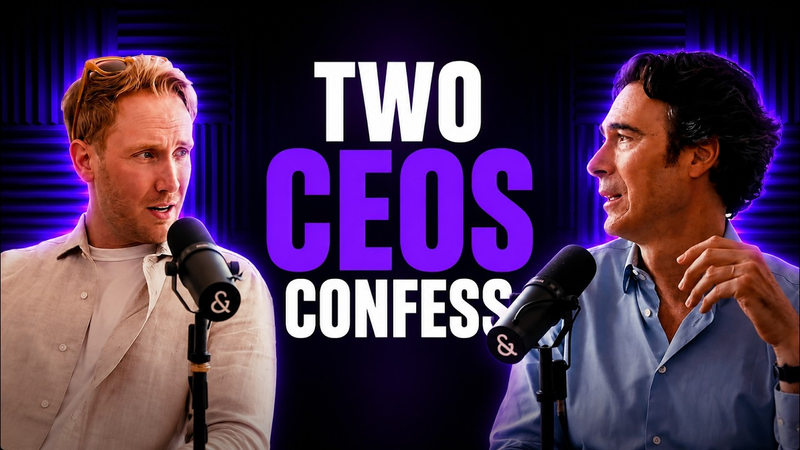
March 2025, both of you became CEOs of existing organizations.
I want to hear about the first 100 days.
Yes, sure. So, for me, it was um it's very busy. It was very intense. I think the thing that defined the first 100 days for us was um bringing the company to the core of what it should be. And so, it was really all about focus. So in that time we divested two studios and we refocused the whole studio around just the Runescape IP. I think for a long time there were questions about whether the company needed to move beyond that IP. Um but actually with the scale of success that it's had and the level of reach that it's had. Um we made the call that actually doubling down on what works well is far better than trying to branch out into something brand new. And that 100 day period literally ended with us rebranding the company as Jagex. the Runescape company. So there is no hiding from the fact that that's who we are at our best. So the first 100 days was about becoming that
and did you have that plan already as you started like you had your 100 days in your mind and executed against that?
Yeah, I had bullet points and thoughts and by day three a lot of them had changed obviously but I think the highle strokes about focus and sort of strategic alignment those things stayed as the tote and pause of that first 100 days. Um, I think by the end of that 100 days, I would like to think and at least our engagement surveys suggest that the whole company was way more aligned with just doing one thing really well. So, our whole strategy now is just three things. One is to obsess over the Runescape games. The second is to make the Runescape games as easy as possible to get into and to enjoy. And the third is to drive as many players into that easy onboarding funnel as possible. That's the whole playbook. And so, the first 100 days was about aligning around that and getting clarity,
keeping it simple. That's it.
Yeah, I can relate to that. I mean, um, I I was, you know, I came from selling my studio to Stillfront, then I was the CEO of Stillfront, so I knew, you know, where the bodies were buried. I know
what was broken and what was, you know, what was really working. And so the big change there that I needed to do was, uh, we were trying to do way too many things. You know, similar similar situation in terms of focus. We acquired, you know, 21 studios. uh we were trying to make 75 games work. Uh it just it was incredible. We were divided in kind of three segments of you know we had Europe, you had North America, you you know Mina Apac. It was it didn't mean anything.
And so it was about what are we here to do? We're here to you know do games that our player communities really enjoy and love and focus on those. So what we did is first of all I knew what were kind of the seven key games came franchise as we call them that really had a chance to succeed in this market and I basically focused the whole company on that got rid of all the you know business areas all that sort of stuff everything that basically was in the way of doing that another thing that they did is initially
we were this kind of very decentralized happy family of studios and everyone you know will do we'll do things that work and that worked at the beginning but when the market became difficult. It didn't work anymore and then we reacted by becoming overly centralized and that slowed down everything and people weren't really taking the decisions at the product level the way it should be. And so I kind of moved that to more of a a partnership level where we gave back autonomy to the studios. We put for example marketing back into the games and all stuff and all that. We we did all these kind of organizational changes uh but at the same time put a lot of discipline. And the final thing was we weren't making new games. uh we had you know new games were almost 0% of our revenue uh the year you know in that year and so we basically built back that muscle because I think a games company that is not able to do new games is a games company that will die at some point you need to be able to operate your games uh but you also need to be able to build new games that would probably have a a different view but
organic growth versus an inorganic I wanted to ask just one question regarding that was like did you have that plan before the 100 day mark start and I'm asking this because like the 100 day mark is in theory when you should listen and execute highly visibly but when I talk to CEOs the listening part kind of happened already before the 100 100 days started and it's about executing highly visibly is that uh is that how it goes
I mean maybe I'll start this time uh I mean I was in a privile position to already be there
uh so I kind of knew what needed to be done uh I would think that maybe I was maybe a little too slow in executing some of those things because I knew the the company so well. So maybe I didn't want to be too brutal in certain in certain areas.
Uh but yeah, the plan was very very clear for me from from the get-go. Uh if you look at the exact team, you know, your direct team that used to be an exact team of 12 people and we were only two product people in that exact team.
Uh that exact team is now six people.
Uh I'm the only one remaining. [laughter] And we are basically poor product people.
Okay.
So it's a big difference in terms of how you approach.
Unless you've been living under a rock, you know this is web store rumbringer. 70% of top apps are using a web store. And the best ones, they're doing it with app charge. Do you want a $20,000 inapp purchase? [music] Yeah, app charge does that. Do you want to pretend that subscriptions are still a viable monetization strategy for [music] games? Yeah, Appcharge even lets you do that. They get what high average [music] revenue per paying customer means. And they're already doing over half a [music] billion dollars in transactions a year. So, are you going to be the first to do a $20,000 AP? Don't [music] accept microtransactions. Embrace macrotransactions. Learn more on appcharge.com. [music]
So, you had the plan before starting the 100 day mark or
Yeah, you John clearly had one.
Yes, I did. It was like hit the ground
running. Yeah, but I mean,
well, you were on the board.
I was on the board, but I have a long history with this company and its games. So, I grew up playing these games. My best friends played these games with me. I was best man at one of their weddings. I'll be a groomsman at another wedding next year. Um, we all met playing
Runescape. Runescape.
Most of us don't. This is the secret. I promise you. Half of the people that you meet secretly do. You just don't know it. Um, in any case, I played these games for about 20 years. Uh, my first job since graduating was at Jagex. It was like my dream job. come and work for the game studio that you've played the games of for 15 years. And so I'd spent a few years at the beginning of my career in this business. And then I came back um as CBC and Habelli bought the business in uh 2023. Uh and since worked with those teams on actually doing the deal for about half a year, then joined the board and then eventually came into the CEO position. So it wasn't like coming in from a cold start. I already had very clear views as a player of what I'd want to see. I already really understood, I think, the player base and what matters most to them. Things like killing bots in our games, these sound like small, trivial, impact,
semi-impactful things, but actually for millions of players, those items are the most important things. And for a business like ours that really grows um sort of steadily and linearly up until recently, over time, like all of those 2% 3% pain points that you can remove are the lifeblood of growth. And so in the last year we've grown about four or five times faster than in any previous year in the last sort of decade or so.
Thank you. Um and that really is on the back of I think just doubling down on on the core stuff and not being too distracted by the rest of it. And I think in terms of listening, I mean I've been listening for two decades as a player. I've been listening for five years as an employee and then another two as a board member and a dealmaker. And so, um, I had lots of views coming in, but really they all just boiled down to do one thing. Well,
Alexis mentioned that he was a little bit slow in some of the decision- making he made. Do you wish you were slower in some of the decisions that you made?
No, I think I can think of more things where I wish I was a bit more assertive and fast than slow. I think you get a
real window to say this is what it's going to be like now and this is what the future that I see for all of us. And I think that window does close naturally over time. And so you get a bit of grace to say this is who I am and this is what you need to know about me. But also here's how I think we're going to be successful. And so a lot of what I I did in that first few months, similar to you, Alexis, is change the leadership team. There's very little of the existing leadership team left. The layer beneath that as well, really flatten the hierarchy as much as possible. And now the people who are running our respective games, we've got three Runescape games. Um, two of them, well, all three of them are longtime Jagex employees. Two of them started as QA analysts like more than a decade ago. And they are the people that I knew when I was playing and have known for many years as like defenders of the games, if you will. And they're now empowered to actually run those studios. There's a part of me that wished I'd spent less time to get to that point. It took about a year for us to get that embedded.
Um, but I sort of don't regret it at all and just wish that I'd moved a bit quicker. Maybe
you have to change a leadership team, right?
Totally. That's where I was too slow. By the way, it's uh there's one or two changes that because it's people I really liked working with that I really enjoyed. I had a relationship with because I was a CEO CO before and I knew them
and it was just really hard to kind of say
this is what I've learned since and this is the thing I tell to all all the teams because we had this kind of still front family and we're all kind of thing and I say and what I told tell my teams now is we're not a family. We're a pro sports team
and we're all everyone who's a leader here is a coach and if you want to be Paris San German Bay or Bayern Munich if the strikers isn't scoring goals you put him on the bench right that's how that's how you have to operate now this is the games industry today it's much harder
Eiffel Tower iconic Tower of London historic the two towers simply epic but none of them tell you anything about mobile app intelligence downloads revenue active users and my personal
favorite weekly cohort ordered retention. Get the real story. Get the real data. Get sensor tower today.
How was that taken? Cuz like Sealfront is culturally Swedish company, is it?
Yeah, it is. Yeah. Well, not not really. I mean, their headquarters are in Sweden, but if you think about it, it's a global company, you know, we're in the US, in Jordan, in Japan, you know, Germany quite a lot. So, uh, [snorts] it was it was difficult. It was a cultural shift and, uh, and and I realized, you know, I had to kind of show example from the top. I hate when companies say corporations say welcome to the family. Why can't they say welcome to the team?
Exactly.
Like it's it's not that sounds actually much better.
Yeah.
Yeah.
I agree. I actually think that it's the privilege of a lifetime as somebody who joined this business when I graduated that I remember the day that I joined. I sat opposite the guy in the interview room who is now the head of Old School Runescape which is the fastest growing and biggest Runescape product that exists. Um he's a killer. He's called Kieran Charles. Wonderful human being. he's the embodiment of all that is good at Jagex. Um, and I remember sort of
sitting in that room thinking this must be some sort of administrative error because this is such a privilege. And I think for people who step into this building who've grown up playing our games and now get to sort of play for Paris Sanjaman or something as a kid who grew up in I don't know um one of the AMDs that should feel like the opportunity and the moment of a lifetime. And you can really tell when people step into the building and they have that feeling. You can also really tell when people don't have that. And so if I look at the team that we have today, 18 months after joining, the percentage of the former is way way way higher than the latter. And the percentage of the people in the business dayto-day who either develop, design, or market the games has grown from less than 50% to more than 85%. So the thing really is
the kind of no we are the Runescape company. You're here to make Runescape. If that doesn't feel amazing, it's probably not right for you.
Yeah. Alexa, do you think he John had a a bit of an easier path for the C for the start of the CEO because you've been
in the inside, you know the inside, but then you went out. How do you feel about
No, [laughter] I'm I'm not the one to be but uh you came essentially from the out. You came from the top. So, you have the board who's already believing you. You know, from the inside because you worked at the company. This is true. you worked in the P who was evaluating the company and now you can come in you you have friends
but they're not that close and you can make new friends and so you get to restructure you can be quite analytical
uh versus Alexis comes from the inside and literally has to change people who who he's worked with for a decade
I mean how did that go I mean you've worked with a lot of those people for a lot of years how does that decision moment feel
I mean to be honest it's impossible to judge whether your situation or my situation was easier or more difficult I'd Maybe in my case because it's a public company there's a extra challenge of being a public company. You're doing everything in the public eye. You every 3 months you've got to say what what you're doing. I mean the the the the quarter where I was made CEO was the worst quarter ever. We had minus 12%
you know uh growth. Uh so you know now Q1 this year we did you know we did we we went flat and and it's and and our key franchise are going by 12%. So, it's changed, but you're starting, you know,
with that pretty deficit,
a pretty heavy deficit. Um, but no, I mean, I I think honestly
is if you're willing to step up to that challenge and to that situation, you you just you just do what needs to be done and you know, I love I love the company. I love what we've created. I love the people that we work with. and when some of the people just weren't the right fit. Actually, that was a much easier conversation than I thought it would be because, you know,
yeah,
you kind of know when when when your heart isn't in there anymore and you not fully in there and all that. You know, you go there.
You had the one-on- ones with them.
You've had the one on the last five years. They know, you know, and you Yeah. So, that's what I meant like
that part. I mean, a lot of people say,
"Alexis, you change your whole team in a year. That's fast." No, I should have done it in the first
the first three months.
Three months. The first 100 days. That's why coming back to your 100 days question.
So you would say you knowing the organization and the people through and through by coming literally from the inside as an acquisition and then just being like a benchmark steelfront company.
You would say you had it an easier path just as a CEO.
Like hindsight could have made faster decision but knowing more is easier. I think if you're decisive enough, but then if you're not decisive, you shouldn't be the CEO.
Then yes, [laughter]
the path path itself is
if you're decisive enough, yes. Then I think it's easier.
Would you agree?
Yeah, totally 100%.
So you had it harder because you just didn't know where the bodies were buried.
I mean, how could I possibly compare? I have no idea how hard or easy it was for Alexis, but at least by my own experience, I think knowing what you know is a liberator and a gift. Um, but if you accept it to just be perpetually
true, you're going to have the same trap as anybody else who's been in the business for a very long time. And so trying to stay, I don't know about for you, but at least for me, trying to remind myself dayto-day that even though I know the products very well and I know the people pretty well and I know the walls of the building pretty well,
it is not the same thing that was true 10 years ago when I was last here. That was a very conscious effort to sort of keep in mind. Um, and I think we we become we develop a problem the second you feel like you really understand it all well enough to just make calls quickly like this. So I think some humility I think the British culture inside of our business is helpful in that sense because there's a lot of natural humility in there. Um, and I think finding the balance between not letting the knowledge become arrogance or presumption
but also recognizing that you know what you know and it's much easier to do it from here than from a standing start. I think that's the balance that I've I've wrestled with. But I think no regrets for sort of coming up to speed early.
I think the one advantage that you probably had was you have one really big clear product that you know and understand all that. It's got its own challenges because you know it's a massive community.
Now we've got three and it's one franchise but
it's one franchise. what I mean.
Yeah,
it's one franchise in in our case, you know, 75 games, 21 game studios, 21 different cultures, different people. I knew those very well, but it's kind of like which ones do I choose? Which ones do I focus on? Why do I explain to the other the ones that we're not choosing that you're you're important because your cash flow you generate is important for the key franchise, but you know what, the best people in your team, they're going to work on that key franchise potentially. And I do that without breaking the studio culture, without breaking that. That made it really difficult just because of what we created with Sofr right. So uh so that was a difficult a difficult shift I think
7 years that's not a sponsorship that's a marriage and that's exactly how long we've been partnering with apps [music]
and the reason it has lasted is simple every growth team I talk to [music] on this podcast every operator who comes and breaks down what is actually working for them eventually the conversation lands on measurement and in gaming [music] we refer to reliable measurement with a single word abser.
Yeah.
Both of you rebuilt the leadership team, but you
didn't rebuild the leadership team from the insiders or how did that happen? Because like
what I'm trying to get at is you join the company even though you know it really well and you have the support of the board as any CEO in the beginning you must feel a little bit like an outsider especially if you push out the uh the leadership team at that moment.
Maybe a little um didn't spend too much time thinking about outside versus inside. Just thought about what we need to be and what we currently are. made it really objective and so like I said the strategy is really clear it's three things and so we have one person in the exec team for each of those strategic heads I think one of the things that's been really important and impactful is rather than saying team X is responsible for an initiative the answer is now
person with name Y is responsible for initiative and so for owning our obsessing over our core that person is James Drovski a CPO that that I brought in with my predecessor Phil together um the second is um the pillar two which is make it the easiest on boarding experience of any MMO in the world that is owned by a guy called Kevin Allington my COO his whole job is that and then the third person fill the top of the net with as many players as possible was a bit more complicated so I come from a mobile background my whole marketing playbook is programmatic UA it's very quant it's much more Eric Sofur than it is sort of brand bible um no regrets for that and I think our company and we maybe we talk about this some other time is uniquely positioned to be able to spend spend on UA like a mobile company is in the world of PC. Now there's it's taken a year of inventing technology for that but the headline is when it comes to the team it meant that the CMO that I needed was not the typical PC CMO. So our CMO is ex head of UA Zinga which for a company like Tatiana which for a
company like ours is quite unusual on paper but the three people in that core of the leadership team align perfectly with the strategy and they have teams that are aligned with each pillar of the strategy. So top tobottom alignment has become really possible because of changing the leadership team. If we'd kept what we had, the confusion does just inevitably seep in and that's where you start to lose the structure. And so it started with what do we need to achieve,
how do we segment the company to achieve those things and then who are the best people in the world to do those three things and it was really that simple for us.
I think um similar approach I think the the difficulty again for us was having all these kind of different studios. So the first thing I needed to do was how do I reempower the people that are leading those studios? How do I give them you know the autonomy that they need in what they need um you know um execution delegation of authority and when you're a public company you know you've got all like it's not like you can't do it any in any kind of way that you want. So, so you need to do this kind of delegation of authority all the
stuff. You need to explain to people what they can do, what they cannot do, what they can sign for and all that. It's it's and a lot of people like don't like that. But I think to give that clarification was super important. Um and then and then same same thing you know a lot of the those studios also the the larger studios report directly to me. So I've got those team reporting directly to me and then I have two people who are taking care of the other studios because I can't have more than three reporting directly to me and be the CEO of a public company. Uh so removed a lot of kind of you know middle you know middle management uh in between and uh yeah but then you know this I have other challenges now I need to rebuild the equity story uh need to do a lot of different things. What's great when you're a when you're when you're it's a PE company you're working for PE company you have you have the price of entry and then you have a target price of exit I have a price that changes every day
every quarter
every quarter you get reevaluated so so you need to build the equity story you need to to explain things if you think about it still front was as a group
uh had not had a a quarter where it wasn't declining since 2022
so last quarter was the first time as a as a business is within decline. So, uh you got a you've got a lot of trust building to to to be doing.
Saturi, it's the Japanese Zen Buddhist term for sudden enlightenment. That flash where everything clicks. We're told that Heroic Labs team had theirs when they realized that most studios run live ops like a horoscope. Vague, kind of generic, same advice for everyone. So they built Sattorii, real time experimentation, player level personalization, events that actually respond to player behavior. Say Sananara to your old live op stack and Konichiwa to Sattorii from Heroic Labs.
Is it easier to run a company that is backed by PE than public?
It's different. So I've I've done a bit of both. Um
yeah, huge games.
I would not go back to public. If I could click my fingers and choose one, I would choose this. I'm glad we agree on something.
Yeah. Yeah. Yeah.
Look, I think for a business like ours, the cycles are so long. Sorry, Alexis. The cycles are so long that if you tried to run our games with a 3-month horizon and high expectations from the outside market, it would not be rewarded by capital markets at all. I actually think that the board that I have, and I I genuinely believe this because I came into this business with that board and with those buyers, we are so unbelievably aligned around what matters. You're not going to see this private equity firm say, "We're going to bolt on some random asset because it helps with the financial engineering." It's not that at all. Um, they understand that the core games, two core games are the ultimate priority, growing a third core game within the franchise is the next priority, everything else is surplus. And so I think if you've got a very smart, very committed deal team who then becomes your board and you all join
at the same time, like that's the luxury I've had is there's never any alignment issues really. There's sometimes small communication things here and there, but they understand what we're trying to build and there is no confusion about what's what's important. And so um I think PE can get a bad rap when there is a lack of understanding between say a CEO and a board for us because we all came in at the same time on the same thesis and we all make money in the same way and that's true of all the people in our business. Um alignment is pretty locked in which makes life much easier.
Yeah. I mean in our case you know yeah you get you get you know your uh what's happening to you kind of every every quarter uh
and on the market as a whole like sometimes you can be doing well but people are just undervaluing games for this quarter correct
because new AI invention genie came out you're down
exactly uh or yeah AI will mean that you know you press a button you'll do a game and all that uh so similar you know you
get the board to align with you. You say, "Guys, we're going to focus only on these seven key franchises. This is what we're doing. This is what we're about because we think we have the talent density, because we think we have, you know, the the community behind them, because we have unique products. Um, and we're not going to chase uh quarter results. We're going to chase long-term growth on on these key franchises. We're going to invest into new games in there. That's going to reduce our profitability for a while. Uh we're going to be bolder than we were before and um are you behind me? And it's going to be a rough ride uh very likely for a while before it becomes better which uh now finally we're seeing it become better but it took a year
in sickness and in health in soft launch and in live ops through every meta shift and every platform policy change. That's the kind of loyalty vibes built between your game and your players. AI powered
targeting, a real [music] meta layer, rorowass optimization that actually compounds. That's what makes Vibes the fastest growing loyalty platform in mobile games. Till churn, do us a part. Vibes. VBS.co. Can you talk a little bit more about working with the board because board is your boss? Uh it's the one who determines whether you are a CEO or not. So what is the optimal setup? Uh it seems like you have one. Can you open up John a little bit of like your boardwalk?
Yeah, I mean look it's I don't know if it's the best one, but I I feel pretty lucky with what what I have. Um I think one of the biggest misconceptions is that when you take the CEO job, you're at the top of the company. You're not. You're the pinch point on an hourglass and it flares out as you go up and you go down. Um, and so everybody seems to be my boss these days from from players to to the board um and shareholders above that.
Look, I think the way that the way that we work as a business is um we talk a
lot um and actually that's mutually beneficial. So um I probably speak with my chairman three four times a week minimum. Sometimes we'll do two hours of walking around a lake talking about what the future looks like and how it should look like um with my lines the rest of the board by with you.
We do it together. So um I have really great relationships with most of the people on my board directly. So as in I speak a lot with most of the people on the board directly um and Mark our chairman does a lot of the sort of behind the scenes level setting communication. And I think it's one of those things where overcommunicating upwards is almost never a bad idea. And so I spend a ton of my time making sure that we're all clear on what's important, why we're doing what we're doing. And by the time we get to any board meeting, nobody should be surprised by anything. And the same is true downwards. So what the board hears is almost exactly the same as what my team hears. And a it makes it really simple. I don't have the brain power to be able to manage two sets of stories.
Honestly, that's it's hard enough with
one. And so if you keep the story really simple and clear, you communicate constantly upwards and downwards, life just gets easier, I think, in this job. And any chance you can do that, you should take
ton of time. Can you give a percentage of of time let's say in a month?
Uh it depends monthto month. So a light month I would say I probably spend 20% of my time 30% of my time on sort of board discussion and communication. If it's coming up to a really big decision moment a month could be 60% spent on that. Um and obviously the inverse is everything that I spend with the business dayto day.
Board thing is not as much as you. Um it's been a bit more recently because we onboarded four four new board members. uh so you have to do the on boarding you have to explain the strategy why you made some decisions and all that so that takes a bit of time so I think during that time it was probably around 30%.
Um I think a healthy level is 20%. I think the m when at least my impression if it goes above 20%. um it means that there that you there's some misalignment in the strategy and
and therefore then you reinvest and maybe you go to the 30 40% to get the alignment again, right? Uh so that's my perception. I'm trying to keep it at 20%. But you know with with four new board members, I'm probably in your in your era right now.
This was also the first video games deal that that CBC has ever done and so there's a lot of learning that's happened over the last few years already. Um, but they're such um sponges for for knowledge and understanding and they genuinely want a player's perspective on things all of the time. I find myself explaining some of the nuances of our in-game economies and realize that they really are quite allin on the detail. And so, um, much of that communication is probably me overcommunicating. Probably 10% 20% isn't that necessary, but as I say, I'd rather do more than less. And the same is is downwards.
Yeah.
I want to talk about a little bit of the weight of the legacy. Of course, Jagex is the the epitome of legacy. you came in, you talked about how you not only changed the leadership team, but you also killed some products.
So, how do you make that decision of
what are the things not sacred to kill? What should be protected? What matters and what doesn't?
Yeah. So, at the product level, it was simple for us. Anything that wasn't Runescape wasn't nearly as important. Anything that is Runescape is important. Um, and that that was the simple divider at the product level. Now, in terms of legacy and sacred cows and lines you don't cross, there are tons within our game. So, below the product level at the operational level, for example, in Old School Runescape, which is our biggest and fastest growing product, that game does not release that team does not release any new content into the game outside of some quality of life stuff unless it passes an in-game vote where 75% who vote vote in favor. And so, there is a democratic element to this. If you lost that, you'd lose something very serious. Equally, if you ever brought sort of true microtransactions in a mobile gaming sense into old school Runescape, there would be riots and there should be and you would see a mass exodus of players in a way that is pretty unusual by normal gaming
standards. So, I think understanding what is sacred is not a limitation per se. It's also the purity of the product comes from that. And that purity I think has allowed the games to become like oases in sort of an inchified desert. And so it is the strength of the business. I'm really grateful for them. And when I say I'm glad that I had the information that I did coming into the job, if you didn't know where those lines in the sand were, I'm convinced this job would be a 100 times harder than it is.
Alexis, how did you know that you're protecting what matters versus protecting what's comfortable?
There's really only two things you need to protect. uh the studio culture the you know when you acquired in our case we acquired studios those studios you require them for a reason they work in a certain way you want to protect that culture and the way they do things uh because what's connected that culture is also basically and I put them together is the community and the game I think they're they're one in the same thing if you do it properly so that's really what you really need to protect
as much as possible that's this that's your sacred house studio culture community and the game. Um, everything else you're it's open game. I think you can you can you can just change it if you need to change it. You can make it more efficient and all that as long as you protect that. And let me explain why that matters. So, uh, you know, you went through some of the things that you have to protect for Runescape.
Some of the things you need to protect for Runescape would make no sense for some of our games, right?
Uh, for example, we have the big franchise. We do farming, you know, farming games, farming management games. It's a very complete different way of approaching that kind of game, that kind of product. Uh, but we also have an MMO Abion online and there you have to be you have to take a completely different approach about how you do an update, how you change things in the game and all that stuff and all that. So, if you break the studio culture or if you are light with the community, uh, you're going that's you're going to
you're going to break that, right? So that's the two sacred cows that we have.
How do you protect studio culture like in practice?
So basically is by ensuring that they have they have the required autonomy to basically be able to act and what you do is do they have the right leadership. Is the leadership really delivering what they need to be delivering if they're are doing what they need to be doing? And as long as the leadership is there, you don't micromanage them. You kind of let them do their thing. because I can't micromanage, you know, seven key franchises. It's not it's not possible. I I don't have and I don't have the skills. They do. But then also, if the leadership is no longer the right one or is no longer engaged or is losing that fire that they need, you need to be you need to be very quick in changing it. So, another thing that I've done is actually I changed a lot of the studio leadership and bizarrely enough I changed the studio leadership to protect the culture. Can you work through through the uh the framework that allows
you to evaluate studio leadership?
I mean, we have monthly business reviews, sitdowns with the leadership where we we go over, you know, what's keeping you awake at night, what isn't keeping you awake at night. Uh what are the
three top deliverables that you want to get done the next 30 days and all that. And very quickly, you know, once if they've missed their three top deliverables, you know, three months in a row, something's not working. Mhm. So it's very very clear, very results driven versus like you know the amount of input they need versus the output or or other type of framework.
It's you know we we also kind of uh do culture surveys in terms of how what's happening with with with the studio uh NPS scores and all that. So it you have a lot of just like a game you have a lot of different KPIs that you will use to see you know is this team performing is the leadership performing and if uh and if then and you also kind of sometimes you'll have a game that's doing very
well and it's growing and the revenues are going through the roof
and you know that actually the leadership is not performing and sometimes you have a game that's not doing well is going down and you have to tell your board no no actually I've got the right leadership in place here because they're doing the things they need to be doing. They're they're fixing what needs to be fixed.
And you've made changes with with products that were going up or the studios that were going on the upward trajectory and you still made the leadership changes. Yes.
That's bold.
Yeah.
Do you have a framework how you changed the leadership on products?
Yeah. I think um I think for our studio we're we're pretty unique in that nearly everybody who works particularly within our games teams sort of builds the Runescape products 9 to5 and then plays the Runescape products 5 to9 religiously and nearly always they've played for many many years
and so similar to Alexis even though I've got a 20- year history playing all of our games um there's almost nobody in the world who understands what our games and our communities need better than the people already working on it that's we're so fortunate is one of our biggest
strengths as a business.
And so in terms of reviewing performance or leadership, um for us, I spend a lot of time with each of the sort of studio leads and we don't necessarily talk about how much money did you make this month. We talk a lot more about what are you executing on, is it the right thing, are your priorities right? And because we all have quite a good sense of what players are really looking for and what's important for the health of our games and what's going to drive the next levels of growth for us like there is a collective does this feel right which is way more important in a business like ours than looking at some like lagging indicators just because our cycles are so long and we live and die by sentiment and sentiment takes months to turn into membership or subscription movements. By the time we've got the numbers we've missed the leadership thing by half a year and so more of it is feeling than you might expect. But I think we're all very tightly tuned to the same thing.
I think another super important point I forgot is do they have a vision for this? Do they have like a three year four year vision about what this game
should be? You know where it where it should go? Very often, especially when you're doing live operations,
you know, you go into that rabbit tunnel that you know, you're doing update after update after update every month and you're just building this tons of features on the product and you don't have there's there's no vision. And so, so that's another key thing, you know, do I believe that this game will matter more and will be more fun and more exciting to play in three years time or not? If I don't see it in what they're kind of showing me, then we need to fix it or we need to change.
That makes sense. Uh, talking about updates, let's talk about your own personal update. So, you came in, of course, you weren't CEOs before
and you had different positions. You were a COO. You were corporate development. You had a corporate development from huge
in a previous life.
Yeah. In the previous lives. And so you were very successful in in those positions. What were the things where you were successful before in your position that you had to unlearn when
you assumed this position?
Um a ton. And this is one of the things I think is is really interesting about our industry. Often times what makes somebody a really great executive is not at all what got them to success the level below. So, I think you're you're pinching at something really important.
Um, for me, the nature of my job, nearly every job that I've ever done prior to this was very transactional. And now I'm dealing in realms of emotion and feeling and sentiment and internal and external and how do players feel? Are they excited about the future? What does that mean for subs? In a previous life, I could say, you know, we've deployed $300 million and bought three studios and they're all performing very well and the value has been accreative and the board is happy and the share price has gone up and now it's um where's sentiment at today and why? Like how should we be communicating this month? Do players feel heard or not? It's a lot more touchyfey and I think in a earlier part of my life, I'd have sort of looked down on that almost as if it's not really objective or scientific. But the truth is for a business like ours, it's way
more important than the day-to-day KPIs. I think that's the big unlearning that not just I but lots of our upand cominging leaders are going through as we speak.
So more player focused essentially.
Way more player focused. Yeah.
Players first truly.
I genuinely think our our company is maybe the most player oriented games business on earth.
Um and I think the reason that is is because if we weren't, it wouldn't work.
That's very different sentiment than being in social casino.
Your [snorts] words not mine. [laughter] Yes, I can see how you got there. Math.
Yeah, it's different breed.
Thanks.
I mean, I had to learn unlearn so much in my case cuz I mean, I was the founder of uh and CEO of my company, you know, started from from scratch, co-designed our first game uh with six people,
Republic.
E Republic back in the day, 2007. So, I was kind of used to doing a bit of everything, you I go design the game, uh, pay the bills, do this, you know, kind of really learned from that. So
when I became COO, I to unlearned a lot of that, uh, to basically, you know, delegate and not try to do things that other people were doing and other stuff and all that. I think the big change is when you become the the CEO is you're the head coach basically. It's it's no longer what you can do to make things better. I think once you've set the direction and you got people line with the direction and all that is how can you a really to make make sure that you're the dumbest person in the room. That's the first thing. If I'm not the dumbest person in the room then I'm doing something wrong. I'm not surrounding myself with the right people. And it's really no longer about leveling yourself and leveling your skill set is about making a,200 people better every day. That's what you need to do. That's the skill set and that's what you need to build. How do you build a performance culture that allows you to do that? And that's a completely new skill, completely new way of doing things. So that's why to be honest, I I like it. I love it because I learning
every day.
Yeah. New challenges.
Yeah.
Um talking about learning and and something new. What does success look like for each of you? Assuming three years from now you've been a CEO, what does the company look like where you could say, "Hey, I was successful as a CEO." So for us it's um it's pretty clear. I think being backed in the way that we're backed with the kind of capital that's in the business, they have like quite distinct timelines. There's some blurriness there, but it's not the same as sort of a public market where you're looking 20 years into the future. And yet for our strategy, it starts with what are we going to be in 20 years genuinely because we've been around for 25. There is no reason why it won't be another 25. I expect our MMO to be around in 2100 and something our MMOs. And so in four years, what does it look like? what it should look like four years into a 20-year journey and we're tracking in the right direction. More practically, what that means is my ambition and the board's ambition too and the team's ambition is to have three or four depending on what we decide to
do in the next few few months um Runescape products that are all actively growing and I think having a an IP that is growing across the board um with a lot of new players but importantly a lot of recaptured players from previous years which is how we've driven a lot of the growth over the last year or so. Those are the biggest bellweathers of finding success. Um, and I would like us to have the largest MMO franchise on Earth. Uh, we're currently about number two. It's sort of two or three neck andneck a lot of times with Final Fantasy, but at least in the West, I'd expect us to have a fair shot at being the biggest and the best.
Very clear.
If our in three years time, our seven key franchises are growing much faster than the market and they're either top one or top two, top three, basically top three in their jar. So supremacy, grand strategy jar, that should be the total war of mobile games for example. Uh so I think that's pretty clear on that side. Second thing is
consistently launching new games successfully and at scale and that's a very significant part of our revenues every year because then you're kind of growing and you're finding new things and all that. And the third thing is um AI is at the center of absolutely everything that we do across the organization. Not just from what we're already doing which is you know the saving cost on translations or different things or doing lots of creatives and all that but actually it's a creative amplifier. It allows us to do and deliver gaming experiences that were not possible before and allows us to make our games much more interesting, much more entertaining. Uh that would be key if we're able to do those three things and we have those three things set. the share price will take care of itself.
Well, I hope in three years we can have this conversation and we can talk about how you won during the past three years.
Yeah. I mean, I don't doubt it. Hopefully, we can have it right here as well.
And we started at the same time, so it's a race.
It's a race. [laughter]
Thank you so much for joining the
podcast.
Thanks for this great job.
You did it. You made it to the end of the episode. As a fan of the show, it would help us out if you'd subscribe and [music] leave us a review on the podcast service of your choice. Those stars and likes, while small action on your part, mean a lot to us and help to grow the show. More importantly, are you a member of the Deconstructor of Fund Slack group? If you have 5 years or more of games industry experience, go to deconstructorofund.com/slack and apply to join. Join [music] the games industry best professional community filled with peers always willing to lend a hand [music] or subscribe to our newsletter to get all the latest insights from the deconstructor of fun content [music] creators. Thanks for listening.
Auto-generated captions from YouTube — names and numbers may be misheard.


















Comments