VideoDeconstructor of Fun
Learnings from Building & Exiting Three Companies with Paul Gouge, Founder of Fourth Star
26 Feb 202480 min video
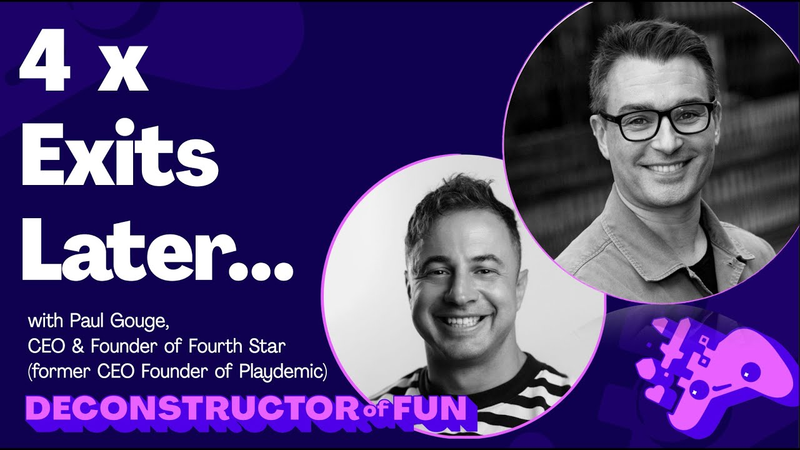
hey folks and welcome to the deconstructor of fun podcast I'm your host Mishka katkov and we have a banger episode for you Paul gch is actually one of the best Founders in the industry he has built three companies over the past two decades a little bit more than two decades and these companies have not only made amazing games but they've also been acquired for times uh with PL demic his latest company uh being bought first by Warner Brothers and then by EA but for $1.4 billion now in this episode uh Paul talks about his fourth company fourth star and how that is going to be the culmination of all the learnings he and his co-founder have have gained over the U the past two and a half decades and I think this episode was really fun one of the most fun ones that I have recorded at least we did it on site so that might affected uh it was extremely
insightful I feel like Paul is the type of a leader that people would crawl through broken glass too uh and in this in this episode we talk about why on Earth him and Alex rby his co-founder are building fourth star after you know such a successful career where they can essentially retire and do other stuff uh we talk about what they've learned from the previous companies that they will be doing in this one what they've done in previous companies that they definitely want to avoid we talk about the fourth Stars 4-day work week uh that's going to be an interesting conversation and also what makes Paul believe that they can succeed in the market of tomorrow so uh I hope you enjoy the uh the podcast episode sound quality wasn't the best one don't worry I've bought new microphones for these onsite interviews so they will be happening as as I'm
traveling a little bit more and um yeah Istanbul Istanbul 7th of March so just in a couple of weeks hope to see you there hope to see you on the uh 8th of March at the istan investor Summit uh with Founders and investors and we also have I think five upcoming GDC events you can find them all and and and find the ones you want to be at on the deconstructor of fun newsletter so if you haven't signed up please do all the links will be there you'll be able to join us in in various events um around the world because we love hanging out with you so anyways without further Ado ladies and gentlemen Paul G Paul G co-founder of Ford Star welcome to the podcast thank you very much thanks for having me in the beautiful lond Town absolutely in this amazing apartment that you've hired especially just for us which people won't be able
to see there's actually a bed in the corner yes which we're not talking about we're not talking about it we don't see the bed no you won't see the bed in if fin is so the the green around here it is it's kind of yeah other things can happen here other than podcast so we are on Brick Lane and other things definitely happen I would call this a trap house if we're in the US but U we're going for Peggy se but the podcast is moving to the next level clearly so it's from the zooms to trap houses so uh Paul uh I want to talk a a little bit about your background before we jump in so you recently raised 10 million from Griffin gaming Partners it's a good thing you're a startup founder All That Jazz but I think the previous episode is even more interesting so fourth star before fourth star you were the CEO and co-founder of play demic that's known for golf clash and golf Clash is known uh for being sold well not golf Clash the whole company was sold for $1.4 billion to EA and before that it was sold to Warner
Brothers indeed so double exit double exit yeah and before that double exit there were two other exits Rock Pole games was sold to and Square Enix of 2007 correct and battle mail in 2001 correct what are we doing like for like uh I don't know where to start you are a superstar founder well we've certainly be doing it for a while yeah whether we're Superstars or not I guess is for other people to judge but um yeah we've been doing this for Mak feel very old like this is my 24th year in video games so uh and we've had a great journey I mean each of those businesses has been different to the prior one so battle mail was very much a early play in online gaming it was virally distributed it was actually a playby email product so it was really sounds like work sounds like work you know what it was work it was very different and it was and we had you know we had a million players that game wow yeah in 2000 which was like no one had a million players in nobody had a million email exactly yeah it was incredible but it was a great experience
we learned so much and actually bizarrely that game was self-published so we distributed that game ourselves which we then didn't do again for like another 10 years or so until we got back to play demic so it was interesting sort of seeing history repeated stff there but I guess over that Journey I'd like to think that each of those companies has been better than the one before you we've been better understanding what makes them tick how we want to organize them what the culture is we've certainly made a lot of mistakes so we've kind of tried to iterate on those each time and play demic was definitely the best version of us um to date to date yeah hopefully four stars even better version of those and um I'm I'm so before I start asking in about the U the the details like what's good what's bad and what you've learned because those are super interesting I'm curious to understand your this sounds so horrible your why oh that's disgusting I don't want to be no no no no let's uh delete that part but I'm just I want to understand this do you you are very
successful you have everything you need you have probably great family I would assume you're a nice guy um you got money you got uh you've shipped games that millions and millions of players have been playing over two decades uh you and your co-founder Alex rby riby have been setting up all those four three four companies for now so I'm just trying to understand why are you doing this again like CU cuz like it's not easy I like play so was founded in 2007 201 2010 2010 yeah and it's sold in 2020 2021 yes so that's that's not like a it's not overnight no no there's a lot of painful things I remember playing Gang Nation you thank you miss you you one of at people that played it well I didn't say it when I was playing I was like why would somebody do Clash of Clans with gangs like who thought this is a good idea oh yeah that's that's a it was that's why I remember we'll come back that was that was what I mist
so so why are you doing this again with Alex like you well this is I me you love MMA this is our MMA you know this is we like the punish do I watch it's Jiu-Jitsu no I think you know I think in all honesty I genuinely love it you know and I think we we went on this journey which has evolved over those you know 23 24 years and when we sold the business to EA I genuinely thought this might be it you know we left the business and I think think I took a year off my wife might not wholly agree but I'm pretty sure I took a year off and Alex did the same and you know our CTO left our CEO left and we sort of all exited the business and I spent some time just thinking about what it was I wanted to do you know I love spending more time with my family which is great I love doing some things I hadn't done before indulging some spare time but ultimately I kind of reached the conclusion that I'd like to think I'm still young enough to really do something interesting constructively with with business video games I know
and I'm still really excited about Mobile gaming despite the current narrative we talk about that I'm sure we will I can I can always feel Eric Crest like slating me as we talk but um but but genuinely felt this is something we really want to do again you know we've learned a lot as you say over years made lots of mistakes we really feel like we've got that passion still in us we love making product we love making video games we love the people the industry the possibility and I couldn't really think of anything more exciting to do so maybe that's the poverty of my own imagination but but that's really but that's a powerful message you do what you love to do we do and there's nothing to it and it's not the am that's not the money that's not the fame that's not the well I don't know about Fame there's no Fame in this definitely not famous but uh you might be quite famous actually well I don't know like uh in in like uh with with 2,000 people maybe like that's that's not worth it uh but um but like there's no other motivation then you're doing it because you love to do it yeah it's definitely not about the money and you know for me and a lot of I know a lot of people say this who made made money it's easy to say you made money
but it never was about money so my first career was Investment Banking if I was interested in money I should I should have stayed there yes and that was just I hated it just wasn't for me so for me the Journey of building these companies and building these games and I see those two things sort of in parallel the idea of building a company and the culture and the mission the vision alongside building video games I see those two things having lots of parallels and I love both of those bits and that's really what gets me out bed in the morning that's beautiful are the all four companies based out of Manchester or where yeah they pretty much happen we had a we had a London office for a while um with rockpool we had a we had a licensing business as part of rockpool was called irstone that was based out of London I lived in London for a long time but fundamentally yeah Manchester we've always had this pool back to Manchester I mean you know you and I both went to man University one sem but um but yeah you know what was funny is when we were growing Rock pool yeah we were trying to hire trying to expand so rock pool did a lot of work for higher development and we found it so much easier to hire the kind of talent we needed in Manchester we in
London and so I moved from London personally to Manchester for that reason we were scaling better in Manchester we're in London so I used to commute from London to Manchester and then it became a day a week two days a week three days a week all week and it was like no we need to move and were you United fan before that or after I was for my sins no one's going to listen there but um yeah I I have been United fan from from childhood so okay interesting even living out of London yeah I mean most as as any cynical football fan will tell you most United fans live in London yeah wow all right interesting all right so let's let's jump in into the learnings because this is what I'm what I'm really interested in is like over these three previous companies what were the the kind of like the the key learnings I think it's very hard to speak of 24 years yes but there must have been certain things where you did your first company it's like okay we can do it again we have a new idea and you do that and then you do the third one so there must have been left certain things that you were continuously doing
like let's do continue to do these things yes yeah and I think there's probably macro things and micro things and so when I say macro things I mean those big Ideas really got to hold on to and then the micro things are probably more procedural methodologies ways of doing things that are small and more detailed so in terms of the macro stuff um one thing and some of these things some of the macro sounds quite trit but I think it's really important to recognize the reality of them so the one thing that I would say up front is that it's all about the people M I know a lot of people say that and I think what's interesting is I've said that for most of my career I think I only really started Living that with play demic so a lot of people you meet in this industrial say it's all about the people people are great sass know incredible Talent absolutely evidently true I'm not convinced that's always lived and certainly when I was running the rock pool business we were just trying to hire people you know we had a lot of work on we work bus we were trying to hire people I mean there was a moment in time where if you lived in Manchester you make video games i' probably would have HED you you know so so I think there is an understanding over that
Journey that those things that do sound a bit try 100% true it's all about super talented people and a collection of super talented people with experience and knowledge are significantly more productive Innovative creative than a less talented group of of a larger number of people so I think that's a really really important point I think secondly and again this is one of those sort of big ideas but I think you know you have to live it is a culture you have to create an environment with those super that people are going to do great work and that's really tough you know it's very hard to do that in a world where I often joke that video games is an art for masquerading as a business yeah so we try and sort of make video games look like a business you know we put deadlines on things and budgets on things and and we try and make them to conform to traditional manufacturing processes when actually it's an art form and I think trying to create environment and a culture where people feel safe to take risks where people feel empowered where people communicate effectively where there's transparency trying to build a platform that great super
talented people that experience can then do great things is really important and we spent a lot of time with play Dem you know it's one of my sort of big missions that play there to create that Foster that environment how how do you do that like so in my experience I've more often failed and succeeded like there were there were Studios where the environment was the one that I loved I think the retention is like you know like when people don't leave and having fun and and very like-minded um um a type of place where it's tough for new new people even to come in because the existing ones have jelled so well yeah it's a you know usually that's you know the the kind of negative part of like well J te I think that's right and I think one of the things I would say about that particular topic is is you know that you remember the famous Netflix sort of um the deck that we all consumed back in 2009 there was a line from those Netflix values that really chimed with me which was we are a sports team we're not a family yeah and I think that's really important is that you know there's this idea that people talk a lot
about that companies are families they're not families you know companies are pro sports teams Elite companies are like Elite athletes now you have to operate at the top of your game you can't tolerate poor performance that doesn't mean you don't support each other it doesn't mean you don't work together but what it does mean is you don't just forget you know you don't just kind of say oh well you know I know this guy hasn't done this thing but he's really nice you know we get really well we go we go way back yeah that's not how that's not what that kind of Collegiate culture about it's it's about high performance you know and high performance is about supporting feeling safe being one unit where everyone in that unit is playing in the position they should be in but it doesn't mean s of you know unconditional love how do you combine that approach which which is that now that you talked about I was kind of like reflecting things that worked reflecting things that didn't work absolutely agree and I was thinking about things that work like was it like a sports team I was like no it was kind of like a locker room yeah which is like I was under 30 then we had a lot of fun
and we were like it's a natural and we were extremely well jelled machine yes I understand not you know probably the easiest place for for new people to come in but yeah anyways moving to the next one uh next so not next one moving away from that but I wanted to ask about the sports team not a family approach it's a Cutthroat approach in many way because sports teams are very brutal to players and managers especially well you know I think they're both yeah I mean we're about football managers getting fired but I think there's something you know there's something about that kind of Elite Performance that requires both things simultaneously yes you do have to be brutal you do have to be brutal in your honesty about what you're trying to do you have to be brutal and we're going to talk about how competive our industry to be brutal in your understanding of how competive that industry is but also the best teams the ones that truly support each other you know what I love is when you see you know as you say I'm a man united fan we we we signed this player called hland who's our new striker yeah and we spent 60 million on
him and he scored his first goal only a few weeks ago now he' been with us from the start of the season and he was the big white hope but what I loved was when he scored that goal all the other players were around him celebrating they were celebrating with him because they knew he needed that goal they knew he needed to have that win and they were really supportive of him and I think you know there is a double-edged swort to this kind of nature of elite a elite sports teams and Elite companies is they are highly supportive of each other yeah but they're supportive in the pursuit of success rather than just being supportive for the sake of being supportive and and I think that's sort of that probably brings me on to another point which is about absolute Clarity in what it is you're trying to do I think you know if everyone understands what they're signing up for they understand the mission they understand the vision they understand how competitive the market is they understand what they're signing up for and they're going to give it their all that's all really asking of anybody so it's not you know it's not brutal in the sense of you know being overly aggressive to people you know
setting you know targets that can't be met not providing the right tools and Tech and support to deliver on something it's about ensuring that all those things are in place but all acknowledging how difficult it is and we got to be on our a game to get there yeah that's a so I wrote here like the question that I have here is around like all of these are very easy to agree upon like there's nothing but then when it when the rubber hits the road that's the most difficult thing and part of it you said psychological safety we all know that when you have psychological safety you're more likely to succeed and so which like playing with a good team if you know that they're going to support you they're going to celebrate with you you scoring is for the team not for you like all that yeah but when you put the the sort of a safety versus support um those are kind of like two different things if you know what I mean it's like on one hand not safety and performance let's put it that way yes where on the one hand it's like I have to be safe I have to try me I have to you know feel that I'm not endangered in my position but at the same time it's like if you
don't perform you're out yeah and I think and you're I think one way of sort of differentiating between those two things is I think is the notion of persistent underperformance I think part of support is recognizing that failure will come through experimentation Innovation and that type of failure is acceptable that's part of the mission if we are aiming to deliver something exceptional and we know we're taking creative or production or technology risk then failure is inevitable part of that consequence I think that kind of failure is not only forgivable but actually part of the process I think where to your point where where over support might be the enemy of performance which I think is your point is where you allow underperformance to persist yeah where a member of the team isn't performing for a long period of time and it's recognized and nothing is done about it I think that's something I've seen in organizations and I've definitely been guilty of this definitely guilty of suffing those bullets and having people
in an organization which frankly everybody sort of knows that this this individual isn't performing but no one really wants to face up to it no one wants to do anything about it because you know everyone's being nice to each other and I think that's the challenge that's where safety is is no longer safe because what you're doing endangering the organization you're endangering the culture you're endangering the mission you're endangering the success of the others around you and that's where the right thing to do is to actually act in that situation I remember someone saying to me that Who I Really respect that one poor performer in a 100 does more than 1% damage and I love that and I I think that's a really important way to think about it yeah and then one top forer does most % of 100% yeah totally agree with that that's um and and and this is like like again we're on a theoretical level and I understand everything perfectly and I think everybody agrees on on that but having been in different organizations i' I've been in quite a few and I have been at these organizations that
are you know based on Netflix yes let's like supercell is a good example supercell of 2013 12 that's a that's a straight up Netflix organization and it is when when people talk about psychological safety in theory I understand that 100% And then I remember this organization that was on top of its game you know best of the best people and the turnover I know at some point was like 50% of of new employees who start and that's not psychologically it doesn't sound like it but nevertheless the organization is incredibly well performing yes so so it's kind of like almost like The Gauntlet for people who get to be part of this organization as they join I yeah and I think I understand that I think you're right I think that the supercell model is one we all hold up and there's incredible success that came out particularly that period and obviously IL is talked a lot about the DNA of that I think from my perspective you know psychological safety is is one of the hardest things that I found to create
because it goes against a lot of natural human instincts you know particularly in Creative Pursuits you know we're all naturally we all naturally attempt to defend our ideas we have a natural association with things that we've thought of or things that we've created the idea that someone else would challenge those requires a level of maturity and insight and perspective to be able to take a step back from and say actually Misa is is challenging this thing that I'm emotionally attached to but need to take a step back and understand that actually the reason he's doing that is that the pursuit of the ultimate goal is the right thing for all of us and I think that's a really difficult thing to create an organization I think in terms of the turnover of of headcounts I think part of that could be that you know could result in some people not being psychologically safe I think M I would say and and be interested see what IL would say about this but that environment is not for everybody you know and some people go into it and realize you know what I don't want to be in this environment this doesn't suit me um and I think you know those who are
left or not left those who continue in that organization might actually be grateful and I've had this experience that other people are no longer in that organization and that for them creates a level of safety exactly and we were talking about super 10 years ago so that's not of today but I remember another uh point that was raised I don't know if this is from Netflix or was this from Riot actually and their culture was that a good enough performance gets you uh was it like a oh I think that's Netflix but I I remember visiting Ryan in those same days and that was the CEO told us this and I remember like it resonated there well I was like that's a good one I like no and it kind of but I think what it talks to is that that demand for for excellence you know when you think about our industry how Inc you know the the the proceeds of success are not eily distributed but but it goes back to it's all about the people and kind of like what I've been I've been muling around this a lot because I've made all the possible mistakes akes here and I've
kind of like going I don't know correct me if I'm wrong I'm kind of like thinking about successes and the failes and it feels like the team building is is the most important part because psychological safety making everybody happy all those things are great but they're not meant for everybody and you have to build the type of team that can execute and that you can lead because there are different leaders and there are different people and some people fail in some football teams you go from Manchester United Real Madrid and you're dog absolutely and the other way around as well but nevertheless when they played in their own teams they were the best players and so it goes back to building the type of team that you can lead and being brutal not brutal but I don't know what's the right word well I think I mean the way I would put that is and I totally agree with you is chemistry there needs to be chemistry amongst the team you know you need to have a highly performant group of individuals that are not just capable of acting individually but when they come together their skill set is examplified and I think that comes from chemistry you know if you
think about as a recipe like garlic is amazing ice cream is amazing I don't want ice cream garlic you know might might be a success but you know what I'm saying things that you know don't go together so I think that chemistry is also really important it's you can't put people together that just because they're highly talented you need to understand that how they're going to operate together in that culture and that team fascinating so all about people create an environment sport team not a family what else what El well I think and you know I think I tou bit earlier but in terms of those big macro things I think you have to be really really clear on the mission and the vision you know and the Mission Vision again these words that get thrown around and they're sort of very corporate jargonistic but I think you know the way I see Mission Vision is just a really clear statement as to what it is we're trying to do now my mission stat is why do I exist why are we coming here s siic yeah well it is is he back toic again but I think ultimately I think that's so important and I think I think a lot of these because I think we've all consumed
way too many business books over the years we build up this natural cynicism towards some of these things but there's real important kernels in these things you know and um I think from from my perspective having a very clear mission and vision is really like having a map if you're go an adventure you and I want to know where we're going we've got a very clear understanding of why we exist and what how I'm going disagree okay so I was uh I was helping this it's a psychologically safe space yeah cordially disagree on this one so I'll give an example I was helping um a team I don't know if startup 150 people I guess that's a startup big startup big startup anyway they've been out for a while it's an app they've been doing you know good and they have a very strong Vision yeah and they were leading the team through goals and so what was happening in between those two is that um is is that you have your you have your vision and that's clear everybody's is on board and they lacked product strategy they didn't uh so they lacked company strategy they lacked product strategy at that point they already had
two big products one big and one new and they lacked road map that is based on the product strategy and so instead it went down to the goals like hey you need to hit this you need to do that we need our retention up our mization is a little bit lacking let's focus on that on next quarter and it created an environment where everything was like up in the air all the time sure because there was that so where I helped apparently so I I helped them and then the end it actually worked um you know uh was I helped them to build a product strategy just you know sit everybody down it took a long time because you have to get onboarded and blah blah and then that product strategy led to the product managers making their own road maps that they presented to the leadership team and and now suddenly went from this goal that goal retention mization social user acquisition now we need to boost our this number and that number to we know what we're going to do for the next 2 years we're going to know what this is the road map for the six months there's enough room and then and then people felt empowered and they're
leading and nothing really like in my opinion nothing really changed that much we made some personal changes but but not much but nevertheless when they worked on the strategy together that was very concrete on the product strategy and then built their own road maps people felt that this is a stable organization and and they were much happier working there I I wholeheartedly agree with that approach and I think that's something that's really resonates with what we do so when we talked before about the macro and the micro I think one of the biggest mistakes that people make you know despite me saying mission and vision are really important I absolutely believe they are in isolation they can become meaningless so analogy I often use with my teams and other companies that I've advised is let's say we decide that you know you're a fit guy we're going to see if msco can run the 100 meters under 11 seconds never going to so if you're if we just say look we're going to start this incredible Mission M and I so we've got a we've got a mission we've got a vision and the vision is m is going to run the 11 seconds project icus you know let's do
it let's go that's kind of meaningless you this kind of ridiculous goal is meaningless however many times I've stand up in town hall and back the table and say m is going to run the 100 met under 11 seconds everyone in our team's kind of going I don't think so or how the hell are we going to get there I mean it doesn't make any sense you know I don't understand this you know and I think you know very if you think about that in a company sense it's like well with this tiny company there's these big companies that are making billions of dollars how are we going to compete with them so I think the way that I you know the analogy I used to extend the idea of you running 100 meters under 11 seconds is that what we would do is say right okay we know we know what we're trying to do it's this incredible lofty goal let's think about how we're going to get you there so let's think about what the trading regime looks like let's think about what the nutrition looks like they's thinking about yeah the strategy how are we going to get you Supple enough how are we going to get you fit enough how are we going to and we'll start with these much more granular goals so our you know our first 6 months might be just making sure that we can prevent any injuries it might be just getting you to a place where we think we're confident you're not going to
injur the next 6 months might be trying to get you to run it under 14 seconds you know the next 6 months might be trying to get you under 30 seconds and doing all kinds of other training techniques you know I don't know much about sprinting but you know what I mean Cycles exactly you're you're breaking this down into its constituent parts and I think you know understanding what those individual goals are on the journey to that ultimate vision is the only reason and the only way of visioning Miss can make sense otherwise it's just this crazy objective goal that you might save somebody down in the P know it needs to be rooted in concrete actions and methodologies and metrics that you can test your performance along the way as you aim for that it's um I I mean one so you're basically saying that mission and vision super important as a starting point but without strategy and road maps you're still dead completely great then you're still a random organization where everybody understands how to execute against mission and vision in different ways absolutely I think you know anyone can say we want to build you know great games that people
millions of people love to play every day for years anyone can say that very few people can actually organizations can actually do that and the devil is in the detail of how you do that and so I think you absolutely have to have those those DNA style statements those constitutional statements about why you exist without the detailed strategy there for nothing I think that's a very important point for people to understand because we tend to overstate the value of vision the values of missions uh and understate the value of the work that just goes into making the Strate making a strategy is not like let's have an offside and come out 10 rules absolutely it's a it's a lot of alignment it's just kind of boring at some point you have to listen to everybody then you make the decisions and then you give ownership of the next stage and so for it's a it's a process it is and it's grinding grind this stuff out and I think and I think that's a really important point for us to here is that these successes you know you talked about you know planemic not
being an overnight success you know of course it wasn't you know and I've seen very very few overnight successes in our industry most overnight successes take 20 years to deliver you know and it's that those iterative learnings those understandings of the of the mission and the vision and then the grindy steps of strategy to get there and without that understanding you know you have to be able to you have to be able to trace a direct thread from the mission and vision all the way back to what I'm doing tomorrow and I think the best strategies are able to do that you know if I can if I can understand what I'm doing tomorrow and how that's in service of ultimately the goal of this organization then the organization is operating effectively in line with the strategy that's beautiful okay three things more so well I think my three things there were the big macros with with the people the culture and then the mission and vision and and then in that strategy of course so I think the other thing you know getting into real micro I think the one thing that is so clearly
evident to me now is that if you're trying to make Mass Market highly successful free-to-play mobile games your understanding of the how competitively compulsive that product needs to be can't be understated you have to genuinely believe and have objective tests but the thing that you're creating is going to compel people to want to complete that core Loop thousands and thousands of times for years and going back to what we said before about psychological safety and being a to detach yourself from the subjectivity of an idea you've created is so important and again this is something that's talked about a lot in our industry you know supercell put this kind of up front and center in terms of the you know the test and kill philosophy a lot of companies talk it a lot of companies will say this is what they do I find it very interesting that very few truly do and there are some big impediments to it you the normal capital structure of an organization means it's quite a difficult thing to do you know
if you're in a large organization you know you and I want to make a product we'll maybe make a prototype that will winers some funding we then have to commit to a p&l forecast we'll have to commit that this is something that's going to come out at a point in time and then suddenly that thing's got some inura and that that momentum is very hard to stop you know once that thing's attracted Capital deployment once it's got a forecast once it's it's in someone's number somebody somewhere oh inside a corporation inside a corporation it's so difficult it has to ship you know and that Corporation may be stating publicly that they believe in this funnel analysis test and kill philosophy but they don't because they can't so I think you know living that philosophy is crucially important and that is about being truly impassive in your understanding of of whether your product or not can entertain and be compelling to individuals and for us the way we think about it in fourth star is we have the thing we call the conveyor Bel to doom and it sounds very negative but every every single idea is strapped to
the conveyor belt of Doom so it's destined to be chopped up by the Jaws that at the end of this conveyor belt the only way you can drag an idea off the conveyor belt of Doom is to objectively demonstrate that there's something seriously compelling about that concept because without the ability to do that ability to prove that objectively it's going to be consign to B to the bin okay so there's a interesting topic here so you have your strategy you have your vision you have your mission um let's say you have your product strategy is your approach more like let's get the MVPs out as soon as possible test them show the traction if you don't show the traction then the conveyor belt of Doom is going to eat it correct so my question around this is I I've read the The Lean Startup and I think it's not a good book I think it's a dangerous book yeah I think it it it um prioritizes failing fast over longm yeah and over strategic thinking
over being deliberate and and I'm trying to understand like how are you bringing the elements of being deliberate because it's very easy to make a lot of prototypes and kill them all uh we've seen companies like wuga is a good example at one point they went to this approach and they became very good at killing games and very bad at shipping games in the end like we want to be on that shipping part it's a really good point and it's and there's a real Nuance in that how we respond to that so there's there's a couple of things that we do as well which again I should talk about for more context so we have a a concepting methodology and we call it aim and a stands for audience I stands for ingredients and m stands for mix and the idea behind aim is to provide some kind of concept framework so I think we all know that that great great creative ideas happen inside a a framework happen with constraint so the idea of aim is to create some constraint so you know we don't just get up in the morning and say let's just make a game game to somebody you know the idea of a the idea of aim is to identify a core
audience and we have to believe that core audience is relatively underserved not that not that there's any audience that's underserved in this market because there's so much competition but we have to believe relatively speaking there is some audience opportunity there so with gold Clash we felt that we felt this been proven to us by things like eightball pool and other products that there was a compeed casual male gamer who wants to play skill-based PVP games that were relatively underserved the fact that eightball pool had made it into the top 20 grossing showed us something um so so that was sort of the a with that product I is about ingredients so for us you know I talked before about the idea that there's lots of there's lots of iterative steps in product development where people are copying things in the market people are being inspired by things in the market some are just playing xeroxing things in the market but for us the right thing to do is to look at successful products and identify ingredients elements of those games that are doing really really well but could be taken up objectively out of that particular game Loop and maybe you somewhere else so we identify which
ingredients we think resonate well with our audience that becomes part of our menu of things we want to look at and makes you look at the market much more yeah exactly and then and then m is is you know M's there to make aim make aim but M's really STP M's mix so the idea is we're mixing these ingredients together into new forms so I think it's important just to sort of give that context that's our framework and and how do we test an MVP sorry did I jump no no no no it's f I know I just want to kind of you know come back on your point there around I because I also agree with that Nuance point that you know what I just described in the conveyor ble of Doom may sound like move quickly and break things so and that whole fail fast mentality so there's a real Nuance there for us um and we've got an expression that we use the office we actually got to we actually graph we love graphs so we got to graph this and we think there is a threshold by which you have to get to to assess the quality of your prototype so what I mean by that is any any idea that you're developing has to have a level of sophistication and
polish and joy it has to feel close to a prototype quality something you would put in front of of a focus tester and be proud of for you to get an objective feedback so if you produce something just quickly that you everyone in the studio recognizes this is not really how we want to be yeah we don't when in the real game it won't look like this in the real game it won't feel like this in the real game that'll be quicker in the real game you won't get that lag in the real game you won get that effect on you know when you move between screens that then in our view makes the whole protyping face pointless because what you're doing is putting something in front of somebody which is so far removed from the thing you're trying to get feedback on and we know from experiences as you do is that to that feedback is so marginal you know the difference between success and failure in this market is so marginal that you have to get that thing absolutely right so for example with golf Clash that pull back a release mechanic that went through so so many iterations there's so much work on there to create that joyfulness to the naked
eye the untrained eye that might just seem like a pretty simple thing to do but I think to the game maker ey you know that those joyful those toy likee things things that are just Pleasant to do they take a lot of effort and work and iteration so so I think you know when we talk about the compar of Doom the things that are on there aren't just thrown on there they they're made with joy and love and they're made at high quality because we believe they have to be at that quality to get object feed I think those are amazing points and that's why I kind of challeng I'm not challenging I'm asking more questions because people hear these things over and over again and then they hear that one sentence from you or Ila or somebody else and then go replicate and fail and they miss the nuance and like I'm asking more question because you've done these things and you've been highly successful at doing these things so so the devil's in the detail and here it is like you are focused on one clear audience so so that's already setting you there you have clear ingredients that you look at
meaning you play other games you try to uh you know put things together like any more good mobile games and makes it up really bringing in not MVPs but something that is testable like deliberate development even though there's a lot of testing there's Innovation there's room to figure things out but in the end it's very deliberate process absolutely and I think and I think that goes back to that idea we said earlier about trying to trace your strategy all through we spend a lot of time reminding everyone us all as a team why we're trying to do this you know we talk a lot about you know you'll know this and I know you're about newu podcast there's there's about 150 mobile game apps that do more than 100 million Revenue a year according to St AI we have to be in that 150 so that 150 isn't new 150 every year as we know many of that 150 has been in there for a very long time so we're trying to break into that League we're trying to be we you know thankfully we've done it before so know achievable we're trying to be in that top you know that top League of
high performing products and we know to do that we have to produce something that is so joyful and compelling to those people that they want to stop doing the thing they're currently doing and do something new Tik Tok like Tik Tok yeah which is actually eating the world yes um shout out to Tik Tok yes indeed um so so um what are the the other sort of micro I don't think this is micro this is like very deliberate product strategy element that you have it's not like you know we like to drink this we have our own energy drink our micro is like we have great all we live on Prim so um yeah I think I mean there's there's a lot of stuff you know there's a lot of stuff talk about we we we're a great checklist company as well we like checklists you know we like that as a method of keeping us true to that mission you know we like to break you know we talked a lot about how you take these big ideas and make them granular and make them you know pull them into
their sort of atomic paths we find that actually creating checklists or success criteria as we call them is a really important part of that process you know to try and make sense going back to you running 100 meters under 11 seconds now when that turns into very small things that can be measured and done on a daily or weekly basis that's a really important proc part of the process for us so you know that methodology which is very deliberate and very unsexy know trying to take control method from something that that you know for this one my lzy expression is 80% joyful to 92% joyful is is a somewhat dull you know grindy process um and something that you know is very tempting to move away from and move on to the next thing and I think you know what we've always tried to do and hopefully got better at and will be best at in this compan is to stick with that and say no no no no we're not we're not moving on from here until we feel that we've got this as far as we can take it and then we'll move on a lot of this that I'm that I'm I'm hearing is is sort of a very how would I
say like professional but transparent approach to things yes and I think that is what brings the psychological safety because there are rules yes yes yeah and that transpar I mean transparency you know is something that I've been a big fan of for a long time so we are radically transparent so we have been ever since we started play demic you know play everyone in play demic knew the full p&l so we would do I would do a town hall every week we had weekly Town Halls we had actually had two Town Halls a week week in play we had one on Monday and one the Friday and because we believed in overcommunication and that transparency flowed through to the pnl so there wasn't a person inside play make who didn't know the p&l now not everyone might have actually taken a lot of notice but but those who did you know had access to it and could see it and for me that's a really important part of this process you know my experience companies companies don't share their financials with their employees for two reasons one they're making too much money they want to share it or two they not they're going outs so I think sharing the reality of of where we are
with your you know highly talented highly committed highly aligned team makes absolute sense you know why would you hide part of the map from these people so for for us that you know transparency permeates every part of what we do and it allows us to face up to the challenge you know the challenge which is so immense you know what we're trying to do is really difficult so we don't want to do anything that makes it harder for ourselves I mean really open and honest about the scale of that challenge and transparent and how we're achieving against it is really important that's that's so I've often seen this transparency thing brought up and I have like I understand perfectly your point it makes all the sense and then I go back to my examples of other Founders that were quite we transparent equally and in situation where the company's like key game would fail yeah and they were showing de fine and they were kind of like you know seeing that the money is not going to be here forever we put a
lot of money into this and it's not what it used to what it was supposed to be the company saw a good amount of attrition and the problem with that attrition is is that the company was also going through some negotiation with key parners and as you well know like you can be having attrition during those negotiations uh because they are buying the people and and so the problem also with those negotiations is that they're private they cannot tell the team so even though they are transparent they actually are not because they are not telling an important part of this equation um so how do you how do you kind of tackle that that challenge I think that's very important I guess there's a couple of things in there I guess the first point before we get on to the acquisition and the NDA governed negotiations there's another part there which you talk about you know what happens when the financials are going the wrong way you know when the business is going south you know does that lead to attrition and you know inevitably in some cases it does you know there there's no hiding
the fact that you know people enjoy being part of successful organizations and if that organization is ceasing to be successful then obviously attrition might be a natural consequence of that and I think you know we none of us pretend that's not true um the one thing I would say though is if you're radically transparent about your performance you'll see that early and you'll be able to raise that challenge early so if you see that product you know has peaked and it's coming down the other side there is an opportunity as an organization to spot that early in its metrics whether it be Financial or whether it be you know about engagement or retention or or play session length or whatever it is you can address that early and say look this is happening this is happening to us you know as a team we're trying to win and right now it doesn't look like we're winning as much as we used to what are we going to do about it and you can respond together as a as an organization through that transparency I think maybe some of the examples you're talking about is that when when that information isn't flowing quite as readily there might be transparency but maybe things aren't being pointed out identifi ifed early then that information can come as a bit of a shock you know you sort of you go to the the quarterly town hall and you
think things are going really well and actually the C say Well they're not no they're really not you know we are 25% down where we were at this point last year oh that must mean we're in trouble I think sugar coating that information as well can also lead to negative outcomes you know this guy is telling me it's okay it can't be okay we're 25% down that can't be a different story then yeah he's trying to convince me to stay he doesn't want me to think this is bad news so I think you know you can't do the peac meal approach transparency you have to just be open and if you know if your numbers are down they're down let's talk about it you know the only the only organization that's going to solve these numbers is us you know how are we going to respond to that so I think that's one thing I would say I've definitely seen situations where weing through obers and actually transparency and overcommunication has held more people in than have left and I think that's a really important point is that actually if someone respects you enough to be open honest about the challenge then I think you have the ability to see it in the round I think there are lots of
situations where keeping people out of that information or giveing them a partial piece of that information is more likely to to result in in them leaving not every situation but I think that's as a principal that's a very good point I think in terms of your your second point of your of your question which is what do you do when you're in a commercial negotiation that's sensitive and maybe given by NDA so the way that I've handled that is i' I've tried to seek and we I guess we're fortunate our organizations has been relatively small in terms of head cams you know if you if you're employing thousands and thousands of people this becomes a lot more challenging or if you're a public company this is a lot more challenging but as a smaller private company I've I've strived as much as possible work in partnership with companies that may be talking to about acquisition to share as much as possible with the group so in a town hall meeting if we're entering into an acquisition process everyone will know that there would be anyone this who doesn't know having those kind of conversations they may not know the details that are commercially sensitive but know it's happening and you know and my updates might well be look it's going really well we talking to 5 10 companies
there's some of the companies you might expect us to be talking to it's going or it's not going well or we think we're not going to do this now or those kind of updates so that people feel like they're engaged in that process and they're part of that process that's fascinating I I I would lean towards the full transparency I think I've I've done in in between kind of like thinking like that was always my question is like like what is the downside and what is the side and I always like push more towards Clarity over transparency because everything can be transparent but I'll try to make everything as clear as possible I think that's I think those are really really important points because they're good bed fellows as well transparency can lead to cognitive overload yeah exactly and I think that's definitely something that I've been guilty of is you start sharing everything and there are certain people in the organization who say I didn't want to know that it's not my job to worry about that know I'm now going to bed worrying about something that I wasn't worrying about before so I think you have be you have to be careful as to how you deliver the information and you have to deliver it in a manner that says
these are things we should be worrying about these are things that we aren't worrying about these are things that we've got you know don't worry about them and I think that that is a really important process part of the process and that Clarity of communication is essential I I tell you one little anecdote that really brought transparency home to me was uh in our Rock pool business which was I said before was work for high business and we were we did a lot of work for Sega a lot of work for THQ making these games and um I'd often sort of go out and have dinner with people once we've done a deal and and they' sort of go oh you go making loads of money on you and I started to realize actually they thought we were making more money than we were so um we we we moved our pricing model so the way our pricing model worked internally and you sort of got measure of the kind of guy I am so it w surprise you was that it was very detailed we had this model Che yeah everything every every every single hour was we knew how much every single hour cost does and we knew what the overhead contribution would be what profit contribution would be and we sort of calculated all the numbers and we'd work out but and we'd have a contingency for over runs it was never right of course but you know but
we sort of at least we had a very sort of mathematical approach and so I suddenly realized actually this is what we should be sharing with our partners so we went to an completely open Book pricing model so when we pitched on on a game we would turn up and we'd say this is how much it's going to cost us this is exactly how how many people exactly how much it going to cost exactly what the op contribution is and exactly what the profit is that we're going to make and what was hilarious was that actually it was the profit was way less than they thought it was so um and that was such an important thing for us cuz then suddenly aligned us much more effectively with our with our partners with the commissioning publisher they knew we had to make a profit we didn't make a profit you know we wouldn't get through lean periods didn't make a profit we wouldn't be able to grow we knew we had to make a profit and as soon as we were open and transparent about that it added a new dimension to that relationship new level of trust that wasn't there before wow transparency goes all the way I think so I me there's no but what do you mean you think you've successfully done I great
case I'm nervous of saying this any singular solution to every single problem devil is in the detail you can't do cognitive overload and you have to you know focus on things that are important for the team to understand so that everybody's on the same page and I would assume in this type of a organization that people have to be quite senior right yeah well I think I think again it's one of the things that attracts me to these kind of businesses is that you know you're working with a relatively small number of people so communication can be very very effective because I know there I can't remember the name of that the very famous psychology who talks about when communication breaks down at a certain number of people 150 something like that is it like a Dutch name maybe something like that yeah but um but I think that's definitely true I think you know communication breaks down exponentially over a certain number so these you know these games businesses that we've set up tend to not get over about 100 people so communication is still very easy so a lot of things I'm talking about are only possible inside these organizations you haven't got very many levels of management so they're quite flat structures as you say they're senior
experienced people who understand what they're trying to do so that makes this kind of a culture much easier to implement because of the nature of the people you're working with fascinating what what what else are we missing or do we go to the I don't I'm not going to share all the secret but I think but I think you know that's probably a good summary of kind of how we more than good and and I think that's you know I suppose the only the we haven't really touched on and I know when you were prepping me for this you were talking about you know how competive Market is why it out yeah well I want to ask something that that you've kind of gotten rid of of the Tendencies or or some of the elements over these four companies now like what were the things that you thought would work and then you had to drop it yes well I think well I mean you mentioned gang Nations earlier and gang Nations was a project that really should have died um and that was a really good learning experience for us that was us absolutely not living
the test and kill methodology we became very emotionally attached to that product um and we persisted with it we thought we could polish our way into B metrics you know all the mistakes that you know we know about that was a really important learning experience for us so I think that that lesson from a product perspective was a really good one I think you know we probably touched a little bit on the hiring you know hiring you know again I'm conscious that some of these Expressions sound a little bit jargonistic but hiring if you believe that people are your greatest asset then hiring is your most important function so so trying to really invest in hiring and seeing hiring as a as a crucial function for success is really important and again that's something people will say but actually doing it is quite difficult because if you're in service of making product if you're in service of the strategy hiring can often feel like an annoyance it can of feel like this thing that you sort of have to do because your your resource can strange you need to get some people through the door um so really focusing down on the hiring process so you know we've done we did a thing at play demic which we still
do now at Fourth star which is that we have a very involved hiring process so it's a multi-stage process the final stage of that process is we ask everybody who's going to come to work for us when they're a candidate to come and work for us for three days nice they come work for us for free and they come work inside the team they're going to work three days work for free three days work for free now I actually discovered why why for free because I think it really represents a really important commitment from that individual if you're if you're asking somebody to commit to something I think they have to risk something so if somebody comes and they say I'm prepared to give you two or three days of my holiday or they might call him sick I don't know but you know they're going to give you two to three days of their holiday their vacation time they're really committing to this process and what we say to people in this in this hiring funnel is look this is as much for you as it is for us because you may be an incredibly exceptional individual you may be super talented have all EXP expence but going back to what we said earlier if you don't have the chemistry with the team you're about to go into this thing is
not going to work so you need to come and be in that team and I think the reason to say two or three days is because a lot of people when they come to an organization for the first time it's very difficult to really to let your guard down to be the real you I think two or 3 days in you're kind of getting to the real you interesting so you can be an authentic version of yourself you can see the authentic version of the people around you and both the organization and the indidual can make a decision as to whether that is a good exactly it's a mutual evaluation I I like that a lot it just brought me back to my discussion on the podcast we have Jordan merer worked at sculle Riot and now at a6z as their head of talent and I I was like Adam at on testing everybody test everybody it doesn't matter if somebody doesn't want a test then they don't want the job great and the test is about 4 to 8 hours and he was very much like no no no no no because you lose that candidate and they will get another job job and that might be an American approach I don't know this is UK so that might be different well I understand and again I think
there's a Nuance point in there I think there were two ways of doing that so I think some of those some of those barri some of those tests are like barriers you know they feel like an obstacle and I think part of part of getting this right is it's a bit like we talking about before about creating psychological safety know you can have a supportive and warm culture there high performance and I think this is similar to the hiring process as you take somebody to that point where they're ready to do you know a coding test or an art test or whatever it is if if it's with one of our businesses you've already had several meetings you're already both pretty invested in that process and hopefully both parties recognize the value of that test you know the candidate doesn't want to go into an environment where their skills may be misunderstood the organization doesn't want to h a candidate TR without truly understanding their skills because you we talk about this a lot interviews are actually a really poor measure of getting development ability so you you might be really good at interviews but you might suck at coding so we need to get you into that point where both parties understand and then beyond that
we then need to do the chemistry test the cultural fit test which is that coming in and spending time with the organization so I think you know there are you know you're both right they can be really offputting if they're delivered in the wrong way too early in the process exactly if they're like gay in our case it was more like the person joins our slack channel so interacting with the manager and so forth so it's not on site yes uh but is like you're working from home yeah and so at least you're getting you know if it's art directory getting art feedback and you're modifying and you're having communication and so forth so sure and the style and manner of that communication is also important isn't it if that is very kind of if the power balance is off you know it's kind of you know talking down the individual and I think you can you know alienate people pretty quickly that way all right emotionally attached to projects Check hiring most is the most important function check what else well what else in the we' covered a lot you know we've covered yeah we've covered a lot the macro we covered some of the micro the a all the things all the things that are
working is because something didn't work and you perfect them so so let's move on to the last thing about how you work and this is very interesting four days work week I I read this from somewhere and let me preface this with a story so um I was in uh I was at uh a Unity event in Israel and um a couple years ago we're sitting in in the and the bus is full of Executives it's like this event called outfest really fun one yeah and everybody's from everywhere and it's going and then I'm listening to the uh this this conversation remember an Indian executive and an American one and the Indian looks at the this sounds like a joke the Indian talks to the American like have you heard what they're doing in Europe he's like no what's up I like four day work week and then he laughed and he said we're going to work six days a week and then they were just laughing how lazy Europeans are fourth star is doing 4day work week and without any pre
Prejudice I'm just always remembering this conversation and remembering the Pocket Gamer it was um games industry Biz article with where one Studio I think in Romania tried the 4 day work week and they came up with uh with Revelation that it's 20% slower yeah on the do why are you doing 4 days work week it's a really good question and I do recognize both those critiques you're trying for we're trying we're experimenting so so I think you know one of the things that we do you know we didn't touch on this earlier but one of the things we do is you know when we think about how we behave in four star we we actually have some very clear behaviors again that's sort of DNA of the organization that's written down and we all kind of we all understand it we all know what we're signing up for one of the things that we've always been very focused on in all our companies actually but you know very much in play they making now very much in fourstar is that we measure productivity by output not input so it's very easy to waste a lot of time in organizations you know you can I can sit in front of my PC from
700 in the morning till 10: at night 5 days a week and do very little yes and what's so we know scientifically measuring the time I'm in front of the PC is not a great measure of output it's not a great measure of productivity certainly not great measure of creativity or innovation so what we're most interested in is what people are actually outputting what their productivity is how Innovative they are how creative they are so what we're SE interested in doing is experimenting in the best way to create that to create go back to what we said before about creating the best environment for people do incredible things so so I should say at the outset the way that we have communicated this experiment inside of full star is that we believe that we will be more productive and productive here is a Nuance work it means it doesn't just mean quantity of output it also means the quality of output so we believe we'll be more qualitatively productive in for days than we will in five that's the thesis that we're trying to examine the logic behind that is that
we know that being highly creative and inative at this edge of high performance requires High degrees of focus it requires High degrees of energy it requires High degrees of collaboration and that's pretty exhausting so what we're thinking is that actually if you do that aggressively for 4 days and then have 3 days out that might be might be a better way of doing it than doing 5 days and 2 days out now there seems to be some evidence suggest that it might be some evidence suggest that it might not be we we have our metric of failure and has made this point and I stood up in a town hall meeting just the beginning of last week and I said our metric of failure here is 80% output if we're doing 80% productivity then this whole experiment is complete failure because doing what we're trying to do here is so difficult it's so competitive that if we're removing 20% to your to your anecdote from the bus if we're removing 20% of our ability then we're definitely going to fail so this is an experiment
in saying we don't really care about the days or the hours what we care about is what we're actually creating now I think as you've heard from me already we're very focused and clear about what it is we're trying to do can we do it better in four days with a high degree of focus a high degree of energy High degree of collaboration than we can in five I don't know the answer yet I really don't and I think you know we we're all going into it in that Spirit of transparency to say we've got to be on our guard to make sure this isn't 80% because if it is we're going to fail I think that's uh that's very very interesting way you're putting it because it's not a trick to get people hired especially since you have to try for 3 days yes uh so it's not like you're lowering the bar it's like just work 4 days and you can be here but it is a way to to find the optimal output and just like I mean we've used too many sports analogies but Sports is true you can overtrain you can over and you can be you know less productive that way and we've been in in um in companies
where where a lot of time goes to meetings and stuff like that so this probably is when you limit the time you make people focus on the most important things and through that they won't waste and think there's you know well I'll do this on Friday that that's the positive view of it certainly and that's we did a little Q&A in this town hall meeting I did on Monday last Monday and one of our team said just that he said look when I yeah actually I'll be honest with you Paul when I come to the office you know historically cuz they're all expic people the first half an hour or so of the day I'm getting a coffee I'm having a chat I'm just logging in I'm just sort of get my brain warmed up he said I now know I can't do that so I just hit the qu running and I thought H okay that's really interesting because that's that's what we're hoping to achieve here um it's too early to say we're successful but I think you're absolutely right if you can create the notion that you have an extra day in a week to do all the things that get in the way of work in a 5 day week please use that extra day to do all those things don't do them as
well as the four days you know stay very laser focused it's new constraint you know let's use it to do something incredible let's see if it works yeah no no deliveries no no like that you got appointments see a doctor or dentist dud they on the fifth day I should I should say we're very prescriptive so Friday is the day that people are work so we don't allow people to choose there four days it's it's Monday to Thursday ex yeah because it's teamwork and that leads me to the question of remote work how are you about that yeah well that's I mean there's one point I guess I'll make that reflects on both these points is that I think this approach this the if you are a supporter of this 4- day week thesis then it works in particular scenarios so for example right now what four star's trying to do is loads of creative Innovative collaborative iterative work that involves people coming together trying to get this Quality Bar to test it to see if we can get it off the compar b doom once you're in a successful globally launched
service based product then clearly people not working on Friday suddenly becomes a really bad idea you know our players don't not to play on Friday and we really don't want to encourage them not to so you know it's this model is suited to certain types of work and I would you know and that's why it's something that's like all of our all of our processes and methodologies at four starts under constant review you know anyone is open to challenge it as we all do at all times um but when it comes to hybrid work it's a similar approach I'm a great believer that when you're doing highly creative Innovative work with a team being physically located is really important I've not seen any evidence to convince me that being remotely located in those that type of work is better um it may be just as good some people would argue but my experience is it's worse that actually has a negative impact on creativity on collaboration on speed on communication so my view is is a strong
one I know Alex shares this as well that being collocated in a physical space together is the best way to get that to work however we also acknowledge that some work is better done in private there are pieces of work where you just have to get your head down you know what you're doing you need some quiet you need to do that we've tried to create offices that allow that to happen yeah right now in full we don't have an office that allows you to do that one big room and actually that work where you've done the collaboration youve done the brainstorming you've got a mission you you know M knows exactly what he's doing for the next four hours that often is better done somewhere quiet somewhere you got and I think that's the benefit I think we get from hybrid the the pandemic you know I was you it's funny when we were when we went into the pandemic I was in charge of pic but also TT games as well which was the the much much larger Studio that makes all the Lego games war and we were we were thinking about how we would work remotely and we had meetings we had at
that point I guess it was like maybe 600 people across both those organizations and we had lots of meetings where we would honestly say to each other this just can't work we just can't do this you know we've never done this this can't work and we actually used pmic as a test case we said look let's try and send pmic home for a week just one week you know to see if the company just falls off a cliff um and obviously thankfully it didn't but what was interesting is that week happened to coincide with the start of the the lockdowns in the UK so play went home for a week and didn't come back for 2 and a half years U which was hilarious and Al the NT went home as well but I think what we learned through that Journey was that actually whilst it's not it's far from ideal for many of the things that we want to do video games there are certain things that it does work for or rather there are certain things you can continue to do from and they tend to be those singular tasks where you know exactly what you're doing you need Focus you don't want the cognitive overload and people chatting around you correct so I think you know
so I think there is that's one approach to hybrid work I think you know this is being completely honest with you I think it's hard for us to hire now without suggesting that we will work to some extent in a hybrid way we've not yet got to the point where we're mandating you have to be in the office all the time we might get there yeah but we're not there today I think Bandai if I'm correct Bandai now I'm call Barcelona they have a 4 day work week they've been on a podcast they're talking about it and I believe it's 4 day at the office okay fifth day go motorcycle drink some yeah I I'm they are in the same phas yeah I'd love to talk about that cuz I think I suspect we might n out there as well because I think that those two things feel like good bed fellows if you're going for that strong focused collaborative work it tends to be done better in one space if you try to do that in four days rather five it UPS The Need to Be yeah and and the second part where you can be at home that you should be at home and concentrating if that's the first thing you that you take a day to
do a concept or something it's like wake up get your kids out and just do it like don't even spend time commuting 100% And I think you can waste a lot of time Comm what what we're trying to do we're actually just in the process of fitting out new new studio space and one we're trying to do in that new studio space is actually create a different space for that piece of work so we've actually called an area the library and the the library area of the studio is designed that type of work that really quiet focused work you can't even take your phone in you can't even take your phone in not really yeah that's so smart because I think you know the best is where you can work in different ways in the same physical space I always wanted to have meetings where you have to leave the phone out yeah I'm a big fan of that I'm a really I think that you know phones obviously you know yeah we love them of course but the impact the impa of just holding your phone you know if I was holding my phone now talking to you it would show I'm not connected I'm not as interested yeah exactly yes yeah you're perfectly fine when I'm people listening to this don't know that you're writing just drawing dra Doodles as I B
you super bad pictures um no but but that's that's true and even though I have all the questions on the phone I have to actually rewrite them here and but it it creates a better conversation I think it's uh it's the same with thing with meetings and I'm addicted to my phone yes you me both and you have to so it's not like I'm better it's like no no this is like if it's in my pocket I can't do it but we connect so much better because neither of us have a phone exactly I think that's that is a really important thing so Paul why are you going to succeed well I think we're going to succeed for the fourth time I think we're going to succeed because I think fourth and four and a half four and a we done a few things double it is and we've done a few other Investments on the way but I think you know the way I like to think about it is that I love making games I love making free to play mobile games and I know Alex does too one of the reasons that we do is that as a game maker I think you're really excited about getting your product into as many
hands as possible and mobile to me still represents that opportunity and one of the things I L about golf Clash is that I meet people all the time that have played it I used to talk a lot we know we're very metrics obsessed at um play demic and and we are at fourar in fact we haven't talked about AI we've got a really incredible head of AI at poar and we were using a lot of AI actually but um but but one things I used to love and anyone who's who's used talk to used to work at pic will will tell you I used to bore people the amount of hours of entertainment we created I love this idea that we created thousands and thousands of years of entertainment with people because that's that makes me feel good I think makes other people feel good mobile represents an incredible opportunity to do that you know thanks to Apple and Google and the user acquisition infrastructure which is not what it used to be we have this ability to make a product you know in manchest in the UK and sell it on a global scale and then send people on a global scale distribute it globally very few Industries have that and when you look
at this scale of that opportunity you know there's like 1.67 billion people played a m game last year you know there's 107 billion just in in you know payments going through the app stores you know a lot more now going around the app stores incredible amount of advertising that's going on mobile very few Industries have those metrics so I think there's something incredibly exciting about able to do that we've said how hard it is and the proceeds of that success are very unevenly delivered you know I think by my calculation the top 20 is about 177% of the whole Market the top 150 might be as much as 60% of the whole market now it's an incredible incredibly concentrated uh distribution of success however we know we've done it before I think we have a set of experiences and skills and motivations and approaches that narrow the odds for us it doesn't guarantee success we all know in this industry there is if I sat here and told you I'm definitely going to be a success then I think I'll be winning a golden twig next year but but
I think certainly I think we are reducing our odds of of you know of being successful I think we've got a better set of odds than a lot of other companies and I'd like to think that our commitment to product quality our commitment to engagement and retention um and The Meta structures that allow long-term play mization will mean that we will not bring something to Market that isn't going to be successful so if we fail it will be that we never brought game to Market we will not bring something to the market that we aren't convinced objectively is going to be successful now you never know 100% but I think you know our filters and our experience are good enough that whatever it is we bring to the market has a reasonable chance of being successful I have one last question so were you ever afraid of failing every single day you're still afraid of failing really yeah I remember I remember reading you don't you don't come like you don't oh underneath this calm demeanor is a petrii very
English and smart but you know what I think that's I remember reading a business book once um and it was it was a a guy I his name now he was a publisher M Felix Dennis he was called he was a publisher of lots of magazines and and and different Publications in the UK very successful guy and he said show me an entrepreneur without Dem and I'll show you an unsuccessful entrepreneur and I think that always resonated with me I think I think many people who try to do difficult things are largely driven from a fear of failure and I think you know that's always been true of me the thought of failing makes me work harder makes me try harder hopefully makes me more Innovative makes me think the best way that I can um so yeah 100% petrified do you have like a chip on your shoulder like why probably yeah who are you proving well know the off off off the Record you and many other people said to me why are you
doing this you know it's a legitimate question yeah you're you're know you're in your late 40s you've got plenty of money you've got family you you're late 40s I am 47 wow I would have said you're 307 oh you're no CH no no I'm like like people don't understand through camera I'm list that's very kind of you I spent all my money on boto so um there's no gray hair there is actually I have more oh if you look carefully you'll find but um but yeah I think I think that's that fear of failure that drives people you know there's no there's no logical reason you know I'm not doing it for you know commercial accolades or or money or I just feel that real drive to do sure part of that is you know the fear of of not doing it yeah that chip on the shoulder I'm just I'm not going to mention the the name of the CEO of one of the most successful G companies and and I heard down the great one I was like the same chat I was like so why is he still doing this like like Paul you're successful he's he crazy
successful yeah it will make you know you look like me compared to you so um and he was like no he's he's he's really into it like he's he's he's he wants to prove it he wants to do it and people close to him like yeah yeah he's he's down and I'm like wow that's crazy like definitely doesn't have to do it no and I think I think that's a really interesting thing isn't it I mean it's that I mean a lot of successful entrepreneurs aren't well adjusted sort of you know rational you know they are driven by a certain thing and I think it's like you know I know we talk about sport but you know people say oh I want to be a footballer because you'll earn loads of money no person ever became a successful footballer because they wanted to earn loads of money you know they became a successful footballer because they were talented they were driven they passionate about the game that's why they're successful it happens to be that you earn a lot of money that's a byproduct and I think that's true of lots of entrepreneurs that's why they keep playing until their wheels fall off like they could stop and have their bodies but they still keep playing
until somebody says enough like we're not going to we're going not take you on the team it's like well I'll go to Saudi Arabia absolutely well maybe that's the deal with you and I should have I'm here with company 6 and I'm kind of hbling in you say enough now PA nobody find this gu right off Sun I'm going to find it myself I'm going to pay him to stop wow um thank you Paul for fantastic was this an interview it feels like a chat it feels like a chat it was lovely and look I'm so honored to do this as well cuz as you know I'm a big fan of you D structure fun I'm a very loyal twig it is I think I'm 265 I think I still watch 266 it's it's my Marling every time to see real people who listen to the podcast we love it uh and especially people as successful as you listen to the nonsense that we spew out every week I'm a big fan uh big fan of the nonsense so thank you so much truly um one of the best reviews than love love that thank you thank you everybody for watching fourth star link in the
description if you want to work for 3 days for free no I'm sorry if you want to if you want to join uh um I would say a one of the most interesting startups out of Europe for sure work with Paul learn how to build organizations get on the uh the conveyor belt of death of death doom and by your luck with AI this is the organization for you so brilliant thank you for that appreciate it damn that was good yeah I love that I was surprised I don't have much expectations
Auto-generated captions from YouTube — names and numbers may be misheard.
The pursuit of excellence in the mobile gaming industry requires a departure from the common "family" corporate culture in favor of a high-performance "sports team" model. This approach prioritizes elite talent, collective chemistry, and radical transparency over individual comfort. By sharing comprehensive financial data and operational metrics with all employees, leadership fosters a culture of trust and alignment, ensuring that every team member understands the gravity of competing in a saturated global market. Success is not viewed as a product of luck or rapid iteration, but as the result of disciplined, high-quality development processes that emphasize rigorous prototyping and granular, measurable roadmaps.
Central to this operational philosophy is the AIM framework—Audience, Ingredients, and Mix—which serves to filter out low-quality concepts before they consume significant resources. This methodology rejects the "fail fast" mantra in favor of a more deliberate, polished approach to game design. To maintain this standard, hiring practices are exceptionally stringent, culminating in multi-day collaborative assessments that ensure cultural and functional fit. Furthermore, the organization challenges traditional work structures by experimenting with a four-day work week, predicated on the belief that high-intensity, focused output is more valuable than time spent at a desk.
Ultimately, the drive to build and scale companies in this sector is fueled by an intrinsic, often irrational, desire to innovate and overcome the fear of failure. This motivation transcends financial gain, pushing experienced founders to continuously refine their craft. By combining physical collocation for creative synergy with a metrics-driven, transparent management style, studios can better navigate the complexities of the modern mobile gaming landscape, transforming high-level strategic visions into sustainable, long-term commercial success.

Deconstructor of Fun · 2026

Deconstructor of Fun · 2026

Deconstructor of Fun · 2026

Deconstructor of Fun · 2026

Deconstructor of Fun · 2026

Deconstructor of Fun · 2026

Deconstructor of Fun · 2026

Deconstructor of Fun · 2026

Deconstructor of Fun · 2026

Deconstructor of Fun · 2026

Deconstructor of Fun · 2026

Deconstructor of Fun · 2026

Deconstructor of Fun · 2024
Naavik · 2024
Frontier Developments

The Game Business · 2026

CD Projekt · 2026
Deconstructor of Fun · 2026
Deconstructor of Fun · 2026

Deconstructor of Fun · 2026

Deconstructor of Fun · 2026

Deconstructor of Fun · 2026

The Game Business · 2026

The Game Business · 2026
Comments