Key insights
7 slides
The rising bill
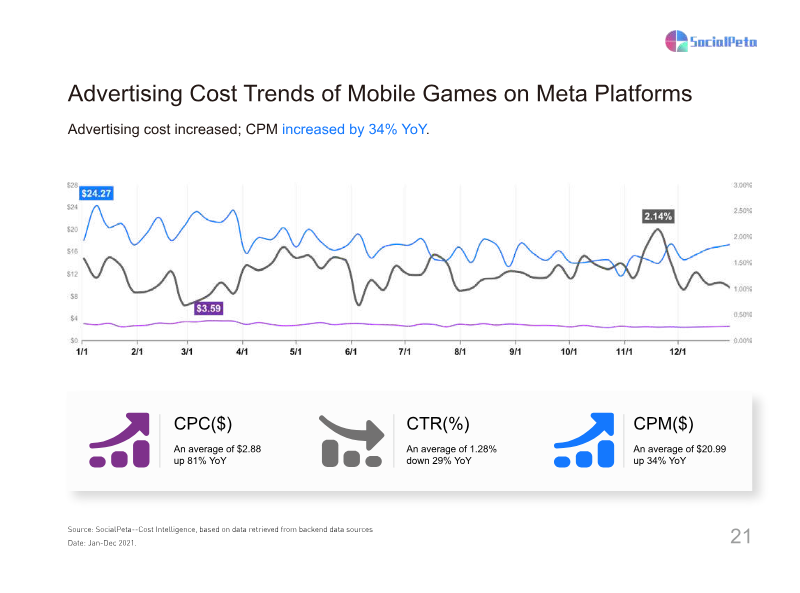
Acquisition costs rose as privacy rules changed.
Rising acquisition costs and iOS privacy regulations triggered a 200% surge in ad creatives. CPMs on platforms like Meta increased 34% year-over-year.
Market slowdown
Total advertiser market growth slowed by 5% in 2021.
Total advertiser market growth slowed by 5% in 2021. Developers prioritized data-driven optimization and regional targeting to protect ROI.
Page 5 of the report201722,000
201832,000
201943,000
202062,000
202165,000
2022E68,000
2023E71,000
Expensive market
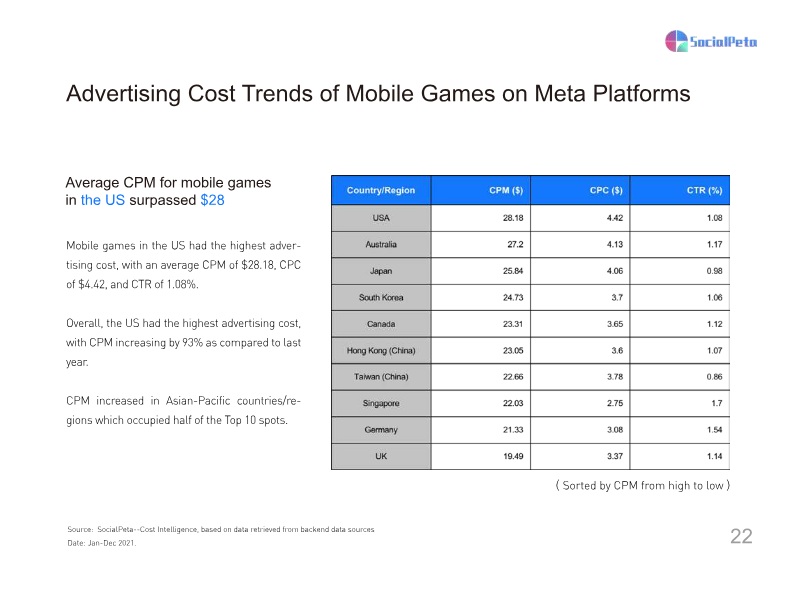
The United States became the most expensive mobile advertising market.
The United States reached an average CPM of $28.18. It became the most expensive market for mobile advertising.
Genre output
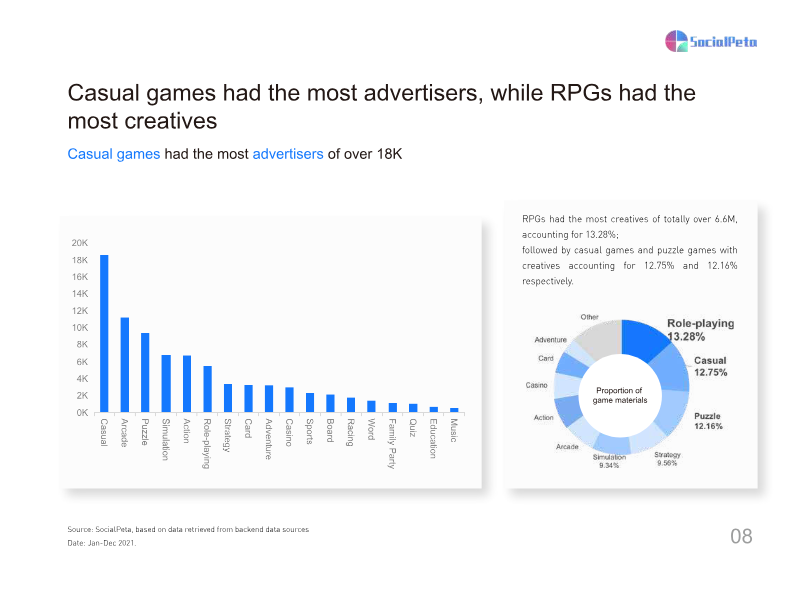
RPGs dominated total creative output in key regions.
Casual and puzzle games led in advertiser volume. RPGs dominated total creative output in Southeast Asia, Hong Kong, Macao, and Taiwan.
High-engagement formats
Developers adopted vertical video ads and playable end cards.
Developers countered market saturation with high-engagement formats. These include vertical video ads longer than 30 seconds and playable end cards featuring celebrity endorsements.
Page 32 of the report45 or Above1
35 to 444
20 to 2411
25 to 2921
30 to 3463
Hybrid monetization
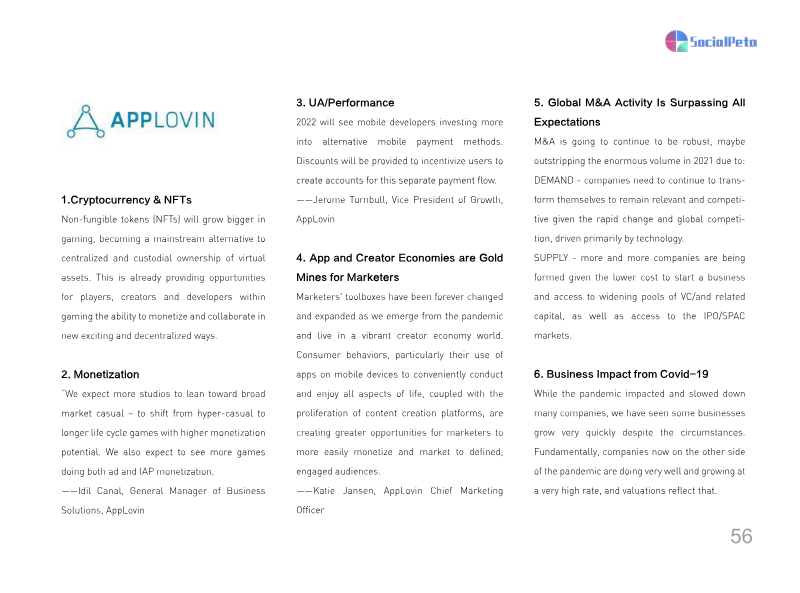
Developers focus on hybrid monetization and NFT integration.
Future growth strategies focus on hybrid monetization models. These combine in-app purchases with ad-based structures and integrate NFTs.
Privacy compliance
Privacy-compliant user acquisition became a prerequisite for success.
Success in the post-privacy ecosystem requires privacy-compliant user acquisition tools. These include early SKAN testing and AI-driven optimization.
Page 59 of the report- 01Early SKAN testingAdopt early SKAN testing
- 02AI-driven optimizationUse AI-driven optimization
1 / 7
Ask AI about this report