1 free read left. Create a free account for unlimited reading + AI research.
Create free accountReport Ukie
1 free read left. Create a free account for unlimited reading + AI research.
Create free accountReportUkie
Women account for 28% of total sector employment, while 90% of the workforce is white.
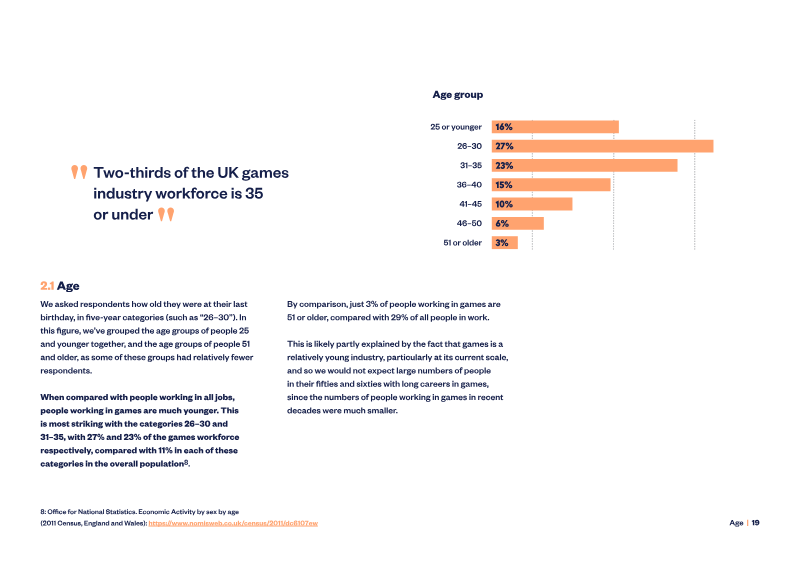
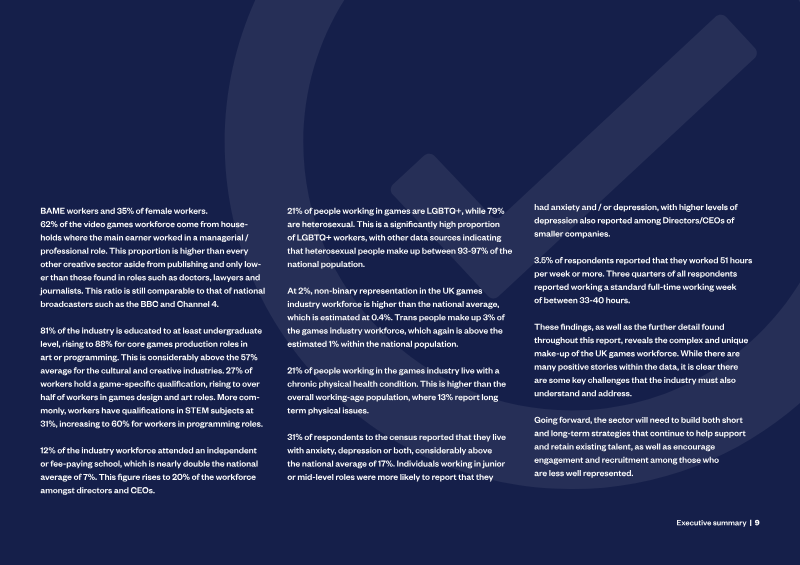
See it on page 43The UK games industry is characterized by a young, highly educated, and international workforce that serves as a critical hub for creative talent. With two-thirds of employees aged 35 or under and 81% holding at least a degree-level qualification, the sector demonstrates a strong reliance on academic achievement and global recruitment to sustain its growth. Despite these strengths, the industry faces structural challenges regarding representation and inclusivity. While LGBTQ+ and neurodivergent individuals are represented at rates higher than national averages, the workforce remains predominantly white at 90% and disproportionately male, with women accounting for only 28% of the sector.
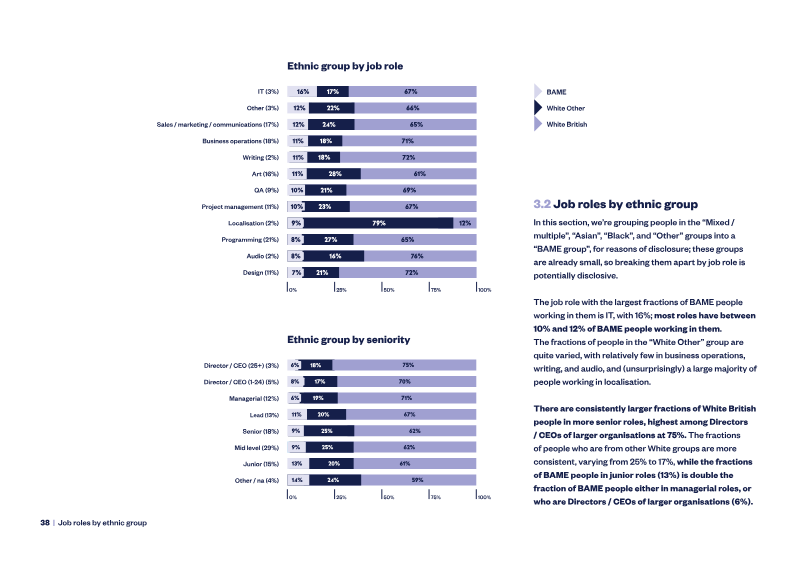
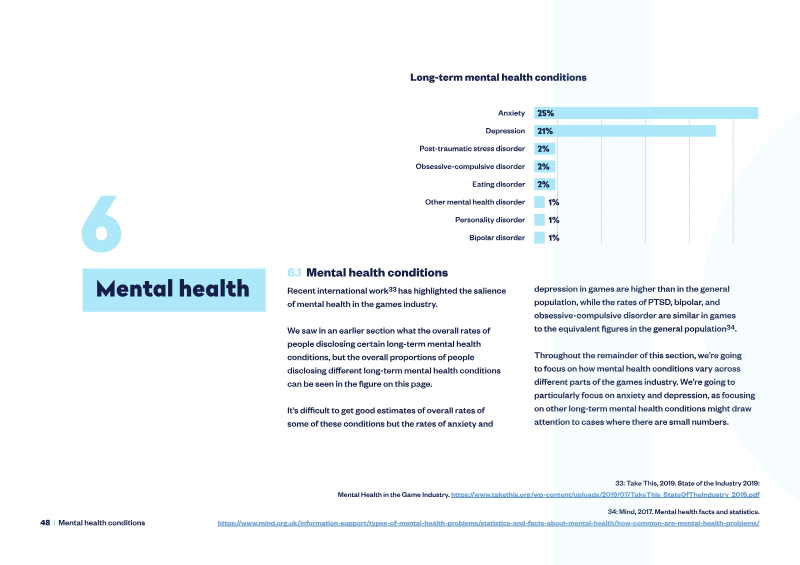
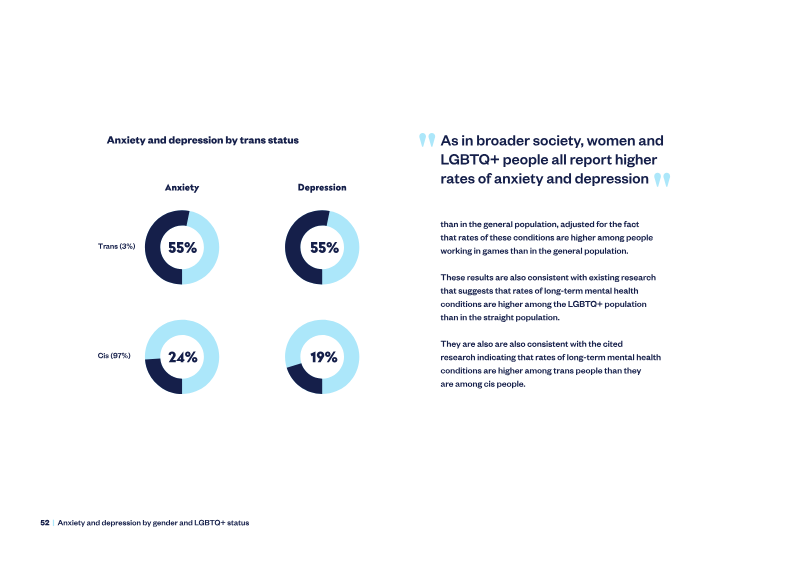
A significant disparity exists between entry-level roles and senior leadership, where White British men from managerial or professional socio-economic backgrounds remain overrepresented. This "leaky pipeline" effect suggests that career progression is not equitable across all demographic groups. Furthermore, the industry contends with a mental health crisis, as 31% of professionals report experiencing anxiety or depression. These conditions are particularly prevalent among junior staff, women, non-binary individuals, and LGBTQ+ employees, indicating that the current working environment may be failing to provide adequate support for its most vulnerable demographics.
To foster a more sustainable and inclusive future, the industry must move beyond current benchmarks and implement systemic changes. Addressing these disparities requires a commitment to regular workforce measurement, targeted outreach programs, and the development of long-term support strategies. By prioritizing mental health and dismantling barriers to senior leadership, the sector can better align its internal culture with the diverse global audience it serves. These findings provide a foundational roadmap for stakeholders to cultivate a more equitable, supportive, and representative professional landscape within the UK games industry.
Ukie · 2025
Ukie · 2025

Ukie · 2025
Ukie · 2025

British Esports · 2025
Ukie · 2025

Ukie · 2025
Ukie · 2025
Ukie · 2025
Ukie · 2025
Ukie · 2025
UKIE – UK Interactive Entertainment · 2025
Develop:Brighton · 2025