More from Ukie
View all
Report
The Value of Esports in the UK
Ukie · 2025

Report
Esports 2023: Challenges and Opportunities in the UK
British Esports · 2025

Report
Annual Review: 2025
Ukie · 2025

Report
Business Case for an Enhanced Video Games Expenditure Credit: UK
Ukie · 2025
Going for Growth: How to Drive Revenue Globally in the Games
Article
Going for Growth: How to Drive Revenue Globally in the Games Industry
Ukie · 2025
Report
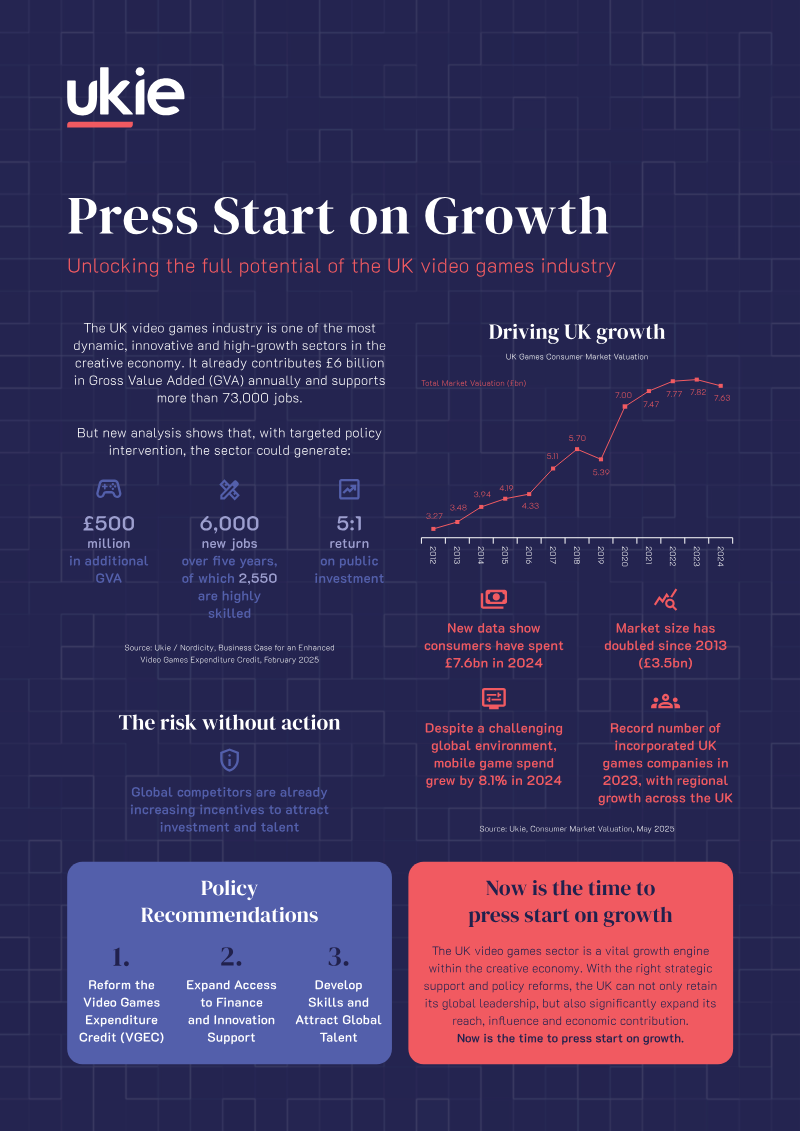
Press Start on Growth: Unlocking the Full Potential of the UK Video Games Industry
Ukie · 2025

Report
Insights into the Japanese Gaming Market: 2025
Newzoo · 2025

Report
Japan Market Report 2025
UKIE – UK Interactive Entertainment · 2025

Report
UKIE Annual Review 2024
Ukie · 2024

Report
Supercharged: Powering the Future of the UK Video Game and Interactive Entertainment Industry
Ukie · 2024

Report
The Economic Impacts of Video Game Technology Spillover: UK and Nordic Economies
Ukie · 2023

Report
Playing for the Planet: Untangling the Carbon Complexities of the Video Gaming Industry
Playing for the Planet Alliance