1 free read left. Create a free account for unlimited reading + AI research.
Create free accountReport Ukie
1 free read left. Create a free account for unlimited reading + AI research.
Create free accountReportUkie
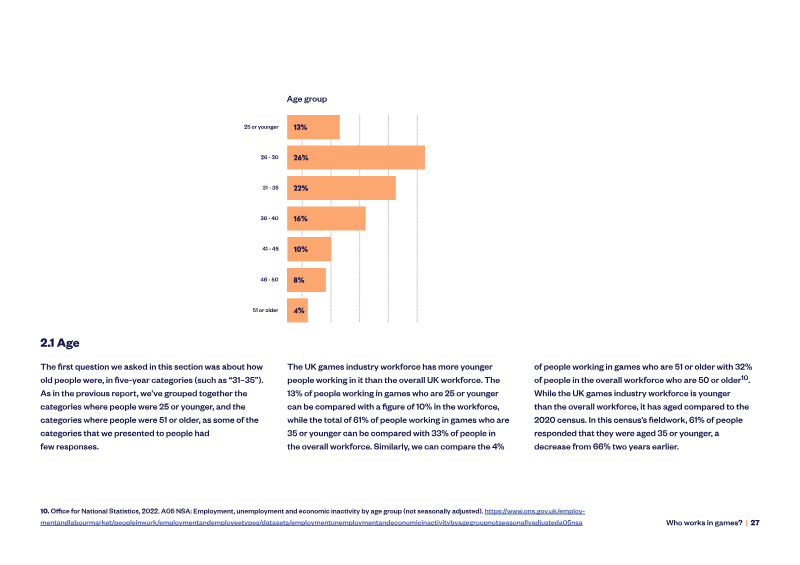
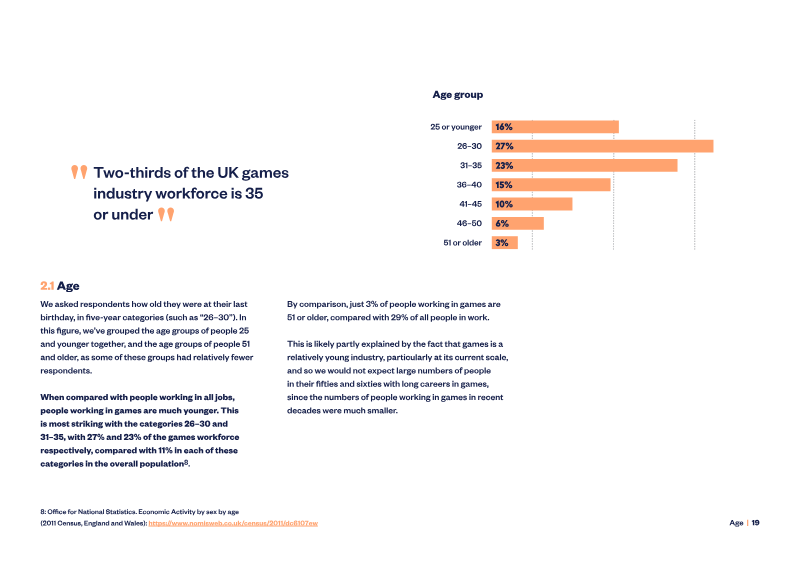
The sector is characterized by a shrinking entry-level pipeline. There is a notable decline in workers aged 25 or younger.
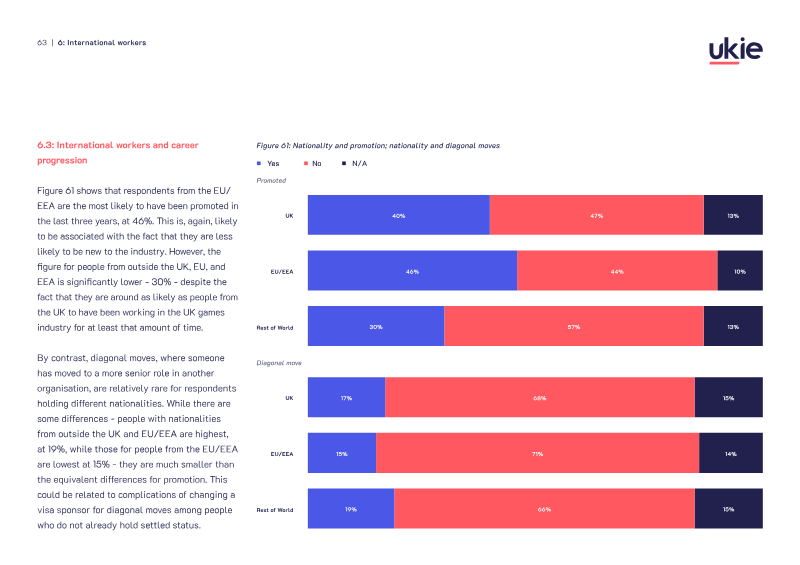
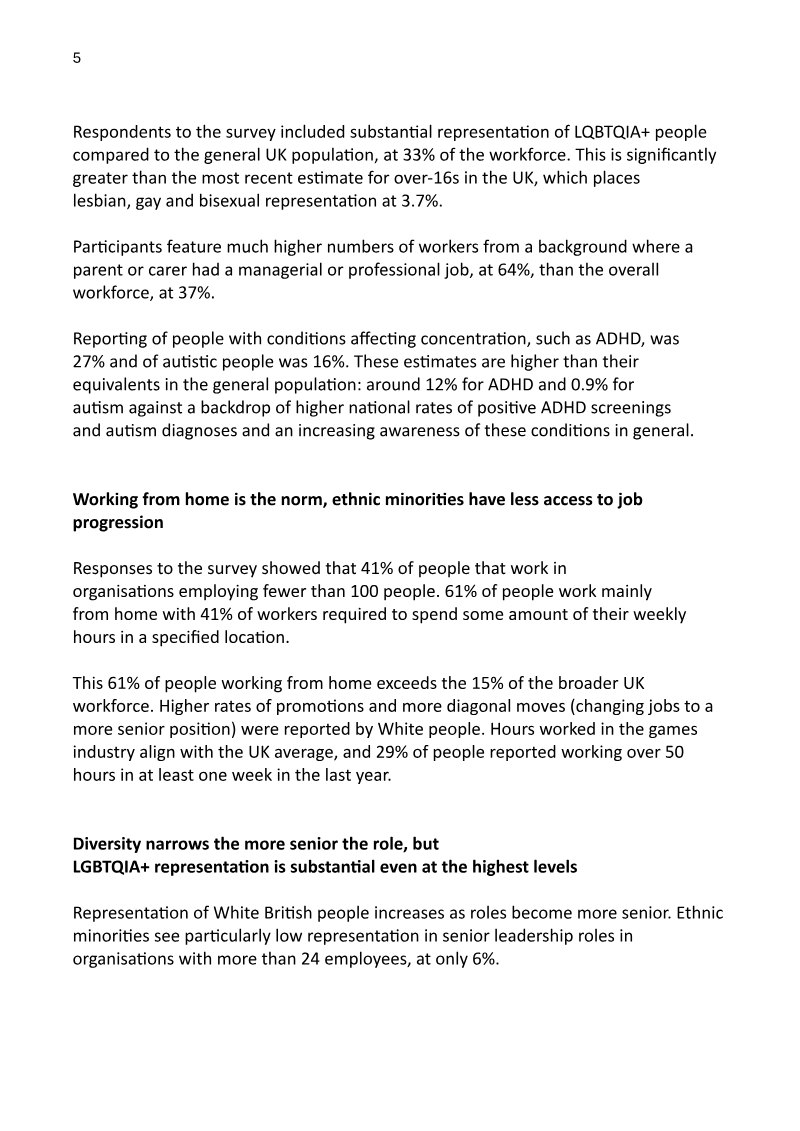
The UK games industry is currently undergoing a period of significant structural maturation and contraction, characterized by a shrinking entry-level pipeline and a workforce that is aging relative to previous years. Based on 1,610 responses, the sector exhibits reduced job mobility and a shift toward smaller studio sizes, with a notable decline in workers aged 25 or younger. While the industry maintains a high reliance on international talent, which comprises 24% of the workforce, these individuals face disproportionate risks regarding job stability and promotion opportunities, particularly those from outside the EU/EEA. The data suggests a less fluid labor market where recent redundancies have hit marginalized groups—including women, ethnic minorities, and LGBTQIA+ individuals—more severely than their peers.
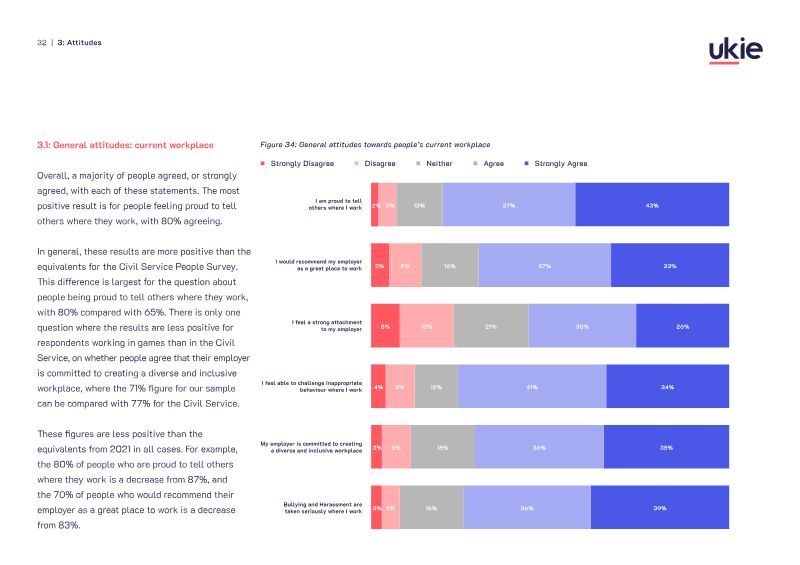
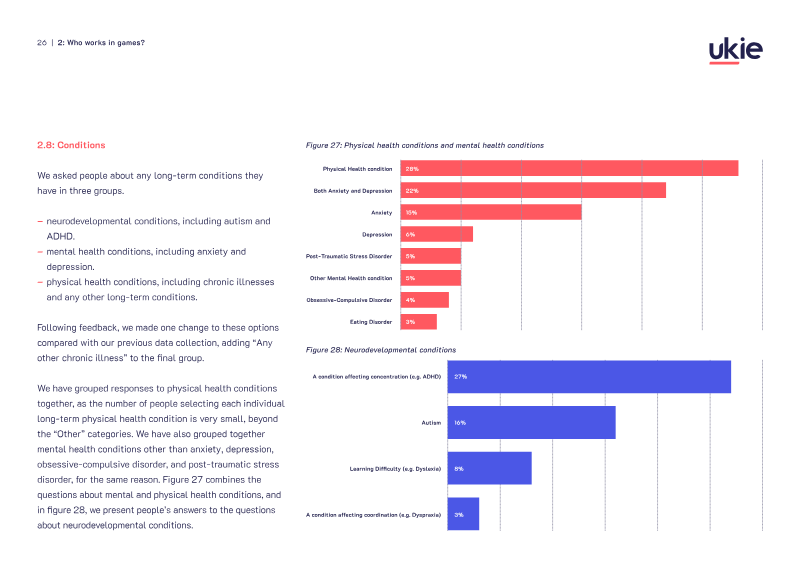
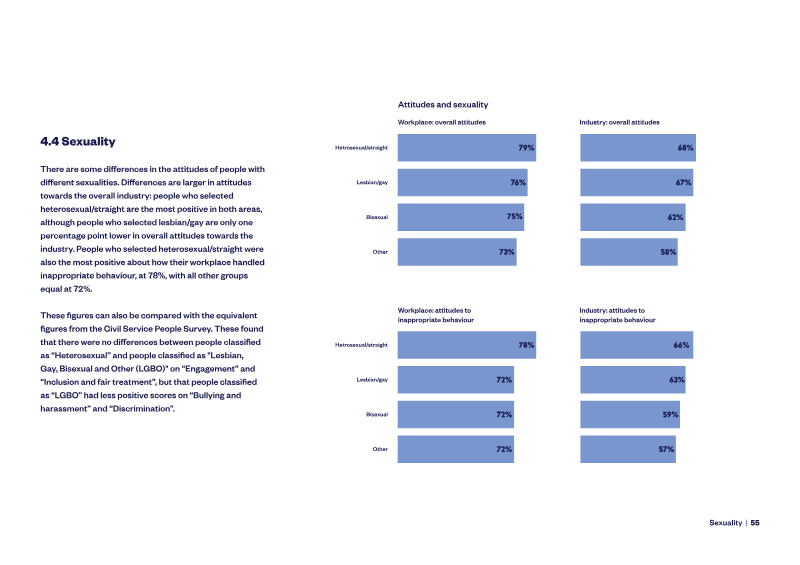
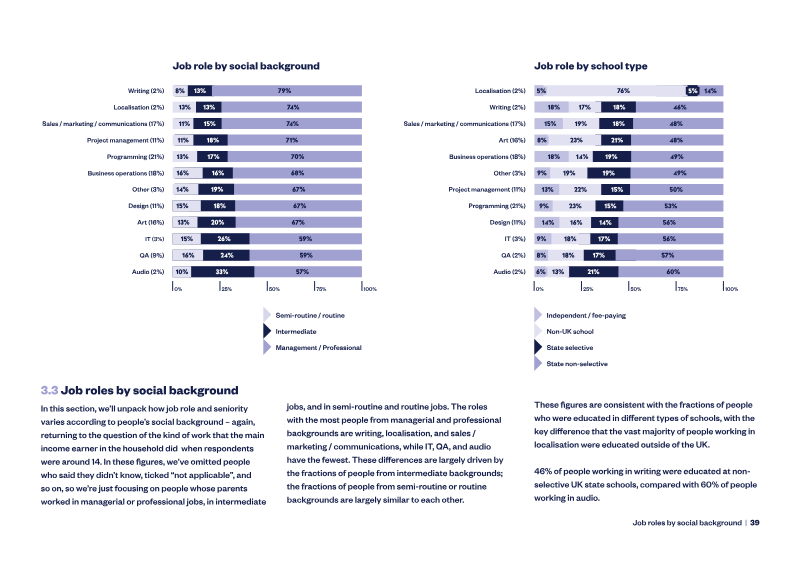
Demographically, the workforce is becoming increasingly diverse regarding gender, sexuality, and neurodiversity, yet it remains heavily skewed toward individuals from managerial and professional social backgrounds. Educational attainment remains high, with 84% of employees holding degrees, and there is a growing trend toward games-specific qualifications. Despite these shifts, the industry faces a growing disconnect between positive sentiment toward individual workplaces and increasingly negative perceptions of the broader sector, particularly concerning the management of bullying and harassment. Furthermore, reports of long-term health conditions, disabilities, and caring responsibilities have risen, signaling a need for more robust support systems.
Ultimately, the industry is grappling with a precarious balance between its reliance on specialized, highly educated talent and the instability caused by recent job losses. While retention intentions remain relatively stable, there is a marked increase in the desire among staff to exit the industry, especially among those who have recently experienced redundancy. The concentration of job instability within work-for-hire studios and specific creative roles suggests that the sector’s current growth model is struggling to sustain its workforce, necessitating a reevaluation of how the UK games industry supports both its international staff and its most vulnerable demographic groups.


Ukie · 2026
Ukie · 2026

Ukie · 2026


Ukie · 2026
Ukie · 2026
Ukie · 2026
Ukie · 2026
Ukie · 2026

Ukie · 2025
Ukie · 2025
Ukie · 2025


Ukie · 2025
Skillsearch · 2026