Transcript
Welcome to the Naavik Gaming Podcast, where it is our mission to explore the business and future of video games. We bring together the industry's brightest builders, investors, and thinkers to keep a pulse on current events, dissect emerging trends in games, share lessons learned, and have a great time. This podcast is also part of Naavik's growing ecosystem, which ranges from free and premium research to consulting and advisory services. For more information, visit www.naavik.co. This episode is brought to you by RallyHere, the proven gaming backend platform and service made specifically for cross-platform live service games. Providing cutting-edge tooling for matchmaking, cross-platform accounts, server optimization, live ops management, player progression, and community engagement, RallyHere is the one-stop shop to streamline your
development processes, increase speed to market, and optimize your post-launch live services. RallyHere powers games that have been played by over 200 million gamers worldwide across PC, console, and mobile, including Smite, Paladins, Rogue Company, and many others. RallyHere's founders were also among the first to embrace cross-platform free-to-play games, meaning the RallyHere solution incorporates over a decade of hard-won experience and learnings in live service games. RallyHere's partnership approach to customer relationships makes them a trusted and experienced co-pilot to help your team as you develop and operate your live service games. So, do you want to know how RallyHere can help you with your live service game? If so, simply head over to rallyhere.gg to learn more and schedule a demo. Again, that is rallyhere.gg. So, with that, let's jump into the episode. Welcome to the Naavik Gaming
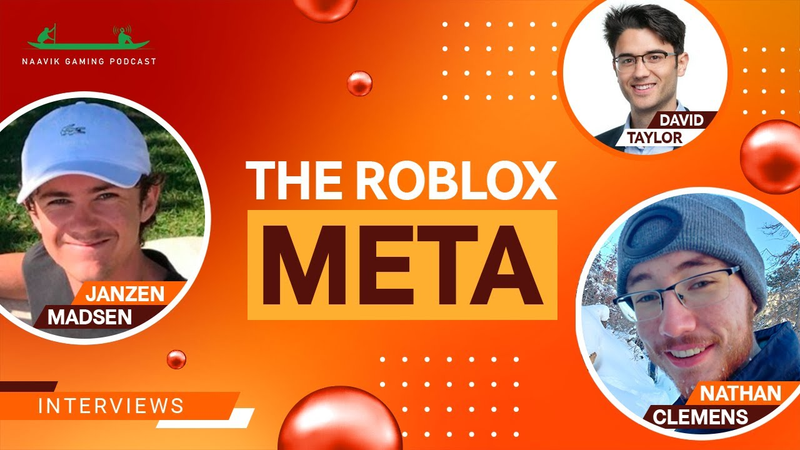
Podcast. I'm your host, David Taylor, and today we're going to be talking about Roblox. Roblox is approaching 350 million monthly active users, making it bigger than Xbox, PlayStation, and Switch combined. It's a platform that generated 3.3 billion in bookings last year and paid 740 million to its developers and creators. The low barriers to entry for developers and immediate access to an audience of 350 million players has made it an appealing proposition for indie developers. According to Roblox's most recent estimates, however, there are over 5 million developers on Roblox, making it incredibly competitive and difficult to stand out. Furthermore, the nuanced player expectations have left many professional developers scratching their heads wondering why their Candy Crush inspired game mechanics never gained traction. Jenssen Madsen, aka Jandel, and Nathan Clemens, aka Undone Builder, are with us today to share their learnings from 8 plus years developing successful Roblox games. Jenssen is the creator of breakout hits such as A Dusty Trip,
Build Trip Z, Wacky Wizards, and Gun Fight Arena, which collectively have a 100,000 concurrent players at the time of this podcast. If Jenssen were a game, he would be the eighth most most popular game on Steam right now. Nathan has launched 24 Roblox games, including the survival game City Life and War Simulator, which have garnered over 850 million play sessions. These two know the Roblox meta better than anyone else, so I'm excited to see what insights we can glean as we look for success on the most competitive platform in games, Roblox. So, welcome, Nathan. Welcome, Jenssen. Excited to have you guys here. I was wondering if you guys could just give us a quick background on your your Roblox history, um starting from, you know, when you first started to develop games and into sort of these breakout successes that you've had over the years. Let's start with Nathan. Fair enough. Uh yeah, so I used to construction probably about a decade ago, uh renovation and construction, and part of that was I would do 3D models,
so I'd mock up how a building might look or a renovation might turn out, usually like Google's CAD Google SketchUp or CAD. Um and I realized, "Hey, I could probably sell this online, you know, what it is, sell my skills as a freelancer." So, I found Roblox, and there were people here willing to pay me to build things, so I did. And then after a couple months of doing that, I went, "Hmm, they have money. Where did they get their money? They make games. I could do that." So, I just hopped into Studio and did my best, and probably took me about 2 years before I had my first big successful game, but then I just cut out the middleman and began making them myself directly. Um and I don't think I've ever stopped since then. Amazing. Yeah, I guess a little bit different, but yeah, I just saw Roblox at a party. I was like, I think I was like 19 at the time, and some people were playing Roblox, and I I thought it was hilarious, so I I I downloaded Roblox the next day, and I
just made a game, and I guess I got lucky. It was like my biggest game for like 3 years. Took me like 2 weeks to make, and then, yeah, I guess like 3 years ago, well, not 3 years after that, I started like getting more serious with developing games, and I made Field Trip Z, which was kind of like my first like big hit, I suppose, and yeah, much the same as Nathan, basically been doing it ever since, yeah. Why stop? Exactly. Awesome. Well, we're going to get to I'm I have some questions about sort of you guys looking into the future with what you're what you're what you're thinking about, but for now, I just wanted to sort of reflect on that time, like as you look think about the past uh past few years, like what's the coolest thing that you've done on Roblox? It could be the thing you're most proud of or the most wacky thing that you've done. Just curious, cuz I know this is such a wild platform. Sure. I I think that my my biggest achievement, and this may be like I guess cliche, but I I think it's amazing like the the like impact Roblox has had like not only on my life, but like all of the people that work with
me's life, right? Like one of my like great partners at the company like immigrated to New Zealand and like moved his family here, and I've had like people that work with us buy homes and and support their families, and and for me like it it it like is kind of surreal actually that that happens, and yeah, I think that's like my my biggest achievement of Roblox is is that. I know it sounds kind of cringe and cliche, but yeah, it's a thing that kind of like drives me, I suppose, at this point, yeah. Yeah, that was awesome. Not at all. I admire his very similar, which is that it's helped me fund, you know, quite a lot of money to its charity, and quite a few We've housed quite a few people that way. It's not cliche at all. That's what makes this worth doing is how it continually impacts so many lives. Yeah. Yeah, I think so, too. That's amazing. It's awesome to hear you you both sort of taking that altruistic approach. Um I myself have found that I'm a lot more motivated to work when I'm doing it for others rather than just myself, so um really cool to hear that coming through. Hey, wrong, you know, I like
getting money, too. It's not altruistic. Um yes, we love money, and so that is why we're going to sort of start off the conversation about sort of the Roblox meta, right? What is the keys to success on the platform? Um how have you guys managed to be successful time in time out? You know, I think you know, Jenssen, you said, "I got lucky." But when we look at your track record, I don't think we can we can say at this point that it was all luck. Um you've been able to recreate success uh numerous times over, as have you, Nathan, so really want to dig into just like taking it step by step of like, what is your guys's process? What do you understand about the Roblox platform today that's enabled you to have so much success when most people who come to the platform are are unable to achieve uh that success. So, let's start with game design. Like, could you each of you sort of take us through your creative process
um in terms of coming up with ideas, cuz you both have have a wide range of games. Um so, yeah. Nathan, why don't you kick us off? Yeah, I mean, that is the $700 million question is in how to how to be successful, but We love money. That's what I'm saying. Let it be money. Yes, I'd say my process usually is I will have an idea of some kind, uh usually based around I'll see a feature in some other game or some concept that I've seen around, and I will usually put that on a shelf. Uh I've got like a backlog of probably 200 ideas or so that I then slowly over years refine more and more until it's to the point where I'm like, "Ah, this is now a game I think will do really well." Like, I'll say Let's Drive a Game, one of my most recently successful games. That was I was probably noodling on and refining for upwards 3 years um after I had seen like an original um
mechanic from like an old old game where I'm like, "Hey, could that's an interesting idea." And I just built off of that for years until I finally had a concept that I'm like, "That's that's a game." I think Yeah, I I actually think my design path is like pretty similar to Nathan's. Like, often I'll have like a very broad idea, and then, yeah, like Nathan said, I have like all these shelves of like different features and and concepts from other games or even from my own brain. Um that I just like pull and and and use to create like I guess like a Roblox experience. Um Yeah, and and game design is not like a one-size-fits-all, you know, like everyone has their own um sort of way of doing it, and and it works for for them, so I think like asking like, "What's the secret sauce of Roblox game design?" is uh quite broad, but yeah, I think I think making a lot of games helps. I I if you've just made a lot of games and um make things that you're interested in, I think eventually you would find
success. Yeah. I think what probably significant makes this such a hard question to answer is it's a creative industry. Very specifically you cannot do what everyone else has done to succeed which that's not the case for most industries but here you have to do something different. It makes it kind of hard to render advice on what someone else should do when the answer has to be well not what I did. Yeah. So So all right. So I get that you guys are sort of noodling on this for a while but like take us through the point where you're like okay, I'm going to dedicate resources to this because you both employ people. You both work with contractors and full-time employees and so how do you know when it's time to actually you know, put resources behind it and decide like we're going to spend time on this versus any other idea that you have? Well, I can say for me I probably run the most inefficient company of all time. Like in fact we just change projects every week. So
the answer is I don't really know and usually and and this is sort of a roundabout way of answering your question is the projects that we start working on and under work on and just come together themselves are usually the projects that succeed. So in terms of like pulling resources it's just like it just happens. It's just a kind of a natural process of working in the creative industry I think. Yeah. Fair. Mine's almost the exact opposite of that which I think is why Jandel is quite a bit more successful than I am. I have a much more top-down approach when one project finishes is very clear what another one begins based on my personal feelings on what should or should not happen based on how a game performs or not. So usually the choice to start a new one is when I've decided another an old one should be left and the team assigned to a new project. Got it. You're You're better at this than I am. Your ways better than mine. Dude, I'm I'm writing down right now
like I maybe I should do that. So Nathan since you sort of have a refined process maybe more more towards you like when you like what are you looking at when you've decided that it's time to move on from an existing project or like that an idea that you've been noodling on is ready for you know, for those resources. So I'd say it definitely comes down to two factors. Either the game that was previously being worked on has had it gotten to the point where it's no longer profitable have team on it. You know, every game has a lifespan. I think that sometimes gets lost to developers that like they feel like they should invent a game that will survive forever but that is not how anything works. And so And how many concurrent players is that? How many concurrent players like if you're looking at a game it drops below what number is it that you're like this probably isn't going to It's not usually a number of players as much as this is as much as this how much money it makes because I
will say my most successful like some of my most profitable games have less than 10% of some other games and make the same amount of money. It's much more hey is this game paying for the team? Is it worth it? You know, eventually a game hits a point where hey, you're spending more money to update it than the game can bring back yet and at that point kind of a no-brainer that you should work on something else. I'd say when I know a project is ready is not so much that I like have a feeling like I go this project is perfect. It's more so one project finishes and I go okay, it's time to start another. Let me look at my list. I feel pretty confident about these five. Let me look at each of these. Okay, I think I want to go with that one. This one feels good for the market right now. Now I'm going to really like refine it into the final concept that's going to be and then obviously that's delusional throughout the process of making it it becomes something completely different but that's usually how I decide well this one's ready. Awesome. Okay, so thank you
so much for that and and let's let's go to sort of the next phase, right? You you've decided we're going to we're going to do this thing. Sounds like you guys are going to have different approaches to this which is great. I love hearing you know, the the different approaches. So what when you're sort of assembling your team like what does the team look like exactly? You first Jandel. Um You know what like I'm very like lucky like on Roblox right? I think the people I work with are like truly some of the best on the platform and and I think a lot of these people could make their own games and and they could do very well. So yeah, I sort of got I just had like four or five people that I work with all the time and these people are like highly specialized can do like anything on the platform to probably the highest standard. So yeah, I'm very lucky. I don't I don't I often usually reach out for more team members once we've already created a game and we're doing like live
ops content cadence. Like for Dusty Trip right we've hired like a lot of people that we haven't worked with before so like do random events and with wacky wizards it was the same like I built that with Matt and um it was doing well with me and him and then we're like holy molly we need to hire some people and so we did. Yeah, so that's kind of the approach I take at least. Yeah. I just one follow-up question for Jandel and like so so you know, what's the biggest team that you've ended up assembling for a game in live ops? In live I would say probably Dusty Trip. I mean it's probably like close to like 20 to maybe 30 people. Wow. Yeah, I mean there's a lot going on that game. Like half the code base is in Russian. I'm not even joking. So yeah, there's a lot going on and there's a lot of refactoring any time you want to add a feature. It's It's like the worst back end you could probably ever work with. Yeah. And how are you finding these developers? Connections I suppose. Yeah, usually it's like either they reach out to me asking if I need any scripting work or the people I worked with in the past
like a few years ago or I just ask a friend and they know someone who's looking for work. Yeah. Nathan, how about you? Well, you're all right. We've had about polar opposite experiences. Unfortunately, I've had the exact opposite where most of the people I've tried to work with long-term turn out to be very poor co-workers would probably be the best way to put it. So I've had a lot of games that have died very tragic deaths where they just can't be maintained because the other person is just like just run off or something along those lines. So my company is now kind of made up of a much more like division-based. I have very specific teams I've put together I've assigned mostly on the programming side anything on the modeling UI UX animation side I kind of have a floating team made up of predominantly myself and then a handful of artists I've like hand-trained to like jump from project to project but on the coding end they're very like specifically assigned coders and
programmers who I've put together in like their specific teams who maintain the projects and like move from project to project together. Jandel, anything to add? Yeah, I think that's like a I think that's a good like infrastructure approach like to to game design. I think that makes sense for like probably 99% of people on Roblox. Yours is still better. Yeah, I think I think like uh Yeah, for us we just like we've purposely designed our company. Like there's engineering companies right and and they're engineering focused right? People focus on hiring good engineers and retaining good engineers and for us like our company is like a game design company right? So our focus is less like how much money we can make was more like how do we like enable like people to be as creative as possible because we're like a game design company. Yeah, for us we just like try to create an environment where people can just like create cool things. Yeah, makes sense and I mean I think that's one of the things that makes Roblox so unique is just the ability to have people who can do several different
roles at the same time. You know, you can do game design, you can do scripting and even do art. There are people who have all of those those skills and the Roblox platform sort of makes it possible for you to have those skills. You guys stop saying that I'm better than you Nathan by the way. Like you're literally like one of the true by every metric. I don't This is not This is not an objective like But objectively right? Like you're like one of the most successful Roblox developers and you're in a very small niche that has like successful projects. I think True and you're in objectively even more successful by like three margins. Please. Your approach to things is actually like really intelligent and thought out and analytical. Like I don't think you should like discredit what you're saying. Like seriously. Like you actually have a lot of value to add. I think the stuff you're saying is like very important. Like and and and even though you're saying like I mean the actual reality of like the infrastructure of our company is quite similar to yours. I kind of think you should stop like dissing yourself. Like seriously. Like you're really great developer. Yeah, yeah. Well, that means
a lot. I think I think we're going to have to include this on the podcast cuz I think it is it's actually what like it's actually representative what I actually really appreciate about the Roblox ecosystem is everyone is extremely supportive of one another. You know, you have people who have had wild success, made millions of dollars and are just still in awe of one another. And and I think that's a really unique about the Roblox space where in other other places like the tech industry or even game development more broadly like people who have success sort of you know, become wanting to like close themselves off to everyone else and and feel like they have something that people want from them. And I've just found the Roblox ecosystem to be the opposite of that. People who have success want to give back and I think you know, it's great that you guys are are you know, organically embodying that as we as we speak. Well, man, I you know, I'm going to swap it up now. I'm just going to say, "Yeah, admit We're enemies now, right? For the for the next 20 minutes. Uh
Yeah, sorry, Nathan. Your approach is wrong to that. Here's how you Yeah, I'm I don't know what that guy's doing over there. A is questionable. All righty. Well, let's get let's move on to sort of the marketing and community side of things. It's like you you design this game. Like what is the next step? Like how do you get people into it to start trying? And I know that there's a whole Roblox discovery algorithm angle that I think our listeners would love to sort of, you know, better understand. So, if you could sort of you know, touch on how you consider the Roblox algorithm and what your marketing activities do to drive that. This is probably my weakest point. So, Jandel, maybe you should uh I think as a I think marketing used to be a lot more important on Roblox. And I think um the algorithm today, right, is it's changing rapidly and and and I could give you advice now that's like not relevant in like 2 weeks. Um but I think Roblox will always serve good games. So, I think So, Steam's a really interesting platform to look at, right? Like there's games on Steam that are like perfect for
me that I discover like 3 years after they're released, right? I think Roblox discoverability on Roblox, like if you have a good game, like you will always find an audience. And I I think that's like the biggest value proposition of Roblox. So, you you know, like the the algorithm's changing a lot and and it is hard to get games surfaced. Um but if your game's good, it will fit 100%. Like I you know, I have games that get, you know, 50,000 concurrents or 20,000 concurrents that you've probably never even heard of. Um and I've done no marketing on them. They just like found an audience. So, I think Roblox that's like the biggest value prop, right? So, yeah, I think uh there's no secret sauce to marketing. It's just making a good game. I'm in full agreement. I feel like by far Roblox is really good. It's certainly in comparison to any other platform about just if you are making a quality product, there's a pretty good chance you'll be able to find a market. Now, with good marketing, you can find a bigger market sometimes. I'd say there
are exceptions to that, but they are rare. Like if you are trying to serve like a very niche specific audience, sometimes Roblox can have a hard time like getting that in front of that specific audience. So, you're probably going to need to do more legwork for like, "Hey, I very specifically have a game that appeals to like people who like trains so much that like the individual things are modeled very specifically. Like, yeah, that's a valid game design. You're probably going to have to put more legwork into getting that in front of people as opposed to probably the more profitable way to make a game is a game anyone can enjoy. Um I'll often be asked by like investors or, you know, consulting firms who are like, "What like what is the difference between like aging up a game? Like what makes a game more fun for one audience versus another?" And my answer to them is probably the same one here, which is if it's fun for one person, generally, if you're designing the game well, it's fun for every age. Like Candy Crush is
fun to a 12-year-old as much as it is to a 40-year-old. It's not fun isn't age or demographic based for most things. So, unless you're designing something you know is going to be niche, Roblox usually is pretty good about it. I think the I think the folks at at ABK might might disagree with you on on the demographics bit, but um I'm curious like like so, are you guys saying you don't do any marketing? Jandel? I mean, I I think I think probably Nathan is in a similar position. I I think like we probably have naturally like a lot of fans that will play our games, but I think if you're marketing your game at Roblox, like you're you're already off to a bad start, you know? Like if if you have to market your game to get in front of people, like the game's going to 100%. Yeah, 100%. I was just going to say I sometimes market when I'm like very first launching a game and I'm like, "Hey, I want to give this I market to get it in front of people to start with and then let Roblox do the
rest. I don't market with the goal that like, "Hey, this marketing is going to make the game take off." I don't think I think that's that's right. That is the game's got to fail. You I do some marketing for like, "Hey, I'm getting this in front of like 10,000 people so that then Roblox can then show it to more people and if that doesn't make it take off, it hurts. Okay, so what you're doing that for? I'm glad I'm glad we got there finally. Uh so, like when you're doing that marketing, that initial marketing, like are you using YouTubers? Like what what are your levers for for getting that initial tried so hard? Honestly, at least for me, and I think this is something Jandel does infinitely better than me, is like relationships with uh like influencers and stuff like that. That is something I personally have just failed miserably at. Not so much that I'm not friends with many of them, more that just if every time I've gotten an influencer to make a video on one of my games that
they didn't naturally decide to do themselves, it has done nothing to help the game. I don't know what it is, but like they can highlight the coolest aspects about it. If they didn't naturally decide to make a video on it, it is useless. They could have 10 million subscribers. I could pay them $5,000. It won't matter. You'll get maybe a couple dozen people. But if they naturally decide they want to make the video, up by thousands. It's I don't understand it. It's an enigma through and through, but yeah. So, how do you get them to do it organically? You just let them find it. There's no other way I've ever found. They just have to see the game naturally either by a fan's recommendation or by advertisement. I might poke one of them and say, "Hey, this is something you might enjoy." But by and large, they just have to decide it for themselves and there's no way around that. Yeah, you make good games, Jandel. Surprisingly. It's amazing how bad you are.
What do you mean? Like I I just make a I just make good games, you know? Like I just focus on making good games and um I I like I I have I'm friends with a lot of YouTubers, but I don't I never ask them to make videos. And I think Nathan's right, right? Like I think if you ask them to make a video, they're probably showing something to the audience that like doesn't fit super well. So, um you know, that like organic engagement is probably the best engagement you can get across the board in any industry, right? So, Uh do you guys think that uh that your reputations allow you to always be noticed by YouTubers without trying? No, absolutely not. Not even a little bit. When we when I release a new game, no one. I'm I'm starting from scratch as much as every other person who released a Roblox game is starting from scratch with every new release. It's not even close. I have tried Don't get me wrong. I have tried to like build a community where I can turn over success in the new projects, but with the exception of maybe one studio on all of Roblox, that is just not something you can do. Like that's just not it doesn't work.
Well, I mean, I'm in the Simple Games Discord and I see you guys cross-marketing your games. I know that you're doing it. We certainly tried. Yeah. But it just that's not that's not moving the needle for you. Nope, not even a little bit. No, yeah, I make games on alts all the time and uh they still become successful. Yeah, I switch up groups. I've got a bunch of games I don't mention in Simple Games. Um you know, I swap it up with for like going to buy different projects and stuff like that that people wouldn't know was made by me. And so, all right. So, it sounds like you're not using Discord for for uh marketing. You're not using YouTube for marketing. You're just sort of making good games. games, sure. But like if you have like an established game, then like yeah, stuff becomes important, right? Yeah, Discord is super important for maintaining a game. Yeah. You're useless for marketing. Okay, so let's let's transition to sort of live ops. Like so, we talked about your your team size a bit. Um
you know, how do you how do you know is it pretty obvious when you have a game that's, you know, taking off or, you know, I imagine sometimes you put a game out there and you need to refine it. You need to quickly iterate to make it better. And then it might take off once you sort of find that sweet spot. Is that right? And and then the question being like, how do you know if something's worth continuing to refine versus moving on to a different concept? I'd say for me, usually it's pretty apparent if by the end of the development cycle when I'm like, "This game is done." If it hasn't built some kind of audience by then, it's probably not going to work. There's probably a fundamental flaw. Like throughout the process of development, I am often just completely refining a game. I'm going like, "Hey, this original idea, I don't like that idea. Yeah, this fits better over here." It's I'm constantly refining it till I think it's fun. And if by the end of that it hasn't worked, it's probably not worth continuing to noodle on.
At least for me. Yeah, I agree. I think I think Roblox, one of its like biggest like I mean, I'm going to use this word a million times, the value propositions is that you can basically release a prototype. And if the if the theme and the game play is engaging, like people will play it, right? If you release your prototype and no one plays it, then like to start working on it. Um To your point there, um you know, if Dusty Trip is a good example. Like I purchased Dusty Trip and it was on like 4 or 5,000 players. And there was like a lot of fundamental flaws with the game, in my opinion. So, like I changed them and then like within 2 weeks the game was at like 70, 80,000 players. Um so, yeah, that is a lot of the times there are like things that you could refine and change in games um that do help push the needle, but the game was terrible when it still had 5,000 players in it. You know what I mean? So, it's like the game was terrible. There's no tutorial. Like the lobby system was like literally broken and there's 5,000 people in it. And you know why? Cuz Roblox is amazing and people will play like junk if it's like
engaging and interesting. So, that and and that's why like yeah, if you have like a game that you worked on for 6 months and and no one's playing it, like yeah, it's just the truth. Like you just ditch it. And I and I think that's what me and Nathan do really well. Awesome. And so, Jazen, you just mentioned that you bought a Dusty Trip. So, when this was yeah, I I I imagine are you sort of looking at the top games and seeing which ones bubble up and then, you know, asking yourself, "Can I make this game better?" Is that Is that part of your approach to to some of the games that you build, maybe? Yeah, I I I like don't like purchasing games, actually. I I like don't feel like a great sense of achievement from it because I like designing things. Um and and how Dusty Trip came about is they like reached out to me wanting to sell the game. And and I played it and and I thought there was like a lot to improve. Um so, that that's kind of how that came about. Um I know that kind of doesn't really answer your question, but And then so, it sounds like it's not usually how you do it. This one just sort of serendipitously fell into your lap and you were like, "Okay, it has
4,000 players in it and it's, you know, totally broken. If I fix it, it could be, you know, much bigger." Yeah, as big as it got, like I didn't think that, but yeah, sure. I like yeah. I mean, the game is good. Like I'm not going to like rag on the previous developer. There was just like a lot of like, I would say, like fundamental like laws for a Roblox game that I think were holding it back. It's a really uh it's a really unique game for the platform, honestly. Like it's uh it's pretty cool to see that taking off cuz I feel like it is sort of you know, you you don't see many other games that that look that way. Nathan's looking at me like, "What do you mean it's unique?" Yeah, I was just about to disagree. Like I feel like it's the essence of a Roblox game. Like I think it's the quintessential example of Roblox game. And I think a lot of these like developers that came to come to Roblox like miss like what makes Roblox Roblox. And that's why Dusty Trip is such a popular game because it's like quote-unquote different, but it's like it's at its essence such a Roblox game. Yeah. But can you All right, so explain
learn me about about what makes this, you know, the quintessential Roblox game. It's buggy. It's funny. It has physics. Like random stuff happens. It's just like a Roblox game. Like that's what it is. It's like super gameplay focused. Like um you don't have like any of this like auxiliary junk, like, you know, storyline and stuff. It's just that you can get in there. You play with your friends. It's social. Like it just hits every mark that like a Roblox game needs to be. It's like refined down to the absolute core elements that make a game fun and nothing else. Yeah, yeah. Yeah. I think that's a great way to put it. Yeah, cuz you see, I mean, there's other games like tycoon games and and simulator games and roleplay games and they all feel like they've removed all of the like the gameplay parts and it's just the mechanics are just like right there in front of you. Yeah, and I think those games are interesting. I'm going to take a quote from On it, who made Bee Swarm Simulator, probably the biggest developer on the platform which is a
game designers. Um those games are interesting because they're like a lineage of like game design essentially. Like if you play the first simulator games of Roblox, they feel very Roblox-y and and um they are like kind of weird and buggy and not okay. Um but you know, over time like the refinement of the genre has like sort of created this like new niche of Roblox game. This uh yeah, it's like interesting to look at those games sort of like a lineage of how they come about. Yeah, that's super cool. I mean, one of the questions I have for you guys since we're on the topic and we'll come back to live ops cuz I think I have a few more questions there, but like how has the Roblox platform evolved during your your 8-plus years on the platform? Are there things that you have to do differently today that that weren't the case before or are there things you did, you know, back in the day that are no longer relevant today? Except for me, fundamentally, it's been almost, I think, 10 years now. Um I mean, there has been a fundamental shift in like
and this is going to sound weird from an outside perspective, but there's been a shift in like the quality expectation for games released. Like I will say, if I were to release the first game that I did really well with, that like was like the second biggest on Roblox for a couple years like 8 years ago, it wouldn't do well anymore because you need to put in more things. I'll say like back then, my game was a tycoon, essentially. It didn't even save. Every time you rejoin the game, you had to start it from scratch. Saving wasn't even a concept back then. So, now if you were to make the same game, you would need to add saving, you know, that's something essential to making the games fun. The core of the you're still releasing bare-bones fun games is still here. That's has not changed. I will say it takes longer. It takes more but like I'll say my average is maybe 3 months for a game, whereas it used to be maybe a month, month and a half. It takes more effort than it used to. But I don't think the core of what makes things fun has ever changed. It's just there's more tools, so a little bit more that needs to go into it. Makes sense.
Jazen, anything on your end? Um what's changed in the last 8 years? I mean, lots. Yeah, I mean, Nathan kind of put it well. Quality of games. I I still think that like compared to other platforms that you time to market is still like insanely short. Um yeah, I used to I think that marketing used to matter a lot more. Like I I think in 2020, 2021, like I would say like the bread and butter of my Roblox career was basically like getting YouTubers to play my games and and that's what like I did well and that's why I succeeded. Um and that's changed out, right? Like that's just so like non-impactful. So, I don't even talk to those people anymore. That is they're still all my friends, but it's just like it's lit like they're like um yeah, I think that impact on the games is like not as much as it used to be. Um and yeah, like I said, like I I think the lineage of like genres on Roblox is just interesting to follow, right? Um you see like I mean, Piggy is a good example, right? Like Piggy was like this horror game
that came out um an amazing game. Um but compared to horror games now, like pretty low quality, right? So, you see like the lineage of like these new breakout genres come And it itself is like the fourth iteration of that. And And it itself was like the fourth iteration of that. Yes. Yeah. Yeah, and then you see like the the quality of that genre get like more and more complex, which is why like when these new genres break out, right? Like they're often like quite easy to replicate, quite easy to improve on. Yeah. So, you know, as a and this sort of goes back to the live ops question. It's like if you have a game that's successful, you totally expect that someone's going to try to replicate it and and do better, either, you know, make make it more complex, make it higher fidelity, you know, improve a specific game mechanic. Is that something that you're worried about on your existing successful games? Like or you just sort of accepting of it and you're like, "This will eventually become obsolete and I'll build something
new." I actually think it's really cool when people like make other projects that are better than mine. And I'm like I would say I'm a pretty competitive guy, you know? So, when I see someone do something better than me, like I just want to do better than what they did. So, like Yeah, I think it's really cool. And and no, I'm not worried about it. I kind of embrace it. Like Steep Steps. Um so, I don't know if the game's about climbing a mountain up the ladder. Like we literally just released the mechanics for free. Like so, I don't know. Whatever. Let's see what other people make. And then to the point like all these people like it kind of like this the lineage thing, right? Like the offshoot of off like shoot of that game was like all these two-player games, these two-player obby games. And I like totally missed the mark on that, right? Like I completely missed it, like did not even see this coming. And like all of those games now like way more successful than like um Steep Steps it all was because those people like saw what people actually wanted to do with the mechanic. Yeah. So, so when you see a like have you ever been in a position where you have a successful game and then you see a competitor come out that is replicating
your game but doing something differently. You know, do you ever try to, you know, steal, you know, take that idea back and and put integrate it into your game? How does that dynamic Sometimes. work? I don't know. I've tried it before and I think it fails. I think Yeah. I I've never been successful with it. Maybe a bit of design could be, but for me like that's never really been the case. And I've never seen it work. I mean, I think one thing that people significantly undervalue and probably the first folly just game developers in general have audited on Roblox is missing how important being the first to the market is. Like that is a near insurmountable advantage that no it takes some serious good design or flaws in the original to overcome that. Like it's not that like these big games that have been around for decades and have on top are the best possible versions of their formula. They're not, but they
were the first to do it that well. And there's no beating that. No amount of money, no better features, no better graphics can ever overcome that. Like the first folly of every game dev and I fell prey to this, too, when I started was, "Ah, I could just make that game but better and then I'll get their market." No, not in the slightest. You have to do something significantly different to succeed. And by the time you're significantly different enough to succeed, you're probably not competing with the original game. And that's probably the most fascinating thing to me is like I don't think I've ever had a game that is a direct competitor to anything I've ever made. I've had games I thought were and then I would watch them shoot up to skyrocketing numbers and realize it didn't change my numbers at all. Uh players were playing both. They might enjoy both my game and their game, but it never diminished the profits or player counts of my games. I've just every time I'm convinced that oh, maybe they're
you know, they're they're going to take my market share. They never do. I've never I I think just the idea of competition on Roblox is just not what you'd expect it to be and hence counterintuitive. Unlike most markets, we're kind of just not in competition with each other. I mean, I guess Jensen, I'd love you to reconcile that with what you said before of like you you've seen people who have used your sort of game ideas and then been even more successful than you. Like is that is there sort of a nuanced uh uh a nuanced area that I'm I'm missing? So, I wouldn't say they used my game ideas. Like it's the like taking like a holistic approach, like sort of like the feel and theme of the game. Um you can tell they're like derivatives if that makes sense. Like it's I wouldn't say they might not even play my game and be like I want to recreate this. I just think that the like feel and theme of the game has like created these derivatives that like are the obvious path where I should have
like improved on my game if that makes sense. To be successful. I think an important detail not to butt in on Jensen's answer is his game still successful. It did not kill his game to have other more successful games. He's still doing awesome. Even that game in specific is still gets very high numbers. Yeah, makes sense. What do you what do you think the like what about Roblox makes it so that there is less of a competitive aspect cuz in the broader game industry like you do see that. Like when Fortnite was super successful, Apex Legends numbers went down, right? And so like what is it about Roblox that makes it so that you know, there isn't that much of a a competition? Probably game life cycles and I think you have I mean, long-tail games are very rare on Roblox. And I think you do see that in the top echelon of games. I mean, a good example would be Bloxburg compared to Brookhaven or even Brookhaven compared to Adopt Me.
I think those games do actually see quite a lot of competitiveness and market share. I don't think it drives game design decisions. I think those people at the top like don't like look at the other games and think uh like I should be doing this. I do think you do see like in that top echelon, yeah, I think you do see like probably some market share being taken away. I mean, it's like someone it's like saying like oh, yeah, like Stardew Valley lost like, you know, 30% of their players to like the Minecraft update. It's like no, it's like in their like kind of like medium scale like tier, I don't think you see like the competitive market like share. I think it's also worth noting that players don't play Roblox games for nearly as long as they play other games. They're spread out much more. Like your average kid playing Roblox is playing like a dozen different games in their hour-long play session. I think the average play time is 12 minutes for a Roblox game. If you're doing really well, like my best games, you know, 20 or if you're like Supernatural, you have 40 people that skew the numbers, 40 minutes. There's like your I think it really changes the
competitive landscape when they're only spending 12 minutes in a game to begin with, so they can play both games. They can play your game and 12 other games in their session and it won't dent you at all. Like that just is how the nature works. They can enjoy both very easily and that just is how they enjoy the platform, which isn't really how other gaming platforms how you consume media. Like, you know, you play Fortnite it with a group of friends, you're playing for 2 hours of the same game. You're not switching between Apex and Fortnite. On Roblox, yeah, I think players very much. Like I know players jump between like three games that would otherwise be competition with mine in the same session cuz they just have fun. Yeah, it's how they consume media here. Yeah, like do you think big YouTubers are like worried about other YouTubers taking away market share? It's a good point, though. Maybe not. I don't know. Yeah, so so you know moving on to sort of well, continue to talk about live ops a bit. I just wanted to sort of get a sense of like what does
a week in live ops look like for a game for each of you? Like what are you guys doing on a week-to-week basis? Like for say for Dusty Trip, Jensen and and Nathan for for the survival game. What does a week for you on those games look like? I mean, I think we're like kind of in the thick of it right now. So, I mean, like a week-to-week right now is I I wake up at 3:30 a.m. and and probably work until like around 5:00 p.m., 7:00 p.m. every day. But I mean, I guess not the average week probably across my Roblox career. Um so yeah, I do like a lot of game design. I do a lot I even do a lot of programming, actually. And making sure people getting the stuff done that needs to be done. Yeah, that's also like super pretty important. I really like programming. I really like getting my hands dirty, but yeah, it does I guess you do hit like a certain critical mass where you kind of have to yeah, I guess more managerial, which sucks. Yeah. Um I'd say for me uh for like survival game, there was very much that to start with. Like the first 3 months of any big
game's release is just like 12 to 18 12 to 18-hour days of just like I'm this is my life now. Um nowadays and once a game gets older, you can settle into a much slower pace of like nowadays, there's like a we don't do weekly updates. We don't even schedule our updates anymore. I find that something people don't I I find that overrated. Uh many developers swear to like oh, you must update every week even if it's not worth updating. Like uh I don't find that nearly as important as most people sell it as. So, usually a week of content cadence will look like a here's what I think it should be this week. Here's the team. Here's the idea. Work on it. This might take 2 weeks, 3 weeks depending on what the project is and then we usually release it on a Friday. That might be two or three weeks in between each update. Just depends. So, Nathan, you're you are sort of directing what the update's going to be and assigning the team
and then following up with them to make sure they're getting it done. That's sort of what a a week looks like for you. And Jensen, sounds like you're also add on to that that I'm usually also designing half of it myself, like doing the modeling and UI and such for it. Yeah. Do you guys use game design documents and stuff or or you're not much into documentation? Well, I guess that depends on your version of documentation. Every now and then like when I'm first starting a game, I'll like write up a Google Doc just so everyone's on the same page of like what the general feel is. And then I will never touch the Google Doc again and then maybe like on super big games, I will have like for survival game, there's like a backlog of like here's cool update ideas. So, when I need a new idea, I'll just look at the backlog and see and like pick one. Well, that's a pretty loose definition of a game doc. But like all right, so like a feature document, like you're going to release a new feature, do you put together like all of the mechanics for how that feature's going to work in
a in sort of in a document or are you just sort of verbiating? In a Discord message. Yeah. I think I think those sorts of processes and um ideas are like are important when you're at scale. And I think most Roblox developers are not at scale. I mean, there's like I mean uh there's like seven people working on Beaches at Dusty Trip, right? Like I can call everyone and explain what I want to do and it's like not a stretch, right? Now, let's say we had 50 people working on the game, right? Like I think those processes uh start to become a lot more important. Um Yeah, I I I think like it's a lot of stuff is like a dialogue. And uh at least at my studio, that's how it's like Nathan was saying. It's like it's like a dialogue that you just have with people. You just talk about it, you know? And and we have like a Trello document that you like write down specific tasks, but it's like I mean, like at the end of the day, right? It's a Roblox game, right? Like if if someone's having trouble like if someone needs like a spreadsheet to build like a seasons pass or something, it's like
what do you I mean, what what do you mean? It just needs to like progress, you know, or or like like oh, I want to have like a new car. Like I don't need to spit out how a new car works. Like everyone knows how a car drives you know, so I think uh I think yeah, just cuz most Roblox studios are at scale, I think most people don't do that. If it's complicated enough that it's something that like interacts with so many systems that you need to worry about that, then I just deal with that part myself. Then I just go well, I'm the one who made this game. I get how this works. I'm not assigning the task of you understanding that to anyone else. You just give me the other parts and I make that part work. There's no like I I you don't know offload that part. At least I don't. Me and like maybe like one other person. Actually, I mean Dusty's pretty unique, actually. Everyone understands the back end because you can't do anything about the back end. It's so bad. So, I I think I'm lucky in that regard, but in previous games, exactly the same as Nathan. Like really cool sort of systems that are important, I'll just I'll just code them. Yeah. So, just a quick question on Dusty
Trip. So, when you got this game, like did you think about sort of revamping the back end or you just like this is it and we're going to sort of just build off of that? I mean, we thought about it. And we And we thought about it. We wanted to. I think it is well, like on like another note, and and I think this was the right decision at the time. I really like when you redesign core games, like the back ends of games, like they always feel like slightly different. And and for me like Dusty Trip, like something about Dusty Trip and I don't even think I could put a finger on it right now, right? Like something about Dusty Trip and I don't know if it's because it's buggy and people like try to figure out the jank of it or something. Um, it works, right? And and I don't know what that is about Dusty Trip that works. So, I actually just intentionally left a lot of the bugs in the game. Because I wasn't sure like what like what line do I cross where like I start to like lose the feel of the game. Like people join, they like don't know how the hell the car works. They finally get the car to work and then they drive like 100 m and like some game-breaking bug
some game-breaking bug like glitches them out and they die. And that's terrible game design, right? But I feel like it's like kind of part of the charm and I didn't want to redesign the back end and like lose that like essence of what the game was. And it doesn't really make a lot of sense, but at the time it was just sort of like a like a risk analysis that I took and something the game's doing very well. It's still doing very well. So, I think uh it was probably the right move. Yeah. So, so while we're on the topic of Dusty Trip, I mean, we hadn't really planned planned this, but you know, Dusty Trip blew up over the weekend. And you know, what happened? Like how did like do you have a sense of of what led to that that huge spike in players? Yeah, I do actually. And it wasn't intentional. So, I'm not going to sit here and claim I'm like some genius, but so um we've been doing like I I would say the monetization in Dusty has been quite aggressive, right? Um, and the value of cars is not only like the value of buying other cars is not
just like a in-game currency thing. It's like I got intrinsic value to Robux uh Robux. And and I think like the the cheapest car we sold was like $5 and then most cars are like $25, right? So, with the update, I was like I was I was I I'll I'll put a Mustang you can get for free if you get there on the update release. And I didn't realize like the intrinsic value I'd created by accident of selling these cars for so much money. And I think people really wanted the car, obviously. Um, so yeah, that's what happened, basically. I think it was just like a lot I mean, the update was really I mean, the update's a great update, right? Like it's a new biome, superior like I mean, this is the reason I'm putting the car out, right? Cuz the update is actually a great update. Um, so yeah, that's the answer. I think. But you never know with Roblox or game designers in general, you know. Yeah. And so, actually this is probably a These are things that I I was just curious didn't have the context, so this might be a good time to sort of just transition to our last topic, which
is on brand activation. So, you men- men- mentioned, you know, you put a a Mustang car in the game. Like in theory, she could have been It wasn't a Mustang. It's a Mustang type car. That is a Mustang. It was a Mustang type car. It was a It was a Mustang. It was a Mustang. Um, and so yeah, so I'm curious like, you know, Dusty Trip is a great example. Have you thought at all about putting uh you know, uh a real brand in there and and potentially monetizing further with the use of that sort of brand advertising component? Yeah. I mean, I think the answer is yes. I think Dusty is probably one of the really one of the biggest driving games in the world right now, so yeah. Yeah. You've thought about it, but that's about as far as you've gone. I mean, Johnny Johnny like so Johnny Dooley uh owns like 40% of the game and I think he's a lot more active in that space. I I find that sort of stuff like pretty uninteresting. And so, how about you? Did you ask him? I've done it before.
We've done like brand integrations into our existing games where we like partner with musicians or brands will come to us to put things in the game. The short answer is that do being good at game design just pays so much better than putting things in the game. Like even the biggest brands like they're not shelling out millions of dollars for these things. They're trying to get good deals on, you know, how to put an ad in. They're pricing it the same as like if they're going to run an ad on YouTube. Like some of them are okay deals, but literally just spending the time to do a good content update or make a good new game pays just so much better than putting I won't mention any brand names. Um, any brand integration in the game. And it just eventually just became not worth it. It's just like the effort of okay. It's like a two-month process to talk through, to get sell them on it,
negotiate through it, sign contracts, get them to approve for their very specific They don't want their brand misrepresented. It's like a huge amount of effort for even the most generous of brands. You could just do better by just being good at game design. So, we just don't anymore. I know that's an unsatisfying answer, but uh We had uh we had Sam Cheng from uh Century Games on the podcast and he let us know that 50% of Livetopia's revenue comes from brand activation. So, And that does make sense, especially because Liveto- Livetopia is a role-play game, which inherently has significantly less monetization than your average game title, which is awesome. That's I'm so glad that works for them. I think that plays back to one of our original questions, which is like how do you decide what's worth it for a for a individual game. Yeah, that type of game being that much
less monetized per user would be perfect for a brand integration to make up for that. I would say that like I I I think the right brand integration is like should be easy if it's right. So, yeah. Maybe Nathan's had some shiners. We don't I can't talk about it on the recording, but there have been some fun ones. No, yeah, I've I've actually built like brand a games for brands as well and same. And one of them did really well, Sesame Street. In fact, it was like I think it's like the biggest single-player game on Roblox. And then also I did like one of the biggest brand games on Roblox. And then also like probably the biggest educational game on Roblox. Like it's a fully like skin learning like equivalent game. And like those guys were amazing to work with like because to sound super arrogant, like they listened to me, basically. Uh and then I built other games for brands and had very constrained like guidelines and the game was awful and I've never done it again. So, now when brands reach out to me, I'm like, yeah, like I'll build you a game, but
like what I'm good at is making games for Roblox and if you're on board with that, then I'm on board with that. Yeah. I'm I mean, I think we we said that uh a number of times. I've said it uh on my channels of like you really need to work with game designers who are from the platform if you're going to maximize your reach as a brand and I think that speaks to your success with with uh Sesame Street, which has 47 million visits, which is like you know, unheard of for a branded experience. I mean, there are experiences that have been around for a couple years that have have more than that, but like it's it's quite substantial. Um, I had a single-player, right? Like it's like There's no single-player game. And single-player. But I mean, those guys are the like they're amazing. I actually learned so much from them. They've got great game designers, too. So, um yeah, like their process was like And to be fair, uh to give credit where credit's due, Matt uh Forex uh actually really spearheaded that project and I think uh created um really did create while successful. I
made like a really terrible prototype that uh they were like, yeah, we could make a game from this. So, then Matt actually made like the reason it existed. All right, we're going to do a lightning round to to close out the the um podcast. Um, so I'm just going to go through these questions real quick. Give me like your 15-20 second response on each. Um, so what do you think Roblox's biggest risk as a platform is? I I think Roblox I don't think UEFN is a risk to Roblox. I don't think any platforms right now like like a uh an immediate risk to Roblox. I think maybe platform direction could be a risk to Roblox. Yeah. I think Roblox is the only risk to Roblox. The only one who can dethrone them is if they make poor enough choices and I don't think they will. Yeah, I see. Awesome. Well, to that end, next question. What is one thing Roblox does really well and one thing that they do really poorly? You're asking the wrong guy to complain. Um, yeah, Roblox does really well serving games, right? Like user acquisition on Roblox is like the best in the world. Like you're not going to get that on any other platform.
Um, one thing they do poorly, uh I don't know. I mean, my answer would be the same as Jandel's for what they do well, but I guess to mix it up so that they're not the same answer. Um, Roblox is fantastic with performance. You can play Roblox on devices and in countries you can't play any other devices any other kinds of games on and that's why they dominate the world without competition. Um, they're incredible with that. What they do poorly? I mean, that's a hard thing to answer because the Roblox is good about if they do something poorly, they still let the market decide whether or not that will matter. Like they do they make plenty of bad decisions. Like they're a corporation. They make tons of bad decisions. But because it's still up to the player what they play and what the developer what they develop, those just don't matter generally. Like they're if a bad update is bad, if they release a poor feature that does poorly, no one uses it. No one plays it. It gets forgotten. And so, only the good ones ever surface. So, I guess the answer would be
it doesn't matter what their worst thing is. It just Yeah. All right, next question. Do you guys think about making games on other platforms ever? Yeah, and I do. I've got a division of Fortnite UEFN. Oh, nice. It sucks. Yeah, I think about I think about I mean, of course, right? Like that's like asking like a YouTuber if they ever think about making movies. I'm sure they do. Um, but uh yeah, I I don't think there's I don't think I've ever thought about it and then actually thought about acting on it. Makes sense. I think for me at least Roblox is like awesome. And then Last question, who is the person you most depend on today to run your business? Sam. He's like my producer, but he's pretty much the CEO. Yeah. Uh I have unfortunately built a business where I don't have anyone I would rely on. I just kind of have to do it myself.
I hope to change that someday. Yeah, you need to say awesome. Trust I do. I You don't know how much I desperately want what you have in the people you work with. They are so good. I mean, you're incredible yourself, but like the team you surrounded with yourself with, man, it is incredible. You guys are very lucky. Yeah, I feel like very lucky. And to think they all work for free. Um if people want to follow you guys, like what's the best What's the best channel for them to follow you on? I have a YouTube called Simple Games that you can watch some tutorials I make sometimes, I guess. Yeah, actually Nathan has a great YouTube, and I like watching Nathan's YouTube, because I think it's a it's a good insight like Nathan has a really good insight into actually like actionables on game design. Like people ask me like, "Oh, what can you do to make a game?" I'll be like, "Ah, like just make one, you know." Nathan will actually break down the process, you know. It's like his YouTube's really good. You too nice, man. God damn it.
Uh I I also can concur. I I watched one of the videos. I was I wasn't sure if you're going to bring in sort of the personality that you do on on those videos into the the podcast today. Uh it would have been welcome for the record. That takes a You know how many cuts that takes to not not forage. Uh Jansen, what's the best way for people to follow you? Uh Twitter or something. I I don't know. Well, LinkedIn. I'm We'll put the We'll put the link in the show notes. That's a flex. Nathan Jansen, it's been awesome to have you on the podcast. Thanks for uh stopping by. If you enjoyed today's episode, whether on YouTube or your favorite podcast app, make sure to like, subscribe, comment, or give a five-star review. And if you want to reach out or provide feedback, shoot us a note at [email protected], or find us on Twitter and LinkedIn. Plus, if you want to learn more about what Navic has to offer, make sure to check out our website, www.navic.co.
There, you can sign up for the number one games industry newsletter, Navic Digest, or contact us to learn about our wide-ranging consulting and advisory services. Again, that is www.navic.co. Thanks for listening, and we'll catch you in the next episode.
Auto-generated captions from YouTube — names and numbers may be misheard.
















Comments