Latin America reports and market data
21 game industry reports, presentations and talks about latin america from writers such as PocketGamer.biz, Game Developers Conference and GameMakers, newest from 2026. Every document has a summary and key insights with the page they come from, and 81 charts and tables are extracted as data.
Key figures
The Latin American mobile app market is projected to reach a valuation of $56.1 billion by 2034, supported by a smartphone penetration rate expected to hit 93% by 2030.
Adjust, 2026 · Mobile App Trends: LATAM, p. 3
Nearly 50% of the regional esports audience speaks Spanish or Portuguese, necessitating localized strategies rather than a unified approach for North and Latin American markets.
Newzoo · Esports in the Americas: Sports, Spanish, and Spending, p. 8
Documents

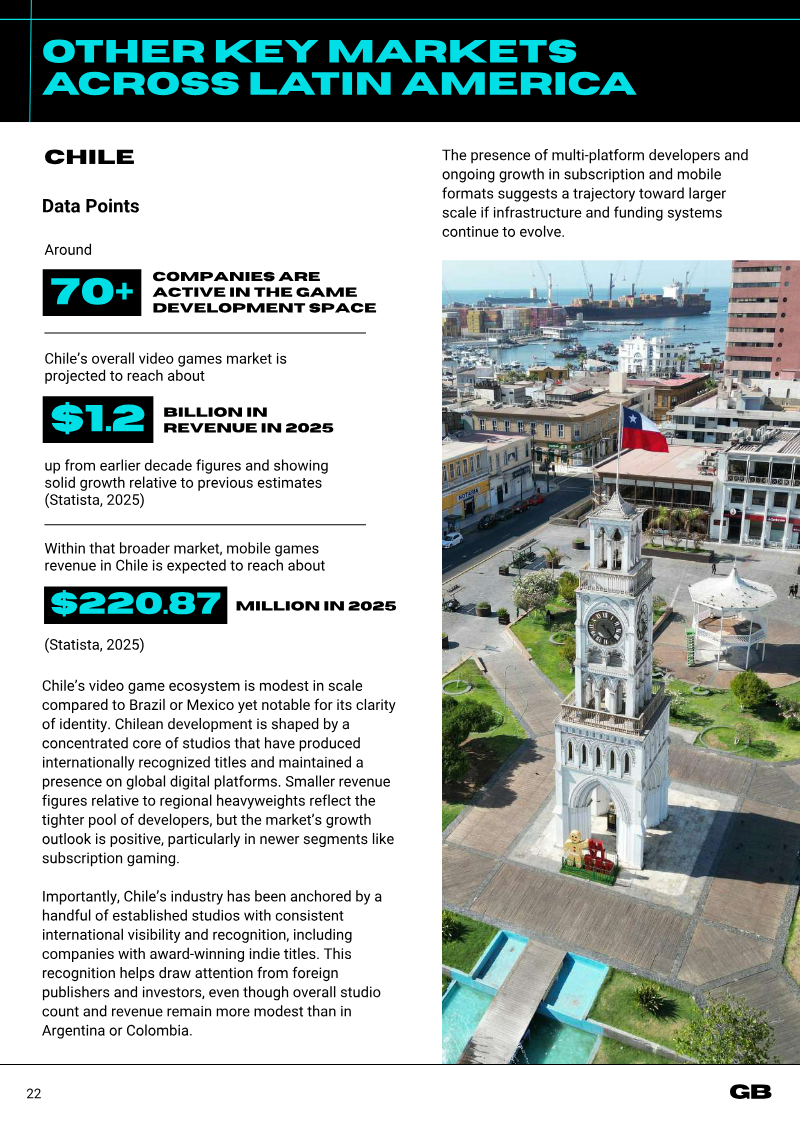
State of the LATAM Games Industry 2026
Latin America has solidified its position as a formidable force in the global gaming landscape, transitioning from a peripheral source of cost-effective labor to a sophisticated hub of creative innovation and live service expertise.
- Brazil and Mexico serve as the region's primary anchors, with Brazil driving engagement across all platforms and Mexico acting as a commercial gateway for global publishers.
- Mexico's gaming industry generated $1.27 billion in revenue in 2024, with mobile and tablet devices accounting for 72% of all gaming activity.
- Brazil hosts a robust ecosystem of over 1,000 developers, while indie game creation in Mexico grew by 30% year-over-year in 2023.

GI Podcast | iicon, Gamescom Latam, and Roblox financials
Roblox demonstrates a complex financial dichotomy, pairing a 39 percent revenue increase and a 35 percent surge in daily active users with a quarterly loss of 248 million dollars.
- Roblox reported a 39% revenue increase and a 35% surge in daily active users, yet still posted a $248 million quarterly loss alongside lowered future net booking projections and mounting child safety legal pressures.
- Microsoft experienced a 7% year-over-year decline in gaming revenue, a downturn attributed primarily to the underperformance of first-party software titles.
- Major publishers are adopting a conservative approach to artificial intelligence, prioritizing backend performance optimization over generative content due to high consumer hostility in North America and recent industry layoffs.
Mobile App Trends: LATAM
The Latin American mobile app market is experiencing robust growth, driven by a highly mobile-first population and rapid economic digitalization.
- The Latin American mobile app market is projected to reach a valuation of $56.1 billion by 2034, supported by a smartphone penetration rate expected to hit 93% by 2030.
- User privacy opt-in rates in the region reached 49% in Q1 2026, significantly outperforming the 38% global average, with Brazil leading at 54%.
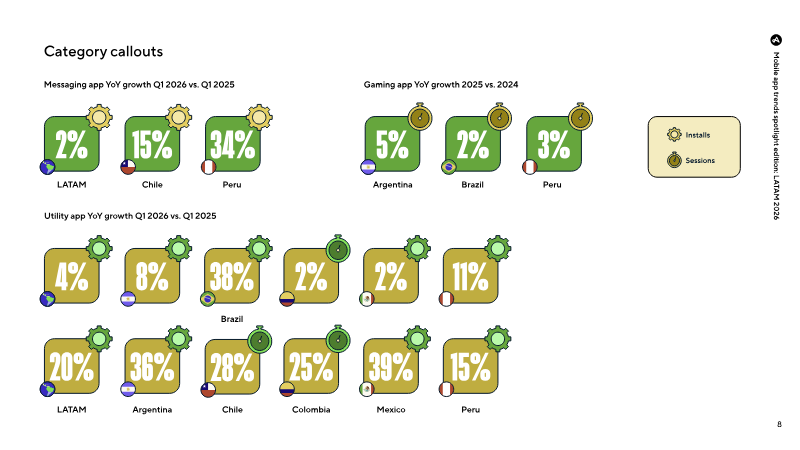
- Finance apps experienced a 34% year-over-year increase in session activity during Q1 2026, driven by the adoption of super apps and real-time payment systems like Brazil’s Pix.

Money, Markets & Disruptive Trends – Xsolla’s Chris Hewish
The global mobile gaming market is entering a period of renewed expansion, with 2024 revenues projected to reach $98.7 billion.
- The global mobile gaming market is projected to reach $98.7 billion in 2024, driven by stable engagement and a strategic shift toward direct-to-consumer web shops.
- Regulatory pressure from the European Commission’s Digital Markets Act and Digital Fairness Act is actively dismantling app store gatekeeper dominance, forcing developers to adopt web shops to retain revenue and player data.
- Web shop adoption is high among consumers, with 81% of mobile gamers aware of these platforms and 77% having completed a purchase.

A Decade Unveiled: The Brazilian Indie Game Scene's Transformative Journey
The Brazilian game industry has undergone a profound transformation over the past decade, evolving from a fragmented landscape of hobbyists into a structured, globally integrated ecosystem.
- The Brazilian game industry has scaled from approximately 100 studios to over 1,000 companies, now employing 13,000 professionals.
- Brazilian developers have successfully pivoted to international markets, which now account for 57 percent of total sales.
- Strategic initiatives like the Brazil Games program have been central to the industry's transition by facilitating international partnerships and co-development opportunities.

How Hyperbeard Became Mexico's Top Game Publisher
HyperBeard has established itself as the leading mobile game publisher in Mexico by shifting the industry standard from individual title performance to a cohesive, ecosystem-based growth model.
- HyperBeard achieved market leadership in Mexico by shifting from individual title performance to a cohesive, ecosystem-based growth model targeting young adult females.
- The company utilizes a 'feeder' strategy that funnels users from low-acquisition-cost titles into higher-monetizing games to maximize total lifetime value across the entire portfolio.
- By treating their catalog as a unified brand, the studio bypasses the limitations of the post-IDFA landscape where traditional, isolated user acquisition has become prohibitively expensive.
Strategic Cross-Promo for Mobile Publishers - A HyperBeard Case Study
HyperBeard, a prominent Mexico-based mobile game developer and publisher, has successfully optimized its user acquisition and monetization strategies by leveraging advanced data analytics tools.
- HyperBeard achieved a 35% increase in portfolio lifetime value (LTV) and a 15% to 20% improvement in return on ad spend (ROAS) by shifting to cross-portfolio performance tracking.
- The publisher increased total ad spend by approximately 300% in a single quarter by justifying higher cost-per-install (CPI) bids based on a user's total contribution to the entire game ecosystem.
- By integrating Tenjin and Growth FullStack, HyperBeard centralized data to bypass privacy-centric measurement limitations and track user migration between their 30+ titles.

The History of Latine Characters in Games
The gaming industry has historically struggled to represent the Latine community with depth, frequently reducing a vast, heterogeneous population spanning 33 countries into monolithic, one-dimensional caricatures.
- The gaming industry has historically reduced the Latine population, which spans 33 countries, into one-dimensional, hypersexualized, or criminal caricatures.
- Authentic representation is shifting away from monolithic archetypes toward multifaceted, human-centric characters, as seen in titles like Life is Strange 2 and the Miles Morales series.
- Sustained progress requires moving beyond superficial diversity initiatives by integrating Latine talent into core creative and decision-making roles.
Seizing the Trends in Emerging Markets
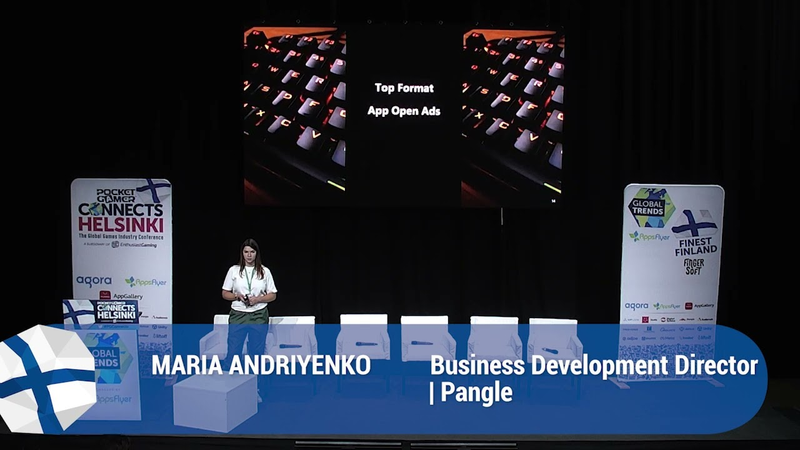
Emerging markets in the gaming industry, specifically across the Asia-Pacific (APAC), Middle East and North Africa (MENA), and Latin America (LATAM) regions, represent significant growth opportunities for publishers.
- Emerging markets in APAC, MENA, and LATAM now represent 58% of global gaming revenue, showing significant growth in both traffic and ROI compared to declining markets in North America and Europe.
- Gaming live stream revenue in Southeast Asia is projected to grow by 300% between 2020 and 2023, while China currently accounts for 50% of global live stream users.
- In Southeast Asia, gaming publishers should align user acquisition and ad spend with e-commerce mega-sale dates (9/9, 10/10, 11/11, and 12/12) to capitalize on increased ad request volume.
The Resolve of the Latin American Gaming Industry
The Latin American gaming industry is currently undergoing a period of significant expansion, characterized by a unique creative identity that blends diverse genres with regional cultural elements and themes of magical realism.
- The Latin American gaming industry is currently limited by systemic barriers, including restricted access to high-end development hardware, inadequate educational infrastructure, and persistent financial constraints.
- To scale beyond its current indie-focused foundation, the region requires a strategic shift toward internal infrastructure and the formation of a unified regional coalition.
- Cross-border collaboration and grassroots initiatives, such as charity streaming festivals and digital knowledge-sharing platforms, are currently the primary mechanisms for securing international visibility and resources.
How to Win on Mobile in LATAM: 2021
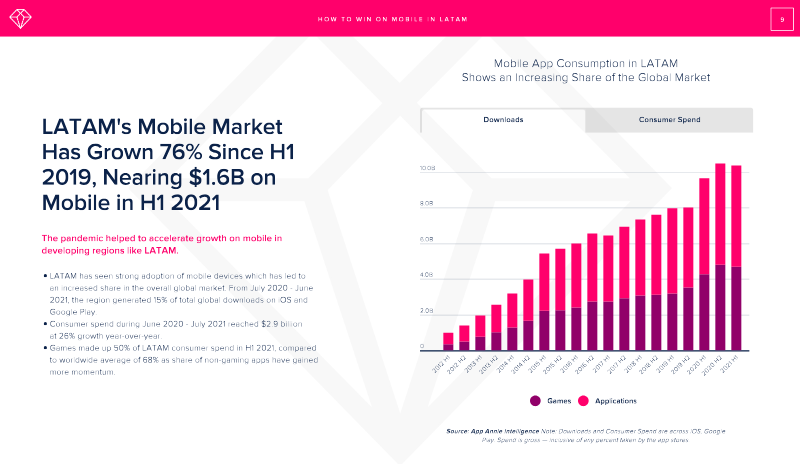
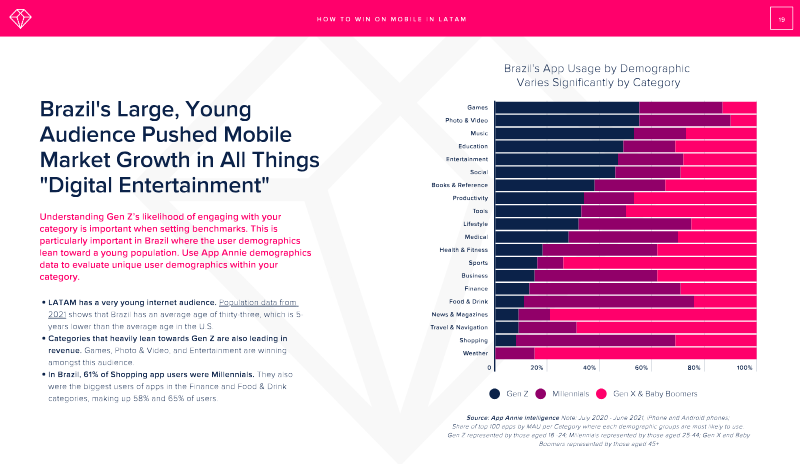
The analysis focuses on Latin America’s mobile ecosystem from July 2020 to June 2021, revealing a region that has accelerated digital adoption and monetization amid the pandemic.
- LATAM mobile downloads surged 76% year-on-year to 21 billion, while consumer spending grew 26% to $2.9 billion between July 2020 and June 2021.
- Android dominates the market with 89% of total downloads, yet iOS commands 56% of total consumer expenditure in the region.
- Brazil and Mexico are the primary drivers of the regional market, collectively accounting for 73% of all mobile downloads.
How to Win on Mobile in LATAM
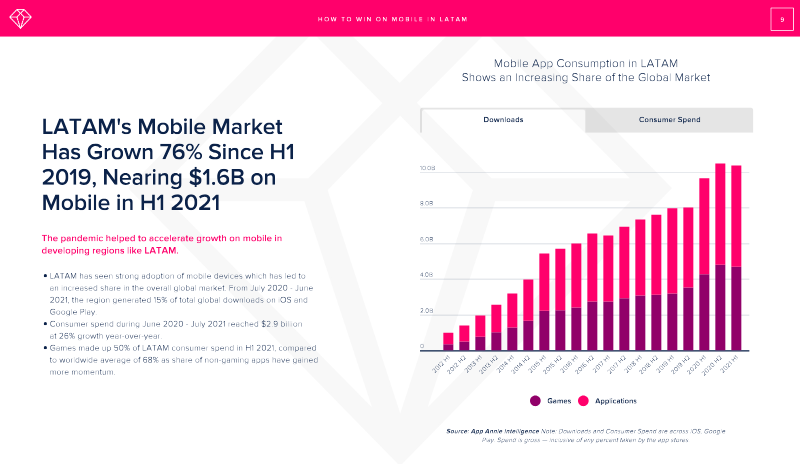
This analysis examines the mobile application ecosystem in Latin America (LATAM) from July 2020 through June 2021, a period marked by rapid digital acceleration due to the COVID-19 pandemic.
- Brazil and Mexico dominate the LATAM mobile market, collectively accounting for 73% of the region's 20.9 billion downloads between July 2020 and June 2021.
- While Android commands 89% of total downloads, iOS captures 56% of consumer spend, highlighting a significant disparity in monetization potential between the two platforms.
- Gaming represents 50% of total consumer spend in the region, with hypercasual titles driving volume while Strategy and RPG subgenres account for 60% of gaming revenue.