1 free read left. Create a free account for unlimited reading + AI research.
Create free account
Three Key Factors to Successfully Monetise Mobile Games in Latin America
Key insights
6 takeaways- 01Developers must prioritize technical optimization for legacy, low-spec Android devices, as high import taxes on electronics have created a market dominated by hardware with limited RAM and storage.
- 02Standard North American or European pricing is often prohibitive due to local income inequality, necessitating the adoption of localized pricing strategies.
- 03High-performance titles often fail in the region, whereas games that adapt to technical constraints, such as Garena’s Free Fire, significantly outperform global titles requiring high-end specifications.
- 04The free-to-play model is essential for the Latin American market, as the vast majority of regional revenue is generated through this structure rather than premium pricing.
- 05Integrating local payment methods—such as domestic credit cards, debit cards, and cash-based voucher systems—can triple revenue compared to relying solely on international platforms.
- 06While Google Play is the primary download channel, developers should leverage alternative distribution networks like carrier-integrated billing and retail partnerships to maximize monetization.
Ask AI about this video
Transcript
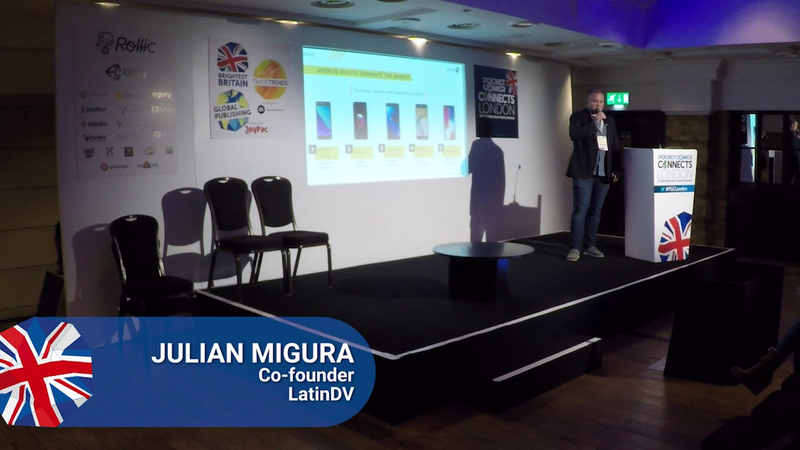
[Music] all right once again it's very nice to be here to be speaking to you as was mentioned we're now traveling virtually from from the Arab countries to Latin America and the core market is obviously Brazil and I'm gonna explain to you today the three or three of the most of important factors on how to monetize and how to publish a game on mobile in Latin America I'm originally from Germany but I've been working for a long long time with Latin America let's just say I had hair when I started and I've been involved in a lot of the PC market so we've helped
brought bring steam to Latin America we've helped bring origin and some other platforms and I've been working with tensions level up division which is basically doing publishing and distribution in general why is Latin America an interesting market it's a very large population basically double the population of the US you have about the internet population of Europe and just two languages that cover everything with an already relatively reasonable smartphone adoption rate that is continuing to grow and for gaming specific you have the highest year-over-year growth rate so the CAG RS are basically about double of those of China currently we've heard earlier why that is to a certain extent in terms of revenues it's about the same market size as the UK with about like I said 250 million gamers and the very interesting fact is that the user acquisition cost
so the CPI costs are still extremely low so the u.s. is about seven times higher than in in Latin America on average in terms of the games industry another interesting fact since this is very much revolving around mobile here 40 percent already of all the revenue from that America comes from mobile you can see that on Brazil and Mexico that's a little bit less just because those markets were more established but overall it's a very mobile heavy region so the mobile gaming revenue off the region is actually higher than as a comparison those of the UK and for the SuccessFactors there's basically three main relevant items that you have to consider the first one are the different device types that are in the market the second one is the pricing and the income inequality and the third one is the accessibility and the different payment and distribution channels so for the devices let's take a
look as a comparison here on the iPhone access so the selling price in Brazil is to launch price in Brazil was two thousand dollars roughly in the US was about a thousand dollars so basically an average Brazilian has to work eight full weeks to buy the device which means obviously the penetration of iOS in general and most more most high-end new spec phones is relatively low so as you can see here why is that it's basically due to three main factors they're extremely high import taxes for most physical goods and electronic goods import taxes are 150% of the value so if you have a thousand euro phone or a thousand dollar phone that becomes two point five K basically if it's produced outside of the region you have extremely high service taxes which means it adds to the inefficiency and yeah it's basically a huge income disparity which
means you have a lot of issues reaching a broader mass we see that also if you look here at the smartphone share so on the left you have the global smartphone share you can see Apple globally is around 12 maybe 15 percent and you can see in Latin America it's at 3 which means that those people that do have apple devices are very very interesting for you because they're going to be the top top top notch basically VIPs as we've just learned from the to take their version of it and but nonetheless if you want to reach mass you have to go and published on Android in terms of the Android devices it's also important to note that those are pretty old devices so the galaxy j2 I think launched in November 2016 iPhone 7 September 16 Galaxy j5 I think in 15 so we're talking about three to five year old devices that were aside
from the iPhone 7 maybe already not at the biggest spec when they were released so you have two main limiting factors one is the phone space which is kind of slowly storage on the phone age hard drive disk which is kind of slowly fading away as it becomes cheaper and then the main limiting factor which is the basically RAM capacity of the phone what happens then is basically you have interesting developments in terms of slightly different developments to the global trends and you have companies such as garena for example that built games for originally Southeast Asia but basically for emerging markets with a lot of low spec phones with which reaches huge numbers of downloads and it's currently with free-fire the most by far most relevant and most successful title in in Latin America and in Brazil
while for example fortnight which globally is much much more stronger has almost no chance just because it's requiring a minimum of three gigabyte of of RAM and if we go back to this one you can see that basically aside from those that are coming in now none of the old devices have have this available what you can also see is 4G mobile we've been working with with Tencent on that for quite a while and we've had huge issues pushing out the original version so the pop G mobile while the pop G mobile light which we basically started these are download numbers from about a month and a half while of G mobile regular download numbers from basically over a year so you can see it's a huge difference if you manage to get the file size low and if you manage to get the RAM down especially so
that people can actually use it on their devices so device is the number one point again mostly because people just don't have access to better devices but there are a lot of players the second part is pricing these are some average numbers from from Google Play basically where you can see adjusted correlations between the GDP per capita and the median SKU price and what's interesting to see obviously the original is the u.s. so it's hundred hundred you can see that in Europe there's obviously an adjustment but where prices are a little bit higher that's usually related to V eighty and a couple of other items and per capita GDP is slightly lower but if you look specifically at Brazil or Mexico you can see that the GDP per capita is significantly lower so we're talking for Brazil about 1/4 of the US but pricing in this case on average is
about half of the u.s. so if you go if you do want to have a chance basically to bring your title to Brazil or to Latin America you have to make sure you adjust pricing because these people simply cannot afford regular European or North American prices in addition what's working pretty much as anywhere but what's working particularly well with Millennials and overall is anything free-to-play so you can see basically the rate in this case is for for online videos but basically you have 85% to 30% ratio so 85% of users watch three free videos and about 30 percent if you look at Brazil and overall I think it's around 25 percent or so are willing to pay for that and you would face similar issues for your game or your app overall so if you bring something to the market
it makes sense to focus on free-to-play all the rests is very difficult one of the main reasons for that is the income inequality that I already mentioned before so you can see Brazil is basically worse in any of the Gini coefficients in the world it's about one level of Botswana and Mexico is not far behind so you have some areas of the same small number of the population that have incredible high wealth and high net earning and the vast majority is very very poor and has very limited access to wealth and that also shows in the top grossing games basically so you can see this is from I belief at some point in November you can see in the top 25 there's basically two four that was one one given day basically there are two non free-to-play titles one is minecraft which fair enough if you build the new Minecraft I think you can go anywhere but the other one is farming simulator
which I think was up there for like two days and then fell back to somewhere in the top 100 so if you look at free-to-play versus paid to play or free versus paid games you can see the revenue difference so talking about farming simulator again they made about 300k with it which is obviously still still nice revenue but it's much more interesting if you look at clash Royale or garena free fire talking about 50 Millions and in the region basically in Brazil's the third one so basically to sum up the pricing part free to play is basically what it takes to be successful there are some very very few pay to play examples so I would recommend that and I would definitely recommend to adjust pricing to make sure that you have local access the people can purchase the game and can afford to purchase the game and
you'll significantly increase revenues versus just plain outgoing with us or EU pricing the last one is the additional accessibility options distribution options so one issue that you can see and basically goes without saying that this farms significant the revenue is that only about five percent of the population and it's six point five to be precise in Brazil and again it's similar for most other countries have access to international credit cards and thus also have access to international PayPal accounts or any other international payment services which means that if you do want them to pay you need to make sure that you allow for payments in local credit cards debit cards or ideally in some form of cash the biggest one most known one is bullet of Ontario we've seen on average for the titles
where we've implemented local voucher top-ups and local payments about a 3x and revenue versus the previous Google Play revenue in addition here you can see this is the most used credit cards obviously these are local cards but you can basically see that's the breakdown of the revenue that we generated with the different payment methods through the channels yeah so basically payments are the third part distribution would be the third part Google Play has very very strong numbers when it comes to downloads but they have big issues when it comes to monetization simply because they have a lot of other countries to care about that are much more relevant than revenue for them and they're slowly changing this which is great because it gives additional potential to everybody but if you're really looking to monetize and to make sure that your game has a strong stance in the market then you have to go with alternative distribution
and monetization schemes I wanted to show a little bit about what's to come so if you look at the smartphone adoption I was mentioning where Latin America is more or less on pear a little bit behind obviously with much older phones much lower spec phones but it is yeah increasing significantly and will continue to do so and we'll probably peak kind of similarly as in the developed countries overall so you have the same potential to grow up there and you can see this is the current one so if you're comparing it it's already more or less there with the exception maybe of Mexico that still has a little bit of work to do to catch up but overall it's quite similar with the difference that you still have a lot of growth potential and user acquisition costs are extremely lower like I said seven times lower than in the US for example which is why we're seeing a lot
of good return for the investment and of course also there's a potential future return as the economy grows last but not least as well you can see that the infrastructure is also getting better which is very important we had a first kind of wave of games coming to Brazil in 2012-13 that were mobile mmo's from the Asian countries and of course if you are blessed with the Internet that Korea has that's great if you're in Brazil that's not so great because you can basically play for half a second and then get disconnected and lose year round or you know whatever happens yeah so basically this is catching up a little bit more still kind of away from it and if you consider the the cost that you have for brazilian internet for example they're significantly higher based on per capita GDP then you'd have here but it's kind of slowly catching up and especially in the cities it's
basically almost on pair with most of the European markets so it's no longer necessary to just focus on desynchronized games which was previously the case but you can also go pretty much MMO if you want to and that's basically it I don't know if we have time for questions I guess not for me okay thank you for the presentation very interesting just a quick question regarding alternative distribution channels you mentioned what do you mean by that so for example we have integration for people to purchase top-ups and to download games through the carriers directly we work with large retailers that have huge mobile mobile user numbers basically they have their own apps where they distribute content as well and we also work through other alternative methods so we work with loyalty programs we work basically with
anyone who has relevant mobile traffic because they're interested to to help with that as well and it's kind of building a much less to the same extent as China but it's slowly building a more for defragmented set up where you have more players in the game that are basically trying to get into it as well and they are very eager for content and in general the Brazilian population or the Latin population is very heavily inspired by the US for content so anything that's global content will pretty much work as well [Music]
Summary
Latin America represents a high-growth mobile gaming market characterized by a massive user base, low user acquisition costs, and significant potential for international developers. Despite these advantages, the region presents unique challenges regarding hardware limitations, income inequality, and payment infrastructure. Success in this market requires a strategic approach centered on three pillars: device optimization, localized pricing, and accessible payment distribution.
Hardware constraints are a primary barrier to entry, as high import taxes on electronics result in a market dominated by older, low-spec Android devices with limited RAM and storage. Consequently, high-performance titles often fail to gain traction. Developers must prioritize optimization, such as reducing file sizes and memory requirements, to ensure compatibility with legacy hardware. Games that successfully adapt to these technical limitations, such as Garena’s Free Fire, significantly outperform global titles that demand high-end specifications.
Pricing and monetization strategies must also be adjusted to reflect local economic realities. Due to significant income disparity, standard North American or European pricing is often prohibitive. Adopting a free-to-play model is essential, as the vast majority of revenue in the region is generated through this structure. Furthermore, because only a small fraction of the population possesses international credit cards, developers must integrate local payment methods, including domestic credit cards, debit cards, and cash-based voucher systems. Implementing these localized payment channels can triple revenue compared to relying solely on international platforms.
While Google Play remains a dominant distribution channel for downloads, it often falls short in monetization support. Developers are encouraged to leverage alternative distribution networks, including carrier-integrated billing, retail partnerships, and loyalty programs, to capture a broader audience. As regional internet infrastructure continues to improve, the market is increasingly capable of supporting complex, synchronized multiplayer experiences, signaling a maturing landscape for mobile gaming investment.

















Comments