VideoTwo & a Half Gamers
The Mistplay Audience Network: Smartest UA Expansion of 2026! 3X reach, same quality
14 May 202637 min video
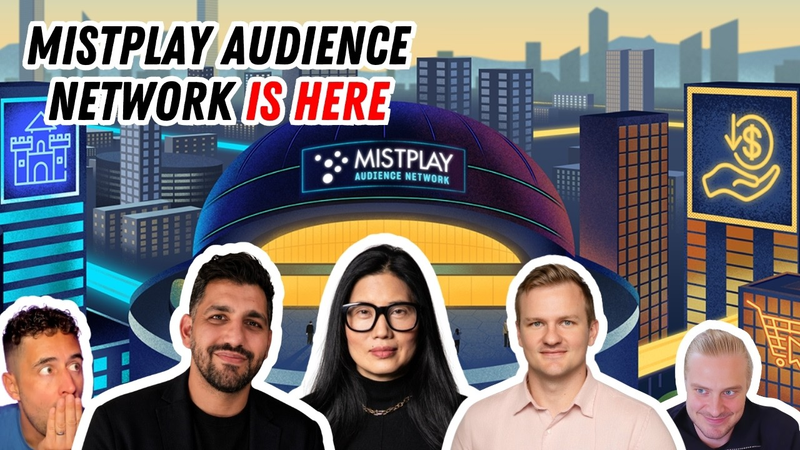
Simply put, what it means to a UA manager is further access to a large scale of high-valued players in the most frictionless way, and this will continue to improve over time for our integrations for both companies as we get to this end state of Misplay audience network.
Hello everybody. This is Two and a Half Gamers and we have super rare episode. How do we call this? Live interviews on the Yeah, super super rare. We have a full house. We are a little bit outnumbered, but I think we can handle that, hopefully. So, welcome again to this this episode. My name is Matej Lancaric.
I'm Felix Braberg.
And we are your hosts and we have three special guests today. So, we have Trisha, Mark and Aaron. Please guys, introduce yourselves and the company you work with and then we can go straight into it. Ladies first.
Thank you. Thanks for having us here today. I'm Trisha. I'm the CEO of Misplay and as many of you know, we're often referred to as the OG rewarded. Aaron?
Hey guys. Aaron here, chief commercial officer at Minsplay, long-time ad tech
veteran. Been with Minsplay for 4 years, in the industry for around 15. And I know you guys very well, so really happy to be here and have this chat with you today.
Cool, and that leaves me. So, hi, I'm Mark. Everyone at Minsplay calls me Bear, so if we do switch between, that's the explanation. So, I'm the general manager for our B2B solutions, so I'm the monetization guy. So, similar to you, Felix. Yeah, that's me in a nutshell.
Nice. So, thanks guys for coming on. So, we are going to talk about the state of the rewarded UA. Then, we heard and saw the big news about audience networks, so we're going to unpack that. And then, like what that actually means for me as a UA manager, and what's going to happen, you know, for Minsplay from now onwards, and what's the future look like. So, if you don't mind, what's, you know, what's actually happening in 2026 in the in the rewarded UA? It's not the new channel, so it's been here for some time, but it's always evolving. So, what's happening? What's the what is what does it look like in 2026 in
Sure, I can take 2026, you know, we've come out swinging. Um, I was recently on a couple podcasts, and I've kind of said this, but Minsplay in itself really has been focused on its own mission, right? Which is one of of patience and one of strategic growth. And I think 2026 so far for us has certainly been that way. When it comes to our clients, who are of course the world's biggest gaming publishers, we've worked with many of them for a long time now, and some in more than 5 or 6 years. And we work with a lot of the top big ones. Like, we we cover like 75% of the top 100 games in the US. Work with Minsplay as evergreen campaigns. So, it's yet another testament that rewarded is a firm part of stack. The share of wallet continues to grow into 2026. It's no longer a test bed, it's certainly a farmer positioned place that user that UA managers can can get traffic. And the focus for us is quite consistently been on high-valued
users. And that's what we're going to continue to do. Build a community of high-valued users, spenders who come in, discover games, and then play those games, and of course spend those games, driving strong returns for our advertisers. So, 2026 in a nutshell, we're doing the same the same as what we've been doing, which is just consistently growing. There's obviously been recent news, which we're super excited about and happy about. Some as recent as a couple weeks ago with the news of My App Story math being acquired by us, which has unlocked some things which we're going to talk about in detail with you guys. But in a nutshell, that's essentially what's what's been going on.
Sure. Do you want to add something?
Yeah. Yeah, I'll add. Okay, so you know, I I think you see it really industry-wide, it's been interesting. You know, we obviously are talking to clients and other people in the space. So, first off, if you look at like you know, the AppsFlyer they put out their 2025 performance index. And what's really interesting, it actually validates what we see. And what they said in that is about a third of leading
UA sources are now rewarded. And as you all know, this is a big contrast from even 3-4 years ago. So, what we used to see or what we used to hear was that rewarded might be single-digit percentages of a of a UA manager's total spend, and low, right? More like 1 to 3, something like that. And what we have really seen over the last 2 years is that is that grow very meaningfully. So, now you're looking at 6%, 8%, definitely approaching 10%. So, you know, what Aaron said, we we see that reflected in our budgets and in our conversation, where we are now rewarded is seen as a core part of the mobile ad stack in general. But the other thing that I will say that we're starting to see is that the category in general is definitely consolidating around what I'm going to call platforms that have really safe, sustainable foundations. Because as we know, when when people sense an opportunity of you see a lot of people will rush into the space. We've seen that over the last, I
would say, 3 to 5 years. However, what's really important for our partners, at least, is to make sure that they know that they can count on us for very sustainable, reliable, trusted delivery of ROAS and performance overall. And so, you know, I it's something that we have been very intentional about building that that that platform and that foundation.
I mean, we joked about recently that I think it was what, like 20 20? Like everybody was building a merge game. Then, 2 years later, everybody was building and starting a rewarded UA channel. So, I mean, there's like so many of them, right? So, the consolidation, I mean, that's like the the natural step. I ran a survey last year, and I'm running the survey again, so everybody should definitely go there and fill it up because I asked, "What's the current or like what was the UA manager's current budget for rewarded UA channels?" It was between 20 to 30%. Then, the the next question, a follow-up question, was, "Are you going to Are you planning to increase this budget next
year?" 80% of that said yes. Yes, my question was like if this is actually becoming a core channel, but I mean, you answered it, Trisha, as well, and people answered it as well, and it's like if a channel is 30% in your UA channel mix, it's definitely a core one. But then, the question is what are like where are the problems and the pain points and things that you're trying to also solve because, obviously, not everything is flawless. In the in terms of the rewarded UA in general, anyone? Anyone?
yeah. No, no, no. So, okay, here's how we think about it. Honestly, the one honest answer is, of course, there's always a scale limitation, right? With any channel when you're trying to hit performance. And so, it's one of the areas that, of course, that we really obsess about. How do we make sure we're giving performance overall? But, you know, we've also talked about, as we've talked to our advertisers, what what do they they really need? And they really like the performance that we've given them over the years. And now they keep saying, "Okay, can you help us understand how can we scale faster?" So,
you know, it's the area that we have we have we've actually taken what we call the the patient path, where we wanted to build again an infrastructure and a foundation that could deliver both the quality as well as the scale in hand in hand in in sort of step functions overall. So, you know, other than that, I would say, you know, we do one of the things that we hear a lot in rewarded as a criticism at times is that, "Hey, we see performance drop off after a certain time period." But, I will say Misplay, we've actually taken a really different approach and we're really thinking about the long term. And so, we've invested very heavily in AI and machine learning to really think through the behavioral component and how do you set up the uh the economies and the and on a game-by-game level, the right path and journey for that for that game. And Aaron, you may want to speak to this. I know you think about this all day long, too.
No, 100% like you hit the nail on the head.
Having done this a long time now, advertisers consistently raise that bar, right? If you deliver great performance, they want more scale. If you get them to scale, they're going to want more scale. And it's just that endless battle of "Hey, we're going to keep keep coming around trying to hunt for these these great users for you." Um but yeah, like the long-term performance piece we've been working very hard to solve. And as Suchi mentioned, like a combination of hiring the right people in data science, right? Making sure our economies are correct, making sure we're driving users deep enough. But then when you take a step back, it really starts at the start of the journey for the user, which is let's match them with the right game they actually want to play. And because we have such a broad game catalog, we're able to do that. So, if you can start there and then as they progress through the game, make sure you're dynamically passing the correct rewards, the correct incentives at the right time, which requires really deep partnership with the games. Very, very important. They're running a special event coming up this weekend. You absolutely want to really want to try to
tie that into the rewards and the messaging that they're seeing within Misplay.
That's where we've we've seen success and that's where we're going to continue to double down on our learnings.
Nice, because yeah, long-term progression is always a player long-term progression is always a problem with the rewarded UA because people are It's It's also I see that they they're complaining of Finally, there's disappear after they get the reward in day 30. Then then you ask question, okay, but what's the what's the reward? Like what's the actual progression that you build with your partner on in terms of the rewarded UA. You mentioned scale and also you mentioned and we saw the the news with like the connection connected rewards and the mobile BBT kind of acquisition and then math My app free acquisition as well. Which then these two components tie to your audience network. So, why now? What's what's changed or why this is the good time to start building?
Well, I'll jump in here. So, I joined Misplay just under two years ago. Uh
I've learned a lot since then including a lot about hockey by the way cuz I didn't know a lot, but now I do cuz as as many of you know, we're we're founded and based in Montreal. Go Habs. Uh so, but but the other thing is is we really took the opportunity at that time to think very deeply about how do we better serve our advertisers and our players. And so, I went and talked to of course all of our customers and again, they said, "Listen, Trish, we're happy with the performance. We have a lot of trust in the the team. We would like to know again how to scale faster. So, you know, our team we we talked about it a lot about the different strategies that we can employ to help them build their businesses cuz that's really our business. If our if our clients are successful, you know, that's that's our purpose overall. And, you know, there were there were like fast ways to maybe do it uh but they weren't necessarily that sustainable. So, we started meeting people and talking to different groups. We actually met the the MAF team as well as the Connected Rewards team. And,
here's what was important for us. Quality is really really important. We really lean into that. We are looking for the highest quality players who are really interested in the games, who want to who want to develop a relationship essentially with the game and with Misplay. And, we carry we care a lot about how we can build sustainably. Again, we've really taken the patient path. So, we weren't willing to just jump in and chase every shiny penny. We wanted to build a really solid infrastructure that we knew would deliver returns for our advertisers day after day after day, you know, into not just 90 days but 180 and 360 and 720 depending what their goals were. As well as that and we needed to find partners that shared that same philosophy about us. So, we wanted to do it on our terms. Uh when we met those two teams, we could see there were a lot of synergies but we thought there was also a lot of agreement culturally about what's
important in business and how and what our purpose was as a team together. So, really it was us wanting to find the right fit as opposed to just go chase any potential trend overall. So, it and it just so happened that this was the right time.
And, Mark, can you just for the viewers just explain cuz I know you have a lot of uh experience with this like what is an audience network and why is it beneficial to build one out, right? What kind of uh expertise does it actually give you a leverage?
Yeah.
Well, I I think Aaron can probably add a few bits to this as well, but essentially up until now the Misplay has been the the gate to So, Misplay is the advertiser-facing platform that they're buying on. With Misplay audience network, now essentially with a tick of a box you're extending those budgets and those campaigns off platform onto our publishing network. So, immediately you get access to like the scale, obviously the Trisha talked about the quality benchmark. I think we'll talk a bit more about that as the conversation goes on. Um so, you get that performance and
scale component, but it's powered by the same data, right? So, the the Misplay data, all of the AI investments we've made to really matchmake the right user with the right game. You you get that same performance, that same kind of engine that powers everything they get today. You just get it on a much bigger scale.
Yeah, and and I'll add one piece, which is really trying to meet these audiences that we know work well in games in in different surfaces, right? You call Misplay O and O, which is Misplay on Android and Misplay on iPhone. But, if they're not there, like yeah, and we don't have an audience network, it's like, "Okay, they're not there. We're going to try and find them, but there's only limitations to scale that you can achieve on an O and O app, right? That's why Meta moved to an audience network, TikTok, Snap, like many many have done this. We're obviously a smaller scale to those Goliaths, but the timing was certainly right for us because it's a case of we know the audiences, we typically know where they're hanging
out, right? Which is on other get get paid to rewards apps, in fintech apps, right? In QSR places as well. So, that's why when evaluating both connected rewards for mobility, My Chips through My App Free Bath, the synergies were really really nice because you get this different reward experience through connected rewards, which I can touch on in a few, and then you get this global reach through my app free, which is phenomenal, especially in Europe and APAC, which is a massive unlock for us. We've done tremendous work in Europe and APAC, but the amount of time it would take to unlock those publishers specific to those regions. I mean, think about Japan is such a good example, right? Yeah, we've launched Mistplay in Japan. It's available. Yes, we're growing it really well. But when you unlock a big local publisher in the comic book manga space, guess what? You're going to have access to millions of incremental users and get games in front of them and start to
drive audiences through that channel as well.
And I think the only thing I would add, kind of like closing the loop as it speaks to the why now topic as well, is if you go back two, three years ago, a lot of these brands and app companies didn't understand rewarded in gaming, right? They didn't see the opportunity space. So, there's a certain amount and certain amount of market education that's needed to happen. And now I would say there's there's quite a big appetite from a lot of these loyalty brands. Obviously, Aaron talked about QSR, gas, you know, restaurant, retail, fintech. All of them are now sort of chomping at the bit to get access to this kind of incremental revenue stream. So, it's kind of a win-win, right? Or a win-win-win, because the advertiser, Mistplay, and the brands all benefit from making that connection.
Before handing it to you, Matthew, for your next question, I must say here, so I worked in monetization for like 10 years, right? So, I think what our guests here are a bit too modest to say is usually when a company builds an audience network, it means you have runaway scale that you actually do need to scale to have it larger, right? So, it's usually a sign of very healthy and
good growth, right? So, it's always a something to keep an eye on. Like if you ever track a company or a stock that has a audience network launch, usually that's when I would buy that stock.
This is not a financial advice. Uh I I looking at you Felix and you were smiling the whole time guys were talking about it. So I was waiting for what's going to what's going to come. But guys, it's an observation Felix.
Yes.
Yeah.
It's like the games on on one hand and then pretty much the rest of the the audience network on the other hand. Like how does those two games and the different verticals kind of work together? It's like it's very different behavior and maybe even like quality and like how does that going to work?
Yeah, I think there's a few things there to unpack and obviously everyone else jump in if there's kind of bits I don't touch on, but I kind of hinted to it like the quality bar is super important
for us. So any publishers or brands that we bring on to the Loyalty Play platform, we're obviously benchmarking them against the Misplay O&O, understanding how those users behave, do they actually fulfill the objectives of the advertisers? And if they don't, ultimately we're going to pair those back. So obviously we're trying to keep it pretty exclusive. It's not like a self-serve sign up and use it. Very enterprise driven with a lot of key brands. So that's that's kind of one part about the quality. Um but you've kind of touched on another interesting topic which is the difference between the users, right? So the context is very different depending on where those users are. So they might not necessarily be in a moment in time where they know they're looking for a game. You know, if you compare it to a rewards app, very high intent. You're going in there, you want a game, you want to maximize the rewards you're getting. You're not going to do anything unless you're rewarded to do it. And so it's very very incentive driven. But for the for the for the apps on audience network, so through Loyalty Play, it could be a shopping app, right?
So it could be this post checkout moment where it's like, "Hey, you get some extra value on top of your purchase for doing that." Or if it was in like a loyalty wallet for a coffee chain, it's like, "Hey, you can and discover one of the 400 games we have on platform and you can play those and earn points that you can directly use to spend on further things. Like tapping into not not necessarily a different audience, but a different mindset and there is a little bit of incrementality that you know, not every person or not every consumer in the world is using a rewards app. Many of them wouldn't discover the opportunity. They're not going to the App Store and searching. But you know, if they're if they're in kind of one of the gas apps on the network, they go in, they see this opportunity and it's very impulsive and it's not driven by the same motivations.
Which means these again different behavior and different kind of point in the the whole funnel until you get to the game can mean different LTV curve as well.
Yeah, I mean the obviously we we've got data to see that very maybe not surprisingly. It could be depending how
close you are to the topic. But there's a very long tail retention for a lot of these users. So, you know, often you see with a rewarded like reward curve like some level of drop off after those early incentives like the 30-day you talked about in the day. Obviously for the non-rewards app users, many of them kind of installed the game and started playing to get some small incentive in the loyalty program, but actually keep playing it. You know, they're they're not keeping a spreadsheet of, you know, do I earn better rewards on this platform or that platform? So, it's quite surprising looking at 60, 90, 180 days on, there's there's a decent surviving cohort that still actively play those games.
One of the things we're very excited about with bringing in this solution is well, two things. One, as Bear mentioned, it's actually it can be very incremental audience. That is what we have seen in all of our data and testing because sometimes these are people who are not necessarily they aren't as exposed to a lot of the same channels
today. So, that's a really interesting opportunity. And the other thing that that we really like about this is we are now with the solution able to connect online and offline in a new way. So, it's almost like taking a holistic approach to someone's life. You know, it's not like you just sit down and play a game. It's like you might go to fill up your car with gas. You might be waiting. You like to like to might like to play a game while you're waiting. I also get a reward. I'm going to go get a cup of coffee inside because of what I've just this really fun game I got to play. So, it's a really interesting way of tying together all of the actual pieces of a person's life in in ways that are I think new and interesting.
Yeah, and I think that touches on kind of a real customer example that I was amiss to talk about, which is so we work with Chevron, Exxon Mobile, and Texaco, which are all in like the big gas oil space. And kind kind of the real world example for that customer is, you know, people are going into the loyalty app when they're topping up gas at the gas station. And they see this
opportunity, "Hey, install this game and get to level 100 and you get X dollars off per gallon when you're filling up at the pump." So, you've completely taken a different context and repurposed it into this gaming reward moment.
Nice. Yeah, that's that's a great
Very neat.
Yeah, pretty good.
Great example. Yeah.
And then what I wanted to say is pretty much I don't think it's like a totally different audience. It's just these people or players, potential players, are still players. They like playing games. It's just like with e-commerce. Anyone who is actually buying whatever um e-commerce, they're also playing games. And there's big overlap. Always was and always will be. That's just tapping into different like um ways of how to acquire these these people, which is which is amazing. Big question is like what does this mean for like the old in terms of the audience network for me as a user manager? Like, okay, so you launch your audience network. Now what? I mean, for me, what
should I do?
It's a great question. And what's interesting about it is, you know, clients a certain subset of already been accessing the audience network without really kind of it being branded as the audience network because we were really waiting for for the recent acquisition to hit and because that's the big scale unlock. Simply put, what it means to a UA manager is further access to a large scale of high-valued players in the most frictionless way. And this will continue to improve over time for our integrations for both companies as we get to this end state of Misplay audience network. But essentially, I think Sam has mentioned it already, but it's going to be as simple as ticking a box, right? When you're buying from Misplay, you're accessing the O&O traffic, right? Our community of high-valued users. And then you tick a box and you'll have access to this incremental world of audiences across the world depending on obviously the the countries you select that will significantly increase the ability to gain exposure in different
places as Bad touched on, right? In these different experience experiences as well. And what we want to achieve as an end state is this level of of dynamic bidding, right? Source level optimization that's all driven through ML and AI. And we're very much on the way towards that. And again, like one of our best hires we've made in my opinion is is Sam Surfer Unity who's been with us now for almost 9 months. He's brought in his own team. We've seen tremendous gains on the O&O side and now is being transferred to the audience network to continue to ensure that's smart for advertisers cuz as a UA manager, as you very well know, Matei, if you're sitting there looking at the cohorts from Misplay, right? You want them to be backing out from a rise perspective. You want their retention to be stronger as those cohorts mature. And you don't want to have to deal with like which source, which sub ID, you know, which campaign, which country, which platform. We're we're going to eliminate all of that and make it very seamless and very frictionless for our partners.
I mean, because I was assuming that this new, let's call it, placement in all these network means like new campaign type, different KPIs, or different creatives, or whatnot, but seems like not really, which is great for me. But again, if you end up doing what I like is just one campaign with all the geos, all the placements, and pretty much leave it to the algorithm, which is, I mean, can be dangerous, but I can I can understand
Yeah, the the the passion project
as as we're going to coin after Trisha mentioned it earlier. It's the It's the same keyword this. I mean, like anyone who's been through any kind of acquisition, whether you're on on the acquirer side or the acquiree side, like it always takes a bit of time, right? It's never as smooth as you think. You always kind of uncover uncover things. You want to make sure that the cultures are right initially before you kind of get really under the weeds. Obviously, it can't disrupt the existing road map you have in place on the core side. So, it's it's a difficult and it's a it's a challenge, but the the opportunity that
challenge presents in a situation like this, I think, is tremendous. And that's what we're very very excited about.
Yeah, I mean, I'm pretty sure like for for the start, there needs to be any types of like, let's say, attribution which is going to the audience network or all in all or whatnot. And all these all these things. What makes it kind of fundal- fundamentally different? And what's the, let's say, the USP for all the UA managers that are not running Misplay now, and thanks to audience network there is a higher scale. Like, what's the What's the actual USP? If you meet me at MAU, and I was like, "Ah, I've never run Misplay." Like, "Okay, but we have the audience network." Is that the
I think it's the added USP.
Right. We've been around for over a decade. I think everyone under the sun has probably tested Misplay.
And there's now a matured
into an evergreen evergreen client for the most part. And then And I'll be I'll be frank with you guys, right? I mean, you like the no [ __ ] with a like we have a lot We have a lot of budget. Like we have a ton
of budget. And and on O&O, the biggest pressure we get from our clients is, "Hey, like let's fill this budget. Like we need more. We need more." And so now we are going to be able to fulfill a lot more of those budgets through the audience network. And again, the core of all of this is making sure we are still driving those very strong LTVs for partners, even though they're coming from obviously our third-party partners on the audience network. And that when that is all put together with O&O traffic as well, which just it it it is a very seamless reporting experience as well. So, I wouldn't say it's, you know, someone who hasn't worked with Misplaced before is now going to because typically if they're not working with rewarded, it may be for other reasons, and there's very few of them. But that being said, I think those who have worked with us in the past will come back to access the scale, and of course those many, many who do work with us currently uh will will get access to all of this very shortly.
Can I just ask a question here? So, like if I'm a Yeah, if I have an audience right now and I'm hearing this, like all the budgets, right? How How do I get
involved in the the Misplay network? Like how do you choose which partners you work with? Is there any filtering process or how do you do that?
So, you're thinking about this from the demonetization perspective.
Yeah, exactly. From the monetization side. So, I'm sorry.
All right. So, you're actually asking for the monetization
Yeah, yeah. Exactly.
Yeah, I mean, you know, it's it's a hands-on process, right? So, it's not like uh you just go, "Oh, we're going to do it at at a button in our app, and it's as simple as that." There's the whole back-end part about how do we communicate the reward values and sync up on everything. So, from both sides, it did you sneeze to be worth the squeeze, right? So, firstly, we look, you know, is this a core destination for an average US consumer, like if we're looking at the US lens? So, is it an app that's a household name? You know, is there at least strong growth metrics that show it's going places and could be something that's very interesting. What do the engagement numbers look like? So, what's the DAU to MAU ratio? So, we discuss all of those things with prospective partners like A
to advise them on how impactful the program would be and B just very practically practically if it's worth it for us and for them to go through the effort to do it. You know, I think there's a right size call it deal, but there's a right size partner for every network. As I say, what's the big unlock for our advertisers? It's the scale and quality combined. Maybe a little bit harsher in terms of what we focus on and what we would bring on. Over time we are making the platform easier for people to come on and say not quite self-serve, but kind of self-serve their integration a little bit more. But, we have to draw a line somewhere for now, right? Which is like let's get the biggest unlock and again Aaron will come back to me and say, "Hey, we've got unspent budgets. We need more scale." Okay, I'll hire 10 more people to go out and sign 100 more publishers.
Yeah, but Mark, you said you said it. Like there's still a high quality bar and you're working with exclusive partners because you want to keep that quality bar quite high.
Yeah, exactly. I think whenever we're going in and having that conversation, it's is better to park it with one provider. The data signals, I know
obviously Felix you're the mediation expert and we've had lots of conversations on that side. I'm sure there'll be an evolution of rewarded and you know, those kind of topics. But, for now it's like, "Hey, if you work with one provider, you get really clear signal on the impact of the program and then the advertisers aren't just competing with themselves." All right, which is like, "Hey, you've got the same game targeting the same user through two different channels effectively. You just increase the price for yourself, you know, because you bid $10 in one place and nine in the other."
You mentioned evolution. Which then like what does that evolution means for Misplay audience network and even to to back that like what's the future mean or like how does the future look like for for audience network? Because you started now and I'm pretty sure you're not stopping here.
Well, I think Aaron touched on some of the directional things that are super important to us, right? Is we want to fulfill that promise of making it as seamless as possible. So, if an advertiser can tick a box, they don't have to worry about creative
optimization, source-level targeting, and bids, and all of these components. That's a whole bulk of work that disappears, right? Compared to a lot of the channels out there. And then if you can automate finding quality, why do you care? You just sort of put more money in and get more profit out, right? That would be the vision that I think everyone's like striving towards. So, evolution in that direction I feel is super important. Obviously, on the monetization side of the coin, um obviously, programmatic, more real-time user-level bidding, at least even if it's not a mediated environment, are kind of the problems we're chewing on right now. Which is like, "Hey, Felix comes into my app and my tie comes in. Two different people, two different games. How do we price them? How do we make sure that's like profitable for the advertiser?" And that probably sounds a lot simpler than it is in practice.
Yes.
Anyone wants to add like how does the the future look like for audience or I mean Misplay in general? Because as you said, you are the OGs.
Let Maybe I can speak to just rewarded, what we think is coming, and therefore how we set up Misplay. So, when we think about the next 24 months, let's call it, we see a couple trends we think are are persisting. One, on the consumer, the player side, loyalty and kind of rewarded programs, those are now expected by consumers. They're not nice to have. Because the consumers these days, they're much savvier, especially when you look at younger generations, right? Of course, they uh they there are certain brands that they really like, but they like them even more when they see that there's this value exchange that they that they can appreciate. So, we think it's here to stay. So, I think you're going to see that continue to expand. AI is very interesting. I've heard a lot on this podcast already, the effect of AI on game generation. We think that definitely continues. I think we've all seen and heard about the stats of the massive increase even of app submissions
to like the App Store. So, that's not going away. And so, then what we think what that means though is that discovery and the ability to have your app or your game be found by the right players is going to be a competitive advantage. And so, what does that mean? That means rewarded continues to grow. We believe it's going to be a larger and larger share of UA, not only because basically games are going to need it, but also it has now been proven not only to be incremental audience, but also to be able to influence the curve for longer-term retention. And the last thing I'll say is that we do we do believe that, you know, the market's going to continue to consolidate, but around the strongest players that need to have really strong ecosystems. You know, I'll call it like flight to quality. So, what does that mean then for Misplay? For Misplay, it means we keep doing what we've been doing for the past 10 years. You know, we we build sustainably. We make sure that we we maintain and really earn that advertiser trust. And that we continue to extend
our networks, but not without by compromising quality. And so, that's what we really And we're we're going to do all of this, you know, you layer on AI and machine learning. And that's again, you know, Aaron mentioned we brought on Sampsa Jatinen, who is really helping us think through the next next generation of models that are going to be important, which I think is also a little bit different for rewarded. Of course, you see it in all the programmatic plays and in all of the the the really heavy hitters, and I think you're going to see more and more of that coming in rewarded. So, you're going to need that that ability to process that data and find the insights. And by the way, we have a really unique data set than than some of the other networks, which I think is also why Rewarded is is really interesting for for UA managers.
I mean, absolutely. Very interesting. Aaron, anything you want to add?
No, just Trisha hit the nail nail on the head. I was looking for the thumbs up button, I couldn't see it. So
I was like, "Hey." Cuz then I was like, "Misplay's going to do what what we were
doing for 10 years." And I was like, "Okay, and acquire more companies. Okay, let's do it." Nice. Now, this is this was great. So, all the UA managers, you know who you you should call Aaron, Mark, and Trisha to just hop back on Misplay and start leveraging Audience Network. And also meet all of us, well, except Felix, obviously. But guys, anything you want to you want to add, like any last takeaways or comments or anything for for the audience?
I think look, MAU is next week. It's it's unbelievable what's here again. I think this is my eighth, ninth MAU. We always have a blast. We're lucky enough to partner with with with the two and a half gamers for our party on Tuesday night. That's going to be a good one. Starts at 9:00 p.m. because it's Vegas and you don't start parties before 9:00 p.m. So, we'll see every we'll see everyone there. And and as Matej mentioned, like we're going to be there as a unified force. The Connected Rewards team's going to be there. My free team's going to be there. Obviously, we're all going to be there. So, we're really excited to
to talk in a lot more detail about all of this and share what's to come in not only the the coming months, but also the long-term future as well.
Amazing. All right. Guys, thank you very much for coming. I will put all the all the information in the in the show notes. And for everybody, see you at MAU next week. And again, thanks for for coming and listening. And see you next time. Bye-bye.
Bye-bye.
Auto-generated captions from YouTube — names and numbers may be misheard.
Rewarded user acquisition has transitioned from a niche tactical experiment into a foundational pillar of the mobile advertising stack, currently representing 20 to 30 percent of typical studio budgets. As industry reliance on rewarded traffic grows—climbing from negligible levels to nearly 10 percent of total spend—advertisers are increasingly prioritizing sustainable, long-term growth strategies. This shift is driven by the need to balance aggressive scale with the rigorous quality benchmarks required for high-value user retention.
To meet these demands, the Mistplay Audience Network consolidates diverse, high-value inventory streams, including MyAppFree and Connected Rewards, into a single, unified buying engine. By applying sophisticated AI-driven matchmaking and machine learning to this expanded ecosystem, the platform enables advertisers to reach audiences across non-gaming verticals such as fintech, retail, and quick-service restaurant loyalty apps. This approach effectively bridges the gap between gaming engagement and real-world consumer behaviors, allowing for seamless campaign management across global markets, with a particular focus on scaling operations in APAC and Europe.
The core objective of this expansion is to provide a frictionless, enterprise-grade solution that maintains cohort quality while unlocking incremental reach. By leveraging real-time bidding and selective publisher partnerships, the platform automates complex user acquisition processes, ensuring that growth remains both scalable and sustainable. Ultimately, this integration positions rewarded advertising as a critical, high-performance channel for mobile developers, offering a cohesive ecosystem that prioritizes long-term user discovery and retention over short-term volume.

Two & a Half Gamers · 2026

Two & a Half Gamers · 2026

Two & a Half Gamers · 2026

Two & a Half Gamers · 2026

Two & a Half Gamers · 2026

Two & a Half Gamers · 2026

Two & a Half Gamers · 2026

Two & a Half Gamers · 2026

Two & a Half Gamers · 2026

Two & a Half Gamers · 2026

Two & a Half Gamers · 2026

Two & a Half Gamers · 2026
Two & a Half Gamers · 2026
Two & a Half Gamers · 2025

Tenjin · 2022
Almedia

Two & a Half Gamers · 2026

Deconstructor of Fun · 2026

Two & a Half Gamers · 2026

Deconstructor of Fun · 2026
Two & a Half Gamers · 2026

Almedia · 2026

Gamesight · 2026

Two & a Half Gamers · 2026
Comments