Transcript
We are now at a plateau of growth. There is has been a lot of growth in the past and we as an industry probably have utilized a lot of growth hacks. It was a lot of growth at all costs.
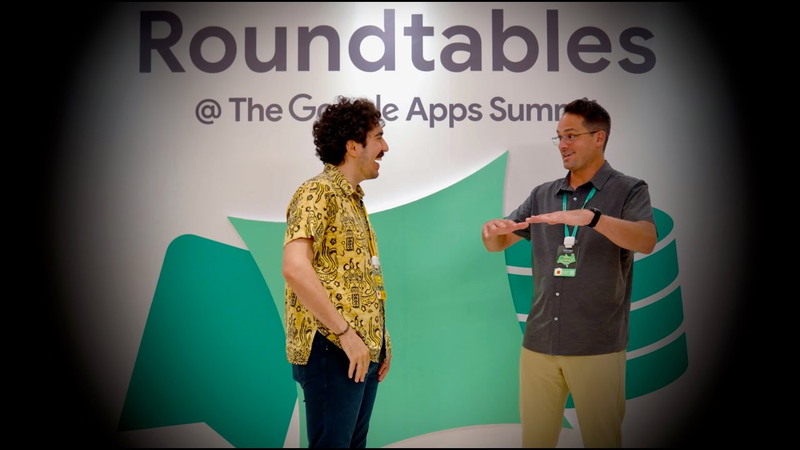
Hello. Hello. So, greetings from Vegas and now with Tobias Knopp from Google. How has it been going, Tobias, at MAU Vegas 2016? I'm curious about your highlights and takeaways from the show. Overall, you had like lots of conversations with people, not just Google team, went to like some events. How do you feel?
Yeah, good question. I mean, I've talked to a lot of people and a lot of partners and people from the ecosystem and and and from the industry. I think one thing is becoming quite clear is that we are now at a plateau of growth. There is has been a lot of growth in the past and
we as an industry have utilized a lot of growth hacks. It was a lot of growth at all costs. But now almost all of the conversations I've been having were about how can we work based on a more predictive LTV? How are we looking at our customers and users from a long-term perspective and not just looking at some short-term gains? Because if an industry is saturating, if a market is well, still growing, but it's getting more competitive, you need to think more smarter about what you're doing and that is exactly, I think, the the overall tone, the overall sentiment I I've gotten from from MAU. And at the same time, yeah, it also fits with a lot of the thinking we we are having at at Google at the same time.
Mhm. I actually also just told from the Play Store perspective as well because like I don't remember the name, but it was, I guess 700,000
new apps every month comes come to the store if I'm not mistaken. So, what you just mentioned about it's becoming more and more on the retention user experience level, they will be just eliminated, I think, because otherwise how will you manage this big topic?
a high percentage also of of apps and games which have never been downloaded or are being downloaded once and then never opened any way.
cities
So, yeah, I I think if if you use an app store like Google Play, if you accept the DDA or developer distribution agreement, you can upload your app, right? We It's It's It's a platform for everyone. And then at the same time, we're going back to users deciding, is this worth my time? Do I like the monetization mix of this app or of this game? Is there a subscription involved? Is there in-app purchases involved? Are there in-app apps involved? And then you take it from there. So, at the very end, I think it's It's fair. It's an ecosystem, right? Many people
are providing supply and then the the users with with their demands, to use that analogy, decide.
So, actually, Tobias, I covered the news on Unity AI beta product and I even wrote about the advantages and disadvantages on even potential risks like because, you know, if everyone can easily develop games, there could be a tsunami of AI games at the same time. So, like at one side, we are talking about, well, it will be, you know, removing the monkey work and making it more quality dedicated time to enriching the details, but at like another end, we will have 70 million new apps and games every month, maybe.
Question is, how do you utilize AI to bring that to to the users out there? And I do think that there are lots of tools, lots of opportunities to, you know,
utilize AI for doing exactly that. And also enabling people, creators to do many more things that were not able to do before. And actually getting rid of some of the more repetitive tasks. And actually thinking of uh opportunities, uh worlds, uh environments they didn't have the time for before. So, from that perspective it is super helpful to utilize AI. And at the same time, you're fully right. People want to have great experiences. So, I give you an example. A while ago we did uh research at Google where we were asking gamers about how they want to see uh AI being utilized in games and how do they perceive that. And the answers were very interesting because all gamers across all generations, we had a breakdown of of of age groups, all generations were saying we are expecting AI to be in games and
and in apps because these are very uh modern, very progressive uh com- technology out there. So, we we we would expect that. But at the same time we also have high expectations about the quirkiness, about the authenticity of these experiences. And interestingly, the younger the people, so as an example, the more they were expecting AI as part of the game, of course. But at the same time, they had the highest demand of I want to have that game designer, that app designer providing me with something only they were able to to come up with. So, I think that is the intersection uh we are looking at right now. And at the very end users and players will decide anyway what is successful and and and not.
Tobias, I really loved uh your sentence on users will decide, players will decide. I think that is the biggest answer, really, and you just brought me two sentences that I chatted with one of the
like biggest studio gaming studios at lunch yesterday. And we chatted around like you could definitely Okay, let's go from the hyper-casual type. Players wanted this because they wanted quickly consumable games while going on the like metro train, like just playing while standing, and then it was over because they were bored. Another thing they brought up to me right now, just we chatted like this China-Vietnam example, like quick prototyping, copy-pasting. The markets wanted this because they wanted to see alternatives. Oh, this is better, you know, like just like quick consuming Instagram or like TikTok logic, tac tac tac alternative.
Well, I think first of all on the stat regarding apps and and and games and and the growth we are seeing there. It's quite interesting to see that lots of app
developers utilize best practices from game developers when it comes to user retention, user loyalty, and that now is benefiting non-gaming apps so much that there is some that there's a lot of growth on that side. And you could even argue what what is an app and what is a game today, right? Because I think the lines are lines are blurring. But let me also break that down to what driving good user loyalty and and retention means for monetization experience, which is the same for for for apps or or for games. If you are not investing into sustainable experience for users, that could be your game, could be your app, but could also be how many ads you show, how often you are showing ads, and whether they are intrusive or not. That will have a big impact on whether your game or your app
is growing or not. We still see new innovation as well, and suddenly people find out that clearing pixel is a great thing, and everybody goes for that. And at the same time, whoever starts with this has edge, and that is right and just. So, I'm less concerned. It is more about having users decide, and also users, when they can decide about more apps and more games out there, they will be more demanding. They want to have very good experiences. They want to also see monetization, which is fair, which is just. And from that perspective, we are also innovating on more sustainable ad formats as an example. Picture in picture, squeeze bag, and just to give you one example, these ad formats, they're easy for users to control. They can use put the ad somewhere else on the screen if they don't like it where it is right now, and and other things on the
side. So, again, we are very much aligned with the industry of driving this type of sustainable business. We need to have now because as we discussed, the era of growth at all costs is over, and no matter what type of game or what type of app you have, if you're getting inspired by someone else or not, you want to ensure that users come back to your experience, and monetization plays a key role in there. We will be expecting more and more innovative ad formats, I think. That is the future for users. Yes, I do think so, and and overall, respect the users because they have the power now more than ever, right? We just talked about it. So, that's why we put a lot of our innovation into various ways for publishers to make users happy. And that even includes things like filtering out bad ads before they're even being shown. So, as an example, we have we put AI to work and also we have
an AI powered ads review center where we ensure that any ad which is not good for the user experience is being filtered out before it's even shown. And that also includes filtering out some ridiculous CTRs nobody should go for because at some point too much is is not good enough anymore.
So, Tobias, at MAU we have been hearing a lot of concerns around stagnation, plateauing, and like, you know, lots of pain points over there. And I really want to get your advice on imagine like you got 100k and you want to, you know, support advice studio for their growth. Like they they want to just find new growth. Like what do you see? How would you advise them?
It's a great experiment first of all. And I do think what is important today more than ever
that you think about your audience and your product. Whether you're an app or whether you're a game. And really figure out what you want to bring to your users. So, that's the first thing. Concept, goal. Do not just copy at It's fine if you get inspired, but add something. Add your unique user flow. Add your unique value proposition. And then be also mindful in how you are putting the right tools for you to use to monetize that audience because 100k is nice, but at the very end, this is just helping you probably to cover a few few you know, salaries or expenses at the very beginning, right? So, once we have a product and we talked about AI and the opportunity to prototype quickly, so that is great. So, once we have an early version of a product, I would be very mindful in the monetization approach. And to tie this
back to some of our announcements, we are very confident about the Google Mobile Ads next generation SDK. We're so confident in it that we are promoting it now from open beta to version 1.0. And the reason why I'm bringing it up is if you're implementing this, you benefit from a faster and lighter SDK. So, as an example, there's a 27% better latency to maximize to viewability of your ads. Very important if you're just having 100k as at start, right? And also it's lighter. The footprint of the SDK is lighter on the user. So, why am I saying all of this? Because this is our future foundation for all the innovation coming from the Google monetization side. And I truly believe if you have the right tools from the very beginning to monetize, to segment your audience, to have the right technical platform, you
can start to innovate. You can start to have great experiences for your users and then we are taking our step from the plateau to incremental growth. And step by step, we are moving towards a sustainable growth flywheel as an app developer, as a game studio, and we can take it from there.
Thank you so much for joining the podcast. And it was a like lovely chat. See you next year.
For sure, for sure. Always great to chat with you.
Auto-generated captions from YouTube — names and numbers may be misheard.
Key insights
6 takeaways · ~2 min read- 01The mobile gaming and app industry has reached a growth plateau, signaling the end of the 'growth at all costs' era and a shift toward predictive lifetime value (LTV) and long-term user retention.
- 02With approximately 700,000 new apps and games entering the Google Play Store monthly, developers must prioritize unique value propositions and high-quality user experiences to avoid being ignored by users.
- 03While AI is a powerful tool for rapid prototyping and eliminating repetitive development tasks, user research indicates that players across all generations demand authentic, human-designed experiences that AI cannot replicate.
- 04Sustainable monetization is critical for growth; developers should avoid intrusive ad practices and instead adopt user-friendly, controllable ad formats like picture-in-picture to maintain player loyalty.
- 05Google is utilizing AI-powered tools, such as its AI-driven ads review center, to filter out low-quality or intrusive advertisements that negatively impact user experience.
- 06Google's new Mobile Ads SDK (version 1.0) offers a 27% improvement in latency and a lighter technical footprint, providing a foundation for developers to build more efficient, sustainable monetization strategies.
Ask AI about this video
Cite this video
Citation
Generating citation…


















Comments