Bandai Namco’s 2017 integrated report presents a comprehensive account of the company’s financial, strategic, and governance performance, emphasizing the central role of its “IP‑axis” strategy in achieving record results. By leveraging core intellectual properties across games, toys, visual media, and music, the group generated ¥620.1 billion in net sales and ¥63.2 billion in operating profit, a 27.7 % year‑on‑year increase, while free‑cash flow rose 47.7 %. The Network Entertainment segment contributed 57.9 % of sales and 63.8 % of profit, with flagship franchises such as Mobile Suit Gundam (¥74 billion) and Dragon Ball (¥61 billion) underpinning cross‑media expansion and overseas growth in Asia, Europe, and the Americas.
Strategic outlook is framed by the newly launched three‑year “NEXT STAGE” plan, which targets global IP expansion, regional autonomy, and continued innovation to meet mid‑term objectives a year ahead of schedule. Governance is reinforced through a ten‑member board—including three independent directors—and an audit‑supervisory board meeting Japanese Corporate Governance Code standards. A robust compliance and risk‑management framework, performance‑linked director compensation, and extensive investor‑relations activities underscore the company’s commitment to transparency and stakeholder trust.
Corporate‑social‑responsibility initiatives achieved a 27 % reduction in CO₂ emissions since FY2012 and introduced universal‑design products and supplier audits. Financially, profit attributable to owners reached ¥44.2 billion, EPS rose to ¥201, and dividends of ¥15.4 billion were declared. Acquisitions such as
Bandai Namco · 2026
Bandai Namco · 2025
Bandai Namco · 2024
Bandai Namco · 2024
Bandai Namco · 2023
Bandai Namco · 2023
Bandai Namco · 2022
Bandai Namco · 2022
Bandai Namco · 2021
Bandai Namco · 2021
Bandai Namco · 2020
Bandai Namco · 2019

Koei Tecmo
Bandai Namco · 2014
Bandai Namco · 2013

Bandai Namco · 2012

Koei Tecmo
Capcom
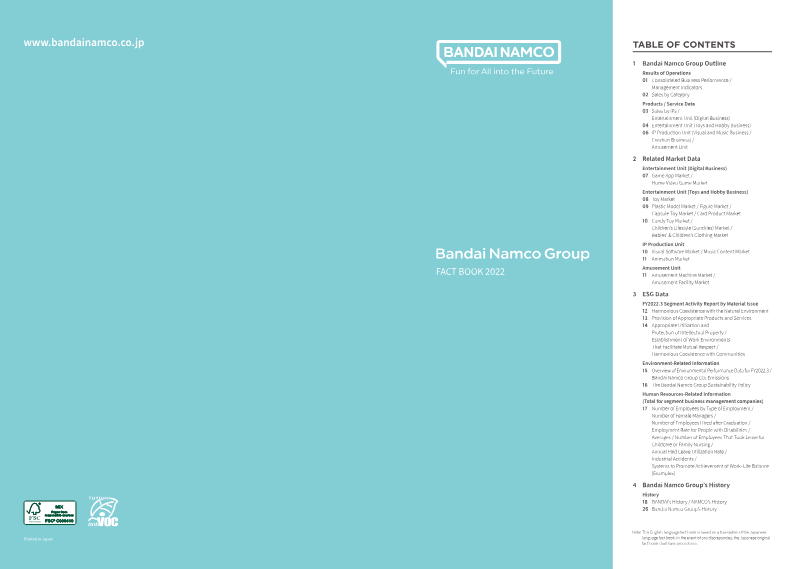
Bandai Namco
Square Enix
GungHo Online Entertainment
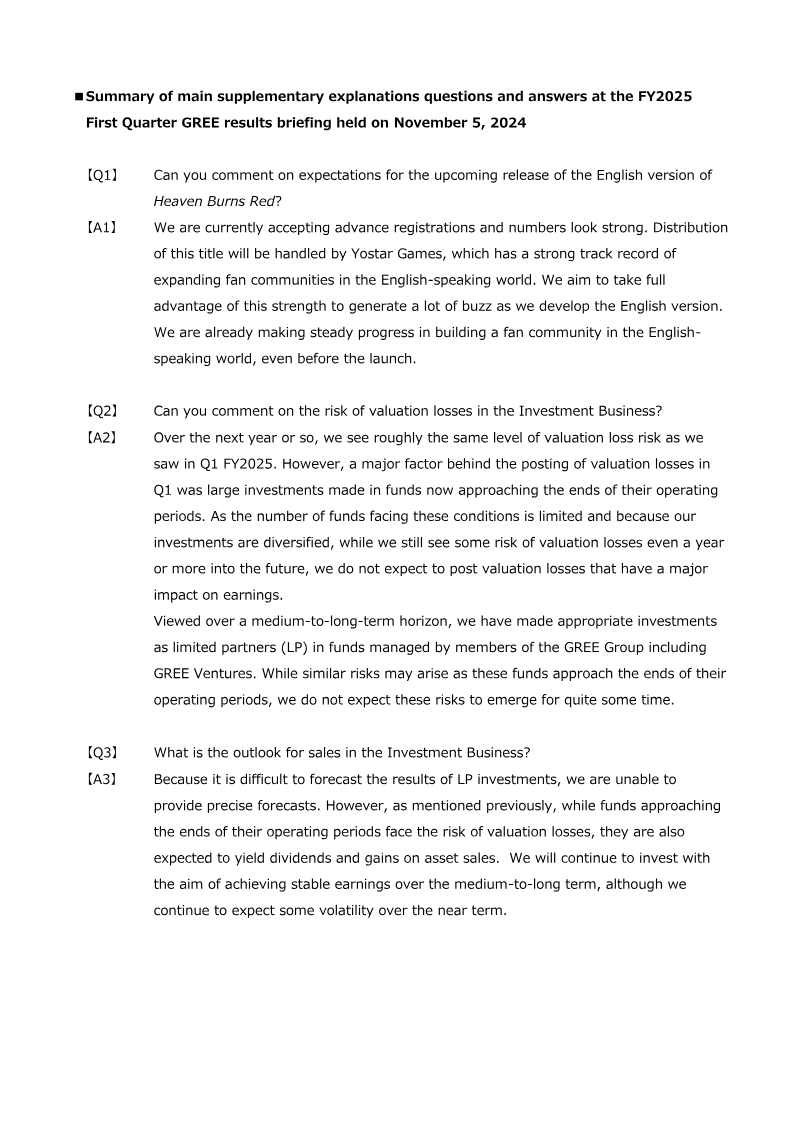
GREE
Bandai Namco
Bandai Namco